





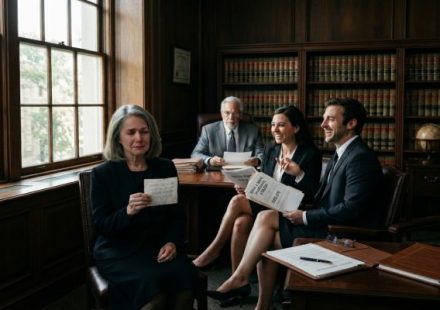
• Part2: Grandpa gave me an old passbook for my wedding. “That bank closed in the ’80s,” Dad said, snatching it away. He’s perplexed. Grandpa died shortly after. In any case, I visited the bank.

    Part2: Grandpa gave me an old passbook for my wedding. “That bank closed in the ’80s,” Dad said, snatching it away. He’s perplexed. Grandpa died shortly after. In any case, I visited the bank.

    The Passbook in the Champagne

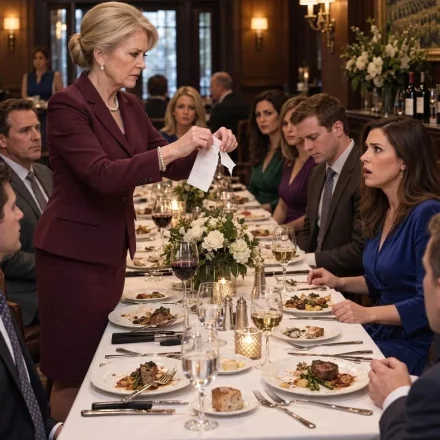
    He walked right to the champagne bucket—silver, sweating, packed with melting ice—and dropped that book straight in like it was garbage he didn’t want on his hands.

    The band was still playing. The tent lights were warm and golden. Newport ocean air drifted in, salty and expensive, the kind of air people pay for. And still, when the passbook hit the slush of ice and bubbly, the whole place erupted like it was the punchline of the year.

    Laughter. Cheers. A few phones lifted higher to record it.

    My father smiled into the spotlight as if humiliation was a party favor he’d generously handed out.

    For a second, I felt my body do what it’s done my whole life around him—shrink, disappear, make room. The old reflex. The quiet daughter. The one who doesn’t make trouble. The one who keeps the peace so everyone can pretend the peace exists.

    Then I saw my grandfather’s handwriting on the inside cover, blurred under the film of champagne, and something inside me went sharp.

    I didn’t scream. I didn’t plead. I didn’t give him the satisfaction of drama.

    I stepped forward, plunged my hand into the freezing water, and grabbed the passbook like it was a pulse I refused to lose. Ice burned my skin. Champagne soaked up my sleeve, and the bodice of my dress darkened with wet, heavy silk.

    I lifted the book out. Pages stuck together, swollen and trembling. The cover sagged in my grip.

    A few people gasped—more at my dress than at what he’d done. That’s how it always is. They care about the spectacle, not the cruelty.

    My father leaned toward the mic again, amused.

    “Look at her,” he said, like I was entertainment. “Always saving what can’t be saved.”

    The crowd laughed harder.

    I looked at him one last time—really looked—and saw what I’d always been trained not to see: not a king, not an untouchable man, just a bully who needed an audience.

    I turned and walked out without looking back.

    Behind me, the tent kept glowing. The music kept playing. Glasses kept clinking. My wedding continued like I was never the point of it.

    Three Days Later

    I walked into the First National Bank in downtown Boston with that passbook sealed inside a plastic Ziploc bag.

    The lobby was all marble and hush, the kind of quiet that makes you lower your voice even when you’re not speaking. Back Bay always feels like that—polished, careful, built for people who don’t like mess. The air smelled faintly of lemon cleaner and old money.

    My coat was thrifted, slightly too thin for the February bite. My hair was still damp from my shower, because in my world you shower and go, no matter what’s happening inside you.

    I’m Alyssa Mercer, and at twenty-nine, I’ve spent my life making myself invisible.

    As a trauma nurse, I’m good at it. I know how to step aside while louder people take up space. I know how to keep my face steady when a room is spinning. I’ve learned that if you look calm enough, people assume you’re safe—even when you’re not.

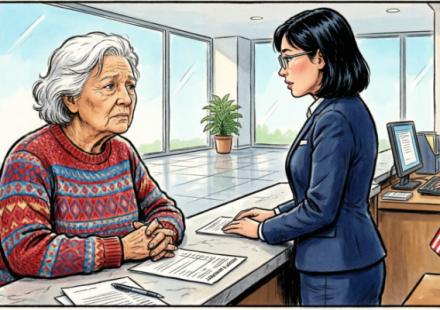
    “I need to check the balance on this,” I said, sliding the bag across the polished counter. “It was a gift.”

    The teller—a girl no older than twenty—picked it up with two fingers, her nose wrinkling slightly. Not because she was mean. Because people like her aren’t trained to expect something valuable to look like this.

    She turned it over once, then typed the account number, probably expecting an error message or a balance of zero.

    At first, her face stayed neutral, the way you learn to keep it when you’re customer-facing and tired.

    Then she stopped.

    Her fingers hovered over the keys. She blinked. Leaned closer to the screen as if she didn’t trust her own eyes.

    And the color drained from her face so quickly it was like watching a tide pull out.

    “Ma’am,” she whispered, voice trembling. “Please wait here. Do not leave.”

    Within seconds, the branch manager appeared—tight smile, expensive suit, quick steps—and behind her came a man in a bespoke suit with the kind of posture that says he’s used to people moving out of his way.

    The regional director.

    “Miss Mercer,” the director said, and even the way he said my name carried weight. “Please. Come with us.”

    He gestured toward a heavy steel door in the back. Not a decorative door. A real one.

    “We’ve been waiting for this account to be claimed for a very long time,” he added, and his voice lowered like the walls had ears.

    They led me into a private viewing room that smelled of old paper, dust, and faint metal—like history trapped in air-conditioned silence. A leather chair waited at the table.

    As they went to retrieve the file, I sat down and closed my eyes.

    And suddenly, I wasn’t in a bank vault.

    I was twelve years old again.

    I was kneeling on the hardwood floor of my father’s study in our Newport house, the room that always smelled like leather and scotch and power.

    Richard sat in his armchair, swirling a glass of scotch, watching me like I was a show he’d paid for.

    He had spilled it on purpose. I knew he had. But the rule in our house was simple: Girls clean. Boys conquer.

    Hunter was on the sofa, laughing at a video game, feet propped up on the table I’d just polished. He didn’t even glance my way.

    “You missed a spot, Alyssa,” Richard said softly.

    He didn’t yell. He preferred his hurt to be quiet, controlled, undeniable. He liked to see the light go out in my eyes in slow motion.

    When Grandpa Samuel tried to help me up, I felt his hand hover near my shoulder, gentle and uncertain.

    Richard’s voice snapped through the room like a whip.

    “Touch that rag, old man, and I’ll put you in a state home so fast you won’t even have time to pack your pills.”

    My grandfather froze. His face tightened with a kind of grief that I still don’t have words for.

    I scrubbed until my knuckles went raw that day. I scrubbed because I believed I had no value outside of what I could endure.

    The heavy clank of the vault door brought me back.

    I opened my eyes.

    The director returned with a thick file—old, heavy, the kind of folder that looks like it carries decades inside it.

    “Your grandfather didn’t just open a savings account, Miss Mercer,” he said. “In 1982, he established a Totten trust.”

    He flipped the file open.

    “He was an early investor. Apple. Microsoft. He funneled every dividend back into the portfolio—untouched—for forty years.”

    The director turned the document toward me.

    “The current value of the trust, legally payable to you upon his death, is $12,400,000.”

    The number sat there on the page, black and absolute.

    I thought about the champagne bucket. I thought about my father’s voice, bright with mockery, calling this fortune trash.

    He had held twelve million dollars in his hand and thrown it away because he couldn’t imagine value existing outside his control.

    “Is there anyone else listed on the account?” I asked.

    “No,” the director said. “Just you. It’s entirely yours.”

    I touched the passbook through the plastic, the ruined pages like softened skin. It wasn’t just money.

    It was proof that my grandfather had seen me.

    For the first time, I wasn’t holding a rag.

    I was holding a weapon.

    The Truth Behind the Empire

    My husband Luke didn’t look up when I walked through the door that evening.

    He was hunched over his laptop at the kitchen island, surrounded by a fortress of printed spreadsheets and highlighted documents.

    Luke isn’t just a data analyst. He’s a forensic architect of secrets. He finds the cracks in foundations nobody else wants to admit are there.

    “It’s not an empire, Alyssa,” Luke said, finally turning the screen toward me. His voice was flat, almost gentle, which meant the truth was sharp. “It’s a Ponzi scheme built on bridge loans and ego.”

    I leaned in, expecting to see wealth.

    Instead, I saw red.

    Red flags. Red negative balances. Red timelines marked overdue.

    “He’s insolvent,” Luke said. “The mansion in Newport—foreclosure proceedings started three weeks ago.”

    He clicked again.

    “The family trust he claims to manage? It’s empty. He’s been moving the same fifty thousand dollars between six different shell accounts to make it look like he has liquidity.”

    Luke’s finger traced the lines like he was reading a map to a buried crime.

    “And here’s the kicker,” he said, quieter. “He’s being audited. The IRS sent him a notice of deficiency last month.”

    The man who had thrown my grandfather’s legacy into a champagne bucket wasn’t a titan of industry.

    He was a drowning man, flailing in a sea of debt, still pretending he was swimming.

    My phone rang.

    It was him.

    I put it on speaker.

    “Alyssa.” Richard’s voice filled our kitchen like he owned it. “I’ve been thinking about that shack your grandfather left you. The cottage.”

    The word “shack” made something in my chest tighten. The cottage wasn’t a shack. It was cedar and salt air and my grandfather’s worn hands.

    “What about it?” I asked.

    “I’m going to do you a favor,” Richard said. “I’ve spoken to my real estate attorney. We can liquidate it quickly. I’ll handle the sale and invest the proceeds into the family business so you actually get a return. You’re a nurse, honey. You don’t know the first thing about property taxes.”

    He wanted the cottage. It was worth maybe three hundred thousand dollars. Peanuts to a man who called himself a billionaire—but a lifeline to a desperate fraudster hunting for cash.

    “I’m not selling, Dad,” I said.

    The mask slipped.

    “You listen to me,” he snarled. “That old man was mentally incompetent when he signed that deed. I have witnesses ready to testify that you manipulated him. If you don’t sign that transfer paperwork by Friday, I will sue you. I will drag you through probate court until you’re bankrupt.”

    A pause, heavy and ugly.

    “Do you understand me? You’re out of your depth, Alyssa.”

    He wasn’t protecting me. He was hunting for liquidity—any asset he could seize and sell.

    “I understand perfectly,” I said.

    “Good,” he snapped. “I’ll have the papers sent over.”

    The line clicked dead.

    I looked at Luke.

    He wasn’t scared.

    He was smiling—a cold, sharp smile that matched the feeling rising in my chest.

    Richard thought he was bullying a helpless daughter.

    He didn’t know he had just handed us the blueprint to his own destruction.

    The Trap

    I waited twenty-four hours before calling him back.

    Silence is a powerful amplifier. It lets the desperation breed.

    Luke and I spent that day in preparation. Not the kind that looks dramatic from the outside. No screaming. No breakdowns.

    We moved like people in a controlled room, hands steady, decisions clean.

    When I finally dialed Richard’s number, I put on the performance of my life.

    I didn’t summon the confident woman who’d walked out of the bank vault.

    I summoned the twelve-year-old girl terrified of spilling scotch.

    “Dad,” I whispered when he picked up. I let my breath catch just enough to sound like panic. “I’m sorry I hung up. I… I didn’t know what to say.”

    “You should be sorry,” he snapped.

    But the edge was duller now. He was listening.

    “It’s not just the cottage,” I said. “I went to the bank. The passbook. It wasn’t empty.”

    The line went dead silent.

    “How much?” he asked.

    The word came out too quickly. Too hungry.

    “Twelve million,” I choked out. “But, Dad… I don’t know what to do. The bank manager started talking about capital gains taxes and audits. I think I’m in trouble. If the IRS finds out I have this, they’ll take half of it.”

    It was the perfect bait.

    “Listen to me very carefully, Alyssa,” he said, his voice shifting like a predator putting on a friendly face. “Do not sign anything with the bank. Do not talk to any lawyers. You bring that paperwork to me. I can shelter it under the family trust. I can make the tax liability disappear.”

    Then, softer: “I’m doing this for you, sweetheart. To protect you.”

    Protect me? No. He wanted to swallow the inheritance whole.

    “Can we… can we do it tonight?” I asked.

    “No,” he said too quickly. “I have the Man of the Year gala on Saturday in Boston. Bring the documents there. We’ll sign everything in the VIP suite before the speeches. I’ll announce the expansion of the family fund.”

    He wanted the audience. He wanted the glory of announcing a twelve-million-dollar windfall as if it was the result of his brilliance.

    “Okay,” I said. “Thank you, Dad.”

    “That’s what fathers are for,” he replied, pleased with himself.

    I hung up.

    The fear slid off my face like a costume I no longer needed.

    “He took it,” I said.

    Luke nodded once, sharp and satisfied.

    By the time Saturday came, everything was ready.

    Part2: Grandpa gave me an old passbook for my wedding. “That bank closed in the ’80s,” Dad said, snatching it away. He’s perplexed. Grandpa died shortly after. In any case, I visited the bank.

    The Gala

    The Man of the Year charity gala was held in the grand ballroom of the Fairmont Copley Plaza. Crystal chandeliers dripped light onto the shoulders of Boston’s elite. Cameras hovered like insects, hungry for a moment.

    I arrived at 7:55 p.m.

    I wasn’t wearing the beige, sensible clothes Richard preferred me in.

    I was wearing a structured red dress that cost more than my car. The color wasn’t an accident. It was a statement: I’m here, and I’m not shrinking.

    I walked through the crowd, not around it.

    Heads turned. Eyes followed.

    Richard was at the front of the room, flanked by two senators. He looked radiant—the glow of a man who thought he had just pulled off the heist of the century.

    When he saw me approaching, his smile didn’t waver, but his eyes narrowed.

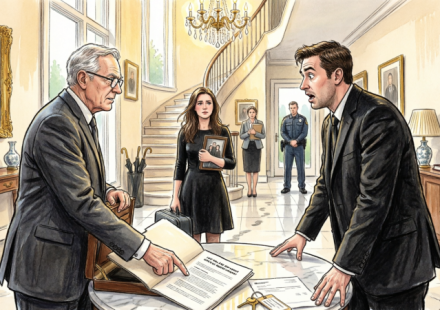
    “You’re late,” he hissed. “Do you have it?”

    “I have it,” I said evenly.

    I held out the blue leather presentation folder.

    He snatched it from my hand, fingers impatient.

    “Is it all there?” he asked. “The transfer authorizations, the power of attorney?”

    “It’s all there, Dad,” I said. “Just like you asked. It puts the entire twelve million under the control of the family trust. You just need to sign as the sole trustee.”

    He opened the folder right there, standing beside the stage.

    He didn’t read the clauses. He didn’t check the definitions.

    He just saw the signature line and the shape of victory.

    A smart man would have asked why the document carried language that tied responsibility backward through years of transactions.

    But Richard wasn’t smart. He was arrogant.

    He pulled a Mont Blanc pen from his pocket like it was a scepter.

    “You did the right thing, Alyssa,” he said. “Finally.”

    He signed with a flourish.

    Then he handed the folder back to me, dismissive, already turning toward the stage.

    “Go find a seat in the back,” he ordered. “I have an announcement to make.”

    I didn’t retreat to the back.

    I moved to the side, where the light caught the glossy paper, and I photographed the signature page with steady hands.

    I hit send.

    Across the city, Luke received it, attached it to the complaint package we’d prepared, and sent it where it needed to go.

    Moments later, Richard took the microphone.

    “Ladies and gentlemen,” he announced proudly, “tonight we launch a historic expansion of the Mercer Family Foundation. A twelve-million-dollar investment in this city’s future.”

    He was confessing in real time, in front of five hundred witnesses.

    He claimed ownership of funds I had just tied to his own trail of fraud.

    My phone buzzed.

    It’s done.

    Richard was still smiling when the sixty-foot LED screen behind him flickered.

    The foundation logo vanished.

    Replaced by a Department of Justice seal stamped with red letters:

    FEDERAL ASSET SEIZURE IN PROGRESS.

    The room didn’t erupt. It collapsed.

    Applause died mid-breath. Conversations snapped shut.

    Richard turned, confused rather than afraid.

    The ballroom doors burst open.

    Six IRS agents swept down the aisle, moving with clean certainty.

    “Richard Mercer,” the lead agent ordered, “step away from the podium.”

    Richard clutched the mic. “Do you know who I am?”

    “We do,” the agent replied, calm as marble. “You’re the sole trustee who signed an affidavit accepting responsibility for twenty years of unreported accounts.”

    Richard spun, eyes hunting, until they landed on me.

    “She tricked me,” he shouted. “My daughter—”

    “Save it for the grand jury,” the agent said.

    Handcuffs snapped shut with a sound that cut through the room sharper than any scream.

    Three Weeks Later

    This morning, Newport smells like salt and fresh coffee, the kind that tastes better when you’re not swallowing fear with it.

    I’m sitting on the porch of my cottage. Mine.

    The roof is fixed. The ivy is gone. The porch boards don’t creak in apology anymore.

    Richard was denied bail. His assets are frozen. His empire liquidated.

    Hunter took a plea. No inheritance awaits him.

    Luke sits beside me, shoulder warm against mine.

    “The trust transfer is complete,” he says. “It’s all yours. What do you want to do with it?”

    I look out at the ocean.

    Twelve million dollars.

    The number doesn’t feel like a crown. It doesn’t feel like revenge.

    It feels like a locked door finally opening.

    “Nothing,” I say. “Let it grow. I’m still a nurse. Still Alyssa. The money isn’t power. It’s protection.”

    I breathe in, slow and steady.

    “Family isn’t blood,” I say. “It’s who stands with you when the vault opens.”

  • Part1: Widowed Mother Cut Off 174 Payments After Her Son Uninvited Her From Dinner-iwachan

    Part1: Widowed Mother Cut Off 174 Payments After Her Son Uninvited Her From Dinner-iwachan


    Serena’s hand froze halfway between the brass door knocker and her cream coat.
    Wesley saw the folder first.
    Not the porch light. Not my face. Not the cup of tea I had set carefully on the little table beside the door.
    The folder.
    It sat tucked under Lydia’s arm, thick enough to bend the corner of her navy blazer. My son’s name was printed across the tab in my handwriting, the same handwriting that had signed his school permission slips, college checks, car insurance forms, mortgage guarantees, and every rescue he had learned to call temporary.
    WESLEY.
    Serena’s eyes moved from the folder to Lydia’s face.
    “Why is she here?” she asked.
    Her voice was low and clean. No panic yet. Serena always reached for control before she reached for truth.
    Lydia did not answer. She stood on my porch with rain beading on her shoulders, her gray-streaked hair pinned at the nape of her neck, one hand steady around the file.
    Wesley swallowed.
    “Mom,” he said, “this got out of hand.”
    I looked at him.
    At forty-eight, he still had Arthur’s eyes when he was frightened. That was the cruel part. A mother can look at a grown man and still see the child who once cried because his kite tore in the wind.
    But that child had become a man who let his wife remove me from a dinner I helped make possible.
    I stepped back from the doorway.
    “Come in.”
    Serena moved first, brushing past the threshold as if accepting an invitation she had been owed all along. Her perfume carried into the hall, sharp and expensive, mixing with the smell of lemon polish and rain-damp wool.
    Wesley followed more slowly.
    Lydia came last.
    I closed the door.
    The sound was soft, but Wesley flinched.
    In the sitting room, Arthur’s photograph still watched from the mantel. The grandfather clock ticked beside the bookcase. Three wet coats shifted and settled in the quiet.
    Serena did not sit.

    “This is a family matter,” she said to Lydia.

    Lydia placed the folder on my coffee table.

    “It became a banking matter at 8:11 this morning.”

    Wesley rubbed the back of his neck. “Mom, we were going to call you.”

    “At 6:18 last night,” I said, “you did.”

    His face tightened.

    Serena turned toward him. “You sent the second text?”

    He didn’t answer fast enough.

    That was answer enough.

    Her cream coat looked too bright against my old green chair. One rain droplet slid from her sleeve to the hardwood floor.

    I picked up my teacup and set it on a coaster.

    No shaking.

    No raised voice.

    No begging.

    That alone seemed to unsettle them.

    “Mom,” Wesley said, “Serena was upset. The coworkers came over last minute. It wasn’t personal.”

    I nodded once.

    “You weren’t invited. My wife doesn’t want you there,” I said.

    His mouth opened, then closed.

    Serena’s chin lifted. “It was one dinner.”

    Lydia opened the folder.

    Paper shifted against paper. Receipts. Printed authorizations. Bank summaries. Canceled drafts. Each page made a dry whisper, like leaves scraping concrete.

    “It was not one dinner,” Lydia said.

    Serena looked at her sharply. “You have no right to discuss our finances.”

    “My finances,” I said.

    The room stilled.

    Outside, a car passed slowly through the wet street. Its tires hissed against the pavement.

    Serena turned to me with the small smile she used in restaurants when a server made a mistake.

    “Margaret, I understand you’re embarrassed.”

    I almost laughed.

    Not because it was funny.

    Because embarrassment had kept me obedient for years.

    Embarrassed to ask why I was never in family photos unless I was holding the camera.

    Embarrassed to admit I paid for things no one thanked me for.

    Embarrassed to feel hurt by little exclusions dressed up as scheduling conflicts.

    Lydia pulled the first page free.

    Wesley’s eyes followed it.

    “Please,” he said.

    That was the first honest sound he had made since entering my house.

    Serena glanced at him. “Please what?”

    He whispered, “Don’t.”

    I sat down in Arthur’s chair.

    The leather was cool under my palms.

    “Read it,” I said.

    Lydia adjusted her glasses.

    “Mortgage assistance draft,” she began. “Monthly amount: $4,850. Originating account: Margaret Hale Living Trust. Beneficiary household: Wesley and Serena Hale. Active for thirty-one months.”

    Serena blinked.

    “That’s not—”

    Lydia turned the page.

    “Private school tuition support. Monthly amount: $2,800. Active for eighteen months.”

    Wesley stared at the carpet.

    Serena’s lips parted.

    “Wesley told me that was from his bonus structure.”

    I watched my son’s shoulders rise, then sink.

    Lydia continued.

    “Homeowners insurance. Two vehicles. Country club family membership. Emergency repairs listed under residential improvement. Business line tied to an entity called Hale Strategy Group.”

    At that, Serena’s face changed.

    Not guilt.

    Alarm.

    “What business line?” she asked.

    Wesley pressed his fingers to his forehead.

    “Serena,” he said quietly.

    “What business line?”

    Lydia looked at me for permission.

    I gave a small nod.

    She slid a page across the coffee table.

    Serena snatched it up.

    Her manicured thumb trembled against the corner.

    The page showed $1,950 a month, withdrawn from my account for twenty-six months, marked as business telecommunications and client management software.

    Serena read the company name once.

    Then again.

    “Hale Strategy Group,” she said.

    Her voice had lost its polish.

    Wesley looked toward the mantel, not at her.

    I had never heard of that company until Lydia turned the screen toward me that morning. It had been one of the lines buried between utilities and membership fees, quiet and patient, waiting for daylight.

    Serena lowered the page.

    “You told me the firm paid for that.”

    Wesley rubbed both hands over his face.

    “I was going to fix it.”

    “Fix what?”

    He said nothing.

    The house seemed to grow smaller around us. The clock ticked. Rain tapped the windows. Somewhere in the kitchen, the refrigerator hummed steadily, indifferent to the collapse taking place ten feet away.

    Lydia removed another sheet.

    “This is the notice generated today when access was revoked. Mr. Hale is no longer authorized to initiate transfers, create payment instructions, or use Margaret Hale’s trust account for any household or business-related charge.”

    Serena stared at Wesley.

    “You had access?”

    His face reddened.

    “For emergencies.”

    “For years,” I said.

    He turned to me. “You gave it to me.”

    “I did.”

    The words came out calm.

    That mattered.

    I had given it to him after Arthur died, when Wesley was grieving too, when he said the mortgage company needed a quick bridge and Serena was overwhelmed and the baby’s expenses had doubled.

    I gave him access because I mistook trust for closeness.

    Then I kept giving because stopping would have forced me to see what I had become to them.

    A safety net with a pulse.

    Serena folded the page slowly.

    Her eyes moved over my sitting room for the first time, really seeing it. The worn rug. The framed photo of Arthur. The quilt over the arm of the sofa. The good porcelain cup beside my chair.

    All the things she had dismissed as old.

    All the things that had funded her new.

    “Wesley,” she said, “how much?”

    He shook his head.

    Lydia answered because numbers do not protect anyone’s pride.

    “In the past calendar year, $93,600.”

    Serena took one step back.

    Her heel struck the leg of the coffee table.

    The folder shifted.

    A few papers slid loose, spreading across the table like white cards in a losing hand.

    “Mom,” Wesley said, and his voice cracked on that single word.

    I waited.

    For once, I did not rush to save him from discomfort.

    He looked older than he had the night before. The skin beneath his eyes sagged slightly. His expensive sweater was damp at the collar. His phone kept buzzing in his hand.

    Declined charge.

    Declined charge.

    Declined charge.

    Each vibration sounded small and ugly in the room.

    Serena’s eyes snapped to the phone.

    “What is that?”

    Wesley looked down.

    He did not speak.

    She took the phone from his hand.

    I saw the screen glow against her face.

    The color drained from her cheeks.

    “Club dining account declined,” she read. “Preschool payment failed. Auto renewal failed. Mortgage draft returned pending review.”

    Her breath came through her nose in sharp little pulls.

    Then she looked at me.

    Not like a daughter-in-law.

    Not like a woman who had excluded an old widow from a dinner.

    Like someone seeing the locked door behind the person she had pushed too far.

    “You can’t do this,” she said.

    I folded my hands in my lap.

    “My name is on the accounts.”

    “It affects the child.”

    There it was.

    The word she saved for leverage.

    Child.

    My granddaughter. The little girl who had texted me at 6:47 p.m. asking if I was still coming. The one who still pressed stickers onto my envelopes and called Arthur’s picture Grandpa Star.

    My throat tightened.

    But I did not move.

    “I have already arranged a separate education account for her,” I said. “One neither of you can touch.”

    Wesley lifted his head.

    Serena went still.

    Lydia placed one final document on top of the folder.

    “This was completed at 9:32 this morning,” she said. “A custodial education trust. Direct school payments only. No parental withdrawal access.”

    Serena stared at the paper.

    For the first time since she entered my house, she had no immediate sentence ready.

    The silence was not empty.

    It was full of every dinner I had missed, every bill I had paid, every thank-you that had become an expectation.

    Wesley stepped toward me.

    “Mom, I’m sorry.”

    His eyes were wet.

    A younger version of me would have stood. Touched his face. Told him we would talk. Told him I understood. Told him Serena pressured him, life was hard, marriage was complicated, money made people afraid.

    A younger version of me would have turned his apology into my responsibility.

    I stayed seated.

    “What are you sorry for?” I asked.

    He blinked.

    “For the text.”

    I waited.

    “For letting it happen.”

    I waited again.

    “For using the accounts.”

    Serena made a sound under her breath.

    He looked at her then back at me.

    “For lying.”

    That one landed.

    Not beautifully.

    Not enough to mend anything.

    But it landed.

    Serena straightened. “We should discuss this privately.”

    “We are,” I said.

    Her eyes cut toward Lydia.

    “Without the banker.”

    Lydia closed the folder with both hands.

    “I’m here because Mrs. Hale requested a witness for the receipt of account revocation and notice of independent trust protection.”

    Serena’s mouth tightened.

    “A witness.”

    “Yes,” Lydia said.

    Her voice remained even.

    That made Serena angrier than shouting would have.

    Wesley sank onto the edge of the sofa without asking. His knees looked weak. His wet shoes left dark marks on the rug.

    Arthur would have hated that rug being marked.

    Then again, Arthur would have hated what his son had become far more.

    Serena remained standing.

    “You’re punishing us because of one awkward dinner,” she said.

    I picked up the townhouse brochure from the side table. I had left it there on purpose.

    The pages still showed the brick walkway, the staged lamps, the smiling kind of emptiness real estate photographers sell as home.

    I opened to the page with the kitchen.

    The one Serena had called perfect.

    The one Wesley had said was for me too.

    I placed it on top of the folder.

    “I paid part of the down payment on a house where I was not welcome for dinner,” I said.

    Serena’s gaze dropped to the glossy page.

    For a moment, her face looked almost naked.

    Not sorry.

    Exposed.

    Wesley covered his eyes with one hand.

    “I didn’t think you’d actually stop everything,” he said.

    That sentence told the whole truth.

    Not that he loved me.

    Not that he forgot.

    Not that he was trapped.

    He simply believed I would absorb the wound and keep paying.

    My fingers tightened once around the armrest.

    Then relaxed.

    At 77, the body teaches you what the heart refuses. Tightness hurts. Release hurts less.

    “I know,” I said.

    Serena’s phone rang.

    She looked down and silenced it.

    It rang again immediately.

    Then Wesley’s buzzed.

    Then hers again.

    Their life, built on automatic yes, had begun asking manual questions.

    Serena glanced toward the front door.

    “Wesley,” she said, “we need to go.”

    But he did not stand.

    He looked at me like a boy waiting outside the principal’s office, hoping his mother would come and make the consequences softer.

    I had done that too many times.

    Lydia gathered the loose pages back into order. Her hands were calm, professional, careful. She clipped the folder shut and passed me a receipt copy.

    “The revocations are complete,” she said. “The trust protections are active. The business authorization has been flagged for review.”

    Wesley’s head snapped up.

    “Flagged?”

    Lydia looked at him.

    “Mrs. Hale did not recognize the business expenses. That required notation.”

    Serena turned slowly toward Wesley.

    The room sharpened.

    There are moments when a marriage does not break loudly. No thrown glass. No screaming. Just one spouse realizing the other has been lying in a direction they never bothered to check.

    “What review?” Serena asked.

    Wesley stood.

    “Not now.”

    “Yes,” she said. “Now.”

    I rose from Arthur’s chair.

    Not quickly. My knees complained. My hand found the armrest first, then the air, then balance.

    All three of them watched me.

    I walked to the mantel and touched Arthur’s frame.

    The silver was cool.

    “You should leave,” I said.

    Wesley took one step toward me. “Mom, please.”

    I looked at my son.

    His face blurred slightly at the edges, but I did not let the tears fall.

    “You may call me when you are ready to speak without needing something.”

    He stopped.

    Serena pulled her coat closed, though the room was warm.

    Lydia lifted the folder.

    “No,” I said softly.

    She paused.

    I held out my hand.

    She gave it to me.

    The folder was heavy.

    Heavier than paper should be.

    Wesley looked at it as if it were alive.

    I walked to the front door and opened it.

    Cold damp air slipped into the hall. The porch light caught the rain in thin silver threads.

    Serena stepped out first, fast now, her heels sharp against the boards.

    Wesley lingered.

    “Did you ever love me without the money?” he asked.

    The question struck harder than I expected.

    I held the folder against my chest.

    “Yes,” I said. “That was the problem.”

    His face folded.

    For one second, I saw the little boy with the torn kite.

    Then I saw the man who had written, You weren’t invited.

    He stepped onto the porch.

    I closed the door.

    This time, he was on the other side of it.

    The house settled around me.

    No applause. No victory music. No clean happiness.

    Just the clock, the rain, and my own breathing.

    Lydia stood beside the sitting room archway, quiet as a witness in a church.

    “Are you all right?” she asked.

    I looked at the good teacup on the table. The tea had gone cold.

    “I will be.”

    Through the window, I saw Serena and Wesley standing beside their car. She was speaking fast. He kept looking back at the house.

    Then Serena opened the passenger door and stopped.

    Because another car had turned into my driveway.

    A small blue sedan.

    My granddaughter climbed out holding a backpack against her chest.

    Behind her, her teacher stepped into the rain with one hand raised, uncertain.

    I moved to the window.

    My granddaughter looked past her parents, straight at my door.

    Her small face was pale.

    Then she lifted her phone.

    A message arrived on my screen.

    Grandma, Mom said you ruined everything. Can I come inside?

    I opened the door before the second buzz.

    This time, I did not ask anyone’s permission.

    PART 3
    “The Night Serena Called the Police… My Granddaughter Whispered Something That Changed Everything.”

    The front door had barely closed behind my granddaughter when headlights flashed across the sitting room walls.

    Blue and red.

    Slow.

    Rotating.

    My granddaughter stiffened beside me.

    Outside, Serena stepped out of the car first.

    Not crying anymore.

    Not shocked anymore.

    Angry.

    The dangerous kind of calm angry.

    Rain slid down her hair as she pointed toward my house with sharp, furious movements.

    Two police officers climbed from the cruiser.

    Behind them, Wesley stood near the driveway with both hands on his head.

    He looked sick.

    My granddaughter grabbed my sweater sleeve.

    “Grandma…”

    Her voice trembled.

    I crouched carefully in front of her.

    “It’s all right, sweetheart.”

    But she shook her head quickly.

    “No,” she whispered. “Mommy gets scary when money disappears.”

    That sentence hit harder than the police lights.

    Outside, Serena’s voice cut through the rain.

    “She took my daughter!”

    Officer Daniels knocked firmly against the door.

    I recognized him immediately.

    His father had worked with Arthur thirty years earlier.

    Life in small towns keeps receipts longer than banks do.

    I opened the door before the second knock.

    The cold air rushed inside.

    Officer Daniels removed his hat slightly.

    “Mrs. Hale.”

    Behind him, Serena pointed toward the house again.

    “She manipulated my child and refused to return her.”

    My granddaughter stepped closer behind me.

    Officer Daniels noticed immediately.

    Children tell truth with their feet before their mouths ever speak.

    “She texted me,” I said calmly. “Asking if she could come inside.”

    Serena laughed once.

    Sharp.

    Fake.

    “She’s eight years old.”

    “And frightened,” I answered.

    Wesley finally looked up.

    His eyes found his daughter first.

    Then me.

    Then the folder still sitting on the coffee table behind my shoulder.

    The folder had become a ghost in the room.

    Officer Daniels cleared his throat carefully.

    “Ma’am,” he said to Serena, “did the child arrive willingly?”

    “She’s confused.”

    “That’s not what I asked.”

    Serena’s jaw tightened.

    The rain kept falling softly around all of us.

    Then my granddaughter did something none of us expected.

    She stepped around me.

    Tiny hands shaking.

    Backpack still hanging from one shoulder.

    And she looked directly at the police officer.

    “My mommy said Grandma ruined our life because Grandma stopped giving us money.”

    Silence.

    Absolute silence.

    Even Serena froze.

    Children do not understand strategy.

    That’s why truth escapes from them so cleanly.

    “Sweetheart—” Serena started.

    But the little girl kept going.

    “She said Daddy messed everything up and now we might lose the big house.”

    Wesley closed his eyes.

    Officer Daniels remained still.

    His partner quietly lowered the notepad in his hand.

    My granddaughter’s lip trembled.

    Then came the sentence that truly shattered the night.

    “I didn’t come because Grandma kidnapped me.”

    She looked up at me.

    Tears sliding silently down her face.

    “I came because I thought Grandma would still love me if we got poor.”

    Serena’s face drained white.

    Wesley made a broken sound in his throat.

    And suddenly every expensive thing they owned looked smaller than the child standing barefoot in my doorway.

    The porch light flickered once in the rain.

    Officer Daniels spoke carefully now.

    “Mrs. Hale,” he said to Serena, “this appears to be a family dispute, not an abduction.”

    Serena snapped toward Wesley.

    “Say something!”

    But Wesley couldn’t.

    Because for the first time in years, the truth was standing in front of him without invoices attached to it.

    My granddaughter wiped her cheeks.

    Then she reached into her backpack slowly.

    “I forgot,” she whispered.

    She pulled out a folded paper.

    Wrinkled.

    Pink.

    Covered in stars.

    She handed it to me.

    I unfolded it carefully.

    It was a school assignment.

    “Draw Your Family Hero.”

    Inside the crooked yellow frame she had drawn only one person.

    Not her parents.

    Not teachers.

    Not friends.

    Me.

    And beneath the drawing, in uneven pencil letters, she had written:

    “My grandma fixes things when everyone else breaks them.”

    Wesley broke first.

    Not loudly.

    Just quietly enough to make it worse.

    He sat down heavily on the wet porch step and covered his face with both hands.

    Serena stared at him in disbelief.

    Almost disgust.

    As though weakness itself offended her.

    Officer Daniels stepped backward toward the cruiser.

    “We’ll document the call,” he said carefully. “But no further action is needed tonight.”

    Serena turned sharply.

    “You’re just leaving?”

    The older officer paused.

    Then his eyes moved toward Wesley sitting in the rain.

    “Ma’am,” he said quietly, “I think your family has bigger problems than police.”

    The cruiser lights shut off.

    Darkness rushed back over the driveway.

    Only the porch light remained.

    Soft.

    Yellow.

    Lonely.

    My granddaughter slipped her hand into mine.

    Then Wesley lifted his head slowly from the porch step.

    Rainwater clung to his face like tears he was too ashamed to admit.

    “Mom,” he whispered, “there’s something else you don’t know.”

    Behind him, Serena went completely still.

    And for the first time that night…

    She looked afraid.
    # PART 4

    ### *“The Secret Wesley Hid From Everyone… Was Already Destroying Their Family Before the Dinner Ever Happened.”*

    The rain had almost stopped.

    Tiny drops still slid from the porch roof, tapping softly against the wooden railing.

    Nobody moved.

    Not me.

    Not Serena.

    Not even the officers pulling away from the curb.

    Everything had frozen around Wesley’s final sentence.

    > “Mom… there’s something else you don’t know.”

    My granddaughter squeezed my hand tighter.

    Serena’s face changed first.

    Fear.

    Real fear this time.

    Not anger.

    Not pride.

    Fear.

    “Wesley,” she said quietly.

    Warning him.

    But he stood slowly from the porch step anyway.

    His sweater clung damply to his shoulders. His eyes looked hollow now, like a man too tired to keep holding walls together.

    “I didn’t just use the trust account,” he said.

    The night suddenly felt colder.

    Behind me, the grandfather clock ticked steadily inside the house.

    Every second sounded louder now.

    Serena stepped toward him sharply.

    “Stop talking.”

    He laughed once.

    Broken.

    Humorless.

    “You think silence is going to save this?”

    “Wesley.”

    “No,” he snapped suddenly.

    That shocked all of us.

    Especially Serena.

    Because men like Wesley do not become weak overnight.

    They become weak one surrender at a time.

    And Serena had spent years teaching him surrender.

    My granddaughter pressed closer against me.

    I could feel her heartbeat through her small sleeve.

    Wesley rubbed both hands over his face.

    Then finally looked directly at me.

    “The business wasn’t real.”

    I stared at him.

    “What?”

    “Hale Strategy Group,” he whispered. “It wasn’t a consulting company.”

    Serena shut her eyes.

    Just for one second.

    But it was enough.

    Enough to confirm she already knew.

    Wesley swallowed hard.

    “It started as gambling.”

    The word hit the porch like shattered glass.

    Even the air seemed to stop.

    My granddaughter looked upward in confusion.

    “Daddy?”

    His face collapsed at the sound of her voice.

    Not dramatic.

    Not cinematic.

    Just exhausted shame finally finding daylight.

    Serena turned away instantly.

    Like she couldn’t bear being seen beside him anymore.

    “I lost money after the layoffs three years ago,” Wesley continued. “At first it was small. Sports betting. Online cards. Then crypto trading. Then leverage accounts…”

    His voice drifted thinner with every confession.

    “I kept thinking I could win it back before anyone noticed.”

    I suddenly remembered dozens of little moments.

    Missed calls.

    Mood swings.

    Random emergencies.

    His strange panic whenever bills arrived.

    Arthur used to say:

    > “A person drowning in secret always splashes at strange times.”

    God, Arthur would have seen it immediately.

    I didn’t.

    Because mothers sometimes mistake protection for love.

    And love for blindness.

    Serena folded her arms tightly.

    “You promised you fixed it.”

    Wesley looked at her slowly.

    “No,” he said. “I promised I’d hide it better.”

    That landed hard.

    Very hard.

    Because suddenly the marriage looked different.

    Not husband and wife.

    Not partners.

    Two people silently dragging a collapsing lie across expensive floors.

    My granddaughter looked between them.

    Confused.

    Scared.

    Too young to understand debt but old enough to recognize danger.

    “Are we losing our house?” she whispered.

    Nobody answered.

    That was answer enough.

    Then Wesley looked back at me.

    “There’s more.”

    Of course there was.

    There always is.

    People don’t destroy families with one lie.

    They do it brick by brick.

    “I borrowed against the house last year,” he admitted.

    Serena spun toward him instantly.

    “What?”

    “I didn’t have a choice.”

    “You said the refinancing was for taxes!”

    “I was covering margin calls!”

    Her face went white again.

    “No…”

    He nodded slowly.

    “The house is almost gone.”

    The porch suddenly became too small for the truth standing on it.

    Inside the house, my tea still sat untouched on the table.

    Cold now.

    Like the version of my life I thought I understood.

    Serena took a step backward.

    Then another.

    As if distance itself could undo what she was hearing.

    “You said we were safe.”

    Wesley laughed again.

    That terrible broken laugh.

    “I said whatever stopped you from leaving.”

    That one cut her.

    Deep.

    I saw it immediately.

    Not because she loved him.

    Because she realized he had manipulated her too.

    And that terrified her.

    For years Serena believed she controlled the marriage.

    Now she was discovering she had been standing on rotten floorboards the entire time.

    My granddaughter suddenly began crying quietly.

    Not loudly.

    Not dramatically.

    Just silent tears sliding down her cheeks while adults destroyed the world around her.

    I bent immediately and pulled her close.

    “That’s enough for tonight,” I said softly.

    But Wesley shook his head.

    “No,” he whispered. “She deserves the whole truth.”

    Then his eyes lifted toward Arthur’s house behind me.

    Toward the family photographs.

    Toward the life he had slowly mortgaged piece by piece.

    “The bank called yesterday morning,” he said. “Before the dinner.”

    My stomach tightened.

    “What bank?”

    He looked sick.

    “The house is entering pre-foreclosure.”

    Serena covered her mouth.

    A sound escaped her throat.

    Tiny.

    Animal.

    Destroyed.

    And suddenly…

    The dinner invitation wasn’t about embarrassment anymore.

    It wasn’t about coworkers.

    Or social image.

    Or inconvenience.

    It was worse.

    Much worse.

    They had planned to smile through dinner while hiding the fact their entire life was collapsing financially.

    And I realized something horrifying.

    The reason Serena didn’t want me there…

    …was because she was afraid I would notice.

    The silence afterward felt endless.

    Then my granddaughter whispered the saddest thing I had heard all night.

    “Is this why Mommy cries in the bathroom now?”

    Serena broke.

    Completely.

    Not elegantly.

    Not beautifully.

    She turned away from all of us and burst into tears right there on the dark wet driveway.

    And Wesley just stood there.

    Like a man finally watching the fire he started reach the roof.
    # PART 5

    ### *“The Morning After Serena Broke Down… Someone Filed a Complaint Against Me With Child Services.”*

    I barely slept.

    Not because of the shouting.

    Not because of Wesley’s gambling.

    Not even because the family I spent decades protecting had cracked open in my driveway.

    It was the little voice from the guest room down the hall.

    Every few hours, my granddaughter whimpered in her sleep.

    Sometimes she called for her mother.

    Sometimes for me.

    Once… quietly…

    For Grandpa Arthur.

    At 4:12 a.m., I stood outside her door listening to the soft sound of her breathing.

    The hallway smelled faintly of lavender detergent and old wood polish.

    Arthur used to say children sleep honestly.

    Adults rehearse.

    Children don’t.

    I leaned against the wall and closed my eyes.

    Then my phone vibrated.

    Wesley.

    I stared at the screen for a long time before answering.

    His voice sounded wrecked.

    “Mom.”

    No excuse.

    No manipulation.

    Just one word carrying thirty years of damage.

    “She’s gone,” he whispered.

    I straightened immediately.

    “What?”

    “Serena.”

    Cold spread through my chest.

    “What do you mean gone?”

    “She left around midnight. Took clothes. Jewelry. Some cash from the safe.”

    His breathing shook badly now.

    “She won’t answer my calls.”

    I looked toward the guest room.

    Toward the little girl sleeping under my roof.

    “Does she know your daughter is here?”

    Silence.

    Then:

    “I think that’s why she left.”

    The words sat heavy between us.

    I pressed fingers against my forehead.

    “Wesley…”

    “She said I ruined her life,” he whispered. “Then she said maybe you could pay for this mess too.”

    There it was again.

    Money.

    Even now.

    Like poison soaked into every conversation.

    “Where are you?” I asked.

    “In the house.”

    His voice cracked.

    “The bank put notices on the front door this morning.”

    Morning.

    God.

    It wasn’t even sunrise yet.

    I closed my eyes briefly.

    Arthur used to warn me about rescuing too fast.

    > “If you keep catching people before they hit consequences,” he once told me, “they never learn gravity.”

    I finally understood what he meant.

    “Stay there,” I said quietly. “We’ll talk later.”

    But before I could hang up, Wesley whispered something that made my stomach tighten.

    “Mom… Serena blamed you before she left.”

    The line went silent.

    I did not ask how.

    Part of me already knew.

    At 8:17 a.m., someone knocked on my front door.

    Not Wesley.

    Not Serena.

    Two women stood outside.

    One carried a clipboard.

    The other wore a state identification badge clipped to her coat.

    And suddenly…

    I understood.

    “Mrs. Margaret Hale?” the older woman asked gently.

    My pulse slowed instead of rising.

    Funny how betrayal eventually exhausts fear.

    “Yes.”

    “I’m Denise Carter with Child Protective Services.”

    Behind me, I heard my granddaughter moving softly in the hallway.

    The younger agent glanced toward the sound.

    “We received an anonymous complaint regarding emotional instability and unsafe custodial conditions involving a minor child.”

    Anonymous.

    Of course.

    I almost laughed.

    Not because it was funny.

    Because Serena had escalated exactly the way people do when they lose control:

    First guilt.

    Then anger.

    Then destruction.

    “May we come inside?” Denise asked.

    I stepped aside calmly.

    The agents entered carefully.

    Their eyes moved over the house.

    Family photographs.

    Clean floors.

    Bookshelves.

    Warm kitchen light.

    Nothing chaotic.

    Nothing dangerous.

    Just old.

    Stable.

    Loved.

    That matters more than people realize.

    My granddaughter appeared slowly at the hallway entrance rubbing one eye.

    Her small voice stopped the room cold.

    “Grandma?”

    The younger agent immediately softened.

    Children can sense who is safe long before adults finish paperwork.

    Denise crouched slightly.

    “Good morning, sweetheart.”

    My granddaughter looked frightened.

    Not of the agents.

    Of losing another safe place.

    I knelt beside her carefully.

    “It’s okay,” I whispered.

    But then Denise asked the question Serena probably hoped would destroy me.

    “Can you tell us why you stayed with your grandmother last night?”

    My granddaughter looked down at her socks.

    Quiet.

    Thinking.

    Then she whispered:

    “Because nobody was yelling here.”

    The younger agent looked away instantly.

    Denise’s expression changed too.

    Not officially.

    Humanly.

    There’s a difference.

    Children always reveal the true climate of a home in one sentence.

    My granddaughter twisted her fingers together nervously.

    “Did Mommy say Grandma is bad?”

    No one answered immediately.

    The silence itself became an answer.

    Then she looked directly at Denise.

    “Mommy says Grandma stopped loving us because of money.”

    My throat tightened sharply.

    But before I could speak—

    My granddaughter added softly:

    “But Grandma still made me pancakes.”

    The younger agent blinked rapidly.

    Denise slowly lowered her clipboard.

    Outside, another car pulled into the driveway.

    Dark blue Mercedes.

    Fast.

    Aggressive.

    Serena.

    The front door slammed before anyone could react.

    Then her heels struck the porch hard.

    Fast.

    Angry.

    She entered without knocking.

    Hair disheveled.

    Eyes swollen from crying.

    But the moment she saw Child Services standing in my sitting room…

    …she froze.

    For one single second, nobody moved.

    Then Denise stood calmly.

    “Mrs. Hale?”

    Serena recovered quickly.

    Too quickly.

    “Yes,” she snapped. “I made the report.”

    My granddaughter shrank behind me immediately.

    That hurt worse than anything else.

    A child should never instinctively hide from her mother.

    Denise glanced between all of us carefully.

    “We’re conducting an assessment.”

    Serena pointed directly at me.

    “She manipulated my daughter against me.”

    My granddaughter whispered against my sweater:

    “That’s not true.”

    Serena stopped breathing for half a second.

    The room shifted again.

    And then Denise asked the question that changed everything:

    “Mrs. Hale… were there financial stressors or domestic conflicts in the home recently?”

    Serena’s face drained instantly.

    Because suddenly…

    This wasn’t about me anymore.

    It was about what investigators might uncover about them.
    # PART 6

    ### *“When Child Services Started Asking Questions… Serena Realized Wesley Had Hidden Something Even Worse.”*

    The room went silent after Denise’s question.

    Not ordinary silence.

    The dangerous kind.

    The kind where everyone suddenly understands one wrong answer could change everything.

    Serena crossed her arms tightly.

    “There are no domestic issues.”

    Too fast.

    Too sharp.

    Denise noticed.

    People like Denise always notice.

    The younger agent quietly wrote something on her pad.

    My granddaughter remained pressed against my side.

    Tiny fingers gripping my sleeve.

    Serena saw it.

    And that hurt her pride more than the investigation itself.

    “You’ve turned her against me,” she snapped at me.

    “No,” I answered softly. “Life did.”

    That landed hard.

    Serena opened her mouth—

    Then stopped.

    Because Wesley had just walked through the front door.

    He looked terrible.

    Same sweater.

    Same damp hair.

    Same exhausted eyes.

    But now there was something else too.

    Defeat.

    Complete defeat.

    His gaze froze when he saw Child Services.

    Then moved to Serena.

    Then to his daughter hiding beside me.

    He understood everything immediately.

    “You reported her?” he whispered.

    Serena lifted her chin defensively.

    “She kidnapped our child.”

    “No,” he said quietly. “You panicked because the money disappeared.”

    The younger agent stopped writing for a second.

    That sentence mattered.

    A lot.

    Serena’s face twisted instantly.

    “You don’t get to blame this on me!”

    Wesley laughed bitterly.

    “I already blamed Mom for years. Might as well try honesty once before everything burns down.”

    My granddaughter looked confused by the anger bouncing around the room.

    Denise stepped forward calmly.

    “Mr. Hale,” she said, “we’re trying to assess the child’s environment.”

    Wesley nodded slowly.

    Then did something nobody expected.

    He sat down.

    Right there on the sofa.

    Like his legs finally gave up carrying secrets.

    And he said:

    “She shouldn’t go home today.”

    Serena turned toward him so sharply I thought she might strike him.

    “What?”

    His eyes remained fixed on the floor.

    “The electricity was shut off this morning.”

    Silence.

    Absolute silence.

    Even my granddaughter stopped breathing for a second.

    Serena stared at him in horror.

    “You told me it was delayed!”

    “I lied.”

    “You said the bank gave extension approval!”

    “I lied about that too.”

    Every confession peeled another layer off their marriage.

    Until nothing stable remained underneath.

    The younger CPS agent slowly lowered her notebook again.

    This was no longer sounding like a vindictive grandmother situation.

    This was beginning to sound like a collapsing household.

    Serena looked around the room wildly now.

    As though searching for a version of reality she could still control.

    “You’re doing this on purpose,” she whispered to Wesley.

    “No,” he said. “I did this years ago.”

    That one hurt because it was true.

    The grandfather clock ticked steadily beside the bookshelf.

    Arthur always wound it every Sunday night.

    Even dying didn’t stop that sound from governing the house.

    Tick.

    Tick.

    Tick.

    Truth arriving one second at a time.

    Denise looked toward me carefully.

    “Mrs. Hale… has your granddaughter stayed here before?”

    “Many weekends.”

    “And do you feel capable of temporary care if needed?”

    Before I could answer—

    Serena exploded.

    “She is NOT taking my daughter!”

    My granddaughter flinched violently.

    That mattered too.

    Children’s bodies testify faster than courts do.

    Denise’s voice became firmer.

    “Mrs. Hale, please lower your voice.”

    Serena suddenly realized she was losing ground.

    Fast.

    So she switched tactics immediately.

    Tears.

    Soft voice.

    Shaking hands.

    “I’m overwhelmed,” she whispered. “We’re under financial pressure and Margaret used money to humiliate us.”

    There it was.

    The rewritten narrative.

    Not lies exactly.

    But selective truth sharpened into weapon form.

    Denise remained neutral.

    “Did Mrs. Hale ever threaten your child?”

    “No.”

    “Deny food?”

    “No.”

    “Use physical punishment?”

    “No.”

    “Then explain why your daughter appears safer here than with you.”

    That question cut the room open.

    Because nobody had a clean answer.

    Especially not Serena.

    My granddaughter suddenly tugged my sleeve gently.

    “Grandma?”

    “Yes, sweetheart?”

    Her voice became very small.

    “Can I still go to school tomorrow?”

    The adults froze again.

    Children don’t worry about lawsuits.

    Or mortgages.

    Or gambling debt.

    They worry about losing routine.

    Friends.

    Lunchboxes.

    Normal life.

    I bent and kissed her forehead gently.

    “Yes,” I whispered. “You’ll go to school.”

    And that’s when Wesley finally broke completely.

    Not emotionally.

    Physically.

    He leaned forward suddenly and buried his face in both hands.

    “I can’t do this anymore.”

    His shoulders shook.

    Serena stared at him like he disgusted her now.

    Not because he failed.

    Because he failed publicly.

    Then Wesley lifted his head slowly.

    Eyes red.

    Voice hollow.

    “There’s another reason the accounts got flagged.”

    The room tightened instantly.

    Even Denise paused.

    Serena looked terrified now.

    “What did you do?”

    Wesley swallowed hard.

    Then looked directly at me.

    “Mom… someone from the bank already contacted federal investigators.”

    The air vanished from the room.

    My heartbeat slowed.

    Not faster.

    Slower.

    The way shock sometimes feels underwater.

    “Investigators?” I repeated quietly.

    Wesley nodded weakly.

    “The business transfers crossed fraud thresholds.”

    Serena stepped backward instantly.

    “No.”

    “I used your identity on two loan applications.”

    My entire body went cold.

    My granddaughter looked between us in confusion.

    Denise’s expression changed immediately.

    Professional now.

    Serious.

    The younger agent stopped writing altogether.

    And Serena whispered the sentence that truly revealed who she was:

    “You told me your mother knew.”

    Wesley closed his eyes.

    “I know.”

    Then came the knock.

    Three heavy knocks at the front door.

    Not neighbors.

    Not friends.

    Authority.

    Real authority.

    Everyone looked toward the entrance.

    And through the frosted glass beside the door…

    …I saw two men in dark jackets holding folders.
    # PART 7

    ### *“The Men at My Door Weren’t There for Me… They Were There Because Wesley Had Used My Name in a Way Even Serena Never Imagined.”*

    The knocking came again.

    Slow.

    Heavy.

    Official.

    Nobody moved.

    My granddaughter pressed against my side so tightly I could feel her trembling.

    Wesley looked like he might faint.

    And Serena…

    Serena looked terrified for the very first time since I had known her.

    Not embarrassed.

    Not angry.

    Terrified.

    Denise from Child Services glanced toward the door carefully.

    “Are you expecting someone?”

    Wesley answered before I could.

    “No.”

    His voice sounded dead.

    The knocking came a third time.

    I walked to the door slowly.

    At seventy-seven, your body learns something useful:

    Panic wastes energy.

    I opened the door.

    Two men stood beneath the porch light wearing dark rain jackets over pressed shirts.

    One older.

    One younger.

    Both carrying folders.

    Bad news always arrives carrying folders.

    The older man showed identification first.

    “Mrs. Margaret Hale?”

    “Yes.”

    “I’m Special Investigator Grant Ellis from the Financial Crimes Division.”

    Behind me, I heard Serena inhale sharply.

    The investigator continued calmly.

    “We need to speak with Wesley Hale regarding fraudulent lending activity and unauthorized financial representations connected to your trust accounts.”

    Wesley sat perfectly still on the sofa.

    Like prey hearing the hunter finally say its name aloud.

    Grant stepped inside slowly after I nodded.

    The younger investigator remained near the doorway.

    Professional.

    Observing everything.

    Then Grant noticed Child Services standing in my sitting room.

    Interesting surprise.

    His eyes narrowed slightly.

    “Well,” he murmured. “This family’s having quite a morning.”

    Nobody laughed.

    Serena suddenly stepped forward.

    “There must be some misunderstanding.”

    Grant looked directly at her.

    “There usually is at first.”

    That line landed hard.

    Wesley stood shakily now.

    His daughter looked up at him immediately.

    “Daddy?”

    God.

    That single word nearly broke the room apart.

    Wesley looked at her with the face of a man realizing consequences finally have witnesses.

    “I’m sorry,” he whispered.

    But the investigator opened the folder.

    And then came the sentence that changed everything.

    “Mr. Hale,” Grant said calmly, “did you or did you not submit two commercial recovery loan applications using your mother’s financial guarantees without direct authorization?”

    Silence.

    Wesley’s breathing became uneven.

    Serena turned toward him slowly.

    “No,” she whispered.

    Not to the investigator.

    To Wesley.

    Like she already knew the answer but desperately needed reality to lie one final time.

    Wesley couldn’t look at anyone now.

    Especially not me.

    “I was trying to buy time.”

    Grant’s expression did not change.

    “That is not an answer.”

    Finally…

    Wesley nodded.

    Tiny movement.

    Barely visible.

    But enough.

    Serena physically staggered backward.

    “You forged her signature?”

    “I thought I could recover the losses before—”

    “You FORGED HER NAME?!”

    My granddaughter jumped at the sound of Serena screaming.

    I pulled her close instantly.

    The younger investigator quietly noticed that too.

    Everything was being noticed now.

    Every reaction.

    Every silence.

    Every fear.

    Grant opened another page inside the folder.

    “The loans total approximately $420,000.”

    The room tilted slightly around me.

    Not because of the amount.

    Because suddenly dozens of memories rearranged themselves in my head.

    The rushed paperwork.

    The “tax forms.”

    The “temporary authorizations.”

    The nights Wesley insisted I didn’t need to read everything because he’d “already handled it.”

    Oh God.

    Arthur warned me about this too.

    Not specifically.

    But generally.

    > “Never let love make you intellectually lazy.”

    I understood too late.

    Serena looked physically sick now.

    “You said your mother co-signed willingly.”

    Wesley whispered something almost inaudible.

    “What?”

    He looked up finally.

    Tears standing in his eyes.

    “I told so many lies I stopped separating them.”

    That sentence silenced everyone.

    Even the investigators.

    Because underneath fraud…

    Underneath gambling…

    Underneath greed…

    …stood a man who had destroyed himself one compromise at a time.

    Grant closed the folder carefully.

    “Mr. Hale, we’re not placing you under arrest today.”

    Serena nearly collapsed with relief.

    But then he added:

    “Yet.”

    The word hung in the room like smoke.

    My granddaughter looked up at me quietly.

    “Is Daddy going to jail?”

    Nobody answered fast enough.

    Children always hear the truth hiding inside adult hesitation.

    Wesley dropped into the chair again and covered his face.

    And suddenly…

    For the first time all night…

    I stopped seeing him as my son.

    Not emotionally.

    Not fully.

    But partially.

    In that moment, I saw something else too:

    A frightened man who had inherited Arthur’s charm…

    …but none of Arthur’s discipline.

    Grant turned toward me gently now.

    “Mrs. Hale, based on preliminary findings, you may be classified as a financial victim in this case.”

    Victim.

    Strange word.

    I didn’t feel like one.

    Tired.

    Heartbroken.

    Humiliated.

    But not weak.

    Never weak.

    Serena suddenly looked at me differently.

    Not like an enemy.

    Not even like family.

    Like a lifeboat she had burned while still standing in the ocean.

    Then Grant asked the question that shattered the last remaining piece of their marriage.

    “Mrs. Hale,” he said to Serena, “how much did you know about the unauthorized applications?”

    Serena froze completely.

    And Wesley slowly lifted his head.

    Terrified now.

    Because for the first time since this nightmare began…

    He realized he might not fall alone.
    # PART 8

    ### *“When Serena Finally Told the Truth… Wesley Realized He Had Destroyed the Wrong Person.”*

    The room held its breath.

    Grant’s question still hung in the air.

    > “How much did you know?”

    Serena didn’t answer immediately.

    And that alone was terrifying.

    Because innocent people usually respond fast.

    Only guilty people measure silence.

    Wesley stared at her now.

    Not lovingly.

    Not angrily.

    Fearfully.

    As though he suddenly realized his wife had secrets too.

    The rain outside had finally stopped.

    But water still dripped steadily from the porch roof.

    Tick.

    Tick.

    Tick.

    Like the grandfather clock behind us.

    Like time running out.

    Serena slowly looked toward the investigators.

    Then toward Child Services.

    Then finally toward me.

    And I saw something I had never seen on her face before.

    Calculation failing.

    For years Serena survived by controlling appearances:

    * the perfect clothes
    * the perfect parties
    * the perfect marriage
    * the perfect social image

    But truth destroys people who survive through presentation.

    Because truth doesn’t care about elegance.

    Grant waited patiently.

    “I knew about the gambling,” Serena whispered finally.

    Wesley shut his eyes.

    Not surprise.

    Confirmation.

    “But I did NOT know he forged signatures.”

    Grant nodded slightly.

    “Did you benefit financially from the loans?”

    “That money went to the house!” she snapped suddenly. “The mortgage, school, debt, everything!”

    The investigator stayed calm.

    “That was not the question.”

    Serena’s breathing became shallow.

    Then Wesley said quietly:

    “You knew about the second loan.”

    Her head whipped toward him instantly.

    “No.”

    “You did.”

    “No, Wesley.”

    “You helped me move the money.”

    My granddaughter looked confused again.

    Scared again.

    Too young for words like fraud and loans and investigations.

    But old enough to recognize adults turning dangerous.

    Serena stepped toward Wesley slowly.

    “You are NOT putting this on me.”

    He laughed bitterly.

    “That’s funny coming from you.”

    Something changed in Serena’s face then.

    Something darker.

    Years of resentment finally cracking open.

    “You want the truth?” she snapped.

    Nobody moved.

    Even the investigators stayed silent.

    Because sometimes people confess most honestly when they stop trying to look good.

    Serena pointed directly at Wesley.

    “I married a man who lied every single day.”

    Wesley stared at her.

    “You think I don’t know that?”

    “No,” she said. “I think you don’t know WHY.”

    That hit him hard.

    Hard enough that he actually looked afraid.

    Then Serena turned toward me.

    And for the first time ever…

    She stopped pretending.

    “No matter what he did,” she said quietly, “you always saved him.”

    The room shifted.

    Because underneath the rage…

    …was truth.

    Painful truth.

    I said nothing.

    Serena laughed weakly.

    “You know what Wesley used to say every time things collapsed?”

    Wesley stood abruptly.

    “Stop.”

    But she ignored him.

    “He’d say: ‘Mom will figure something out.’”

    Every word landed like a stone.

    “Lost money?”
    Mom will fix it.

    “Missed payments?”
    Mom will help.

    “Bad investment?”
    Mom trusts me.

    Tears stood in Serena’s eyes now.

    Real tears this time.

    Not manipulative ones.

    Exhausted ones.

    “You think I made him weak?” she whispered toward me. “You did.”

    The sentence cut deep because part of it was true.

    Not all.

    But enough.

    Wesley shook his head violently.

    “Don’t do this.”

    “No,” Serena snapped. “YOU don’t do this anymore.”

    Then she finally said the thing she had clearly buried for years.

    “The night before Arthur died… he warned me.”

    My heartbeat stopped for one terrible second.

    “What?”

    Wesley looked stunned too.

    Serena wiped tears angrily from her face.

    “He told me Wesley had never truly heard the word no.”

    The house suddenly felt haunted.

    Arthur.

    Even gone…

    Still standing in the middle of this family.

    I remembered that hospital room.

    The machines.

    The pale light.

    Arthur asking everyone else to leave for a few minutes.

    I had assumed he wanted private words with Serena about taking care of Wesley after he was gone.

    God.

    Maybe he had been apologizing instead.

    Serena’s voice cracked now.

    “He said, ‘If Margaret keeps rescuing him, one day Wesley will confuse love with entitlement.’”

    Silence crushed the room.

    My granddaughter looked up at me softly.

    “Grandma?”

    I could barely breathe.

    Because suddenly I realized something horrifying:

    Arthur had seen this ending years ago.

    And I ignored every warning because protecting Wesley made me feel needed after Arthur died.

    Grant closed his folder slowly.

    Not interrupting.

    Not rushing.

    Human beings unravel in their own time.

    Wesley looked completely shattered now.

    “Dad said that?”

    Serena nodded.

    “He begged me to make you stand on your own eventually.”

    Wesley sat down hard again.

    Like the floor had disappeared underneath him.

    And then my granddaughter whispered the most heartbreaking thing yet:

    “Why does everybody keep talking like Grandpa knew bad things would happen?”

    Nobody answered.

    Because children aren’t supposed to inherit emotional wreckage from generations before them.

    But they always do.

    Grant finally spoke carefully.

    “We’ll continue the financial investigation separately.”

    Then his eyes moved toward Child Services.

    “But honestly…”

    He looked around the room slowly.

    “…I think the bigger issue here isn’t money anymore.”

    And he was right.

    Because this family wasn’t collapsing from debt.

    It was collapsing from years of love given incorrectly.

    Then Wesley lifted his head slowly toward me.

    Eyes destroyed.

    Voice small.

    “Mom…”

    I looked at him quietly.

    And he whispered:

    “I think Dad was right about me.”
    # PART 9

    ### *“After Wesley Admitted Arthur Was Right… I Finally Told My Son the Truth I Had Hidden for 40 Years.”*

    Nobody spoke after Wesley’s whisper.

    > “I think Dad was right about me.”

    The room felt hollow.

    Like all the air had been pulled out and replaced with old memories.

    My granddaughter sat quietly beside me on the sofa now, holding the edge of my cardigan with tiny fingers.

    Serena stood near the window staring into the wet driveway.

    The investigators remained silent.

    Even Child Services had stopped writing.

    Because sometimes a family stops being a legal situation…

    …and becomes a tragedy.

    Wesley looked at me again.

    Not demanding.

    Not defensive.

    Just broken.

    And suddenly I saw him clearly.

    Not the successful man he pretended to be.

    Not the frightened little boy I kept rescuing.

    Just a tired man drowning under years of avoidance.

    Arthur used to say:

    > “The hardest thing for a parent is deciding whether they’re raising a child… or delaying an adult.”

    God.

    He really did know.

    I looked toward Arthur’s photograph above the mantel.

    Then back at my son.

    And for the first time in forty years…

    …I stopped protecting him from the truth.

    “You want to know what your father said to me before he died?”

    Wesley froze.

    Serena slowly turned from the window.

    The whole room listened.

    I folded my hands together carefully because suddenly they were shaking.

    Not from fear.

    From memory.

    “He asked me a question,” I whispered.

    Arthur’s hospital room came rushing back into my mind:

    * pale blue walls
    * heart monitor sounds
    * rain against glass
    * his hand weaker than I had ever felt it

    I swallowed hard.

    “He said…”
    My voice cracked slightly.

    > “‘Margaret… when I’m gone, will you finally let Wesley fail?’”

    Wesley shut his eyes instantly.

    Like the words physically hurt him.

    But I continued.

    Because stopping now would only create another lie.

    “I got angry at him,” I admitted softly. “I told him a mother doesn’t abandon her child.”

    My granddaughter looked up at me quietly.

    Children always listen hardest when adults finally tell the truth.

    I stared at the floor.

    “And your father said something I hated him for at the time.”

    Wesley’s breathing became uneven.

    I could barely get the sentence out.

    > “‘Saving someone from consequences is not the same thing as loving them.’”

    Silence.

    Absolute silence.

    The grandfather clock ticked loudly beside us.

    Tick.

    Tick.

    Tick.

    Like Arthur himself refusing to let anyone escape the moment.

    Wesley’s face folded inward.

    Not dramatic crying.

    Worse.

    Quiet devastation.

    “I tried so hard after he died,” I whispered. “But every time you struggled, I saw the little boy who missed his father.”

    My throat tightened painfully now.

    “So I kept helping.”

    Mortgage.

    Cars.

    Tuition.

    Bills.

    Excuses.

    I paid for all of it.

    Not because Wesley deserved it.

    Because grief made me terrified of losing what remained of Arthur.

    And somewhere along the way…

    …I stopped noticing I was feeding weakness instead of healing pain.

    Serena slowly sat down for the first time all morning.

    Not elegant now.

    Not composed.

    Just exhausted.

    The younger CPS agent quietly wiped one eye.

    Even Investigator Grant looked away respectfully.

    Because underneath fraud and debt and manipulation…

    …sat something painfully human:

    A mother who loved incorrectly for too long.

    Wesley stared at the floor.

    Then whispered something so quietly I almost missed it.

    “I don’t think I know how to be a man without someone rescuing me.”

    That sentence shattered me more than the gambling.

    More than the lies.

    Because it was honest.

    Finally honest.

    And honesty sounds unbearably sad when it arrives too late.

    My granddaughter climbed off the sofa suddenly.

    Small feet padding softly across the rug.

    She walked directly to Wesley.

    Nobody stopped her.

    She touched his arm carefully.

    “Daddy?”

    Wesley looked up slowly.

    Tears covered his face openly now.

    And my granddaughter asked:

    “Did you forget how to be brave?”

    God.

    Children.

    They reduce entire lifetimes into one impossible sentence.

    Wesley broke completely then.

    He pulled her into his arms and sobbed against her shoulder.

    Not dignified.

    Not controlled.

    Years of failure pouring out all at once.

    Serena looked away crying silently too.

    Because maybe for the first time…

    …she realized Wesley had been emotionally drowning long before she met him.

    Grant finally closed his folder.

    “We’ll contact legal counsel regarding next steps,” he said gently.

    But even he sounded softer now.

    Less investigator.

    More witness.

    Denise from Child Services stood slowly.

    “Given the circumstances,” she said carefully, “temporary placement with Mrs. Hale appears appropriate while matters stabilize.”

    Serena opened her mouth—

    Then stopped.

    Because deep down…

    Even she knew it was true.

    My granddaughter looked relieved for the first time all morning.

    That alone said everything.

    Then Wesley lifted his head slowly from his daughter’s shoulder.

    Eyes swollen.

    Voice hollow.

    “Mom…”

    I waited quietly.

    And he whispered the sentence I had secretly waited years to hear:

    > “Don’t save me this time.”
    # PART 10

    ### *“The Day Wesley Refused to Be Saved… Serena Finally Revealed Why She Really Married Him.”*

    Nobody moved after Wesley spoke.

    > “Don’t save me this time.”

    The words sat in the room like broken glass.

    For forty years, my son had reached toward rescue the way drowning people reach toward air.

    And now…

    For the first time in his life…

    …he was letting go.

    I should have felt relief.

    Instead, I felt grief.

    Because sometimes growth arrives looking painfully similar to loss.

    My granddaughter still sat curled against Wesley’s chest.

    Tiny fingers clutching his sweater.

    As if she feared he might disappear if she loosened her grip.

    Serena watched them both silently from the armchair.

    Something inside her had changed too.

    The anger was still there.

    But exhaustion had finally overtaken performance.

    No makeup could fix this morning.

    No expensive dinner.

    No perfect social smile.

    Truth had stripped everything down to bone.

    Investigator Grant gathered his folders slowly.

    “We’ll follow up within forty-eight hours,” he said.

    Then his eyes settled on Wesley.

    “I strongly suggest you retain counsel immediately.”

    Wesley nodded weakly.

    No argument.

    No excuses.

    Just acceptance.

    That alone frightened me.

    Because denial had always been his strongest survival skill.

    Denise from Child Services approached me quietly.

    “We’ll complete temporary placement paperwork today,” she explained gently. “Nothing permanent.”

    My granddaughter looked up immediately.

    “I can stay with Grandma?”

    Denise smiled softly.

    “Yes, sweetheart.”

    My granddaughter buried her face against me in relief.

    And Serena flinched.

    Small movement.

    But I saw it.

    Because no matter how selfish Serena had become…

    …some part of her still hated seeing her daughter choose emotional safety elsewhere.

    Grant and the other investigator finally stepped toward the door.

    But before leaving, Grant paused beside Wesley.

    Then said quietly:

    “You know what usually destroys people in cases like this?”

    Wesley looked up slowly.

    Grant’s voice stayed calm.

    “Not debt.”

    His eyes moved briefly toward me.

    “It’s the moment they realize who kept loving them while they were becoming someone unrecognizable.”

    Then he left.

    The front door closed softly behind them.

    And suddenly the house became unbearably quiet.

    No investigators.

    No police.

    No official voices.

    Just family.

    Broken family.

    Honestly broken now.

    The grandfather clock ticked loudly again.

    Tick.

    Tick.

    Tick.

    Arthur’s ghost keeping time over all of us.

    Serena stood slowly.

    “I should pack some things for her,” she whispered.

    My granddaughter stiffened immediately.

    “I don’t want to go home.”

    The sentence hit Serena like a slap.

    Her face cracked instantly.

    “You think I don’t love you?”

    My granddaughter looked frightened now.

    Confused.

    Children should never have to answer questions like that.

    I stepped in gently.

    “She’s overwhelmed.”

    But Serena shook her head.

    “No,” she whispered. “I need to hear it.”

    Dangerous sentence.

    Adults often demand emotional reassurance from children when they’re falling apart themselves.

    And children pay for it.

    My granddaughter twisted her hands nervously.

    Then finally whispered:

    “You love me when things are good.”

    The room shattered.

    Serena physically recoiled.

    As though the words had struck her in the chest.

    And suddenly I understood something terrible:

    Children always know the emotional weather inside a home.

    Always.

    Even when adults think they’re hiding it.

    Serena sat down heavily again.

    Eyes filling slowly.

    Then she laughed once.

    Soft.

    Destroyed.

    “You know the worst part?” she whispered.

    Nobody answered.

    Because everyone sensed confession coming.

    Serena looked directly at me.

    “I used to envy you.”

    That surprised me.

    Me?

    Old widow Margaret with cold tea and quiet rooms?

    She shook her head slowly.

    “Wesley worshipped you.”

    Wesley looked stunned.

    Even now, after everything.

    Serena wiped tears from her cheeks angrily.

    “You want to know why I pushed him so hard for money? Status? Success?”

    Her voice cracked.

    “Because I grew up watching my mother beg my father for grocery money.”

    Silence again.

    Not dramatic silence.

    Human silence.

    Pain recognizing pain.

    Serena stared toward the kitchen without really seeing it.

    “I promised myself I would never live powerless again.”

    Suddenly her obsession with appearances made sense:

    * expensive clothes
    * country club membership
    * perfect house
    * curated dinners
    * social climbing

    It wasn’t vanity alone.

    It was fear wearing jewelry.

    Wesley stared at her quietly.

    “You never told me that.”

    “You never asked.”

    That landed hard too.

    Because marriages don’t always die from hatred.

    Sometimes they die from two frightened people performing strength for each other.

    Serena laughed weakly again.

    “And then I married a man who needed rescuing more than I did.”

    Wesley lowered his eyes.

    No defense left.

    None.

    Then Serena looked at me again.

    And finally said the cruelest truth of all:

    “You weren’t just helping him, Margaret.”

    My chest tightened.

    “You were replacing him.”

    The sentence stunned the room.

    Even me.

    Serena’s voice trembled now.

    “Every time life became hard, he turned toward you instead of becoming stronger himself.”

    I wanted to argue.

    Wanted to deny it.

    But Arthur’s voice echoed again inside my memory:

    > “One day Wesley will confuse love with entitlement.”

    God.

    Maybe all of us helped build this disaster together.

    My granddaughter climbed into my lap quietly.

    Small warm body.

    Safe at last for one tiny moment.

    Then Wesley looked at Serena carefully.

    And asked the question that had probably haunted him for years:

    “Did you ever actually love me?”

    Serena stared at him for a very long time.

    Then answered honestly.

    “Yes.”

    Tiny pause.

    “But eventually I started loving stability more.”

    Wesley closed his eyes.

    Not angry.

    Just devastated.

    Because deep down…

    He finally understood something horrifying:

    The money hadn’t only destroyed his finances.

    It had replaced the foundation of every relationship in his life.

    And then—

    His phone buzzed again.

    He looked down.

    The color drained from his face instantly.

    “What?” I asked quietly.

    Wesley swallowed hard.

    Then whispered:

    “The bank sold the house this morning.”
    # PART 11

    ### *“The Morning Wesley Lost the House… My Granddaughter Found Something Hidden Inside Arthur’s Old Desk.”*

    Nobody spoke after Wesley’s sentence.

    > “The bank sold the house this morning.”

    It felt unreal.

    That house had been the center of their entire performance:

    * dinner parties
    * matching holiday photos
    * expensive furniture
    * polished smiles hiding unpaid bills

    And now…

    Gone.

    Just like that.

    My granddaughter looked between all of us carefully.

    Children can feel when adults are standing near the edge of something life-changing.

    “Do we have to move forever?” she whispered.

    Wesley stared at his phone without blinking.

    “I don’t know.”

    That answer hurt more than lying would have.

    Because uncertainty frightens children in ways adults forget.

    Serena stood slowly and walked toward the window again.

    Her reflection trembled faintly in the glass.

    No mansion behind her now.

    No perfect image.

    Just a tired woman watching her life collapse street by street.

    Then quietly…

    Almost too quietly to hear…

    She said:

    “My mother was right.”

    Wesley looked up.

    “What?”

    Serena laughed once under her breath.

    Sad.

    Embarrassed.

    “She told me marrying someone for potential is just gambling in high heels.”

    Nobody reacted.

    Because honestly?

    It was true.

    And truth loses its dramatic power once everyone becomes exhausted enough.

    My granddaughter shifted in my lap.

    Then suddenly asked:

    “Grandma… can I see Grandpa Arthur’s office?”

    The room softened immediately.

    Arthur’s office.

    God.

    Nobody had entered it much since he died.

    Not because it was forbidden.

    Because grief leaves fingerprints on certain rooms.

    I looked toward the hallway slowly.

    “You want to?”

    She nodded.

    “I like the globe.”

    Arthur used to spin that globe while telling her stories about cities he never visited.

    Tiny rituals survive death strangely well.

    I stood carefully.

    My knees complained again.

    Everything complains at seventy-seven.

    “Come on then.”

    My granddaughter slipped her small hand into mine.

    As we walked down the hallway, I could feel the others remaining frozen behind us in the sitting room.

    Too emotionally bruised to move.

    Arthur’s office smelled exactly the same:

    * cedar wood
    * old paper
    * coffee
    * aftershave lingering faintly in fabric

    Time had paused inside this room.

    Sunlight filtered weakly through the curtains onto Arthur’s desk.

    My granddaughter immediately ran to the globe and spun it gently.

    Tiny smile.

    First smile all day.

    I nearly cried just seeing it.

    Then she stopped suddenly.

    “Grandma?”

    “Yes?”

    “There’s paper stuck.”

    I turned.

    She was kneeling beside the bottom drawer of Arthur’s desk.

    One small piece of folded yellow paper protruded awkwardly from the back corner.

    Strange.

    I frowned slightly.

    Arthur hated disorganization.

    I crouched slowly beside her and pulled the paper free.

    Old envelope.

    No stamp.

    No address.

    Just one word written across the front in Arthur’s handwriting.

    MARGARET.

    My breath caught instantly.

    Behind us, Wesley’s voice appeared at the doorway.

    “What is it?”

    I looked up.

    He and Serena stood there now too.

    Broken people drawn toward the ghost of the man who once held this family together.

    I stared at the envelope carefully.

    Arthur’s handwriting.

    Arthur’s pen pressure.

    Arthur’s slanted letters.

    Real.

    Very real.

    And suddenly my chest tightened painfully.

    Because dead loved ones only speak twice:

    * in memory
    * or in things they left behind

    Wesley stepped forward slowly.

    “Dad wrote that?”

    I nodded weakly.

    My fingers trembled as I opened the envelope.

    Inside sat three things:

    * one folded letter
    * one bank document
    * one small brass key

    The room went completely still.

    Even my granddaughter sensed something important now.

    I unfolded the letter first.

    Arthur’s handwriting stared back at me immediately.

    Steady.

    Careful.

    Prepared.

    And at the top of the page, he had written:

    > “If you are reading this, then Wesley finally mistook love for permission.”

    Wesley physically staggered backward.

    Serena covered her mouth instantly.

    I could barely breathe.

    Arthur knew.

    Years ago…

    He knew.

    My hands shook harder as I continued reading silently.

    Then suddenly stopped.

    Because halfway through the letter…

    Arthur mentioned another account.

    Not the trust.

    Not the mortgage.

    Another one.

    Hidden.

    Protected.

    My heart pounded now.

    Wesley whispered:

    “Mom… what does it say?”

    I looked up slowly.

    And for the first time since this nightmare began…

    …I saw fear in Wesley that had nothing to do with money.

    I swallowed hard.

    Then read Arthur’s next sentence aloud:

    > “I created one final account that Wesley can never access… unless he learns the difference between being loved and being rescued.”
    # PART 12

    ### *“Arthur’s Hidden Account Came With One Condition… And Wesley Wasn’t Ready to Hear It.”*

    Nobody moved.

    The entire office felt frozen around Arthur’s letter.

    Dust floated slowly through the pale morning light.

    My granddaughter sat quietly beside the globe now, sensing something sacred had entered the room.

    And in my trembling hands…

    Arthur was speaking again.

    Even after death.

    Wesley stared at the paper like it might explode.

    “Dad knew?” he whispered.

    Not angry.

    Not defensive.

    Wounded.

    Because children never expect their parents to quietly prepare for their failure.

    I looked back down at the letter.

    Arthur’s handwriting remained calm.

    Steady.

    The same way he spoke during storms.

    I continued reading aloud.

    > “Margaret, if things have reached this point, then Wesley has likely exhausted not only money… but character.”

    Wesley shut his eyes instantly.

    Each sentence was cutting him open.

    Serena remained perfectly still beside the doorway.

    Even she looked shaken now.

    Because Arthur wasn’t speaking like a dead father.

    He was speaking like a man who had watched this collapse happen slowly for years.

    I swallowed hard and kept reading.

    > “Do not mistake this account for rescue funds.”

    The room tightened.

    Arthur underlined the word rescue.

    Twice.

    > “This money exists only for two purposes:
    > protecting our granddaughter…
    > and testing whether our son can survive honesty.”

    Silence.

    Heavy silence.

    The kind that settles into bones.

    Wesley sat slowly in Arthur’s leather chair.

    Arthur’s chair.

    God.

    The image nearly destroyed me.

    Because suddenly Wesley looked less like a grown man and more like a lost child sitting in his father’s shadow.

    My granddaughter tilted her head slightly.

    “What’s honesty survival?”

    Children ask questions adults spend lifetimes avoiding.

    Nobody answered immediately.

    Then Serena whispered quietly:

    “It means telling the truth even when it hurts your life.”

    That might have been the wisest thing she had said in years.

    I unfolded the bank document next.

    Private account summary.

    Created eleven years earlier.

    Balance protected under layered custodial restrictions.

    My breath caught.

    Arthur had hidden enough money to secure:

    * our granddaughter’s education
    * housing support
    * emergency care
    * future protection

    For years.

    Secretly.

    Without telling even me.

    Wesley stared at the numbers in disbelief.

    “Oh my God…”

    But then I saw the next page.

    Conditions.

    Arthur’s conditions.

    My heartbeat slowed.

    And suddenly…

    I understood why he hid this from everyone.

    I read carefully.

    Then stopped breathing entirely.

    Wesley noticed immediately.

    “What?”

    I looked up slowly.

    “There’s a release condition.”

    Serena stepped closer.

    “What kind of condition?”

    My hands trembled harder now.

    Because Arthur hadn’t built a financial safeguard.

    He had built a moral test.

    And the condition was brutal.

    I finally read it aloud.

    > “No funds may be released to Wesley Hale unless all fraudulent activity, hidden debts, and financial deceptions are voluntarily confessed in full without negotiation, concealment, or blame transfer.”

    The room went dead silent.

    Arthur knew.

    He knew Wesley’s greatest weakness wasn’t gambling.

    It was avoidance.

    Then I continued reading.

    > “If Wesley chooses honesty before consequences force him into it, release may be considered.”

    May.

    Not will.

    May.

    Arthur even protected the account from emotional manipulation.

    God.

    That man really did think of everything.

    Wesley looked physically ill now.

    “Dad made me earn forgiveness?”

    “No,” Serena whispered quietly.

    We all looked at her.

    And she said:

    “He made you earn trust.”

    That landed even harder.

    Because forgiveness can be emotional.

    Trust is behavioral.

    Arthur understood the difference.

    My granddaughter suddenly climbed into Wesley’s lap carefully.

    Tiny arms wrapping around him.

    And she whispered:

    “I still love you, Daddy.”

    Wesley broke again instantly.

    Tears falling openly now.

    “But I don’t think I like myself very much anymore.”

    The sentence shattered the room.

    Because for the first time…

    His shame wasn’t about losing money.

    It was about seeing himself clearly.

    I looked back down at Arthur’s letter.

    There was still more.

    One final paragraph.

    The shortest paragraph of all.

    And somehow the most painful.

    I read it softly.

    > “Margaret… if you are reading this, then please remember:
    > loving someone is not the same thing as preventing their suffering.”

    My vision blurred immediately.

    Arthur.

    Even dead…

    Still trying to save me too.

    I lowered the paper slowly.

    Nobody spoke.

    Then suddenly—

    Wesley stood.

    Carefully moving his daughter aside first.

    He wiped his face roughly.

    And for the first time in this entire disaster…

    There was something different in his eyes.

    Not panic.

    Not entitlement.

    Decision.

    He looked directly at me.

    Then at Serena.

    Then at Arthur’s letter in my hands.

    And finally said:

    > “I’m going to tell them everything.”
    # PART 13

    ### *“The Day Wesley Chose Honesty… Serena Finally Told Him the Truth She Had Hidden for Years.”*

    Nobody tried to stop him.

    That was the strange part.

    After years of lies…
    excuses…
    rescues…
    cover stories…

    …Wesley finally saying,

    > “I’m going to tell them everything,”

    felt almost holy.

    Arthur’s office had become painfully quiet.

    Even the grandfather clock in the hallway seemed farther away now.

    Tick.

    Tick.

    Tick.

    My granddaughter looked up at her father with wide eyes.

    “You mean no more secrets?”

    Wesley knelt in front of her slowly.

    “No more secrets.”

    His voice trembled badly.

    Because promises sound terrifying when you’ve spent years breaking them.

    Serena stood near the bookshelf with both arms wrapped around herself tightly.

    Watching him.

    Studying him.

    Maybe wondering whether this version of Wesley was real.

    Or simply another emotional collapse before avoidance returned.

    I folded Arthur’s letter carefully and slid it back into the envelope.

    My hands still shook.

    Not from fear anymore.

    From release.

    Arthur had spent his final years quietly preparing for a disaster he hoped would never happen.

    And somehow…

    …he had still left room for redemption.

    Wesley looked toward me again.

    “Mom, I need the investigator’s number.”

    I nodded slowly.

    But before I could speak—

    Serena said quietly:

    “You should tell her first.”

    Wesley frowned slightly.

    “Tell who what?”

    Serena’s eyes lowered to the floor.

    And suddenly…

    I felt the room tighten again.

    Another secret.

    God.

    Families really do bury truth like landmines.

    Wesley stood slowly.

    “What are you talking about?”

    Serena laughed softly under her breath.

    Broken.

    Embarrassed.

    “The second loan.”

    Wesley froze.

    My chest tightened.

    “You said you didn’t know,” he whispered.

    “I didn’t know at first.”

    The air changed instantly.

    My granddaughter looked between them nervously now.

    Serena wiped at her eyes angrily.

    “You came to me crying after the bank rejected the refinancing.”

    Wesley stared at her.

    “You said if the account collapsed we’d lose everything.”

    “You DID know?”

    Her voice cracked sharply.

    “I was trying to protect our daughter!”

    “No,” Wesley whispered. “You helped me hide it.”

    That one landed deep.

    Because suddenly Serena’s moral ground cracked beneath her too.

    She turned toward me.

    Eyes full of shame now.

    Not performance.

    Real shame.

    “He begged me not to tell you,” she whispered.

    I closed my eyes briefly.

    Of course he did.

    And of course she agreed.

    Because secrets create partnerships stronger than honesty sometimes.

    Especially inside broken marriages.

    Serena’s breathing became uneven.

    “At first I thought it was temporary,” she admitted. “Then the debt kept growing.”

    She looked toward Wesley.

    “And eventually I became more afraid of losing the lifestyle than losing ourselves.”

    There it was.

    The true confession.

    Not greed alone.

    Fear of falling backward.

    Fear of becoming powerless again.

    Wesley looked sick now.

    “You should’ve stopped me.”

    Serena laughed bitterly.

    “You would’ve hated me.”

    “No,” he whispered.

    Then looked around the room slowly.

    “At least we wouldn’t be here.”

    That sentence crushed her.

    Because deep down…

    She knew it was true.

    My granddaughter suddenly asked the saddest question yet.

    “Were you both pretending to be happy?”

    Nobody answered immediately.

    Children always cut directly through adult complexity.

    Finally Serena whispered:

    “Yes.”

    My granddaughter looked down quietly.

    Then said:

    “That sounds lonely.”

    God.

    The room nearly shattered again.

    Because she was right.

    All those dinners.

    All those parties.

    All those smiling photographs.

    Lonely people hiding inside expensive frames.

    Wesley sat back down heavily in Arthur’s chair.

    Then looked toward me carefully.

    “I need to confess everything before they uncover more themselves.”

    Arthur’s condition.

    Voluntary honesty.

    Not forced honesty.

    I realized Wesley understood now.

    For the first time in his life…

    He could not buy his way out of consequences.

    Could not charm his way through.

    Could not wait for rescue.

    He had to walk into truth willingly.

    Serena suddenly spoke again.

    Very quietly.

    “There’s still one thing you don’t know.”

    Wesley looked exhausted now.

    “What else could possibly be left?”

    Serena’s eyes filled immediately.

    And suddenly…

    She looked terrified.

    Not angry.

    Not defensive.

    Terrified.

    She pressed trembling fingers against her lips.

    Then whispered:

    > “The night before the dinner… I met with a divorce attorney.”

    The room stopped breathing.

    Wesley stared at her like he had been physically struck.

    “You what?”

    Tears slid down Serena’s face silently now.

    “I thought if I left before everything collapsed… maybe I could still save myself and our daughter.”

    Wesley looked completely destroyed.

    Not because she wanted divorce.

    Because she had planned escape while he was still drowning beside her.

    Serena cried harder now.

    “But then your mother cut off the accounts before I could leave.”

    Silence.

    Horrible silence.

    And suddenly the dinner invitation made horrifying sense.

    She didn’t want me there because the marriage was already dying.

    The finances were collapsing.

    And she was preparing an exit.

    Wesley covered his mouth with shaking hands.

    My granddaughter looked frightened again.

    “Are Mommy and Daddy breaking up?”

    Nobody could protect her from the truth anymore.

    Not really.

    Serena dropped into the armchair and sobbed openly.

    And Wesley just stared at the floor.

    Like a man realizing the life he thought he was saving…

    …had already been leaving him quietly for months.
    # PART 14

    ### *“After Serena Admitted She Planned to Leave… Wesley Found the One Thing Arthur Never Wanted Him to See.”*

    Nobody spoke after the divorce confession.

    The silence felt bruised.

    Heavy.

    My granddaughter sat curled quietly beside me now, clutching the sleeve of my cardigan like it anchored her to something stable.

    Serena cried into both hands.

    Not elegantly anymore.

    Not strategically.

    Just broken.

    And Wesley…

    God.

    Wesley looked hollow.

    Like every lie, every unpaid debt, every fake smile had finally collapsed inward at the exact same time.

    Arthur’s office suddenly felt too small for all the truth sitting inside it.

    The old globe.

    The shelves.

    The desk.

    The leather chair.

    Ghosts everywhere.

    Wesley finally stood slowly.

    Not angry.

    That was the frightening part.

    He looked past anger now.

    Past denial.

    Into something colder.

    “How long?” he asked quietly.

    Serena wiped at her face.

    “What?”

    “How long were you planning to leave?”

    She swallowed hard.

    “Since February.”

    The room tilted.

    February.

    Months.

    All those dinners.

    Trips.

    Family photos.

    Pretending.

    My granddaughter looked confused again.

    “You wanted to leave Daddy?”

    Serena’s face shattered instantly.

    “No, baby—”

    But children understand emotional distance before adults admit it aloud.

    Wesley laughed softly under his breath.

    That terrible empty laugh again.

    “So while I was trying to save everything…”

    Serena suddenly snapped.

    “Save WHAT, Wesley?!”

    The office jumped with the force of her voice.

    “You weren’t saving us! You were gambling with our lives hoping your mother would never stop rescuing you!”

    Wesley froze.

    And Serena kept going now.

    Years of resentment finally exploding open.

    “You know what the worst part is?”

    Tears streamed down her face again.

    “I don’t even think you realized how selfish you became.”

    That landed hard.

    Because selfishness wrapped in panic still destroys people.

    Serena pointed toward Arthur’s desk.

    “You kept saying you were doing all this for family.”

    Her voice cracked violently.

    “But every lie was really about protecting yourself from shame.”

    Wesley looked physically ill now.

    And deep down…

    He knew she was right.

    My granddaughter suddenly whispered:

    “Please stop yelling.”

    Instantly the room softened again.

    Serena covered her mouth in horror.

    Wesley turned away quickly.

    Adults always forget children measure safety by tone before words.

    I gently pulled my granddaughter close.

    “It’s okay, sweetheart.”

    But she shook her head slightly.

    “No it’s not.”

    God.

    Children always know.

    Always.

    Wesley walked toward the window slowly.

    Rain clouds still hung low outside.

    Gray.

    Heavy.

    Then he whispered something so quietly I almost missed it.

    “I think I ruined everyone.”

    The sentence floated through Arthur’s office like smoke.

    And for the first time…

    Nobody rushed to disagree.

    Because healing cannot begin until truth is allowed to exist fully.

    Serena sat trembling in the armchair.

    “I didn’t want to become my mother,” she whispered.

    We all looked at her.

    She laughed weakly through tears.

    “Staying with a man who keeps drowning while pretending he’s swimming.”

    Wesley flinched visibly.

    But again…

    True things hurt differently.

    Then suddenly—

    My granddaughter pointed toward the bottom shelf of Arthur’s desk.

    “Grandma…”

    I followed her finger.

    There was a small wooden box shoved behind old accounting books.

    Dark walnut.

    Locked.

    My breath caught.

    Arthur’s brass key.

    The one from the envelope.

    Wesley turned slowly.

    The entire room seemed to tighten again.

    Another secret.

    Arthur really had prepared for this day.

    I stepped carefully toward the shelf and lifted the box free.

    Dust coated the edges.

    Untouched for years.

    The brass key trembled slightly in my hand as I inserted it into the lock.

    Click.

    The sound echoed softly through the office.

    Inside the box sat:

    * several documents
    * old photographs
    * one sealed envelope
    * and a small cassette recorder

    Wesley frowned slightly.

    “What is that?”

    But I already recognized it.

    Arthur’s voice recorder.

    He used it years ago to dictate notes when his arthritis became bad.

    My chest tightened painfully.

    There was a label attached in Arthur’s handwriting.

    FOR WESLEY — ONLY WHEN HE FINALLY STOPS LYING.

    Nobody breathed.

    Wesley stared at the recorder like it frightened him.

    Because suddenly this wasn’t just about money anymore.

    It was about being seen completely by his dead father.

    And that terrified him more than investigators ever could.

    My granddaughter looked up innocently.

    “Can we hear Grandpa?”

    The room broke all over again.

    Wesley slowly sat back down in Arthur’s chair.

    Tears already standing in his eyes.

    And whispered:

    > “I don’t know if I deserve to.”
    # PART 15

    ### *“When We Finally Played Arthur’s Recording… Wesley Heard the One Truth His Father Never Said Out Loud.”*

    Nobody moved.

    The recorder sat inside the wooden box like something alive.

    Small.

    Gray.

    Ordinary.

    And somehow more frightening than the investigators, the debt, or the collapsing marriage.

    Because money exposes behavior.

    But a parent’s final words expose identity.

    My granddaughter leaned gently against my side.

    “Did Grandpa make videos before phones existed?”

    The innocence of the question nearly shattered me.

    Wesley laughed softly through tears.

    “Something like that.”

    His voice sounded hollow now.

    Worn thin from too many truths in one day.

    Serena remained silent in the armchair.

    No more arguing left inside her.

    Just exhaustion.

    I carefully lifted the cassette recorder from the box.

    Arthur’s handwriting covered the tape label.

    FOR MY SON.

    God.

    Even now he still wrote son first.

    Not failure.

    Not disappointment.

    Son.

    My fingers trembled as I turned it over.

    The batteries were still inside.

    Arthur always believed in preparedness.

    I swallowed hard.

    “Wesley…”

    But he shook his head immediately.

    “No.”

    His breathing became uneven.

    “I can’t.”

    The words came out almost childlike.

    And suddenly I realized something painful:

    No matter how old we become…

    …part of us always fears disappointing our parents.

    Even dead ones.

    My granddaughter looked at him quietly.

    Then asked:

    “Would Grandpa want you scared?”

    That landed.

    Hard.

    Wesley closed his eyes briefly.

    Then slowly held out his hand.

    I gave him the recorder.

    Arthur’s office felt impossibly still now.

    Even the rain outside had stopped completely.

    The entire world seemed to pause with us.

    Wesley stared at the PLAY button for a long time.

    Then finally pressed it.

    Static crackled softly.

    A hiss.

    Silence.

    Then—

    Arthur’s voice.

    Older.

    Rougher.

    But unmistakably Arthur.

    My knees nearly gave out.

    “Wesley,” the recording began.

    The room shattered instantly.

    Because grief waits silently until it hears a familiar voice again.

    Wesley covered his mouth immediately.

    Serena looked down at the floor crying quietly.

    And my granddaughter whispered:

    “That’s Grandpa…”

    Arthur cleared his throat softly on the tape.

    “If you’re hearing this, then one of two things happened.”

    Tiny static crackled.

    “Either you finally became honest…”

    A pause.

    “…or life finally forced honesty onto you.”

    Wesley lowered his head.

    Arthur knew him too well.

    The recording continued.

    “I spent years trying to decide whether protecting you was helping you.”

    My chest tightened sharply.

    Arthur’s voice softened.

    “The hardest part of loving you, son, was watching how terrified you became of failure.”

    Wesley’s shoulders shook silently now.

    “You always thought mistakes meant you were weak,” Arthur said. “So you learned to hide them instead.”

    God.

    Every word was exact.

    Perfectly exact.

    The tape hissed softly again.

    “Your mother loved you by removing pain.”

    Tears blurred my vision instantly.

    “And I loved you by trying to prepare you for it.”

    Arthur paused a long time.

    Then came the sentence that broke all of us.

    > “Neither of us realized we were pulling you in opposite directions.”

    Serena cried openly now.

    Even I couldn’t breathe properly anymore.

    Because suddenly this family disaster no longer looked like one villain destroying everyone.

    It looked like generations of fear, love, weakness, and protection colliding slowly over decades.

    Arthur continued.

    “If you reached the point where this recording matters… then you’ve probably hurt people.”

    Wesley whispered:

    “Yes.”

    Tiny.

    Destroyed.

    Like Arthur could somehow still hear him.

    Then Arthur’s voice changed slightly.

    Softer now.

    Older.

    More tired.

    “But listen carefully.”

    Static crackled again.

    “One failure does not make you worthless.”

    Wesley broke completely.

    Not dramatic.

    Not loud.

    Just years of shame collapsing inward.

    My granddaughter immediately hugged his arm tightly.

    Arthur continued:

    > “What destroys a man is not failure…
    > it’s refusing responsibility after failure.”

    Silence filled the office again after that line.

    Heavy.

    Sacred.

    Arthur had spent his final words trying to separate shame from accountability.

    Trying to save his son without rescuing him.

    God.

    He really had understood everything.

    Then the tape clicked softly.

    Arthur inhaled slowly one final time.

    And said the words Wesley had probably needed his entire life:

    > “You never had to become impressive for me to love you.”

    The room shattered.

    Wesley folded forward completely, sobbing into both hands.

    Not because of the money.

    Not because of the fraud.

    Because suddenly he realized something horrifying:

    He had spent his whole life trying to look successful…

    …while never believing he was enough without success.

    Even Serena cried harder now.

    Because maybe she understood that feeling too.

    My granddaughter looked confused by all the tears.

    Then she whispered softly:

    “Grandpa sounds kind.”

    That nearly killed me.

    Because yes.

    He was.

    Arthur’s voice returned one last time.

    Weak now.

    Fading.

    “But if you’re hearing this after hurting your mother…”

    A long pause.

    “…then your first real act as a man must be learning how to stand without her carrying you.”

    Click.

    The tape ended.

    Silence swallowed the office whole.

    Nobody moved.

    Nobody breathed properly.

    And then Wesley slowly lifted his face from his hands.

    Eyes swollen.

    Destroyed.

    Changed.

    And he whispered the sentence that truly began the next chapter of the story:

    > “I think this is the first honest day of my entire life.”
    # PART 16

    ### *“The First Honest Day of Wesley’s Life Ended With Him Making the One Call He Had Avoided for Years.”*

    Nobody spoke after the recording ended.

    Arthur’s voice still seemed trapped inside the walls of the office.

    Lingering.

    Breathing.

    Watching.

    My granddaughter sat quietly beside Wesley now, her small hand resting against his arm like she was afraid he might disappear if she let go.

    And Wesley…

    He looked different.

    Still devastated.

    Still ashamed.

    But different.

    Because for the first time since this nightmare began…

    …he was no longer trying to escape the truth.

    Arthur had finally cornered him with love instead of control.

    I carefully placed the recorder back inside the wooden box.

    My hands trembled so badly I almost dropped it.

    Forty-three years of marriage.

    And somehow Arthur still knew exactly what to say after death.

    Serena wiped her face silently.

    Then looked toward Wesley carefully.

    Not as enemies now.

    Not even really as husband and wife.

    Just two exhausted people standing in the wreckage of who they became together.

    Wesley stared at the floor for a long time.

    Then finally whispered:

    “I blamed everyone except myself.”

    Nobody interrupted.

    Because confession sounds fragile when it’s real.

    He laughed weakly under his breath.

    “I blamed stress. Pressure. Marriage. Money. Dad dying. Mom helping too much.”

    His eyes slowly lifted.

    “But every bad choice still belonged to me.”

    Arthur would’ve been proud of that sentence.

    Not happy.

    Proud.

    There’s a difference.

    My granddaughter tilted her head slightly.

    “What happens now?”

    God.

    Children always ask the question adults fear most.

    What happens now?

    Not yesterday.

    Not blame.

    Not excuses.

    Now.

    Wesley inhaled shakily.

    Then stood up slowly from Arthur’s chair.

    And for the first time in years…

    …he looked like a man preparing to carry something heavy himself.

    “I fix what I can,” he whispered.

    Serena stared at him carefully.

    “And the things you can’t?”

    Wesley looked toward Arthur’s desk.

    Toward the recorder.

    Toward the letter.

    Then answered quietly:

    “I stop lying about them.”

    The room softened again.

    Not healed.

    Not even close.

    But honest.

    Finally honest.

    Then Wesley pulled his phone from his pocket.

    His hand shook violently.

    I frowned slightly.

    “Who are you calling?”

    He swallowed hard.

    “The investigator.”

    Serena’s eyes widened instantly.

    “Now?”

    “Yes.”

    “Wesley—”

    “No more hiding.”

    The sentence cut through the office cleanly.

    Arthur’s condition.

    Voluntary honesty.

    Not forced honesty.

    Wesley finally understood.

    He pressed the number slowly.

    The phone rang once.

    Twice.

    Then:

    “Grant Ellis.”

    Wesley nearly lost his nerve right there.

    I saw it happen.

    The old instinct:

    * delay
    * soften
    * escape
    * manipulate

    But then his eyes drifted toward his daughter.

    And something inside him steadied.

    “This is Wesley Hale,” he said quietly.

    Silence on the other end.

    Then Grant answered carefully.

    “Yes, Mr. Hale?”

    Wesley closed his eyes.

    And finally did the bravest thing he had ever done.

    Not gambling.

    Not business.

    Not pretending success.

    Truth.

    “I need to amend my statement,” he whispered.

    The office became completely still again.

    Wesley’s voice shook harder now.

    “There are debts and transactions you haven’t uncovered yet.”

    Serena covered her mouth instantly.

    Because even she didn’t know everything.

    Grant’s voice sharpened slightly.

    “What kind of transactions?”

    Wesley leaned against Arthur’s desk like his body suddenly needed support.

    Then came the sentence that changed everything again.

    “I transferred money through an account overseas.”

    My heart stopped.

    Serena looked horrified.

    “What?!”

    Wesley kept talking now.

    Fast.

    Like years of buried panic had finally burst open.

    “There were online lenders… crypto losses… hidden transfers… I moved money trying to stop the collapse.”

    Grant became silent.

    Very silent.

    That frightened me more than yelling would have.

    Then Grant asked carefully:

    “How much are we discussing, Mr. Hale?”

    Wesley’s face drained completely.

    He whispered the number.

    And Serena physically staggered backward into the bookshelf.

    My granddaughter looked frightened again.

    I felt the room tilt around me.

    Because the amount was so much larger than any of us imagined.

    Much larger.

    Arthur’s office suddenly felt cold.

    Too cold.

    Grant finally spoke again.

    “Mr. Hale… do not move any additional funds. Do not destroy records. I’m scheduling an immediate follow-up meeting.”

    Wesley nodded weakly even though Grant couldn’t see him.

    “I understand.”

    The call ended.

    Silence.

    Horrible silence.

    Then Serena whispered:

    “How long?”

    Wesley looked shattered now.

    “Almost two years.”

    She stared at him in disbelief.

    “Two YEARS?”

    He nodded slowly.

    And suddenly Serena laughed.

    Not kindly.

    Not cruelly.

    Just completely broken.

    “My God,” she whispered.

    Then tears filled her eyes again.

    “None of us were actually living in that house anymore, were we?”

    Nobody answered.

    Because deep down…

    We all knew she was right.

    The house had stopped being a home long before the bank sold it.

    It became a stage.

    And everyone inside it had been performing survival.

    My granddaughter climbed down from the sofa quietly.

    Then walked toward Arthur’s desk.

    She touched the old recorder gently.

    And asked the one question nobody was ready for:

    > “If Grandpa knew everybody was hurting… why didn’t he tell us sooner?”
    # PART 17

    ### *“The Question My Granddaughter Asked About Arthur… Finally Revealed the Secret He Carried Until Death.”*

    Nobody answered her.

    Not because we didn’t want to.

    Because adults spend years realizing children sometimes ask impossible questions accidentally.

    > “If Grandpa knew everybody was hurting… why didn’t he tell us sooner?”

    The office fell completely silent.

    The old recorder sat on Arthur’s desk between us like a heartbeat that had stopped too late.

    Wesley looked shattered.

    Serena stared toward the floor.

    And I…

    God.

    I suddenly realized something painful.

    Arthur *had* tried.

    We just didn’t listen in the ways that mattered.

    I walked slowly toward the window.

    Outside, the wet street shimmered under weak afternoon light.

    Arthur used to stand in this exact spot every morning with his coffee.

    Quiet.

    Thinking.

    Watching the world before everyone else woke up.

    “He did try,” I whispered finally.

    Everyone looked at me.

    My granddaughter tilted her head.

    “When?”

    I smiled sadly.

    “In small ways.”

    Arthur never believed people changed through lectures.

    He believed they changed through consequences.

    But maybe…

    Maybe he waited too long too.

    I touched the curtain gently between my fingers.

    “Your grandfather warned me many times after he retired.”

    Wesley’s face tightened.

    “What did he say?”

    I laughed softly under my breath.

    “He used to tell me our family had become financially allergic to discomfort.”

    Even Serena blinked at that one.

    Because it was true.

    Every inconvenience had been avoided:

    * debt covered
    * mistakes softened
    * consequences delayed
    * appearances protected

    Arthur saw the pattern long before the collapse.

    I turned back toward them slowly.

    “He wanted Wesley to fail safely while he was still young enough to recover.”

    Wesley looked sick hearing that.

    But again…

    True things hurt differently.

    My granddaughter climbed carefully into Arthur’s old chair.

    Too small for it.

    Tiny feet dangling above the floor.

    Then she asked quietly:

    “Did Grandpa know Daddy was sad?”

    That question broke Wesley more than the investigation.

    Because suddenly this wasn’t about fraud anymore.

    It was about emotional inheritance.

    I looked toward Arthur’s recorder again.

    And then…

    I noticed something strange.

    Another folded note taped beneath the machine.

    How had I missed it?

    My pulse tightened.

    I carefully peeled the note free.

    Smaller handwriting this time.

    Rushed.

    Probably written near the end.

    At the top it said:

    FOR MARGARET — ONLY AFTER THE RECORDING.

    My throat closed instantly.

    Arthur again.

    Still speaking.

    Even now.

    I unfolded the paper slowly.

    And the very first sentence nearly stopped my heart.

    > “Margaret, if Wesley finally listened to the recording… then there’s one last truth he deserves to know.”

    Wesley stared at me.

    “What truth?”

    My hands trembled violently now.

    Because suddenly…

    I wasn’t sure I wanted to continue reading.

    Arthur’s final private thoughts had always frightened me a little.

    Not because he was cruel.

    Because he was usually right.

    I forced myself to continue.

    > “Our son was never weak because you loved him too much.”

    I froze.

    The entire room froze with me.

    Then I read the next line aloud.

    > “He became weak because he spent his entire childhood believing love could disappear if he disappointed us.”

    Silence.

    Total silence.

    Wesley looked stunned.

    Serena covered her mouth again.

    And suddenly memories came rushing back:

    * Wesley panicking over report cards
    * Arthur expecting discipline
    * me overprotecting afterward
    * our endless cycle of pressure and rescue

    Oh God.

    Arthur finally understood it before he died.

    We accidentally raised a child terrified of failure instead of capable of surviving it.

    I kept reading through tears now.

    > “Every time Wesley failed, you comforted him.
    > Every time I pushed him harder, he hid more from both of us.”

    My knees nearly gave out.

    Arthur wasn’t blaming me.

    He was blaming himself too.

    The note shook in my hands.

    > “By the time he became a man, he no longer knew how to separate mistakes from worthlessness.”

    Wesley sat perfectly still.

    Like his entire identity was rearranging itself sentence by sentence.

    My granddaughter looked confused.

    “What’s worthless?”

    Wesley answered before anyone else could.

    His voice cracked badly.

    “It means feeling like people won’t love you if you mess up.”

    My granddaughter frowned immediately.

    “That’s silly.”

    God.

    Children.

    She looked directly at Wesley.

    “I spill stuff all the time and Grandma still loves me.”

    That sentence hit every adult in the room at once.

    Because healing often sounds embarrassingly simple after years of emotional damage.

    I continued reading Arthur’s final words.

    > “If Wesley is finally telling the truth, do not rescue him from consequences…
    > but do not let shame convince him he is beyond redemption either.”

    My vision blurred completely.

    Arthur.

    Still trying to protect everyone at the same time.

    Even after death.

    Then came the final line.

    Short.

    Simple.

    Devastating.

    > “A child who fears losing love becomes an adult who fears honesty.”

    Wesley broke again.

    Not loudly.

    Not dramatically.

    Just silent tears running down the face of a man finally understanding himself too late.

    And then…

    His phone rang.

    Unknown number.

    Wesley stared at the screen for a long time.

    Then answered weakly.

    “Hello?”

    His expression changed instantly.

    Fear.

    Real fear.

    “What?”

    The room tightened again.

    Wesley slowly lowered the phone from his ear.

    Face completely drained of color.

    And whispered:

    > “The overseas account wasn’t empty…”
    # PART 18

    ### *“The Overseas Account Still Had Money In It… And Someone Else Had Been Using It.”*

    Arthur’s office went cold.

    Not physically.

    Emotionally.

    The kind of cold that enters a room when people realize the nightmare is not over yet.

    Wesley still held the phone against his ear loosely.

    Face pale.

    Eyes unfocused.

    My granddaughter looked up immediately.

    “Daddy?”

    He didn’t answer.

    That frightened her more than yelling ever could.

    I stepped toward him carefully.

    “Wesley… who was that?”

    His throat moved once before sound finally came out.

    “The fraud department.”

    Serena stood instantly.

    “What now?”

    Wesley stared at the floor.

    “They traced activity on the overseas account this morning.”

    The room tightened again.

    “But you said the account was dead,” Serena whispered.

    “I thought it was.”

    Thought.

    God.

    That word had destroyed this family repeatedly.

    I took the phone gently from his hand.

    “Mr. Hale?” a man’s voice asked from the speaker.

    “This is Margaret Hale.”

    Tiny pause.

    Then:
    “Mrs. Hale, we identified two outgoing transfers from the overseas account within the last seventy-two hours.”

    My heart slowed painfully.

    “Transferred where?”

    “We’re still tracing the destination.”

    Wesley looked physically sick now.

    “That’s impossible,” he whispered. “I froze the account months ago.”

    The investigator’s voice sharpened slightly.

    “Then someone else retained access.”

    Silence exploded through the office.

    Someone else.

    Serena looked terrified now.

    “What does that mean?”

    But deep down…

    I think all of us already knew.

    Wesley had not built his lies alone.

    The fraud officer continued carefully.

    “There’s another issue.”

    Of course there was.

    “There were communications attached to the account.”

    Wesley frowned weakly.

    “What communications?”

    The man hesitated slightly.

    “Messages referencing repayment pressure.”

    The room shifted.

    Pressure.

    Debt collectors?

    Loan sharks?

    No.

    Something worse.

    Wesley whispered:

    “Oh God…”

    Serena stepped closer immediately.

    “What?”

    But Wesley looked toward me instead.

    Ashamed again.

    Afraid again.

    “There were private lenders.”

    The office fell silent.

    Not banks.

    Private lenders.

    Meaning:

    * hidden contracts
    * dangerous debt
    * people outside legal systems

    Arthur’s office suddenly no longer felt safe.

    My granddaughter sensed it instantly too.

    She quietly climbed down from the chair and moved closer to me again.

    The investigator continued.

    “One sender repeatedly mentioned collateral enforcement if repayment failed.”

    Serena’s face drained completely.

    “What kind of collateral?”

    No answer came immediately.

    That frightened me more than anything yet.

    Then the man said carefully:

    “We believe family assets may have been used as leverage.”

    I stopped breathing.

    Family assets.

    Arthur’s house?

    The trust?

    No.

    Worse.

    Much worse.

    Wesley suddenly covered his face.

    And whispered:

    “I never thought they’d contact the family.”

    Serena grabbed his arm violently.

    “What did you DO?!”

    Wesley finally looked at her.

    Tears standing in his eyes again.

    “I borrowed from people online after the banks stopped approving loans.”

    “How much?”

    No answer.

    That *was* the answer.

    The investigator spoke again.

    “Mrs. Hale, for safety reasons, we strongly advise you document all contacts and avoid sharing financial access with anyone connected to these accounts.”

    Safety reasons.

    The phrase echoed through Arthur’s office like a warning bell.

    My granddaughter looked frightened now.

    “Grandma… are bad people coming here?”

    God.

    I hated that question.

    I crouched beside her immediately.

    “No one is going to hurt you.”

    And I meant it.

    No matter what happened next.

    Serena suddenly backed away from Wesley slowly.

    Like she was finally seeing the true size of the collapse.

    “You lied about debt.”

    Tears filled her eyes again.

    “You lied about the loans.”

    Another step backward.

    “You lied about the house.”

    Then the final step.

    “And now dangerous people are involved?”

    Wesley looked destroyed.

    “I was trying to fix it before anybody knew.”

    “There IS no fixing this anymore!”

    That scream echoed through Arthur’s office so sharply my granddaughter jumped.

    Instant regret crossed Serena’s face.

    But it was too late.

    Children absorb fear like smoke.

    Wesley stared at the old recorder on the desk.

    Arthur’s final words still lingering inside the room:

    > “A child who fears losing love becomes an adult who fears honesty.”

    And suddenly…

    I think Wesley finally understood something horrifying.

    Every lie he told to avoid shame…

    …created something far more dangerous than shame.

    My phone vibrated suddenly in my pocket.

    Unknown number.

    I almost ignored it.

    Almost.

    Then a text appeared.

    No greeting.

    No name.

    Just one sentence:

    > “Tell Wesley the deadline expired yesterday.”

    Ice spread through my chest.

    And before I could hide the screen—

    Wesley saw it.

    His entire face collapsed instantly.

    Because he recognized the number.
    # PART 19

    ### *“The Text Message Wesley Recognized… Came From the One Person He Prayed Would Never Find Our Family.”*

    The room stopped breathing.

    Wesley stared at my phone like it contained a loaded weapon.

    And maybe it did.

    Because fear changes shape once it enters a family.

    First it’s embarrassment.

    Then debt.

    Then lies.

    And eventually…

    People.

    Dangerous people.

    My granddaughter looked between all of us nervously.

    “Daddy?”

    Wesley slowly took the phone from my hand.

    His fingers trembled violently.

    The message glowed against his face:

    > “Tell Wesley the deadline expired yesterday.”

    Nothing else.

    No signature.

    No threat.

    No explanation.

    And somehow that made it worse.

    Serena whispered:

    “Who is that?”

    Wesley didn’t answer immediately.

    His silence stretched too long.

    Then finally:

    “His name is Viktor.”

    Even the name sounded dangerous.

    Short.

    Cold.

    Heavy.

    Wesley swallowed hard.

    “He handled recovery loans through encrypted lending groups.”

    Recovery loans.

    Such a harmless phrase for something so ugly.

    Serena stared at him in disbelief.

    “You borrowed money from criminals?”

    “I didn’t know at first.”

    That sentence almost made her laugh.

    Not because it was funny.

    Because every disaster in this family began with:

    > “I didn’t know at first.”

    Arthur’s office suddenly felt smaller.

    My granddaughter climbed fully into my lap now.

    Tiny body tense against mine.

    Children always know when adults become truly afraid.

    I looked directly at Wesley.

    “How much do you owe?”

    His face tightened immediately.

    That meant the number was catastrophic.

    “Wesley.”

    He whispered it.

    And Serena physically stumbled backward against the bookshelf.

    “No.”

    He nodded weakly.

    “I kept borrowing to cover older losses.”

    Ponzi panic.

    Desperation stacking on desperation.

    I suddenly understood why Arthur looked so worried during his last years.

    Maybe he didn’t know details.

    But he sensed the emotional pattern.

    The avoidance.

    The fear.

    The endless performance.

    Serena looked sick now.

    “You used our family as collateral?”

    Wesley shook his head quickly.

    “No. Not officially.”

    Not officially.

    God.

    That terrified me more.

    Because unofficial threats obey no laws.

    My phone buzzed again.

    Another message.

    This time with a photograph attached.

    Wesley saw it first.

    And the blood drained from his face instantly.

    “What?” Serena demanded.

    Wesley couldn’t speak.

    I took the phone carefully.

    The image showed:

    * Arthur’s house
    * my front porch
    * taken recently
    * from across the street

    My entire body went cold.

    Someone had been watching the house.

    My granddaughter noticed my expression immediately.

    “Grandma?”

    I locked the screen quickly.

    But it was too late.

    Fear had already entered the room fully now.

    Then came the third message.

    > “Family involvement creates emotional complications. We prefer cooperation.”

    Serena covered her mouth in horror.

    “Oh my God.”

    Wesley looked completely destroyed.

    “I never told them where you lived.”

    But again…

    People drowning in lies never fully understand how much they’ve already exposed.

    I stood slowly.

    Something inside me had changed.

    Fear, yes.

    But underneath it…

    Anger.

    Cold anger.

    Not because of the money anymore.

    Because my granddaughter was now involved.

    And that I would not tolerate.

    Arthur used to say:

    > “There’s a moment when fear becomes responsibility.”

    I think this was that moment.

    I looked directly at Wesley.

    “Everything. Now.”

    He blinked weakly.

    “What?”

    “No more partial truth.”

    My voice came out harder than expected.

    “Every name. Every account. Every message. Every lie.”

    Even Serena looked startled hearing me speak like that.

    But I was done trembling.

    Done cushioning.

    Done protecting grown adults from reality while children absorbed the damage.

    Wesley sat heavily in Arthur’s chair again.

    And finally…

    Finally…

    The entire story began coming out.

    “There were three lenders,” he whispered.

    He explained everything slowly:

    * gambling losses
    * crypto collapses
    * hidden refinancing
    * fake business invoices
    * layered transfers
    * offshore holding accounts
    * anonymous payment channels

    Each confession made Serena look more horrified.

    Because even now…

    She still hadn’t known the full truth.

    Then Wesley said something that chilled me completely.

    “I tried to stop six months ago.”

    I frowned.

    “What happened?”

    Wesley looked toward the floor.

    “They threatened exposure first.”

    Pause.

    “Then they started mentioning family details.”

    My granddaughter tightened her arms around me immediately.

    Wesley’s eyes filled again.

    “I thought if I could just recover enough money before the deadlines…”

    His voice cracked violently.

    “…nobody would ever know.”

    That was the tragedy of it.

    Not greed anymore.

    Panic.

    Shame.

    Fear growing into something monstrous.

    Serena suddenly whispered:

    “The dinner…”

    Wesley nodded weakly.

    “You weren’t supposed to come.”

    I stared at him quietly.

    “Because of your coworkers?”

    He shook his head slowly.

    Then finally told the truth about the dinner.

    The real truth.

    “There was going to be someone there watching me.”

    The room froze solid.

    “What?”

    “One of Serena’s clients invited a guest investor.”

    His breathing became uneven again.

    “But I recognized him from the lender group.”

    Ice spread through my chest.

    Serena looked horrified.

    “You think they were already tracking us?”

    Wesley nodded slowly.

    “I think they wanted me scared.”

    Arthur’s office suddenly no longer felt like a family room.

    It felt like the center of a storm finally reaching shore.

    And then—

    Someone knocked on the front door downstairs.

    Three slow knocks.

    Not police.

    Not investigators.

    Slow.

    Patient.

    Certain.

    My granddaughter buried her face against me instantly.

    And Wesley whispered in terror:

    > “They found the house.”
    # PART 20

    ### *“The Men Outside Arthur’s House Already Knew My Granddaughter’s Name.”*

    Nobody moved.

    The knocking came again.

    Slow.

    Controlled.

    Not angry.

    That made it worse.

    Angry people lose control.

    Calm people believe they already have it.

    My granddaughter buried her face deeper against my chest.

    I could feel her tiny heartbeat racing.

    Wesley looked like all the blood had drained from his body.

    And Serena…

    God.

    Serena finally understood this had moved beyond money.

    Beyond divorce.

    Beyond reputation.

    Fear changed her face completely.

    “Don’t open the door,” she whispered.

    The knocking stopped.

    Silence.

    Then—

    A phone buzzed.

    Wesley’s.

    He looked down slowly.

    Unknown number again.

    His hands shook so badly he almost dropped it.

    Another message appeared.

    > “We’re not here to frighten the child.
    > We’re here because your son stopped answering.”

    Ice spread through my stomach.

    They knew about my granddaughter.

    That meant surveillance.

    Watching.

    Tracking.

    Arthur’s office suddenly felt impossibly exposed.

    Wesley whispered:

    “Oh God…”

    Serena snapped toward him.

    “What did you tell these people?”

    “Nothing!”

    “Then HOW do they know about her?!”

    Because fear always needs someone to blame first.

    Wesley covered his face again.

    “I don’t know.”

    But deep down…

    He probably did.

    People reveal pieces of themselves while desperate:

    * addresses
    * routines
    * schools
    * family names

    Tiny details become maps in the wrong hands.

    Another knock echoed downstairs.

    Still patient.

    Still calm.

    My granddaughter whimpered softly.

    And something inside me hardened instantly.

    No more fear.

    Not now.

    Arthur once told me:

    > “When children become afraid, adults lose the luxury of falling apart.”

    I stood carefully.

    Serena grabbed my arm immediately.

    “Margaret, no.”

    I looked at her calmly.

    “Someone has to handle this.”

    Wesley rose too quickly from the chair.

    “No, Mom.”

    But I turned toward him sharply.

    “No more hiding behind other people.”

    The sentence landed hard.

    Very hard.

    Because suddenly Wesley understood:
    for years, other people walked into fires while he stood behind them trying to survive consequences.

    Not this time.

    I handed my granddaughter gently to Serena.

    The child clung to me at first.

    “Grandma…”

    I kissed her forehead softly.

    “It’s okay.”

    Then I looked directly at Wesley.

    “You answer the door.”

    Fear crossed his face instantly.

    Pure fear.

    Not of violence.

    Of accountability.

    Arthur’s words still haunted the room:

    > “Your first real act as a man must be learning how to stand without her carrying you.”

    Wesley knew it too.

    He swallowed hard.

    Then slowly nodded.

    We moved downstairs together.

    Every step creaked louder than normal.

    The grandfather clock ticked heavily in the hallway.

    Tick.

    Tick.

    Tick.

    Like the house itself was holding its breath.

    At the bottom of the stairs, Wesley froze beside the front door.

    His hand hovered over the lock.

    And for one terrible second…

    …I thought he might run.

    The old instinct.

    Escape.

    Delay.

    Avoid.

    But then upstairs, my granddaughter called softly:

    “Daddy?”

    Everything changed in his face.

    Not courage exactly.

    Responsibility.

    Finally responsibility.

    He opened the door.

    Two men stood beneath the porch light.

    Dark coats.

    Rain-speckled shoes.

    No weapons visible.

    No raised voices.

    The older one looked directly at Wesley.

    “Mr. Hale.”

    Not a question.

    Recognition.

    Wesley’s throat moved once.

    “Yes.”

    The man glanced briefly past him into the house.

    Then his eyes landed on me.

    Cold.

    Observant.

    Not cruel.

    That somehow frightened me more.

    “You stopped responding,” the man said calmly.

    Wesley tried to steady his voice.

    “I’m working on repayment.”

    The younger man almost smiled at that.

    Almost.

    “No,” he said softly.

    “You were pretending repayment.”

    Silence.

    The older man stepped slightly closer.

    “We gave you extensions.”

    Another step.

    “We gave warnings.”

    Another.

    “You disappeared.”

    Wesley looked trapped now.

    Like a man finally realizing panic had run out of road.

    Serena appeared halfway down the staircase clutching my granddaughter protectively.

    The older man noticed immediately.

    His expression changed slightly.

    Human.

    Just for a second.

    Then he sighed.

    “You involved family. That complicates things.”

    My granddaughter whispered against Serena’s shoulder:

    “Mommy…”

    God.

    I hated this.

    Hated strangers bringing fear into Arthur’s home.

    Wesley finally whispered:

    “What do you want?”

    The older man looked at him steadily.

    “The truth.”

    That stunned all of us.

    Not money.

    Not threats.

    Truth.

    The man pulled a folded document from his coat.

    Then handed it to Wesley.

    Wesley unfolded it slowly.

    And the color vanished from his face completely.

    “What?” Serena demanded.

    But Wesley couldn’t speak.

    I took the paper gently from his shaking hands.

    It was a transaction summary.

    Dozens of transfers.

    Large transfers.

    But one line had been circled in red ink.

    An outgoing payment made three months earlier.

    Recipient name:

    SERENA HALE.

    The entire house went silent.

    And Serena whispered:

    > “No…”
    # PART 21

    ### *“The Transfer Sent to Serena’s Account Proved Someone in the Family Had Been Lying Even Longer Than Wesley.”*

    Serena stared at the paper in my hands like it might disappear if she refused to breathe.

    > RECIPIENT: SERENA HALE

    Circled in red.

    Large transfer.

    Three months earlier.

    The younger man on the porch watched her carefully now.

    Not accusing.

    Studying.

    Wesley looked completely lost.

    “What is this?”

    Serena shook her head immediately.

    “I never got that money.”

    But her voice came too fast.

    Too sharp.

    The older man noticed too.

    “You received the transfer,” he said calmly.

    “No.”

    He tilted his head slightly.

    “The account belongs to you.”

    “I said I never SAW the money.”

    Silence.

    That changed everything.

    Not saw.

    Meaning:
    the transfer happened.

    My stomach tightened.

    Wesley stared at her in disbelief.

    “You knew about this?”

    Serena backed away slightly.

    “I thought it was from the refinancing.”

    “You told me you never knew about offshore transfers!”

    “I DIDN’T KNOW WHERE IT CAME FROM!”

    The younger man finally spoke.

    “Forty thousand dollars usually makes an impression.”

    Forty thousand.

    My granddaughter looked confused again.

    Too much fear.
    Too many numbers.
    Too many adults breaking apart.

    Serena pressed both hands against her forehead.

    “Oh my God…”

    Wesley stepped toward her slowly.

    “What did you do with it?”

    She looked up instantly.

    And for the first time since I met her…

    I saw genuine shame without pride protecting it.

    “It paid the school balance,” she whispered.

    Wesley froze.

    “The mortgage.”

    Another whisper.

    “The electricity.”

    Her breathing became uneven now.

    “And the credit cards.”

    The room shifted violently.

    Because suddenly…

    Serena hadn’t been preparing escape for months.

    She had been secretly trying to stop the collapse too.

    Just differently.

    Wesley looked stunned.

    “You never told me.”

    Serena laughed weakly through tears.

    “You never told ME anything either!”

    That landed hard.

    The older man on the porch sighed softly.

    “This is why financial panic destroys families,” he murmured.

    Nobody answered him.

    Because he was right.

    Secrets multiply separately until nobody understands who is protecting whom anymore.

    My granddaughter suddenly whispered:

    “Were Mommy and Daddy both scared?”

    Serena looked at her daughter.

    Really looked at her.

    Then slowly nodded.

    “Yes.”

    Tiny pause.

    “Very scared.”

    And suddenly…

    I think Serena finally understood something terrible:

    children do not remember balance sheets.

    They remember emotional weather.

    Wesley sat down heavily on the staircase.

    Completely exhausted now.

    “So you stayed.”

    Serena frowned weakly.

    “What?”

    “You said you were planning to leave.”

    His eyes filled again.

    “But you used the money to keep the house alive instead.”

    Serena wiped tears angrily from her face.

    “I didn’t know what else to do!”

    The sentence echoed through the hallway.

    Not greed.

    Not manipulation.

    Panic.

    Everybody drowning differently.

    The older man looked toward Wesley again.

    “You understand repayment is no longer the main concern.”

    Wesley nodded weakly.

    “I know.”

    “You involved layered transfers connected to monitored accounts.”

    That phrase chilled me.

    Monitored.

    The younger man added quietly:

    “Which means other people are now paying attention too.”

    Other people.

    Not lenders.

    Bigger.

    Worse.

    My pulse slowed painfully.

    Arthur’s house suddenly no longer felt like the center of a family crisis.

    It felt like collateral damage in something larger.

    Then the older man’s eyes moved toward me.

    Toward my granddaughter.

    Toward the family photographs in the hallway.

    And his expression softened slightly.

    “You should not have brought this to their doorstep.”

    Wesley looked like he might collapse.

    “I know.”

    “No,” the man replied quietly.

    “I don’t think you fully do yet.”

    Silence.

    Then the older man reached slowly into his coat pocket again.

    Wesley visibly tensed.

    But instead of threats…

    He pulled out a small folded photograph.

    Old.

    Bent at the corners.

    He handed it toward Wesley.

    Wesley took it carefully.

    Then froze instantly.

    “What is that?” I asked softly.

    Wesley’s face drained completely.

    “It’s me.”

    I stepped closer.

    The photo showed Wesley sitting outside a casino entrance two years earlier.

    Head in his hands.

    Completely alone.

    And standing across the street…

    Watching him…

    Was Arthur.

    My entire body went cold.

    Wesley stared at the picture in horror.

    “Dad knew…”

    The older man nodded once.

    “Your father contacted people quietly trying to settle part of your debt before he died.”

    The room shattered again.

    Serena covered her mouth.

    My granddaughter looked confused.

    And I…

    God.

    Arthur carried this alone.

    All this time.

    The older man looked directly at Wesley.

    “Your father begged us not to destroy you.”

    Tears rolled down Wesley’s face instantly.

    “He said shame already had enough control over his son.”

    Arthur.

    Even then…

    Still trying to save him.

    But then the older man said the sentence that changed everything again:

    > “Unfortunately, your father died before we discovered who originally pulled you into the network.”

    The hallway went silent.

    Wesley frowned weakly.

    “What network?”

    The older man’s eyes darkened.

    Then he looked toward Serena.

    And asked quietly:

    > “Mrs. Hale… have you ever heard the name Daniel Mercer?”
    # PART 22

    ### *“The Name ‘Daniel Mercer’ Wasn’t Just Dangerous… It Was Connected to Serena’s Life Before Wesley Ever Met Her.”*

    The hallway went completely still.

    Even the rain outside seemed to pause again.

    > “Mrs. Hale… have you ever heard the name Daniel Mercer?”

    Serena’s face lost all color instantly.

    That was answer enough.

    Wesley saw it too.

    And suddenly…

    Fear changed shape.

    Not fear *for* Serena.

    Fear *of what she wasn’t saying.*

    “Serena,” he whispered.

    She didn’t answer.

    The older man on the porch studied her carefully now.

    Like he had been waiting for that reaction.

    My granddaughter looked between everyone nervously.

    “Who’s Daniel?”

    Nobody answered her.

    Because adults were suddenly realizing the story had started long before Wesley’s gambling.

    Serena slowly sat down on the staircase.

    Like her knees could no longer hold secrets upright.

    Wesley stared at her.

    “You KNOW him?”

    Her breathing became uneven.

    Then finally—

    Very quietly—

    “Yes.”

    The entire house seemed to shift.

    My stomach tightened instantly.

    The younger man exchanged a glance with the older one.

    Not surprise.

    Confirmation.

    Wesley looked completely blindsided.

    “How?”

    Serena laughed weakly under her breath.

    Not happy.

    Ashamed.

    “Before I met you…”

    She stopped.

    Tried again.

    “Years ago, when I first moved to the city, I worked for a luxury hospitality group.”

    Arthur’s clock ticked loudly behind us.

    Tick.

    Tick.

    Tick.

    Serena looked toward the floor.

    “Daniel Mercer invested in several nightlife properties.”

    Nightlife properties.

    That sounded cleaner than what it really meant.

    The older man spoke calmly.

    “Mercer specialized in identifying financially desperate people.”

    My chest went cold.

    Serena closed her eyes briefly.

    “He liked people who wanted to look successful before they actually were.”

    God.

    That line explained almost everything.

    The designer clothes.
    The expensive dinners.
    The obsession with image.

    Wesley whispered:

    “You never told me this.”

    Serena looked up sharply.

    “Would you have listened?”

    Silence.

    Because honestly?

    Probably not.

    She wiped tears from her face roughly.

    “When I met Wesley… he reminded me of those men.”

    Wesley flinched.

    “What men?”

    “The ones Daniel liked.”

    The older man nodded slowly.

    “Men terrified of appearing ordinary.”

    Arthur.

    Arthur saw it too.

    My granddaughter climbed down from Serena’s lap carefully and walked toward me again.

    Children always move toward emotional safety instinctively.

    Serena noticed.

    And I think that hurt her more than any accusation tonight.

    Wesley stared at his wife in disbelief.

    “You think I became this because of him?”

    “No,” Serena whispered.

    Then finally looked directly at him.

    “I think he recognized what was already inside you.”

    That landed brutally hard.

    The older man stepped inside the house fully now.

    Not threatening.

    Serious.

    “Mercer recruits emotionally vulnerable debtors,” he explained carefully. “He starts small. Easy wins. Friendly advice. Investment opportunities.”

    Wesley’s face slowly crumpled.

    Because now he recognized the pattern.

    The younger man added:

    “By the time victims realize the system is predatory… they’re already trapped by shame.”

    Shame.

    Always shame.

    Arthur’s final note echoed through my head:

    > “A child who fears losing love becomes an adult who fears honesty.”

    Oh God.

    Mercer hadn’t created Wesley’s weakness.

    He exploited it.

    Serena suddenly whispered something horrifying.

    “The night before the dinner…”

    Everyone looked at her.

    Her hands shook violently now.

    “I saw Daniel.”

    The room exploded.

    “What?!” Wesley shouted.

    My granddaughter jumped immediately.

    Serena covered her face.

    “He approached me after the fundraiser.”

    The fundraiser.

    The same event connected to the dinner disaster.

    Her breathing became ragged.

    “He told me Wesley was ‘running out of time.’”

    The older man cursed softly under his breath.

    Not loudly.

    But enough.

    Because now even he looked worried.

    Wesley looked sick.

    “You saw him and didn’t tell me?”

    “I was scared!”

    “You let him near our family?!”

    “You brought him INTO our lives!”

    That one silenced everything.

    Because again…

    It was true.

    Wesley staggered backward against the wall.

    And suddenly the entire story became horrifyingly clear:

    * Wesley feared failure
    * Mercer exploited shame
    * Serena feared poverty
    * I feared losing my son
    * Arthur feared what we were becoming

    And every fear fed the next disaster.

    My granddaughter tugged my sleeve softly.

    “Grandma…”

    I bent toward her immediately.

    “Is Daniel a bad man?”

    I looked at Wesley.

    At Serena.

    At Arthur’s old house trembling with generations of damage.

    Then answered carefully:

    “Yes.”

    Tiny pause.

    “But bad people become powerful when good people stay afraid too long.”

    The older man nodded slowly at that.

    Then his phone buzzed.

    He checked the screen once.

    And his entire expression changed.

    “What?” Wesley whispered.

    The man looked up slowly.

    Grim now.

    Very grim.

    Then said the sentence that pushed the story into its final arc:

    > “Daniel Mercer knows Arthur Hale is dead…
    > and he believes the hidden account belongs to Wesley now.”
    # PART 22

    ### *“The Name ‘Daniel Mercer’ Wasn’t Just Dangerous… It Was Connected to Serena’s Life Before Wesley Ever Met Her.”*

    The hallway went completely still.

    Even the rain outside seemed to pause again.

    > “Mrs. Hale… have you ever heard the name Daniel Mercer?”

    Serena’s face lost all color instantly.

    That was answer enough.

    Wesley saw it too.

    And suddenly…

    Fear changed shape.

    Not fear *for* Serena.

    Fear *of what she wasn’t saying.*

    “Serena,” he whispered.

    She didn’t answer.

    The older man on the porch studied her carefully now.

    Like he had been waiting for that reaction.

    My granddaughter looked between everyone nervously.

    “Who’s Daniel?”

    Nobody answered her.

    Because adults were suddenly realizing the story had started long before Wesley’s gambling.

    Serena slowly sat down on the staircase.

    Like her knees could no longer hold secrets upright.

    Wesley stared at her.

    “You KNOW him?”

    Her breathing became uneven.

    Then finally—

    Very quietly—

    “Yes.”

    The entire house seemed to shift.

    My stomach tightened instantly.

    The younger man exchanged a glance with the older one.

    Not surprise.

    Confirmation.

    Wesley looked completely blindsided.

    “How?”

    Serena laughed weakly under her breath.

    Not happy.

    Ashamed.

    “Before I met you…”

    She stopped.

    Tried again.

    “Years ago, when I first moved to the city, I worked for a luxury hospitality group.”

    Arthur’s clock ticked loudly behind us.

    Tick.

    Tick.

    Tick.

    Serena looked toward the floor.

    “Daniel Mercer invested in several nightlife properties.”

    Nightlife properties.

    That sounded cleaner than what it really meant.

    The older man spoke calmly.

    “Mercer specialized in identifying financially desperate people.”

    My chest went cold.

    Serena closed her eyes briefly.

    “He liked people who wanted to look successful before they actually were.”

    God.

    That line explained almost everything.

    The designer clothes.
    The expensive dinners.
    The obsession with image.

    Wesley whispered:

    “You never told me this.”

    Serena looked up sharply.

    “Would you have listened?”

    Silence.

    Because honestly?

    Probably not.

    She wiped tears from her face roughly.

    “When I met Wesley… he reminded me of those men.”

    Wesley flinched.

    “What men?”

    “The ones Daniel liked.”

    The older man nodded slowly.

    “Men terrified of appearing ordinary.”

    Arthur.

    Arthur saw it too.

    My granddaughter climbed down from Serena’s lap carefully and walked toward me again.

    Children always move toward emotional safety instinctively.

    Serena noticed.

    And I think that hurt her more than any accusation tonight.

    Wesley stared at his wife in disbelief.

    “You think I became this because of him?”

    “No,” Serena whispered.

    Then finally looked directly at him.

    “I think he recognized what was already inside you.”

    That landed brutally hard.

    The older man stepped inside the house fully now.

    Not threatening.

    Serious.

    “Mercer recruits emotionally vulnerable debtors,” he explained carefully. “He starts small. Easy wins. Friendly advice. Investment opportunities.”

    Wesley’s face slowly crumpled.

    Because now he recognized the pattern.

    The younger man added:

    “By the time victims realize the system is predatory… they’re already trapped by shame.”

    Shame.

    Always shame.

    Arthur’s final note echoed through my head:

    > “A child who fears losing love becomes an adult who fears honesty.”

    Oh God.

    Mercer hadn’t created Wesley’s weakness.

    He exploited it.

    Serena suddenly whispered something horrifying.

    “The night before the dinner…”

    Everyone looked at her.

    Her hands shook violently now.

    “I saw Daniel.”

    The room exploded.

    “What?!” Wesley shouted.

    My granddaughter jumped immediately.

    Serena covered her face.

    “He approached me after the fundraiser.”

    The fundraiser.

    The same event connected to the dinner disaster.

    Her breathing became ragged.

    “He told me Wesley was ‘running out of time.’”

    The older man cursed softly under his breath.

    Not loudly.

    But enough.

    Because now even he looked worried.

    Wesley looked sick.

    “You saw him and didn’t tell me?”

    “I was scared!”

    “You let him near our family?!”

    “You brought him INTO our lives!”

    That one silenced everything.

    Because again…

    It was true.

    Wesley staggered backward against the wall.

    And suddenly the entire story became horrifyingly clear:

    * Wesley feared failure
    * Mercer exploited shame
    * Serena feared poverty
    * I feared losing my son
    * Arthur feared what we were becoming

    And every fear fed the next disaster.

    My granddaughter tugged my sleeve softly.

    “Grandma…”

    I bent toward her immediately.

    “Is Daniel a bad man?”

    I looked at Wesley.

    At Serena.

    At Arthur’s old house trembling with generations of damage.

    Then answered carefully:

    “Yes.”

    Tiny pause.

    “But bad people become powerful when good people stay afraid too long.”

    The older man nodded slowly at that.

    Then his phone buzzed.

    He checked the screen once.

    And his entire expression changed.

    “What?” Wesley whispered.

    The man looked up slowly.

    Grim now.

    Very grim.

    Then said the sentence that pushed the story into its final arc:

    > “Daniel Mercer knows Arthur Hale is dead…
    > and he believes the hidden account belongs to Wesley now.”
    # PART 24

    ### *“Arthur’s Final Meeting With Daniel Mercer Revealed the One Thing Wesley Never Understood About His Father.”*

    The photograph shook in Wesley’s hands.

    Arthur sitting across from Daniel Mercer.

    Alive.

    Tired.

    Still fighting for his son quietly while the son himself kept lying.

    The older recovery agent looked toward me carefully.

    “Your husband offered Mercer repayment personally.”

    My chest tightened painfully.

    “With what?”

    Silence.

    Then:

    “Himself.”

    The room froze.

    Arthur had tried to carry Wesley’s shame for him.

    Again.

    Just differently.

    Wesley collapsed into Arthur’s chair sobbing openly.

    And upstairs, the grandfather clock continued ticking like judgment itself.

    # PART 25

    ### *“The Night Wesley Finally Faced Daniel Mercer… He Walked In Without His Mother Beside Him.”*

    Mercer requested a meeting.

    One condition:
    Wesley came alone.

    For the first time in his life…

    I did not stop him.

    Arthur’s words echoed inside me:

    > “Do not rescue him from consequences.”

    Before leaving, Wesley knelt beside his daughter.

    “If I come back different,” he whispered, “I still love you.”

    She touched his face softly.

    “Grandpa said brave means telling truth.”

    God.

    Arthur’s lessons had reached the next generation already.

    Wesley walked out the front door alone.

    And this time…

    Nobody carried him.

    # PART 26

    ### *“Daniel Mercer Finally Told Wesley Why He Chose Him.”*

    The meeting happened in an empty restaurant after midnight.

    Mercer smiled the moment Wesley entered.

    Calm.

    Elegant.

    Terrifying.

    “You know why I picked you?” Mercer asked.

    Wesley said nothing.

    Mercer poured whiskey slowly.

    “Because men who need approval will destroy themselves before disappointing people.”

    Every word struck like Arthur’s voice twisted darker.

    Mercer leaned forward.

    “You were never addicted to gambling.”

    Tiny smile.

    “You were addicted to becoming someone nobody could reject.”

    And Wesley finally understood:
    Mercer didn’t trap him with money.

    He trapped him with shame.

    # PART 27

    ### *“The Secret Arthur Left Behind Forced Wesley to Make an Impossible Choice.”*

    Arthur’s hidden account could protect:

    * Margaret
    * the granddaughter
    * legal recovery

    But only if Wesley signed permanent surrender documents.

    No access.

    No inheritance.

    No future claim.

    Arthur’s final protection against rescue.

    Wesley stared at the paperwork for hours.

    Then finally signed.

    No argument.

    No manipulation.

    Just acceptance.

    And for the first time…

    Margaret saw her son choose responsibility over entitlement.

    # PART 28

    ### *“Serena Finally Told Margaret the Truth About the Dinner.”*

    Late that night, Serena sat beside Margaret in the kitchen.

    Cold tea between them.

    Quiet house.

    Quiet grief.

    “I wasn’t embarrassed of you,” Serena whispered.

    Margaret looked up slowly.

    Serena cried softly.

    “I was embarrassed Daniel Mercer would see what kind of mother-in-law still helped us survive.”

    Tiny pause.

    “And I hated myself for needing you too.”

    That truth hurt deeper than insults ever could.

    Because Serena hadn’t rejected Margaret out of cruelty alone.

    She rejected the mirror showing how dependent they became.

    # PART 29

    ### *“Wesley Returned Home Looking More Like Arthur Than Margaret Had Ever Seen Before.”*

    When Wesley returned the next morning…

    He looked older.

    But steadier.

    No panic.

    No performance.

    Just tired honesty.

    He handed Margaret his phone.

    All passwords.

    All accounts.

    All records.

    “No more hidden doors,” he said quietly.

    Then he looked at his daughter.

    And instead of promising perfection…

    He promised presence.

    “I may lose money,” he whispered.
    “I may lose the house.
    I may even lose people.”

    His voice cracked.

    “But I will never lie to you again.”

    His daughter hugged him tightly.

    And Margaret finally cried without trying to hide it.

    # PART 30

    ### *“The Investigators Closed In on Mercer… But Arthur’s Final Letter Changed Everything.”*

    Inside Arthur’s final sealed envelope was one last message:

    > “Mercer survives because people fear exposure more than corruption.”

    Arthur had quietly documented:

    * meetings
    * account numbers
    * private names
    * shell companies

    For years.

    The investigators realized Arthur had been building evidence before his death.

    Not for revenge.

    For Wesley’s escape.

    Arthur knew one day the truth would have to destroy the lie completely.

    And he prepared for it.

    Even dying didn’t stop him protecting his family.

    # PART 31

    ### *“The Day the House Finally Sold… Margaret Learned What Her Granddaughter Would Remember Forever.”*

    Moving trucks lined the driveway.

    The big house emptied room by room.

    No luxury left.

    No performance left.

    Just people.

    Serena stood beside Wesley quietly.

    Not healed.

    But honest.

    And the granddaughter sat beside Margaret on the porch swing watching the sunset.

    “Grandma?”

    “Yes, sweetheart?”

    “Are we poor now?”

    Margaret smiled softly through tears.

    “No.”

    The child frowned.

    “But we lost everything.”

    Margaret kissed her forehead gently.

    “No, baby.”

    She looked toward Wesley helping carry boxes without hiding behind anyone anymore.

    “We just finally found out what actually mattered.”

    The little girl thought about that for a long time.

    Then whispered:

    “I think Grandpa already knew.”

    Margaret looked toward the evening sky.

    And smiled through tears.

    “Yes.”

    He did.

    # PART 32 — FINAL

    ### *“One Year Later… Wesley Opened Arthur’s Recorder One Last Time.”*

    The little apartment was small.

    Simple.

    Honest.

    Wesley worked regular hours now.
    No fake investments.
    No secret accounts.
    No luxury image.

    Serena worked too.

    Some days they argued.
    Some days they healed.
    Some days they simply survived.

    But the lies were gone.

    And that changed everything.

    Margaret visited every Sunday.

    Just like Arthur once did.

    One evening, after his daughter fell asleep on the couch, Wesley opened Arthur’s old recorder one final time.

    There was one last unlabeled tape inside.

    He pressed PLAY.

    Static crackled softly.

    Then Arthur’s tired voice filled the apartment.

    > “If you’re hearing this…
    > then maybe you finally understand something.”

    Wesley closed his eyes immediately.

    Arthur continued:

    > “A good life is not built by avoiding failure.
    > It’s built by surviving truth.”

    Tears rolled silently down Wesley’s face.

    In the background, his daughter stirred softly in her sleep.

    Arthur’s voice weakened near the end.

    > “And son…
    > if you ever become a father afraid your child might stop loving you after mistakes…”

    Tiny pause.

    Then the final sentence:

    > “Love them honestly anyway.”

    Click.

    Tape end.

    Silence filled the apartment softly.

    Wesley sat there crying quietly.

    Not from shame anymore.

    Not from fear.

    From freedom.

    Then his daughter sleepily climbed into his lap.

    “Daddy?”

    “Yes, sweetheart?”

    She wrapped tiny arms around his neck.

    And whispered the final line of the story:

    > “Grandpa was right.
    > Truth feels safer.”

  • PART1: When my husband told me he was going to “work in Canada for two years,” I sobbed as I drove him to the airport. However, as soon as I got home, I moved the $720,000 into my account and filed for divorce.

    PART1: When my husband told me he was going to “work in Canada for two years,” I sobbed as I drove him to the airport. However, as soon as I got home, I moved the $720,000 into my account and filed for divorce.

    The smell of jet fuel was sharp in the air, mingling with the scent of freshly brewed coffee and the expensive perfume of a thousand hurried travelers. JFK International Airport, Terminal 4, was a frenetic dance of people and their hurried stories. And yet, in that moment, everything seemed to slow down. The bustle of the crowd became a distant murmur, and the world was nothing more than Daniel and I, standing at the threshold of what seemed like the end of everything we knew.

    We were there, standing in front of the security checkpoint, and he was about to walk away. He was about to disappear from my life for two whole years.

    “Hey,” Daniel said softly, pulling me into his arms. His embrace was warm, steady, like a promise I never wanted to hear. He was tall, broad-shouldered, and the kind of man who always seemed to have everything under control. At least, that’s what I believed.

    “Everything’s going to be fine,” he murmured, his breath tickling my ear. “I promise, Emma. Two years. Just two years, and then we’ll be able to live the way we’ve always dreamed of. You’ll see. This promotion, it’s a huge step for us. I’ll make everything work. And when I come back, we’ll finally have it all.”

    His words sounded so reassuring, so confident, like they were carved from stone. I could feel his heartbeat against my cheek, steady and strong, and for a moment, I almost believed him. But there was a tight knot in my chest—one I couldn’t quite explain.

    “I’m going to miss you,” I whispered, my voice quivering slightly, betraying the emotions I didn’t want to show.

    “I know, baby. I’ll miss you too. But we’ve talked about this. This is for us. For our future.” His lips brushed my forehead in a tender kiss, and I closed my eyes, willing myself to hold on to this moment, to the feeling of being loved, of being wanted.

    “Promise me you’ll take care of yourself,” I said, my voice trembling as I pulled back slightly to look at him, needing him to understand the weight of my words. “Promise me you won’t forget about me over there. Call me every day.”

    Daniel gave me a soft smile, his hands gently cradling my face. “Never. You’re my home, Emma. I’ll think about you every single day. Just hold things together here, okay? We’ll be fine.”

    The words felt like a balm on my wounded heart. I nodded, though the lump in my throat made it hard to swallow. He turned to walk toward the security line, his figure tall and assured against the sea of strangers. Before he disappeared into the crowd, he turned back and waved one last time.

    I waved back, my heart breaking just a little more as the gap between us widened. Tears blurred my vision as I watched him walk away, disappearing into the crowd, like a man walking toward a future I was no longer a part of.

    But as soon as he vanished from sight, something changed.

    I stopped crying.

    Completely.

    I stood there for a moment, surrounded by the hum of the airport, feeling nothing but a strange sense of clarity. It wasn’t heartbreak I felt. It wasn’t sorrow. It was something cold, something steady, something more dangerous than the ache of a broken heart.

    I turned slowly and made my way out of the terminal, my footsteps echoing in the vast space. I wasn’t sure when it had happened, but I knew it was over. There was no more room for tears. There was only room for action.

    Three nights before his flight, when the idea of Daniel going to London for a promotion had seemed so real, I had stumbled upon something that would change everything. I had been walking into the study to grab my phone charger when I noticed his laptop open on the desk. I wasn’t one to snoop—at least, not openly—but something about that night, something about the way he had been acting so secretive, made me pause.

    I walked closer, and the faint glow of his laptop screen caught my eye.

    A notification. An unread email.

    Out of curiosity, I hovered over the mouse and clicked it open.

    What I found made my stomach churn.

    There was no mention of London. No international contract, no company relocation paperwork. Instead, there was a lease agreement—one for a luxury penthouse in Miami Beach.

    It was signed by two names: Daniel Carter and Olivia Bennett.

    Olivia.

    The name sent a jolt through me. But it wasn’t just the name. It was the attached ultrasound image, dated just a few weeks ago.

    My hand trembled as I read the email thread. Daniel’s words were a punch to the gut.

    “I’ll be free soon. We’ll finally live together without her in the way.”

    Her. Me.

    He was planning to leave me. To disappear into a new life with his mistress, with Olivia. And all the while, I had believed his lies. I had believed he was moving to London for a promotion.

    But that wasn’t what was happening.

    And as if that weren’t enough, he had been siphoning money from our joint account, preparing for his new life.

    $720,000.

    It was the money from my parents’ estate, money I had worked for, money I had grown through smart investments. It wasn’t just our money. It was mine. I had put every cent into our future, believing he was doing the same.

    But I was wrong. So wrong.

    I got into my car and drove home, the sound of the engine a low hum in the background. The knot in my chest was gone. My hands were steady on the steering wheel. There was no panic. No fear. Only the quiet rush of revenge.

    When I got home, I didn’t hesitate. I walked straight to the home office. My fingers moved with purpose as I logged into our joint bank account.

    The balance was there. $720,000.

    It was the last piece of his plan. But it wouldn’t be his anymore. Not now. Not after everything he had done.

    I hesitated for only a moment, just long enough to collect my thoughts.

    And then I transferred the money into an account under my name—one he didn’t know about. One I had opened years ago, on the advice of my financial advisor. He would never find it.

    The transfer was complete.

    I looked at the remaining balance: $0.00.

    I exhaled slowly, a sense of calm sweeping over me. It was done.

    I pulled out my phone and dialed my attorney, my voice steady as I gave the instructions.

    “Mr. Thompson, he’s already left. I need you to file for divorce immediately. And send the papers to the Miami Beach address. Not London.”

    There was a brief pause on the other end of the line before he responded, “Understood, Mrs. Carter. I’ll take care of everything.”

    The next two hours felt like a lifetime.

    Then, my phone rang.

    Daniel.

    Right on schedule.

    I answered it, sweetly, as though nothing had changed.

    “Hi, love. Did you land in London safely?” I asked, my tone light and casual, as if I had no idea what was really happening.

    His voice was sharp with panic. “Emma! What happened to our account? My card was declined! It says there’s no money!”

    I leaned back in my chair, a small smile tugging at my lips. “Oh. That. I transferred it.”

    “You did WHAT?” His voice rose in outrage. “Where is it?! Emma, that’s our money!”

    “No,” I corrected him, my voice cold and calm. “It’s my inheritance. And I’ve decided to keep it.”

    Silence.

    Then, his breathing—heavy, uneven.

    “I—I don’t understand.”

    I almost laughed. Almost. But I kept my composure.

    “I know you’re not in London,” I said, my voice even. “I know about the penthouse in Miami. And I know about Olivia. Congratulations, by the way.”

    There was a long pause. He didn’t say anything for a moment, as though the weight of my words had crushed him.

    “Emma, I can explain—”

    “There’s nothing left to explain,” I interrupted, my voice icy. “The man I married would never have done this. The tears you saw at the airport were real. They were for the version of you I thought existed.”

    I heard his voice crack. “Please…”

    But I didn’t listen. “Get a job,” I said. “You’re good at creating stories. Maybe try writing fiction.”

    “Emma—”

    “Good luck in London,” I said softly. Then I added, “Or should I say… Miami?”

    And with that, I ended the call.

    For a long moment, I stared at my phone, the finality of it all sinking in. I pulled the SIM card from the phone and snapped it in two.

    The sound was small. Final.

    I walked through the house—the house that would never again be home to him. The sunlight streamed through the windows, warm and golden, filling the empty spaces he would never walk through again. I had never felt so alone in my life, but in that loneliness, I found a peace I hadn’t known existed.

    I wasn’t broken.

    The cheater was gone.

    And for the first time in months, I felt free.

    It had been three days since the phone call. Three days since the last time I heard Daniel’s voice—the same voice that once soothed me with promises of love, now reduced to a desperate, pleading cry.

    I had given myself time to breathe, time to think, but there was no relief from the storm inside me. What I had learned about him, about the lies, about the betrayal, it all simmered within me like a pressure cooker. It was one thing to be deceived, to be left behind, but it was another to have everything you once believed to be true shatter in an instant.

    The penthouse in Miami Beach wasn’t just a symbol of Daniel’s infidelity. It was the physical manifestation of his complete disregard for me, for everything we had built together. He didn’t even have the decency to tell me the truth before leaving. No, instead, he had planned everything with Olivia—his new life, his new family, paid for by the money I had worked tirelessly to grow. The same money he was now scrambling to find.

    But that wasn’t the worst part. The worst part was how I had fallen for his lies. How I had cried at the airport, watched him walk away, believing he was doing it all for us. I had let him break my heart only to find that it had all been a farce, a game of manipulation. The part of me that had trusted him so completely was now gone. But I had also discovered something much stronger in its place: my power.

    The money was safe, and so was my future. But what about him? What about Daniel?

    I wasn’t sure how long it had been, but the silence in my house was deafening. I had once found comfort in it. The quiet hours when Daniel would come home after a long day, when we would sit together and share our thoughts, our plans. Now, the silence felt suffocating. It wasn’t just his absence that weighed on me, it was the life I had thought I was living. Everything about it had been a lie.

    I had called my lawyer, Mr. Thompson, and made it clear that I was moving forward with the divorce. There was no going back. But as the days passed, I realized that the next step wasn’t just about severing ties with Daniel. It was about reclaiming my life, about taking back the control that had been so easily taken from me.

    I stared out the window, watching as the golden light of early evening cast long shadows over the city. The world outside seemed unaffected by the upheaval I was experiencing. Life moved on, indifferent to the wreckage Daniel had left in his wake.

    I was trying to gather the strength to meet with my lawyer again, to discuss the next steps in the divorce proceedings, when the phone rang.

    I didn’t need to look at the caller ID to know who it was. The number had been burned into my memory.

    “Emma,” Daniel’s voice crackled through the line. “Please, you need to listen to me. We need to talk.”

    My pulse quickened, but I didn’t let him see my reaction. I took a deep breath, steadying myself. I had to stay in control, even now.

    “I’m listening,” I said coldly, my voice devoid of emotion.

    “I—” He paused, as if gathering his thoughts. “I’ve been trying to fix this. I know I made a terrible mistake. But we can work through this, Emma. I love you, I always have.”

    The words were the same. They were empty, meaningless. I had heard them all before, and they no longer had the power to sway me. But I couldn’t help myself. I couldn’t resist the pull of his voice, the remnants of the man I had once trusted. So I let him speak, knowing it would only solidify my resolve.

    “I’m sorry for everything, okay? I’ve made mistakes, but we can start fresh. We can go to therapy. We can work it out.”

    I laughed softly, the sound bitter in my throat. “You think a few apologies are going to fix this? You think a few sessions with a therapist will make up for the fact that you’ve been living with her in Miami while I was left here, believing you were working in London?”

    “Emma, I was confused. I didn’t know how to leave you. I thought I could do it without hurting you. But I was wrong. I know I was wrong.”

    I pressed the phone tighter to my ear, my mind racing. I could feel the old emotions beginning to stir—the love I once had for him, the memories of us, the good times we shared. But I crushed those feelings down. They had no place here, not anymore.

    “You don’t get to decide how this ends, Daniel,” I said firmly. “You made your choice. You’ve already shown me who you are. And now, you’ll deal with the consequences.”

    There was a long silence on the other end of the line. I could hear him breathing heavily, the weight of my words sinking in.

    “Emma, please. I’m begging you. Don’t do this.”

    “You already did it,” I replied coldly. “You already decided. Now it’s my turn.”

    I hung up the phone before he could say anything else. The finality of the action felt good, like a weight being lifted from my shoulders. But as I stood there, holding the phone in my hand, I realized that the real work was just beginning.

    PART2: When my husband told me he was going to “work in Canada for two years,” I sobbed as I drove him to the airport. However, as soon as I got home, I moved the $720,000 into my account and filed for divorce.

    Two days later, I sat in my lawyer’s office, the papers spread out in front of me like the final puzzle pieces of a life I was no longer interested in. My mind was clear, my heart steady.

    “Everything’s in order,” Mr. Thompson said, adjusting his glasses. “We’ve prepared the divorce papers, and I’ve already filed for the separation. The next step is simply serving them to Daniel, and that should be the final nail in the coffin.”

    I nodded. I didn’t need to say anything. The legal process was just a formality now. What mattered was that I had reclaimed my life. I was no longer the victim of his lies. I was stronger than that.

    “Thank you,” I said, my voice soft but firm.

    It wasn’t until a week later that the real consequences of Daniel’s betrayal hit him. The divorce papers arrived at his new address in Miami Beach—his luxury penthouse, the one he had set up with Olivia. The same one I had once believed was a symbol of his new life in London.

    It was a cruel twist of fate that the moment he thought he had escaped, he was faced with the cold reality of what he had done.

    And as the weeks passed, I heard nothing from him. Not a single call. Not a single word. He had learned the hard way that I was not a woman to be taken lightly. I wasn’t just a victim of his deceit. I was his reckoning.

    But it didn’t matter anymore. I had my peace.

    It had been three weeks since I signed the divorce papers. Three weeks since the last remnants of Daniel and I had been legally severed, cut through by the sharp edge of paperwork and finality. The days since had passed in a blur—slow, almost dreamlike, yet with an undercurrent of urgency that seemed to propel me forward.

    The house, once shared with him, now felt like a fortress. His absence lingered, not as a ghost, but as a stark contrast to the life we had once built together. The silence was my companion, but it no longer felt oppressive. It felt like freedom. Every room, every corner of the house felt different now—less suffocating, more alive.

    I had made it through the worst of it. The phone calls from him, the pleading, the occasional messages that would show up in my inbox, all asking for forgiveness, all begging me to reconsider. But none of them reached me. It was as though the wall I had built around myself had become impenetrable. I had no room for the man he had become—only for the woman I was now forced to be.

    Olivia had been a silent specter in all of this. I had seen her name in the lease agreement, heard it in Daniel’s phone conversations. She was his future, the one he had left me for. The thought of her made my stomach twist, but I knew I had no use for her in my life anymore.

    I could have easily sought revenge—found a way to make her life just as miserable as mine had been. But that wasn’t the kind of person I wanted to be. Daniel had already made his choice. Olivia was a casualty of that choice. I was beyond the drama now. What mattered was reclaiming myself. Moving forward.

    A few days after the divorce was finalized, I received a package at my doorstep. The sender’s name was unfamiliar—only a simple return address with a name I didn’t recognize. I hesitated for a moment, curiosity warring with caution, before I tore open the package.

    Inside, I found a manila envelope, thick with papers, and a note on top.

    Emma,

    I’m sorry. You’re the one who deserves all of this. You’ve always been the one who’s earned it. Here’s the final paperwork, confirming your financial security. I’ve also included your inheritance—everything that was meant for you. It’s all there. Take it. It’s yours. I don’t expect forgiveness. I don’t deserve it. But I hope you can at least find peace.

    Daniel

    I stared at the note for a long time. His words were hollow, empty. But there was one part of it that caught my attention: Take it. It’s yours. The papers inside were legal documents—proof that the money he had stolen from me was mine once again. But it wasn’t the money that mattered. It was the fact that Daniel had finally acknowledged something.

    He had acknowledged that I was the one who had built my own future. I had worked hard for everything I had. And even if it had taken betrayal to see it, I knew now that I was strong enough to keep it.

    I had no use for him anymore. His apologies were too late. But I understood what he was trying to say. It wasn’t about the money. It was about him letting go of the past, accepting his failure. And now, it was my turn to do the same.

    A week later, I found myself at a coffee shop downtown. It was a small, cozy place—quiet, with an old-school charm that seemed to welcome you in. I had always liked it here, the anonymity of it, the way you could blend into the background and just exist without any expectations.

    I sat at the back, nursing a cappuccino, my mind still reeling from everything that had happened. But it was different now. I wasn’t consumed by anger or betrayal anymore. Instead, I found myself sitting with the quiet realization that I was free.

    That was when I saw her.

    Olivia.

    She walked in, her high heels clicking against the tile floor, a confident smile on her lips as she greeted the barista. Her presence was undeniable—elegant, poised, the picture of the life Daniel had chosen. She didn’t see me at first, but when she did, our eyes met. For a moment, time seemed to stop, and I saw everything I needed to know in her eyes. There was no shame. No guilt. Just a sense of self-assuredness.

    But what struck me the most was how… empty she seemed. There was no joy in her smile, no real warmth in her gaze. She wasn’t the glamorous figure I had once imagined her to be. Instead, she was just another person, tangled in the same web of deceit that had ensnared me.

    She hesitated for a moment, and then, to my surprise, she walked over to my table. Her heels clicked loudly on the floor as she approached, and she stopped a few feet away, almost as if waiting for permission to join me.

    “Emma,” she said, her voice cool but measured. “I wasn’t sure if you’d want to speak with me. But I thought… maybe we could talk.”

    I raised an eyebrow, surprised at her boldness. The last thing I expected was for Olivia to approach me, but here she was, standing in front of me, ready to engage.

    “Talk?” I repeated, my voice steady. “What do we have to talk about?”

    She sat down across from me without waiting for an invitation. There was something unnervingly calm about her demeanor, as if she had already made peace with what was happening between us. But I couldn’t bring myself to give her the same courtesy.

    “I know this isn’t easy for you,” she began, her eyes softening slightly. “I don’t want to make things worse, but I think there are some things we both need to acknowledge. I’m not here to beg for forgiveness, Emma. But I think we both deserve some closure.”

    I stared at her, feeling the anger that had once burned in me begin to simmer down. What did I owe her? Nothing. She was the one who had betrayed me, not the other way around. But I realized, perhaps for the first time, that I didn’t need to carry this anger anymore. It was exhausting.

    “Closure?” I asked, leaning back in my chair. “I’m not sure I need it. What about you, Olivia? Are you seeking it from me? Because if that’s the case, you’ve come to the wrong place.”

    She looked down at her hands for a moment, then met my eyes again. “I’m not asking for anything, Emma. But I’ve been where you are. I know how it feels to lose everything, to feel like you’ve been left behind without a choice. I guess… I just wanted to say that I’m sorry. I didn’t want any of this to happen. It was never supposed to be like this.”

    I was silent for a moment, taking in her words. And in that silence, I realized something. Olivia wasn’t my enemy. She was a victim of the same lie I had been. She was just another person trapped in Daniel’s web.

    “I think it’s too late for apologies,” I finally said. “But I’m not angry anymore. I’m done with him, with you, with all of it. So, if this is your way of seeking some kind of redemption, you’ve already lost. I’ve moved on.”

    For a brief moment, Olivia’s mask slipped. Her shoulders sagged slightly, and she looked away. But then, just as quickly, she composed herself.

    “Good for you,” she said softly, standing up. “Maybe one day, we’ll both get the closure we deserve.”

    I didn’t respond. She turned and walked out of the coffee shop, her heels clicking sharply as she disappeared into the crowd.

    The days blurred into one another after Olivia’s visit. Her words, though sincere, hadn’t moved me. They didn’t change anything. I wasn’t angry anymore, but that didn’t mean I wanted to reopen the door to the past. It had been a clean break. She had her own journey, and I had mine. And for the first time in months, I truly felt free.

    But there was still so much I hadn’t allowed myself to face. The deeper, quieter fears I had pushed away since Daniel left—the ones that whispered at the edges of my mind when I allowed myself to be still.

    Who was I now?

    What was left of me after everything I had been through? Was there a version of me that could live outside of the shadows of betrayal, one that could finally find peace, joy, and maybe even love again?

    I had spent so many years defining myself by my relationship with Daniel. Our life together. Our shared dreams, and then our crumbled reality. But who was Emma without him? Without the house we built together, without the wealth we shared, without the promises that once felt so certain?

    I needed to rediscover myself. And this time, I wouldn’t allow anyone else to define me.

    A week later, I found myself standing at the edge of the city, watching the horizon stretch out in front of me. It was a Saturday morning, and the sky was clear, a soft blue that seemed to call to me. There was something about the city, the endless buildings and people, that had always felt suffocating. But today, for the first time in a long time, I didn’t feel trapped by it. Instead, I felt a kind of excitement, an almost childlike wonder at the possibility of everything ahead of me.

    I had decided to take control. I had made an appointment with my financial advisor, and I was going to invest in my future—my real future. No more playing it safe with Daniel’s money, no more hiding behind the safety net of the life we had built together. It was time for me to start something new, something of my own.

    I had been reading up on new business ventures—small-scale startups that focused on sustainability and innovation. It wasn’t the tech world Daniel had dominated, but it felt right for me. I didn’t want to just make money anymore. I wanted to make a difference. I wanted to leave my own mark on the world.

    A few days later, I was back in my lawyer’s office. This time, the papers on the desk weren’t about my divorce. They were about a new business venture I had decided to embark on. My financial advisor had helped me set up an investment plan for my new company, and I was ready to make my first major step.

    “Emma,” Mr. Thompson said, glancing at me over his glasses. “I can see you’re making the right move here. This is your future, and you have the resources to make it happen. Are you sure you’re ready for this? It’s going to take everything you’ve got.”

    I nodded, feeling a surge of determination course through me. “I’m ready. I’m done waiting for someone else to give me permission to live my life. I’m going to build something that’s mine—something I can be proud of.”

    The legal documents I signed that day were the first steps in securing my future. The thrill of it was addicting. For the first time in so long, I was thinking about myself. Not about Daniel. Not about the lies. Just about what I wanted to create.

    PART3: When my husband told me he was going to “work in Canada for two years,” I sobbed as I drove him to the airport. However, as soon as I got home, I moved the $720,000 into my account and filed for divorce.

    Over the following weeks, I threw myself into my new venture with everything I had. I met with potential investors, attended networking events, and worked long hours to get the business off the ground. Each step felt empowering, and every day was another chance to prove to myself that I was capable of more than I had ever imagined.

    But even amidst this newfound purpose, there were still moments of quiet that tested me. Moments when my thoughts drifted back to Daniel—the life we had shared, the man I had loved so completely, and the way he had betrayed me.

    One of those moments came late one evening when I found myself sitting in the quiet of my home, a glass of wine in my hand, staring at the empty space where Daniel’s things used to be. It wasn’t the house that hurt; it wasn’t even the betrayal anymore. It was the absence of the version of myself I used to be. The woman who had blindly believed in love, in marriage, in forever.

    But she was gone. And in her place was a stronger, wiser version of me—a version that didn’t need anyone’s validation to stand tall. I could do this on my own. I was doing it on my own.

    One afternoon, I found myself at the same coffee shop where I had met Olivia. I was there to meet a potential investor—a woman who had built her own startup empire and had a reputation for being a tough, no-nonsense businesswoman. I wasn’t sure what to expect from our meeting, but I knew I had to make a good impression.

    When I walked in, the barista greeted me with a warm smile, but I barely noticed. I was too focused on my meeting. But as I turned toward the back, I saw a familiar face.

    It was Daniel.

    He was sitting at a table in the corner, his back to me. He was with someone—an older man in a suit, a conversation in full swing. I froze for a moment, my heart skipping a beat. It had been weeks since I last saw him, and seeing him here, so casual, so out of place in this moment of my life, made me realize how much had changed.

    I could feel the pull of the old emotions, the ones that once had me chasing after him, the ones that had me doubting myself. But I shook it off. That version of me was gone.

    He didn’t see me, and I had no intention of confronting him. I wasn’t interested in what he had to say.

    But then, just as I turned to leave, something caught my eye. It was a woman sitting beside him.

    Olivia.

    I paused for a moment, watching them, seeing the easy way they interacted. I felt a fleeting pang of something—resentment, perhaps, or maybe jealousy—but it passed as quickly as it came. What was the point? They had each other. They were living the life he had chosen. And I was living the life I had chosen.

    I smiled to myself and walked out of the coffee shop without a second glance. There was nothing left to say to either of them.

    As the weeks wore on, I found myself navigating a new life, one where the echoes of the past grew quieter with each passing day. It wasn’t that I had erased the memories of Daniel or Olivia. Those memories were part of who I was, part of the lessons that had shaped me. But they no longer had the power to define me. They no longer had the power to steal my peace.

    The business was growing—slowly but steadily. I had managed to secure a few investors who believed in my vision, and with each new step, I found myself more and more confident in my decisions. It wasn’t always easy. There were days when the weight of the work seemed too much, and I wondered if I was really cut out for this. But those doubts were fleeting. Every challenge was just another opportunity to prove to myself that I could do this on my own.

    And for the first time in a long while, I was truly living for myself.

    One evening, after a long day of meetings and paperwork, I decided to take a break from the grind. I had been working nonstop for weeks, and I knew that pushing myself too hard could lead to burnout. So, I slipped into something comfortable, grabbed my keys, and headed out the door.

    I didn’t have a destination in mind—just a need to get out of the house, to clear my head. I ended up walking through a park near my apartment, the cool evening air filling my lungs as I took in the sights and sounds of the city around me. It was quiet here, a rare reprieve from the bustling energy of New York. The sound of birds chirping and the rustle of leaves in the trees provided a soothing backdrop to my thoughts.

    I found a bench by a small pond and sat down, letting the tranquility of the park settle over me. It wasn’t the same as the peace I had once felt in my marriage, but it was something more authentic, more lasting. This peace was mine. I had earned it.

    As I sat there, I noticed a figure walking toward me from across the park. I didn’t recognize him at first, but as he drew closer, my heart skipped a beat.

    It was David, a man I had met a few weeks ago at one of the networking events I’d attended for my business. He was confident, successful, with a kind smile that had put me at ease the moment we’d shaken hands. We’d exchanged numbers, but our conversations had been few and far between. He had been busy with his own work, and so had I. But now, here he was, walking toward me as if by chance.

    He smiled when he saw me. “Emma,” he said, his voice warm and easy. “I didn’t expect to see you here. Mind if I join you?”

    I smiled back. “Not at all,” I replied, motioning to the empty space beside me. “It’s nice to see a familiar face.”

    David sat down next to me, and we fell into easy conversation. We talked about our businesses, about life, about the challenges we both faced. There was something refreshing about him—he was intelligent and driven, but without the arrogance that I had grown so used to with men like Daniel. He listened. He asked thoughtful questions. He didn’t rush anything.

    The more we talked, the more I realized that I wasn’t just enjoying his company. I was experiencing it. For the first time in months, I wasn’t weighed down by the shadows of my past. I was simply present.

    And for the first time in a long time, I felt a flutter of something new, something exciting.

    Over the next few weeks, David and I spent more time together. At first, it was just casual—coffee dates, lunches, walks in the park. But as we continued to spend time together, I realized that there was something more to what was blossoming between us. It wasn’t just chemistry or attraction; it was a connection. One that felt natural, not forced.

    He never pressured me, never made me feel like I had to move faster than I was comfortable with. He was patient, understanding, and respectful of my boundaries. It felt… safe.

    Safe in a way that I had forgotten existed.

    One night, as we walked through the streets of the city, the lights of New York casting a soft glow over everything, David stopped and turned to face me.

    “Emma,” he said, his voice low but steady. “I know you’ve been through a lot. And I know you’re not looking for anything serious right now, and that’s okay. But I just want you to know that I’m here. I admire your strength, your ambition. And I’d like to see where this could go—if you’re open to it.”

    I looked at him, taking in his words. He wasn’t asking for anything. He was simply offering his support, his presence. And for the first time in a long time, I realized that I was ready to let someone in again.

    I had been so focused on rebuilding my life after Daniel that I hadn’t allowed myself to consider the possibility of something new. But maybe it was time. Maybe I didn’t have to carry the weight of my past forever.

    “I’m open to it,” I said softly, my heart beating a little faster at the thought. “Let’s see where this goes.”

    That night, as I lay in bed, I thought about everything that had happened—about Daniel, about the betrayal, about the pain that had almost destroyed me. But now, looking back, I realized that those experiences had shaped me, yes, but they had not defeated me.

    I had learned that I didn’t need anyone to define me. I didn’t need Daniel’s approval, or Olivia’s. I didn’t need anyone to validate my worth. I had already done that for myself.

    And now, for the first time in a long time, I was excited about the future. I didn’t know where it would take me, but I knew one thing for sure: it would be mine.

    The past had been painful, yes. But it had led me here, to a place of strength, of independence. To a place where I could finally see the possibilities that lay ahead. And whatever they were, I would face them head-on.

  • PART1: My Brother Touched Me,’ my 9-year-old

    PART1: My Brother Touched Me,’ my 9-year-old


    Part1: ‘My Brother Touched Me,’ my 9-year-old said—so I believed her, watched my husband punch our son bloody, and let him be thrown onto the street. Two years later, my daughter is dying after a crash, and the doctors say only her brother’s kidney can save her.

    ‘My Brother Touched Me,’ my 9-year-old said—so I believed her, watched my husband punch our son bloody, and let him be thrown onto the street. Two years later, my daughter is dying after a crash, and the doctors say only her brother’s kidney can save her. I tracked him down. He came to the hospital, listened to her sobbing confession… then walked out: ‘Don’t expect anything else.’ Desperate, I blasted his full name online. Four hours later, he posted a video—and the world turned on me as the monitor started to flatline….
    My daughter lead once. I believed her and kicked my son out. Two years later, she needs his kidney, but he refuses to save her.

    I never imagined I’d write something like this, or that I’d be sitting here alone, my hands shaking, revisiting every decision I made that night, every word I screamed, and every quiet I chose to maintain.
    I was 38, and my spouse was 39. We had two children, Adrien, 18, and Isabella, 9. Despite the significant age disparity, I always assumed they loved each other, looked after each other, and were close siblings.
    Adrienne was quiet and reserved. He enjoyed reading, staying in his room, and studying. Yet, he was a good lad. He never responded to me, never caused difficulty, and never gave me any reason to distrust him.
    Isabella was the complete opposite. Cheerful, active, a whirlwind, constantly moving and talking. And because I worked part-time and my husband spent long hours away, Adrienne frequently looked after her, he would return home from college and be with her until I arrived.
    There were no indicators.
    Until that night.
    It was a family meal. We’d prepared spaghetti. My sister-in-law provided the wine. My nephews were playing in the living room. My husband, my children, and I were all at the table along with a couple of cousins.
    Nothing unusual, nothing out of the ordinary.
    And then Isabella spoke it plainly without drama or tears, like if the neighbors dog had bitten her.
    “Adrienne touched me down there,” she said simply and coldly, as if she didn’t realize the gravity of the situation.
    Everything ceased. My cousin quit speaking. My spouse stared at me. I gazed at my kid.
    “What did you say, my love?” I asked softly, trying not to shake.
    “My brother touched my private parts twice.”
    I coughed on my own breath.
    Nobody said anything for a few seconds.
    Then my hubby got up. His chair tipped backward.
    I followed him as if my legs were moving themselves.
    I called Adrien. He didn’t respond.
    I called again.
    This time he picked up.
    “What’s wrong, Mom?”
    “Come home now.”
    “What happened?”
    “Just come home.”
    He got off the line.
    It took him 20 minutes to arrive.

    He stepped in with his knapsack on his shoulder, perplexed.
    “What happened?”
    Before he could respond, my husband pushed him hard against the wall.
    “Did you touch her? Did you touch your sister?”
    “What? What are you talking about?”
    Adrien couldn’t grasp. I swear it. I could see it on his face. He was pale, terrified, stammering and shaking his head.
    “No, of course not. I would never do that. I don’t know why she’s saying that,” but my husband wouldn’t let him go on.
    He punched him in the face.
    Adrien collapsed to the floor, bleeding from his nose, and looked up at us with a mixture of terror, amazement, and something more.
    Something I’d never seen before in him.
    Betrayal.
    I did nothing.
    I simply gazed at him.
    I did not hug him.
    I did not defend him.
    I did not believe him.
    My husband went to his room and got his backpack, clothes, and paperwork. He went outside, flung everything on the doorstep, and screamed, “You’re dead to us. Never come back.”
    Adrien was crying, practically begging. He said he didn’t comprehend and it wasn’t true.
    “Please don’t kick me out.”
    And I simply stood there clutching Isabella.
    No word, not a single one.

    We excluded him from everything. We changed the locks and canceled his college support.

    He never returned to that house or made another call.

    He ceased to exist for us.

    We spent weeks convincing ourselves that we had done the right thing by sheltering our baby.

    We questioned her multiple times if there was anything more that had happened.

    She only said no twice and we never took her to a psychologist because we thought our love was enough and we blindly believed her.

    For a while it appeared that peace was returning.

    Isabella played, smiled, and slept better.

    I started sleeping too until the dream started.

    I would see Adrien on the floor, his face bleeding, his eyes wide, gazing at me, his mother, and asking why.

    Because I didn’t inquire.

    I didn’t doubt.

    I simply acted.

    That was the night I completely destroyed him….
    The ending will surprise you. Type KITTY to read the full story and I’ll send it immediately.

    Months have passed since we kicked Adrienne out. Months of silence, denial, and thinking we’d done the right thing.

    Isabella smiled again, playing. She even mentioned that she felt safer today. I viewed that as a sign that we had acted appropriately.

    My husband never brought up Adrienne’s name again.

    Whether I indicated that I missed him or inquired whether we knew anything about him, his expression would freeze me from the inside.

    Adrien didn’t exist for him anymore.

    Until that Saturday.

    Isabella was on her way to art class. An elder cousin was driving her.

    It was a calm afternoon.

    I was folding laundry when the phone rang.

    I don’t recall much of the call.

    Only a few words remain in my ear.

    Accident, head-on collision, ambulance, one person killed.

    The girl is in critical condition.

    My husband followed me as I hurried to the hospital.

    We arrived as she was being brought to the ER.

    There was blood.

    There were shrieks.

    Doctors were scurrying everywhere.

    I saw her pale, unconscious little face covered in tubes.

    For a little moment, the world fell silent again.

    My niece was killed in the impact.

    Isabella lived, but only barely.

    The diagnosis was straightforward.

    Serious damage to her left kidney, several internal hemorrhages and contusions.

    She would require immediate surgery, most likely a transplant.

    The physicians advised us that time was of the essence and that we should be prepared for the worst.

    We spent days in the ICU.

    I never left her side, sleeping on a chair and refusing to eat.

    I simply stared at the machines that kept her alive.

    My husband became a statue.

    He didn’t speak or cry.

    He was simply there.

    One night, Isabella opened her eyes.

    She was weak.

    She couldn’t speak clearly, but she recognized me…. TYPE KITTY TO READ MORE

    My daughter lead once. I believed her and kicked my son out. Two years later, she needs his kidney, but he refuses to save her.

    I never imagined I’d write something like this, or that I’d be sitting here alone, my hands shaking, revisiting every decision I made that night, every word I screamed, and every quiet I chose to maintain.

    I was 38, and my spouse was 39. We had two children, Adrien, 18, and Isabella, 9. Despite the significant age disparity, I always assumed they loved each other, looked after each other, and were close siblings.

    Adrienne was quiet and reserved. He enjoyed reading, staying in his room, and studying. Yet, he was a good lad. He never responded to me, never caused difficulty, and never gave me any reason to distrust him.

    Isabella was the complete opposite. Cheerful, active, a whirlwind, constantly moving and talking. And because I worked part-time and my husband spent long hours away, Adrienne frequently looked after her, he would return home from college and be with her until I arrived.

    There were no indicators.

    Until that night.

    It was a family meal. We’d prepared spaghetti. My sister-in-law provided the wine. My nephews were playing in the living room. My husband, my children, and I were all at the table along with a couple of cousins.

    Nothing unusual, nothing out of the ordinary.

    And then Isabella spoke it plainly without drama or tears, like if the neighbors dog had bitten her.

    “Adrienne touched me down there,” she said simply and coldly, as if she didn’t realize the gravity of the situation.

    Everything ceased. My cousin quit speaking. My spouse stared at me. I gazed at my kid.

    “What did you say, my love?” I asked softly, trying not to shake.

    “My brother touched my private parts twice.”

    I coughed on my own breath.

    Nobody said anything for a few seconds.

    Then my hubby got up. His chair tipped backward.

    I followed him as if my legs were moving themselves.

    I called Adrien. He didn’t respond.

    I called again.

    This time he picked up.

    “What’s wrong, Mom?”

    “Come home now.”

    “What happened?”

    “Just come home.”

    He got off the line.

    It took him 20 minutes to arrive.

    He stepped in with his knapsack on his shoulder, perplexed.

    “What happened?”

    Before he could respond, my husband pushed him hard against the wall.

    “Did you touch her? Did you touch your sister?”

    “What? What are you talking about?”

    Adrien couldn’t grasp. I swear it. I could see it on his face. He was pale, terrified, stammering and shaking his head.

    “No, of course not. I would never do that. I don’t know why she’s saying that,” but my husband wouldn’t let him go on.

    He punched him in the face.

    Adrien collapsed to the floor, bleeding from his nose, and looked up at us with a mixture of terror, amazement, and something more.

    Something I’d never seen before in him.

    Betrayal.

    I did nothing.

    I simply gazed at him.

    I did not hug him.

    I did not defend him.

    I did not believe him.

    My husband went to his room and got his backpack, clothes, and paperwork. He went outside, flung everything on the doorstep, and screamed, “You’re dead to us. Never come back.”

    Adrien was crying, practically begging. He said he didn’t comprehend and it wasn’t true.

    “Please don’t kick me out.”

    And I simply stood there clutching Isabella.

    No word, not a single one.

    We excluded him from everything. We changed the locks and canceled his college support.

    He never returned to that house or made another call.

    He ceased to exist for us.

    We spent weeks convincing ourselves that we had done the right thing by sheltering our baby.

    We questioned her multiple times if there was anything more that had happened.

    She only said no twice and we never took her to a psychologist because we thought our love was enough and we blindly believed her.

    For a while it appeared that peace was returning.

    Isabella played, smiled, and slept better.

    I started sleeping too until the dream started.

    I would see Adrien on the floor, his face bleeding, his eyes wide, gazing at me, his mother, and asking why.

    Because I didn’t inquire.

    I didn’t doubt.

    I simply acted.

    That was the night I completely destroyed him.

    Months have passed since we kicked Adrienne out. Months of silence, denial, and thinking we’d done the right thing.

    Isabella smiled again, playing. She even mentioned that she felt safer today. I viewed that as a sign that we had acted appropriately.

    My husband never brought up Adrienne’s name again.

    Whether I indicated that I missed him or inquired whether we knew anything about him, his expression would freeze me from the inside.

    Adrien didn’t exist for him anymore.

    Until that Saturday.

    Isabella was on her way to art class. An elder cousin was driving her.

    It was a calm afternoon.

    I was folding laundry when the phone rang.

    I don’t recall much of the call.

    Only a few words remain in my ear.

    Accident, head-on collision, ambulance, one person killed.

    The girl is in critical condition.

    My husband followed me as I hurried to the hospital.

    We arrived as she was being brought to the ER.

    There was blood.

    There were shrieks.

    Doctors were scurrying everywhere.

    I saw her pale, unconscious little face covered in tubes.

    For a little moment, the world fell silent again.

    My niece was killed in the impact.

    Isabella lived, but only barely.

    The diagnosis was straightforward.

    Serious damage to her left kidney, several internal hemorrhages and contusions.

    She would require immediate surgery, most likely a transplant.

    The physicians advised us that time was of the essence and that we should be prepared for the worst.

    We spent days in the ICU.

    I never left her side, sleeping on a chair and refusing to eat.

    I simply stared at the machines that kept her alive.

    My husband became a statue.

    He didn’t speak or cry.

    He was simply there.

    One night, Isabella opened her eyes.

    She was weak.

    She couldn’t speak clearly, but she recognized me.

    She gave me a small grin and asked, “Mom, do you think there is a heaven?”

    My throat tightened.

    “Yes, my love, of course there is.”

    “And do you think bad people can go there if they’re sorry?”

    “Why do you ask that, sweetheart?”

    She took a break.

    Her gaze grew far away.

    “Because I did something very bad.”

    “Something exceedingly awful.”

    I felt my stomach drop.

    “A few months ago, I lied to you. I lied about Adrien.”

    I didn’t speak.

    “What? What did you lie about?”

    “I made it up, Mom. The part about him touching me, it wasn’t true. I was just angry because he wouldn’t let me use his tablet. I wanted to punish him. I thought if I said something I don’t know. I didn’t think all of that would happen. Then I became afraid and didn’t know how to convey the truth.”

    Her eyes flooded with tears.

    Mine had already overflowed.

    “I killed my brother,” she replied, sobbing. “And now I’m going to die, too.”

    I clutched her as if I might draw her soul into mine.

    “Don’t say that. You’re not going to die. Forgive you. I’m right here with you.”

    But inside, a fracture was tearing me apart.

    Not for her, but for him, Adrien, for his expression on the floor and his quiet that night.

    I returned home.

    I dragged myself like a dying beast.

    I told my hubby everything.

    He was calm.

    He didn’t say anything for several minutes.

    Finally, without looking at me, he murmured, “We’re not going to judge her. what’s done is done,” and walked away.

    His apathy hurt me more than his fist that night, but I couldn’t take the stillness any longer.

    In the early hours of the morning, I looked for Adrien.

    His phone number was disconnected.

    I found him after searching social media platforms.

    A profile image without a face indicates a semi-abandoned account.

    I emailed him, “Hi, it’s me. Please just read this.”

    He did not respond.

    I waited one day. two.

    On the third day, I sent an additional message, long and painful.

    I informed him about the accident, Isabella, and the confession.

    I told him I wasn’t expecting him to forgive me.

    I just wanted him to know mom wanted to see him, that she didn’t have much time, and that we weren’t asking for anything else.

    Hours later, a response.

    “You all hurt me too much. I don’t know if I can forgive, but if she’s as bad as you say, I’ll go one last time.”

    My hands trembled as I texted him the hospital location.

    I heard nothing else for 3 days.

    I was in the hallway when I noticed him.

    Adrien is leaner, has dark circles under his eyes, and wears basic clothing.

    He walked as if he were carrying the weight of the world upon his shoulders.

    My heart desired to run to him.

    My body did not move.

    I watched him enter the room.

    She spotted him.

    He stared at her and time stood still.

    Isabella burst out in tears.

    “I’m sorry. Please, I ruined you.”

    Adrienne listened quietly.

    “I can’t forgive you completely,” he finally replied, “but a part of me already has.”

    He grasped her hand, spoke to her for a few minutes, and then went.

    He did not greet or glance at me.

    He only left one sentence before going away.

    “If there’s a funeral, I’ll be there, but don’t expect anything else.”

    He didn’t say anything else after that.

    Do not anticipate anything else.

    Adrienne vanished again.

    No message, no reaction, only the echo of his voice in that room, in Isabella’s cries, repeating her apology again and over as if asking for forgiveness was sufficient.

    But I couldn’t sleep now that I knew.

    I knew time was running out, and the only person who could save my daughter was the same one I had assisted in destroying.

    A week after his visit, the doctor confirmed it.

    She’s going to need a transplant soon.

    My spouse and I had compatibility tests.

    We weren’t compatible, neither of us.

    The risk of rejection was exceedingly high.

    The doctor was direct.

    A biological brother is the best option.

    If he’s a match, the chances are much higher.

    I’d already known.

    I’d seen it in the medical records.

    They have the same blood type.

    Oh, positive.

    Even though I knew I had no right, I looked for him again.

    I wrote to him from a number he didn’t recognize.

    I just said, “It’s important. Please, we need to talk.”

    To my amazement, he consented.

    We met in a small remote coffee shop.

    He was on time.

    He strolled in alone without looking at anyone.

    He was wearing the same modest clothes and carrying a rucks sack on his shoulder.

    However, his eyes were different.

    They were no longer the eyes of a hurt youngster, but of someone who had learned to accept the emptiness.

    He sat across from us.

    My hubby was beside me.

    Nobody talked for several seconds.

    He interrupted the stillness.

    “What do you want?”

    I gulped hard.

    My voice quivered.

    “Adrien, we checked the test. There’s a high chance you’re a match for Isabella. The doctor says if you get tested, you could save her.”

    He wasn’t responding.

    He expressed no rage or astonishment, only fatigue.

    “You’re asking me to donate to my sister.”

    “Yes,” I told you.

    My husband intervened.

    “We know this doesn’t erase the past, but it could be the first step to fixing things, to becoming a family again.”

    Adrienne raised his eyebrows.

    He then gazed at us with surgical coldness.

    “Becoming a family again?”

    I asked, choking back tears.

    “We’re not asking you to forgive us, just to help her. She’s dying.”

    Then he smiled.

    However, it was not a cheerful smile.

    It was a sad, sardonic, and perplexing smirk.

    “And you think this fixes everything?”

    my spouse asked, winking.

    “It’s not for us. It’s for her.”

    Her.

    The same one who said I touched her.

    The one who watched me sleep on the street and didn’t lift a finger.

    The one who only said she was sorry when she realized she might die.

    I tried to interrupt.

    “Adrien, please.”

    “Do you know how many times I thought about dying?”

    He asked.

    “How many nights I slept clutching my backpack?”

    “How many times I didn’t eat for two days because I didn’t have a single coin?”

    He looked at us but didn’t notice us.

    He was speaking to his recollections.

    “I was about to throw myself off a bridge, not once but three times. And you know why I didn’t? Because I told myself, ‘If I survive this, then I’m going to live my way without owing anything to anyone.’”

    He took his place.

    “And now you come to ask me to cut myself in two to give a part of myself to save you.”

    My husband stood up as well, this time with his fists tightened.

    “Your sister is dying. Doesn’t that mean anything to you?”

    Adrienne asked, his expression mixed with wrath and pity.

    “You know what it means to me? That now it turns out I’m worth something. That now you need me. That now you want to listen to me.”

    I was shaking with joy.

    “Just think about it, please. If not for her, then for yourself. So you can get closure on this.”

    He was grumbling.

    “I’ve already got closure. I received it the night I slept on the street with a bloodied face while you celebrated Christmas without me.”

    He then left.

    He did not shout, cry, or disrespect us.

    He just departed.

    That was the last time I saw him.

    I did not sleep that night.

    My husband paced the living room like a caged lion, muttering words like ungrateful, selfish.

    “What kind of brother does that?”

    PART2: My Brother Touched Me,’ my 9-year-old

    I heard him, but I didn’t disagree because one phrase kept replaying in my head.

    She is dying and he can save her.

    I felt useless, empty, and increasingly desperate.

    So, I did the unthinkable.

    I opened Facebook.

    I shared a photo of Isabella in the hospital.

    Tubes, dark circles, her little face sleepy, delicate, on the verge of death.

    I wrote a lengthy, honest yet twisted text.

    I informed them that we needed a donor, that her brother was a match, that we had already apologized, that the girl had sought forgiveness, and that he was the only thing missing.

    I tagged him using his full name, and concluded with a condemnatory sentence.

    What kind of monster refuses to save his sister when he has the power to do so?

    First there was silence, then the post blew up.

    Dozens of reactions, hundreds of comments, initially from acquaintances, then relatives, and finally from complete strangers.

    Everyone held an opinion.

    Everyone pointed fingers.

    Everyone judged.

    Seriously, he’s going to let a little girl die?

    A kidney?

    It’s one kidney.

    You can live with one.

    After everything she suffered, it’s the least he could do.

    What kind of human trash?

    A life for a life.

    It makes up for the damage.

    Some people went even further.

    A monster disguised as a victim.

    Anyone with a heart would donate without thinking.

    Maybe he did what the girl said, and that’s why he doesn’t want to help.

    Part2: ‘My Brother Touched Me,’ my 9-year-old said—so I believed her, watched my husband punch our son bloody, and let him be thrown onto the street. Two years later, my daughter is dying after a crash, and the doctors say only her brother’s kidney can save her.
    That one hurt more than I expected because despite knowing Adrienne was innocent, I had made him the target again.

    I had unleashed a digital mob.

    But in my mind, I kept thinking the same thing.

    If he feels forced, he might say yes.

    Several hours passed.

    I reloaded the post every 5 minutes, waited and checked his profile.

    Nothing.

    Until about 4 hours later, he responded.

    Instead of a remark or a private message, send a video.

    He shared a roughly 5-minute video on his profile, and it received hundreds of reactions in less than an hour.

    It began with him sitting on a bench, an empty park in the background, plain clothes, untidy hair, and deep dark circles, yet with an expression I couldn’t recognize.

    He started, “Hello, my name is Adrien. Many of you know me because of what my mother posted today. Some of you knew me before, others only from what you’ve read. I want to tell you something I never had the chance to say.”

    He paused, took a long breath.

    “Two years ago, my sister accused me of touching her in front of my entire family. And without asking me or listening to me, they beat me, threw me out, and took everything from me. I was 18 years old at the time, and my world collapsed. I slept on the street, went hungry, lost my scholarship, had no one to call, slept in libraries, hid in public restrooms to wash myself, and considered suicide several times.”

    He then presented a recording from his phone.

    It was a talk with Isabella in the hospital.

    Her crying, confessing, pleading for his pardon, claiming she made it all up, that she had wrecked him, and that she did not deserve his forgiveness.

    Then he looked back at the camera.

    “I saved this recording not for revenge, but because I knew that one day someone would try to turn me into the villain again.”

    He took a break.

    His voice cracked.

    “I do not wish for my sister to die ever. But I will not save the people who killed me while I was still alive. I will not give them a piece of my body as a currency for their redemption. I am not their second chance.”

    He ended with a heartbreaking sentence.

    “I am not a monster. I just learned to say no. And this time, I am the one breaking the silence.”

    He stopped the video and I stood there stunned, my phone in my hand.

    The notifications began coming in, but now the comments were intended for us.

    What kind of mother allows that?

    You are the real monsters.

    She lies, you attack, and he’s supposed to save you.

    Disgusting.

    I hope you live with that guilt for the rest of your lives.

    The private messages were terrible.

    My sister has blocked me.

    My folks called me and cried.

    My sister-in-law wrote to say she hoped the same thing happened to me.

    Isabella saw the video.

    She saw everything.

    I discovered her crying alone in her bed.

    “Everyone hates me,” she said.

    “Everyone, even him.”

    I didn’t know how to respond.

    I just hugged her, but I’m not sure if it was out of love or remorse.

    The video has gone viral.

    In less than 24 hours, Adrienne’s post was shared on Facebook groups, Reddit, Tik Tok accounts that collected family confessions, and even Twitter threads arguing whether he should give the kidney.

    It wasn’t only our narrative anymore.

    Now, everyone had an opinion.

    The majority supported him.

    Some argue that forgiveness does not force you to sacrifice yourself.

    Others replied, “A kidney doesn’t pay for a ruined life.”

    And many simply said, “What I couldn’t ignore, they deserve it.”

    Isabella, who had before been just another victim in a hospital, was now viewed as a manipulator and liar.

    The phrase false accuser began emerging in the comments.

    One that cut me like a dagger was, “Let her die just as she almost killed her brother.”

    I had to erase the message, but it was too late.

    The damage had been done.

    But Adrienne was not finished.

    A day after the first video, he posted another.

    This time, he wasn’t speaking in the park.

    He was sitting at a table holding a piece of paper in his hand.

    “I’ve received a lot of questions and the most common one is, ‘Why can’t you just forgive?’ I’m going to try to explain it without anesthesia.”

    His voice was calm, tired, and precise.

    “I was accused of child abuse. There was no trial or proof, just a phrase shouted aloud, and that was enough. I lost my house, my schooling, and my name. I became a pariah, and no one wanted to be near me.

    Have you ever attempted to rent a room with the rumor that you abused someone?

    Have you ever tried to find work with a stain you can’t erase, even if it’s a lie?”

    He held up a document.

    His medical records from a year ago show that he was treated for suicidal ideiation, severe depression, and starvation.

    “The first time I slept under a bridge, it was raining. The second night, I thought about swallowing all the pills I had. The third, someone spat on me in the street, he yelled, ‘Child abuser’ at me, and I had no one to call.”

    He put the document on the table.

    “I don’t need you to understand me. I just need you to listen. I don’t want revenge. I do not wish for my sister’s death, but I will not offer myself up as a martyr for a family that buried me alive.”

    He picked up a photograph.

    It was of him and Isabella when she was a small child.

    They were smiling.

    His hand was shaky.

    “I loved her. She was my sister. I made her breakfast, changed her clothes, waited for her after school. And when she said what she said, she didn’t just destroy my life, she destroyed me.”

    He tore the photograph in half.

    He remained silent for a few seconds.

    “My kidney is not a currency of redemption. I am not the cure for anyone’s guilt. I will not donate and I will not apologize for it.”

    He ended the video with a line that felt like a bullet.

    “If you look for me at the funeral, I’ll be in the back, not to comfort, but to watch what you built and left to die.”

    He put the camera away.

    I vomited after seeing it.

    That is not a metaphor.

    I practically vomited in the hospital bathroom from terror, remorse, and the fact that I could no longer hide.

    When I returned to the room, Isabella was awake.

    Her eyes were inflamed.

    She didn’t say anything, only said, “Does he hate me?”

    I didn’t know what to reply because I had no idea how he felt, only what I had done and what was coming.

    The doctors informed us that her condition was deteriorating, that the days were numbered, that there was no longer time to wait for regular donors, and that Adrienne remained the most compatible candidate.

    But he had already mentioned that there would be no donations.

    That night, my spouse burst.

    “Damn selfish, ungrateful bastard. Let him rot wherever he is.”

    I tried to calm him down, telling him that cursing would not help.

    “And what do you expect me to do? Applaud him for letting his sister die?”

    He isolated himself in the kitchen and smashed a dish.

    I sat alone in solitude.

    I grieved as I glanced at images on my phone of them as children when they were innocent.

    I cried like I never had before because I knew Isabella was going to die.

    And it wasn’t due to a shortage of kidneys.

    It was for something far worse.

    A family’s refusal to listen, believe, and love unreservedly.

    The room smelt like disinfectant and sadness.

    Isabella was unconscious and linked to more machinery than her body.

    Her skin was nearly translucent.

    Every time the alarm went off, I held my breath.

    The doctor would come in, check, change something, and depart with the same expression.

    Containment, not solution, only waiting.

    The donation list was not moving.

    The compatibilities were minor.

    The chances are nearly negligible, and Adrien was gone.

    After his second video, he vanished entirely, deleting his social media accounts, changing his phone number, leaving no trace.

    Nobody knew where he was.

    And to be honest, I wasn’t sure I wanted him found.

    Not for his sake, but because I was concerned about what my husband would do if he ever saw him again.

    The days passed like sluggish blades.

    The hateful messages were no longer visible.

    They were now private.

    Some wrote to wish me strength.

    Others would tell me I deserved every moment of pain.

    A woman I didn’t know sent me a message.

    Proud of yourself now.

    You raised a daughter who lied and a son you destroyed.

    I hung up the phone.

    I did not switch it on again.

    One morning in the early hours, the doctor summoned us.

    The sentence was direct.

    Prepare yourselves.

    She’s no longer responding.

    It’s just a matter of waiting for the moment.

    I walked out into the hallway.

    I slid from the wall to the floor.

    I did not cry.

    I just hugged my knees.

    My hubby didn’t say anything.

    He was pale and shocked.

    He was not the same person who had beaten his son that night.

    He was a broken statue, waiting to be crushed totally.

    I returned to the room.

    I grasped Isabella’s hand and whispered, “I’m here, my love. Mommy’s here.”

    There was no response, just a continuous beep from the cardiac monitor.

    I closed my eyes and prayed for the first time.

    Not to a god, not for a miracle.

    I asked for time, just a little more, just a bit more.

    And day later, we got a letter with no return address.

    There is no name, only a sheet of paper folded in three.

    It came from Adrien.

    Don’t search for me.

    I’m not going to change my mind.

    I don’t want her to die, but I won’t take part in a forced redemption play.

    Isabella lied, and you believed her.

    I was sentenced without a trial, and all I wanted for was to be heard, which no one granted.

    So don’t ask me to give you my body now.

    You’ve already taken my soul.

    They believe death redeems, but I died two years ago.

    Her end is not my fault.

    It is an echo of her origin.

    I hope you find peace, but don’t search for it in me.

    There was no signature, only a photo of him smiling from years ago when he still considered us family.

    Isabella died a week later.

    There were no screams or warnings, just a flat tone and a straight line across the screen.

    My husband collapsed.

    I did not yell.

    I did not cry.

    I just held her until they removed her out of my arms.

    The funeral was modest and frigid.

    The majority of the family had withdrawn themselves, some out of shame and others out of hatred.

    Nobody knew what to say to us.

    And Adrien, he did come.

    He arrived in quiet, sat in the rear, did not cry, look at us, or approached the casket.

    Finally, he rose up, left a single flower, and walked away silently.

    Today, I’m writing from a silent house.

    My husband no longer speaks.

    He spends his days watching television with the volume turned off.

    I stroll through the empty rooms with my daughter’s clothes still folded on her bed.

    Every now and then I look back at her last photo when she was still breathing and had a chance.

    And I think of Adrien, of his words, his broken stare, of what we did and did not do.

    And I remind myself, death does not come alone.

    It carries remorse and memories with it.

    And neither can be buried.

    One suggestion.

    I read your whole story.

    I sat in silence and could only think.

    What an insane mother.

    You literally killed him in life and then you expect him to save you.

    After you took everything from him, now you’re asking for an organ.

    If I were him, I wouldn’t have given it to you either.

    In fact, I’d be in the line of people spitting in your face.

    I hope his gaze haunts you until your last day.

    Two further comments.

    You left him without a home, without food, without emotional support, without a future, and you wanted him to risk his health for you.

    How can you even ask why he didn’t want to donate?

    The answer is obvious and painful because you killed him first.

    A third comment.

    Your story is the closest thing I’ve read to a slow motion murder.

    Adrien died when you threw him out on the street like trash and now you’re crying because he wouldn’t save the one who lied.

    Did it not occur to you that every time he saw his sister, he was reliving the trauma, the nerve, the ego, the total lack of humanity?

    A fourth comment follows.

    The way you minimize everything you did is terrifying.

    My husband hit him.

    It sounds like you’re saying he spilled his coffee.

    Your son was physically assaulted, thrown out, abandoned, and vilified by everyone, and you recounted as if it were an uncomfortable anecdote.

    What kind of emotional psychopath are you?

    The fifth comment is, “You know what? The worst part of all this was that your daughter confessed she lied and you still decided to use her tragedy to manipulate your son again. You learned nothing. You just changed tactics. First it was guilt, then fear, then public blackmail. You are the nightmare of any human being with a mother.”

    The sixth comment.

    I refuse to feel sorry for you.

    You made your son’s life impossible.

    Then you tried to paint him as a monster for not donating a damn kidney.

    You used him like a piece of meat.

    And when he said no, you tried to manipulate the entire internet.

    How shameful.

    What moral depravity.

    I hope you never find peace.

    The seventh comment.

    Adrien is a hero for still being alive after what you did to him.

    He was the one who deserved help.

    He was the one who needed urgent therapy, but you were too busy protecting your parental egos to see that you were destroying him.

    And even today, you continue to blame him.

    Monstrous.

    The eighth comment.

    What did you expect?

    That he would give you the kidney and then you’d all pose for a reconciled family photo.

    This isn’t a fairy tale.

    This is real life.

    And in real life, the people you destroy don’t come back when it’s convenient for you.

    They don’t forgive you automatically.

    They don’t save you just because you’re bleeding crocodile tears.

    Comment nine is as follows.

    You used his pain as a public weapon.

    You exposed him with his full name.

    You humiliated him after having already thrown him onto the street.

    And you wonder why he blocked you.

    The question should be, how did he not sue you?

    Because he had more than enough reason.

    It’s a miracle you’re not in jail.

    And it’s a miracle he’s sane.

    A 10th comment.

    Isabella didn’t die from lack of a kidney.

    She died from a lie and from parents who didn’t know how to handle it.

    The blame isn’t Adrienne’s.

    It’s yours.

    You killed her with silence, with denial, with manipulation.

    And now you want to lay the corpse at his feet.

    I don’t buy it.

    I’m not swallowing

  • Part1: My male boss had no idea I owned 90% of the company stock. He leaned back in his chair, smirked, and said, ‘We don’t need incompetent people like you. Leave.’ I smiled the way people do when they already know the ending and said, ‘Fine. Fire me.’ He thought my badge was the only reason I belonged in that building. He had no clue the next shareholder meeting was going to teach him a very expensive lesson in math.

    Part1: My male boss had no idea I owned 90% of the company stock. He leaned back in his chair, smirked, and said, ‘We don’t need incompetent people like you. Leave.’ I smiled the way people do when they already know the ending and said, ‘Fine. Fire me.’ He thought my badge was the only reason I belonged in that building. He had no clue the next shareholder meeting was going to teach him a very expensive lesson in math.

    My boss fired me on a Tuesday at 4:47 in the afternoon, and the room went quiet in that special corporate way where everyone pretends a human being is actually a scheduling issue.

    Derek Vaughn leaned back in the conference-room chair as if posture alone could manufacture authority.

    He had his jacket unbuttoned, his tie loosened half an inch, and the smug patience of a man who believed he was delivering a lesson instead of exposing himself.

    Two department managers sat along the wall.

    The HR representative kept her eyes fixed on a folder in front of her.

    ‘We don’t need incompetent people like you,’ Derek said.

    ‘Leave.’

    The smell of burnt coffee had settled into the carpet years before I ever joined Harborstone Components, and on that day it mixed with dry-erase marker fumes and the sharp plastic warmth of the wall monitor behind him.

    My dashboard was still on the screen.

    Supplier lead times.

    Defect spikes.

    Late shipments.

    Warranty exposure.

    A recovery plan I had drafted after Derek’s restructuring had thrown our production schedule into a ditch.

    ‘Incompetent based on what?’ I asked.

    He waved a hand toward the screen without turning around.

    ‘Based on the fact that you always push back.

    Every meeting, Elena, it’s another warning, another concern, another reason we can’t move quickly.

    This is manufacturing, not graduate school.

    We need people who execute.’

    That was Derek’s favorite trick.

    Turn caution into weakness.

    Turn expertise into attitude.

    Turn anyone who noticed danger into the obstacle.

    In the six months since he had been hired as chief operating officer, he had cut quality assurance hours, overridden engineers, pushed a lower-grade resin through a supplier change nobody competent would have approved, and celebrated all of it as margin discipline.

    When defects reached customers, he blamed operators.

    When managers hesitated, he accused them of lacking urgency.

    When I objected, I became difficult.

    HR slid a packet across the table.

    ‘If you sign here, we can process your final pay today.’

    Derek smiled, thin and proud.

    ‘You should actually be grateful.

    We’re not dragging this out with a performance improvement plan.’

    I looked at the paperwork.

    Effective immediately.

    Cause: failure to align with leadership expectations.

    A clean phrase for refusing to become useful to someone else’s incompetence.

    I did not pick up the pen.

    I looked at Derek, gave him the smallest possible smile, and said, ‘Fine.

    Fire me.’

    Something shifted in his face then.

    Not fear.

    He wasn’t that perceptive.

    Just irritation.

    He had expected pleading, maybe a defensive speech, maybe tears.

    Men like Derek preferred their scenes emotional, because emotion made them feel factual.

    ‘I’m serious,’ he said.

    ‘Security can escort you out.’

    ‘I heard you the first time.’

    I took my phone and notebook, stood, and walked to the door without giving him the performance he wanted.

    In the hallway, three engineers looked up from a cluster outside the lab.

    One of them actually half rose from his chair.

    They all knew what I had been trying to stop.

    They all knew Derek was making the company more fragile by the week.

    They also knew something else Derek didn’t: I had never needed the title on my badge to matter.

    When the elevator doors closed, my phone vibrated with a calendar reminder I had set months

    earlier.

    Quarterly Shareholder Meeting.

    Thursday.

    9:00 a.m.

    Boardroom A.

    I stared at the screen and let out one long breath.

    Harborstone was not a public company.

    We made precision polymer components for medical devices, filtration systems, and specialty industrial equipment.

    Boring to people who only looked at headlines.

    Vital to the people whose production lines stopped when our parts failed.

    The company had been founded by my grandfather, Walter Wren, forty-two years earlier in a warehouse with two molding presses and a payroll he once covered by selling his fishing boat.

    When he retired, most of the equity went into Wrenfield Capital Trust.

    I was the controlling trustee.

    Ninety percent of the voting stock sat under my signature.

    Derek had memorized the org chart.

    He had studied compensation tables, reporting lines, and board biographies.

    He could recite whose title outranked whose in any meeting.

    What he had never done was read the actual governance documents.

    If he had, he would have noticed that the woman he had just fired from operations carried more voting power than everyone who had ever applauded his presentations combined.

    He also would have understood why I was working inside Harborstone in the first place.

    I had not hidden my name, exactly.

    On the stock ledger I was Elena Mercer Wren.

    Inside the company, I used Elena Mercer, the surname I had kept after my divorce.

    Most people outside governance had seen the name in resolutions and proxy materials, not in fluorescent conference rooms near the production floor.

    I joined Harborstone quietly three years earlier as a supply-chain analyst because I wanted to learn how the place breathed without announcing myself as ownership.

    My grandfather believed inheritance made people lazy if it arrived before responsibility.

    He had taught me to read a P&L statement before I was old enough to drive, but he had also taught me how to sweep a floor, pack a shipment, and stand beside a machine operator long enough to understand why late engineering changes ruined entire weeks.

    When he retired, he put the trust in my hands with one instruction: never let this company be run by people who love power more than work.

    So I took the least glamorous route available.

    I worked my way through procurement, vendor audits, plant scheduling, and customer escalations.

    I sat in fluorescent rooms with people who knew more than I did and learned from them.

    I listened.

    I earned trust the slow way.

    By the time Derek arrived through an executive search firm, I knew which customers called before dawn, which production lines could absorb variability, which supervisors cut corners when they were scared, and which ones stayed late because their names were attached to the parts.

    Derek mistook all of that for middling authority.

    In his first week, he called Harborstone bloated.

    In his second, he said quality was over-engineered bureaucracy.

    By the end of his first month, he had started speaking about people the way gamblers speak about chips.

    Headcount.

    Efficiency.

    Leverage.

    He bragged about fast decisions and called any request for supporting data a stall tactic.

    The board liked his confidence because confidence photographs well in quarterly decks.

    The trouble with people like Derek is that they can look decisive for just long enough to become expensive.

    I sat in my

    car for three minutes after leaving the building and let the anger move through me until it settled into something useful.

    Then I opened my contacts and called Mara Levin, Harborstone’s outside corporate counsel.

    ‘He did it,’ I said when she answered.

    Mara was silent for half a beat.

    ‘Fired you?’

    ‘In front of witnesses.

    Cause listed as failure to align with leadership expectations.’

    She made a small sound that meant she was already rearranging her evening.

    Mara had represented my grandfather first, then the trust, and then me.

    She had no patience for swagger, and less for people who confused retaliation with management.

    ‘Do not sign anything else.

    Do not email anyone from your company account.

    Forward nothing from company systems.

    I will handle preservation notices.

    Is Thursday’s shareholder meeting still on the calendar?’

    ‘Nine o’clock.’

    ‘Good,’ she said.

    ‘It just got a new agenda.’

    My second call was to Harold Pierce, Harborstone’s corporate secretary and the only person at the company besides the board chair and Mara who routinely handled the stock ledger.

    Harold was seventy-one, methodical, and incapable of small talk when documents were involved.

    ‘Mr.

    Pierce,’ I said, ‘I need the finalized voting register for Thursday and a copy of the bylaws section on officer removal.’

    He did not ask why.

    ‘You’ll have both within the hour.’

    My third call was the one I had avoided for months, mostly because I had wanted the operating issues fixed before family became part of the story.

    It went to my grandfather’s voicemail.

    Walter no longer came into the office often, but his influence still moved through Harborstone like old steel through concrete.

    He called back before I reached my apartment.

    ‘You all right?’ he asked.

    ‘I’m angry,’ I said.

    ‘But yes.’

    ‘Good.

    Angry’s fine.

    Humiliated is useless.

    Tell me.’

    So I told him.

    The firing.

    The packet.

    The witnesses.

    The defect trends.

    The cheaper material approvals.

    The way Derek had been performing control while hollowing out the systems that actually protected the business.

    Walter listened without interrupting.

    When I finished, he said, ‘Then Thursday will be educational.’

    I laughed despite myself.

    ‘That’s exactly what I was thinking.’

    ‘Remember something, Lena.

    Ownership is not revenge.

    Ownership is duty.

    If you remove him, do it because the company must be protected, not because your pride wants applause.’

    That was the problem with a man who had built something real.

    He could still correct your posture with one sentence.

    ‘I know.’

    ‘Good.

    Then protect it properly.’

    That night I spread my notes across my dining table and built the cleanest timeline of Derek Vaughn’s tenure anyone at Harborstone had ever seen.

    Approval dates for supplier changes.

    Quality deviations.

    Internal warnings.

    Returned parts.

    Customer complaints.

    Warranty exposure.

    Email excerpts from meetings where he had directed teams to move forward despite objections.

    I did not need exaggeration.

    Facts were more than enough.

    At 9:12 that evening, my phone lit up with a message from Nina Brooks, the HR representative who had sat through my termination.

    I am sorry, it read.

    I shouldn’t be texting, but there are things you need to know.

    He told me last week to prepare documentation in case you kept undermining leadership.

    I objected.

    I kept copies of the draft notes.

    I called her immediately.

    Nina answered in a

    whisper.

    ‘I’m at home.’

    ‘Why are you telling me this?’ I asked.

    ‘Because it was wrong,’ she said.

    ‘And because he told me to backdate performance concerns that never existed.’

    I closed my eyes for a moment.

    ‘Do you still have the documents?’

    ‘Yes.’

    ‘Do not send them from a company system.

    Mara Levin will contact you from outside counsel.

    Preserve everything.’

    There was a pause on the line, then Nina said, very softly, ‘He thinks nobody can touch him.’

    ‘He miscalculated,’ I said.

    Wednesday morning brought three more calls before eight o’clock.

    One from Victor Chan in engineering, who told me Derek had approved a production run using material substitutions despite an unresolved compatibility flag.

    One from Rosa Martinez, a plant manager who said scrap was climbing fast enough to become visible even under Derek’s massaged reporting categories.

    And one from the purchasing team, who had just learned the cheaper supplier Derek favored had missed two certification renewals nobody had bothered to verify because he was in a hurry to announce savings.

    By noon, the picture had gone from reckless to dangerous.

    Mara sent a legal hold notice to the board, outside auditors, and key administrators.

    Harold confirmed that the shareholder meeting packet had been amended with governance items under proper notice.

    The board chair, Daniel Price, requested a pre-read.

    Mara refused on my behalf.

    The materials would be presented in session, she told him.

    Ms.

    Wren would address the shareholders directly.

    Thursday morning arrived with one of those gray coastal skies that flatten everything into steel.

    I parked on the east side of the Harborstone building, the same lot where employees parked, and watched production workers move toward the doors with coffee cups and lunch bags.

    I had spent three years entering through those doors as one of them.

    Not in the same role, not under the same pressure, but under the same fluorescent hum, the same practical routines, the same quiet understanding that the company only worked when the people closest to the process could trust the people making decisions above them.

    I did not feel triumphant walking in.

    I felt responsible.

    Harold met me in the lobby in a navy suit that always made him look like a dignified undertaker.

    He handed me a leather folder and said, ‘The register is tabbed.

    The proxy confirmations are in the back.

    Ms.

    Levin is already upstairs.’

    ‘Thank you,’ I said.

    He adjusted his glasses.

    ‘I have served this company for twenty-eight years.

    I would enjoy very much seeing arithmetic restore order.’

    That nearly made me smile.

    Boardroom A was one floor above the conference room where Derek had fired me.

    The difference between the two rooms summarized half the disease of corporate life.

    Downstairs, fluorescent panels and old carpet.

    Upstairs, glass walls, polished walnut, filtered water, and a framed history of Harborstone’s growth displayed as if the company had assembled itself through good typography.

    When I entered, Mara was arranging papers at the far end of the table.

    Daniel Price, the board chair, stood beside the windows with the CFO, Martin Keane.

    Two independent directors were already seated.

    Their expressions shifted when they saw me, but no one spoke.

    Not yet.

    Derek arrived two minutes later carrying a laptop and the confidence of a man about to explain

    numbers he did not fully understand.

    He stopped just inside the doorway when he saw me seated at the table.

    His eyes moved from my face to Mara, then to Harold, then back to me.

    ‘Why is she here?’

    Nobody answered quickly enough for him, so he turned to Daniel.

    ‘She’s been terminated.

    Effective Tuesday.’

    Harold took his seat, opened the ledger, and said in the dry voice of a man reading weather data, ‘For the record, Ms.

    Elena Mercer Wren is present in her capacity as controlling trustee of Wrenfield Capital Trust, holder of ninety percent of Harborstone Components voting shares.’

    It is amazing how silence changes texture when it lands on money.

    Derek actually laughed once, a sharp, disbelieving sound.

    ‘What?’

    Harold did not look up.

    ‘Ninety percent.

    Verified and recorded.

    Proxies are unnecessary.’

    Daniel Price turned fully toward me then.

    For the first time since Derek had been hired, he looked less like a polished board chair and more like a man realizing he had attended the wrong meeting.

    I folded my hands on the table.

    ‘Good morning, everyone.’

    Derek set his laptop down too hard.

    ‘This is some kind of stunt.’

    ‘No,’ Mara said.

    ‘This is corporate governance.’

    His face went red in stages.

    ‘Why wasn’t I told?’

    Because you never asked would have been satisfying, but satisfaction was not the point.

    ‘My ownership structure was available in the governance records you were given when you joined,’ I said.

    ‘You chose to learn titles instead.’

    He looked at Daniel again, hunting for rescue.

    Daniel did not provide it.

    The board chair had his flaws, but he was not foolish enough to get between a majority shareholder and a documented agenda.

    Harold called the meeting to order.

    Minutes were approved.

    Attendance was recorded.

    Then he moved to the amended agenda items.

    Governance review.

    Operational risk presentation.

    Officer accountability.

    Derek tried once more.

    ‘This is absurd.

    We have quarterly numbers to discuss.’

    ‘We are going to discuss them,’ I said.

    ‘And the methods used to produce them.’

    I stood, connected my own laptop, and brought up the first slide.

    No branding.

    No grand design.

    Just dates, metrics, and decisions.

    The first section covered defect rates by product family over six months.

    The next showed warranty claims.

    Then late shipments.

    Then unplanned scrap.

    Then the supplier substitutions approved under Derek’s signature.

    Each chart told a simple story: costs had been trimmed in the short term by amputating the safeguards that kept failures from reaching customers.

    The apparent margin improvement in his reports was being purchased with delayed consequences.

    Martin Keane, the CFO, leaned forward before I reached slide seven.

    ‘These scrap numbers aren’t in the monthly packet.’

    ‘They’re in the plant-level reports,’ I said.

    ‘Reclassified under waste variance and temporary startup loss.

    Your office was given consolidated summaries.’

    Martin looked slowly toward Derek.

    The next slide was a sequence of meeting notes cross-referenced with approval dates.

    I quoted Derek directly from three separate sessions: move forward, we can’t let perfect be the enemy of shipped, QA can catch it later.

    On the right side of the slide were the customer complaints that followed.

    One independent director took off her glasses.

    ‘Were these risks documented internally at the time?’

    ‘Repeatedly,’ I said.

    ‘By engineering, plant leadership, and me.’

    Then I

    put up the email Nina had preserved.

    It was a draft note chain between Derek and HR discussing the need to build a file in case I continued resisting leadership direction.

    The timestamp predated any formal issue raised with me by weeks.

    A second document showed language Nina had been asked to backdate.

    A third showed Derek instructing her to use alignment rather than performance because it would be harder to disprove.

    Nina herself entered the room at Mara’s request and confirmed it on the record.

    Her hands trembled when she sat down, but her voice steadied by the second sentence.

    ‘There was no active performance process for Ms.

    Mercer,’ she said.

    ‘I was asked to prepare one after she challenged certain supplier decisions.

    I objected to backdating the documentation.

    The termination on Tuesday did not follow the company’s standard corrective process.’

    Derek stared at her as if betrayal were something that only happened downward.

    He recovered enough to speak.

    ‘Everyone in this room knows leadership requires alignment.

    Elena undermined decisions, went around me, and created confusion in the plants.’

    Rosa Martinez had joined by video from the main facility at my request.

    Her face appeared on the monitor next to the charts.

    She did not blink much when she was angry.

    ‘What created confusion,’ Rosa said, ‘was changing approved materials mid-cycle, cutting inspection hours, and telling line supervisors to hit output targets after engineering flagged compatibility concerns.

    Elena is the only person who consistently documented the risk.’

    Victor Chan followed with a technical explanation of the material issue that made one of the independent directors sit back hard in her chair.

    A polymer blend Derek had pushed into production expanded differently under sterilization heat.

    The issue did not affect every shipment, which made it more dangerous, not less.

    It could pass initial checks and fail in a customer’s process days later.

    Daniel Price finally spoke.

    ‘How much exposure are we talking about?’

    I clicked to the final operations slide.

    ‘If all suspect lots are traced and contained now, the direct cost will hurt.

    If we delay, we risk a recall across three customers, contract penalties, and permanent loss of one medical-device account that represents eighteen percent of our annual revenue.’

    Derek seized on the word risk like a drowning man grabbing foam.

    ‘Risk, not reality.

    This is alarmist.

    Every manufacturing business has variability.’

    ‘Every competent manufacturing business also has leaders who listen when engineers say stop,’ I said.

    Martin, who had spent most of the meeting looking sicker by the minute, opened a folder and said, ‘There’s something else.’ He slid several pages down the table.

    ‘The supplier Derek championed, Vastwell Materials, shares a mailing address with a distribution company owned by his brother-in-law.

    I only noticed it this morning because procurement forwarded a tax form discrepancy.’

    That changed the room.

    Mara did not even try to hide her interest.

    ‘Undisclosed related-party involvement?’

    Martin nodded.

    ‘Potentially.

    At minimum, it wasn’t disclosed through our conflict process.’

    Derek’s voice sharpened.

    ‘That’s ridiculous.

    My brother-in-law has nothing to do with day-to-day decisions there.’

    ‘Did you disclose the relationship?’ Mara asked.

    He did not answer immediately, which was answer enough.

    The quiet after that was different from the earlier shock.

    Earlier, people had been surprised.

    Now they were calculating damage.

    I closed my

    laptop because I no longer needed it.

    ‘This is not about my pride or a bad firing.

    If Derek had treated me perfectly and still made these decisions, I would be standing here in exactly the same capacity.

    Harborstone is carrying operational risk, legal risk, customer risk, and governance risk because one executive decided confidence was a substitute for discipline.

    The termination on Tuesday only clarified that he would rather retaliate than correct course.’

    Daniel Price rubbed a hand over his mouth.

    ‘What are you requesting?’

    I had written the motion myself the night before, and even then I had revised it three times to remove anything that sounded theatrical.

    ‘First, immediate suspension of Derek Vaughn from all officer duties pending a for-cause review.

    Second, revocation of system access and preservation of all company devices and communications.

    Third, emergency reactivation of full quality protocols and immediate trace review on the affected lots.

    Fourth, appointment of interim operating leadership.

    Fifth, authorization for outside counsel and independent auditors to investigate the supplier relationship, financial reporting classifications, and retaliatory employment actions.’

    ‘And the board?’ one of the directors asked carefully.

    I met her eyes.

    ‘The current board may proceed if it acts now and acts competently.

    If it does not, the majority shareholder will exercise her rights to reconstitute it.’

    That, finally, made the arithmetic unmistakable.

    Daniel looked around the room.

    The directors did not need much discussion after that.

    Derek tried twice to interrupt.

    Once to claim the data were being misrepresented, and once to insist that his numbers would have delivered the best margin improvement in company history if people had simply stayed out of his way.

    Nobody responded.

    When people stop arguing with you in a boardroom, the ending has begun.

    The vote to suspend him was unanimous.

    The vote to initiate a for-cause review was unanimous.

    The vote to authorize the investigation was unanimous.

    When Daniel informed Derek that his access would be terminated immediately and he was to leave company property after turning over his devices, Derek looked directly at me for the first time with something like comprehension.

    Not respect.

    He was not built for that.

    But comprehension.

    ‘You set this up,’ he said.

    ‘No,’ I answered.

    ‘You did.’

    Security did escort him out in the end, though not because he had ordered it for me.

    Harold remained seated while it happened, making a note in the minutes with the serenity of a church accountant.

    Nina sat very still.

    Rosa’s video feed stayed on until the hallway door closed behind Derek.

    Then she exhaled audibly and said, ‘All right.

    Can we go fix the company now?’

    That was the best question asked all week.

    The rest of Thursday was not cinematic.

    It was work.

    Real work.

    The sort people forget to include when they imagine dramatic reversals.

    We froze suspect shipments.

    Reinstated inspection holds.

    Notified affected customers before rumors could travel faster than facts.

    Brought engineering, quality, procurement, legal, and plant leadership into the same room and made them stay there until responsibilities were assigned line by line.

    Martin corrected the financial reporting classifications.

    Mara supervised device preservation and document holds.

    Nina began reviewing every termination and disciplinary action Derek had touched.

    At 4:00 that afternoon, I walked onto the production floor and gathered the supervisors near

    Line 3, where rumor always arrived before email.

    Word had already spread in fragments.

    People knew Derek was gone.

    They knew the boardroom had exploded in some impressive way.

    What they did not know was what came next, and people can survive bad news more easily than uncertainty.

    ‘I need thirty seconds of honesty from all of you,’ I said.

    The floor quieted.

    ‘I should have stopped this sooner.

    That’s on me.

    Starting today, no one will be punished for elevating a quality concern, a safety concern, or a customer risk.

    If a line has to stop, it stops.

    If a shipment has to wait, it waits.

    We will take the cost in daylight instead of hiding it in the dark.

    And nobody here will be asked to sign off on work they know is wrong.’

    There was no applause.

    Thank God.

    Factories are not theaters.

    But shoulders loosened.

    A supervisor near the back gave one sharp nod.

    That meant more than clapping ever would have.

    By Friday morning, the interim structure was in place.

    Rosa became interim chief operating officer.

    I took the role of executive chair on site three days a week and left day-to-day plant decisions with the people who actually understood them intimately.

    Victor led the technical containment team on the material issue.

    Nina reported directly to the board’s governance committee until HR procedures were rebuilt.

    Martin, chastened and to his credit honest about how much he had missed, hired an outside forensic accounting firm without being pushed twice.

    The next six weeks were ugly.

    Margins dropped exactly the way Derek had warned they would if somebody restored controls.

    Scrap surfaced.

    Rework increased.

    We told customers the truth about affected lots, which meant several angry calls, one bruising visit, and a weekend spent with engineers in a sterilization lab proving which parts were safe and which were not.

    One account placed us on probationary status.

    Another sent an audit team to our plant and walked every line.

    But the thing about honest pain is that it heals differently than hidden damage.

    Problems exposed can be solved.

    Problems disguised grow teeth.

    People inside Harborstone changed faster than the numbers.

    Engineers started speaking more plainly in meetings because they no longer expected to be punished for accuracy.

    Supervisors stopped padding updates with optimism and started reporting constraints early.

    Procurement rebuilt vendor qualification with actual verification.

    Customer service, which had spent months apologizing for decisions it never made, finally had real information to give clients.

    We did not become magically harmonious.

    That only happens in companies described by consultants.

    What we became was trustworthy again.

    Three months into the recovery, the investigation concluded.

    Derek had not merely bullied people and cut the wrong corners.

    He had concealed the extent of defect exposure in management summaries, directed reporting reclassifications that made operational losses look temporary, and failed to disclose the family connection to Vastwell Materials.

    Outside counsel stopped short of calling it fraud in the summary memo, but only because the word would be saved for litigation if needed.

    The board terminated him for cause.

    His severance was denied.

    When his attorney sent an aggressive letter threatening wrongful termination claims, Mara responded with a page count so large I am fairly certain it caused physical fatigue at the other end.

    We never heard from him again after the second exchange.

    Nina stayed.

    She apologized to me once more, months later, in the cafeteria when we were both reaching for terrible soup.

    ‘You didn’t owe me that,’ I told her.

    ‘I know,’ she said.

    ‘I owed myself not to keep being quiet.’

    That was what Derek had missed about almost everyone around him.

    He thought fear was permanent.

    It rarely is.

    Usually it is just waiting for proof that courage won’t be wasted.

    The board offered me the CEO role that autumn.

    I declined the title twice before accepting a version of the job that made sense.

    Harborstone did not need another performer.

    It needed structure, accountability, and somebody willing to spend more time in plants than on stage.

    We separated the executive chair and operating roles, kept Rosa running operations, and rebuilt reporting so no executive summary could exist without the raw numbers beneath it.

    Harold called the new governance package an elegant insult to future nonsense, which I took as praise of the highest order.

    My grandfather returned to the plant once that winter, walking slower than he used to but with the same eyes that measured everything.

    I took him through the molding area, then the quality lab, then the shipping dock.

    He stopped beside a pallet of finished parts wrapped and labeled for a customer we had nearly lost.

    ‘How bad did it get?’ he asked.

    ‘Bad enough,’ I said.

    ‘And now?’

    I looked around.

    Operators were working without the tight, brittle speed that had settled over the place during Derek’s months.

    A quality tech was checking a batch with the kind of concentration that comes from knowing the company wants the truth, not theater.

    Through the dock doors, I could hear a truck backing in.

    ‘Now it feels like Harborstone again,’ I said.

    Walter nodded.

    ‘Then you did the hard part.’

    I smiled.

    ‘You mean the board vote?’

    He snorted.

    ‘No.

    Anybody with shares can remove a fool.

    Keeping a company worthy of the people who depend on it, that’s harder.’

    He was right, of course.

    The boardroom makes for a better story, but the ending was never really written there.

    It was written in a hundred smaller decisions afterward.

    In every meeting where someone chose clarity over vanity.

    In every shipment we delayed because the data were wrong.

    In every customer conversation where we said, without excuses, here is what happened and here is what we are doing to make sure it never happens again.

    A year after Derek fired me, Harborstone closed its cleanest fourth quarter in nearly five years.

    Not the flashiest.

    Not the cheapest.

    Cleanest.

    Defect rates were down.

    On-time delivery was up.

    The medical-device account we had nearly lost renewed its contract for three years and expanded volume after its audit team wrote the nicest sentence operations people ever get: Harborstone demonstrates credible corrective discipline.

    Martin framed that phrase as a joke.

    Rosa told him if he hung it in the lobby she would resign.

    He put it in his office instead.

    On the anniversary of that Tuesday, I walked past the downstairs conference room where Derek had told me to leave.

    The carpet still smelled faintly of burnt coffee.

    The monitor had been replaced.

    The room looked smaller than I

    remembered, which is what happens to places where somebody tried to make you feel small and failed.

    Nina was now head of people operations.

    Victor had stepped into a broader technical leadership role.

    Rosa remained the steadiest operator I had ever worked with.

    Harold still kept minutes like they might one day be entered as sacred text.

    Daniel Price had become a better board chair after one terrible shock to his assumptions, which is more than can be said for most people in his position.

    I paused in the doorway long enough to remember the exact cadence of Derek’s voice saying, we don’t need incompetent people like you.

    He had been right about one thing.

    Harborstone did not need incompetent people.

    He had simply been looking at the wrong side of the table.

  • Part1: When my husband told me he was going to “work in Canada for two years,” I sobbed as I drove him to the airport. However, as soon as I got home, I moved the $720,000 into my account and filed for divorce.

    Part1: When my husband told me he was going to “work in Canada for two years,” I sobbed as I drove him to the airport. However, as soon as I got home, I moved the $720,000 into my account and filed for divorce.


    The smell of jet fuel was sharp in the air, mingling with the scent of freshly brewed coffee and the expensive perfume of a thousand hurried travelers. JFK International Airport, Terminal 4, was a frenetic dance of people and their hurried stories. And yet, in that moment, everything seemed to slow down. The bustle of the crowd became a distant murmur, and the world was nothing more than Daniel and I, standing at the threshold of what seemed like the end of everything we knew.

    We were there, standing in front of the security checkpoint, and he was about to walk away. He was about to disappear from my life for two whole years.

    “Hey,” Daniel said softly, pulling me into his arms. His embrace was warm, steady, like a promise I never wanted to hear. He was tall, broad-shouldered, and the kind of man who always seemed to have everything under control. At least, that’s what I believed.

    “Everything’s going to be fine,” he murmured, his breath tickling my ear. “I promise, Emma. Two years. Just two years, and then we’ll be able to live the way we’ve always dreamed of. You’ll see. This promotion, it’s a huge step for us. I’ll make everything work. And when I come back, we’ll finally have it all.”

    His words sounded so reassuring, so confident, like they were carved from stone. I could feel his heartbeat against my cheek, steady and strong, and for a moment, I almost believed him. But there was a tight knot in my chest—one I couldn’t quite explain.

    “I’m going to miss you,” I whispered, my voice quivering slightly, betraying the emotions I didn’t want to show.

    “I know, baby. I’ll miss you too. But we’ve talked about this. This is for us. For our future.” His lips brushed my forehead in a tender kiss, and I closed my eyes, willing myself to hold on to this moment, to the feeling of being loved, of being wanted.

    “Promise me you’ll take care of yourself,” I said, my voice trembling as I pulled back slightly to look at him, needing him to understand the weight of my words. “Promise me you won’t forget about me over there. Call me every day.”

    Daniel gave me a soft smile, his hands gently cradling my face. “Never. You’re my home, Emma. I’ll think about you every single day. Just hold things together here, okay? We’ll be fine.”

    The words felt like a balm on my wounded heart. I nodded, though the lump in my throat made it hard to swallow. He turned to walk toward the security line, his figure tall and assured against the sea of strangers. Before he disappeared into the crowd, he turned back and waved one last time.

    I waved back, my heart breaking just a little more as the gap between us widened. Tears blurred my vision as I watched him walk away, disappearing into the crowd, like a man walking toward a future I was no longer a part of.

    But as soon as he vanished from sight, something changed.

    I stopped crying.

    Completely.

    I stood there for a moment, surrounded by the hum of the airport, feeling nothing but a strange sense of clarity. It wasn’t heartbreak I felt. It wasn’t sorrow. It was something cold, something steady, something more dangerous than the ache of a broken heart.

    I turned slowly and made my way out of the terminal, my footsteps echoing in the vast space. I wasn’t sure when it had happened, but I knew it was over. There was no more room for tears. There was only room for action.

    Three nights before his flight, when the idea of Daniel going to London for a promotion had seemed so real, I had stumbled upon something that would change everything. I had been walking into the study to grab my phone charger when I noticed his laptop open on the desk. I wasn’t one to snoop—at least, not openly—but something about that night, something about the way he had been acting so secretive, made me pause.

    I walked closer, and the faint glow of his laptop screen caught my eye.

    A notification. An unread email.

    Out of curiosity, I hovered over the mouse and clicked it open.

    What I found made my stomach churn.

    There was no mention of London. No international contract, no company relocation paperwork. Instead, there was a lease agreement—one for a luxury penthouse in Miami Beach.

    It was signed by two names: Daniel Carter and Olivia Bennett.

    Olivia.

    The name sent a jolt through me. But it wasn’t just the name. It was the attached ultrasound image, dated just a few weeks ago.

    My hand trembled as I read the email thread. Daniel’s words were a punch to the gut.

    “I’ll be free soon. We’ll finally live together without her in the way.”

    Her. Me.

    He was planning to leave me. To disappear into a new life with his mistress, with Olivia. And all the while, I had believed his lies. I had believed he was moving to London for a promotion.

    But that wasn’t what was happening.

    And as if that weren’t enough, he had been siphoning money from our joint account, preparing for his new life.

    $720,000.

    It was the money from my parents’ estate, money I had worked for, money I had grown through smart investments. It wasn’t just our money. It was mine. I had put every cent into our future, believing he was doing the same.

    But I was wrong. So wrong.

    I got into my car and drove home, the sound of the engine a low hum in the background. The knot in my chest was gone. My hands were steady on the steering wheel. There was no panic. No fear. Only the quiet rush of revenge.

    When I got home, I didn’t hesitate. I walked straight to the home office. My fingers moved with purpose as I logged into our joint bank account.

    The balance was there. $720,000.

    It was the last piece of his plan. But it wouldn’t be his anymore. Not now. Not after everything he had done.

    I hesitated for only a moment, just long enough to collect my thoughts.

    And then I transferred the money into an account under my name—one he didn’t know about. One I had opened years ago, on the advice of my financial advisor. He would never find it.

    The transfer was complete.

    I looked at the remaining balance: $0.00.

    I exhaled slowly, a sense of calm sweeping over me. It was done.

    I pulled out my phone and dialed my attorney, my voice steady as I gave the instructions.

    “Mr. Thompson, he’s already left. I need you to file for divorce immediately. And send the papers to the Miami Beach address. Not London.”

    There was a brief pause on the other end of the line before he responded, “Understood, Mrs. Carter. I’ll take care of everything.”

    The next two hours felt like a lifetime.

    Then, my phone rang.

    Daniel.

    Right on schedule.

    I answered it, sweetly, as though nothing had changed.

    “Hi, love. Did you land in London safely?” I asked, my tone light and casual, as if I had no idea what was really happening.

    His voice was sharp with panic. “Emma! What happened to our account? My card was declined! It says there’s no money!”

    I leaned back in my chair, a small smile tugging at my lips. “Oh. That. I transferred it.”

    “You did WHAT?” His voice rose in outrage. “Where is it?! Emma, that’s our money!”

    “No,” I corrected him, my voice cold and calm. “It’s my inheritance. And I’ve decided to keep it.”

    Silence.

    Then, his breathing—heavy, uneven.

    “I—I don’t understand.”

    I almost laughed. Almost. But I kept my composure.

    “I know you’re not in London,” I said, my voice even. “I know about the penthouse in Miami. And I know about Olivia. Congratulations, by the way.”

    There was a long pause. He didn’t say anything for a moment, as though the weight of my words had crushed him.

    “Emma, I can explain—”

    “There’s nothing left to explain,” I interrupted, my voice icy. “The man I married would never have done this. The tears you saw at the airport were real. They were for the version of you I thought existed.”

    I heard his voice crack. “Please…”

    But I didn’t listen. “Get a job,” I said. “You’re good at creating stories. Maybe try writing fiction.”

    “Emma—”

    “Good luck in London,” I said softly. Then I added, “Or should I say… Miami?”

    And with that, I ended the call.

    For a long moment, I stared at my phone, the finality of it all sinking in. I pulled the SIM card from the phone and snapped it in two.

    The sound was small. Final.

    I walked through the house—the house that would never again be home to him. The sunlight streamed through the windows, warm and golden, filling the empty spaces he would never walk through again. I had never felt so alone in my life, but in that loneliness, I found a peace I hadn’t known existed.

    I wasn’t broken.

    The cheater was gone.

    And for the first time in months, I felt free.

    It had been three days since the phone call. Three days since the last time I heard Daniel’s voice—the same voice that once soothed me with promises of love, now reduced to a desperate, pleading cry.

    I had given myself time to breathe, time to think, but there was no relief from the storm inside me. What I had learned about him, about the lies, about the betrayal, it all simmered within me like a pressure cooker. It was one thing to be deceived, to be left behind, but it was another to have everything you once believed to be true shatter in an instant.

    The penthouse in Miami Beach wasn’t just a symbol of Daniel’s infidelity. It was the physical manifestation of his complete disregard for me, for everything we had built together. He didn’t even have the decency to tell me the truth before leaving. No, instead, he had planned everything with Olivia—his new life, his new family, paid for by the money I had worked tirelessly to grow. The same money he was now scrambling to find.

    But that wasn’t the worst part. The worst part was how I had fallen for his lies. How I had cried at the airport, watched him walk away, believing he was doing it all for us. I had let him break my heart only to find that it had all been a farce, a game of manipulation. The part of me that had trusted him so completely was now gone. But I had also discovered something much stronger in its place: my power.

    The money was safe, and so was my future. But what about him? What about Daniel?

    I wasn’t sure how long it had been, but the silence in my house was deafening. I had once found comfort in it. The quiet hours when Daniel would come home after a long day, when we would sit together and share our thoughts, our plans. Now, the silence felt suffocating. It wasn’t just his absence that weighed on me, it was the life I had thought I was living. Everything about it had been a lie.

    I had called my lawyer, Mr. Thompson, and made it clear that I was moving forward with the divorce. There was no going back. But as the days passed, I realized that the next step wasn’t just about severing ties with Daniel. It was about reclaiming my life, about taking back the control that had been so easily taken from me.

    I stared out the window, watching as the golden light of early evening cast long shadows over the city. The world outside seemed unaffected by the upheaval I was experiencing. Life moved on, indifferent to the wreckage Daniel had left in his wake.

    I was trying to gather the strength to meet with my lawyer again, to discuss the next steps in the divorce proceedings, when the phone rang.

    I didn’t need to look at the caller ID to know who it was. The number had been burned into my memory.

    “Emma,” Daniel’s voice crackled through the line. “Please, you need to listen to me. We need to talk.”

    My pulse quickened, but I didn’t let him see my reaction. I took a deep breath, steadying myself. I had to stay in control, even now.

    “I’m listening,” I said coldly, my voice devoid of emotion.

    “I—” He paused, as if gathering his thoughts. “I’ve been trying to fix this. I know I made a terrible mistake. But we can work through this, Emma. I love you, I always have.”

    The words were the same. They were empty, meaningless. I had heard them all before, and they no longer had the power to sway me. But I couldn’t help myself. I couldn’t resist the pull of his voice, the remnants of the man I had once trusted. So I let him speak, knowing it would only solidify my resolve.

    “I’m sorry for everything, okay? I’ve made mistakes, but we can start fresh. We can go to therapy. We can work it out.”

    I laughed softly, the sound bitter in my throat. “You think a few apologies are going to fix this? You think a few sessions with a therapist will make up for the fact that you’ve been living with her in Miami while I was left here, believing you were working in London?”

    “Emma, I was confused. I didn’t know how to leave you. I thought I could do it without hurting you. But I was wrong. I know I was wrong.”

    I pressed the phone tighter to my ear, my mind racing. I could feel the old emotions beginning to stir—the love I once had for him, the memories of us, the good times we shared. But I crushed those feelings down. They had no place here, not anymore.

    “You don’t get to decide how this ends, Daniel,” I said firmly. “You made your choice. You’ve already shown me who you are. And now, you’ll deal with the consequences.”

    There was a long silence on the other end of the line. I could hear him breathing heavily, the weight of my words sinking in.

    “Emma, please. I’m begging you. Don’t do this.”

    “You already did it,” I replied coldly. “You already decided. Now it’s my turn.”

    I hung up the phone before he could say anything else. The finality of the action felt good, like a weight being lifted from my shoulders. But as I stood there, holding the phone in my hand, I realized that the real work was just beginning.

    Two days later, I sat in my lawyer’s office, the papers spread out in front of me like the final puzzle pieces of a life I was no longer interested in. My mind was clear, my heart steady.

    “Everything’s in order,” Mr. Thompson said, adjusting his glasses. “We’ve prepared the divorce papers, and I’ve already filed for the separation. The next step is simply serving them to Daniel, and that should be the final nail in the coffin.”

    I nodded. I didn’t need to say anything. The legal process was just a formality now. What mattered was that I had reclaimed my life. I was no longer the victim of his lies. I was stronger than that.

    “Thank you,” I said, my voice soft but firm.

    It wasn’t until a week later that the real consequences of Daniel’s betrayal hit him. The divorce papers arrived at his new address in Miami Beach—his luxury penthouse, the one he had set up with Olivia. The same one I had once believed was a symbol of his new life in London.

    It was a cruel twist of fate that the moment he thought he had escaped, he was faced with the cold reality of what he had done.

    And as the weeks passed, I heard nothing from him. Not a single call. Not a single word. He had learned the hard way that I was not a woman to be taken lightly. I wasn’t just a victim of his deceit. I was his reckoning.

    But it didn’t matter anymore. I had my peace.

    It had been three weeks since I signed the divorce papers. Three weeks since the last remnants of Daniel and I had been legally severed, cut through by the sharp edge of paperwork and finality. The days since had passed in a blur—slow, almost dreamlike, yet with an undercurrent of urgency that seemed to propel me forward.

    The house, once shared with him, now felt like a fortress. His absence lingered, not as a ghost, but as a stark contrast to the life we had once built together. The silence was my companion, but it no longer felt oppressive. It felt like freedom. Every room, every corner of the house felt different now—less suffocating, more alive.

    I had made it through the worst of it. The phone calls from him, the pleading, the occasional messages that would show up in my inbox, all asking for forgiveness, all begging me to reconsider. But none of them reached me. It was as though the wall I had built around myself had become impenetrable. I had no room for the man he had become—only for the woman I was now forced to be.

    Olivia had been a silent specter in all of this. I had seen her name in the lease agreement, heard it in Daniel’s phone conversations. She was his future, the one he had left me for. The thought of her made my stomach twist, but I knew I had no use for her in my life anymore.

    I could have easily sought revenge—found a way to make her life just as miserable as mine had been. But that wasn’t the kind of person I wanted to be. Daniel had already made his choice. Olivia was a casualty of that choice. I was beyond the drama now. What mattered was reclaiming myself. Moving forward.

    A few days after the divorce was finalized, I received a package at my doorstep. The sender’s name was unfamiliar—only a simple return address with a name I didn’t recognize. I hesitated for a moment, curiosity warring with caution, before I tore open the package.

    Inside, I found a manila envelope, thick with papers, and a note on top.

    Emma,

    I’m sorry. You’re the one who deserves all of this. You’ve always been the one who’s earned it. Here’s the final paperwork, confirming your financial security. I’ve also included your inheritance—everything that was meant for you. It’s all there. Take it. It’s yours. I don’t expect forgiveness. I don’t deserve it. But I hope you can at least find peace.

    Daniel

    I stared at the note for a long time. His words were hollow, empty. But there was one part of it that caught my attention: Take it. It’s yours. The papers inside were legal documents—proof that the money he had stolen from me was mine once again. But it wasn’t the money that mattered. It was the fact that Daniel had finally acknowledged something.

    He had acknowledged that I was the one who had built my own future. I had worked hard for everything I had. And even if it had taken betrayal to see it, I knew now that I was strong enough to keep it.

    I had no use for him anymore. His apologies were too late. But I understood what he was trying to say. It wasn’t about the money. It was about him letting go of the past, accepting his failure. And now, it was my turn to do the same.

    A week later, I found myself at a coffee shop downtown. It was a small, cozy place—quiet, with an old-school charm that seemed to welcome you in. I had always liked it here, the anonymity of it, the way you could blend into the background and just exist without any expectations.

    I sat at the back, nursing a cappuccino, my mind still reeling from everything that had happened. But it was different now. I wasn’t consumed by anger or betrayal anymore. Instead, I found myself sitting with the quiet realization that I was free.

    That was when I saw her.

    Olivia.

    She walked in, her high heels clicking against the tile floor, a confident smile on her lips as she greeted the barista. Her presence was undeniable—elegant, poised, the picture of the life Daniel had chosen. She didn’t see me at first, but when she did, our eyes met. For a moment, time seemed to stop, and I saw everything I needed to know in her eyes. There was no shame. No guilt. Just a sense of self-assuredness.

    But what struck me the most was how… empty she seemed. There was no joy in her smile, no real warmth in her gaze. She wasn’t the glamorous figure I had once imagined her to be. Instead, she was just another person, tangled in the same web of deceit that had ensnared me.

    She hesitated for a moment, and then, to my surprise, she walked over to my table. Her heels clicked loudly on the floor as she approached, and she stopped a few feet away, almost as if waiting for permission to join me.

    “Emma,” she said, her voice cool but measured. “I wasn’t sure if you’d want to speak with me. But I thought… maybe we could talk.”

    I raised an eyebrow, surprised at her boldness. The last thing I expected was for Olivia to approach me, but here she was, standing in front of me, ready to engage.

    “Talk?” I repeated, my voice steady. “What do we have to talk about?”

    She sat down across from me without waiting for an invitation. There was something unnervingly calm about her demeanor, as if she had already made peace with what was happening between us. But I couldn’t bring myself to give her the same courtesy.

    “I know this isn’t easy for you,” she began, her eyes softening slightly. “I don’t want to make things worse, but I think there are some things we both need to acknowledge. I’m not here to beg for forgiveness, Emma. But I think we both deserve some closure.”

    Part2: When my husband told me he was going to “work in Canada for two years,” I sobbed as I drove him to the airport. However, as soon as I got home, I moved the $720,000 into my account and filed for divorce.

    I stared at her, feeling the anger that had once burned in me begin to simmer down. What did I owe her? Nothing. She was the one who had betrayed me, not the other way around. But I realized, perhaps for the first time, that I didn’t need to carry this anger anymore. It was exhausting.

    “Closure?” I asked, leaning back in my chair. “I’m not sure I need it. What about you, Olivia? Are you seeking it from me? Because if that’s the case, you’ve come to the wrong place.”

    She looked down at her hands for a moment, then met my eyes again. “I’m not asking for anything, Emma. But I’ve been where you are. I know how it feels to lose everything, to feel like you’ve been left behind without a choice. I guess… I just wanted to say that I’m sorry. I didn’t want any of this to happen. It was never supposed to be like this.”

    I was silent for a moment, taking in her words. And in that silence, I realized something. Olivia wasn’t my enemy. She was a victim of the same lie I had been. She was just another person trapped in Daniel’s web.

    “I think it’s too late for apologies,” I finally said. “But I’m not angry anymore. I’m done with him, with you, with all of it. So, if this is your way of seeking some kind of redemption, you’ve already lost. I’ve moved on.”

    For a brief moment, Olivia’s mask slipped. Her shoulders sagged slightly, and she looked away. But then, just as quickly, she composed herself.

    “Good for you,” she said softly, standing up. “Maybe one day, we’ll both get the closure we deserve.”

    I didn’t respond. She turned and walked out of the coffee shop, her heels clicking sharply as she disappeared into the crowd.

    The days blurred into one another after Olivia’s visit. Her words, though sincere, hadn’t moved me. They didn’t change anything. I wasn’t angry anymore, but that didn’t mean I wanted to reopen the door to the past. It had been a clean break. She had her own journey, and I had mine. And for the first time in months, I truly felt free.

    But there was still so much I hadn’t allowed myself to face. The deeper, quieter fears I had pushed away since Daniel left—the ones that whispered at the edges of my mind when I allowed myself to be still.

    Who was I now?

    What was left of me after everything I had been through? Was there a version of me that could live outside of the shadows of betrayal, one that could finally find peace, joy, and maybe even love again?

    I had spent so many years defining myself by my relationship with Daniel. Our life together. Our shared dreams, and then our crumbled reality. But who was Emma without him? Without the house we built together, without the wealth we shared, without the promises that once felt so certain?

    I needed to rediscover myself. And this time, I wouldn’t allow anyone else to define me.

    A week later, I found myself standing at the edge of the city, watching the horizon stretch out in front of me. It was a Saturday morning, and the sky was clear, a soft blue that seemed to call to me. There was something about the city, the endless buildings and people, that had always felt suffocating. But today, for the first time in a long time, I didn’t feel trapped by it. Instead, I felt a kind of excitement, an almost childlike wonder at the possibility of everything ahead of me.

    I had decided to take control. I had made an appointment with my financial advisor, and I was going to invest in my future—my real future. No more playing it safe with Daniel’s money, no more hiding behind the safety net of the life we had built together. It was time for me to start something new, something of my own.

    I had been reading up on new business ventures—small-scale startups that focused on sustainability and innovation. It wasn’t the tech world Daniel had dominated, but it felt right for me. I didn’t want to just make money anymore. I wanted to make a difference. I wanted to leave my own mark on the world.

    A few days later, I was back in my lawyer’s office. This time, the papers on the desk weren’t about my divorce. They were about a new business venture I had decided to embark on. My financial advisor had helped me set up an investment plan for my new company, and I was ready to make my first major step.

    “Emma,” Mr. Thompson said, glancing at me over his glasses. “I can see you’re making the right move here. This is your future, and you have the resources to make it happen. Are you sure you’re ready for this? It’s going to take everything you’ve got.”

    I nodded, feeling a surge of determination course through me. “I’m ready. I’m done waiting for someone else to give me permission to live my life. I’m going to build something that’s mine—something I can be proud of.”

    The legal documents I signed that day were the first steps in securing my future. The thrill of it was addicting. For the first time in so long, I was thinking about myself. Not about Daniel. Not about the lies. Just about what I wanted to create.

    Over the following weeks, I threw myself into my new venture with everything I had. I met with potential investors, attended networking events, and worked long hours to get the business off the ground. Each step felt empowering, and every day was another chance to prove to myself that I was capable of more than I had ever imagined.

    But even amidst this newfound purpose, there were still moments of quiet that tested me. Moments when my thoughts drifted back to Daniel—the life we had shared, the man I had loved so completely, and the way he had betrayed me.

    One of those moments came late one evening when I found myself sitting in the quiet of my home, a glass of wine in my hand, staring at the empty space where Daniel’s things used to be. It wasn’t the house that hurt; it wasn’t even the betrayal anymore. It was the absence of the version of myself I used to be. The woman who had blindly believed in love, in marriage, in forever.

    But she was gone. And in her place was a stronger, wiser version of me—a version that didn’t need anyone’s validation to stand tall. I could do this on my own. I was doing it on my own.

    One afternoon, I found myself at the same coffee shop where I had met Olivia. I was there to meet a potential investor—a woman who had built her own startup empire and had a reputation for being a tough, no-nonsense businesswoman. I wasn’t sure what to expect from our meeting, but I knew I had to make a good impression.

    When I walked in, the barista greeted me with a warm smile, but I barely noticed. I was too focused on my meeting. But as I turned toward the back, I saw a familiar face.

    It was Daniel.

    He was sitting at a table in the corner, his back to me. He was with someone—an older man in a suit, a conversation in full swing. I froze for a moment, my heart skipping a beat. It had been weeks since I last saw him, and seeing him here, so casual, so out of place in this moment of my life, made me realize how much had changed.

    I could feel the pull of the old emotions, the ones that once had me chasing after him, the ones that had me doubting myself. But I shook it off. That version of me was gone.

    He didn’t see me, and I had no intention of confronting him. I wasn’t interested in what he had to say.

    But then, just as I turned to leave, something caught my eye. It was a woman sitting beside him.

    Olivia.

    I paused for a moment, watching them, seeing the easy way they interacted. I felt a fleeting pang of something—resentment, perhaps, or maybe jealousy—but it passed as quickly as it came. What was the point? They had each other. They were living the life he had chosen. And I was living the life I had chosen.

    I smiled to myself and walked out of the coffee shop without a second glance. There was nothing left to say to either of them.

    As the weeks wore on, I found myself navigating a new life, one where the echoes of the past grew quieter with each passing day. It wasn’t that I had erased the memories of Daniel or Olivia. Those memories were part of who I was, part of the lessons that had shaped me. But they no longer had the power to define me. They no longer had the power to steal my peace.

    The business was growing—slowly but steadily. I had managed to secure a few investors who believed in my vision, and with each new step, I found myself more and more confident in my decisions. It wasn’t always easy. There were days when the weight of the work seemed too much, and I wondered if I was really cut out for this. But those doubts were fleeting. Every challenge was just another opportunity to prove to myself that I could do this on my own.

    And for the first time in a long while, I was truly living for myself.

    One evening, after a long day of meetings and paperwork, I decided to take a break from the grind. I had been working nonstop for weeks, and I knew that pushing myself too hard could lead to burnout. So, I slipped into something comfortable, grabbed my keys, and headed out the door.

    I didn’t have a destination in mind—just a need to get out of the house, to clear my head. I ended up walking through a park near my apartment, the cool evening air filling my lungs as I took in the sights and sounds of the city around me. It was quiet here, a rare reprieve from the bustling energy of New York. The sound of birds chirping and the rustle of leaves in the trees provided a soothing backdrop to my thoughts.

    I found a bench by a small pond and sat down, letting the tranquility of the park settle over me. It wasn’t the same as the peace I had once felt in my marriage, but it was something more authentic, more lasting. This peace was mine. I had earned it.

    As I sat there, I noticed a figure walking toward me from across the park. I didn’t recognize him at first, but as he drew closer, my heart skipped a beat.

    It was David, a man I had met a few weeks ago at one of the networking events I’d attended for my business. He was confident, successful, with a kind smile that had put me at ease the moment we’d shaken hands. We’d exchanged numbers, but our conversations had been few and far between. He had been busy with his own work, and so had I. But now, here he was, walking toward me as if by chance.

    He smiled when he saw me. “Emma,” he said, his voice warm and easy. “I didn’t expect to see you here. Mind if I join you?”

    I smiled back. “Not at all,” I replied, motioning to the empty space beside me. “It’s nice to see a familiar face.”

    David sat down next to me, and we fell into easy conversation. We talked about our businesses, about life, about the challenges we both faced. There was something refreshing about him—he was intelligent and driven, but without the arrogance that I had grown so used to with men like Daniel. He listened. He asked thoughtful questions. He didn’t rush anything.

    The more we talked, the more I realized that I wasn’t just enjoying his company. I was experiencing it. For the first time in months, I wasn’t weighed down by the shadows of my past. I was simply present.

    And for the first time in a long time, I felt a flutter of something new, something exciting.

    Over the next few weeks, David and I spent more time together. At first, it was just casual—coffee dates, lunches, walks in the park. But as we continued to spend time together, I realized that there was something more to what was blossoming between us. It wasn’t just chemistry or attraction; it was a connection. One that felt natural, not forced.

    He never pressured me, never made me feel like I had to move faster than I was comfortable with. He was patient, understanding, and respectful of my boundaries. It felt… safe.

    Safe in a way that I had forgotten existed.

    One night, as we walked through the streets of the city, the lights of New York casting a soft glow over everything, David stopped and turned to face me.

    “Emma,” he said, his voice low but steady. “I know you’ve been through a lot. And I know you’re not looking for anything serious right now, and that’s okay. But I just want you to know that I’m here. I admire your strength, your ambition. And I’d like to see where this could go—if you’re open to it.”

    I looked at him, taking in his words. He wasn’t asking for anything. He was simply offering his support, his presence. And for the first time in a long time, I realized that I was ready to let someone in again.

    I had been so focused on rebuilding my life after Daniel that I hadn’t allowed myself to consider the possibility of something new. But maybe it was time. Maybe I didn’t have to carry the weight of my past forever.

    “I’m open to it,” I said softly, my heart beating a little faster at the thought. “Let’s see where this goes.”

    That night, as I lay in bed, I thought about everything that had happened—about Daniel, about the betrayal, about the pain that had almost destroyed me. But now, looking back, I realized that those experiences had shaped me, yes, but they had not defeated me.

    I had learned that I didn’t need anyone to define me. I didn’t need Daniel’s approval, or Olivia’s. I didn’t need anyone to validate my worth. I had already done that for myself.

    And now, for the first time in a long time, I was excited about the future. I didn’t know where it would take me, but I knew one thing for sure: it would be mine.

    The past had been painful, yes. But it had led me here, to a place of strength, of independence. To a place where I could finally see the possibilities that lay ahead. And whatever they were, I would face them head-on.

  • He Took $56M After The Funeral, But One Hidden Clause Exposed Him-iwachan

    He Took $56M After The Funeral, But One Hidden Clause Exposed Him-iwachan

    The rain had followed us from the cemetery to the lawyer’s office
    It clung to my black dress, darkened the hem with mud, and made every car outside Harold Jenkins’s conference room hiss against the wet street like it was trying not to interrupt.
    My father did not look wet.
    Thomas Stewart never did.
    He looked pressed, polished, and faintly impatient, as if my grandfather’s funeral had been an appointment that ran longer than expected.
    I sat across from him with both hands wrapped around the old brass key Grandpa William had given me when I was eight years old.
    The key had a tag on it.
    HOME.
    Grandpa had written it in black marker himself.
    He had put it in my palm after my mother died and told me I would always have a door that opened for me.
    My father had never liked that story.
    He had never liked anything that made Grandpa look like the parent he had refused to be.
    Harold Jenkins sat at the head of the glass table with a thick folder in front of him.
    He was the kind of lawyer who looked older than he probably was because he carried other people’s worst days for a living.
    His glasses kept sliding down his nose.

    Every time he pushed them back up, his eyes flicked toward me.
    Not long enough for my father to notice.
    Long enough for me to feel seen.
    A small American flag stood beside a framed courthouse photo on the credenza behind him.
    It was the sort of office detail I had never paid attention to before that morning.
    That day, everything looked official enough to hurt.
    “We are here to read the last will and testament of William Arthur Stewart,” Harold said.
    My father laughed under his breath.
    “Skip the ceremony, Harold. We all know why we’re here.”

    I looked at him then.

    Really looked.

    At the graveside, he had accepted condolences with the right slow nod, the right lowered voice, the right hand placed briefly over his chest.

    But while the priest was still speaking, he had leaned close enough for me to smell his cologne and whispered, “The estate needs to be cleared out.”

    Not mourned.

    Not protected.

    Cleared out.

    “I live there,” I had whispered back.

    “For now,” he said.

    That was my father.

    He could stand beside a casket and discuss locks.

    He could shake hands with old friends of his father and already be thinking about listing prices.

    He could make grief look like bad business.

    Harold opened the folder and began to read.

    The Oak Lane house came first.

    The house where I had learned to ride a bike in the driveway.

    The house where my mother’s photo still sat on the hallway table because Grandpa said love did not get packed away just because it hurt.

    Then came the investment accounts.

    Then the controlling interest in Stewart and Sons Construction.

    Then the full value of the estate.

    Fifty-six million dollars.

    All of it passed to Thomas Stewart.

    My father leaned back as if a throne had appeared under him.

    “Excellent,” he said.

    The word did not echo.

    It landed.

    I stared at the folder, waiting for my name.

    I did not want a mansion.

    I did not want a company.

    I wanted one line.

    One sentence that said Grandpa had remembered the girl who sat beside him during chemo appointments, who learned how to make his oatmeal the way he liked it, who kept his pill organizer filled when my father was too busy to answer the phone.

    Harold turned a page.

    My father stood before he could read another word.

    “Send the transfer documents to my office by noon,” Dad said. “I want the house empty today. Stagers are coming Monday.”

    Harold’s hand stopped on the paper.

    “Thomas,” he said, “Sophia has lived in that house for most of her life.”

    “Sophia is twenty-four,” my father said. “She has a degree. She can find an apartment. My father was sentimental. I am not.”

    He said it with the smoothness of a man who had practiced sounding reasonable while doing cruel things.

    I swallowed.

    “Dad, I just buried the man who raised me.”

    “You buried my father,” he said. “Do not confuse affection with ownership.”

    There are moments when a family sentence becomes a diagnosis.

    That one did.

    My father did not hate me in the dramatic way people imagine hatred.

    He simply considered me unnecessary.

    He walked around the table until he stood over me.

    “You have two hours,” he said.

    “For what?”

    “To remove your personal effects.”

    The phrase made me feel like a box in storage.

    “My mother’s photo is there,” I said. “Grandpa’s books are there. My whole life is there.”

    “Then pack quickly.”

    Harold’s jaw tightened.

    He looked like a man holding back a sentence he was not yet allowed to say.

    That was the first moment I understood something was wrong.

    Not wrong with the will.

    Wrong with my father’s confidence.

    “Please,” I said.

    I hated the word before it finished leaving my mouth.

    “Give me a week.”

    Dad checked his watch.

    “You are useless to me now, Sophia.”

    He did not shout.

    He did not spit.

    He did not lose control.

    He filed me away.

    Harold closed his eyes for half a second.

    My father picked up his briefcase.

    “At noon,” he said, “anything left in the house becomes mine. If you take anything of value, I will treat it as theft.”

    Then he walked out.

    No hug.

    No apology.

    No backward glance.

    I drove to Oak Lane with my funeral shoes still damp.

    The house looked the same from the road, which felt like betrayal.

    The oaks leaned over the driveway.

    The mailbox still had one corner dented from the winter Grandpa backed into it with his old pickup.

    The porch light was on even though it was almost noon, because Grandpa had believed a lit porch made a house look kinder.

    But there was already a locksmith’s van in the driveway.

    Two security men stood near the front steps.

    My father pointed at the door.

    “Exterior locks first,” he said. “Then the gate code.”

    I ran past him.

    In my room, I opened my suitcase on the bed and began throwing clothes inside.

    Jeans.

    A sweater.

    A hoodie.

    My laptop charger.

    The stuffed bear Grandpa had won for me at a county fair when I was ten.

    My hands were shaking so badly I dropped the framed photo of my mother, and the glass struck the carpet with a soft thud.

    It did not break.

    I remember thinking that was the only mercy the room gave me.

    At 11:31 a.m., I tried to enter Grandpa’s bedroom.

    My father blocked the doorway.

    “Nothing from here,” he said.

    “I just want his watch.”

    “It’s worth ten grand.”

    “He was my grandfather.”

    “And now he is an asset.”

    Something inside me went quiet.

    Not peaceful.

    Quiet in the way a courtroom goes quiet before the verdict is read.

    I looked past his shoulder at the room.

    Grandpa’s cardigan was still hanging over the chair.

    His reading glasses were on the nightstand.

    The book he had been too tired to finish lay facedown beside the lamp.

    The room still smelled faintly of cedar, coffee, and the peppermint candies he kept in his pocket.

    A family can train you to beg for warmth from a closed door.

    The day you stop knocking, they call it disrespect.

    “You’re going to regret this,” I said.

    My father laughed.

    “Threats from a homeless girl. How dramatic.”

    That was when I remembered what Grandpa had told me two months earlier.

    We had been sitting at the kitchen table while rain hit the windows.

    He had asked me to bring him his blue folder from the office.

    When I did, he covered my hand with his and said, “Sophia, when people show you who they are, don’t argue with the evidence.”

    I thought he meant my father’s absence.

    I thought he meant the missed birthdays, the unanswered calls, the way Dad only came to dinner when investors were visiting and he wanted the family table to look warm.

    I did not know he meant evidence literally.

    So I stopped begging.

    I packed only what belonged to me.

    I photographed every room.

    I recorded the locksmith’s van in the driveway, the real estate agent’s SUV parked behind my father’s car, and the security guard taking the brass key from my hand.

    My phone stamped the final video at 11:46 a.m.

    In the foyer, Dad smiled.

    “Good girl,” he said.

    I walked out with one suitcase, one framed photo, and the stuffed bear tucked under my arm like I was eight years old again.

    That night, I slept in my car under the harsh white lights of a grocery store parking lot.

    The store was open twenty-four hours, and every few minutes someone pushed a cart across the pavement.

    The wheels rattled.

    The automatic doors sighed.

    A teenage employee in a red vest came outside to collect carts and pretended not to notice me wiping my face with my sleeve.

    I did not cry loudly.

    I did not want strangers to hear the sound my father had managed to pull out of me.

    I kept my mother’s photo wrapped in Grandpa’s sweater on the passenger seat.

    At 9:00 the next morning, my phone rang.

    Harold Jenkins.

    “Sophia,” he said, “where are you?”

    “In my car.”

    Silence.

    Then he exhaled.

    “Come back to Oak Lane.”

    I sat up so quickly my neck hurt.

    “Why?”

    “Do not call your father. Do not warn him. Bring nothing except yourself.”

    “Harold, what is going on?”

    His voice changed then.

    It became careful.

    Almost kind.

    “Your grandfather trusted you more than he trusted anyone. I need you to remember that before we walk in.”

    One hour later, Harold and I stood on the porch together.

    The new lock was halfway installed.

    A small cardboard box of hardware sat by the door.

    Inside, my father’s voice carried from the foyer.

    “We’ll tear out the built-ins,” he was saying. “Buyers don’t want dark wood. They want clean lines.”

    I stopped walking.

    Grandpa’s library had been the heart of the house.

    He had built those shelves himself when my mother was pregnant with me.

    He had measured every board, sanded every edge, and told me that books deserved a proper home because people often did not get one.

    Harold looked at me.

    “Ready?” he asked.

    No.

    But I nodded.

    We stepped inside.

    My father was standing beside a real estate agent with a tape measure in her hand.

    The locksmith was near the staircase.

    One security guard stood by the door, looking bored until he saw Harold.

    Dad turned red the instant he saw me.

    “I told you to get lost.”

    Harold set his briefcase on Grandpa’s entry table.

    For the first time since the funeral, he smiled.

    “Thomas,” he said, “did you actually read the whole will?”

    Dad’s mouth tightened.

    “I read enough.”

    “No,” Harold said. “You read the part your ego wanted.”

    The real estate agent lowered the tape measure.

    The locksmith stopped moving.

    Harold opened the briefcase and removed a sealed section from behind the probate filing.

    It was clipped separately.

    The paper looked ordinary.

    That made it more terrifying.

    My father stared at it.

    “What is that?”

    “Your father’s conditional transfer addendum,” Harold said.

    Dad laughed once.

    It was a bad laugh.

    Too short.

    Too dry.

    “That’s not enforceable.”

    “You may argue that later,” Harold said. “But you will not argue it while attempting to remove property or alter the residence.”

    He laid the first page on the table.

    My name was there.

    Sophia Elaine Stewart.

    My knees nearly gave out.

    Harold kept one hand on the document.

    “William left temporary control of the estate to you for twenty-four hours, Thomas, with one specific test attached. If you used that control to preserve the family home and provide Sophia access, the transfer would continue under supervision.”

    Dad’s face changed.

    Not fully.

    Not yet.

    But the smugness cracked.

    Harold continued.

    “If you attempted to remove Sophia, change locks, liquidate the residence, destroy the library, or interfere with her personal property before final certification, your control terminated immediately.”

    The foyer froze.

    The real estate agent whispered, “Oh my God.”

    My father reached for the page.

    Harold moved it away.

    “I would advise against touching it.”

    Dad’s voice dropped.

    “You set me up.”

    “No,” Harold said. “Your father gave you a choice.”

    That sentence did what shouting could not.

    It made my father look small.

    Harold opened a thin envelope I had never seen before.

    My name was written on it in Grandpa’s crooked black ink.

    Sophia — only open this if your father forgets what family means.

    For a second, I was back at the kitchen table with Grandpa’s warm hand over mine.

    I could hear the rain on the windows.

    I could smell his coffee.

    I could see him trying not to look tired.

    My father saw the envelope too.

    All the color drained from his face.

    “Harold,” he said. “Don’t.”

    The word sounded nothing like the man who had called me useless.

    It sounded like fear.

    Harold slid the envelope toward me.

    “Your grandfather asked me to give this to you if the condition was triggered.”

    My fingers trembled as I broke the seal.

    Inside was a letter and one notarized page.

    The letter began with my name.

    My dear Sophia.

    I had to stop reading for a moment because the handwriting blurred.

    Harold waited.

    Nobody else moved.

    Even the locksmith seemed to understand he had walked into something larger than a lock job.

    I read the first paragraph silently.

    Then the second.

    Then I looked at my father.

    He would not meet my eyes.

    Harold took the notarized page and read aloud.

    “Upon breach of conditional stewardship by Thomas Stewart, full residential ownership of the Oak Lane property transfers to Sophia Elaine Stewart, along with the William Stewart Family Preservation Trust established for maintenance, taxes, and protection of the residence.”

    The real estate agent covered her mouth.

    My father gripped the edge of the table.

    Harold kept reading.

    “Additionally, Thomas Stewart shall be removed from controlling authority over Stewart and Sons Construction pending board review, due to demonstrated conflict of interest and failure to comply with fiduciary conditions.”

    Dad looked like he had been slapped by air.

    “The company?” he said.

    Harold nodded.

    “The board received notice this morning.”

    At 9:42 a.m., Harold told him, the certification packet had been filed.

    At 9:57 a.m., the conditional breach notice had been delivered to the company’s registered office.

    At 10:12 a.m., the first board member called Harold back.

    Every time Harold named a time, my father flinched.

    Not because the times were dramatic.

    Because they were documented.

    People like my father can dismiss tears.

    They struggle with timestamps.

    “You can’t do this,” Dad said.

    “I am not doing it,” Harold replied. “William did.”

    Then he looked at me.

    “Sophia, the house is yours.”

    I did not smile.

    I thought I would.

    I thought if the day ever came when my father was forced to face the cost of his cruelty, I would feel triumphant.

    Instead, I felt the terrible weight of being loved by a dead man more carefully than I had been loved by a living father.

    I picked up the old brass key from the table.

    The guard had returned it when Harold demanded it.

    The tag still said HOME.

    Dad looked at the key like it had betrayed him.

    “You think this makes you important?” he said.

    I looked at him for a long moment.

    “No,” I said. “It means Grandpa knew exactly who you were.”

    The real estate agent quietly gathered her clipboard.

    “I’m leaving,” she said.

    The locksmith packed up his tools without being asked.

    The security guard stepped aside.

    My father did not move.

    For the first time in my life, he was standing in a room where his money, his name, and his tone did not open the door.

    Harold handed him a copy of the notice.

    “You have until five p.m. to remove yourself from the property,” he said. “Anything belonging to the estate or the residence stays here.”

    Dad stared at him.

    Then he stared at me.

    I remembered the conference room.

    I remembered the cemetery mud.

    I remembered sleeping under grocery store lights with my mother’s photo beside me.

    I remembered his voice saying, “You are useless to me now, Sophia.”

    That sentence had felt like an ending when he said it.

    It was not.

    It was evidence.

    By sunset, my father was gone from Oak Lane.

    He left in silence.

    No apology.

    No explanation.

    No dramatic final speech.

    Just a man carrying a briefcase down the porch steps of a house he had tried to sell before the grief inside it had cooled.

    I stood in the doorway and watched him pass the mailbox Grandpa had dented with his old pickup.

    The porch light clicked on behind me.

    For the first time in twenty-four hours, the house did not feel like something being taken.

    It felt like something keeping its promise.

    Later that night, I went into Grandpa’s room.

    His watch was still on the dresser.

    I did not put it on.

    I sat beside it and read his letter again.

    He wrote that he was sorry he had not protected me sooner.

    He wrote that he knew Thomas would mistake inheritance for permission.

    He wrote that blood did not make someone family if all they knew how to do was calculate your value.

    Then he wrote the line that finally broke me.

    You were never useless, Sophia. You were the reason this house stayed warm.

    I cried then.

    Not loudly.

    Not prettily.

    I cried the way people cry when their body finally believes it is safe.

    The next morning, I made coffee too strong and toast too dark.

    I set one cup at Grandpa’s place at the kitchen table, not because he was coming back, but because love sometimes needs a ritual before it can become memory.

    Then I took the old brass key, locked the front door from the inside, and stood there listening to the quiet house breathe.

    My father had called me useless because he could not use me anymore.

    Grandpa had called me home because he knew the difference.

    And that difference changed everything.

  • Retired Dad Was Mocked Over His Pension Until The Envelope Came Out-thuyhien

    Retired Dad Was Mocked Over His Pension Until The Envelope Came Out-thuyhien


    The night my daughter laughed at my pension, the house smelled like ribeye, roasted vegetables, warm butter, and a kind of hope I should have known better than to bring to the table.

    Envelopes
    arrow_forward_ios
    Read more

    I had set out the good plates.

    Kitchen & Dining

    Blue rim, thin edge, wedding gift from a life that had been gone long enough for the cabinet hinges to squeak every time I opened them.

    Image

    The candles were not fancy.

    They were the grocery store kind, two for six dollars, but the flames made the dining room look softer than it had in years.


    Discover more
    Envelope
    paper
    envelope


    I wanted the evening to feel like a small ceremony.

    Not grand.


    Not dramatic.

    Just enough for a man closing a thirty-five-year chapter of his life.

    At 6:18 p.m., I carried the steaks in from the kitchen and placed one plate in front of my daughter, Sarah, and one in front of her husband, Michael.

    Sarah had come in wearing her work blouse and that tired expression people get when they believe everyone around them is one more task.

    Michael barely looked up from his phone.

    His thumbs moved across the screen while I poured the wine.

    I poured his first.

    That still embarrasses me a little.

    Even now, after everything, I remember the small habits of respect I kept offering people who had already decided I was beneath them.

    “Dinner smells good,” Sarah said, but she said it the way people say something because silence would be rude.

    “Thanks,” I told her.

    I waited until they had both sat down.

    I waited until Michael finally put his phone face-down beside his knife.

    Then I lifted my glass.

    “I wanted tonight to be special,” I said. “I have news.”

    Sarah looked up.

    Michael cut into his steak.

    “As of last Friday,” I said, “Peterson and Associates is officially closed. Thirty-five years, and I am retired.”

    The word retired landed strangely in the room.

    Sarah did not smile.

    She did not raise her glass.

    She blinked once and said, “Retired?”

    “That’s right,” I said.

    I tried to make my voice light.

    “New beginning.”

    Michael chewed slowly.

    Sarah’s eyes narrowed the way they used to when she was a teenager trying to work out how my answer affected her plans.

    “Wait,” she said. “What about your pension?”

    It was not an unreasonable question.

    I had expected it eventually.

    I had not expected the tone.

    “Social Security,” I said. “Around twelve hundred a month. I don’t need much.”

    The room went still.

    The refrigerator hummed down the hallway.

    The candlelight moved over the wine glasses.

    Then my daughter laughed.

    Not a soft laugh.

    Not a surprised laugh.

    A sharp little burst, as if I had accidentally said something ridiculous in public.

    “Twelve hundred?” she said.

    Michael finally looked at me.

    “That’s it?”

    “That’s it,” I said.

    Sarah shook her head and set her fork down.

    “Dad, my car payment is more than that. How exactly do you think you’re going to live?”

    “Within my means,” I said.

    It was an old answer.

    A boring answer.

    The kind of answer that built the table they were eating from.

    Michael leaned back and gave a short laugh through his nose.

    “Maybe you should have thought about that before shutting down your income.”

    I felt the first cold edge of the evening then.

    It was not anger yet.

    It was recognition.

    The body often understands disrespect before the heart is willing to name it.

    Sarah reached for her wine.

    “This is serious,” she said. “Doctors, utilities, food, emergencies. You can’t survive on that.”

    “He survives because he lives here,” Michael said.

    He said it without looking at me.

    Then he looked at me and smiled.

    “Because we don’t charge him rent.”

    That was the first moment my hand tightened around the stem of the glass.

    My house had been paid off for twelve years.

    My name was on the deed.

    My late wife’s rosebushes were still along the back fence.

    The scratch near the pantry door came from the year Sarah tried to move her first dresser by herself and put a corner straight through the paint.

    I had never made her feel ashamed for coming home after her divorce.

    I had never asked Michael for rent when he moved in and promised it would only be six months.

    Those six months had become three years.

    Three years of groceries I quietly covered when Sarah said the week was tight.

    Three years of lawn work Michael always meant to get to.

    Three years of watching a grown man call my house “our place” while never once asking how the taxes got paid.

    I looked from him to my daughter.

    “What exactly are you suggesting?” I asked.

    Michael lifted his wineglass and swirled it.

    He liked gestures like that.

    They made him feel like a man in charge of a room.

    “I’m saying we need to be practical,” he said.

    Sarah did not stop him.

    That mattered.

    People think betrayal is always loud.

    Most of the time, it is someone looking down at their plate while another person says the cruel thing out loud.

    “You can stay,” Michael continued. “But things change. You’ll be home all day now. You can clean, cook, do the grocery runs, keep up the yard.”

    He paused.

    The corner of his mouth lifted.

    “And stop acting like this is your house.”

    The fork in Sarah’s hand froze halfway above her plate.

    She still did not speak.

    Outside, a car rolled past the front window, headlights sliding briefly across the wall.

    For one ugly heartbeat, I wanted to stand up and shout.

    I wanted to point to every board, every bill, every repair, every winter I had spent alone fixing something no one noticed unless it stopped working.

    I wanted to remind Sarah who answered when she called at 2:13 a.m. crying from a parking lot after Michael’s first big failure.

    I did none of that.

    An accountant learns early that numbers do not get stronger because you yell them.

    They get stronger because they are documented.

    So I sat there and listened.

    Michael mistook my silence for weakness.

    “You have two options, old man,” he said. “You stay here and make yourself useful, or you go out on the street and start begging.”

    Sarah flinched at the word begging.

    Only a little.

    Not enough.

    I looked at her.

    For a second, I did not see the woman across from me.

    I saw the eight-year-old girl who used to leave math homework on my office chair because she liked the way I explained fractions with pennies.

    I saw the teenager who refused to cry after her first breakup until I brought her a paper cup of diner coffee and sat beside her in the parking lot.

    I saw the young mother she never became, the wife she tried to become, the daughter I kept rescuing because fathers can confuse love with repeated permission.

    Then I saw her as she was that night.

    Silent.

    Comfortable enough with my humiliation to let her husband finish the sentence.

    “So what’s it going to be?” Michael asked.

    I set my wineglass down carefully.

    The sound was small, but it made both of them look at my hand.

    “Before I answer,” I said, “I want to make sure I understand.”

    Michael smirked.

    “Understand what?”

    “You believe I live here because you allow it.”

    “That’s reality,” he said.

    “You believe my retirement income means I have no choices.”

    Sarah finally spoke.

    “Dad, don’t make this dramatic. We’re trying to help you face facts.”

    That sentence nearly made me laugh.

    Face facts.

    All my life had been facts.

    Receipts.

    Ledgers.

    Transfers.

    Dates.

    Signatures.

    At 2:40 p.m. that same afternoon, my attorney had finalized the latest amendment to my trust.

    At 3:12 p.m., I had received confirmation that copies of six property deeds were scanned and stored.

    At 4:05 p.m., I had scheduled one email for Monday morning, addressed to the property manager who handled the two duplexes across town.

    At 4:37 p.m., I had placed two envelopes inside my jacket pocket.

    I had not planned to use them that night.

    I had hoped, foolishly, that I would not have to.

    Hope is a soft thing.

    Paper is harder.

    I reached into the inside pocket of my jacket.

    Michael’s smile faded by a fraction.

    Sarah sat straighter.

    I pulled out the first white envelope and laid it beside my untouched steak.

    It was plain.

    No gold seal.

    No theatrical flourish.

    Just a legal envelope with my attorney’s card clipped to the front.

    Michael stared at it.

    “What is that?” he asked.

    “A reminder,” I said.

    “Of what?”

    “Of whose house you’re sitting in.”

    The sentence changed the air in the room.

    Sarah looked at the envelope, then at me.

    Michael reached for it.

    I placed my hand on top before his fingers touched the paper.

    “No,” I said.

    It was the first time all evening I saw uncertainty cross his face.

    Not fear yet.

    Uncertainty.

    Men like Michael do not become afraid right away.

    First they become offended that the person they were stepping on has moved.

    “Open it,” Sarah whispered.

    I looked at her.

    “Are you asking as my daughter or as his wife?”

    Her mouth parted.

    No answer came.

    That was an answer too.

    My phone buzzed against the table.

    The screen lit up.

    7:02 p.m.

    One message from my attorney.

    Ready when you are. The house occupancy notice is attached.

    Sarah saw enough of it before I turned the phone facedown.

    The color drained from her face.

    Michael stood so quickly his chair scraped backward across the hardwood.

    “What notice?” he demanded.

    “Sit down,” I said.

    He laughed once, sharp and ugly.

    “You don’t get to order me around.”

    “In this house,” I said, “I do.”

    The old refrigerator kept humming.

    The candles kept burning.

    The expensive steaks cooled on the plates.

    An entire table had taught me, in less than ten minutes, that love without boundaries turns into permission for people to treat you like furniture.

    I opened the envelope.

    Inside was the occupancy letter my attorney had prepared, along with a copy of the deed.

    I slid the deed across the table first.

    Michael looked at it like paper might change shape if he glared hard enough.

    Sarah touched only the corner.

    “Dad,” she said. “Why would you do this?”

    “I didn’t do anything tonight,” I said. “I prepared for what you showed me tonight.”

    Michael jabbed a finger at the paper.

    “This doesn’t mean you can throw us out.”

    “No,” I said. “The law handles timelines. I know timelines.”

    That was true.

    I had no interest in screaming at them to leave in the middle of dinner.

    I had no interest in making a scene the neighbors could hear.

    The plan was legal, calm, and already documented.

    The occupancy letter stated that their informal living arrangement was ending.

    The trust amendment removed Sarah as a successor beneficiary until further review.

    The property manager would begin handling all house-related communication.

    And every dollar I had been quietly covering for them would stop immediately.

    No more grocery transfers.

    No more car insurance rescue payments.

    No more credit card minimums tucked into Sarah’s account with a note that said, Last time, sweetheart.

    There had been too many last times.

    Michael grabbed the second page.

    His eyes moved fast.

    Then slower.

    Then not at all.

    “Trust?” he said.

    Sarah looked at him.

    “What?”

    He did not answer.

    She took the paper from him and read the paragraph he had stopped on.

    That was where she saw the number.

    Ten million dollars.

    Not in a checking account.

    Not sitting loose for anybody to grab.

    In a trust built over years of disciplined investing, paid-off properties, careful exits, and the kind of boring patience that people mock until they need it.

    Sarah’s hand started to tremble.

    “You have ten million dollars?”

    Michael turned toward me so fast his napkin slid off his lap.

    His voice changed.

    That was almost funny.

    Not softer exactly.

    Recalculated.

    “Okay,” he said. “Okay, maybe we all got heated.”

    “No,” I said. “You were calm. I remember that part very clearly.”

    Sarah had tears in her eyes now.

    I did not know whether they were for me, for herself, or for the money she had just learned she could lose.

    That uncertainty hurt more than I expected.

    “Dad,” she whispered. “I didn’t know he was going to say it like that.”

    “But you knew what he meant.”

    She looked down.

    Again, no answer.

    Michael tried again.

    “We can talk about this as a family.”

    “We were talking as a family,” I said. “That was the problem. You finally spoke honestly.”

    He pointed toward the paper.

    “You can’t just cut Sarah off. She’s your daughter.”

    That sentence told me everything about him.

    He did not say he loved her.

    He did not say she loved me.

    He said daughter like it was a password to an account.

    I picked up the second envelope.

    Sarah saw her name written across the front.

    Her expression folded.

    “What’s that?” she asked.

    “A choice,” I said.

    Michael scoffed, but he did not sound confident anymore.

    I opened it and removed a single typed page.

    No lecture.

    No revenge speech.

    Just terms.

    Sarah could stay connected to the trust review only if she moved out within the legal timeline, attended financial counseling, and spoke with me without Michael present.

    Not because I wanted to control her marriage.

    Because I had spent three years watching my help disappear into a household where gratitude never survived contact with entitlement.

    Sarah read the page twice.

    Michael tried to take it from her.

    She pulled it back.

    That was the first thing she had done all night that was not for him.

    He noticed.

    His face hardened.

    “You’re really going to let him manipulate you?” he said.

    Sarah looked at him then.

    Not at me.

    At him.

    The room held its breath.

    “You told my father to beg,” she said.

    Michael rolled his eyes.

    “I was making a point.”

    “No,” she said. “You were enjoying it.”

    It was a small sentence.

    It was also the first honest one she had spoken all evening.

    I did not rush in to rescue her from the silence that followed.

    A father wants to soften every fall.

    Sometimes love means letting the floor be felt.

    Michael turned on me because I was easier.

    “You set this up,” he said. “You sat there waiting to humiliate us.”

    “I sat there waiting to celebrate,” I said. “You chose the rest.”

    His mouth opened, then closed.

    He looked at the envelope.

    He looked at the deed.

    He looked around the dining room as if the walls had betrayed him by belonging to me.

    Then he grabbed his phone and walked toward the hallway.

    “I’m calling someone,” he said.

    “Call anyone you like,” I said. “The documents will say the same thing.”

    He stopped at the doorway.

    For the first time since I had known him, Michael looked smaller than the room he was standing in.

    Not sorry.

    Smaller.

    There is a difference.

    Sarah stayed at the table.

    She cried quietly, one hand pressed to her mouth, the other still holding the page with her name on it.

    I wanted to go to her.

    Of course I did.

    She was my daughter.

    But I had spent too many years treating every tear as proof that the lesson should end.

    So I stayed seated.

    The steaks were cold now.

    The candles had burned low.

    The wine in Michael’s glass still circled faintly from where his hand had shaken the table.

    “I thought you needed us,” Sarah said at last.

    That was the closest she came to telling the whole truth.

    I looked at the house around us.

    The old paint.

    The dining chairs I had repaired twice.

    The hallway full of framed school pictures, most of them hers.

    “No,” I said. “I wanted you.”

    She cried harder then.

    Not loudly.

    Not theatrically.

    Just enough that her shoulders moved.

    Michael’s voice rose from the hallway, angry and low, speaking to someone who was probably telling him what I already knew.

    He did not have a claim to the house.

    He did not have a claim to the trust.

    He did not have a claim to my silence anymore.

    By Monday morning, the email went out.

    The property manager took over communication.

    My attorney sent formal copies of every document that needed to be sent.

    The grocery transfers stopped.

    The automatic payment I had quietly made on Sarah’s overdue card stopped.

    The little leaks of money I had plugged for years finally stayed open long enough for them to see where the water had been coming from.

    Michael left first.

    Not dramatically.

    Men who perform power at dinner tables often pack very quietly when paperwork arrives.

    He loaded two suitcases into the family SUV in the driveway while the small American flag on the porch moved in a light morning breeze.

    He did not look back at me.

    Sarah did.

    She stood on the porch with swollen eyes, holding a cardboard box of office files and winter clothes.

    “I don’t know how to fix this,” she said.

    “Start by not asking me to fix it for you,” I told her.

    That sounded harsh.

    It was not.

    It was the first clean sentence I had given her in years.

    Over the next few weeks, Sarah moved into a small apartment she could afford on her own.

    She took the counseling requirement seriously at first because money was attached to it.

    Later, I think, she kept going because she started hearing herself.

    Michael called twice.

    I did not answer.

    Then he sent one long message about respect, betrayal, and family.

    I forwarded it to my attorney and deleted it from my phone.

    There was a time when I would have read it six times and wondered what I could have done differently.

    That time had retired too.

    Sarah and I did not become close overnight.

    Real damage does not disappear because one person cries at a dining table.

    For months, we spoke carefully.

    She apologized once in a way that sounded practiced.

    I told her to try again when she was ready to be specific.

    The second apology came in the parking lot of a small diner after breakfast.

    She held a paper coffee cup between both hands and said, “I let him talk to you like you were useless because part of me was scared you were becoming my responsibility. And when I found out you weren’t helpless, I felt ashamed because I realized I had liked feeling above you.”

    That one I accepted.

    Not because it fixed everything.

    Because it finally named something true.

    A year after that dinner, I still lived in the same house.

    I cooked less steak.

    I used the good plates more often.

    Sometimes Sarah came over on Sundays, alone, and we ate sandwiches at the kitchen table instead of pretending every meal needed candles.

    The trust stayed amended.

    The six properties stayed in my name.

    The ten million dollars stayed protected.

    My daughter slowly learned that access is not ownership, help is not weakness, and silence is not consent.

    As for Michael, I heard he told people I had turned cold in retirement.

    Maybe I had.

    Or maybe, after thirty-five years of balancing other people’s books, I finally balanced my own.

    That night began with my daughter laughing at a pension she thought made me powerless.

    It ended with an entire table learning that the smallest number in the room was never the measure of the man sitting at the head of it.

  • They Laughed at My Tiny Pension and Called Me Helpless—Until One Envelope Exposed the Fortune I’d Been Hiding All Along.

    They Laughed at My Tiny Pension and Called Me Helpless—Until One Envelope Exposed the Fortune I’d Been Hiding All Along.

    The room was so quiet I could hear the clock ticking in the hallway.

    Sarah’s hands trembled as she stared at the documents spread across the table.

    Michael looked from one deed to another.

    Then back to me.

    Then back to the deeds.

    As if looking long enough would somehow change what he was seeing.

    It didn’t.

    The truth was sitting right there between the wine bottle and the untouched steaks.

    Six properties.

    All paid off.

    A trust worth over ten million dollars.

    And a man they had mistaken for helpless.

    Michael swallowed hard.

    “You… you own all of this?”

    I folded my hands.

    “Yes.”

    Sarah’s face had turned ghost white.

    “But why didn’t you ever tell us?”

    I looked at her for a long moment.

    “Because I wanted people to love me for who I was, not for what I had.”

    Nobody spoke.

    The answer landed harder than any accusation.

    Michael shifted uncomfortably in his chair.

    “Look, maybe we got off on the wrong foot tonight—”

    “No.”

    My voice stopped him immediately.

    “This didn’t start tonight.”

    His mouth closed.

    I stood and walked toward the living room.

    The two of them followed.

    I opened a drawer and pulled out a thick folder.

    Inside were years of receipts.

    Cancelled checks.

    Bank transfers.

    Records.

    Every time I had helped them.

    Every loan.

    Every emergency.

    Every rescue.

    I laid the folder on the coffee table.

    Sarah stared at it.

    “What is this?”

    “Your history.”

    I opened the first page.

    “$8,200 for your divorce attorney.”

    Flip.

    “$4,500 for your car after the accident.”

    Flip.

    “$12,000 for Michael’s business idea.”

    Michael looked away.

    Flip.

    “Mortgage payments when you couldn’t make them.”

    Flip.

    “Medical bills.”

    Flip.

    “Credit card debt.”

    Page after page.

    Year after year.

    Sarah began crying before I reached the middle.

    “I never realized…”

    “No,” I said softly.

    “You never counted.”

    The tears streamed down her face.

    Because she knew I was right.

    When help becomes expected, gratitude slowly disappears.

    And somewhere along the way, my sacrifices had become invisible.

    For several minutes nobody said a word.

    Then Sarah whispered something I never expected.

    “I’m ashamed.”

    I looked at her.

    She wasn’t defending herself.

    Wasn’t making excuses.

    Wasn’t blaming Michael.

    She was simply telling the truth.

    “I’m ashamed of how I treated you.”

    For the first time all evening, I saw my daughter again.

    Not the angry woman across the dinner table.

    Not the person obsessed with money.

    The daughter I had raised.

    The one who still existed beneath all the noise.

    Michael stood quietly.

    Then he surprised me too.

    “I owe you an apology.”

    I raised an eyebrow.

    He continued.

    “No conditions. No excuses.”

    He looked directly at me.

    “I was wrong.”

    The room fell silent again.

    This time for a different reason.

    Because sincere apologies are rare.

    Especially from people who aren’t used to admitting fault.

    I nodded slowly.

    “Thank you.”

    The next morning nobody slept late.

    Nobody hid in their room.

    Nobody pretended the previous night hadn’t happened.

    Instead, Sarah made breakfast.

    Michael cleaned the kitchen.

    And around noon they both sat across from me at the dining room table.

    The same table where they had mocked me less than twenty-four hours earlier.

    Sarah took a deep breath.

    “What happens now?”

    I already knew the answer.

    Because I had spent months thinking about it.

    “I’ll tell you exactly what happens.”

    They listened carefully.

    “You are still moving out.”

    Their faces dropped.

    I raised my hand.

    “Not because I hate you.”

    They remained silent.

    “Because dependency is destroying all three of us.”

    The words hurt.

    But they were true.

    “You need your own life.”

    Sarah nodded slowly.

    “And you?”

    I smiled.

    “I need mine.”

    For the first time in years, neither of them argued.

    Over the next sixty days, everything changed.

    Michael found steady work.

    Not glamorous work.

    Real work.

    The kind that requires showing up every day.

    Sarah returned to school and completed the certification program she had abandoned years earlier.

    Slowly, they began standing on their own feet.

    The process wasn’t easy.

    Some weeks were difficult.

    Some months were worse.

    But every challenge they solved themselves made them stronger.

    And for me?

    Retirement finally began.

    I traveled.

    I visited places I had postponed seeing for decades.

    I watched sunrises without checking emails.

    I ate breakfast whenever I wanted.

    I spent entire afternoons reading books with absolutely no deadlines.

    For the first time since I was twenty-three years old, I belonged to my own schedule.

    Life felt lighter.

    Then came the phone call.

    Two years later.

    “Dad?”

    Sarah’s voice sounded different.

    Confident.

    Happy.

    “We bought a house.”

    I smiled immediately.

    “You did?”

    “We did.”

    I could hear excitement in her voice.

    Not entitlement.

    Pride.

    The healthy kind.

    The kind earned through effort.

    A month later she invited me over.

    The house wasn’t huge.

    It wasn’t luxurious.

    But every corner of it reflected their hard work.

    As we walked through the front door, Sarah stopped beside the entryway.

    Mounted on the wall was a framed photograph.

    The picture showed three people standing in front of a moving truck.

    Me.

    Sarah.

    Michael.

    The day they moved out.

    Below it was a small plaque.

    I leaned closer and read the words.

    “The day we stopped depending on others and started building our own future.”

    I felt my throat tighten.

    Sarah noticed.

    “You changed our lives, Dad.”

    I laughed softly.

    “I nearly threw you out.”

    She smiled through tears.

    “Exactly.”

    That evening we sat on their back patio watching the sunset.

    No arguments.

    No manipulation.

    No demands.

    Just family.

    Real family.

    Before I left, Sarah handed me a small envelope.

    Inside was a note.

    Written in her handwriting.

    The last line read:

    “You spent your life giving us everything. Thank you for finally teaching us how to earn something ourselves.”

    I folded the letter carefully and slipped it into my pocket.

    As I drove home, I realized something important.

    The greatest inheritance isn’t money.

    It isn’t property.

    It isn’t a trust fund.

    The greatest inheritance is character.

    Because money can disappear.

    Property can be sold.

    Fortunes can be lost.

    But the lessons that shape a person’s heart can last forever.

    And for the first time in a very long time, I knew my daughter would be just fine.

    Not because of what I could give her.

    But because of who she had become.

  • Eight Months Pregnant at My Divorce Hearing, I Left With Nothing—Until a Billionaire Walked In and Changed Everything

    Eight Months Pregnant at My Divorce Hearing, I Left With Nothing—Until a Billionaire Walked In and Changed Everything

    “Leave my house before five o’clock. Let’s see how you survive with that baby without me.”Hector Luján said those words with a smile, right after the judge struck the gavel and left me with nothing.

    I sat in the family courtroom in Mexico City, eight months pregnant, one hand pressed against my stomach as my son moved inside me like he was afraid too. Judge Rivas read the ruling in a flat, calm voice.

    “The prenuptial agreement is valid. The Las Lomas house, joint accounts, vehicles, and investments remain under Mr. Luján’s name. Ms. Mariana Torres will receive no alimony and must leave the marital home today before 5:00 p.m.”

    I felt the ground vanish beneath me. I had no parents, no siblings, and nowhere to go. I had grown up in foster homes, passed from one place to another until I learned that love usually came with an expiration date.

    Then Hector appeared in my life. Handsome, wealthy, charming. He brought flowers to the bookstore where I worked and promised I would never be alone again. I believed him. I married him. I signed papers I didn’t understand because he called them a formality. I quit my job because he said he wanted to take care of me. Slowly, he separated me from everyone I knew.

    When I got pregnant, the tenderness disappeared. First came silence. Then insults. Then threats. Then divorce.

    Hector leaned close after court and whispered:

    “You came from nothing, Mariana. You’ll go back to nothing. When that child is born, family services will take him because you won’t even afford a crib.”

    I bit my lip to keep from crying.

    Then the courtroom doors flew open.

    Four men in black entered first, moving with the precision of trained security. Then a woman stepped inside, and the entire room seemed to stop breathing.

    Doña Catalina Aranda.

    The most feared investor in Mexico. Owner of half the Bajío industrial corridor. Matriarch of Grupo Aranda. Newspapers called her the Iron Queen.

    She wore a white wool coat, pearl earrings, and a ring that caught the light. But what froze me were her eyes.

    Green-gray.

    Exactly like mine.

    She walked straight to me, ignoring Hector completely. Her marble expression cracked. Tears filled her eyes as she touched my cheek.

    “My little girl,” she whispered. “My beautiful girl… I finally found you.”
    I could not breathe.

    She placed her hand over mine on my belly. My baby kicked. A tear ran down her face.

    Then she turned to Hector, and the Iron Queen returned.

    “My daughter and my grandson will live far better without you, Mr. Luján.”

    Hector laughed nervously.

    “Your daughter? Mariana is an orphan. I saw her records. Someone is deceiving you.”

    Catalina raised one hand.

    Six lawyers entered carrying black briefcases.

    One placed a thick file on the judge’s desk.

    “Your Honor,” he said, “we present evidence of fraud, forged documents, identity theft, altered civil records, misappropriation of funds, and bribery of public officials.”

    Judge Rivas began to sweat.

    And Hector stopped smiling.

    The lawyer opened the file.

    “Twenty-eight years ago, Mrs. Catalina Aranda lost her newborn daughter during an arson attack at a family property in San Miguel de Allende. She was told the baby died.”

    I gripped the table.

    “The death certificate was falsified. Social workers were bribed. Records were altered. The child was placed into foster care under the name Mariana Torres.”

    My knees weakened.

    All my life, I thought I had been abandoned.

    But I had been stolen.

    Catalina looked at me with unbearable pain.

    “I never stopped looking for you.”

    Hector slammed his fist on the table.

    “This is madness! Mariana, tell them I cared for you!”

    I stared at him. He had held me while I cried about having no family. He knew my deepest fear was my child being born without protection.

    And all along, he had known who I was.

    The lawyer continued. Three years earlier, Hector’s company had hired a private intelligence firm for acquisition research. During that search, they found a genetic match linking me to the Aranda family. Instead of reporting it, Hector found me at the bookstore, faked romance, isolated me, married me, and gained access to a trust created for the Aranda heiress.

    That trust, activated when I married, had grown to more than 900 million pesos.

    Every flower. Every dinner. Every promise.

    A strategy.

    Hector had not married me for love.
    He married my money.

    Then the lawyer turned to the judge and revealed a five-million-peso payment to a shell company tied to his brother-in-law, made three days before the hearing.

    Federal agents entered moments later.

    “Attorney General’s Office! Nobody move!”

    They surrounded Hector. He tried to reach me, but an officer threw him to the floor before he could touch me.

    “Mariana!” he cried. “Tell them to stop! I’ll give everything back! Don’t take my son!”

    I looked down at him.

    “You’re not a father, Hector. You’re a thief who used my loneliness to open a safe.”

    As they dragged him away, a sharp pain split through me. Warm liquid ran down my legs.

    My water had broken.

    My baby was coming in the same place where they had tried to destroy me.

    Doña Catalina caught me before I fell.

    “I won’t let go,” she said.

    I was taken to a private hospital in Polanco. In the ambulance, Catalina told me everything. My real name was Mariana Aranda Salcedo. My father died when I was three months old. Enemies of Catalina’s business empire had burned a family property, bribed a nurse, and made her believe her baby had died from smoke.

    But I had been taken alive.

    Renamed.

    Buried inside the system.

    The delivery lasted seven hours. Catalina stayed with me, wiping my forehead, whispering:

    “Almost there, my child. You’re almost home.”

    When my son cried, something inside me broke and rebuilt itself at once. They placed him on my chest, and he quieted against my skin.

    “Mateo,” I said without thinking.

    Catalina covered her mouth.

    “Your grandfather’s name was Mateo.”

    We cried together then—not as heiress and queen, but as mother and daughter.

    Two months later, Hector was in pretrial detention, accused of fraud, organized crime, identity theft, money laundering, and property crimes. Judge Rivas fell too. News programs talked about the scandal for weeks, but I stopped reading comments from strangers who thought they understood my pain.

    I gave my statement to prosecutors with Mateo asleep in my arms and my mother beside me. I told them how Hector isolated me, controlled me, checked my phone, and convinced me no one would believe an orphan.

    But I was not alone anymore.

    The trust returned to my name. Accounts were frozen. Hidden properties were investigated. The Luján family claimed they knew nothing.

    Catalina placed the tablet down after reading their statement.

    “They knew enough,” she said.

    “What will you do?” I asked.

    She looked at me steadily.

    “That depends on you. I am no longer the one who decides for you.”

    That sentence healed something in me.
    A year later, I became director of a foundation called Casa Raíz, created to help young people leaving foster care with scholarships, housing, legal support, therapy, and dignified work. I did not want another girl like me to mistake a cage for a home just because someone wrapped it in luxury.

    Then a letter arrived from prison.

    Hector wrote that he had made mistakes, that there had been love, that Mateo was his son, that I should not let my mother turn me cruel.

    For a moment, the abandoned child in me wanted to feel guilty.

    Then I looked at Mateo laughing on the rug with wooden blocks.

    I folded the letter and fed it into the shredder.

    After that, I signed the papers authorizing Grupo Aranda to buy Luján Logística’s debt. The company Hector had tried to save by stealing from me would now belong to the family he tried to destroy.

    I signed my full name:

    Mariana Aranda Salcedo.

    Not for revenge.

    For justice.

    That afternoon, I stood with Mateo in the rooftop garden while Mexico City stretched below us. Catalina placed a blanket over my shoulders.

    “Are you okay?” she asked.

    I looked at my son, then at my mother.

    “I’m learning.”

    Hector thought he had married a helpless orphan.

    In truth, he had married the long-lost heir to an empire.

    And empires do not beg to survive.

    They rise.