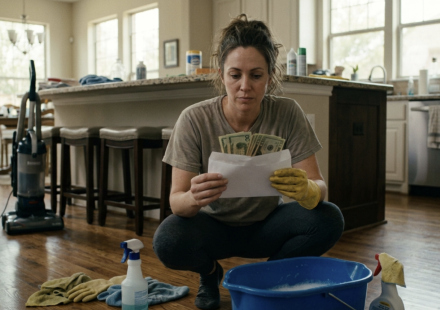









• I covered all the bills, but my mother-in-law still demanded an extra $5,000.

    After covering every expense, my mother-in-law still demanded another $5,000. When I refused, she lost control and threw hot coffee in my face. I left in tears, promising she would regret it. The next morning, she woke up to a harsh surprise waiting for her.

    My mother-in-law demanded another five thousand dollars from me on a Tuesday night, despite the fact that I was already paying for everything in that house.

    The mortgage. Utilities. Property taxes. Groceries. Her medications. My husband’s truck payment after he lost his job. Even the premium cable package she insisted helped her “nerves.” For eleven months, I had supported three adults on one income while working sixty-hour weeks as a senior claims analyst in Dallas. I kept telling myself it was temporary. My husband, Eric, said his mother, Diane, just needed “a little time” after her second divorce and financial issues. That “little time” turned into her taking over my kitchen, criticizing how I cooked, and acting like my paycheck was something she was entitled to.

    That night, I walked in exhausted, dropped my laptop bag by the door, and saw Diane sitting at the breakfast bar in a silk robe, her red nails wrapped around one of my mugs.

    She didn’t greet me.

    She said, “I need another five grand by Friday.”

    I laughed at first, thinking I’d misheard. “Another five grand for what?”

    Her eyes narrowed. “Don’t play dumb. I saw the bonus deposit hit your account.”

    My stomach dropped. She had been going through the mail again, maybe even opening banking alerts that still printed to the shared office printer because Eric never fixed the settings.

    “That money is not yours,” I said.

    “It is if you expect peace in this house.”

    I set my keys down carefully. “I already pay for everything.”

    “And?” she snapped. “You married into this family. Family helps family.”

    I glanced toward the den where Eric was half-watching a game. He had gone completely still, but he didn’t move. That told me everything: he knew this was coming.

    I turned back to her. “What do you need five thousand dollars for?”

    Diane lifted her chin. “That’s none of your business.”

    That was all I needed. I pulled out my phone, opened my banking app, and checked the joint household card linked to my account. There they were—three recent charges from a luxury casino resort in Oklahoma and one from a boutique handbag store in Plano.

    I looked up. “You’ve already been using my card.”

    Eric finally stood. “Lena, just calm down—”

    I stared at him. “You gave her my card?”

    “It was for emergencies,” he muttered.

    Diane slammed her mug down. “Don’t act like I’m stealing from some saint. You have money. I want five thousand, and I want it by Friday.”

    “No.”

    Her expression hardened instantly. “Excuse me?”

    “I said no.”

    The silence barely lasted a second.

    Then she grabbed the mug and hurled the hot coffee straight at my face.

    The pain was immediate—scalding, blinding, shocking enough to force a cry out of me before I could stop it. Coffee splashed across my cheek, neck, collarbone, and blouse. The mug shattered against the tile near my feet. I staggered back into the counter, one hand clutching my skin, tears streaming from pain and disbelief.

    Eric shouted, “Mom!”

    Diane stood there breathing hard, still furious, as if I had done something to her.

    I looked at both of them through burning eyes. “I’ll never forgive you,” I said, my voice shaking. “You’re going to regret this.”

    Then I grabbed my purse, my keys, and the folder from the office drawer Eric had never once asked about—the house deed, in my name alone—and I walked out.

    At 6:12 the next morning, Diane woke to loud pounding on the front door.

    When she opened it, two police officers were standing there.

    And behind them was a locksmith.

    By the time the sun rose, Diane’s idea of “peace in this house” had turned into a criminal assault report, an emergency protective order request, and the fastest legal consultation I had ever paid for.

    After I left, I drove straight to urgent care. The doctor documented first-degree burns across the left side of my face, neck, and upper chest, took photos, and told me to return within forty-eight hours in case blistering worsened. While a nurse pressed cool compresses to my skin, I called my older brother, Mason—a real estate attorney and the only person in my family who never confused kindness with surrender.

    His first question was, “Whose name is on the house?”

    “Mine,” I said.

    “Only yours?”

    “Yes.”

    “Good,” he replied. “Then stop panicking and start documenting.”

    So I did.

    I photographed my injuries. Saved the medical records. Wrote a timeline while everything was still fresh. Uploaded screenshots of the casino and handbag charges. Then Mason connected me with a criminal attorney who made it clear that hot coffee thrown in someone’s face is not “family drama.”

    It is assault.

    I filed the report before midnight.

    The officers were direct. If Diane admitted it was intentional, that mattered. If Eric witnessed it, that mattered. If there were cameras, that mattered most. There were. I had installed indoor cameras six months earlier after prescription pills went missing from the guest bathroom and Diane blamed one of my nieces. I never proved that, but I never removed the cameras either. One was aimed directly at the breakfast bar.

    The footage was undeniable.

    At 4:30 a.m., after reviewing the video and consulting the on-call magistrate, the officers approved a temporary removal order while the protective request moved forward. Mason arranged the locksmith, and I authorized a same-day security reset since the property was legally mine and both Eric and Diane were there by permission, not ownership.

    So when Diane opened the door that morning in her robe and slippers, she was met by officers telling her to step outside.

    According to Mason, her first words were, “This is my son’s house.”

    It wasn’t.

    Eric stumbled into the hallway moments later, disheveled and pale, looking like someone whose decisions had finally caught up with him. He kept saying, “Can we just talk about this?” Funny how people discover the importance of conversation only after consequences arrive.

    I showed up ten minutes later with Mason, the locksmith, and legal paperwork in hand.

    Diane looked at my face and, for the first time, seemed shaken by what she had done. My skin was red and swollen despite treatment, my eye puffy, burns visible down my neck.

    She still said, “It was an accident.”

    One of the officers answered before I could. “Ma’am, the video says otherwise.”

    Eric turned to me. “Lena, please. Don’t do this.”

    I met his eyes. “You watched your mother demand money, admitted you gave her my card, and stood there while she threw boiling coffee in my face.”

    His shoulders dropped. “I didn’t think she’d actually—”

    “Exactly.”

    Mason handed Eric an envelope—revocation of account access, fraud dispute forms already filed. The joint card had been frozen hours earlier. The bank was investigating the charges as unauthorized.

    Diane’s expression shifted to fear. “Wait—what does that mean?”

    “It means,” I said, “the card you treated like your personal allowance stopped working six hours ago.”

    Her mouth fell open.

    Mason added calmly, “And because Ms. Carter is the sole homeowner, both of you are being removed pending further legal action.”

    Eric went pale. “Removed to where?”

    I almost laughed.

    For eleven months, they treated me like an unlimited resource. Not once did they consider what would happen if I stopped paying.

    Now they were finally asking.

    By noon, they were out.

    Not permanently—not yet—but under the temporary order, Diane could not remain after the assault complaint, and Eric chose to leave with her when I made it clear he could not stay without full cooperation, repayment, and a separation agreement.

    He chose his mother.

    That didn’t hurt as much as I expected. It just made things clear.

    The harsh surprise Diane woke up to wasn’t dramatic revenge.

    It was something far worse for someone like her: documentation, legal action, and consequences that couldn’t be shouted away.

    By midmorning, the locks were changed, garage access reset, gate code updated. Security access revoked. My accountant froze the household account and redirected my income. Utilities stayed in my name, of course—but Diane’s phone line, streaming services, and the department store account I had co-signed were canceled or flagged before lunch.

    She sat in the driveway, muttering, while officers supervised. Eric loaded suitcases, glancing at me like I might change my mind.

    I didn’t.

    When Diane realized the fraud dispute included the handbag store, she exploded. “You can’t accuse me of fraud! We’re family!”

    I stood on the porch with an ice pack against my neck. “You stopped being family when you burned my face and tried to extort me.”

    Her voice shook. “I was angry.”

    “So was I,” I said. “I still didn’t assault anyone.”

    That ended it.

    Eric approached me one last time. “Can we talk?”

    “We are talking.”

    His eyes lingered on my injuries, then dropped. “I messed this up.”

    “Yes.”

    “I thought if I kept Mom calm, things would settle.”

    “You didn’t keep her calm. You made her comfortable while she disrespected me, used my money, and treated my home like hers.”

    He swallowed. “What do you want me to do?”

    There it was—the question he should have asked a year earlier.

    “I want a signed separation agreement. Repayment for every unauthorized charge. A written statement about what happened. And I want you to understand that whether this marriage survives depends on what you do next—not what you say right now.”

    He nodded slowly.

    From the driveway, Diane shouted, “Eric, don’t you dare side with her!”

    He closed his eyes.

    Then said, without turning around, “Mom, stop.”

    It was the first decent thing he had done in months.

    Three weeks later, Diane was charged with misdemeanor assault causing bodily injury. She accepted a plea deal—anger management, restitution, and no contact while the case remained active. The bank reversed the casino charges. The handbag purchase was reversed too after store footage confirmed she used the card while falsely claiming I had sent her.

    Eric moved into a temporary hotel, then a small apartment. We began mediation. Whether it ends in divorce or not is still undecided.

    But the morning after Diane threw hot coffee in my face, she learned something she had avoided her entire life:

    Some women cry when you hurt them.

    And then they call the police, the bank, the lawyer, and the locksmith.

    By the time people like Diane realize what’s happening, the real shock isn’t revenge.

  • At Sunday Dinner, My Father Casually Asked About the $200,000 He “Sent Me” — “You Said You Needed It for the House,” He Smiled, But When the Bank Confirmed the Account Was Opened From Our Home IP, Two Officers Soon Stood Under Our Chandelier Asking Who Committed a Felony

    At Sunday dinner, my father casually asked how I’d used the $200,000 he claimed he sent for my house.

    I froze—I had never received a cent. He insisted my sister Brianna had emailed him my “account details.” When he showed us the transfer confirmation, the account bore my name and Social Security number—but it wasn’t mine.

    We called the bank. On speaker, the fraud representative confirmed the account had been opened online using my identity. The login activity traced back to our home IP address. The money had already been drained—used for vendor payments and a certified check toward a downtown condo.

    Trevor, my brother-in-law, went pale. The condo Brianna said was funded by a brand deal.

    Cornered, Brianna claimed it was “family money” and accused Dad of favoritism. She said she needed the condo to maintain her influencer image. Dad’s voice broke when he replied, “You could have asked.”

    He didn’t shield her.

    Within the hour, two officers stood beneath our chandelier. The digital trail led straight to Brianna’s devices. She was charged with identity theft and unlawful appropriation of funds. As they led her out, dinner plates sat half-eaten on the table.

    In the weeks that followed, the bank recovered part of the money and the condo deal collapsed. Brianna accepted a plea agreement—restitution, probation, and community service. Her online persona unraveled; reality replaced filters.

    I visited her once. “I hated feeling second,” she admitted.

    I told her forgiveness and consequences can coexist—but both must be earned.

    Dad later helped me buy a modest house—this time transparently, every document signed together. Trust rebuilt slowly. Family dinners changed too: fewer performances, more honesty.

  • My husband took my sister on a luxury trip and left me behind to be a caregiver. Enjoy your chores, the note said. I cried in despair until my scenile grandma stood up, handed me a black card, and said, “Dry your tears, Valerie. I just froze their bank accounts. Let the games begin.”

    I was driving through a brutal storm when my whole life cracked open.

    Rain hammered the windshield so hard I could barely see the road to Oak Creek. I wasn’t supposed to be home yet. I had been in Cleveland handling contract negotiations for my husband Richard’s logistics company, but the meeting had been canceled at the last minute. Instead of staying in a hotel, I decided to drive five hours through the storm and surprise my family.

    I thought Richard might appreciate a good meal and a little kindness. I even bought a small gift for my sister, Glenda, who had been staying with us after another breakup. Mostly, though, I was worried about Grandma Betty, Richard’s grandmother, who lived with us and had been struggling with memory issues. I hated leaving her behind with Richard and his mother, Doris, because they treated her like an inconvenience.

    When I pulled into the driveway, the house was dark.

    Not dim. Completely dark.

    At seven on a Tuesday night, that made no sense.

    I ran through the rain, unlocked the door, and stepped into a freezing, silent house. No television. No complaints from Doris. No sound of Glenda’s phone. The kitchen was spotless, which was its own warning sign. Then I saw the note on the island, pinned under the salt shaker.

    I knew Richard’s handwriting immediately.

    “Valerie,” it began. “Glenda has been feeling down. Mom and I decided to take her to Hawaii for a week to cheer her up. We used the company card since it technically counts as team building. Didn’t want to bother you while you were working. You’re the responsible one, so we knew you wouldn’t mind holding down the fort. Grandma Betty is on the sofa. Enjoy the quiet. See you Sunday.”

    Hawaii.

    My husband had taken my sister to Hawaii, along with his mother, without telling me. They had used company money I managed. And they had left me behind as caregiver, accountant, maid, and backup plan.

    I sat on the kitchen floor and cried.

    Not just because of the trip. Because of what it meant. I was the wife who kept the company alive, the one who paid bills, fixed problems, cooked meals, and carried everyone else’s weight. And when something good came along, I was the one they left behind.

    Then I felt a hand on my shoulder.

    I turned and saw Grandma Betty.

    Only she wasn’t confused or frail. She stood tall, eyes sharp, voice steady.

    “Dry your tears, Valerie,” she said. “I’ve been waiting for them to make a mistake this big.”

    I stared at her, speechless.

    Everyone thought Betty was slipping. But she had been pretending far more than anyone realized. She led me to Richard’s study, opened a hidden safe, and showed me what he never meant for me to see: trust documents, financial records, and a hard drive full of evidence.

    Then she showed me the footage.

    Hidden cameras had captured Richard and Glenda together in my house. Not just flirting. They were involved. Laughing at me. Planning around me. Using me. Richard called me “a free maid.” Glenda mocked me for being “boring.” They discussed waiting for Betty to die so they could seize full control of the trust and throw me out.

    I thought the worst part would be the affair.

    It wasn’t.

    The worst part was realizing they had built an entire life on my labor while despising me in private.

    Betty was calm. “They think they’re clever,” she said, handing me a black card tied to the master trust account. “I just froze everything.”

    That night, we went to work.

    Betty’s trust actually owned the house and the company. Richard only controlled things because everyone thought Betty no longer understood what was happening. But she had protections built into the trust. The moment she proved she was of sound mind, his authority disappeared.

    By dawn, with the help of her lawyer, we had revoked Richard’s access to the business, frozen the company cards, canceled the family phone plans, and started eviction paperwork. We found proof he’d been skimming money, using shell companies, and funneling company funds toward his affair with Glenda.

    We also discovered something even uglier: Richard had been setting me up as the future scapegoat if his fraud ever surfaced.

    Then came the call from Hawaii.

    Richard was furious, stranded, and humiliated. Their cards had been declined at an expensive resort restaurant. Their hotel room had been locked. Their return flights were gone. Their luggage was being held over unpaid charges.

    He demanded I fix it.

    Instead, I told him the truth.

    “I’m the new CEO,” I said. “And company policy doesn’t cover unauthorized vacations for non-employees.”

    Then Betty leaned into the phone and added, “Hope you enjoy sleeping on the beach.”

    When they came back to Illinois, they expected to storm back into the house and scare me into submission.

    Instead, they found new locks, legal notices, and security waiting.

    Richard screamed. Glenda cried. Doris played the helpless mother.

    None of it worked.

    Richard tried to force his way in and ended up being arrested after smashing a porch decoration and breaking a window. Glenda and Doris were forced off the property. For the first time in years, I watched them leave instead of apologizing to keep the peace.

    But they weren’t finished.

    Richard tried to retaliate with legal tricks and false reports. He used Adult Protective Services against Betty, claiming we were exploiting her. Betty dismantled that lie in minutes. She had medical proof, documentation, and more clarity than any of them expected.

    Then I found the final piece hidden in Richard’s garage: a ledger and digital records showing he wasn’t just cheating and stealing. He was laundering money through the company.

    That changed everything.

    The divorce fight became a criminal investigation.

    At the court hearing, Richard walked in smug, expecting to trap me financially. Instead, federal agents walked in and arrested him for fraud, laundering, and conspiracy. He tried to blame me, but the evidence was overwhelming.

    Watching him led away in handcuffs didn’t feel triumphant.

    It felt like breathing after years underwater.

    Glenda wasn’t done either.

    After Richard’s arrest, she vandalized the bakery I was opening with the savings and control I finally reclaimed. She smashed windows and spray-painted insults across the walls. For one brief moment, standing in the wreckage, I almost broke.

    But Betty stood beside me and said, “We are not victims. We are survivors. Survivors clean up the mess.”

    So we did.

    Friends, workers, neighbors, even my lawyer helped me scrub, repaint, and rebuild. The bakery opened on time. The community showed up in force. Glenda was arrested soon after, caught with paint still on her hands.

    And that was the end of her.

    Over time, I stopped living in reaction to the damage they caused and started building a life that was mine.

    The bakery thrived.

    Richard went to prison.

    Glenda drifted into irrelevance.

    My parents, who had always favored her and excused her behavior, tried to return when they wanted money and sympathy. I refused. I paid for the most basic care to keep them off the street, but I kept them out of my life.

    And Betty?

    She lived long enough to see us win.

    Before she died, she asked me one question: “Did we win?”

    I held her hand and told her yes.

    Because we did.

    Not just legally. Personally.

    I won my own life back.

    Years later, I look at the ocean from a home that is truly mine, beside a man who is kind, steady, and honest. My business is thriving. My peace is real. And the woman who once sat sobbing on a kitchen floor because her husband took her sister to Hawaii without her is gone.

    She di:ed the night she read that note.

    In her place is someone better.

    Someone who learned that revenge isn’t screaming. Sometimes it’s refusing to fix what other people broke. Sometimes it’s locking the door. Sometimes it’s building something so beautiful that the people who tried to destroy you become irrelevant.

    I used to think survival looked loud and dramatic.

    Now I know better.

    Sometimes survival is quiet.

    Sometimes it wears an apron dusted with flour.

    Sometimes it sounds like a lock clicking shut.

  • Hello world!

    Welcome to WordPress. This is your first post. Edit or delete it, then start writing!