Author: Mrs. Susann

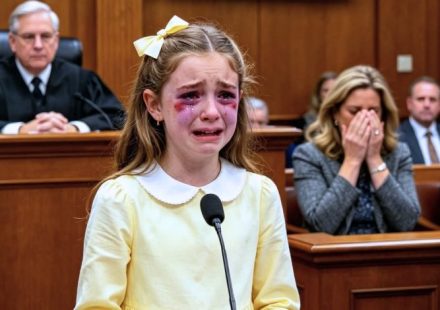
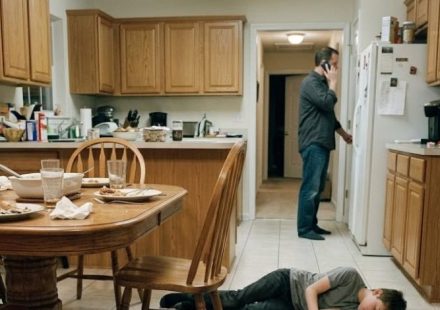
  • Part1: On Easter Sunday, my daughter sobbed, “Dad, please come get me. He hit me again.” Then, there was a scream, a violent crash, and a dead silence. Twenty minutes later, I discovered her bleeding on her husband’s white Persian rug while his mother scoffed and said, “Go Back To Your Lonely Little House.” They mistakenly believed me to be a retired old man driving a rusty pickup. They didn’t know what the phone call had just triggered.

    Part1: On Easter Sunday, my daughter sobbed, “Dad, please come get me. He hit me again.” Then, there was a scream, a violent crash, and a dead silence. Twenty minutes later, I discovered her bleeding on her husband’s white Persian rug while his mother scoffed and said, “Go Back To Your Lonely Little House.” They mistakenly believed me to be a retired old man driving a rusty pickup. They didn’t know what the phone call had just triggered.


    It was a Sunday afternoon in April, the kind of quiet, peaceful Easter I had grown accustomed to since my retirement. The air in my small suburban house was filled with the warm, comforting scent of slow-roasted ham and the faint, sweet smell of the spring daffodils blooming outside my kitchen window. I was sitting at my small dining table, nursing a cup of black coffee, expecting a call from my daughter, Lily, later that afternoon to wish me a happy holiday.

    At exactly 1:04 PM, my cell phone rang. The caller ID flashed Lily. A warm, paternal smile touched my lips.

    I hit accept. “Happy Easter, sweetheart,” I said, my voice full of warmth.

    The sound that came back was not a cheerful greeting.

    “Dad… oh my god… please…”

    Lily’s voice was a shattered, terrified, barely recognizable whisper, broken by a series of ragged, wet sobs.

    “Lily? Honey, what’s wrong?” I asked, my own voice instantly losing its warmth, the comfortable peace of my Sunday afternoon evaporating in a flash of cold, paternal dread.

    “Please come get me,” Lily choked out. “He… he hit me again, Dad. It’s bad this time…”

    Before she could say another word, I heard a sharp, guttural scream on her end of the line, a sound of pure, unadulterated agony, followed immediately by the sickening, metallic thud of what sounded like a phone hitting a hard surface, and then a wall.

    Click.

    The line went dead.

    The coffee cup fell from my hand, shattering against the linoleum floor, but I didn’t even notice. The quiet retiree, the lonely old man my neighbors saw mowing his lawn on Saturdays, vanished. In his place, something else, something much older and far more dangerous, awoke.

    Twenty minutes later, my old, beat-up pickup truck screeched to a halt in front of the massive, wrought-iron gates of the Vance estate.

    Richard Vance, Lily’s husband of five years, was a real estate mogul who had inherited his fortune and possessed an ego so vast it had its own gravitational pull. The estate was a monument to his arrogance—a sprawling, multi-million dollar mansion surrounded by perfectly manicured lawns and high, intimidating stone walls.

    As I punched the security code into the keypad—a code Lily had given me for emergencies—the gates swung open to reveal a scene of grotesque, surreal normalcy.

    On the pristine front lawn, a group of about a dozen children, undoubtedly the offspring of Richard’s wealthy relatives and business partners, were happily running around, hunting for brightly colored plastic Easter eggs. Soft, classical music drifted from outdoor speakers.

    I slammed the truck into park near the front entrance, my heart hammering a frantic, terrifying rhythm against my ribs.

    I stormed up the wide, marble porch steps. The heavy, ornate oak double doors were ajar.

    Just as I reached for the handle, the door was pulled open from the inside.

    Eleanor, Richard’s mother, stood blocking the doorway. She was a woman constructed of sharp angles, expensive silk, and a profound, chilling lack of empathy. She was holding a tall, delicate glass of mimosa, her face a mask of polite, aristocratic disdain.

    Her fake, practiced smile hardened instantly when she saw my face.

    “Oh, Arthur,” Eleanor sneered, deliberately blocking the entryway with her body. “What a surprise. Lily isn’t feeling well. She’s resting upstairs. You don’t need to come in here and ruin our holiday party with your drama. She just needs her space.”

    “Move,” I growled, my voice a low, dangerous rumble.

    “I really think you should leave, Arthur,” Eleanor continued, her tone dripping with condescending pity. “We have important guests here. Just go back to your lonely little house and wait for her to call you when she feels better.”

    She placed a manicured, diamond-ringed hand directly on my chest and gave me a firm, aggressive shove backward.

    A hot, blinding surge of pure, primal rage flared in my chest, wiping away every shred of my carefully cultivated, civilized restraint.

    I didn’t step back.

    I reached out, grabbed her wrist with a grip of solid iron, and forcefully swatted her diamond-adorned arm aside as if she were a fly. I didn’t care about her expensive jewelry or her fragile, old-money bones.

    I threw open the solid oak doors with enough force that they slammed violently against the interior walls of the grand foyer.

    I stepped into the sprawling, cathedral-like living room.

    The floor was scattered with the remnants of a children’s Easter basket—shredded green plastic grass, torn gift wrapping, and brightly colored chocolate eggs.

    But in the absolute center of the room, lying in a broken, unnatural heap on a massive, expensive white Persian rug, was a sight that made a father’s heart stop beating.

    Lily was curled up on the rug, unmoving. A dark, ugly, viscous pool of blood was seeping from a wound on her temple, staining the pristine white wool a sickening shade of crimson.

    And standing over her, casually adjusting the expensive French cuffs of his tailored silk shirt, a smug, self-satisfied, almost bored smile on his face, was Richard.

    2. The Bloody Confession

    “Get away from her!” I roared, the sound echoing off the high, vaulted ceilings of the mansion.

    I sprinted across the room, my boots sinking into the thick, plush carpet. I dropped to my knees beside my daughter, my hands trembling violently as I gently cradled her head.

    Her face was a horrific, swollen mess. Her left eye was already bruised shut, the skin around it a deep, mottled purple. A long, angry red welt, the unmistakable imprint of a human hand, was emblazoned across her neck.

    She was breathing. Shallow, ragged, but breathing.

    “Lily, baby, I’m here,” I whispered, my voice choked with a mixture of terror and rage.

    Lily’s eyes fluttered open. She clung to the fabric of my old flannel shirt, her body trembling like a leaf in a hurricane.

    Richard let out a short, condescending scoff from behind me. He walked casually over to the crystal decanter on the wet bar and poured himself a heavy glass of amber Scotch.

    “Old man, you need to calm down,” Richard sneered, swirling the expensive liquid in his glass. “She’s just being dramatic. She’s a clumsy girl. She tripped and hit her head on the fireplace mantle.”

    I looked down at Lily’s neck. The finger-shaped bruises were undeniable.

    “She tripped,” I growled, looking up at him, “and left handprints on her own neck, did she, Richard?”

    Eleanor walked into the room, her mimosa still in her hand. She looked down at the blood seeping into her five-thousand-dollar rug, and clicked her tongue in annoyance.

    “Oh, for heaven’s sake,” Eleanor sighed, her voice devoid of any human compassion. “Look at the mess. Richard, I told you to call the maid to clean this up before the guests come inside for dinner. This is completely unacceptable.”

    They weren’t looking at a human being. They were looking at an inconvenience. A stain on their perfect, curated, high-society Easter party.

    “You think you can do this?” I asked Richard, my voice dropping to a low, dangerous whisper as I carefully compressed my white-hot, explosive rage into a single, cold, hard block of ice in my chest. “You think you can beat my daughter half to death and just get away with it?”

    Richard took a slow, deliberate sip of his Scotch. He smiled. It was the smile of a man who believed, with absolute, unshakeable certainty, that he was entirely untouchable.

    “Get away with it?” Richard smirked, walking closer. “Arthur, let me explain how the world works to a simple, retired old man like you. My grandfather built this town. My family owns half the businesses on Main Street.”

    He paused, leaning in slightly, his voice dropping to a conspiratorial, mocking tone.

    “The local Chief of Police,” Richard continued, “is currently enjoying a barbecue in my backyard. I donate heavily to his reelection campaign. His son is on a full scholarship to a university, courtesy of a ‘charitable grant’ from my family’s foundation.”

    He stood up straight, his chest puffed out with arrogant, sociopathic pride.

    “So, go ahead, Arthur,” Richard sneered. “Call the cops. Let’s see if they put handcuffs on me, or if they put handcuffs on you for trespassing on my private property and assaulting my mother.”

    I looked into his cold, dead eyes.

    He was right.

    Conventional law, the kind of law that served the wealthy and powerful, would not protect my daughter here. The system in this town was rigged, bought and paid for by the Vance family fortune. They had built a fortress of corruption around themselves.

    So, I wouldn’t use conventional law. I would use my own.

    I carefully, gently scooped Lily’s limp, broken body into my arms. I stood up, cradling her as if she were a small child again.

    “You are going to deeply, profoundly regret what you just said,” I whispered to Richard, my voice devoid of any anger, filled only with a terrifying, absolute finality.

    I turned my back on them and walked out the front doors, leaving Richard laughing hysterically behind me.

    He didn’t know that the moment I stepped out of the gilded gates of his estate, my trembling fingers were already dialing a heavily encrypted, barcode-sequenced number on a satellite phone I hadn’t used in fifteen years.

    3. Activating the Signal

    I placed Lily gently, carefully in the passenger seat of my old pickup truck. I buckled her in, ignoring the bloodstains she was leaving on the worn fabric seats. She whimpered softly in pain, still only half-conscious.

    “Hold on, sweetheart,” I whispered, kissing her bruised forehead. “Daddy’s going to fix this. I promise.”

    I slammed the truck door shut. I didn’t drive to the local hospital—I knew Richard would have the police chief there in minutes, controlling the narrative, ensuring the doctors wrote “accidental fall” on her medical report.

    I reached into the glove compartment of the truck and pulled out my second phone.

    It wasn’t a sleek, modern smartphone. It was an old, heavy, military-grade satellite flip phone, a relic from a life I had tried so hard to bury.

    I flipped it open. The small screen glowed a faint green. I navigated to the single, unlabeled contact in the phonebook and hit dial.

    The phone didn’t ring. There was only a brief, silent burst of static before a deep, gritty, instantly familiar voice answered on the other end of the line.

    “Report, Commander.”

    The title hit me like a jolt of electricity. I hadn’t been “Commander” in over a decade. But to the men I had led, the title was permanent.

    “Ghost,” I said, my voice instantly shedding the soft, gentle tone of a retired grandfather, returning to the ice-cold, razor-sharp cadence of the man I used to be fifteen years ago when I commanded the elite, off-the-books Delta Task Force. “We have a Code Black.”

    There was a dead, heavy silence on the other end of the line. A Code Black was the highest, most severe distress signal, reserved only for extreme, life-or-death situations involving the commander’s immediate family. It had only been used once before.

    “Location?” Ghost asked, his voice instantly devoid of any warmth, all business.

    “The Vance estate, Oakwood Hills,” I replied, starting the truck’s engine with a roar. “My daughter has been severely assaulted. There is a high probability of local law enforcement complicity and cover-up. I require a full, clean sweep.”

    The silence on the line stretched for another full second. Then, I heard a sharp, definitive, metallic click of a rifle chambering a round.

    “Understood, Commander,” Ghost said, his voice a low, terrifying rumble of absolute loyalty. “We are fifteen minutes out. We will not leave a single brick intact, boss. Asset recovery and hostile neutralization are authorized. Get your daughter clear of the blast radius.”

    Click.

    The line went dead.

    I slammed the truck into gear and peeled out of the gated community, heading east, toward the next county line. I was taking Lily to a private, secure medical facility run by a former Army field surgeon who owed me his life.

    Behind me, in their luxurious, insulated mansion, Richard and Eleanor were still drinking expensive Scotch, laughing at the pathetic old man they had so easily dismissed.

    They were completely, blissfully unaware that a pack of highly trained, incredibly dangerous wolves had just been unleashed from the shadows.

    At the Vance estate, the local Police Chief, a fat, complacent man named O’Malley, was raising a crystal glass to toast Richard.

    “Don’t you worry about that crazy old man, Richard,” O’Malley slurred, his face flushed with alcohol. “I’ll have a patrol car stationed outside his house for the next week for ‘harassment’. And I’ll make damn sure the hospital report officially states that your wife just had a clumsy, unfortunate fall.”

    Richard laughed, a loud, booming sound of untouchable arrogance.

    Suddenly, every single lightbulb in the massive, sprawling mansion flickered violently and then went out simultaneously. The classical music playing from the integrated sound system cut off abruptly, plunging the entire estate into a sudden, disorienting darkness and silence.

    And then, from every single direction, the sound of shattering glass echoed through the night.

    4. The Shadow Raid

    The darkness that enveloped the Vance mansion was absolute and suffocating.

    The immediate, panicked screams of the elite, wealthy guests echoed chaotically through the dining room as dozens of bright, blinding red and green laser sights pierced the blackness, sweeping across their expensive suits and silk dresses.

    “What the hell is this?! A power outage?!” Richard yelled, his voice tight with a sudden, sharp spike of panic. “O’Malley! Chief! Do something!”

    The local police chief, O’Malley, fumbled drunkenly at his hip, his hand reaching for the holster of his service pistol.

    He never made it.

    A massive, dark, silent shadow rappelled down from the high, vaulted ceiling of the dining room. A heavy, tactical boot slammed violently into the back of O’Malley’s knees, shattering his kneecaps and sending him face-first onto the hard marble floor with a wet, sickening crunch.

    The cold, steel barrel of a suppressed assault rifle pressed firmly against the side of O’Malley’s head before he could even scream.

    “Federal Bureau of Investigation,” a cold, anonymous voice stated in the darkness, a simple, effective lie to sow maximum terror and confusion.

    The front doors of the mansion, which had been locked and bolted, were not breached. They simply swung open silently, revealing four more massive figures in full, unbadged black tactical gear, their faces obscured by ballistic masks and night-vision goggles.

    They moved with a terrifying, silent, choreographed precision that local law enforcement could never hope to match.

    The guests were not harmed. They were simply herded, terrified and weeping, into a corner of the room by two of the operators, their cell phones and purses confiscated.

    The other four operators zeroed in on their primary targets.

    Four rifle barrels, each with a laser sight painting a small, dancing red dot, pointed directly at Richard’s chest. He froze, his hands shooting into the air.

    He was kicked hard behind the knees, forcing him to collapse to the floor. His hands were yanked violently behind his back and bound tightly with heavy-duty, military-grade zip ties.

    Eleanor shrieked in terror as a tall, slender female operative grabbed her by the hair, dragging her off her chair and pressing her face down onto the expensive, soft fabric of the sofa she prized so highly.

    “Who are you people?!” Richard screamed, his voice cracking with a mixture of terror and wounded pride as his face was pressed into the remnants of his Thanksgiving feast. “Do you know who I am?! I am a millionaire! I will sue you! I will have all of your badges!”

    The emergency backup lights in the mansion suddenly flickered on, casting a dim, eerie, red glow over the scene of chaos.

    The now-splintered front doors swung open again.

    Ghost—my former second-in-command, a man built like a mountain with a face scarred by a dozen forgotten conflicts—walked calmly into the room. He was holding a small, ruggedized military tablet.

    He walked over to where Richard was being held on the floor. He didn’t say a word. He simply tossed a small, encrypted satellite phone, already streaming a live video call, right onto the floor in front of Richard’s face.

    On the glowing screen, my face appeared.

    I was sitting in the stark, white, fluorescent-lit waiting room of the private hospital, my daughter sleeping peacefully, wrapped in warm blankets on a gurney beside me.

    Richard glared at the screen, his chest heaving, his eyes wide with a mixture of profound confusion and absolute, soul-crushing horror as he recognized the face of the man he had just called a “lonely retiree.”

    “Arthur?” Richard panted, spitting out a piece of half-chewed turkey. “What the hell are you doing? Are these your men? What is the meaning of this?!”

    I looked at him through the camera. I looked at the blood on his shirt from Lily’s wound.

    “I told you you would regret it, Richard,” I said, my voice cold and flat, transmitting perfectly through the satellite connection. “You thought you were untouchable behind your money and your corrupt police chief. You were wrong.”

    I paused, a cold, predatory smile touching my lips.

    “And now,” I said, “the evidence collection portion of the evening begins.”

    Ghost looked at me through the camera and nodded. He reached into a pouch on his tactical vest.

    He pulled out a heavy, industrial nail puller.

    5. The Blood Confession

    “No need for the pliers, Ghost,” I said calmly through the video feed. “Let’s be a bit more civilized.”

    Ghost smiled, a terrifying, humorless expression. He tossed the nail puller onto the table and replaced it with a sleek, military-grade laptop, which he immediately connected to Richard’s home network server.

    “We’ve been monitoring your digital traffic for the last hour, Richard,” I explained, watching his face contort with a new wave of panic. “My men hacked into your internal home servers the moment I gave the Code Black. They have everything.”

    Ghost turned the laptop screen toward Richard’s face, showing him a cascading wall of code and brightly highlighted financial data.

    “Your encrypted Cayman Island accounts,” Ghost rumbled, his voice low and menacing. “The detailed transaction history of your money laundering operation with Arthur Vance. And, most damning of all, the archived text messages and wire transfer receipts showing your illegal bribes to the very police chief currently lying face-down and bleeding on your expensive Persian rug.”

    Richard gasped, a wet, choking sound. His arrogance was not just crushed; it was completely, utterly annihilated. He was a cornered animal, stripped of his wealth, his power, and every single one of his illusions.

    “What do you want from me?” Richard whimpered, his voice a pathetic, broken whisper.

    “I want a confession,” I said coldly. “A full, detailed, on-camera confession. I want you to look into this camera and state, for the record, that you and your mother, Eleanor Hale, did knowingly and with malicious intent, physically assault my daughter, Lily Hale, with a golf club this morning.”

    “No… please…” Richard sobbed, tears and snot now mixing with the blood on his face. “If I confess to that, I’ll go to prison for decades!”

    “You will confess to the assault,” I stated, my tone leaving absolutely no room for negotiation, “or, I will have Ghost upload this entire, unredacted financial file directly to the secure servers of the Internal Revenue Service, the FBI’s white-collar crime division, and, just for fun, the primary leadership of the Colombian cartel whose money you’ve been so clumsily laundering.”

    I paused, letting the full weight of the ultimatum sink in.

    “You will not just lose your money, Richard,” I said, my voice dropping to a lethal whisper. “You will lose your life in a federal supermax prison. Your choice.”

    Under the terrified, horrified gaze of his dozens of elite, high-society guests, Richard Hale—the arrogant, untouchable real estate millionaire—broke completely.

    He cried. He sobbed. And with a camera recording his every word, he clearly, meticulously detailed every single horrific blow he and his mother had inflicted upon my daughter. He described the weapon. He described her screams. He described their decision to dump her, bleeding and unconscious, at a bus terminal.

    His mother, Eleanor, who was being held on the sofa, let out a long, keening wail of despair, burying her face in the expensive cushions as she realized her son had just sealed their fate.

    “And,” I added when he had finished, “I want you to confess that you bribed Chief O’Malley to cover it up.”

    “Yes!” Richard sobbed hysterically. “Yes, I paid him! I pay him every month to look the other way! Just please, don’t send those files! Please!”

    Ghost looked at me through the camera, raising an eyebrow.

    “Recordings secured, Commander,” Ghost said.

    I smiled. A cold, hard, and deeply satisfying smile.

    “Excellent,” I replied. “Now, send the files anyway.”

    Part2: On Easter Sunday, my daughter sobbed, “Dad, please come get me. He hit me again.” Then, there was a scream, a violent crash, and a dead silence. Twenty minutes later, I discovered her bleeding on her husband’s white Persian rug while his mother scoffed and said, “Go Back To Your Lonely Little House.” They mistakenly believed me to be a retired old man driving a rusty pickup. They didn’t know what the phone call had just triggered.

    6. The Easter of Life

    Three months later.

    The sterile, antiseptic scent of the hospital had been replaced by the warm, earthy smell of spring rain and blooming roses.

    I was standing in the physical therapy wing of the rehabilitation center, the bright, afternoon sun streaming through the large windows, chasing away the bone-chilling cold of that horrific Thanksgiving day.

    The trial had been swift, brutal, and incredibly public.

    The high-definition video confession, combined with the irrefutable forensic evidence from the hospital and the mountain of incriminating financial data retrieved from Richard’s servers, had left their high-priced defense attorneys with absolutely nothing to work with.

    Marcus and Sylvia Hale were both found guilty of conspiracy and attempted murder. The judge, disgusted by the sheer, calculating cruelty of their actions against a family member, handed down maximum, consecutive sentences. Life in a federal penitentiary, without the possibility of parole.

    Arthur Vance’s sprawling criminal empire, which I had been hunting for years, collapsed like a house of cards. The financial files provided the irrefutable evidence the FBI needed to indict his entire organization. The Vance Investment Group was seized, its assets frozen, and Arthur himself was currently facing a litany of charges that would ensure he spent the rest of his natural life behind bars.

    Chief O’Malley was stripped of his position, his pension, and his freedom, indicted on federal corruption charges.

    They had all thought they were untouchable. They thought their wealth and their wrought-iron gates made them gods. They didn’t know that a father protecting his daughter is more powerful, more relentless, and infinitely more dangerous than any army in the world.

    I watched Lily from across the room.

    She was standing between two long, parallel metal bars, her small hands gripping the rails tightly. The ugly, dark purple bruises had long since faded. The deep laceration on her temple had healed into a thin, faint, silvery scar that was barely visible against her hairline. Her smile, which I had feared I would never see again, had returned, brighter and more resilient than ever.

    She took a deep breath, her face set in a mask of intense, focused concentration.

    She let go of the bars.

    She slowly, deliberately lifted her right leg, the muscles trembling slightly with the effort of relearning a motion that had once been so natural.

    “Come on, sweetie,” I smiled, stepping to the end of the parallel bars and holding my arms wide open. My heart swelled with a profound, overwhelming pride that left me breathless. “You can do it. I’m right here.”

    Lily smiled back at me. It was a bright, genuine, victorious smile.

    She took a step.

    Then another.

    Her balance was unsteady, but she didn’t fall. She took three more determined, unassisted steps, crossing the gap between the bars, before finally falling forward, laughing, into my waiting arms.

    I caught her, wrapping my arms tightly around her shoulders, holding her close, burying my face in her hair. I breathed in the scent of her shampoo, listening to the strong, steady, miraculous thrum of her heartbeat against my chest.

    I had put my satellite phone away in a locked box. I had retired the name “Commander.” The biggest, most important, and most agonizing battle of my entire life was finally, truly over.

    And I had won.

    Not because I had sent three people to prison. Not because I had dismantled a criminal enterprise.

    I had won because as I stood in the warm sunlight, holding my daughter tightly in my arms, feeling her strength and her incredible, unbreakable resilience, I knew that the greatest miracle in the world wasn’t a tactical raid or a perfect legal execution.

    It was the simple, beautiful, undeniable fact that she was still here. Surviving, thriving, and entirely safe in my arms.

  • At 85 years old, my bicycle was stolen, and I saw it advertised online like it was just some piece of junk. I set up a meeting pretending to buy it, but the thief didn’t know I had taught Taekwondo for forty years.

    At 85 years old, my bicycle was stolen, and I saw it advertised online like it was just some piece of junk. I set up a meeting pretending to buy it, but the thief didn’t know I had taught Taekwondo for forty years.

    The Master’s Bicycle: Part II

    It wasn’t a gun. It was worse. It was a keychain.

    An old, black leather keychain, with a scratched metal plate where you could still make out a letter: R. I felt the air catch in my chest. Because that keychain was also mine. Not mine from now. Mine from before. A long time ago. My husband’s. Robert’s.

    The same keychain he carried when he still walked with me through the farmers market, when he would still tell me, “Betty, don’t buy so many hot peppers or you’ll complain later,” when he would still laugh with that dry cough he got from so many years working at the bakery.

    That keychain disappeared the day of his wake. I thought a guest had taken it by mistake. Or that it had fallen among the flowers. Or that, in the midst of the grief, I had lost it myself. But there it was. In the sweaty hand of a kid who had just stolen my bicycle.

    For a second, my grip loosened. And the thief felt it. He yanked his wrist in desperation, trying to break free, but I reacted before he could take a step. I twisted his arm behind his back, brought him down to his knees, and put my hand on the back of his neck—without hurting him, but making it crystal clear that moving was a bad idea.

    —”Where did you get that?” I asked. My voice didn’t sound angry anymore. It sounded cold.

    The kid swallowed hard. —”I don’t know what you’re talking about.” I squeezed his wrist a little tighter. —”Look closely at me, kid. At eighty-five, a woman has no time for cheap lies.”

    My granddaughter came closer, still recording, but when she saw my face, she lowered her phone. —”Grandma… what happened?” I didn’t answer. My eyes were glued to the keychain. It had a dark stain on one corner. A stain I knew well. Robert made it with coffee one morning when he was rushing out because he was running late to open the bakery. He never wanted to replace it.

    —”That keychain belonged to my husband,” I said slowly. “And my husband died nine years ago.”

    The crowd stopped laughing. The park felt strange. Like when a cloud suddenly covers the sun and even the pigeons seem to understand that something changed.

    The thief went still. Too still. —”I… I bought it,” he muttered. —”From who?” —”Some guy.” —”What guy?” —”I don’t know.”

    I barely twisted his hand. —”Yes, you do.” —”Ow! Alright, alright! My mom gave it to me!”

    My granddaughter let out a sigh. —”Grandma, let’s call the cops.” —”They’re already on their way,” a man from the back said. “I called them when the show started.”

    The kid squeezed his eyes shut, as if the word cops had punched him in the gut. —”No, please. Don’t let them take me.” —”You should have thought about that before you stole.” —”You don’t understand, lady.” —”Of course I understand. You liked what didn’t belong to you.”

    —”No!” he yelled, and for the first time, his voice broke. “I didn’t want to sell it for drugs or anything. It was for medicine.”

    I looked at him. I had heard that story many times. At the dojang, on the street, in life. Some people wear pity like a jacket to hide their bad habits. But there was something in his eyes. Fear, yes. Shame, too. And something else. A very young sadness.

    —”Medicine for who?” I asked. He looked down. —”For my brother.”

    I didn’t loosen the hold, but I didn’t squeeze tighter either. —”What’s your name?” —”Danny.” —”How old are you?” —”Twenty-one.” —”Well, for twenty-one you’re a bit too old to be stealing bicycles from old ladies.” —”I didn’t know it was yours.” —”That doesn’t make it any better.”

    Danny was breathing fast. His forehead was beaded with sweat and his knee was shaking against the pavement. His hat had fallen to the side, and without it, he looked less like a street tough. More like a kid. More lost.

    A siren wailed in the distance. He heard it and the color drained from his face. —”Ma’am, please. If they lock me up, my brother will be left alone with my mom. She can’t take care of him. She works cleaning houses. I… I’m the one who gets the money.” —”By stealing.” —”Not always.” —”But today, yes.” He bit his lip. —”Today, yes.”

    My granddaughter approached me slowly. —”Grandma, you don’t have to take care of this.” I looked at her out of the corner of my eye. She was right. I didn’t have to take care of anyone’s mistakes. I just had to take my bike, hand over the thief, and go home to make coffee. That would have been the fair thing. The simple thing. What everyone expected.

    But then my fingers brushed against the keychain. And the memory pulled me like a rope. Robert, sitting in the kitchen, glasses on the tip of his nose, fixing the bicycle chain while telling me: —“Betty, not all bad people were born bad. Sometimes they just ran out of road.” I would reply: —“Well, they better stay off mine.” And he would laugh. He always laughed.

    The squad car pulled up to the edge of the park. Two cops got out fast. One young, the other already graying with the belly of a man who eats too many donuts. —”What happened here?” asked the gray-haired cop.

    Several voices answered at once. —”The kid stole the bike!” —”The lady caught him!” —”She folded him like a pretzel!” —”He has stolen goods!”

    The young cop looked at Danny on the ground, then looked at me. —”Do you have him restrained?” —”Well, I’m not hugging him.” The gray-haired cop let out a little chuckle he tried to hide. —”Ma’am, let him go, we’ll take it from here.”

    I looked at Danny. He wasn’t struggling anymore. He was crying silently, jaw clenched, like those men who think crying makes them less of a man, when in reality what breaks them is pretending they don’t feel.

    —”Before I let him go,” I said, “I want to know where this keychain came from.” I took the keychain from his hand and showed it to the cop. —”This was my husband’s. It went missing nine years ago.”

    The gray-haired cop took it, inspected it, and frowned. —”Are you sure?” —”More sure than I am of my own name.”

    Danny spoke without lifting his head. —”My mom kept it. She’s had it for years.” —”Why?” I asked. —”Because… because she worked with a man named Robert.”

    I felt the world tilt. —”What did you say?” Danny swallowed hard. —”My mom’s name is Theresa. Years ago, she used to clean at a bakery. She says the owner helped her when my dad left us. He’d lend her money, give her bread, kept her job safe when no one else would hire her because she had a sick kid.”

    My hand began to shake. Robert never told me that. Or maybe he did, in his own way, without giving details, like he did when he helped someone and then changed the subject to avoid getting thanked.

    —”Which bakery?” I asked. —”The one on Lincoln Avenue. The Golden Wheat.”

    My heart skipped a beat. It was Robert’s. The park disappeared for a moment. I saw the yellow storefront, the steaming trays, the fresh cinnamon rolls, Robert dusting flour off his apron. I saw him handing bread to a skinny kid standing at the door. I saw him slipping folded bills into an envelope, saying it was for “an errand.” I saw him coming home late some nights, telling me they were backed up with work.

    It wasn’t work. It was kindness.

    —”My brother’s name is Leo,” Danny continued. “He’s been sick since he was little. Kidneys. Right now he needs medicine that insurance doesn’t fully cover. I got a job at an auto shop, but they fired me. Then I delivered food, but my scooter got stolen. And… and I started doing stupid things.” —”Like stealing bicycles,” I said. —”Yeah.” —”And selling other people’s memories.”

    Danny closed his eyes. —”I wasn’t going to sell the keychain. I carried it because… because my mom says Mr. Robert was the only good man we ever knew. That when we had nothing to eat, he gave us bread and never made it feel like charity. I’ve carried it since I was a little kid. I thought it gave me luck.”

    It made me angry. Very angry. But it wasn’t the same anger anymore. Because it’s one thing to confront a nameless thief. And it’s another to look at a kid twisted by desperation, carrying in his pocket the memory of the man you loved.

    The young cop pulled out his handcuffs. —”Alright, kid, get up.” Danny didn’t move. He looked at me. —”Miss Betty, I’m sorry.”

    I don’t know why hearing my name from his mouth hurt more. —”Who told you my name?” —”My mom. She used to talk about you too. She said Mr. Robert had a fierce wife, but a good one. That if we ever met you, we should bring you flowers.”

    My granddaughter touched my shoulder. —”Grandma…”

    I kept looking at Danny. Then I looked at my bicycle. The loose basket. The patched seat. The Virgin Mary. The sad little bell. And I understood that Robert, stubborn as he was, had sent me a test from wherever he was. One of those tests that can’t be solved with a kick, but with something much harder.

    With mercy.

    I let Danny go. The young cop pulled him up immediately and slapped a handcuff on his wrist. —”Ma’am, we need you to come file a report.” Danny hung his head. —”I’ll go,” I said. He closed his eyes, defeated. —”But not for the bicycle theft.”

    Everyone turned to look at me. The gray-haired cop raised an eyebrow. —”Then what?” —”For something more important.” I grabbed my bicycle by the handlebars. “This young man is going to take me to his mother. Right now.”

    —”Ma’am, we can’t allow—” —”Officer,” I interrupted him, “you can arrest him, fill out paperwork, and lock him up for a few hours. He’ll come out worse later, because hungry kids learn fast from the seasoned criminals in there. Or you can come with us, verify that his story is true, and help me decide if we’re dealing with a criminal… or a kid who can still be straightened out.”

    The young cop looked serious. —”The law is the law.” —”And life is life,” I replied. “I’m not saying there shouldn’t be consequences. I’m saying I want to see the root before I chop down the tree.”

    The gray-haired cop observed me with a strange calm. —”You were a teacher, weren’t you?” —”Forty years.” —”It shows.” He signaled to the young cop. “Let’s go. But we’re following right behind you.”

    Danny looked at me like he didn’t understand. —”You’re not sending me to jail?” —”Don’t sing victory just yet, kid. I might end up throwing you in there myself.”

    My granddaughter approached, worried. —”Grandma, this is out of control.” —”No, sweetie. The important part just started.”

    We walked three blocks to an old apartment complex, with peeling paint and planters made out of old paint buckets. The neighbors peeked out when they saw the squad car. A little girl stopped jumping rope. A skinny dog followed us, wagging its tail as if it also wanted to know the ending.

    Danny was quiet. He didn’t look like a thief anymore. He looked like a son. We climbed some narrow stairs to the second floor. He knocked on a blue door with chipping paint. —”Mom,” he said in a low voice. “It’s me.”

    The door opened. A thin woman, hair pulled back, with deep dark circles under her eyes, appeared in the doorway. Seeing the cops, she brought a hand to her chest. —”Danny… what did you do?”

    No one answered. Her eyes shifted from the officers to the bicycle, then to me. And then she went pale. —”Miss Betty?”

    I don’t know what hurt more: that she recognized me, or that she did so with such shame. —”Theresa,” I said, even though I didn’t immediately remember her face.

    She started to cry. —”Forgive me. Please, forgive me. I didn’t know. I swear I didn’t know it was your bicycle.” —”But you did know your son was out stealing.”

    She lowered her eyes. That silence answered for her. From inside, a dry cough echoed. A young, deep cough, like it was scraping from the inside. —”Is that Leo?” I asked. Theresa nodded.

    I walked in without asking permission. The room was small. A table, two chairs, a two-burner stove, an old curtain separating the area where there was a bed. In it was a boy of about fifteen, skinny, with yellowish skin and huge eyes. He had a blanket pulled up to his chest and an open notebook by his side. He saw me and tried to sit up. —”Good afternoon.”

    Polite. Even sick, he was polite. That completely broke me. —”Don’t get up, sweetheart.”

    He looked at Danny, then at the cops. —”What happened?” Danny couldn’t answer. Theresa covered her mouth. I placed Robert’s keychain on the table. —”What happened is that your brother forgot everything a good man did for this family.”

    Danny snapped his head up as if I had slapped him. —”I didn’t forget.” —”Then you misunderstood it. My Robert helped people so they could get back on their feet. Not so they could use his memory as a lucky charm while hurting others.”

    The silence fell heavy. Theresa cried silently. Leo clutched his notebook to his chest. —”I told him not to steal,” he whispered. “I told him I’d rather just endure the pain.”

    Danny broke down. He collapsed into a chair, the handcuff still dangling from one wrist, and started crying like a child. —”I couldn’t watch you like that. I couldn’t, Leo. Not again. Mom comes home exhausted, you’re in pain, I have no job… and everyone saying ‘come back tomorrow,’ ‘we can’t help,’ ‘leave your paperwork.’ It was just the easy way out.” —”The easy way is almost never clean,” I said.

    The gray-haired cop took a deep breath. —”Ma’am, we need to proceed.”

    I looked at him. Then I looked at Theresa, at Leo, at Danny. And I thought of my students. The ones who came to the dojang with rage in their fists and fear on their backs. The ones who were saved not because someone simply forgave them, but because someone forced them to answer for what they did without completely destroying them.

    —”Danny,” I said, “look at me.” He lifted his tear-soaked face. —”You stole something from me that was worth more than money. You stole my independence, a memory, and a gift from my husband. That doesn’t get paid off with a ‘sorry.’” —”I know.” —”You are going to return everything you’ve stolen.” He nodded quickly. —”Yes.” —”You’re going to tell the officers where you sold it, who you hang out with, and who else is stealing at the farmers market.” His eyes widened. —”They’re gonna kill me.” —”Going down this path will kill you faster.” —”Ma’am…” —”And you’re going to work.” —”Where? Nobody will hire me—” —”For me.”

    My granddaughter almost choked. —”What do you mean, for you?” —”The dojang is closed, but I still own the space. It’s been gathering dust for years. It needs sweeping, painting, the leaks fixed. And it needs to be opened again.”

    Theresa looked at me, not understanding. —”Miss Betty…” —”I’m going to run free classes three afternoons a week. For the neighborhood kids. Self-defense. Discipline. Respect. And you, Danny, are going to mop the floor before every class until it shines like a mirror. You’re going to haul the mats. You’re going to fix the neighbors’ bicycles with whatever you learned at the auto shop. And every legal dollar you earn, a cut goes to me to pay for the lock, the basket, the scare, and the shame.”

    Danny blinked. —”And the cops?” I looked at the officers. —”I am going to file a report. I’m going to put what happened on the record. But I’m also going to state that I got my bicycle back, that the young man is cooperating, and that I request restorative justice through community service, if the authorities allow it.”

    The young cop didn’t look convinced. The gray-haired one did. —”We can take him to the precinct and explain the situation to the DA. The lady has the right to press charges and also to seek a restorative agreement if applicable.”

    —”And if he doesn’t follow through?” asked my granddaughter. I leaned in close to Danny. —”If you don’t follow through, I’ll drag you in myself. And believe me, kid, I run slow, but I’ll catch you.”

    Leo let out a weak little laugh. It was the first ray of light in that room. Danny wiped his face with his sleeve. —”I’ll do it.” —”Don’t swear it to me.” I pointed to the keychain. “Swear it to Robert.”

    Danny took the keychain in both hands. They were shaking. —”I swear it to you, Mr. Robert. I screwed up. But I’m gonna fix it.”

    Theresa doubled over in tears. I walked over and, without overthinking it, hugged her. At first, she was stiff. Then she clung to me like someone who is finally allowed to be exhausted. —”Forgive me,” she kept repeating. “I should have stopped him.” —”Yes,” I told her. “You should have. But there’s still time.”


    That afternoon didn’t end in the park, but at the police precinct, among hard plastic chairs, slow paperwork, and clerks who looked bored to death. Danny made his statement. He gave names. Addresses. A stash house where they kept stolen bikes before selling them online.

    And that’s where the case blew up. Because my bicycle wasn’t the only one. That same night, using the intel Danny provided, they found nine more bikes in an abandoned lot behind a tire shop. There was a blue girl’s bike with butterfly stickers. A delivery bike. Two mountain bikes. A red one with a baby seat.

    The next day, my granddaughter’s video went viral. I didn’t want it to. But it did. “Taekwondo Grandma recovers stolen bike and busts theft ring,” a headline read. Grandma. Again. But oh well. At least this time it sounded respectful.

    People started coming by my house. First, a lady thanking me because they recovered her son’s bike. Then a delivery boy with a box of pastries. Then a man who wanted to sign up for classes “if his wife let him.” Even the owner of the local hardware store gave me free paint for the dojang.

    My granddaughter, who at first said I was crazy, was the first to make a sign: ROBERT’S DOJANG — SELF DEFENSE & STRONG HEARTS

    —”Robert’s?” I asked her when I saw it. She smiled. —”Well, he started the helping, so let him keep at it.” I didn’t say anything. I just hugged her.


    Three weeks later, the old place smelled of sweat, Pine-Sol, and hope again.

    Danny showed up on time from day one. With his baseball cap, but without the fake gold chain. He swept. He painted. He fixed the door. He fixed Mrs. Mabel’s bike, the butcher boy’s bike, and even mine—though I told him not to fix the scars on my bike, because those were memories, too.

    Leo started tagging along when he was feeling up to it. He’d sit in a chair by the wall, with his notebook, taking down the names of the kids. Sometimes he rang the bell to signal the change of drills. The off-pitch little bell from my bicycle.

    Theresa brought iced tea on Fridays. The cops dropped by every now and then. The gray-haired one, Officer Miller, ended up signing his granddaughter up. —”So she doesn’t let anyone push her around,” he told me. —”And so she doesn’t push anyone around either,” I replied. Because that was the very first thing I taught. You don’t learn how to punch just to feel big. You learn to defend yourself so you can walk without fear. And also to know when not to strike.

    It took Danny a while to hold his head up. The first few days he walked around like everyone was pointing at him. And yes, some did. Neighborhoods have long memories when they want to, and short ones when it suits them. But he kept showing up.

    One afternoon, after class, I found him standing in front of the photo of Robert I had hung by the entrance. In the picture, he was young, apron covered in flour, flashing that good-man smile he never bragged about.

    Danny had the keychain in his hand. —”Do you think he would have forgiven me?” he asked. I stood next to him. —”Robert would have.” —”And you?”

    I took a moment to answer. Because forgiveness isn’t a blanket you just throw over yourself and that’s it. Forgiveness is sewn together. Stitch by stitch. With actions.

    —”I’m learning,” I told him. Danny nodded. —”Me too.”


    Two months passed. The agreement was being honored. Danny handed over a cut of what he made from repairs. He helped recover other bikes. He cut ties with the crew that got him in trouble. He didn’t turn into a saint—because saints only exist on prayer cards—but he started to become someone who could look in the mirror without lowering his eyes.

    One Sunday, I went to the farmers market on my bike. The same one. With the loose basket, the patched seat, the scratched Virgin Mary, and a brand new chain Danny put on “so nobody swipes it this time, ma’am.” I bought tomatoes, onions, cheese, and cilantro.

    On my way out, I stared at the pole where they had stolen it. I didn’t feel angry anymore. I felt something else. As if the empty space from that day had been filled with something I hadn’t expected. A story. A painful one, yes. But a living one.

    When I got to the dojang, the kids were already lined up. My granddaughter was at the front, trying to get them in order. Danny was setting up the mats. Leo rang the little bell. Ding. Off-pitch. Perfect.

    Everyone went quiet when I walked in. —”Master Betty,” Danny said, standing up straight, “ready.”

    Master. Not granny. Not lady. Master.

    I felt that Robert, wherever he was, was laughing softly to himself. I left my cane by the door. The same cane I didn’t need, but now kept as a souvenir of the day an old bicycle gave me back something much bigger than an object.

    I stood in front of the students. Kids, mothers, a cop with a belly, a lady from the market, a boy who had been a thief and was now learning to stand tall.

    —”Alright,” I said. “Today we are going to practice balance.” A little girl raised her hand. —”So we don’t fall down, Master?” I smiled. —”For that too. But mostly, to learn that when life shoves you, you don’t always have to strike back. Sometimes it’s enough to plant your feet firmly… and decide who you want to be.”

    Danny looked down, but this time not out of shame. Out of respect. I took a step forward. The same step as always. Firm. Precise.

    And as everyone followed my lead, I heard my bicycle outside leaning against the wall, its little bell barely chiming in the wind. Ding. As if Robert was telling me: —“Well done, Betty.”

    And without turning around, I answered him in silence: —“I know, old man. But don’t get too excited. He still needs to learn how to sweep the corners right.”

  • Part1: I put laxative in my husband’s coffee before he left to see his lover, and I watched him swallow it as if he were not drinking down his own shame. I thought the worst part would be watching him run to the bathroom, but two hours later I came home and found something that left me colder than his betrayal.

    Part1: I put laxative in my husband’s coffee before he left to see his lover, and I watched him swallow it as if he were not drinking down his own shame. I thought the worst part would be watching him run to the bathroom, but two hours later I came home and found something that left me colder than his betrayal.

    Carolina stood at my door, pale as paper, holding a baby wrapped in a yellow blanket.
    For one second, I forgot the broken glass behind me.
    I forgot Bruno’s open phone on the floor.
    I forgot the pharmacy bag on the bathroom sink with my name written across it by hand.
    All I could see was the baby.
    Tiny.
    Sleeping.
    One small fist pressed against her cheek
    Her lips moving softly as if she were dreaming of milk, warmth, and a world less cruel than the one waiting outside that blanket.
    Carolina’s eyes were swollen from crying.
    Her red nails were chipped.
    The perfect secretary who used to smile at me in Bruno’s office looked like she had run through three nightmares before reaching my door.
    “Mariana,” she whispered.
    My hand stayed on the door.
    “What are you doing here?”
    She looked over her shoulder toward the street.
    Then back at me.
    “Please. I know you hate me. You have every right. But I need to come in.”
    I laughed once.
    Not because anything was funny.
    Because the situation was so absurd my body did not know what else to do.

    “You came to my house with a baby after sleeping with my husband, and you want me to invite you in?”
    Her face crumpled.
    “I didn’t come because of Bruno.”
    My blood went colder.
    I looked at the baby again.
    “Whose child is that?”
    Carolina’s mouth trembled.
    Before she could answer, the baby stirred and made a soft little sound.
    Not crying.
    Just breathing.
    That sound went through me like a needle.
    Because I had once imagined that sound in this house.
    For years.
    A baby in the kitchen.
    A baby asleep against Bruno’s chest.
    A baby whose tiny socks I would wash and fold and lose under the sofa.
    But after three failed treatments, one miscarriage, and a doctor who said my body needed “rest from disappointment,” Bruno had stopped wanting to talk about children.
    He said we should enjoy our marriage.
    He said maybe motherhood was not for everyone.

    He said it gently.

    With forehead kisses.

    Now there was a baby on my doorstep, and the woman holding her looked terrified of the man who had once comforted me through my own empty crib.

    “Come in,” I said.

    The words surprised both of us.

    Carolina stepped inside carefully, as if the floor might accuse her.

    I closed the door and locked it.

    Twice.

    Just like Bruno always did.

    The house was too quiet.

    The broken glass still glittered on the table.

    Bruno’s phone lay on the floor with her message still glowing.

    I already did what you asked me to do. Now tell your wife the truth.

    I pointed at it.

    “What truth?”

    Carolina stared at the phone.

    Her face twisted with pain.

    “He didn’t tell you.”

    “No. Bruno has been busy lying about strategy meetings.”

    She flinched.

    “I know what this looks like.”

    “Do you?”

    “Yes.”

    “Good. Then start talking before I decide to throw both you and your yellow blanket out.”

    The baby made another little sound.

    I hated myself immediately for saying it.

    Carolina held the child closer.

    “Her name is Lucía.”

    The name landed softly.

    Too softly for the room it entered.

    I crossed my arms.

    “Is she Bruno’s?”

    Carolina looked at me.

    For one strange second, she looked almost sorry for me.

    Then she said, “No.”

    I blinked.

    “No?”

    “No.”

    My eyes moved to the baby.

    Then back to her.

    “Then why are you here?”

    Carolina swallowed.

    “Because Bruno told me to bring her.”

    The room tilted.

    “What?”

    “He said today was the day. He said you already knew something was wrong. He said after he told you the truth, I should bring the baby here.”

    I stared at her.

    My mouth was dry.

    “What truth?”

    Carolina lowered her voice.

    “Mariana… Lucía is not mine.”

    The words did not make sense.

    I looked at the baby.

    Then at Carolina’s empty hands except for the blanket.

    “What do you mean, she’s not yours?”

    “I carried her. I gave birth to her. But she’s not genetically mine.”

    A ringing sound began in my ears.

    Far away.

    High and thin.

    I sat down slowly on the edge of the sofa.

    “Say that again.”

    Carolina’s tears spilled over.

    “She’s yours.”

    My body went completely still.

    The air left the room.

    The baby made a small sigh in her sleep.

    I looked at her.

    At the curve of her cheek.

    The dark hair at her forehead.

    The shape of her tiny mouth.

    My heart gave one violent, impossible beat.

    “No,” I whispered.

    Carolina stepped closer.

    “I’m sorry.”

    “No.”

    “Mariana—”

    “No.”

    The word came out sharper this time.

    The baby startled.

    Carolina immediately rocked her.

    “Shh, mi vida, shh…”

    I stood too fast.

    “Don’t call her that.”

    Carolina froze.

    I had not known where the words came from until they were already in the room.

    My hands were shaking.

    “What are you saying? What are you accusing him of?”

    Carolina reached into the diaper bag hanging from her shoulder.

    Slowly, carefully, she pulled out a folder.

    Not a small folder.

    A thick one.

    Medical papers.

    Lab reports.

    Consent forms.

    Clinic invoices.

    Photos.

    And on the first page, printed clearly beneath a fertility clinic letterhead, was my full name.

    Mariana Alejandra Torres.

    My knees weakened.

    I grabbed the back of the chair.

    Carolina placed the folder on the coffee table beside Bruno’s phone.

    “I didn’t know at first,” she said quickly. “I swear I didn’t know. Bruno told me you and he had embryos stored from your treatments. He said you were too emotionally fragile after the miscarriage to carry another pregnancy. He said you had agreed to a surrogate, but you couldn’t be involved until after the birth because it would break you.”

    My fingers went numb.

    Embryos.

    My treatments.

    The miscarriage.

    Bruno had sat beside me through every injection, every scan, every blood test, every bill.

    He had held my hand when the doctor said there were embryos we could preserve.

    He had told me he would take care of everything.

    I had been too grief-stricken to read every document.

    Too tired.

    Too trusting.

    Carolina kept speaking, her voice shaking.

    “He told me it was a private arrangement. That you didn’t want your family to know. That you had signed. That after the baby was born, he would explain everything gently and bring her home.”

    I looked at the folder.

    I could not touch it.

    If I touched it, it would become real.

    “How old is she?” I asked.

    “Six weeks.”

    Six weeks.

    For six weeks, somewhere in this city, a baby who might be mine had existed while I was washing Bruno’s shirts and wondering why he no longer touched me with tenderness.

    I turned toward the staircase.

    The guest bathroom door was open.

    The window still stood ajar.

    “Where is Bruno?”

    Carolina’s lips parted.

    “What?”

    “He was here when I left. Sick. In the bathroom. When I came back, the front door was open, his phone was on the floor, and he was gone. Where is he?”

    Carolina’s face changed.

    “I don’t know.”

    “You don’t know?”

    “He was supposed to call me. He said he would tell you everything first. Then I got his message to come.”

    I picked up Bruno’s phone.

    It was unlocked.

    Of course it was.

    Maybe he had dropped it before leaving.

    Maybe someone else had.

    The message from Carolina was not the last one.

    There was another thread open beneath it.

    A number saved only as M.

    The last message had been sent at 1:03 p.m.

    You failed to control the secretary. We are taking over now.

    My blood went cold.

    I showed Carolina.

    She went pale.

    “Who is M?”

    “I don’t know.”

    “Don’t lie to me.”

    “I’m not.”

    The baby began to fuss.

    Carolina rocked her with practiced tenderness.

    That tenderness hurt more than the papers.

    Because it was real.

    Whatever she had done, whatever she had believed, she had held that baby through six weeks of midnight hunger and morning sunlight.

    Then I noticed the pharmacy bag again in my mind.

    The one upstairs.

    With my name written on it.

    I grabbed the folder and ran upstairs.

    Carolina followed me with the baby.

    The guest bathroom smelled awful.

    Humiliatingly awful.

    But beneath that was another smell.

    Sharp.

    Chemical.

    On the sink was the white pharmacy bag.

    My name was written on it in black marker.

    Inside were three things.

    A box of postpartum medication.

    A hospital bracelet.

    And a small plastic bottle labeled with my name.

    Not current.

    Old.

    From the fertility clinic.

    A medication used during the embryo retrieval process.

    My hand shook as I picked up the bracelet.

    It did not have my name on it.

    It had Lucía’s.

    Baby Girl Torres-Rivas.

    Torres.

    My last name.

    Rivas.

    Bruno’s.

    A sound came out of me.

    Not a cry.

    Not a scream.

    Something deeper.

    Something a body makes when the truth is too large for language.

    Carolina stood in the doorway.

    “I asked him why the baby’s hospital band had your name,” she whispered. “He said it was legal paperwork. He said you were the intended mother. I believed him until last week.”

    “What happened last week?”

    Carolina looked down.

    “I found messages.”

    “From M?”

    She nodded.

    “They wanted Bruno to transfer legal custody. Not to you. To someone else.”

    My head snapped up.

    “What?”

    Carolina’s voice trembled.

    “They said the baby was worth more than he understood.”

    The bathroom seemed to close around me.

    I gripped the sink.

    Worth.

    They used that word about a baby.

    My baby.

    Maybe my baby.

    “What else?”

    Carolina swallowed.

    “Bruno told them no. He said he only agreed to the surrogacy lie because he thought he could manage everything after the birth. He said he wanted to bring the baby here and force you to forgive him.”

    I let out a broken laugh.

    “That sounds like Bruno.”

    “He said once you saw her, you would accept anything.”

    My stomach turned.

    Accept the betrayal.

    Accept Carolina.

    Accept the lie.

    Accept that my own child had been grown in another woman’s body without me knowing.

    Because love would make me easy to control.

    I looked at Lucía.

    Her eyes were open now.

    Dark.

    Unfocused.

    Searching.

    The world narrowed to those tiny eyes.

    Then the doorbell rang again.

    We all froze.

    Once.

    Twice.

    Three times.

    Carolina backed away from the hallway.

    “Don’t open it.”

    I looked at the security camera through my phone.

    Two men stood outside.

    Not police.

    Not neighbors.

    Dark suits.

    Blank faces.

    One looked directly into the camera and smiled.

    My skin crawled.

    Then my phone rang.

    Unknown number.

    I answered without speaking.

    A man’s voice came through.

    “Mrs. Torres, we need to collect the child.”

    Carolina made a choking sound.

    I held up a hand to silence her.

    “Who is this?”

    “A representative of the legal party responsible for the arrangement.”

    “The arrangement?”

    “The child was not supposed to be delivered to you yet.”

    My eyes moved to the baby.

    Lucía blinked slowly, innocent of the fact that men outside my door were discussing her like a package.

    I lowered my voice.

    “If you think I’m handing a baby to strangers, you’re insane.”

    The man sighed.

    “Your husband created complications. We are here to resolve them.”

    “Where is Bruno?”

    A pause.

    Too long.

    “Unavailable.”

    Carolina began crying silently.

    I walked into the bedroom and opened the drawer where Bruno used to keep an old pistol he insisted was for protection.

    Empty.

    Of course.

    I came back into the hallway and said into the phone, “Leave my property.”

    “This can be done politely.”

    “No.”

    “Mrs. Torres—”

    “I said leave.”

    Then I hung up and called the police.

    My voice did not shake when I gave the address.

    It shook afterward.

    Carolina stood in the upstairs hallway with Lucía against her chest.

    “What do we do?”

    I looked at her.

    “I don’t trust you.”

    “I know.”

    “But I trust them less.”

    She nodded, tears streaming.

    “Tell me where to go.”

    We went into the master bedroom and locked the door.

    Then I dragged the dresser in front of it while Carolina sat on the bed, whispering to Lucía.

    From downstairs came a loud knock.

    Then another.

    The men did not shout.

    That frightened me more.

    They were patient.

    Patient men are worse than angry ones.

    My phone buzzed.

    My cousin.

    I answered instantly.

    “Mariana? I was just about to call. I found something in those bank statements.”

    “Lucía,” I said.

    “What?”

    “The baby. Carolina is here. She says the baby is genetically mine. There are men outside trying to take her. Bruno is gone.”

    Silence.

    Then my cousin’s voice changed completely.

    “Lock yourself somewhere. Police?”

    “Called.”

    “I’m coming with two officers I know. Do not open the door. Do not let Carolina leave with the child. And Mariana?”

    “Yes?”

    “If that baby is connected to your embryos, this is not just infidelity. This is reproductive fraud, medical fraud, possibly trafficking.”

    Trafficking.

    The word landed like ice water.

    I looked at Lucía.

    She was beginning to cry softly now.

    Hungry.

    Scared.

    Alive.

    “Come fast,” I whispered.

    Downstairs, glass shattered.

    Carolina screamed.

    I dropped the phone.

    The men had broken a window.

    The house alarm screamed to life.

    Lucía began wailing.

    I grabbed the heavy lamp from the bedside table.

    Carolina stood, holding the baby with one arm and clutching a blanket with the other.

    “Bathroom,” I said.

    We locked ourselves inside the master bathroom.

    I wedged a chair under the handle.

    Footsteps moved through the house.

    Slow.

    Methodical.

    One man called out, almost politely.

    “Mrs. Torres, this is unnecessary.”

    My hands tightened around the lamp.

    Carolina sank onto the floor, holding Lucía to her chest.

    “I’m sorry,” she whispered over and over. “I’m so sorry.”

    I wanted to hate her.

    I did hate her.

    But hatred was a luxury for people not hiding in a bathroom with a stolen baby and strangers downstairs.

    “Later,” I said.

    “What?”

    “You can be sorry later. Right now, keep her quiet.”

    Carolina nodded and began feeding Lucía with a bottle from the diaper bag.

    The baby’s cries softened.

    The footsteps came upstairs.

    One step.

    Then another.

    The house that had once held my marriage now held the sound of men coming for a child.

    A voice outside the bedroom door.

    “She’s in here.”

    The door handle rattled.

    The dresser held.

    For now.

    Then came the sound of wood cracking.

    I lifted the lamp.

    Carolina closed her eyes.

    Then, suddenly, sirens.

    Not far away.

    Close.

    The footsteps stopped.

    A man cursed.

    The bedroom door crashed open.

    I heard shouting downstairs.

    “Police! Hands where I can see them!”

    More footsteps.

    A struggle.

    A heavy thud.

    Carolina sobbed with relief.

    I did not move until my cousin’s voice called from the bedroom.

    “Mariana! It’s me!”

    Only then did I remove the chair.

    When I opened the bathroom door, my cousin stood there in a navy suit, hair wild, face pale with fury.

    Behind her were two uniformed officers.

    Downstairs, the two men were being handcuffed in my living room.

    The broken glass on the floor glittered like teeth.

    My cousin looked at Carolina.

    Then at the baby.

    Then at me.

    “Is this her?”

    I could not speak.

    Carolina nodded.

    The officer nearest us softened his voice.

    “Ma’am, we need everyone downstairs, but the baby is safe.”

    Safe.

    Again, that word felt too fragile to touch.

    We spent the next seven hours in statements.

    Police.

    Child protection.

    Medical questions.

    Names.

    Dates.

    Clinic records.

    Bruno’s messages.

    Carolina’s documents.

    The pharmacy bag.

    The hospital bracelet.

    The men outside.

    Their IDs were fake.

    Their car was rented.

    One had a burner phone with Bruno’s number in it.

    Bruno himself remained missing.

    By midnight, Lucía was asleep in a portable crib a female officer had brought from social services.

    Carolina sat at the kitchen table, wrapped in a blanket, giving her statement.

    I sat across from her.

    Not beside her.

    Across.

    There were things I still could not forgive.

    Maybe would never forgive.

    But I listened.

    She told the full story.

    Bruno had approached her at work with kindness at first.

    Then favors.

    Then compliments.

    Then the affair.

    He told her his marriage was empty.

    He told her I was cold.

    He told her he wanted a child desperately but I had “given up.”

    Then came the proposal.

    Carry an embryo.

    Help him “save his family.”

    He would pay her.

    He would take care of her.

    He would explain everything later.

    Carolina had debts.

    A sick father.

    A younger brother in school.

    Bruno knew all of that.

    “He chose me because I was desperate,” she whispered.

    My jaw tightened.

    That did not absolve her.

    But it explained the shape of the trap.

    “Did you sign papers?”

    “Yes.”

    “With whose lawyer?”

    “Bruno’s.”

    Of course.

    “Did you ever meet anyone from the clinic alone?”

    “No. Bruno came to every appointment.”

    My cousin, listening from the counter, cursed under her breath.

    “What made you realize something was wrong?” she asked.

    Carolina looked at Lucía sleeping in the crib.

    “When she was born, they took her away for almost an hour. Bruno argued with someone in the hallway. I heard him say, ‘She is Mariana’s, and I decide when she knows.’ Then another man said, ‘That was not the agreement.’”

    My blood turned cold.

    Carolina continued.

    Part2: I put laxative in my husband’s coffee before he left to see his lover, and I watched him swallow it as if he were not drinking down his own shame. I thought the worst part would be watching him run to the bathroom, but two hours later I came home and found something that left me colder than his betrayal.

    “I demanded the baby back. Bruno told me I was emotional. But the nurse gave her to me because I was the one who delivered her. After that, Bruno kept delaying. He said he needed the right time to bring her here.”
    She looked at me.
    “Last night, I found messages about transferring the baby to a private adoption contact. I told Bruno I would go to the police. He panicked. He said he would tell you today.”
    I thought of the coffee.
    The laxative.
    His scream in the garage.
    Some absurd part of me almost laughed.
    I had thought I was ruining his romantic morning.
    Instead, I had disrupted whatever plan had already been moving beneath our house.
    “Why did he run?” I whispered.
    My cousin looked at Bruno’s phone.
    “Maybe the men arrived before you did. Maybe he escaped through the bathroom window.”
    “And left his phone?”
    “Panic makes people stupid.”
    I thought of Bruno doubled over, sweating, furious.
    For once, his body had betrayed him at the exact moment his lies collapsed.

    The next morning, the DNA process began.
    Emergency petition.
    Court order.
    Child protection involvement.
    Medical review.
    The fertility clinic denied everything at first.
    Then my cousin arrived with police and document preservation orders.
    Their attitude changed.
    By afternoon, we had enough to prove that embryo records had been altered.
    By evening, a nurse from the clinic called my cousin privately.
    “I knew something was wrong,” the nurse said. “But Dr. Larios told us the wife had signed everything.”
    The wife.
    Me.
    I had signed nothing.
    At least nothing knowingly.
    But in the file, there were consent forms with my name.
    My signature.
    Not mine.
    My initials.
    Not mine.
    A copy of my passport.
    A scanned ID from Bruno’s files.
    All used to build a lie around my body.
    My grief.
    My embryos.
    My child.
    Lucía remained in temporary protective custody, but because Carolina had brought her to me and cooperated fully, she was allowed supervised contact.
    So was I.

    The first time a social worker placed Lucía in my arms, I almost collapsed.
    She smelled like milk and baby shampoo.
    Her head fit beneath my chin.
    Her tiny hand opened against my blouse.
    I looked down at her and saw, or imagined I saw, my mother’s mouth.
    My own brow.
    Bruno’s dark hair.
    I wanted to love her immediately.
    I did love her immediately.
    But love arrived tangled with horror.
    There is no clean way to become a mother through a crime.
    Carolina sat across the room, crying quietly.
    I did not comfort her.
    Not then.

    Lucía blinked up at me.

    Her dark eyes unfocused but calm.

    “Hello,” I whispered.

    My voice broke.

    “I think I’m your mother.”

    The DNA results came five days later.

    I opened them in my cousin’s office.

    Carolina was there.

    So was the social worker.

    The report confirmed it.

    Lucía was my biological daughter.

    Bruno was her biological father.

    Carolina was not genetically related.

    The room blurred.

    My cousin put a hand on my shoulder.

    Carolina covered her face and sobbed.

    I read the words again.

    Probability of maternity: 99.999%.

    My daughter.

    My stolen daughter.

    My hidden daughter.

    My six-week-old baby who had almost been taken by strangers because the man I married believed women, wombs, babies, and truth were all things he could arrange around his convenience.

    Bruno was arrested two days later at a cheap motel outside Puebla.

    He had shaved his beard.

    Dyed his hair badly.

    Used cash.

    He looked ridiculous in the police photo.

    Smaller than I remembered.

    Maybe he had always been small, and I had lent him height by loving him.

    When he called from holding, I almost did not answer.

    My cousin said I did not have to.

    But I wanted to hear his voice without believing it.

    “Mariana,” he said.

    He sounded exhausted.

    “Where is Lucía?” I asked.

    Silence.

    Then softly, “So Carolina told you.”

    “She told me enough.”

    “I was going to explain.”

    I laughed.

    That laugh came from somewhere ugly and necessary.

    “When? After selling her? After bringing her here? After letting me thank you for making me a mother?”

    “I was not selling her.”

    “No?”

    “No. It got complicated.”

    “Babies are not business deals, Bruno.”

    He inhaled shakily.

    “I made mistakes.”

    “You created a child behind my back using embryos I thought were safely stored. You deceived a desperate woman into carrying her. You forged my consent. You hid my daughter for six weeks. Then men came to my house to collect her.”

    His voice lowered.

    “I never meant for them to go to the house.”

    That was not a denial.

    My blood chilled.

    “Who are they?”

    No answer.

    “Who is M?”

    Still nothing.

    “Bruno.”

    His voice cracked.

    “I owed money.”

    The floor seemed to tilt.

    “What?”

    “Investments went bad. Loans. Men you don’t just ignore.”

    I closed my eyes.

    The expensive dinners.

    The missing savings.

    The strange withdrawals.

    The hotel rooms.

    The perfume.

    All of it had looked like an affair.

    But beneath the affair was debt.

    And beneath the debt was my daughter.

    “They found out about the embryos,” he whispered. “They knew a private adoption network. They said people would pay.”

    I pressed the phone so hard against my ear it hurt.

    “You were going to sell our child?”

    “No!” he cried. “I was trying to fix it. I was going to bring her to you. Once you saw her, you would help me. You would pay anything.”

    There it was.

    The real confession.

    Not love.

    Not regret.

    Calculation.

    He thought my motherhood would become his ransom note.

    I hung up.

    The trial became news.

    Of course it did.

    A stolen embryo.

    A secretary surrogate.

    A missing husband.

    Men breaking into a house in Del Valle.

    A baby almost sold through a private network.

    Reporters camped outside.

    Neighbors stared.

    Women online argued about Carolina.

    Some called her a victim.

    Some called her a homewrecker.

    Both things could be true in different proportions.

    That was the part people hated.

    They wanted clean roles.

    Villain.

    Victim.

    Mother.

    Mistress.

    But real life is more uncomfortable.

    Carolina had betrayed me.

    She had also been exploited.

    She had carried my daughter safely.

    She had brought Lucía to my door instead of handing her to the men.

    I did not know what forgiveness would look like.

    But I knew the truth required all its pieces.

    In court, Bruno tried to say I had agreed to everything and later “forgot” because of emotional distress.

    That lasted until my cousin played the messages.

    Until the clinic nurse testified.

    Until Carolina testified.

    Until the financial records showed debts, payments, forged consents, and contact with illegal brokers.

    Until Bruno’s own call from jail was entered.

    “You would pay anything.”

    The prosecutor repeated that line three times.

    Each time, Bruno looked smaller.

    Carolina testified for two days.

    She cried through most of it.

    At one point, Bruno’s lawyer tried to paint her as a jealous mistress who had invented the baby scheme after being rejected.

    Carolina looked at him and said, “I loved a man who lied to me. That made me foolish. It did not make those documents fake.”

    I looked at her then.

    Really looked.

    For the first time without only hatred.

    She was twenty-six.

    Tired.

    Ashamed.

    Still lactating for a baby she no longer had in her arms every night.

    A woman who had made terrible choices and then, when the final choice came, had chosen to bring Lucía to me.

    That mattered.

    Not enough to erase.

    Enough to remember.

    Bruno was convicted on multiple charges.

    Fraud.

    Forgery.

    Reproductive coercion.

    Child trafficking conspiracy.

    Assault-related charges tied to the men who broke into my house.

    The clinic doctor lost his license and faced separate proceedings.

    The private adoption network cracked open wider than anyone expected.

    Several babies were found.

    Several women came forward.

    Several families learned truths that broke and remade them.

    Lucía, without knowing it, had pulled a thread that unraveled an entire hidden industry.

    She was nine months old when the custody order became final.

    I became her legal mother.

    Sole guardian.

    No contact with Bruno.

    Carolina requested one thing through the court.

    Not custody.

    Not rights.

    A letter.

    One letter placed in Lucía’s file for when she was old enough.

    I read it first.

    It began:

    Dear Lucía, I carried you before I understood the truth. When I learned enough to be afraid, I chose the door that led to your mother. I am sorry for every choice that made your beginning painful. I hope one day you know that even inside a lie, you were loved by more than one woman.

    I cried for an hour after reading it.

    Then I approved it.

    Carolina moved away from Mexico City.

    She sent updates through my cousin for a while.

    Her father recovered.

    Her brother graduated.

    She never contacted me directly.

    I appreciated that.

    Bruno sent letters from prison.

    I did not read them.

    My cousin kept them in a file.

    Evidence, if needed.

    Trash, emotionally.

    Lucía grew.

    She laughed before she crawled.

    She hated peas.

    She loved music.

    She had a stubborn little frown that looked unfortunately like Bruno, but I learned not to fear it.

    Children are not their fathers’ crimes.

    One day, when she was two, she found the black coffee cup in the back of a cabinet.

    Best husband.

    I had forgotten to throw it away.

    She banged it against the floor until the handle broke.

    I laughed so hard I cried.

    Then I threw it away.

    For a long time, I blamed myself.

    For not reading every fertility form.

    For trusting Bruno.

    For turning my suspicion into a laxative joke instead of going to the police sooner.

    For not knowing my daughter existed.

    Therapy helped.

    So did motherhood.

    Babies are very rude to guilt.

    They need bottles, diapers, songs, clean blankets, vaccines, sleep routines, and someone willing to look ridiculous making airplane noises with mashed banana.

    Guilt can wait its turn.

    Years passed.

    Lucía learned to walk in the living room where men had once broken glass.

    I replaced the window.

    I replaced the table.

    I replaced the locks.

    I replaced my last name.

    Back to Torres.

    Mine.

    My mother’s.

    One evening, when Lucía was four, she asked why there were only pictures of her as a baby after she was already big enough to smile.

    I sat very still.

    The question had come earlier than I expected.

    Children find locked doors by accident.

    I touched her hair.

    “Because when you were very tiny, Mommy didn’t know where you were yet.”

    She frowned.

    “Was I lost?”

    I swallowed.

    “A little.”

    “Did you find me?”

    I looked at her.

    At those dark eyes.

    At the child who had been hidden from me, carried by another woman, nearly taken by strangers, and delivered to my door wrapped in yellow.

    “Yes,” I said. “You came home.”

    She seemed satisfied.

    For now.

    One day, she will know more.

    Not everything at once.

    Not before her heart can hold it.

    But she will know.

    I will tell her that she was not born from shame.

    She was born through a crime, yes.

    Through lies, yes.

    Through betrayal, yes.

    But she herself was never the betrayal.

    She was the truth everyone tried to move around.

    The living proof.

    The heartbeat that refused to remain hidden.

    I will tell her that a young woman named Carolina made terrible mistakes but carried her safely and chose not to hand her to danger.

    I will tell her that her father broke laws, vows, and bodies of trust, and that he faced consequences.

    I will tell her that motherhood did not begin for me in a hospital room.

    It began at my own front door, when a woman I hated stood there pale and shaking with a baby in a yellow blanket.

    It began in terror.

    It became love.

    Sometimes I still think about that morning.

    The perfume.

    The coffee.

    The little bottle in my hand.

    Bruno swallowing without gratitude.

    His scream from the garage.

    The absurd satisfaction I felt when he ran to the bathroom.

    I thought I had made him swallow his shame.

    I had no idea shame was only the smallest thing in that house.

    Behind it were forged papers.

    Stolen embryos.

    Debt.

    A baby hidden in another woman’s arms.

    Men waiting outside doors.

    A life I had dreamed of, born in secret while I was mourning it.

    I once believed betrayal was the worst thing a husband could do.

    I was wrong.

    Betrayal can break a marriage.

    But stealing a woman’s chance to know her own child?

    That breaks the world.

    And yet, somehow, from that broken world came Lucía.

    My daughter.

    My miracle with dark hair and a laugh like bells.

    The child who taught me that truth can arrive wrapped in the arms of someone who hurt you.

    That love can begin with terror.

    That motherhood is not always clean, but it can still be sacred.

    And that sometimes, the doorbell you dread most is the one that brings your life back.

    Bruno left that morning perfumed for his lover.

    He thought he was going to choose between two women.

    He thought he was the secret-keeper.

    The father.

    The man in control.

    But by nightfall, his phone was on the floor, his lies were in a folder, police were in my living room, and the baby he tried to use as leverage was asleep in my arms.

    The coffee had only delayed him.

    The truth destroyed him.

    And Lucía?

    She saved me.

  • Retired Dad Was Mocked Over His Pension Until The Envelope Came Out-thuyhien

    Retired Dad Was Mocked Over His Pension Until The Envelope Came Out-thuyhien

    Discover more
    Packaging
    Textiles & Nonwovens
    Patio, Lawn & Garden

    The night my daughter laughed at my pension, the house smelled like ribeye, roasted vegetables, warm butter, and a kind of hope I should have known better than to bring to the table.

    Envelopes
    arrow_forward_ios
    Read more

    I had set out the good plates.

    Kitchen & Dining

    Blue rim, thin edge, wedding gift from a life that had been gone long enough for the cabinet hinges to squeak every time I opened them.

    Image

    The candles were not fancy.

    They were the grocery store kind, two for six dollars, but the flames made the dining room look softer than it had in years.

    Discover more
    Envelope
    paper
    envelope

    I wanted the evening to feel like a small ceremony.

    Not grand.

    Not dramatic.

    Just enough for a man closing a thirty-five-year chapter of his life.

    At 6:18 p.m., I carried the steaks in from the kitchen and placed one plate in front of my daughter, Sarah, and one in front of her husband, Michael.

    Sarah had come in wearing her work blouse and that tired expression people get when they believe everyone around them is one more task.

    Michael barely looked up from his phone.

    His thumbs moved across the screen while I poured the wine.

    I poured his first.

    That still embarrasses me a little.

    Even now, after everything, I remember the small habits of respect I kept offering people who had already decided I was beneath them.

    “Dinner smells good,” Sarah said, but she said it the way people say something because silence would be rude.

    “Thanks,” I told her.

    I waited until they had both sat down.

    I waited until Michael finally put his phone face-down beside his knife.

    Then I lifted my glass.

    “I wanted tonight to be special,” I said. “I have news.”

    Sarah looked up.

    Michael cut into his steak.

    “As of last Friday,” I said, “Peterson and Associates is officially closed. Thirty-five years, and I am retired.”

    The word retired landed strangely in the room.

    Sarah did not smile.

    She did not raise her glass.

    She blinked once and said, “Retired?”

    “That’s right,” I said.

    I tried to make my voice light.

    “New beginning.”

    Michael chewed slowly.

    Sarah’s eyes narrowed the way they used to when she was a teenager trying to work out how my answer affected her plans.

    “Wait,” she said. “What about your pension?”

    It was not an unreasonable question.

    I had expected it eventually.

    I had not expected the tone.

    “Social Security,” I said. “Around twelve hundred a month. I don’t need much.”

    The room went still.

    The refrigerator hummed down the hallway.

    The candlelight moved over the wine glasses.

    Then my daughter laughed.

    Not a soft laugh.

    Not a surprised laugh.

    A sharp little burst, as if I had accidentally said something ridiculous in public.

    “Twelve hundred?” she said.

    Michael finally looked at me.

    “That’s it?”

    “That’s it,” I said.

    Sarah shook her head and set her fork down.

    “Dad, my car payment is more than that. How exactly do you think you’re going to live?”

    “Within my means,” I said.

    It was an old answer.

    A boring answer.

    The kind of answer that built the table they were eating from.

    Michael leaned back and gave a short laugh through his nose.

    “Maybe you should have thought about that before shutting down your income.”

    I felt the first cold edge of the evening then.

    It was not anger yet.

    It was recognition.

    The body often understands disrespect before the heart is willing to name it.

    Sarah reached for her wine.

    “This is serious,” she said. “Doctors, utilities, food, emergencies. You can’t survive on that.”

    “He survives because he lives here,” Michael said.

    He said it without looking at me.

    Then he looked at me and smiled.

    “Because we don’t charge him rent.”

    That was the first moment my hand tightened around the stem of the glass.

    My house had been paid off for twelve years.

    My name was on the deed.

    My late wife’s rosebushes were still along the back fence.

    The scratch near the pantry door came from the year Sarah tried to move her first dresser by herself and put a corner straight through the paint.

    I had never made her feel ashamed for coming home after her divorce.

    I had never asked Michael for rent when he moved in and promised it would only be six months.

    Those six months had become three years.

    Three years of groceries I quietly covered when Sarah said the week was tight.

    Three years of lawn work Michael always meant to get to.

    Three years of watching a grown man call my house “our place” while never once asking how the taxes got paid.

    I looked from him to my daughter.

    “What exactly are you suggesting?” I asked.

    Michael lifted his wineglass and swirled it.

    He liked gestures like that.

    They made him feel like a man in charge of a room.

    “I’m saying we need to be practical,” he said.

    Sarah did not stop him.

    That mattered.

    People think betrayal is always loud.

    Most of the time, it is someone looking down at their plate while another person says the cruel thing out loud.

    “You can stay,” Michael continued. “But things change. You’ll be home all day now. You can clean, cook, do the grocery runs, keep up the yard.”

    He paused.

    The corner of his mouth lifted.

    “And stop acting like this is your house.”

    The fork in Sarah’s hand froze halfway above her plate.

    She still did not speak.

    Outside, a car rolled past the front window, headlights sliding briefly across the wall.

    For one ugly heartbeat, I wanted to stand up and shout.

    I wanted to point to every board, every bill, every repair, every winter I had spent alone fixing something no one noticed unless it stopped working.

    I wanted to remind Sarah who answered when she called at 2:13 a.m. crying from a parking lot after Michael’s first big failure.

    I did none of that.

    An accountant learns early that numbers do not get stronger because you yell them.

    They get stronger because they are documented.

    So I sat there and listened.

    Michael mistook my silence for weakness.

    “You have two options, old man,” he said. “You stay here and make yourself useful, or you go out on the street and start begging.”

    Sarah flinched at the word begging.

    Only a little.

    Not enough.

    I looked at her.

    For a second, I did not see the woman across from me.

    I saw the eight-year-old girl who used to leave math homework on my office chair because she liked the way I explained fractions with pennies.

    I saw the teenager who refused to cry after her first breakup until I brought her a paper cup of diner coffee and sat beside her in the parking lot.

    I saw the young mother she never became, the wife she tried to become, the daughter I kept rescuing because fathers can confuse love with repeated permission.

    Then I saw her as she was that night.

    Silent.

    Comfortable enough with my humiliation to let her husband finish the sentence.

    “So what’s it going to be?” Michael asked.

    I set my wineglass down carefully.

    The sound was small, but it made both of them look at my hand.

    “Before I answer,” I said, “I want to make sure I understand.”

    Michael smirked.

    “Understand what?”

    “You believe I live here because you allow it.”

    “That’s reality,” he said.

    “You believe my retirement income means I have no choices.”

    Sarah finally spoke.

    “Dad, don’t make this dramatic. We’re trying to help you face facts.”

    That sentence nearly made me laugh.

    Face facts.

    All my life had been facts.

    Receipts.

    Ledgers.

    Transfers.

    Dates.

    Signatures.

    At 2:40 p.m. that same afternoon, my attorney had finalized the latest amendment to my trust.

    At 3:12 p.m., I had received confirmation that copies of six property deeds were scanned and stored.

    At 4:05 p.m., I had scheduled one email for Monday morning, addressed to the property manager who handled the two duplexes across town.

    At 4:37 p.m., I had placed two envelopes inside my jacket pocket.

    I had not planned to use them that night.

    I had hoped, foolishly, that I would not have to.

    Hope is a soft thing.

    Paper is harder.

    I reached into the inside pocket of my jacket.

    Michael’s smile faded by a fraction.

    Sarah sat straighter.

    I pulled out the first white envelope and laid it beside my untouched steak.

    It was plain.

    No gold seal.

    No theatrical flourish.

    Just a legal envelope with my attorney’s card clipped to the front.

    Michael stared at it.

    “What is that?” he asked.

    “A reminder,” I said.

    “Of what?”

    “Of whose house you’re sitting in.”

    The sentence changed the air in the room.

    Sarah looked at the envelope, then at me.

    Michael reached for it.

    I placed my hand on top before his fingers touched the paper.

    “No,” I said.

    It was the first time all evening I saw uncertainty cross his face.

    Not fear yet.

    Uncertainty.

    Men like Michael do not become afraid right away.

    First they become offended that the person they were stepping on has moved.

    “Open it,” Sarah whispered.

    I looked at her.

    “Are you asking as my daughter or as his wife?”

    Her mouth parted.

    No answer came.

    That was an answer too.

    My phone buzzed against the table.

    The screen lit up.

    7:02 p.m.

    One message from my attorney.

    Ready when you are. The house occupancy notice is attached.

    Sarah saw enough of it before I turned the phone facedown.

    The color drained from her face.

    Michael stood so quickly his chair scraped backward across the hardwood.

    “What notice?” he demanded.

    “Sit down,” I said.

    He laughed once, sharp and ugly.

    “You don’t get to order me around.”

    “In this house,” I said, “I do.”

    The old refrigerator kept humming.

    The candles kept burning.

    The expensive steaks cooled on the plates.

    An entire table had taught me, in less than ten minutes, that love without boundaries turns into permission for people to treat you like furniture.

    I opened the envelope.

    Inside was the occupancy letter my attorney had prepared, along with a copy of the deed.

    I slid the deed across the table first.

    Michael looked at it like paper might change shape if he glared hard enough.

    Sarah touched only the corner.

    “Dad,” she said. “Why would you do this?”

    “I didn’t do anything tonight,” I said. “I prepared for what you showed me tonight.”

    Michael jabbed a finger at the paper.

    “This doesn’t mean you can throw us out.”

    “No,” I said. “The law handles timelines. I know timelines.”

    That was true.

    I had no interest in screaming at them to leave in the middle of dinner.

    I had no interest in making a scene the neighbors could hear.

    The plan was legal, calm, and already documented.

    The occupancy letter stated that their informal living arrangement was ending.

    The trust amendment removed Sarah as a successor beneficiary until further review.

    The property manager would begin handling all house-related communication.

    And every dollar I had been quietly covering for them would stop immediately.

    No more grocery transfers.

    No more car insurance rescue payments.

    No more credit card minimums tucked into Sarah’s account with a note that said, Last time, sweetheart.

    There had been too many last times.

    Michael grabbed the second page.

    His eyes moved fast.

    Then slower.

    Then not at all.

    “Trust?” he said.

    Sarah looked at him.

    “What?”

    He did not answer.

    She took the paper from him and read the paragraph he had stopped on.

    That was where she saw the number.

    Ten million dollars.

    Not in a checking account.

    Not sitting loose for anybody to grab.

    In a trust built over years of disciplined investing, paid-off properties, careful exits, and the kind of boring patience that people mock until they need it.

    Sarah’s hand started to tremble.

    “You have ten million dollars?”

    Michael turned toward me so fast his napkin slid off his lap.

    His voice changed.

    That was almost funny.

    Not softer exactly.

    Recalculated.

    “Okay,” he said. “Okay, maybe we all got heated.”

    “No,” I said. “You were calm. I remember that part very clearly.”

    Sarah had tears in her eyes now.

    I did not know whether they were for me, for herself, or for the money she had just learned she could lose.

    That uncertainty hurt more than I expected.

    “Dad,” she whispered. “I didn’t know he was going to say it like that.”

    “But you knew what he meant.”

    She looked down.

    Again, no answer.

    Michael tried again.

    “We can talk about this as a family.”

    “We were talking as a family,” I said. “That was the problem. You finally spoke honestly.”

    He pointed toward the paper.

    “You can’t just cut Sarah off. She’s your daughter.”

    That sentence told me everything about him.

    He did not say he loved her.

    He did not say she loved me.

    He said daughter like it was a password to an account.

    I picked up the second envelope.

    Sarah saw her name written across the front.

    Her expression folded.

    “What’s that?” she asked.

    “A choice,” I said.

    Michael scoffed, but he did not sound confident anymore.

    I opened it and removed a single typed page.

    No lecture.

    No revenge speech.

    Just terms.

    Sarah could stay connected to the trust review only if she moved out within the legal timeline, attended financial counseling, and spoke with me without Michael present.

    Not because I wanted to control her marriage.

    Because I had spent three years watching my help disappear into a household where gratitude never survived contact with entitlement.

    Sarah read the page twice.

    Michael tried to take it from her.

    She pulled it back.

    That was the first thing she had done all night that was not for him.

    He noticed.

    His face hardened.

    “You’re really going to let him manipulate you?” he said.

    Sarah looked at him then.

    Not at me.

    At him.

    The room held its breath.

    “You told my father to beg,” she said.

    Michael rolled his eyes.

    “I was making a point.”

    “No,” she said. “You were enjoying it.”

    It was a small sentence.

    It was also the first honest one she had spoken all evening.

    I did not rush in to rescue her from the silence that followed.

    A father wants to soften every fall.

    Sometimes love means letting the floor be felt.

    Michael turned on me because I was easier.

    “You set this up,” he said. “You sat there waiting to humiliate us.”

    “I sat there waiting to celebrate,” I said. “You chose the rest.”

    His mouth opened, then closed.

    He looked at the envelope.

    He looked at the deed.

    He looked around the dining room as if the walls had betrayed him by belonging to me.

    Then he grabbed his phone and walked toward the hallway.

    “I’m calling someone,” he said.

    “Call anyone you like,” I said. “The documents will say the same thing.”

    He stopped at the doorway.

    For the first time since I had known him, Michael looked smaller than the room he was standing in.

    Not sorry.

    Smaller.

    There is a difference.

    Sarah stayed at the table.

    She cried quietly, one hand pressed to her mouth, the other still holding the page with her name on it.

    I wanted to go to her.

    Of course I did.

    She was my daughter.

    But I had spent too many years treating every tear as proof that the lesson should end.

    So I stayed seated.

    The steaks were cold now.

    The candles had burned low.

    The wine in Michael’s glass still circled faintly from where his hand had shaken the table.

    “I thought you needed us,” Sarah said at last.

    That was the closest she came to telling the whole truth.

    I looked at the house around us.

    The old paint.

    The dining chairs I had repaired twice.

    The hallway full of framed school pictures, most of them hers.

    “No,” I said. “I wanted you.”

    She cried harder then.

    Not loudly.

    Not theatrically.

    Just enough that her shoulders moved.

    Michael’s voice rose from the hallway, angry and low, speaking to someone who was probably telling him what I already knew.

    He did not have a claim to the house.

    He did not have a claim to the trust.

    He did not have a claim to my silence anymore.

    By Monday morning, the email went out.

    The property manager took over communication.

    My attorney sent formal copies of every document that needed to be sent.

    The grocery transfers stopped.

    The automatic payment I had quietly made on Sarah’s overdue card stopped.

    The little leaks of money I had plugged for years finally stayed open long enough for them to see where the water had been coming from.

    Michael left first.

    Not dramatically.

    Men who perform power at dinner tables often pack very quietly when paperwork arrives.

    He loaded two suitcases into the family SUV in the driveway while the small American flag on the porch moved in a light morning breeze.

    He did not look back at me.

    Sarah did.

    She stood on the porch with swollen eyes, holding a cardboard box of office files and winter clothes.

    “I don’t know how to fix this,” she said.

    “Start by not asking me to fix it for you,” I told her.

    That sounded harsh.

    It was not.

    It was the first clean sentence I had given her in years.

    Over the next few weeks, Sarah moved into a small apartment she could afford on her own.

    She took the counseling requirement seriously at first because money was attached to it.

    Later, I think, she kept going because she started hearing herself.

    Michael called twice.

    I did not answer.

    Then he sent one long message about respect, betrayal, and family.

    I forwarded it to my attorney and deleted it from my phone.

    There was a time when I would have read it six times and wondered what I could have done differently.

    That time had retired too.

    Sarah and I did not become close overnight.

    Real damage does not disappear because one person cries at a dining table.

    For months, we spoke carefully.

    She apologized once in a way that sounded practiced.

    I told her to try again when she was ready to be specific.

    The second apology came in the parking lot of a small diner after breakfast.

    She held a paper coffee cup between both hands and said, “I let him talk to you like you were useless because part of me was scared you were becoming my responsibility. And when I found out you weren’t helpless, I felt ashamed because I realized I had liked feeling above you.”

    That one I accepted.

    Not because it fixed everything.

    Because it finally named something true.

    A year after that dinner, I still lived in the same house.

    I cooked less steak.

    I used the good plates more often.

    Sometimes Sarah came over on Sundays, alone, and we ate sandwiches at the kitchen table instead of pretending every meal needed candles.

    The trust stayed amended.

    The six properties stayed in my name.

    The ten million dollars stayed protected.

    My daughter slowly learned that access is not ownership, help is not weakness, and silence is not consent.

    As for Michael, I heard he told people I had turned cold in retirement.

    Maybe I had.

    Or maybe, after thirty-five years of balancing other people’s books, I finally balanced my own.

    That night began with my daughter laughing at a pension she thought made me powerless.

    It ended with an entire table learning that the smallest number in the room was never the measure of the man sitting at the head of it.

  • PART1: My Son Gave Me $3 for Christmas… So I Left Him a “Gift” That Changed Everything 

    PART1: My Son Gave Me $3 for Christmas… So I Left Him a “Gift” That Changed Everything 

    My son bought his mother-in-law a $60,000 BMW for Christmas.
    When I arrived at their house that evening, the car was already sitting in the driveway like a trophy -black paint shining under the holiday lights, a huge red bow stretched across the hood.
    Neighbors were peeking through curtains. Ashley’s mother, Linda, stood beside it with her hands over her mouth, pretending to cry from joy.
    “Oh my God… this is too much,” she kept repeating.
    Marcus, my son, looked proud of himself. Ashley smiled like everything in her life had finally fallen into place.
    |And me?|
    I stood there holding a small homemade pie, feeling like I had walked into someone else’s celebration.
    Not once did Marcus ask me to come closer.
    Not once did Ashley take my hand.
    So I finally asked the question that slipped out before I could stop it.
    “So… where’s my gift?”
    The air changed immediately.
    Marcus turned to me like I had said something inappropriate.
    Then he laughed softly.
    “Mom… you’re old. What do you need a gift for?”
    The words weren’t shouted.
    That was the problem.
    They were calm. Easy. As if my existence no longer required effort or thought.
    Then he reached into a bag and pulled out a small pink piggy bank.
    He placed it in my hands.
    Three dollars inside.
    “It’s symbolic,” he said. “You’re always saving money anyway.”
    For a moment, I didn’t move.
    I looked at the piggy bank.
    Then at my son.
    Then at the BMW.
    And I realized something I didn’t want to accept.
    wasn’t part of their celebration anymore.

    I was an afterthought.
    So I smiled.|
    Not because I was happy.
    But because I didn’t want them to see me break in their driveway.
    “Oh,” I said softly. “Thank you. That’s very thoughtful.”
    Then I turned around and went home.
    That night, my house felt emptier than usual.
    The kind of empty that doesn’t come from silence-but from being excluded.
    I placed the piggy bank on the kitchen counter.
    Three dollars.
    That was my Christmas gift.
    I should have left it there.
    But something changed when I went to the car and found Linda’s purse still inside.

    Heavy. Expensive. Forgotten.
    At first, I planned to return it immediately.
    But when I opened it, I saw something that stopped me.
    Not money.
    Not jewelry.
    A folded set of documents.
    Bank transfers.
    Loan agreements.
    And signatures I recognized instantly.
    Marcus’s signature.

    My son was involved in financial commitments I had never heard about.
    Big ones.
    Dangerous ones.
    The kind of decisions people don’t talk about at Christmas dinners.
    And suddenly, the BMW didn’t look like a gift anymore.
    It looked like pressure.
    Debt.
    A mistake dressed as success.
    I didn’t react immediately.
    I just sat there at my kitchen table for a long time.
    Thinking
    Not about revenge.
    But about truth.
    Because sometimes truth doesn’t need anger.

    It just needs timing.
    The next morning, I made a decision.
    I didn’t call.
    I didn’t argue.
    I didn’t try to explain anything.
    Instead, I printed everything carefully, placed it into a simple envelope, and drove back to their house.
    The neighborhood was still quiet.
    The BMW still sat in the driveway like nothing had changed.
    I walked up to their door and placed the envelope on the mat.
    Then I rang the bell once.
    And stepped back.
    Marcus opened the door.
    Still sleepy. Still confident.

    “Mom? What is this?”
    Ashley came behind him, already annoyed.
    Linda stood a little behind them.
    But the moment Linda saw the envelope, her expression changed.
    Because she already knew something wasn’t right.
    Marcus opened it.
    One page.
    Then another.
    Then silence.
    His face slowly changed from confusion to disbelief.
    “This… this can’t be real,” he said.
    Ashley leaned in, read a line-and froze.

    Linda stepped back, her lips trembling.
    For the first time, the BMW in the driveway didn’t look like a blessing.
    It looked like a question no one wanted to answer.
    Marcus looked up at me.
    “What is this supposed to mean?”
    I didn’t raise my voice.
    I didn’t move closer.
    I simply said:
    “It means I noticed more than you thought I did.”
    Silence fell.
    Not the comfortable kind.
    The kind that makes people rethink everything they just celebrated……………………………………………………………………………………………………………..

    PART2: My Son Gave Me $3 for Christmas… So I Left Him a “Gift” That Changed Everything 🎁💔

    I looked at my son one last time.
    “You told me I was old,” I said quietly.
    “And asked what I needed a gift for.”
    I nodded toward the house.
    “Turns out I didn’t need a gift.”
    “I just needed to stop being treated like I didn’t matter.”
    Marcus didn’t respond.
    Because for the first time, he had no confident answer ready.
    I turned away.
    And this time, no one laughed behind me.
    No one made a joke.
    No one stopped me.
    I walked back to my car slowly.
    The driveway felt different now.
    Not because anything outside had changed…
    But because something inside the house had.
    And for the first time that Christmas night-I didn’t feel like the one being left out.
    I felt like the one finally being seen.

    PART 1 — The BMW in the Driveway

    The neighborhood looked like one of those Christmas cards people mail to relatives they secretly compete with.
    Every house on the cul-de-sac glowed with matching white lights. Inflatable snowmen leaned over frozen lawns. Wreaths hung perfectly centered on front doors, and somewhere nearby, a choir version of Silent Night drifted through the cold air from hidden outdoor speakers.
    Dorothy Williams tightened both hands around the homemade apple pie resting on her lap and stared through the windshield for a few extra seconds before turning off the engine.
    The pie was still warm.
    She had woken up at five in the morning to bake it from scratch the way Marcus used to love when he was little. Extra cinnamon. Thin crust. No raisins.
    For a moment, she sat there quietly, watching her own breath fog the glass.
    Then her eyes landed on the black BMW parked in the driveway.
    A giant red bow stretched across the hood like something from a luxury commercial.
    Dorothy blinked slowly.
    “Well,” she whispered to herself. “That certainly explains the excitement.”
    The garage door was open. Laughter spilled into the driveway along with warm yellow light.
    Ashley stood near the car in cream-colored boots and a white wool coat that probably cost more than Dorothy’s monthly grocery bill. Her curled blonde hair bounced as she clapped excitedly beside her mother, Linda.
    Linda had both hands pressed dramatically against her chest.
    “Oh my God,” she gasped for what sounded like the tenth time. “Marcus, this is insane.”
    Marcus stood proudly beside the BMW, spinning the keys around one finger.
    Dorothy barely recognized that smile anymore.
    Not because it had changed.

    Because it no longer reached his eyes.
    When Marcus was younger, his smiles had always been too big for his face. Genuine. Warm. The kind that made strangers smile back automatically.
    Now his expressions looked polished.
    Practiced.
    Like something he wore for work.
    Dorothy slowly climbed out of the car, balancing the pie carefully against the cold wind.
    Nobody noticed her at first.
    Ashley was busy filming Linda beside the BMW.
    “Wait, stand there again,” Ashley laughed. “Mom, pretend you’re shocked.”
    “I am shocked!”
    Marcus chuckled.

    The three of them looked like actors inside a commercial for perfect families.
    Dorothy stood quietly at the edge of the driveway holding aluminum foil and cinnamon while nobody turned around.
    Something small tightened painfully inside her chest.
    Then Ashley finally noticed her.
    “Oh! Dorothy, you made it.”
    Not Mom.
    Just Dorothy.
    Ashley hurried over and gave her a quick one-armed hug without fully turning away from the car.
    Dorothy smiled politely.
    “Merry Christmas, sweetheart.”
    Marcus glanced over.
    “Hey, Mom.”
    That was it.
    No hug.
    No warmth.
    Just Hey, Mom.
    Dorothy told herself not to be sensitive.
    People got distracted during holidays.
    People got tired.
    People changed.
    Still, she couldn’t stop noticing how Marcus immediately turned back toward Linda.|
    “You like the interior?” he asked eagerly. “Wait until you see the dashboard.”

    Linda laughed like a teenager.
    “You’re spoiling me.”
    Ashley wrapped her arm around Marcus proudly.
    “He worked so hard for this.”
    Dorothy stood there holding the pie long enough that the steam stopped rising from the crust.
    Finally, she cleared her throat softly.
    “Well,” she said lightly, forcing a smile. “I suppose I should ask…”
    Marcus looked over distractedly.
    “Ask what?”
    Dorothy laughed awkwardly.
    “So… where’s mine?”
    The moment the words left her mouth, she regretted them.
    Ashley’s smile froze slightly.
    Linda suddenly became very interested in the BMW door handle.
    Marcus stared at Dorothy for half a second before letting out a small laugh.
    Not cruel.
    Not loud.

    Almost worse because of how casual it sounded.
    “Mom,” he said gently, “you’re old. What do you need a gift for?”
    The cold air seemed to press against Dorothy’s skin all at once.
    She tried to smile like it was a joke.
    But Marcus was already reaching into a Target bag sitting near the garage.
    He pulled out a small pink piggy bank.
    Plastic.
    Childish.
    Cheap.
    Ashley gave a nervous little laugh.

    Marcus shook the piggy bank once before placing it into Dorothy’s hands.
    “There,” he said. “It’s symbolic.”
    Dorothy stared down at it silently.
    Three dollar bills sat folded inside.
    Three dollars.
    For one strange second, she honestly thought she might faint
    Not because of the money.
    Because of the humiliation.
    Because her son had handed her three dollars in front of everyone like she was a punchline nobody needed to explain.
    Linda covered her mouth, pretending not to laugh.|Ashley looked uncomfortable now, but she still said nothing.
    Marcus smiled awkwardly.
    “You’re always saving money anyway.”
    Dorothy felt heat rising behind her eyes.
    Not here.
    Please not here.

    She would not cry in that driveway.
    Not in front of Linda.
    Not in front of Ashley.
    Not while a sixty-thousand-dollar BMW gleamed beside her like proof of exactly where she ranked in her son’s life.
    So Dorothy did what women her age had spent decades learning to do.
    She smiled through it.
    “Oh,” she said softly. “How thoughtful.”
    Her voice sounded far away, even to herself.
    Marcus already seemed relieved the moment had passed.
    “Come inside,” Ashley said quickly. “Dinner’s almost ready.”
    But dinner felt strange after that.
    The house smelled like rosemary, cinnamon candles, and expensive wine.
    Everyone kept talking.
    Linda talked about heated seats.
    Ashley talked about future vacations.
    Marcus talked about work bonuses.
    Dorothy mostly listened.
    Every now and then, she caught herself staring at Marcus while he laughed.
    And every time, she remembered another version of him.

    Five years old with scraped knees.
    Ten years old making her handmade Mother’s Day cards.
    Sixteen years old crying after his father’s funeral because he was scared he’d forget Tom’s voice.=
    Back then, Marcus used to hug her every Christmas morning before opening presents.
    Now he barely looked at her.
    Halfway through dinner, Dorothy realized something painful:
    Nobody had asked her a single question all evening.
    Not about her health.
    Not about her life.
    Not even about the pie.
    She could have disappeared from the table entirely, and the conversation would have continued uninterrupted.

    By the time dessert ended, Dorothy already knew she wouldn’t stay long.

    She helped carry dishes to the kitchen while Ashley scrolled through photos of the BMW online.

    Linda was on the phone with a friend bragging loudly from the living room.

    Marcus stood near the fireplace texting someone from work.

    Nobody noticed Dorothy quietly putting on her coat.

    She picked up the piggy bank from the counter.

    The three dollars rattled softly inside.

    Marcus glanced up briefly.

    “Leaving already?”

    Dorothy forced another smile.

    “It’s getting late.”

    “Drive safe.”

    That was all.

    No hug.

    No “Love you.”

    Nothing.

    Dorothy nodded once and walked toward the front door before anyone could see her expression collapse.

    Outside, snow had started falling lightly over the neighborhood.

    The BMW gleamed under the Christmas lights like a trophy.

    Dorothy walked slowly to her car, clutching the piggy bank against her coat.

    The moment she shut the driver’s door behind her, the silence broke her.

    Not loudly.

    Not dramatically.

    Just one quiet breath that trembled harder than she expected.

    She placed the piggy bank carefully on the passenger seat.

    Three dollars.

    After thirty-five years of motherhood.

    Dorothy stared through the windshield for a long moment before finally turning the key.

    As she backed slowly out of the driveway, she noticed something sitting near the curb beneath the glow of the streetlight.

    A black leather purse.

    Linda’s purse.

    Dorothy hesitated.

    Then sighed softly and pulled over.

    She stepped out into the snow, picked up the expensive purse, and placed it carefully in her passenger seat beside the piggy bank.

    For a brief moment, she considered going back to the door.

    But the thought of hearing more laughter from inside exhausted her.

    “I’ll return it tomorrow,” she whispered.

    Then she drove home alone through streets filled with Christmas lights that suddenly felt much colder than before.

    And sitting beside her the entire drive home were two things Dorothy couldn’t stop staring at:

    A pink piggy bank containing three dollars…

    And Linda’s forgotten purse.

    PART 2 — The Envelope

    Dorothy’s house had never felt this quiet before Tom died.

    Now the silence lived there permanently.

    It sat in the corners of the living room beside his empty recliner. It lingered in the hallway where his boots used to rest after work. It waited in the kitchen every morning while the coffee brewed for only one person instead of two.

    That night, the silence felt heavier than usual.

    Dorothy stepped inside slowly, setting her keys beside a stack of unopened mail. Snow melted quietly from her boots onto the floor mat while the old grandfather clock near the stairs ticked steadily in the background.

    Tick.

    Tick.

    Tick.

    The kind of sound people only notice when they’re lonely.

    She placed the piggy bank carefully on the kitchen counter.

    Three dollars.

    Under the warm overhead light, it somehow looked even smaller.

    Dorothy stared at it for several seconds before letting out a tired laugh under her breath.

    “Symbolic,” she murmured bitterly.

    Then she looked away quickly, ashamed of how much it hurt.

    At her age, people expected women to stop caring about these things.

    Stop caring about birthdays.

    Stop caring about holidays.

    Stop caring whether anyone still saw them.

    But Dorothy wasn’t hurt because she didn’t get an expensive gift.

    She was hurt because her son had publicly announced that she no longer mattered enough to try.

    That was the real gift he had handed her.

    The realization.

    She removed her coat slowly and noticed Linda’s purse sitting on the chair beside the table.

    Black leather.

    Gold zipper.

    Heavy.

    Dorothy rubbed her forehead tiredly.

    “I should’ve returned this already.”

    She reached for the purse, intending to place it near the front door so she wouldn’t forget it in the morning.

    But the moment she lifted it, something inside shifted heavily.

    Paper.

    A lot of paper.

    Dorothy frowned slightly.

    Linda had always loved expensive things, but she also loved appearing helpless whenever it benefited her. Every story about her finances somehow ended with someone else paying the bill.

    Dorothy had noticed that long ago.

    Still, she hesitated.

    Opening someone else’s purse felt wrong.

    Petty.

    Invasive.

    For several seconds, she stood frozen in the kitchen arguing silently with herself.

    Then her eyes drifted back toward the piggy bank.

    Three dollars.

    Something hardened quietly inside her.

    “Fine,” she whispered.

    She unzipped the purse.

    Inside sat:

    • a designer wallet,
    • two lipsticks,
    • a bottle of perfume,
    • receipts,
    • and a thick folded envelope tucked beneath a notebook.

    Dorothy immediately noticed Marcus’s name printed across one corner.

    Her stomach tightened.

    Slowly, she pulled the documents free.

    At first, the numbers barely made sense.

    Loan statements.

    Transfer confirmations.

    Financing agreements.

    Then her eyes landed on something that made her breath catch completely.

    CO-SIGNER: MARCUS WILLIAMS.

    Dorothy sat down heavily at the kitchen table.

    The paperwork spread across the wood surface like pieces of a puzzle she never wanted to solve.

    BMW financing.

    Personal loans.

    Credit extensions.

    Large ones.

    Very large ones.

    Far larger than Marcus should have comfortably handled.

    Dorothy flipped through page after page, her pulse growing colder with each line.

    The BMW hadn’t been purchased outright.

    It was financed under risky terms.

    And Marcus had attached himself to multiple accounts connected to Linda.

    Some overdue.

    Some dangerously close.

    One document even mentioned a second property dispute connected to Linda’s previous debts.

    Dorothy leaned back slowly.

    “Oh, Marcus…”

    Her voice cracked softly in the empty kitchen.

    This wasn’t generosity.

    This was desperation disguised as success.

    And suddenly the evening replayed differently in her mind.

    Marcus’s forced confidence.

    Ashley’s performative excitement.

    Linda’s dramatic gratitude.

    The BMW hadn’t been a gift.

    It had been a performance.

    Dorothy closed her eyes.

    She thought about calling immediately.

    Thought about driving back.

    Thought about demanding explanations.

    But another memory surfaced first.

    Marcus at age eleven.

    Crying at the kitchen table because he got a B-minus on a math test.

    “I don’t want people thinking I’m not good enough,” he had whispered.

    Even then, he had feared disappointing people.

    Tom used to say Marcus cared too much about appearances.

    “He wants everyone proud of him,” Tom had once laughed gently. “One day that boy’s gonna exhaust himself trying to prove he’s successful.”

    Dorothy swallowed hard.

    Maybe that day had finally arrived.

    She stared again at the paperwork.

    Then at the piggy bank.

    Something painful clicked together in her mind.

    Marcus had spent sixty thousand dollars trying to impress one woman…

    while reducing his own mother to three dollars in front of strangers.

    Not because he hated her.

    Because somewhere along the way, he stopped seeing her as someone whose approval still mattered.

    That realization hurt more than the insult itself.

    The clock ticked louder.

    Midnight approached.

    Outside, snow continued falling softly across the neighborhood.

    Dorothy remained at the kitchen table for nearly an hour, reading every page carefully.

    By the end, one truth became painfully obvious:

    Marcus was in trouble.

    Real trouble.

    The kind that destroys marriages quietly before anyone realizes it’s happening.

    And Ashley probably had no idea how deep it went.

    Dorothy rubbed both hands together slowly.

    She could ignore it.

    Return the purse.

    Pretend she saw nothing.

    After all, hadn’t Marcus already made it clear she wasn’t important?

    But motherhood was cruel that way.

    Even wounded mothers still worried about their children.

    Especially wounded mothers.

    Finally, Dorothy stood up.

    She walked to her office downstairs—a small room Tom once used for taxes and paperwork before cancer took him three winters earlier.

    His old desk lamp still worked.

    She turned it on.

    Soft yellow light filled the room.

    Then Dorothy sat down, opened her laptop, and began organizing copies of every document.

    Not out of revenge.

    Out of clarity.

    If Marcus was drowning financially, someone needed to force the truth into daylight before it destroyed all of them.

    And if Linda was manipulating him…

    Dorothy intended to make sure everyone saw it clearly.

    By three in the morning, the printer had finished.

    The documents sat neatly inside a large manila envelope.

    Dorothy stared at it for a long time.

    This envelope could start a war inside that family.

    But deep down, she knew something else too:

    The war had already started the moment her son decided she no longer deserved dignity.

    This was simply the first time she stopped pretending not to notice.

    Outside the window, dawn slowly began turning the snow pale blue.

    Dorothy wrapped the envelope carefully in plain brown paper.

    No ribbon.

    No note.

    Just truth.

    Then she picked up her keys.


    The neighborhood looked different at sunrise.

    Quieter.

    Almost innocent.

    The Christmas lights still glowed softly while fresh snow covered the sidewalks untouched.

    Dorothy parked slowly across from Marcus’s house.

    The BMW still sat proudly in the driveway beneath the enormous red bow.

    For one strange moment, Dorothy almost laughed.

    It looked ridiculous now.

    Like a giant expensive lie.

    She stepped out of the car holding the package carefully against her coat.

    The cold air stung her cheeks as she walked toward the front porch.

    Ashley’s holiday wreath swayed gently in the wind.

    Dorothy could hear faint movement inside the house.

    People waking up.

    Coffee brewing.

    A normal Christmas morning pretending nothing had cracked overnight.

    She bent down carefully and placed the package directly in front of the door.

    Then she pressed the Ring doorbell once.

    A blue light blinked.

    Footsteps approached almost immediately.

    Marcus opened the door wearing gray sweatpants and confusion.

    “Mom?”

    His hair was messy. His voice still rough with sleep.

    Then he noticed the package.

    “What’s this?”

    Behind him, Ashley appeared tying her robe tightly around herself.

    “Who’s at the—”

    She stopped when she saw Dorothy.

    Then Linda appeared farther back in the hallway.

    And the moment Linda noticed the envelope in Dorothy’s hands…

    the color drained from her face.

    Dorothy saw it instantly.

    Fear.

    Real fear.

    Marcus frowned.

    “Mom… what’s going on?”

    Dorothy held his gaze calmly.

    “I brought your Christmas gift,” she said quietly.

    Ashley looked confused.

    Marcus slowly opened the envelope.

    The first page barely changed his expression.

    The second page did.

    By the third, the confidence disappeared completely.

    “What…” he whispered.

    Ashley stepped closer.

    “Marcus?”

    He turned another page.

    Then another.

    His face went pale.

    “This can’t be right.”

    Ashley grabbed the papers from his hands.

    Dorothy watched her eyes move quickly across the financial statements.

    Then Ashley looked up sharply at Linda.

    “What is this?”

    Linda opened her mouth but nothing came out immediately.

    And for the first time since Dorothy arrived the night before…

    nobody in that house looked powerful anymore.

    PART 3 — Cracks in the Perfect Family

    For several long seconds, nobody moved.

    The cold morning air drifted quietly through the open doorway while snowflakes melted against the welcome mat.

    Marcus stood frozen with the papers hanging loosely from his hands.

    Ashley stared directly at Linda now.

    Not confused anymore.

    Suspicious.

    “What is this?” she repeated slowly.

    Linda finally found her voice.

    “It’s not what it looks like.”

    Dorothy almost smiled.

    People only say that when it looks exactly like what it is.

    Marcus flipped through the documents again, faster this time, panic creeping visibly into his face.

    “Mom,” he said sharply without looking up, “where did you get these?”

    “You left Linda’s purse in my car.”

    Ashley turned immediately.

    “You left this in Dorothy’s car?”

    Linda crossed her arms defensively.

    “Well obviously it was an accident.”

    But Ashley wasn’t listening anymore.

    Her eyes had locked onto one particular page.

    “Marcus,” she whispered, “why is your retirement account listed here?”

    Marcus’s jaw tightened.

    “It’s temporary.”

    “Temporary?” Ashley looked up at him in disbelief. “You used your retirement savings for this?”

    “It was an investment.”

    Dorothy noticed the way he said it.

    Quickly.

    Automatically.

    Like he’d repeated those exact words to himself many times already.

    Ashley laughed once.

    Not because anything was funny.

    Because she was beginning to panic.

    “A BMW is not an investment.”

    Linda stepped forward immediately.

    “Actually luxury vehicles hold value very well—”

    “Oh my God, Mom, stop talking.”

    The sentence hit the porch like shattered glass.

    Linda blinked.

    Ashley rarely spoke to her that way.

    Marcus rubbed both hands over his face.

    “Can we not do this outside?”

    Dorothy remained silent.

    She suddenly felt like she was watching a crack spread across glass in slow motion.

    Everything still looked intact…

    but it was already broken.

    Marcus stepped aside stiffly.

    “Come inside.”

    Dorothy hesitated.

    Part of her wanted to leave.

    Another part knew this moment would define the future of their family.

    So she stepped into the house.

    The warmth hit her immediately, carrying the smell of cinnamon candles and coffee.

    Just twelve hours earlier, this house had sounded full of laughter.

    Now the silence felt suffocating.

    Ashley walked directly into the kitchen and spread the papers across the marble counter.

    “How much debt is this?”

    Marcus avoided eye contact.

    “It’s manageable.”

    “That’s not a number.”

    “Ashley—”

    “How much?”

    Marcus exhaled hard.

    “Ninety-three thousand.”

    Dorothy felt her stomach drop.

    Ashley actually stepped backward.

    “Ninety-three thousand dollars?”

    “It’s spread out across multiple accounts.”

    “You signed almost a hundred thousand dollars in debt without telling me?”

    Linda jumped in immediately.

    “He did it to help family.”

    Ashley spun around.

    “Family?”

    Her voice cracked now.

    “You mean you.

    Linda’s expression hardened.

    “Excuse me?”

    “You already had overdue loans before the BMW!”

    “It wasn’t overdue—”

    “There are COLLECTION NOTICES in here!”

    Marcus slammed one hand against the counter suddenly.

    “Enough!”

    Everyone went silent.

    Even Marcus looked startled by his own outburst.

    Dorothy saw it then.

    The exhaustion in his face.

    The dark circles beneath his eyes.

    The tension he’d been hiding behind expensive smiles and confident posture.

    For the first time all morning, he looked less like a successful man…

    and more like a frightened little boy pretending he wasn’t drowning.

    Ashley stared at him.

    “How long?”

    Marcus looked away.

    “A few months.”

    “A few months?”

    Dorothy quietly spoke for the first time.

    “No,” she said softly. “Longer.”

    Everyone looked at her.

    Dorothy pointed gently toward one of the papers.

    “That refinancing agreement is over a year old.”

    Marcus’s shoulders dropped slightly.

    Ashley’s face changed.

    Not anger now.

    Betrayal.

    Deep betrayal.

    “You lied to me for a year?”

    Marcus swallowed hard.

    “I was trying to fix it before you noticed.”

    “That’s your explanation?”

    “I didn’t want you worrying.”

    Ashley laughed bitterly.

    “So instead you bought my mother a sixty-thousand-dollar car?”

    The room fell silent again.

    Because suddenly everyone understood the truth at the exact same time.

    The BMW had never been about generosity.

    It had been about appearances.

    Status.

    Validation.

    Performance.

    Marcus had been trying to hold together an image of success that was already collapsing underneath him.

    And the cost of maintaining that illusion was becoming impossible to hide.

    Linda sat down heavily at the kitchen island.

    “I told you we could handle the payments,” she muttered.

    Ashley looked at her slowly.

    “You encouraged this?”

    Linda immediately became defensive.

    “Oh please, don’t act like you didn’t enjoy the car yesterday.”

    “That’s not the point!”

    “No, the point is everybody suddenly wants someone to blame.”

    Ashley stared at her mother in disbelief.

    Then she whispered something so quietly Dorothy almost missed it.

    “You let him risk our future for a Christmas present.”

    Linda rolled her eyes.

    “You’re being dramatic.”

    That did it.

    Ashley shoved the papers across the counter.

    “Dramatic?” she snapped. “Marcus emptied part of his retirement account! We have mortgage payments! We talked about having children!”

    Marcus closed his eyes briefly.

    Dorothy saw shame spread across his face like heat.

    Ashley’s breathing became uneven.

    “You promised me we were stable.”

    “We are stable.”

    “No, Marcus,” she said, tears forming now. “Stable people don’t secretly borrow ninety-three thousand dollars.”

    Dorothy looked at her son carefully.

    And for the first time since yesterday, she saw something other than arrogance.

    Fear.

    Real fear.

    He wasn’t just scared of money.

    He was scared the life he built was collapsing in front of him.

    Marcus suddenly looked toward Dorothy.

    His voice softened.

    “You went through Linda’s purse?”

    The question surprised her.

    Not because he asked it.

    Because underneath everything else, he still sounded hurt.

    Dorothy answered honestly.

    “Yes.”

    Marcus nodded once slowly.

    “And if you hadn’t?”

    Dorothy looked directly at him.

    “Would you have told Ashley yourself?”

    He didn’t answer.

    That silence told Ashley everything she needed to know.

    She turned away immediately, wiping tears from her face.

    Marcus reached toward her instinctively.

    “Ash—”

    She pulled away.

    “Don’t.”

    The single word landed harder than shouting.

    Linda stood up abruptly.

    “This is ridiculous. Everybody’s acting like Marcus committed a crime.”

    “No,” Dorothy said quietly.

    Linda turned sharply.

    Dorothy’s voice remained calm.

    “He committed something worse.”

    Marcus looked up slowly.

    Dorothy held her son’s eyes for several painful seconds.

    “He forgot the difference between looking successful… and being honest.”

    The room became completely still.

    Marcus stared at her like he wanted to argue.

    But no words came.

    Because somewhere deep down…

    he knew she was right.

    Outside, snow continued falling softly over the neighborhood.

    The BMW sat silently in the driveway beneath its giant red bow.

    But now it no longer looked beautiful.

    It looked expensive.

    Heavy.

    Fragile.

    Like a glittering mistake parked in plain sight.

    And inside the house, the perfect Christmas everyone had performed the night before was finally beginning to crack apart……………………………………………………..

    PART3: My Son Gave Me $3 for Christmas… So I Left Him a “Gift” That Changed Everything 🎁💔

    PART 4 — The Drive Home

    Dorothy left before anyone asked her to stay.
    No one stopped her.
    Not Ashley.
    Not Linda.
    Not even Marcus.
    That hurt more than she expected.
    The argument continued quietly behind her as she walked toward the front door, voices low and sharp like glass scraping together.
    She paused briefly in the hallway beside the family photos lining the wall.
    Pictures from vacations.
    Anniversaries.
    Smiling dinners.
    Marcus and Ashley holding wine glasses on some beach resort.
    Linda appearing in almost every recent frame.
    Dorothy noticed something strange.
    She wasn’t in any of the newer pictures.
    Not one.
    It was as if she had slowly disappeared from their lives without anyone formally announcing it.
    Her chest tightened.
    Then she quietly opened the front door and stepped back into the cold morning air.
    The neighborhood was fully awake now.
    A man across the street shoveled snow from his driveway while Christmas music drifted faintly from someone’s garage radio.
    Everything looked painfully normal.
    Dorothy walked slowly toward her car.
    The BMW sat only a few feet away.
    Yesterday it had looked glamorous.
    Today it looked desperate.
    She caught her reflection briefly in the black paint.
    Gray curls.
    Tired eyes.
    A woman standing alone on Christmas morning while her family collapsed behind her.

    For a second, she barely recognized herself.
    Then the front door behind her opened suddenly.
    “Mom.”
    Marcus.
    Dorothy stopped beside her car but didn’t turn immediately.
    She heard his footsteps crunch softly through the snow.
    When she finally faced him, she saw something unfamiliar in his expression.
    Not anger.
    Not confidence.
    Uncertainty.
    Marcus shoved both hands into the pockets of his hoodie like he suddenly didn’t know what to do with them.
    He looked thirty-five years old and twelve years old at the same time.
    “You could’ve just talked to me,” he said quietly.
    Dorothy studied him carefully.
    “I tried asking for a Christmas gift,” she replied softly.
    Marcus flinched.
    Just slightly.
    But she saw it.
    He looked away immediately.
    “That’s not what I meant.”
    “No,” Dorothy said. “I know.”

    For several seconds neither of them spoke.
    Snow drifted gently between them.
    Marcus rubbed the back of his neck.
    “You embarrassed me in there.”
    Dorothy almost laughed.
    Not because it was funny.
    Because she genuinely couldn’t believe he still didn’t fully understand.
    She looked at him calmly.
    “You gave your mother three dollars in a piggy bank.”
    Marcus’s face tightened.
    “It was a joke.”

    “No,” Dorothy said quietly. “It was honesty pretending to be a joke.”
    That sentence hit him harder than shouting would have.
    Dorothy could see it.
    Marcus stared down at the snow-covered driveway.
    “When Dad died…” he said slowly, “everything got harder.”
    The words surprised her.
    Not because they were emotional.
    Because it was the first real thing he’d said since she arrived.
    Dorothy stayed silent.
    Marcus swallowed hard.
    “You know what people expect now?” he continued quietly. “Everyone expects you to look successful all the time.”
    He gestured vaguely toward the house.
    “The neighborhood. Ashley’s friends. Work. Social media. Everybody’s competing constantly.”
    “And a BMW fixes that?”
    “No,” Marcus admitted softly. “But it makes people stop asking questions.”
    Dorothy looked at him carefully.
    For the first time in months—maybe years—her son sounded exhausted instead of polished.
    “How long have you been struggling?” she asked gently.
    Marcus laughed bitterly under his breath.
    “I don’t even know anymore.”
    The honesty in his voice hurt her.
    Because suddenly she remembered something Tom used to say whenever Marcus got overwhelmed as a child.
    “He thinks pressure is the same thing as love.”
    At the time, Dorothy never fully understood what Tom meant.
    Now she did.
    Marcus spent his entire adult life chasing approval because he believed being admired mattered more than being known.

    And somewhere along the way, he stopped recognizing himself too.
    Dorothy softened slightly.
    But then she remembered the piggy bank sitting on her kitchen counter.
    Three dollars.
    Public humiliation wrapped in fake humor.
    And the softness inside her hardened again.
    “You still humiliated me,” she said quietly.
    Marcus immediately looked ashamed.
    “I know.”
    “No,” Dorothy replied. “I don’t think you do.”
    His eyes lifted slowly toward hers.
    Dorothy took a shaky breath.
    “When your father died…” she began softly, “I lost my husband.”
    Her voice trembled slightly now.
    “But I still had my son.”
    Marcus looked away immediately.
    “And lately,” Dorothy whispered, “I’m not sure where he went.”
    Silence.
    The kind that settles directly into your chest.
    Marcus blinked quickly several times.
    Dorothy knew that look.
    He was trying not to cry.
    He used to do the same thing as a boy after getting hurt.
    For one dangerous moment, she almost reached out and hugged him.
    Almost.
    But pain held her still.
    Marcus finally cleared his throat.
    “Ashley didn’t know about all the loans.”
    “I figured.”
    “She’s angry.”
    “She has the right to be.”
    Marcus nodded weakly.
    Then he looked toward the BMW.
    “I just wanted one Christmas where everybody felt impressed.”
    Dorothy followed his gaze toward the giant red bow sitting proudly on the hood.

    Then she said the one thing he probably needed to hear most.
    “People who love you shouldn’t need to be impressed by you.”
    Marcus closed his eyes briefly.
    }And for the first time since she arrived yesterday…
    he looked truly ashamed.
    Dorothy opened her car door slowly.
    “Mom.”
    She paused.
    Marcus’s voice cracked slightly now.
    “I didn’t mean to hurt you.”
    That sentence finally did what the piggy bank couldn’t.
    It broke her heart completely.
    Because she believed him.
    That was the tragedy.
    Marcus hadn’t intentionally become cruel.
    He had simply become so consumed by appearances, pressure, and performance that he stopped noticing the damage he caused along the way.
    Dorothy looked at him one last time.
    “I know,” she whispered.
    Then she got into the car.
    Marcus stood motionless in the driveway as Dorothy slowly backed away from the house.
    The BMW remained parked behind him like a monument to every bad decision sitting quietly between them.
    As Dorothy drove through the neighborhood, Christmas decorations blurred softly past her windshield.
    Children played in snow-covered yards.
    Families carried wrapped presents inside glowing homes.

    Life continued normally everywhere except inside her chest.

    Halfway to home, her vision blurred suddenly.

    She pulled over beside an empty park and covered her mouth as tears finally came.

    Not loud tears.

    Not dramatic sobbing.

    Just years of loneliness quietly escaping all at once.

    She cried for Tom.

    For Marcus.

    For herself.

    For every small moment she ignored because mothers are taught that sacrifice is normal.

    After several minutes, Dorothy finally wiped her eyes and leaned back against the seat.

    The car heater hummed softly.

    Her phone buzzed once.

    Marcus calling.

    She stared at the screen until it stopped ringing.

    Then another message appeared.

    Mom, please answer.

    Dorothy looked out through the windshield at children building a snowman across the park.

    A little boy laughed while his mother adjusted his scarf.

    For one painful second, she saw Marcus there instead.

    Six years old.

    Red mittens.

    Missing front tooth.

    Running toward her yelling,
    “Mom! Look what I made!”

    Dorothy closed her eyes.

    When she opened them again, she turned off her phone completely.

    And for the first time in a very long time…

    she chose silence over forgiveness.

    PART 5 — The Loans

    Ashley didn’t sleep at all that night.

    By two in the morning, she sat alone at the kitchen island wearing one of Marcus’s oversized sweatshirts, staring at the stack of financial papers spread across the marble counter like evidence from a crime scene.

    The Christmas tree still glowed quietly in the corner.

    Presents remained half-opened beneath it.

    The entire house looked frozen between celebration and disaster.

    Ashley rubbed both hands over her face slowly.

    Ninety-three thousand dollars.

    The number repeated in her head until it stopped sounding real.

    Upstairs, Marcus paced their bedroom floor while pretending to organize drawers.

    Ashley could hear every footstep through the ceiling.

    Neither of them had spoken properly since Dorothy left.

    Every conversation kept collapsing into silence.

    Or blame.

    Or tears.

    Ashley picked up another page.

    Home equity extension.

    Her stomach tightened.

    Another one.

    Retirement withdrawal penalty.

    She inhaled sharply.

    Then finally she saw the document that made something inside her go completely cold.

    SECONDARY CREDIT LINE — ACTIVE.

    Ashley stared at the balance.

    “Oh my God.”

    Marcus appeared in the kitchen doorway at that exact moment.

    His face looked exhausted already, shadows dark beneath his eyes.

    “What now?”

    Ashley slowly held up the paper.

    “You opened another credit line against the house?”

    Marcus froze.

    Only for a second.

    But it was enough.

    Ashley stood up immediately.

    “You did.”

    “It’s temporary.”

    “That’s what you said about the retirement account!”

    Marcus dragged one hand through his hair roughly.

    “I was managing it.”

    “No,” Ashley snapped, “you were hiding it.”

    Marcus looked away.

    That silence confirmed everything.

    Ashley suddenly felt anger rise hotter than panic.

    “You stood in this kitchen yesterday morning talking about future vacations while secretly borrowing against our home?”

    “I was going to fix it.”

    “How?”

    Marcus opened his mouth.

    Then closed it again.

    Because he didn’t have an answer.

    Ashley laughed bitterly.

    “You don’t even know.”

    Marcus’s voice hardened slightly.

    “You think this is easy for me?”

    Ashley stared at him in disbelief.

    “No,” she whispered. “I think it’s easier for you than honesty.”

    The sentence landed heavily between them.

    Marcus leaned both hands against the counter and lowered his head.

    For several seconds he looked completely drained.

    Then he spoke quietly.

    “Your mother said the BMW would help.”

    Ashley blinked slowly.

    “What?”

    Marcus finally looked up.

    “She said appearances matter in this neighborhood. That people judge success before they know you.”

    Ashley crossed her arms tightly.

    “So your solution was financial suicide?”

    “She said it was manageable.”

    “My mother says a lot of things.”

    Marcus’s jaw tightened.

    “She was trying to help.”

    “No,” Ashley said coldly. “She was trying to impress people.”

    The truth of it hung painfully in the kitchen.

    Ashley suddenly remembered dozens of little moments she’d ignored over the years.

    Linda criticizing smaller houses.

    Linda comparing vacations.

    Linda constantly asking what people drove, earned, wore.

    Linda treating life like a competition nobody else realized they were playing.

    Ashley had grown up believing appearances were survival.

    You dressed well even when bills were late.

    You smiled even when marriages failed.

    You looked successful even when you were terrified.

    And now she realized Marcus had learned the exact same lesson.

    Just from different people.

    Ashley sank slowly back into her chair.

    “I can’t believe Dorothy found out before I did.”

    Marcus winced visibly at his mother’s name.

    Ashley noticed immediately.

    “You know what the worst part is?”

    Marcus didn’t answer.

    Ashley looked directly at him.

    “She wasn’t even trying to humiliate you.”

    Marcus’s face tightened.

    “She could’ve screamed. She could’ve exposed you in front of the whole family.”

    Instead, Dorothy had simply placed the truth quietly at their front door.

    No drama.

    No scene.

    Just truth.

    And somehow that felt worse.

    Marcus walked toward the refrigerator and grabbed a bottle of water with trembling hands.

    Ashley watched him carefully now.

    Really watched him.

    Not the confident version he performed for work dinners and neighbors.

    Not the polished man with expensive watches and networking smiles.

    This version.

    The exhausted one.

    The frightened one.

    “When did this start?” she asked softly.

    Marcus stared at the unopened water bottle for a long moment.

    “After Dad died.”

    Ashley frowned slightly.

    “What does that have to do with this?”

    Marcus laughed quietly without humor.

    “You wouldn’t understand.”

    “Then explain it.”

    He leaned heavily against the counter.

    “After the funeral…” he said slowly, “everybody suddenly started treating me differently.”

    Ashley stayed quiet.

    Marcus looked toward the dark living room.

    “People looked at me like I was supposed to become him overnight.”

    His voice cracked slightly now.

    “The provider. The successful one. The strong one.”

    Ashley’s anger softened just a little.

    Marcus continued staring ahead.

    “I kept feeling like if I slowed down for even one second…” he whispered, “everything would fall apart.”

    Ashley swallowed hard.

    Because for the first time, this wasn’t really about the BMW anymore.

    It was about grief.

    Pressure.

    Fear.

    And a man quietly drowning while trying to look successful.

    Marcus rubbed his face tiredly.

    “So I worked harder.”

    He laughed bitterly again.

    “Then harder stopped feeling like enough.”

    Ashley looked down at the papers.

    “And the loans?”

    Marcus hesitated.

    “At first it was small.”

    That was never a good sign.

    “A business investment didn’t work out. Then your mom needed help with some payments after the condo issue.”

    Ashley closed her eyes briefly.

    “Marcus…”

    “I thought I could handle it.”

    “But you kept borrowing.”

    “I thought I’d catch up.”

    Ashley looked at him carefully.

    “You were trying to outrun embarrassment.”

    Marcus didn’t answer.

    Because she was right.

    The silence between them stretched painfully.

    Then suddenly headlights flashed across the front windows.

    A car pulling into the driveway.

    Ashley frowned.

    “At this hour?”

    Marcus looked outside.

    His entire expression changed immediately.

    Tension.

    Annoyance.

    Fear.

    Ashley stood and walked toward the window.

    A silver Lexus sat outside.

    Linda’s car.

    “Oh no,” Ashley muttered.

    A moment later, the front door opened without knocking.

    Linda stepped inside wrapped in a long cream coat, her perfume arriving before her words.

    “I have been calling both of you for an hour.”

    Ashley folded her arms immediately.

    “It’s three in the morning.”

    Linda ignored the comment and walked straight toward the kitchen counter where the documents still lay scattered.

    Her face tightened instantly.

    “You’re still looking at these?”

    Ashley stared at her in disbelief.

    “Still?”

    Linda sighed dramatically.

    “Oh please. Everybody acts dramatic when numbers are on paper.”

    Marcus looked exhausted already.

    “Linda…”

    “No, Marcus,” Linda interrupted. “You’re panicking because your mother embarrassed you.”

    Ashley stepped forward.

    “My mother-in-law exposed the truth.”

    Linda rolled her eyes.

    “Dorothy has always enjoyed acting morally superior.”

    That sentence changed the air instantly.

    Ashley’s expression hardened.

    “You humiliated her yesterday.”

    Linda blinked.

    “What?”

    Ashley pointed toward the driveway.

    “You stood there smiling while Marcus handed her three dollars in a piggy bank.”

    Linda scoffed lightly.

    “Oh for heaven’s sake, it was a joke.”

    “No,” Ashley said quietly. “It was cruel.”

    Marcus closed his eyes.

    Linda looked genuinely irritated now.

    “Why is everybody suddenly treating Dorothy like some innocent victim?”

    The kitchen went completely silent.

    Ashley stared at her mother slowly.

    And for the first time in her life…

    she didn’t recognize the woman standing in front of her anymore.

    PART 6 — Linda’s Past

    Dorothy woke before sunrise the next morning.

    For a few seconds, she forgot everything.

    Then she saw the pink piggy bank still sitting on the kitchen counter.

    Three dollars.

    The memory returned instantly.

    The BMW.

    The envelope.

    Ashley’s face.

    Marcus standing in the snow looking ashamed for the first time in years.

    Dorothy closed her eyes briefly and reached for the coffee pot.

    The house creaked softly around her as the heater hummed awake.

    Outside, snow still covered the neighborhood in pale white silence.

    Normally, mornings were the hardest part of Dorothy’s day.

    That was when she missed Tom most.

    He used to stand beside the kitchen window every morning pretending to “inspect the weather” while drinking terrible instant coffee.

    Dorothy smiled faintly at the memory.

    Then the smile disappeared.

    Because if Tom were alive, none of this would have happened.

    Marcus would never have dared humiliate her that way in front of people.

    Not while his father watched.

    Dorothy poured herself coffee slowly and carried the mug toward the dining room table.

    The documents still sat there neatly stacked from the night before.

    She told herself she was done getting involved.

    She had exposed the truth.

    That should have been enough.

    But something about Linda continued bothering her.

    Not the money.

    Not even the manipulation.

    The performance.

    Linda acted too comfortable around other people’s finances.

    Too experienced.

    Dorothy sat down and opened her laptop again.

    Just curiosity, she told herself.

    Nothing more.

    She typed Linda Harper into the search bar.

    At first, nothing unusual appeared.

    Social media.

    Old neighborhood fundraiser photos.

    A real estate license that had expired years earlier.

    Dorothy kept scrolling.

    Then she found something odd.

    A court filing from nearly twelve years ago.

    Her eyes narrowed slightly.

    The case involved:

    • unpaid business loans,
    • co-signed debt,
    • and a former fiancé.

    Dorothy clicked the file open slowly.

    By the time she finished reading the first page, her coffee had gone cold.

    The details felt disturbingly familiar.

    The fiancé had apparently financed multiple luxury purchases under shared accounts before the relationship collapsed.

    The man later filed claims stating he’d been pressured emotionally into “maintaining appearances” far beyond his financial limits.

    Dorothy sat very still.

    Her stomach tightened.

    She opened another file.

    Then another.

    A second lawsuit.

    Different man.

    Similar story.

    Financial strain.

    Luxury spending.

    Emotional pressure.

    Relationship collapse.

    Dorothy leaned back slowly in her chair.

    “Oh, Linda…”

    This wasn’t bad luck.

    This was a pattern.

    And suddenly dozens of little moments over the years rearranged themselves inside Dorothy’s memory.

    Linda constantly discussing expensive things.

    Linda subtly shaming smaller homes.

    Linda complimenting people based on wealth.

    Linda treating appearances like oxygen.

    Marcus had walked directly into the perfect storm:

    • grief,
    • insecurity,
    • pressure to succeed,
    • and a woman who measured love through status.

    Dorothy rubbed her temples tiredly.

    The frightening part wasn’t that Linda was evil.

    It was that Linda genuinely believed this behavior was normal.

    To people like Linda, appearances weren’t vanity.

    They were survival.

    Dorothy knew women like that existed.

    Women who grew up believing admiration meant safety.

    Women who feared looking ordinary more than being unhappy.

    Still…

    Marcus was drowning because of it.

    Her phone buzzed suddenly across the table.

    Marcus.

    Dorothy stared at the screen until it stopped.

    Then another message arrived.

    Mom, can we please talk?

    A second message followed almost immediately.

    Ashley left this morning.

    Dorothy’s chest tightened slightly.

    Then another.

    She went to stay with a friend.

    Dorothy closed her eyes.

    The collapse had started faster than she expected.

    For several seconds she considered answering.

    But she wasn’t ready yet.

    Not emotionally.

    Instead, she set the phone face down and looked back at the laptop screen.

    One final article caught her attention.

    A small local newspaper clipping from years earlier.

    Linda photographed smiling beside a luxury condo development project that later failed financially.

    Several investors reportedly lost money.

    One name in the article made Dorothy pause immediately.

    Richard Coleman.

    Her breath caught slightly.

    Richard had been Tom’s old coworker.

    Dorothy remembered hearing years ago that Richard went through a terrible divorce and bankruptcy shortly before moving away.

    At the time, Tom mentioned some woman had pressured him into risky investments.

    Dorothy slowly looked back at the photograph.

    Linda stood smiling beside Richard in the picture.

    The same polished smile.

    The same carefully styled appearance.

    The same hunger hidden behind charm.

    Dorothy suddenly felt cold despite the warm kitchen.

    She whispered quietly to herself:

    “How many times have you done this?”


    Across town, Marcus sat alone in his kitchen staring at two untouched cups of coffee.

    Ashley’s side of the bed had remained empty all night.

    The silence inside the house felt unbearable now.

    Every room still carried traces of Christmas:

    • wrapping paper,
    • ribbon,
    • half-open gifts,
    • holiday music softly paused mid-song on the television.

    And sitting outside in the driveway like a monument to disaster…

    the BMW.

    Marcus rubbed both hands over his face roughly.

    He hadn’t slept more than an hour.

    Ashley’s words replayed endlessly inside his head.

    “You lied to me for a year.”

    The worst part?

    She was right.

    Marcus had stopped recognizing the line between protecting his family and deceiving them.

    At some point, he simply became addicted to the feeling of looking successful.

    Because success was easier than grief.

    Easier than fear.

    Easier than admitting he constantly felt like he was failing his father somehow.

    His phone buzzed suddenly.

    Linda.

    Marcus sighed heavily before answering.

    “What?”

    Linda sounded furious immediately.

    “You need to call your wife.”

    “She doesn’t want to talk right now.”

    “Well she’s blaming me for everything.”

    Marcus stared blankly toward the driveway.

    “Linda…”

    “No, Marcus. I’m serious. Ashley barely answered my calls this morning.”

    Marcus’s exhaustion slowly sharpened into irritation.

    “She found out we’re drowning in debt on Christmas morning.”

    “We are not drowning.”

    Marcus laughed bitterly.

    “Ninety-three thousand dollars.”

    “It’s manageable.”

    “That’s exactly what you said six months ago.”

    Silence.

    Then Linda’s tone changed slightly.

    Softer.

    Manipulative.

    “Marcus… sweetheart… people make investments every day.”

    Marcus closed his eyes.

    There it was again.

    The language.

    Investment.

    Opportunity.

    Appearance.

    Always dressed in reassuring words.

    But suddenly, for the first time, Marcus heard it differently.

    Not confidence.

    Pressure.

    Constant pressure.

    He thought about Dorothy standing quietly in the snow.

    “You gave your mother three dollars.”

    Shame hit him again immediately.

    Harder this time.

    Marcus lowered his voice.

    “Why did you think the BMW was a good idea?”

    Linda sounded offended.

    “Because Ashley deserved a beautiful Christmas.”

    “No,” Marcus said quietly. “You deserved one.”

    The silence on the phone changed instantly.

    Linda’s voice cooled.

    “What’s that supposed to mean?”

    Marcus stared toward the driveway.

    At the giant red bow.

    At the luxury car already poisoning his marriage.

    And for the first time since buying it…

    he no longer felt proud looking at it.

    Only tired.

    Very, very tired……………………………………………………..

    PART4: My Son Gave Me $3 for Christmas… So I Left Him a “Gift” That Changed Everything 🎁💔

    PART 7 — The Family Dinner Disaster

    By the weekend, everybody knew something was wrong.
    Not the full truth.
    Just enough to smell trouble.
    Families like Marcus and Ashley’s never exploded quietly. Problems leaked slowly through neighborhood conversations, unanswered texts, awkward church greetings, and relatives pretending not to gossip while absolutely gossiping.
    Ashley hadn’t returned home.
    Marcus barely left the house.
    And Linda had spent three straight days calling everyone “dramatic.”
    Which usually meant the situation was worse than people realized.
    So when Aunt Valerie suggested a “small family dinner to clear the air,” Dorothy already knew it would become a disaster before she even agreed to attend.
    Still, she went.
    Because avoiding family conflict only made relatives more creative.
    The dinner took place Sunday evening at Valerie’s house across town.
    The dining room smelled like garlic bread and expensive candles, while nervous conversation floated awkwardly around the table.
    Everyone was trying too hard.
    Too much smiling.
    Too much politeness.
    Dorothy arrived quietly carrying a casserole nobody complimented because everybody was too busy pretending not to study her expression.
    Valerie hugged her tightly.
    “You okay?”
    Dorothy smiled softly.
    “I’ve survived worse things than awkward dinners.”
    Valerie squeezed her hand knowingly.

    Inside the dining room sat:

    • Marcus,
    • Ashley,
    • Linda,
    • Uncle Ray,
    • two cousins,
    • and enough tension to crack the ceiling.

    Marcus looked exhausted.
    Not casually tired.
    Destroyed.
    His beard had grown unevenly over the last few days, and the confident posture Dorothy remembered from Christmas had completely disappeared.
    Ashley sat stiffly beside him but noticeably farther away than usual.
    Linda, meanwhile, looked immaculate.
    Perfect makeup.
    Perfect hair.
    Perfect smile.
    Dorothy suddenly realized something unsettling:
    Linda dressed for emotional war the way soldiers dressed for battle.
    Dinner started politely enough.
    People discussed weather.
    Traffic.
    Holiday decorations.
    Anything except the giant emotional explosion sitting in the center of the table beside the mashed potatoes.
    Then Uncle Ray made the mistake.
    “So…” he said carefully, sipping wine. “How’s the new BMW?”
    Silence slammed into the room instantly.
    Ashley lowered her fork slowly.
    Marcus stared at his plate.
    Linda smiled too brightly.
    “Oh, it’s lovely.”
    Nobody responded.

    Valerie shot Ray a murderous look from across the table.
    But it was too late.
    The air had already shifted.
    Ashley finally set her fork down.
    “We may have to sell it.”
    Linda’s head snapped toward her immediately.
    “What?”
    Ashley didn’t look up.
    “We can’t afford it.”
    Linda laughed nervously.
    “Well don’t be ridiculous.”
    Marcus closed his eyes briefly.
    Ashley looked at her mother for the first time all evening.
    “No,” she said quietly. “What’s ridiculous is pretending everything’s fine.”
    The room went completely still.
    Linda straightened slightly.
    “This conversation does not belong at dinner.”
    Ashley let out a short bitter laugh.
    “Neither did humiliating Dorothy on Christmas.”
    Dorothy noticed several relatives suddenly become fascinated by their plates.
    Nobody wanted to be involved.
    Everybody wanted details.
    Linda’s smile finally disappeared completely.}
    “For heaven’s sake,” she snapped softly, “are we really still discussing that?”
    Marcus looked up sharply.
    “Linda.”
    “No, Marcus. I’m tired of acting like Dorothy was some innocent victim.”
    Dorothy calmly folded her napkin.
    Interesting.

    This was the first time Linda had openly challenged her directly.
    Ashley stared at her mother in disbelief.
    “You seriously still don’t understand why people are upset?”
    Linda threw up both hands dramatically.
    “It was a joke!”
    “No,” Dorothy said quietly from across the table. “It was honesty.”
    The sentence landed heavily.
    Linda turned toward her immediately.
    “Oh please. You’ve been judging this family for years.”
    Dorothy blinked slowly.
    “That’s not true.”
    “Really?” Linda leaned forward. “Because you’ve always acted morally superior.”
    Marcus rubbed his forehead hard.
    “Can we not do this?”
    But nobody listened.
    Years of resentment had finally found an open door.
    Dorothy looked at Linda calmly.
    “I never judged you for liking expensive things.”
    Linda scoffed.
    “You judged me plenty.”
    “No,” Dorothy replied softly. “I worried about what they cost people.”
    That hit harder than Linda expected.
    Ashley lowered her eyes immediately.
    Marcus looked away.

    Even Uncle Ray shifted uncomfortably.
    Linda’s face hardened.
    “You think I manipulated Marcus.”
    Dorothy remained silent for a moment.
    Then she answered honestly.
    “I think Marcus was already vulnerable.”
    The room became very quiet.
    Because everybody heard the deeper meaning underneath those words.
    Marcus spoke suddenly.
    “I made my own decisions.”
    Dorothy turned toward her son.
    “I know.”
    Marcus’s jaw tightened.
    “No, Mom. You don’t.”
    His voice cracked slightly now.
    Years of pressure sat visibly behind his eyes.
    “I’m so tired of everybody acting like I’m weak.”
    Ashley looked at him carefully.
    Marcus laughed bitterly under his breath.
    “You know what it’s like walking into work every day pretending you’re successful enough?”
    Nobody answered.
    Marcus pushed his untouched food away.

    “You know what it’s like seeing people your age buying bigger houses, taking vacations, moving ahead while you feel like you’re constantly falling behind?”

    Ashley’s face softened slightly.

    Marcus looked around the table.

    “Dad made everything look easy.”

    Dorothy’s chest tightened instantly.

    There it was.

    The real wound.

    Not money.

    Not the BMW.

    Tom.

    Marcus swallowed hard.

    “After he died…” he whispered, “I kept feeling like everybody expected me to become him.”

    Nobody spoke.

    Even Linda remained quiet now.

    Marcus stared down at his hands.

    “But I’m not him.”

    His voice broke on the final word.

    Dorothy suddenly saw her little boy again.

    The child who cried over report cards.

    The teenager terrified of disappointing people.

    The young man who stood trembling beside his father’s hospital bed pretending not to be afraid.

    Marcus had spent years performing strength because grief convinced him weakness was failure.

    And somewhere along the way…

    he confused appearances with worth.

    Ashley wiped at her eyes quietly.

    Then she asked the question nobody wanted to say aloud.

    “So why the BMW?”

    Marcus laughed once.

    A hollow exhausted sound.

    Then finally, he admitted the truth.

    “I wanted people to think I was doing well.”

    The honesty stunned the room.

    Marcus looked toward Ashley.

    “I wanted your mother impressed.”

    Then toward Dorothy.

    “And I stopped caring who got hurt while I was trying.”

    Silence.

    Real silence now.

    Not awkwardness.

    Pain.

    Dorothy felt tears sting unexpectedly behind her eyes.

    Because this wasn’t a villain confessing cruelty.

    This was a broken man admitting exhaustion.

    Linda suddenly stood up.

    “Oh, this is ridiculous.”

    Everyone looked toward her.

    Linda grabbed her purse sharply.

    “You’re all acting like I forced him to do something terrible.”

    Ashley stared at her mother.

    “You encouraged it.”

    “I encouraged confidence.”

    “You encouraged performance.”

    Linda’s face hardened immediately.

    “You know what?” she snapped. “Maybe I got tired of watching this family celebrate mediocrity.”

    The sentence hit the table like shattered glass.

    Nobody moved.

    Ashley looked horrified.

    Marcus slowly stood up.

    “Linda…”

    But Dorothy already understood something important.

    Linda wasn’t cruel in the traditional sense.

    Linda was terrified.

    Terrified of aging.

    Terrified of looking ordinary.

    Terrified of losing status.

    And people ruled by fear often destroy others while convincing themselves they’re helping.

    Ashley whispered slowly:

    “Mom… did you ever actually care whether we were happy?”

    Linda blinked.

    For the first time all evening…

    she had no answer ready.

    PART 8 — Tom’s Old Letter

    The dinner ended early.

    Not dramatically.

    Nobody flipped tables.

    Nobody screamed.

    Which somehow made it worse.

    People simply stopped pretending.

    Plates remained half-full. Wine glasses sat abandoned beside melting candles. One by one, relatives gathered coats and leftovers while avoiding eye contact like witnesses leaving the scene of an accident.

    Linda was the first to leave.

    She walked out stiffly after Ashley’s question, heels clicking sharply against Valerie’s hardwood floors.

    Ashley didn’t follow her.

    That silence said more than any argument could have.

    Marcus left ten minutes later.

    Before walking out, he paused near Dorothy awkwardly.

    For a second, he looked like he wanted to say something.

    Apologize maybe.

    Or explain.

    But exhaustion defeated him first.

    “Goodnight, Mom,” he said quietly.

    Dorothy looked up at him.

    He seemed older suddenly.

    Not physically.

    Emotionally.

    Like the pressure he’d spent years hiding was finally becoming visible to everyone else.

    “Drive safely,” she answered softly.

    Marcus nodded once and left.

    Dorothy stayed behind helping Valerie clean dishes mostly because she didn’t feel ready to return to an empty house yet.

    Valerie handed her a towel carefully.

    “You okay?”

    Dorothy gave a tired smile.

    “I honestly don’t know.”

    Valerie dried another plate slowly.

    “You still love him.”

    It wasn’t a question.

    Dorothy looked down at the sink water.

    “Of course I do.”

    “That’s the hard part.”

    Dorothy swallowed quietly.

    Because loving someone while feeling hurt by them was one of the loneliest feelings in the world.

    Especially when that someone was your child.


    Outside, snow had started falling again by the time Dorothy finally drove home.

    The roads glowed silver beneath the streetlights while Christmas decorations flickered softly across dark neighborhoods.

    Everything looked peaceful.

    Which felt unfair somehow.

    Dorothy pulled into her driveway slowly and sat inside the car after turning off the engine.

    The house looked exactly the same as always.

    Small.

    Quiet.

    Lonely.

    Tom’s old wind chime moved gently near the porch.

    For several seconds, Dorothy simply stared at the front door trying to gather the energy to walk inside.

    Then her eyes drifted toward the garage.

    Tom’s old workbench still sat exactly where he left it.

    Dorothy suddenly remembered something.

    A box.

    She hadn’t opened it in years.

    Her chest tightened slightly.

    Before she could overthink it, she stepped out of the car and walked into the garage.

    The cold air smelled faintly like sawdust and old tools.

    Tom used to spend hours out there fixing things nobody else even noticed were broken.

    Dorothy smiled sadly.

    “He would hate this mess,” she whispered.

    Near the back shelf sat several dusty storage bins labeled in Tom’s handwriting.

    Taxes.

    Old photos.

    Marcus school stuff.

    Dorothy knelt carefully beside the last box.

    Inside sat:

    • report cards,
    • baseball trophies,
    • old birthday cards,
    • drawings,
    • and dozens of tiny pieces of Marcus’s childhood she couldn’t bring herself to throw away.

    Her fingers trembled slightly as she lifted a faded construction-paper card.

    MOTHER’S DAY — AGE 7.

    Inside, crooked handwriting read:

    Mommy, I love you bigger than dinosaurs.

    Dorothy laughed softly through sudden tears.

    Then she found the envelope.

    Plain white.

    Her name written across the front in Tom’s handwriting.

    Dorothy froze.

    Slowly, she opened it.

    Inside sat several folded pages.

    At the top, Tom had written:

    If you’re reading this after I’m gone, it probably means Marcus is struggling.

    Dorothy’s breath caught instantly.

    She sat down heavily on the garage stool.

    Then she began reading.


    Dorothy,

    You know our son better than anyone, but sometimes I think even you miss how scared he is underneath all that confidence.

    Marcus wants people proud of him so badly it hurts him.

    Ever since he was little, he believed love had to be earned.

    Good grades.

    Good job.

    Good image.

    He thinks failure makes him unlovable.

    Dorothy covered her mouth.

    Tears blurred the page already.

    Tom’s handwriting continued steadily.

    That boy carries pressure like it’s oxygen.

    And one day, after I’m gone, he’s going to try becoming “the man of the family” before he’s emotionally ready.

    Promise me something.

    Don’t confuse his fear with cruelty.

    Marcus was born soft-hearted.

    Life will teach him to hide it.

    But it’s still there.

    Dorothy closed her eyes tightly.

    The garage suddenly felt too small for all the emotion crushing inside her chest.

    Tom knew.

    Somehow, years ago, Tom already understood exactly what their son would become.

    Not evil.

    Lost.

    The letter continued:

    He’ll probably chase success too hard.

    He’ll probably care too much what people think.

    And someday he may even hurt you while trying to prove himself to the world.

    If that happens…

    remind him who he was before he got afraid.

    Dorothy broke completely then.

    Not loudly.

    Just quiet trembling tears in a cold garage filled with old memories.

    Because suddenly she understood something painful:

    Marcus hadn’t stopped loving her.

    He had stopped understanding himself.

    And grief had slowly replaced warmth with performance.

    Dorothy looked around the garage again.

    At Marcus’s old baseball glove.

    At the tiny school projects.

    At the broken lamp Tom kept promising to repair.

    This family didn’t collapse in one Christmas.

    It collapsed slowly.

    Over years of silence, pressure, pride, grief, and people pretending they were okay when they weren’t.

    Her phone buzzed suddenly in her coat pocket.

    Ashley.

    Dorothy wiped her eyes quickly before answering.

    “Hello?”

    Ashley’s voice sounded shaky.

    “Dorothy… I’m sorry for calling so late.”

    “It’s alright.”

    Silence lingered briefly.

    Then Ashley whispered:

    “I think my marriage is falling apart.”

    Dorothy closed her eyes.

    Outside, snow continued falling softly over the quiet neighborhood while Tom’s old wind chime moved gently in the dark.

    And for the first time since Christmas morning…

    Dorothy realized the real story hadn’t even begun yet

    PART 9 — The Missed Payment

    Ashley arrived at Dorothy’s house just after midnight.

    Her makeup had smeared slightly beneath tired eyes, and her cream-colored coat hung loosely around her shoulders like she had thrown it on without thinking.

    For a moment, Dorothy barely recognized her.

    Not because Ashley looked different.

    Because she looked stripped down.

    No polished smile.

    No carefully controlled voice.

    No performance.

    Just a frightened woman standing on a cold porch trying not to fall apart.

    Dorothy opened the door wider immediately.

    “Come inside.”

    Ashley stepped in slowly, wrapping both arms around herself while warmth filled the hallway.

    The house smelled faintly like coffee and cinnamon candles.

    Safe.

    Quiet.

    Ashley looked around awkwardly.

    “I’m sorry for showing up like this.”

    “You don’t need permission.”

    Dorothy took her coat gently.

    Ashley’s eyes suddenly filled with tears again at that simple kindness.

    People often cried hardest when someone treated them gently after a long period of emotional pressure.

    Dorothy knew that feeling well.

    “Sit down,” she said softly. “I’ll make tea.”

    Ashley nodded silently.


    Ten minutes later, they sat together at the kitchen table beneath soft yellow light while snow drifted outside the windows.

    Ashley held the warm mug tightly between both hands.

    For a while, neither woman spoke.

    Then Ashley whispered:

    “I don’t know what’s real anymore.”

    Dorothy stayed quiet.

    Ashley laughed shakily.

    “I thought we were building a good life.”

    Her eyes lowered toward the table.

    “Now I feel stupid.”

    “You’re not stupid.”

    Ashley swallowed hard.

    “I should’ve noticed.”

    Dorothy thought carefully before answering.

    “People don’t notice what they’re emotionally invested in believing.”

    Ashley looked up slowly.

    Dorothy smiled faintly.

    “We all do it.”

    Ashley stared into her tea again.

    “When Marcus bought the BMW…” she admitted quietly, “part of me loved it.”

    The honesty surprised even her.

    Ashley shook her head bitterly.

    “I knew it was excessive. I knew it didn’t make sense financially.”

    “But?”

    Ashley gave a small embarrassed laugh.

    “But for one night, I felt like we were winning.”

    That sentence hung painfully in the kitchen.

    Because Dorothy understood exactly what she meant.

    Ashley had spent years trying to keep up with women who measured worth through houses, vacations, jewelry, and appearances.

    The BMW wasn’t just a car.

    It was proof.

    Proof that she belonged.

    Proof that she wasn’t falling behind.

    Proof that her life looked successful enough to survive judgment.

    Dorothy suddenly felt unexpected sympathy for her daughter-in-law.

    Ashley had been trapped too.

    Just differently.

    “When did things change between you and Marcus?” Dorothy asked gently.

    Ashley stared toward the dark window.

    “After your husband died.”

    Dorothy’s chest tightened slightly.

    Ashley continued quietly.

    “He became obsessed with work.”

    Dorothy nodded slowly.

    “That sounds like Marcus.”

    “At first I thought he was just grieving.” Ashley rubbed her thumb against the mug nervously. “But eventually it became… constant.”

    “Constant?”

    “He couldn’t relax anymore. Everything became about achievement.”

    Ashley laughed sadly.

    “If we went to dinner with friends, he compared salaries afterward.”

    Dorothy lowered her eyes.

    “If neighbors renovated their kitchen, suddenly Marcus wanted upgrades too.”

    Ashley looked exhausted remembering it all.

    “He stopped enjoying life. He started measuring it.”

    Dorothy thought of Tom’s letter sitting folded carefully upstairs.

    He thinks failure makes him unlovable.

    The words echoed painfully now.

    Ashley suddenly looked ashamed.

    “And honestly…” she whispered, “sometimes I encouraged it.”

    Dorothy frowned slightly.

    Ashley shrugged weakly.

    “I liked feeling admired too.”

    The honesty in her voice made Dorothy respect her more.

    Most people protected their pride during collapse.

    Ashley seemed too emotionally tired for pride anymore.

    Before Dorothy could answer, Ashley’s phone buzzed loudly on the table.

    Both women looked down.

    Ashley frowned.

    Unknown Number.

    She answered cautiously.

    “Hello?”

    Silence.

    Then Ashley’s face slowly drained of color.

    “What?”

    Dorothy sat upright immediately.

    Ashley listened another few seconds before standing suddenly from the table.

    “No, there has to be some mistake.”

    Dorothy’s stomach tightened.

    Ashley turned away slightly, one hand pressed against her forehead now.

    “Yes, I understand… but we made the payment last month…”

    Pause.

    Then Ashley whispered:

    “Oh my God.”

    The call ended.

    Ashley remained frozen for several seconds before slowly lowering the phone.

    Dorothy stood carefully.

    “Ashley?”

    Ashley looked up with panic spreading visibly across her face.

    “The mortgage payment bounced.”

    Dorothy felt cold instantly.

    “What?”

    Ashley’s breathing became uneven.

    “They said the account didn’t have enough funds.”

    No one spoke.

    The heater hummed softly in the background.

    Outside, snow continued falling peacefully while inside the kitchen everything suddenly felt unstable.

    Ashley shook her head rapidly.

    “That account should’ve had money in it.”

    Dorothy already knew the answer before Ashley said it.

    Marcus moved funds again.

    Ashley grabbed her coat immediately.

    “I need to go home.”

    “Ashley—”

    “No,” she said quickly, panic rising now. “I need to see what’s happening.”

    Dorothy touched her arm gently.

    “You shouldn’t drive like this.”

    Ashley’s eyes filled again.

    “What if we lose the house?”

    The fear in her voice sounded painfully young.

    Not like a wife.

    Like a child terrified the ground beneath her family was disappearing.

    Dorothy squeezed her hand softly.

    “You’re not losing the house tonight.”

    But Ashley barely seemed to hear her.

    She was already spiraling through numbers, bills, consequences, humiliation.

    Dorothy recognized the feeling.

    The moment life stops feeling emotionally safe.

    Ashley hurried toward the door while pulling on her coat with trembling hands.

    Then suddenly she stopped.

    Turned around.

    And whispered something unexpected.

    “I understand why you were hurt now.”

    Dorothy looked at her quietly.

    Ashley’s eyes brimmed with tears.

    “It wasn’t the piggy bank,” she said softly.

    “It was feeling invisible.”

    The sentence landed directly in Dorothy’s chest.

    Because yes.

    That had always been the real wound.

    Ashley wiped her eyes quickly and left into the snow-covered night.

    Dorothy stood alone in the doorway long after the car disappeared.

    The neighborhood remained silent.

    Peaceful.

    But somewhere across town, a marriage was beginning to crack under the weight of secrets it could no longer carry.

    And for the first time since Christmas morning…

    Dorothy felt afraid not just for herself.

    But for all of them……………………………………………………..

    PART5: My Son Gave Me $3 for Christmas… So I Left Him a “Gift” That Changed Everything 🎁💔

    PART 10 — Ashley Breaks

    Marcus knew something was wrong the moment Ashley’s car pulled into the driveway.
    It was too fast.
    Too sharp.
    Snow sprayed slightly beneath the tires as she stopped without even properly parking.
    The front door opened before the engine fully shut off.
    Ashley stepped out quickly.
    Not walking.
    Almost rushing.
    Marcus stood in the living room and watched her through the window, his stomach tightening immediately.
    She didn’t look angry.
    She looked scared.
    That was worse.
    Ashley burst through the front door.
    “We’re losing the house.”
    The words hit the room like a dropped glass.|
    Marcus blinked.
    “What?”
    Ashley held up her phone.
    “The mortgage payment bounced.”
    Marcus stared at her.
    “That’s not possible.”
    “It is,” she snapped, voice shaking. “Because the account doesn’t have enough funds.”
    Marcus’s face slowly changed.
    Confusion first.
    Then realization.
    Then something darker.
    “Where is Linda?” Ashley asked suddenly.
    Marcus didn’t answer.
    Ashley stepped closer.
    “Marcus.”
    He exhaled slowly.
    “She said she would handle some of the payments this month.”
    Ashley went completely still.
    “She what?”
    Marcus rubbed his face hard.
    “She said she’d cover part of it until the next transfer cleared.”
    Ashley stared at him in disbelief.
    “You gave her access to our mortgage account?”
    “It wasn’t like that.”
    “What was it like then?”
    Marcus opened his mouth.
    Then closed it.

    Because he didn’t have a better explanation.
    Ashley’s voice cracked.
    “You trusted your mother with our house payment?”}
    Marcus looked away.
    “She said she understood finances better than I did.”
    Ashley let out a sharp, broken laugh.
    “That’s your defense?”
    Marcus snapped suddenly.
    “She’s been helping me!”
    Ashley froze.
    Then something inside her finally broke.
    “Helping you?” she repeated quietly. “Marcus… she encouraged a ninety-three thousand dollar debt.”
    Silence.
    Marcus didn’t respond.
    Because he knew she was right.

    Ashley walked past him into the kitchen and opened drawers aggressively, searching for statements, receipts, anything.
    “Where is she?” she demanded.
    “I don’t know.”
    Ashley stopped.
    Slowly turned back toward him.
    “You don’t know where your own mother is?”
    Marcus’s voice lowered.
    “She left after dinner.”
    Ashley stared at him.
    “Good,” she whispered.
    Marcus frowned.
    “What?”
    Ashley looked exhausted suddenly.
    “I don’t want her near this anymore.”
    That sentence landed heavily.
    Marcus didn’t argue.
    For the first time, he didn’t defend Linda.
    He just stood there silently.
    Ashley sank into a chair at the kitchen island.
    Her hands trembled.
    “I feel like I’m losing my mind,” she whispered.
    Marcus sat down across from her slowly.
    Neither spoke for a long time.
    Then Ashley finally said:
    “Tell me the truth.”

    Marcus looked up.
    “All of it.”
    He hesitated.
    Then slowly nodded.
    I already did.”
    Ashley shook her head.
    “No. Not the version you tell when you’re trying not to sound like a failure.”
    Marcus’s jaw tightened.
    Ashley leaned forward slightly.
    “I want the version you tell yourself at 3 a.m.”
    That question hit deeper.
    Marcus looked down at his hands.
    The silence stretched.
    Then finally, he spoke.
    “I thought I could fix everything before you ever had to see it falling apart.”
    Ashley stayed quiet.
    Marcus continued, voice quieter now.
    “After your mom said the BMW would help me look stable… I wanted to believe her.”
    Ashley closed her eyes briefly.
    Marcus shook his head.
    “But I kept digging deeper.”

    Ashley whispered:
    “Why didn’t you tell me?”
    Marcus laughed weakly.
    “Because you started trusting me because I looked like I had everything under control.”
    He looked up at her.
    “And I didn’t want to lose that.”
    That truth sat painfully between them.
    Ashley wiped her face quickly.
    “So instead you destroyed it?”
    Marcus didn’t answer.
    Because there was no defense left.
    Ashley stood suddenly.
    “I went to Dorothy’s house tonight.”
    Marcus looked up sharply.
    “You did?”
    Ashley nodded slowly.
    “I told her everything.”
    Marcus froze.
    Ashley’s voice softened slightly.
    “She didn’t judge me.”
    That surprised him.
    Ashley swallowed.
    “She just listened.”
    Marcus looked down again.
    Ashley added quietly:
    “She understands more than we do.”

    Silence.
    Then Ashley whispered:
    “I think I want to stay somewhere else for a while.”
    Marcus looked up immediately.
    “Ash—”
    “I’m not leaving you,” she said quickly. “I’m leaving the situation.”
    That distinction mattered.
    Marcus nodded slowly, though it hurt him anyway.
    Ashley grabbed her coat.
    “I can’t think clearly here.”
    She paused at the door.
    Then added softly:
    “Fix this, Marcus. Not the image. The problem.”
    And then she was gone.
    The house went silent again.
    But this silence was different.
    Not peaceful.
    Not normal.
    This silence felt empty.
    Marcus stood alone in the kitchen for a long time.
    Then finally looked out the window.
    The BMW sat in the driveway under snow.
    Perfect.

    Expensive.

    Useless.

    He walked outside slowly.

    Cold air hit his face immediately.

    He stood in front of the car for a long time.

    Then whispered:

    “What did I do?”

    For the first time, the answer didn’t come from pride.

    Or excuses.

    Or Linda’s voice.

    It came from nowhere at all.

    And that terrified him more than anything.

    Because when the noise of justification disappears…

    all that’s left is truth.

    PART 11 — The Neighbor Gossip

    By morning, the neighborhood already knew something had happened.

    Nobody knew everything.

    But they never needed everything.

    They only needed enough to start talking.

    And talking, in a place like Marcus’s neighborhood, traveled faster than snow falling from the sky.

    Dorothy noticed it first on her way to the grocery store.

    Two women standing near the mailbox cluster stopped mid-conversation when she passed.

    One of them smiled too quickly.

    The other looked away.

    Dorothy kept walking.

    She didn’t need to hear the words to understand what was happening.

    By afternoon, she confirmed it at the grocery store checkout.

    The cashier recognized her.

    “Oh… you’re Marcus’s mom, right?”

    Dorothy paused slightly.

    “Yes.”

    The cashier hesitated.

    Then added carefully:

    “I heard there was some… family trouble.”

    Dorothy gave a polite smile.

    “Families tend to have those.”

    The cashier nodded quickly.

    “Of course. Of course.”

    But Dorothy could feel the curiosity underneath it.

    Not concern.

    Interest.

    People didn’t gossip because they cared.

    They gossiped because other people’s problems made their own lives feel stable.

    By the time Dorothy returned home, she already knew the story had grown.

    In one version, Marcus had “invested poorly.”

    In another, Ashley had “left him.”

    In a third, Linda had “lost money in real estate again.”

    None of it was accurate.

    All of it was entertaining.

    Dorothy placed her groceries on the kitchen counter and stood still for a moment.

    The house was quiet again.

    But not peaceful.

    It felt suspended.

    Like something waiting to fall further.

    Her phone buzzed.

    Ashley.

    Dorothy answered immediately.

    “Ashley?”

    A long pause.

    Then Ashley’s voice, soft and exhausted:

    “People are already talking.”

    Dorothy closed her eyes briefly.

    “Yes.”

    “I had three missed calls from neighbors I barely speak to,” Ashley continued. “One asked if I was ‘okay.’ Like they already knew I wasn’t.”

    Dorothy exhaled slowly.

    “That’s how it spreads.”

    Ashley laughed weakly.

    “I hate this.”

    Another pause.

    Then quieter:

    “I hate that I care what they think.”

    Dorothy sat down slowly at the kitchen table.

    “That doesn’t make you shallow,” she said gently. “It makes you human.”

    Silence on the line.

    Then Ashley whispered:

    “I stayed at a hotel last night.”

    Dorothy nodded even though Ashley couldn’t see her.

    “Marcus didn’t call?”

    “He did.”

    Ashley hesitated.

    “I didn’t answer.”

    Dorothy stayed quiet.

    Ashley’s voice cracked slightly.

    “I don’t even know what I’m supposed to fix first.”

    Dorothy looked toward the window.

    Snow still covered the garden.

    Tom’s wind chime moved gently in the cold breeze.

    “Nothing gets fixed all at once,” Dorothy said softly. “It breaks all at once. Fixing takes time.”

    Ashley didn’t respond immediately.

    Then:

    “Do you think I should go back?”

    Dorothy paused.

    This was the kind of question that didn’t have a simple answer.

    So she answered honestly.

    “I think you should go back when you’re ready to look at the truth without panicking.”

    Ashley exhaled shakily.

    “That doesn’t sound like anytime soon.”

    Dorothy gave a small tired smile.

    “It usually isn’t.”


    Meanwhile, across town, Marcus sat alone in his living room staring at a stack of unopened mail.

    Bills.

    Notices.

    Statements.

    They used to feel manageable.

    Now they felt like accusations.

    The BMW keys sat on the table in front of him.

    He hadn’t touched them since yesterday.

    His phone buzzed repeatedly.

    Linda.

    He ignored it.

    It buzzed again.

    He ignored it again.

    Finally, he answered.

    “What.”

    Linda’s voice was sharp immediately.

    “You need to stop listening to Ashley and your mother.”

    Marcus rubbed his forehead.

    “I’m not listening to anyone.”

    “That’s not what it looks like.”

    Marcus looked out the window.

    The BMW still sat in the driveway.

    Linda continued:

    “People make mistakes. This is fixable.”

    Marcus laughed quietly.

    “You’ve been saying that for months.”

    Silence.

    Then Linda’s tone changed.

    Softer.

    Carefully controlled.

    “Marcus… I did what I thought was best for you.”

    He closed his eyes.

    “There it is again,” he whispered.

    “What?”

    “That phrase,” Marcus said tiredly. “Everything you do is ‘for my best.’”

    Linda paused.

    Marcus stood up slowly.

    “Do you know what Dorothy said to me?”

    Linda didn’t answer.

    “She said I confused appearances with worth.”

    Linda scoffed lightly.

    “Dorothy has always been judgmental.”

    Marcus’s voice sharpened suddenly.

    “No.”

    The word surprised even him.

    Linda went quiet.

    Marcus continued:

    “She didn’t yell at me. She didn’t call me names. She just told the truth.”

    His voice lowered.

    “And I think I’ve been running from that truth for years.”

    Linda finally snapped:

    “So now she’s your therapist?”

    Marcus exhaled slowly.

    “No,” he said quietly. “She’s my mother. And I forgot that mattered.”

    Silence.

    For the first time, Linda didn’t have an immediate response.

    Marcus added softly:

    “I think I need space from you for a while.”

    That sentence landed like a final crack.

    Linda’s voice hardened instantly.

    “After everything I’ve done for you?”

    Marcus closed his eyes.

    “That’s exactly the problem.”

    He ended the call.

    And for the first time in a long time…

    he didn’t feel guilty.

    Only exhausted.


    That evening, Marcus walked outside and sat on the front steps.

    The BMW was still there.

    Perfectly clean under a thin layer of snow.

    He stared at it for a long time.

    Then finally said out loud:

    “I don’t even know what you cost anymore.”

    Not the price of the car.

    Not the debt.

    Not the damage.

    But the life behind it.

    The peace.

    The trust.

    The version of his marriage that used to exist.

    Inside the house, silence waited for him again.

    But this time, Marcus didn’t run from it.

    He just sat there.

    And listened.

    PART 12 — The Hospital Visit

    Dorothy didn’t plan to collapse.

    It happened the way most things do when the body finally refuses to keep carrying what the mind insists on holding.

    One moment she was standing in the kitchen making tea.

    The next, the room tilted slightly.

    Then everything went quiet in a strange, distant way.

    The cup slipped from her hand and hit the floor, breaking softly.

    After that… nothing.


    When she woke up, there was white ceiling above her.

    Bright lights.

    A steady beeping sound nearby.

    Her throat felt dry.

    “Mrs. Williams?”

    A voice beside her.

    Dorothy turned her head slowly.

    A nurse smiled gently.

    “You fainted at home. You’re in the hospital.”

    Dorothy blinked.

    Her body felt heavy, like it didn’t fully belong to her yet.

    “Is anyone with you?” the nurse asked.

    Dorothy paused.

    Then quietly answered:

    “No.”

    Something flickered in the nurse’s expression, but she stayed professional.

    “We’ve contacted your emergency contacts.”

    Dorothy stared at the ceiling again.

    Emergency contacts.

    The phrase felt strange.

    As if she had entered a version of her life where she mattered enough to have those.


    The next voice she heard was faster.

    More panicked.

    “Mom!”

    Marcus.

    Dorothy turned her head slightly.

    He stood at the doorway, breathless, hair messy, face pale.

    Behind him, Ashley followed quickly.

    Both of them looked like they hadn’t slept properly in days.

    Marcus rushed to her side immediately.

    “What happened? Are you okay?”

    Dorothy blinked slowly.

    “I think I stood up too quickly.”

    Ashley stepped closer, her eyes already wet.

    “You scared us.”

    Dorothy tried to sit up slightly.

    Marcus gently stopped her.

    “Don’t move.”

    For a moment, the room was quiet except for the monitor.

    Dorothy studied both of them carefully.

    Marcus looked broken in a different way now.

    Not angry.

    Not defensive.

    Just afraid.

    Ashley held Dorothy’s hand tightly, like she was afraid she might disappear again.

    “I came as soon as I heard,” Ashley whispered.

    Dorothy gave a small tired smile.

    “You didn’t have to rush.”

    “Yes,” Ashley said softly. “I did.”

    That simple sentence carried more emotion than anything said at Christmas.

    Marcus pulled a chair closer and sat down heavily.

    “I’ve been calling you,” he said quietly.

    Dorothy nodded slightly.

    “I know.”

    “I thought—” he stopped, swallowing. “I thought you were avoiding me.”

    Dorothy turned her head toward him.

    “I wasn’t avoiding you,” she said gently. “I was giving you space to hear yourself.”

    Marcus looked down immediately.

    Ashley squeezed Dorothy’s hand.

    The silence stretched again.

    Then Marcus spoke quietly.

    “I didn’t know you were alone.”

    Dorothy replied softly:

    “I’ve been alone before this.”

    That hit harder than intended.

    Marcus flinched slightly.

    Ashley looked away.

    Dorothy noticed both reactions.

    And immediately softened her tone.

    “But I’m alright,” she added.

    Marcus shook his head.

    “No,” he said quietly. “You’re not just… alright. Not anymore.”

    For the first time, his voice wasn’t defensive.

    It was honest.

    Dorothy studied him carefully.

    Something had changed in him over the last few days.

    The sharp edges of pride were still there…

    but dulled.

    Worn down by exhaustion.

    Ashley spoke suddenly:

    “We almost lost the house last night.”

    Dorothy looked at her immediately.

    “What?”

    Marcus closed his eyes briefly.

    “The mortgage payment bounced,” Ashley explained. “Because money was moved from the account.”

    Dorothy’s expression tightened.

    “Marcus…”

    “I know,” he said quickly. “I know.”

    His voice cracked slightly.

    “I fixed it.”

    Ashley shook her head.

    “We had to borrow from another account to cover it.”

    Dorothy exhaled slowly.

    The financial collapse was no longer theoretical.

    It was real now.

    Immediate.

    Unstable.

    Marcus leaned forward, elbows on knees.

    “I stopped talking to Linda.”

    Dorothy looked at him sharply.

    Marcus nodded once.

    “I needed to.”

    Ashley didn’t react with surprise.

    Only relief.

    Dorothy stayed quiet for a moment.

    Then asked gently:

    “How are you feeling about that?”

    Marcus laughed weakly.

    “I don’t know,” he admitted. “Like I cut off something poisonous… but it’s still inside my system.”

    Ashley nodded quietly.

    “That’s exactly how it feels.”

    Dorothy studied both of them.

    Then spoke softly:

    “Cutting someone off doesn’t fix what they already taught you.”

    Marcus looked up slowly.

    Dorothy continued:

    “But it does give you a chance to learn something new.”

    Silence.

    Ashley wiped her eyes.

    Marcus leaned back in his chair.

    “I don’t know how to fix any of this,” he admitted.

    Dorothy nodded.

    “I believe you.”

    That surprised him.

    Marcus looked at her.

    “You do?”

    “Yes,” Dorothy said gently. “Because fixing things starts with admitting you don’t know how.”

    The room went quiet again.

    But this silence felt different.

    Less heavy.

    More honest.

    Ashley suddenly stood up slightly.

    “I’m going to get you water.”

    Dorothy nodded.

    As Ashley left the room, Marcus stayed seated.

    For a long moment, he didn’t speak.

    Then quietly:

    “I miss Dad.”

    Dorothy’s chest tightened instantly.

    She turned her head toward him.

    “Me too,” she said softly.

    Marcus swallowed hard.

    “I keep thinking… he would know what to do.”

    Dorothy shook her head slightly.

    “No,” she said gently. “He would be just as lost as you are.”

    Marcus looked confused.

    Dorothy continued:

    “He just wouldn’t pretend to be.”

    That sentence landed deeply.

    Marcus stared at the floor.

    “I think I built my entire life on pretending I wasn’t lost.”

    Dorothy reached over and gently touched his hand.

    “I know,” she whispered.

    For the first time in days…

    Marcus didn’t pull away.

    He just sat there.

    Quiet.

    Human.

    Unprotected.

    And outside the hospital window, life continued moving forward as if nothing inside that room had ever broken at all……………………………………………………..

    PART6: My Son Gave Me $3 for Christmas… So I Left Him a “Gift” That Changed Everything 🎁💔

    PART 13 — The First Honest Call

    Marcus didn’t leave the hospital right away.
    Neither did Ashley.
    They sat in shifts beside Dorothy’s bed, as if neither trusted the other to handle things alone anymore.
    Dorothy kept telling them she was fine.
    They both kept pretending not to hear her.
    By evening, the doctor confirmed it was exhaustion, stress, and mild dehydration—nothing permanent, but a warning delivered loudly enough to be impossible to ignore.
    “Your body is asking for rest,” the doctor said gently before leaving.
    Dorothy almost laughed at that.
    As if her body had only just started making requests.
    Later that night, the room dimmed into a soft hospital glow.
    Ashley had gone to get food.
    Marcus stayed behind.
    He sat in the chair quietly, staring at his phone like it was heavier than it looked.
    Dorothy watched him for a while.
    “You haven’t slept,” she said gently.
    Marcus didn’t look up.
    Neither have you.”
    “That’s different.”
    He gave a small tired smile.
    “No it’s not.”
    Dorothy let that sit for a moment.

    Then:
    “You should call her.”
    Marcus’s fingers tightened slightly around the phone.
    “Ashley?”
    Dorothy shook her head.
    “Linda.”
    Marcus immediately shook his head.
    “No.”
    Dorothy studied him carefully.
    “Not to argue,” she added softly. “To end the silence properly.”
    Marcus finally looked up.
    “There’s no point.”
    Dorothy nodded slowly.
    “You’re not calling her to change her.”
    That made him pause.
    “Then why?”
    Dorothy answered simply:
    “Because otherwise she’ll live in your silence the way she lived in your approval.”
    Marcus looked away.
    That hit deeper than he expected.
    He leaned back in the chair, exhaling slowly.
    “I don’t even know what I would say.”
    Dorothy nodded.
    “That’s why it matters.”
    Silence filled the room.
    Soft monitor beeping.
    Footsteps in the hallway.
    “Life continuing outside their small bubble of collapse.
    Marcus stared at his phone for a long time.
    Then finally, he pressed call.

    It rang once.
    Twice.
    Three times.
    Then:“Marcus.”
    Linda’s voice.
    Immediate.
    Controlled.
    Too controlled.
    Marcus didn’t speak right away.
    He almost hung up.
    But Dorothy’s eyes stayed on him quietly, not forcing, just present.
    So he stayed.
    “What do you want?” Linda asked.Marcus swallowed.
    “I’m at the hospital.”
    A pause.
    Then Linda sighed.
    “Oh my God. Is it Ashley?”
    “No,” Marcus said quietly. “It’s Mom.”
    Silence.
    For the first time, Linda didn’t respond instantly.
    That alone felt unusual.
    “What happened?” she finally asked.

    Marcus looked toward Dorothy.
    “She collapsed.”
    Another pause.
    Then Linda’s voice softened slightly.
    “Stress?”
    “Yes.”
    A longer silence this time.
    Then Linda said something unexpected.
    “I told you she was getting too involved.”
    Marcus blinked.
    “What?”
    “She always inserts herself into things,” Linda continued. “She’s emotional, Marcus. She overreacts.”
    Marcus slowly straightened in his chair.
    Dorothy watched him carefully.
    His face changed.
    Not angry yet.
    But something close.
    “You think this is her fault?” he asked quietly.
    Linda hesitated.
    “That’s not what I said.”
    Marcus’s voice sharpened slightly.
    “That’s exactly what you said.”
    Silence.
    Dorothy could hear Linda breathing through the phone speaker.

    Finally, Linda replied:
    “I’m saying she stresses herself out. She always has.”
    Marcus looked down at the floor.
    Then he said something very calm.
    Very controlled.
    Very different from his usual tone.
    “You know she didn’t speak to me for two days after Christmas.”
    Linda scoffed lightly.
    “That’s dramatic behavior.”
    Marcus closed his eyes briefly.
    Dorothy could see something shifting inside him now.
    Not rage.
    Clarity.
    He spoke again, quieter.
    “No.”

    Linda paused.
    Marcus continued:
    “She was hurt.”
    Another pause.
    Then Marcus added:
    “And I let her feel alone in it.”
    Silence stretched.
    Linda’s voice cooled again.
    “Marcus, I think you’re emotionally overwhelmed right now.”
    That sentence used to work on him.
    Not anymore.
    Marcus stood up slowly.
    “I think I’ve been emotionally overwhelmed for years.”
    Linda went quiet.
    Marcus looked toward Dorothy again.
    She gave a small nod.
    He kept going.
    “I stopped talking to you because everything you say makes me feel like I’m either succeeding or failing.”
    Linda’s tone changed immediately.
    “That’s not fair.”
    Marcus shook his head.
    “I’m not blaming you.”
    A pause.
    Then he added honestly:
    “I’m just telling you what it did to me.”
    Silence.
    For once, Linda didn’t interrupt.

    Marcus sat back down slowly.

    “I don’t want money advice anymore,” he said quietly.

    “I don’t want opinions on my marriage.”

    “I don’t want to be told what looks good or bad.”

    His voice lowered.

    “I just want to figure out how to fix what I broke.”

    Linda finally responded, softer now but still guarded.

    “You’re blaming me for your mistakes.”

    Marcus exhaled slowly.

    “No,” he said.

    A pause.

    Then the truth:

    “I’m realizing I made them while listening to the wrong voice.”

    That line stayed in the air.

    Heavy.

    Unavoidable.

    Linda didn’t respond.

    For the first time in Marcus’s life, she had nothing immediate to say.

    And that silence told him more than any argument ever had.

    “I’m going to focus on Mom right now,” Marcus said gently.

    “I need space from this.”

    Linda’s voice tightened.

    “Marcus—”

    But he already pressed end call.

    The room fell quiet again.

    Marcus lowered the phone slowly.

    His hands were shaking slightly.

    Dorothy watched him carefully.

    “You did something hard,” she said softly.

    Marcus nodded.

    “I don’t feel better.”

    “I didn’t expect you to.”

    He looked at her.

    “Will I ever feel better about it?”

    Dorothy thought for a moment.

    “Yes,” she said honestly.

    “But not because it gets easier.”

    Marcus frowned slightly.

    “Then why?”

    Dorothy answered gently:

    “Because one day you’ll realize silence isn’t the same thing as peace.”

    A long pause.

    Then Marcus whispered:

    “I think I’ve been living inside someone else’s version of peace.”

    Dorothy squeezed his hand softly.

    “Then it’s time to find yours.”

    PART 14 — The Debt Comes Due

    The first official letter arrived on a Tuesday morning.

    Plain envelope. No warning. No emotion.

    Just paper that changed everything.

    Ashley opened it at the kitchen table while Marcus stood nearby, already knowing before she even read the first line that it wasn’t good news.

    Her eyes scanned quickly.

    Then stopped.

    Then read again.

    “No,” she whispered.

    Marcus stepped closer.

    “What is it?”

    Ashley didn’t answer right away. Her hand tightened around the paper.

    Then she finally spoke, voice shaking.

    “They’ve initiated foreclosure proceedings.”

    The words didn’t land immediately.

    Marcus blinked.

    “What?”

    Ashley looked up at him slowly.

    “The bank,” she said. “They’re starting the process.”

    Silence.

    The house felt smaller instantly.

    Like the walls had moved closer without permission.

    Marcus took the letter from her hands and read it himself.

    Each line confirmed what his mind already feared.

    Missed payments.

    Insufficient funds.

    Account irregularities.

    Default status pending enforcement.

    He lowered the paper slowly.

    For a moment, he just stood there.

    Then he whispered:

    “How did it get this far?”

    Ashley laughed once—small, broken.

    “You moved money out of the mortgage account.”

    Marcus flinched.

    “I fixed it.”

    “You didn’t fix it in time.”

    That sentence hit harder than yelling would have.

    Because it was calm.

    True.

    Unavoidable.

    Marcus sat down heavily at the table.

    “I thought we had more time.”

    Ashley shook her head slowly.

    “That’s what you always say now.”

    He looked up at her immediately.

    “What does that mean?”

    Ashley hesitated.

    Then finally:

    “It means you keep making decisions like consequences are negotiable.”

    Silence.

    Marcus looked down at his hands.

    For the first time, he didn’t argue.

    Didn’t defend.

    Didn’t explain.

    He just… listened.

    That scared Ashley more than his usual reactions.

    Because it meant he was finally understanding how serious things were.

    The silence stretched until Marcus spoke quietly.

    “We can fix it.”

    Ashley didn’t respond immediately.

    Then she said:

    “How?”

    Marcus opened his mouth.

    Then stopped.

    Because for the first time, he didn’t have a story.

    No plan that sounded convincing.

    No optimism to borrow from.

    Just reality.

    “I don’t know yet,” he admitted.

    Ashley nodded slowly.

    “That’s the first honest thing you’ve said in weeks.”


    Across town, Dorothy sat in a clinic chair waiting for a follow-up checkup.

    Her strength had returned slowly over the past days, but something in her body still felt fragile—like a warning system that refused to fully reset.

    The nurse called her name.

    “Mrs. Williams?”

    Dorothy stood carefully and followed her inside.


    Back at the house, Marcus remained at the table long after Ashley left the room.

    She had gone upstairs without another word.

    The silence between them now felt different than before.

    Not angry.

    Not chaotic.

    Just distant.

    He stared at the foreclosure letter again.

    Then slowly opened his laptop.

    Bank account.

    Mortgage history.

    Transaction logs.

    Everything he had avoided looking at clearly.

    As the numbers loaded, his stomach tightened.

    It wasn’t just the mortgage.

    It was everything.

    Credit lines.

    Overdraft fees.

    Loan extensions.

    Interest stacking on interest like layers of consequences he had postponed but never prevented.

    A knock on the door interrupted his thoughts.

    Marcus looked up.

    Too early for neighbors.

    Too late for deliveries.

    He opened the door slowly.

    Linda stood outside.

    Perfectly dressed.

    Composed.

    Like nothing had changed.

    Marcus froze.

    “I told you I needed space,” he said immediately.

    Linda ignored that and stepped inside anyway.

    “I saw the news,” she said.

    Marcus frowned.

    “What news?”

    Linda waved her hand slightly.

    “People are talking.”

    Marcus’s jaw tightened.

    “That’s not news.”

    Linda walked toward the kitchen, glancing at the foreclosure letter on the table.

    Her expression changed slightly.

    But only for a moment.

    Then she sighed.

    “This is fixable,” she said again.

    Marcus stared at her.

    Something inside him finally cracked—not loudly, not dramatically.

    Just cleanly.

    “You keep saying that,” he said quietly.

    Linda turned toward him.

    “Because it is.”

    Marcus shook his head.

    “No,” he said.

    A pause.

    Then:

    “You don’t get to say that anymore.”

    Linda blinked.

    “What?”

    Marcus pointed at the papers.

    “This isn’t theory. This isn’t reputation. This is our home.”

    Linda frowned slightly.

    “I understand that.”

    “No,” Marcus said again, voice firmer now. “You understand appearances.”

    That line made Linda pause.

    For the first time, she looked slightly unsettled.

    Marcus continued:

    “You told me to keep things looking stable.”

    “You told me debt was manageable.”

    “You told me control was just a matter of confidence.”

    He shook his head slowly.

    “And I believed you because it was easier than admitting I was struggling.”

    Silence.

    Linda’s expression hardened again.

    “So now I’m the villain?”

    Marcus looked at her for a long moment.

    Then answered honestly:

    “No.”

    A pause.

    “You’re the pattern I learned.”

    That hit differently.

    Because it wasn’t anger.

    It was recognition.

    Linda stood still.

    For once, she didn’t have a quick response.

    Marcus exhaled slowly.

    “I’m not cutting you out of hatred,” he added quietly.

    “I’m doing it because I can’t hear that voice anymore.”

    Linda’s face tightened slightly.

    But she didn’t argue.

    Not immediately.

    Instead she said something softer.

    Almost careful.

    “You’re going to regret shutting me out.”

    Marcus shook his head.

    “I already regret listening too long.”

    Silence filled the room.

    Outside, the BMW sat in the driveway under dull winter light.

    No bow now.

    No celebration.

    Just a very expensive mistake waiting to be resolved.

    Linda looked at Marcus one last time.

    Then quietly said:

    “You’re not strong enough to handle this alone.”

    Marcus met her gaze.

    And for the first time, he didn’t flinch.

    “I think I’ve been alone in it already,” he replied.

    Linda didn’t answer.

    She simply turned and left.

    The door closed softly behind her.

    And Marcus stood there in the quiet kitchen, realizing something unsettling.

    For years, he had confused being guided with being supported.

    But now that the voices were gone…

    he finally had to think for himself.

    PART 15 — Dorothy’s Decision

    Dorothy didn’t return home after her appointment.

    Instead, she sat alone in a small hospital garden outside the clinic, wrapped in a thin cardigan while winter air moved gently through the trees.

    She wasn’t weak anymore.

    The doctors had confirmed that.

    But something inside her had shifted.

    Not broken.

    Rearranged.

    Like her body had finally forced her to pause long enough to see what she had been ignoring.

    Her phone buzzed again.

    Marcus.

    Then Ashley.

    Then Marcus again.

    She didn’t answer.

    Not out of punishment.

    But because she was thinking.

    For the first time, not reacting.

    Just thinking.


    Back at Marcus’s house, silence had become permanent.

    Ashley had moved into the guest room.

    No argument.

    No announcement.

    Just distance forming naturally, like a river changing direction after a storm.

    Marcus stood in the kitchen staring at the foreclosure letter again.

    But this time, he wasn’t frozen.

    He was reading.

    Really reading.

    Every line.

    Every consequence.

    Every number he had avoided facing properly for months.

    For the first time, it didn’t feel like an attack.

    It felt like clarity.

    Painful clarity.

    The kind that doesn’t ask permission.


    That evening, Dorothy finally returned home.

    Not because she was ready.

    But because she knew avoidance had stopped working.

    When she stepped inside, the house felt quieter than usual.

    Tom’s wind chime moved softly outside.

    She placed her bag down slowly and noticed something on the kitchen counter.

    A small stack of printed documents.

    Bank statements.

    Loan summaries.

    Foreclosure notice.

    Marcus had left them there deliberately.

    Not hidden.

    Not softened.

    Just truth laid out plainly.

    Dorothy touched the papers carefully.

    Then she heard footsteps behind her.

    Marcus stood in the doorway.

    He looked different again.

    Not confident.

    Not lost in the same way as before.

    More… aware.

    Like someone who had stopped running and finally saw how far off course he had gone.

    “I didn’t know where else to put it,” he said quietly.

    Dorothy nodded.

    “I know.”

    Silence.

    Then Marcus spoke again.

    “I’ve been trying to fix everything fast,” he admitted. “But I think I’ve been making it worse.”

    Dorothy looked at him gently.

    “Yes.”

    The honesty didn’t hurt him as much this time.

    He exhaled slowly.

    “I’m not asking you to fix it,” he said.

    A pause.

    “I just… don’t want to do it wrong anymore.”

    Dorothy studied him carefully.

    For the first time in a long time, he wasn’t asking for rescue.

    He was asking for direction.

    That mattered.


    Across town, Ashley sat alone in a hotel room staring at her reflection in the dark window.

    Her phone was on the bed beside her.

    Silent.

    Unanswered calls lined the screen.

    She finally picked it up.

    Scrolled.

    Paused on Dorothy’s name.

    Then pressed call.

    It rang.

    Once.

    Twice.

    Dorothy answered.

    “Ashley?”

    Ashley’s voice was quiet.

    “I don’t know what I’m doing anymore.”

    Dorothy didn’t rush her.

    “I know.”

    A long pause.

    Then Ashley whispered:

    “Do you think it’s over?”

    Dorothy looked out at her garden through the window.

    Winter light fading.

    Trees moving gently.

    Life continuing without urgency.

    Then she answered honestly:

    “No.”

    Ashley exhaled shakily.

    “But it feels like it is.”

    Dorothy nodded slightly.

    “It feels like that when everything familiar disappears.”

    Another pause.

    Then Dorothy added softly:

    “But sometimes what disappears isn’t love.”

    Ashley listened closely.

    “It’s illusion.”

    Silence.

    Ashley closed her eyes.

    “I don’t want to lose him,” she whispered.

    Dorothy’s voice softened.

    “Then don’t lose him,” she said. “But stop accepting the version of him that was built on fear.”

    Ashley’s breath trembled slightly.

    “I don’t know if he can change.”

    Dorothy replied gently:

    “Neither does he.”

    That honesty settled between them.

    Not comforting.

    But real.


    Later that night, Marcus sat alone on the living room floor.

    The house was dark except for the faint glow of the streetlight through the window.

    The BMW keys were no longer on the table.

    He had moved them into a drawer earlier.

    Not symbolic.

    Just practical.

    He stared at the foreclosure papers again.

    Then quietly opened a notebook.

    For the first time, he wasn’t writing plans for appearances.

    He was writing steps.

    Small ones.

    Phone calls.

    Negotiations.

    Financial restructuring.

    Reality-based decisions.

    Not fantasies.

    Not shortcuts.

    Just work.

    After a while, he paused.

    Then wrote one line at the top of the page:

    “Stop trying to look okay. Start trying to be okay.”

    He stared at it for a long time.

    Then finally closed the notebook.

    And for the first time in a long time…

    he didn’t feel like everything was collapsing.

    He felt like he was finally standing inside it……………………………………………………..

    PART7: My Son Gave Me $3 for Christmas… So I Left Him a “Gift” That Changed Everything 🎁💔

    PART 16 — The Meeting With the Bank

    The bank building felt colder than it should have.
    Not because of the air conditioning.
    Because of what it represented.
    Marcus sat in the waiting area wearing a plain button-down shirt, no watch, no polished confidence, just a man who had stopped trying to look like he had it together.
    Ashley sat beside him.
    They hadn’t touched since they arrived.
    But they were there together.
    That mattered.The loan officer called their names.“Mr. and Mrs. Williams?”
    They stood at the same time.
    The office was too clean.
    Everything designed to make financial collapse feel polite
    .A woman in a gray suit gestured for them to sit.
    “I’ve reviewed your account,” she said calmly.
    Marcus nodded.
    Ashley stayed silent.The officer continued:
    “Your mortgage is in default status. However, there are options we can discuss before formal foreclosure proceeds.”
    Marcus leaned forward slightly.
    |“Like what?”
    “Restructuring. Temporary forbearance. Asset liquidation.”
    Ashley exhaled quietly.
    The word liquidation felt heavier than it should have.
    Marcus asked:
    “What do we need to do to stop it immediately?”
    The officer looked down at her papers.
    “A partial lump payment would pause the process.”
    Ashley closed her eyes briefly.
    “How much?”
    The number came.
    Clear.
    Unavoidable.
    Marcus didn’t react outwardly.
    But Ashley did.
    Her hand tightened slightly on the armrest.
    “That’s not possible right now,” Marcus said honestly.
    The officer nodded.
    “I understand. Then we move to the restructuring path.”
    A pause.
    Then she added:

    “However, I need to make you aware that your current debt-to-income ratio is… extremely high.”
    Marcus let out a slow breath.
    “I know.”
    Ashley looked at him.
    It wasn’t judgment.
    Just reality settling in.
    The officer continued:
    “There are also secondary debts tied to personal loans and credit lines.”
    Marcus nodded again.
    “I know those too.”
    Ashley finally spoke.
    “Can we recover from this?”
    The officer didn’t sugarcoat it.
    “Yes,” she said. “But it will require full transparency and strict financial control for several years.”
    Several years.
    The phrase landed heavily.
    Marcus looked down at the table.
    Ashley stared straight ahead.
    No shortcuts.
    No appearance fixes.|
    Just time.

    After the meeting, they walked outside into bright daylight.
    The contrast was almost cruel.
    Life looked normal again.
    Cars passed.
    People laughed on sidewalks.
    Somewhere, someone was holding coffee like nothing had ever fallen apart.
    Ashley stopped walking.
    Marcus stopped too.
    Neither spoke for a moment.
    Then Ashley said quietly:
    “I can’t live like we were living before.”
    Marcus nodded immediately.
    “I know.”
    Ashley turned toward him.
    “I don’t just mean money.”
    Marcus looked at her.
    “I know.”
    Silence.
    Then Ashley asked:
    “Are you still trying to impress people?”
    Marcus didn’t answer right away.
    He thought about it honestly.
    Then shook his head slowly.
    “No.”
    Ashley studied him carefully.
    “Are you sure?”
    Marcus exhaled.
    “I don’t think I even know how anymore.”
    That answer… was enough.
    Not perfect.
    But real.
    Ashley nodded slightly.
    “That’s a start.”

    That evening, Marcus returned home alone.
    Ashley had gone to stay at Dorothy’s again.
    Not as avoidance this time.
    But space.
    A structured pause instead of a collapse.
    Marcus sat on the steps outside the house.
    The BMW was still in the driveway.
    But now it looked different.
    Not powerful.
    Just expensive.
    And still sitting in the consequences of choices made under pressure.
    He didn’t stare at it long.
    Instead, he opened his notebook again.
    And wrote:
    “No more decisions to be seen. Only decisions to be lived.”
    He paused.
    Then added:
    “Tell the truth faster.”

    A long silence followed.
    Then, for the first time in a long time, his phone buzzed.
    It was Dorothy.
    He answered immediately.
    “Mom?”
    Dorothy’s voice was calm.
    Not distant.
    Not emotional.
    Just steady.
    “I want you and Ashley here tomorrow,” she said.
    Marcus swallowed.
    “Together?”
    “Yes.”
    A pause.
    Marcus asked quietly:
    Why?”
    Dorothy answered:
    “Because avoidance has ended.”
    Another pause.
    Then softer:
    “And now we rebuild properly.”
    Marcus looked at the house.
    At the BMW.
    At the life that no longer felt like it belonged to the version of him that built it.
    And finally said:
    “Okay.”
    Dorothy didn’t say anything else.
    She just ended the call.
    And Marcus sat there longer than usual.
    Not running from the silence.
    Not filling it.
    Just sitting inside it.
    For the first time…
    without fear.

    PART 17 — The Conversation No One Wanted

    Dorothy didn’t set a fancy table.
    No candles.
    No performance.
    Just three chairs, a simple kitchen table, and tea that had gone slightly too strong because she forgot it on the stove while thinking too long.
    That was intentional.
    Today wasn’t about comfort.
    It was about truth.
    Ashley arrived first.
    She looked more rested than before, but still emotionally cautious—like someone walking into a room where anything could break again.
    Marcus arrived ten minutes later.
    He stopped briefly at the doorway.
    As if checking whether this was still his home in any meaningful way.
    Dorothy noticed that hesitation immediately.
    “Sit down,” she said gently.
    No emotion in the instruction.
    Just clarity.
    They both sat.
    Silence filled the space quickly.
    Not awkward.
    Just heavy.
    Dorothy placed three mugs on the table.

    Then sat down herself.

    For a moment, nobody spoke.

    Outside, wind moved softly through the trees.

    The house felt strangely still, like even it was listening.

    Finally, Ashley spoke first.

    “I don’t know where to start.”

    Dorothy nodded.

    “Then don’t start perfectly.”

    That helped a little.

    Ashley exhaled.

    Marcus kept his eyes on the table.

    Dorothy looked at both of them.

    “Before anything else,” she said quietly, “we stop hiding from consequences.”

    Marcus nodded immediately.

    Ashley followed after a moment.

    Dorothy continued:

    “No more moving money quietly. No more guessing. No more ‘I thought I could fix it later.’”

    Marcus swallowed.

    “I understand.”

    Ashley added softly:

    “I agree.”

    Dorothy studied them carefully.

    Then said:

    “And no more protecting each other from the truth.”

    That sentence landed differently.

    Ashley looked at Marcus.

    Marcus looked down.

    Because both of them had been protecting versions of reality that no longer existed.

    Dorothy leaned forward slightly.

    “Now,” she said, “we talk about what actually happened. From the beginning.”

    Marcus hesitated.

    Ashley didn’t.

    “I’ll start,” she said quietly.

    Marcus looked at her.

    Ashley took a breath.

    “The first time I noticed something was wrong wasn’t the BMW.”

    Marcus frowned slightly.

    Ashley continued:

    “It was before that. Small things. Marcus comparing everything to other people. Getting stressed after social events. Checking accounts too often.”

    She paused.

    “I thought it was ambition.”

    She looked at him.

    “I didn’t realize it was fear.”

    Marcus closed his eyes briefly.

    Dorothy stayed silent.

    Ashley added softly:

    “I also didn’t stop it.”

    That honesty shifted the tone in the room.

    Marcus finally spoke.

    “I didn’t tell you because I thought I could fix it before it showed.”

    Ashley nodded.

    “But it kept growing.”

    Marcus exhaled slowly.

    “Yeah.”

    A pause.

    Then Dorothy spoke.

    “And Linda?”

    The room tightened instantly.

    Marcus looked away.

    Ashley’s jaw tightened slightly.

    Marcus answered carefully.

    “She taught me that looking stable mattered more than being stable.”

    Ashley added quietly:

    “And I believed her.”

    Dorothy nodded slowly.

    “That’s important.”

    Silence again.

    Then Dorothy said something that made both of them look up.

    “Linda didn’t create the pressure,” she said calmly. “She amplified what was already there.”

    Marcus frowned.

    Ashley listened closely.

    Dorothy continued:

    “Marcus already feared failure.”

    “He already equated worth with performance.”

    “She just gave that fear a direction.”

    That truth settled heavily.

    Not blaming.

    Not excusing.

    Just understanding the structure.

    Marcus whispered:

    “So it was always going to happen?”

    Dorothy shook her head.

    “No.”

    A pause.

    “It was always going to happen this way unless someone stopped it.”

    Ashley looked down.

    “I should have asked more questions.”

    Marcus shook his head.

    “No. I should have answered them.”

    Silence again.

    Longer this time.

    Then Ashley spoke softly:

    “So what do we do now?”

    Dorothy looked at both of them.

    This was the real moment.

    Not the collapse.

    Not the confession.

    The rebuilding.

    She spoke slowly:

    “Now we remove everything that depends on appearance.”

    Marcus frowned slightly.

    Ashley looked uncertain.

    Dorothy continued:

    “No more pretending stability we don’t have. No more decisions made for image. No more outside voices guiding internal problems.”

    Marcus nodded slowly.

    Ashley did too.

    Dorothy leaned back slightly.

    “And we rebuild slowly.”

    Marcus let out a breath.

    “How slowly?”

    Dorothy looked at him.

    “As long as it takes to stop lying to ourselves.”

    That quieted the room.

    Because neither of them could rush that answer.


    After a long silence, Ashley finally asked:

    “Do you think we can stay together through this?”

    Marcus looked at her immediately.

    He didn’t answer quickly.

    Not because he didn’t know.

    But because he wanted to be honest.

    Finally, he said:

    “I don’t want to lose you.”

    Ashley nodded slowly.

    “That’s not an answer.”

    Marcus swallowed.

    “I know.”

    Dorothy watched them carefully.

    Then spoke gently:

    “You don’t rebuild marriage by promising certainty.”

    She paused.

    “You rebuild it by proving consistency.”

    Both of them listened.

    Dorothy added:

    “Day by day.”

    Marcus exhaled slowly.

    Ashley nodded.

    For the first time, there was no emotional explosion.

    No collapse.

    Just clarity.


    As they left later that day, the air outside felt different.

    Not fixed.

    Not healed.

    But real.

    Ashley walked slightly ahead.

    Marcus followed a few steps behind.

    Not separated.

    But not merged either.

    Dorothy stood at the door watching them go.

    Before they reached the car, Marcus stopped and looked back.

    “Mom,” he said quietly.

    Dorothy raised her eyebrows slightly.

    Marcus hesitated.

    Then:

    “Thank you for not letting me keep pretending.”

    Dorothy nodded once.

    “I didn’t do it for punishment,” she replied softly.

    “I did it because you were finally ready to hear it.”

    Marcus held that for a moment.

    Then turned and walked to the car.

    And for the first time since Christmas…

    no one was performing anymore.

    Only rebuilding.

    PART 18 — The Sale

    The BMW was gone by the end of the week.

    It didn’t happen dramatically.

    No argument.

    No emotional scene.

    Just paperwork, signatures, and a tow truck arriving early in the morning like a quiet correction to a very loud mistake.

    Marcus stood on the porch while it happened.

    Ashley stood beside him.

    Neither of them spoke much.

    When the car finally rolled away, Marcus felt something unexpected.

    Not loss.

    Not relief.

    Just… closure.

    Like a chapter he had been avoiding finally stopped pretending it wasn’t finished.

    Ashley exhaled slowly.

    “Good,” she said quietly.

    Marcus glanced at her.

    “You’re not angry?”

    Ashley shook her head.

    “I was angry about what it represented.”

    She looked at him.

    “Not the metal.”

    That landed gently.

    Marcus nodded.

    “Yeah.”

    Silence.

    Then Ashley added:

    “I don’t want anything in our life that we can’t afford emotionally too.”

    Marcus turned toward her.

    “That’s… actually a good way to put it.”

    Ashley gave a small tired smile.

    “I’ve had practice thinking about consequences.”

    That honesty surprised both of them a little.

    But it also softened the space between them.


    Inside the house, Dorothy sat at the kitchen table reviewing financial papers Marcus had brought over the night before.

    Not to control.

    To organize.

    To understand.

    To face everything together instead of individually panicking in separate rooms.

    Marcus entered quietly.

    Ashley followed after.

    Dorothy looked up.

    “It’s done?” she asked.

    Marcus nodded.

    “Yes.”

    Dorothy studied him for a moment.

    Then simply said:

    “Good.”

    No praise.

    No punishment.

    Just acknowledgment.

    That mattered more than either of them expected.

    Ashley sat down slowly.

    “So what now?” she asked.

    Dorothy tapped the papers lightly.

    “Now we build a plan that doesn’t depend on luck or denial.”

    Marcus nodded.

    “I already started one.”

    Dorothy raised her eyebrows slightly.

    Marcus opened his notebook.

    This time, it wasn’t filled with emotional reactions or panic planning.

    It was structured.

    Clear.

    Measured.

    Income.

    Expenses.

    Debt timeline.

    Negotiation points.

    Payment strategy.

    Ashley leaned in slightly.

    “You did all this?”

    Marcus nodded.

    “Couldn’t sleep anyway.”

    Dorothy looked at it carefully.

    Then nodded once.

    “This is better than what most people do after a crisis.”

    Marcus exhaled.

    “That’s not comforting.”

    Dorothy gave a faint smile.

    “It’s not supposed to be.”

    That small moment of honesty eased the tension slightly.


    Later that evening, Ashley stepped outside alone.

    The yard was quiet.

    No BMW.

    No noise.

    Just wind moving through the trees.

    She stood there for a while, thinking.

    Not about what was lost.

    But about what remained.

    Footsteps behind her.

    Marcus.

    He stopped beside her but didn’t speak immediately.

    They stood together in silence for a while.

    Then Marcus said quietly:

    “I don’t feel like I used to.”

    Ashley looked at him.

    “That’s not necessarily bad.”

    Marcus nodded slowly.

    “I know.”

    A pause.

    Then he added:

    “But it’s unfamiliar.”

    Ashley replied softly:

    “Everything honest feels unfamiliar at first.”

    That line stayed between them.

    Marcus looked at her.

    “I’m trying,” he said quietly.

    Ashley nodded.

    “I see that.”

    It wasn’t forgiveness.

    Not yet.

    But it was recognition.

    And that was the first real step forward.


    Inside, Dorothy watched them through the window.

    She wasn’t smiling.

    Not fully.

    But something in her expression had softened.

    Tom’s letter still sat in a drawer upstairs.

    But now, she understood it differently.

    It wasn’t a warning about Marcus becoming lost.

    It was a reminder that lost people could still come back.

    Not quickly.

    Not cleanly.

    But honestly.

    Her phone buzzed.

    A message from Marcus.

    We’re not okay yet. But we’re not lying anymore.

    Dorothy read it twice.

    Then set the phone down.

    Outside, Marcus and Ashley were still standing together in the yard.

    Not fixed.

    Not healed.

    But no longer pretending.

    And for the first time…

    that was enough……………………………………………………..

    PART8: My Son Gave Me $3 for Christmas… So I Left Him a “Gift” That Changed Everything 🎁💔

    PART 19 — Linda’s Return

    It started with a knock.
    Not loud.
    Not urgent.
    Just controlled.
    Like someone who expected the door to open quickly because they were used to being let in.
    Dorothy opened it slowly.
    Linda stood there.
    Same posture. Same careful makeup. Same polished presence.
    But something was off.
    The confidence didn’t sit as naturally as before.
    Dorothy didn’t step aside.
    “Hello, Linda.”
    Linda smiled tightly.
    “I need to speak with Marcus.”
    Dorothy studied her.
    “He’s not here.”
    Linda blinked.
    “He told me you’re all staying here.”
    Dorothy nodded slightly.
    “Yes.”
    A pause.
    Linda exhaled as if this was inconvenient rather than painful.
    “I need to fix this.”
    Dorothy’s expression didn’t change.
    “Fix what exactly?”
    Linda hesitated.
    “The misunderstanding.”
    Dorothy looked at her carefully.
    “That’s not what it is.”
    Linda’s smile faded slightly.
    “I heard about the BMW.”
    Dorothy nodded.
    “It’s gone.”
    Linda frowned.
    “That was unnecessary.”
    Dorothy tilted her head slightly.
    “Or necessary.”
    Silence.
    Then Linda stepped closer.
    “I think you’ve influenced Marcus against me.”
    Dorothy almost laughed, but didn’t.
    “I haven’t influenced him.”
    Linda’s voice tightened.
    “He’s cutting me off.”
    Dorothy nodded calmly.
    “Yes.”
    That single word landed harder than expected.
    Linda’s composure cracked slightly.
    “I raised him.”
    Dorothy replied gently:
    “And he’s still your son.”
    A pause.
    Then Dorothy added:
    “But he’s also an adult.”
    Linda’s jaw tightened.
    “He’s making emotional decisions.”
    Dorothy shook her head slightly.
    “He’s making clear decisions after emotional overwhelm.”
    Linda’s eyes sharpened.
    “You’ve turned him against everything I taught him.”
    Dorothy finally stepped aside and let her in—not as permission, but to avoid arguing on a doorstep.
    Linda walked into the kitchen like she owned the space.
    She looked around briefly.
    Saw the papers.
    Saw the notebook.
    Saw the absence of chaos.
    And something in her expression shifted.

    Marcus and Ashley entered from the hallway at that moment.
    The room immediately tightened.
    Marcus stopped when he saw her.
    Ashley didn’t.
    “Mom,” Ashley said flatly.
    Linda turned toward her.
    “Ashley.”
    No warmth
    No softness.
    Just recognition.
    Marcus exhaled slowly.
    “Why are you here?”
    Linda looked at him directly.
    “Because you’ve all decided I’m the problem.”
    Marcus didn’t respond immediately.
    Then:
    “You’re part of it.”
    Silence.
    Linda’s eyes narrowed slightly.
    “That’s not fair.”
    Ashley stepped forward.
    “We’re not debating fairness anymore.”
    Linda turned toward her.
    “Then what are you doing?”
    Ashley answered calmly:
    “Facing reality.”

    That word again.
    Reality.
    Linda scoffed lightly.
    “You all act like I created your financial situation.”
    Marcus shook his head.
    “No,” he said quietly. “You didn’t create it.”
    A pause.
    “You normalized it.”
    That landed differently.
    Linda’s expression tightened.
    Marcus continued:
    “You taught me that looking successful mattered more than being stable.”
    Linda’s voice rose slightly.
    “That is not what I taught you.”
    Marcus looked at her steadily.
    “Then what did you teach me?”
    Silence.
    The question hung there too long.
    Linda opened her mouth.
    Closed it again.
    For the first time, she didn’t have a polished answer ready.
    Dorothy spoke gently from the side.
    “You taught him to manage perception before truth.”
    Linda turned sharply.
    “I taught him ambition.”
    Dorothy nodded.
    “And he already had that.”
    A pause.
    “But what he needed wasn’t more ambition.”

    Dorothy looked at Marcus briefly.
    “It was safety.”
    That word shifted the room.
    Ashley’s eyes softened slightly.
    Marcus lowered his gaze.
    Linda looked… unsettled.
    Because “safety” wasn’t something she knew how to argue against.
    Only something she had replaced with image.
    Linda finally spoke quieter.
    “I did what I thought was best.”
    Marcus looked at her.
    “I know.”
    A pause.
    “But it wasn’t what I needed.”
    Silence.
    Longer this time.
    Linda’s hands tightened slightly at her sides.
    Then she said something unexpected.
    “I don’t know how to be different.”
    The room went still.
    Not because it was dramatic.
    But because it was honest.
    Marcus blinked slowly.
    Ashley looked away.
    Dorothy studied Linda carefully.
    For the first time, there was no performance.
    No defense.

    Just fear underneath control.
    Dorothy spoke softly:
    Then don’t change overnight.”
    A pause.
    “Just stop interfering with what’s already being rebuilt.”
    Linda looked at her.
    Something conflicted in her expression.
    Finally, she asked quietly:
    “Am I allowed to be part of it?”
    Marcus answered first.
    “I don’t know yet.”
    Honest.
    Not cruel.
    Not final.
    Just uncertain.
    Ashley nodded slowly.
    “That’s the truth.”
    Silence filled the kitchen again.
    This time, no one rushed to end it.
    Linda looked at Marcus for a long moment.
    Then said softly:
    “I miss you.”
    Marcus swallowed.
    “I know.”
    A pause.
    “I miss you too.”

    But he didn’t move toward her.
    And she didn’t push.
    Because this time…
    love wasn’t enough to override damage.
    Only time could decide what remained.
    Linda finally nodded once.
    Then turned and left.
    No argument.
    No collapse.
    Just departure.
    When the door closed, the room stayed quiet.
    Ashley exhaled slowly.
    “That was… different.”
    Marcus nodded.
    “Yeah.”
    Dorothy looked at both of them.
    “Progress isn’t always reconciliation,” she said gently.
    “It’s honesty without collapse.”
    And for the first time…
    they all understood that.

    PART 20 — Rebuilding

    Spring arrived quietly.
    Not in a sudden transformation, but in small changes that only became noticeable after time had already passed.
    The snow was gone.
    The air felt lighter.
    And the house—Dorothy’s house—no longer felt like a place of collapse, but of steady repair.
    Inside, life had become structured.
    Not perfect.
    But real.
    Marcus worked long hours, but differently now. There was no performance in his exhaustion anymore—just effort. Honest, measurable effort.
    Ashley had returned, not fully healed, but no longer running. Some nights she still slept lightly, as if waiting for something to break again. But mornings were easier.
    Dorothy watched both of them closely.
    Not as a judge.
    Not as a rescuer.
    But as someone who had finally stepped out of the center of chaos and into observation.

    One morning, Marcus sat at the kitchen table with a stack of revised financial plans.

    No shortcuts.

    No illusions.

    Just numbers that had to be faced.

    Ashley made coffee quietly beside him.

    Dorothy entered, reading glasses in hand.

    Marcus looked up.

    “I think we’re close to stabilizing the mortgage plan,” he said.

    Dorothy nodded.

    “That’s good.”

    Ashley added softly:

    “We’re also cutting most unnecessary expenses.”

    Dorothy sat down.

    “Good.”

    Marcus hesitated.

    Then said:

    “I still think about how fast everything collapsed.”

    Dorothy looked at him.

    “Collapse isn’t fast,” she said gently. “It’s delayed recognition.”

    Ashley nodded slowly.

    “That sounds accurate.”

    A faint, tired smile crossed Marcus’s face.

    “I don’t ever want to live like that again.”

    Dorothy replied simply:

    “Then don’t.”

    No drama.

    No emotional weight added.

    Just truth stated plainly.


    Later that day, Marcus stepped outside alone.

    The yard was green now.

    The driveway empty where the BMW once stood.

    That space still felt strange.

    Not painful anymore.

    Just… open.

    Ashley joined him a moment later.

    They stood side by side.

    Not fused.

    Not distant.

    Just present.

    Marcus spoke quietly:

    “I used to think success was something people saw.”

    Ashley nodded.

    “And now?”

    Marcus looked at the house.

    “I think it’s something you don’t have to hide.”

    Ashley considered that.

    Then asked:

    “Do you feel like yourself yet?”

    Marcus thought for a long moment.

    Then answered honestly:

    “No.”

    A pause.

    “But I don’t feel like someone else anymore either.”

    Ashley nodded.

    “That counts.”

    They stood in silence for a while.

    Not uncomfortable.

    Just steady.


    Inside, Dorothy placed Tom’s old letter back into its envelope.

    She didn’t reread it this time.

    She didn’t need to.

    It had already done its job.

    She looked around the kitchen.

    It was no longer the place where everything broke.

    It was where things were being understood.

    Her phone buzzed.

    A message from Linda.

    I don’t know how to do this right.

    Dorothy stared at it for a while.

    Then replied:

    Neither did any of us at the beginning.

    She set the phone down.

    Outside, Marcus and Ashley were still standing together.

    Not fixed.

    Not finished.

    But no longer lost in silence.

    Dorothy watched them and thought something simple.

    Some families don’t return to what they were.

    They become something slower.

    More careful.

    More honest.

    And sometimes…

    that is the closest thing to healing there is.

    THE END.

  • My Brother Touched Me,’ my 9-year-old

    My Brother Touched Me,’ my 9-year-old

    Part1: ‘My Brother Touched Me,’ my 9-year-old said—so I believed her, watched my husband punch our son bloody, and let him be thrown onto the street. Two years later, my daughter is dying after a crash, and the doctors say only her brother’s kidney can save her. ‘My Brother Touched Me,’ my 9-year-old said—so I believed her, watched my husband punch our son bloody, and let him be thrown onto the street. Two years later, my daughter is dying after a crash, and the doctors say only her brother’s kidney can save her. I tracked him down. He came to the hospital, listened to her sobbing confession… then walked out: ‘Don’t expect anything else.’ Desperate, I blasted his full name online. Four hours later, he posted a video—and the world turned on me as the monitor started to flatline….

    My daughter lead once. I believed her and kicked my son out. Two years later, she needs his kidney, but he refuses to save her.

    I never imagined I’d write something like this, or that I’d be sitting here alone, my hands shaking, revisiting every decision I made that night, every word I screamed, and every quiet I chose to maintain.

    I was 38, and my spouse was 39. We had two children, Adrien, 18, and Isabella, 9. Despite the significant age disparity, I always assumed they loved each other, looked after each other, and were close siblings.

    Adrienne was quiet and reserved. He enjoyed reading, staying in his room, and studying. Yet, he was a good lad. He never responded to me, never caused difficulty, and never gave me any reason to distrust him.

    Isabella was the complete opposite. Cheerful, active, a whirlwind, constantly moving and talking. And because I worked part-time and my husband spent long hours away, Adrienne frequently looked after her, he would return home from college and be with her until I arrived.

    There were no indicators.

    Until that night.

    It was a family meal. We’d prepared spaghetti. My sister-in-law provided the wine. My nephews were playing in the living room. My husband, my children, and I were all at the table along with a couple of cousins.

    Nothing unusual, nothing out of the ordinary.

    And then Isabella spoke it plainly without drama or tears, like if the neighbors dog had bitten her.

    “Adrienne touched me down there,” she said simply and coldly, as if she didn’t realize the gravity of the situation.

    Everything ceased. My cousin quit speaking. My spouse stared at me. I gazed at my kid.

    “What did you say, my love?” I asked softly, trying not to shake.

    “My brother touched my private parts twice.”

    I coughed on my own breath.

    Nobody said anything for a few seconds.

    Then my hubby got up. His chair tipped backward.

    I followed him as if my legs were moving themselves.

    I called Adrien. He didn’t respond.

    I called again.

    This time he picked up.

    “What’s wrong, Mom?”

    “Come home now.”

    “What happened?”

    “Just come home.”

    He got off the line.

    It took him 20 minutes to arrive.

    He stepped in with his knapsack on his shoulder, perplexed.

    “What happened?”

    Before he could respond, my husband pushed him hard against the wall.

    “Did you touch her? Did you touch your sister?”

    “What? What are you talking about?”

    Adrien couldn’t grasp. I swear it. I could see it on his face. He was pale, terrified, stammering and shaking his head.

    “No, of course not. I would never do that. I don’t know why she’s saying that,” but my husband wouldn’t let him go on.

    He punched him in the face.

    Adrien collapsed to the floor, bleeding from his nose, and looked up at us with a mixture of terror, amazement, and something more.

    Something I’d never seen before in him.

    Betrayal.

    I did nothing.

    I simply gazed at him.

    I did not hug him.

    I did not defend him.

    I did not believe him.

    My husband went to his room and got his backpack, clothes, and paperwork. He went outside, flung everything on the doorstep, and screamed, “You’re dead to us. Never come back.”

    Adrien was crying, practically begging. He said he didn’t comprehend and it wasn’t true.

    “Please don’t kick me out.”

    And I simply stood there clutching Isabella.

    No word, not a single one.

    We excluded him from everything. We changed the locks and canceled his college support.

    He never returned to that house or made another call.

    He ceased to exist for us.

    We spent weeks convincing ourselves that we had done the right thing by sheltering our baby.

    We questioned her multiple times if there was anything more that had happened.

    She only said no twice and we never took her to a psychologist because we thought our love was enough and we blindly believed her.

    For a while it appeared that peace was returning.

    Isabella played, smiled, and slept better.

    I started sleeping too until the dream started.

    I would see Adrien on the floor, his face bleeding, his eyes wide, gazing at me, his mother, and asking why.

    Because I didn’t inquire.

    I didn’t doubt.

    I simply acted.

    That was the night I completely destroyed him….

    The ending will surprise you. Type KITTY to read the full story and I’ll send it immediately.

    Months have passed since we kicked Adrienne out. Months of silence, denial, and thinking we’d done the right thing.

    Isabella smiled again, playing. She even mentioned that she felt safer today. I viewed that as a sign that we had acted appropriately.

    My husband never brought up Adrienne’s name again.

    Whether I indicated that I missed him or inquired whether we knew anything about him, his expression would freeze me from the inside.

    Adrien didn’t exist for him anymore.

    Until that Saturday.

    Isabella was on her way to art class. An elder cousin was driving her.

    It was a calm afternoon.

    I was folding laundry when the phone rang.

    I don’t recall much of the call.

    Only a few words remain in my ear.

    Accident, head-on collision, ambulance, one person killed.

    The girl is in critical condition.

    My husband followed me as I hurried to the hospital.

    We arrived as she was being brought to the ER.

    There was blood.

    There were shrieks.

    Doctors were scurrying everywhere.

    I saw her pale, unconscious little face covered in tubes.

    For a little moment, the world fell silent again.

    My niece was killed in the impact.

    Isabella lived, but only barely.

    The diagnosis was straightforward.

    Serious damage to her left kidney, several internal hemorrhages and contusions.

    She would require immediate surgery, most likely a transplant.

    The physicians advised us that time was of the essence and that we should be prepared for the worst.

    We spent days in the ICU.

    I never left her side, sleeping on a chair and refusing to eat.

    I simply stared at the machines that kept her alive.

    My husband became a statue.

    He didn’t speak or cry.

    He was simply there.

    One night, Isabella opened her eyes.

    She was weak.

    She couldn’t speak clearly, but she recognized me…. TYPE KITTY TO READ MORE

    My daughter lead once. I believed her and kicked my son out. Two years later, she needs his kidney, but he refuses to save her.

    I never imagined I’d write something like this, or that I’d be sitting here alone, my hands shaking, revisiting every decision I made that night, every word I screamed, and every quiet I chose to maintain.

    I was 38, and my spouse was 39. We had two children, Adrien, 18, and Isabella, 9. Despite the significant age disparity, I always assumed they loved each other, looked after each other, and were close siblings.

    Adrienne was quiet and reserved. He enjoyed reading, staying in his room, and studying. Yet, he was a good lad. He never responded to me, never caused difficulty, and never gave me any reason to distrust him.

    Isabella was the complete opposite. Cheerful, active, a whirlwind, constantly moving and talking. And because I worked part-time and my husband spent long hours away, Adrienne frequently looked after her, he would return home from college and be with her until I arrived.

    There were no indicators.

    Until that night.

    It was a family meal. We’d prepared spaghetti. My sister-in-law provided the wine. My nephews were playing in the living room. My husband, my children, and I were all at the table along with a couple of cousins.

    Nothing unusual, nothing out of the ordinary.

    And then Isabella spoke it plainly without drama or tears, like if the neighbors dog had bitten her.

    “Adrienne touched me down there,” she said simply and coldly, as if she didn’t realize the gravity of the situation.

    Everything ceased. My cousin quit speaking. My spouse stared at me. I gazed at my kid.

    “What did you say, my love?” I asked softly, trying not to shake.

    “My brother touched my private parts twice.”

    I coughed on my own breath.

    Nobody said anything for a few seconds.

    Then my hubby got up. His chair tipped backward.

    I followed him as if my legs were moving themselves.

    I called Adrien. He didn’t respond.

    I called again.

    This time he picked up.

    “What’s wrong, Mom?”

    “Come home now.”

    “What happened?”

    “Just come home.”

    He got off the line.

    It took him 20 minutes to arrive.

    He stepped in with his knapsack on his shoulder, perplexed.

    “What happened?”

    Before he could respond, my husband pushed him hard against the wall.

    “Did you touch her? Did you touch your sister?”

    “What? What are you talking about?”

    Adrien couldn’t grasp. I swear it. I could see it on his face. He was pale, terrified, stammering and shaking his head.

    “No, of course not. I would never do that. I don’t know why she’s saying that,” but my husband wouldn’t let him go on.

    He punched him in the face.

    Adrien collapsed to the floor, bleeding from his nose, and looked up at us with a mixture of terror, amazement, and something more.

    Something I’d never seen before in him.

    Betrayal.

    I did nothing.

    I simply gazed at him.

    I did not hug him.

    I did not defend him.

    I did not believe him.

    My husband went to his room and got his backpack, clothes, and paperwork. He went outside, flung everything on the doorstep, and screamed, “You’re dead to us. Never come back.”

    Adrien was crying, practically begging. He said he didn’t comprehend and it wasn’t true.

    PART 2-My Brother Touched Me,’ my 9-year-old

    “Please don’t kick me out.” And I simply stood there clutching Isabella. No word, not a single one. We excluded him from everything. We changed the locks and canceled his college support. He never returned to that house or made another call. He ceased to exist for us. We spent weeks convincing ourselves that we had done the right thing by sheltering our baby. We questioned her multiple times if there was anything more that had happened.

    She only said no twice and we never took her to a psychologist because we thought our love was enough and we blindly believed her.

    For a while it appeared that peace was returning.

    Isabella played, smiled, and slept better.

    I started sleeping too until the dream started.

    I would see Adrien on the floor, his face bleeding, his eyes wide, gazing at me, his mother, and asking why.

    Because I didn’t inquire.

    I didn’t doubt.

    I simply acted.

    That was the night I completely destroyed him.

    Months have passed since we kicked Adrienne out. Months of silence, denial, and thinking we’d done the right thing.

    Isabella smiled again, playing. She even mentioned that she felt safer today. I viewed that as a sign that we had acted appropriately.

    My husband never brought up Adrienne’s name again.

    Whether I indicated that I missed him or inquired whether we knew anything about him, his expression would freeze me from the inside.

    Adrien didn’t exist for him anymore.

    Until that Saturday.

    Isabella was on her way to art class. An elder cousin was driving her.

    It was a calm afternoon.

    I was folding laundry when the phone rang.

    I don’t recall much of the call.

    Only a few words remain in my ear.

    Accident, head-on collision, ambulance, one person killed.

    The girl is in critical condition.

    My husband followed me as I hurried to the hospital.

    We arrived as she was being brought to the ER.

    There was blood.

    There were shrieks.

    Doctors were scurrying everywhere.

    I saw her pale, unconscious little face covered in tubes.

    For a little moment, the world fell silent again.

    My niece was killed in the impact.

    Isabella lived, but only barely.

    The diagnosis was straightforward.

    Serious damage to her left kidney, several internal hemorrhages and contusions.

    She would require immediate surgery, most likely a transplant.

    The physicians advised us that time was of the essence and that we should be prepared for the worst.

    We spent days in the ICU.

    I never left her side, sleeping on a chair and refusing to eat.

    I simply stared at the machines that kept her alive.

    My husband became a statue.

    He didn’t speak or cry.

    He was simply there.

    One night, Isabella opened her eyes.

    She was weak.

    She couldn’t speak clearly, but she recognized me.

    She gave me a small grin and asked, “Mom, do you think there is a heaven?”

    My throat tightened.

    “Yes, my love, of course there is.”

    “And do you think bad people can go there if they’re sorry?”

    “Why do you ask that, sweetheart?”

    She took a break.

    Her gaze grew far away.

    “Because I did something very bad.”

    “Something exceedingly awful.”

    I felt my stomach drop.

    “A few months ago, I lied to you. I lied about Adrien.”

    I didn’t speak.

    “What? What did you lie about?”

    “I made it up, Mom. The part about him touching me, it wasn’t true. I was just angry because he wouldn’t let me use his tablet. I wanted to punish him. I thought if I said something I don’t know. I didn’t think all of that would happen. Then I became afraid and didn’t know how to convey the truth.”

    Her eyes flooded with tears.

    Mine had already overflowed.

    “I killed my brother,” she replied, sobbing. “And now I’m going to die, too.”

    I clutched her as if I might draw her soul into mine.

    “Don’t say that. You’re not going to die. Forgive you. I’m right here with you.”

    But inside, a fracture was tearing me apart.

    Not for her, but for him, Adrien, for his expression on the floor and his quiet that night.

    I returned home.

    I dragged myself like a dying beast.

    I told my hubby everything.

    He was calm.

    He didn’t say anything for several minutes.

    Finally, without looking at me, he murmured, “We’re not going to judge her. what’s done is done,” and walked away.

    His apathy hurt me more than his fist that night, but I couldn’t take the stillness any longer.

    In the early hours of the morning, I looked for Adrien.

    His phone number was disconnected.

    I found him after searching social media platforms.

    A profile image without a face indicates a semi-abandoned account.

    I emailed him, “Hi, it’s me. Please just read this.”

    He did not respond.

    I waited one day. two.

    On the third day, I sent an additional message, long and painful.

    I informed him about the accident, Isabella, and the confession.

    I told him I wasn’t expecting him to forgive me.

    I just wanted him to know mom wanted to see him, that she didn’t have much time, and that we weren’t asking for anything else.

    Hours later, a response.

    “You all hurt me too much. I don’t know if I can forgive, but if she’s as bad as you say, I’ll go one last time.”

    My hands trembled as I texted him the hospital location.

    I heard nothing else for 3 days.

    I was in the hallway when I noticed him.

    Adrien is leaner, has dark circles under his eyes, and wears basic clothing.

    He walked as if he were carrying the weight of the world upon his shoulders.

    My heart desired to run to him.

    My body did not move.

    I watched him enter the room.

    She spotted him.

    He stared at her and time stood still.

    Isabella burst out in tears.

    “I’m sorry. Please, I ruined you.”

    Adrienne listened quietly.

    “I can’t forgive you completely,” he finally replied, “but a part of me already has.”

    He grasped her hand, spoke to her for a few minutes, and then went.

    He did not greet or glance at me.

    He only left one sentence before going away.

    “If there’s a funeral, I’ll be there, but don’t expect anything else.”

    He didn’t say anything else after that.

    Do not anticipate anything else.

    Adrienne vanished again.

    No message, no reaction, only the echo of his voice in that room, in Isabella’s cries, repeating her apology again and over as if asking for forgiveness was sufficient.

    But I couldn’t sleep now that I knew.

    I knew time was running out, and the only person who could save my daughter was the same one I had assisted in destroying.

    A week after his visit, the doctor confirmed it.

    She’s going to need a transplant soon.

    My spouse and I had compatibility tests.

    We weren’t compatible, neither of us.

    The risk of rejection was exceedingly high.

    The doctor was direct.

    A biological brother is the best option.

    If he’s a match, the chances are much higher.

    I’d already known.

    I’d seen it in the medical records.

    They have the same blood type.

    Oh, positive.

    Even though I knew I had no right, I looked for him again.

    I wrote to him from a number he didn’t recognize.

    I just said, “It’s important. Please, we need to talk.”

    To my amazement, he consented.

    We met in a small remote coffee shop.

    He was on time.

    He strolled in alone without looking at anyone.

    He was wearing the same modest clothes and carrying a rucks sack on his shoulder.

    However, his eyes were different.

    They were no longer the eyes of a hurt youngster, but of someone who had learned to accept the emptiness.

    He sat across from us.

    My hubby was beside me.

    Nobody talked for several seconds.

    He interrupted the stillness.

    “What do you want?”

    I gulped hard.

    My voice quivered.

    “Adrien, we checked the test. There’s a high chance you’re a match for Isabella. The doctor says if you get tested, you could save her.”

    He wasn’t responding.

    He expressed no rage or astonishment, only fatigue.

    “You’re asking me to donate to my sister.”

    “Yes,” I told you.

    My husband intervened.

    “We know this doesn’t erase the past, but it could be the first step to fixing things, to becoming a family again.”

    Adrienne raised his eyebrows.

    He then gazed at us with surgical coldness.

    “Becoming a family again?”

    I asked, choking back tears.

    “We’re not asking you to forgive us, just to help her. She’s dying.”

    Then he smiled.

    However, it was not a cheerful smile.

    It was a sad, sardonic, and perplexing smirk.

    “And you think this fixes everything?”

    my spouse asked, winking.

    “It’s not for us. It’s for her.”

    Her.

    The same one who said I touched her.

    The one who watched me sleep on the street and didn’t lift a finger.

    The one who only said she was sorry when she realized she might die.

    I tried to interrupt.

    “Adrien, please.”

    “Do you know how many times I thought about dying?”

    He asked.

    “How many nights I slept clutching my backpack?”

    “How many times I didn’t eat for two days because I didn’t have a single coin?”

    He looked at us but didn’t notice us.

    He was speaking to his recollections.

    “I was about to throw myself off a bridge, not once but three times. And you know why I didn’t? Because I told myself, ‘If I survive this, then I’m going to live my way without owing anything to anyone.’”

    He took his place.

    “And now you come to ask me to cut myself in two to give a part of myself to save you.”

    My husband stood up as well, this time with his fists tightened.

    “Your sister is dying. Doesn’t that mean anything to you?”

    Adrienne asked, his expression mixed with wrath and pity.

    “You know what it means to me? That now it turns out I’m worth something. That now you need me. That now you want to listen to me.”

    I was shaking with joy.

    “Just think about it, please. If not for her, then for yourself. So you can get closure on this.”

    He was grumbling.

    “I’ve already got closure. I received it the night I slept on the street with a bloodied face while you celebrated Christmas without me.”

    He then left.

    He did not shout, cry, or disrespect us.

    He just departed.

    That was the last time I saw him.

    I did not sleep that night.

    My husband paced the living room like a caged lion, muttering words like ungrateful, selfish.

    “What kind of brother does that?”

    I heard him, but I didn’t disagree because one phrase kept replaying in my head.

    She is dying and he can save her.

    I felt useless, empty, and increasingly desperate.

    So, I did the unthinkable.

    I opened Facebook.

    I shared a photo of Isabella in the hospital.

    Tubes, dark circles, her little face sleepy, delicate, on the verge of death.

    I wrote a lengthy, honest yet twisted text.

    I informed them that we needed a donor, that her brother was a match, that we had already apologized, that the girl had sought forgiveness, and that he was the only thing missing.

    I tagged him using his full name, and concluded with a condemnatory sentence.

    What kind of monster refuses to save his sister when he has the power to do so?

    First there was silence, then the post blew up.

    Dozens of reactions, hundreds of comments, initially from acquaintances, then relatives, and finally from complete strangers.

    Everyone held an opinion.

    Everyone pointed fingers.

    Everyone judged.

    Seriously, he’s going to let a little girl die?

    A kidney?

    It’s one kidney.

    You can live with one.

    After everything she suffered, it’s the least he could do.

    What kind of human trash?

    PART 3-My Brother Touched Me,’ my 9-year-old

    A life for a life. It makes up for the damage. Some people went even further. A monster disguised as a victim. Anyone with a heart would donate without thinking. Maybe he did what the girl said, and that’s why he doesn’t want to help. Part2: ‘My Brother Touched Me,’ my 9-year-old said—so I believed her, watched my husband punch our son bloody, and let him be thrown onto the street. Two years later, my daughter is dying after a crash, and the doctors say only her brother’s kidney can save her. That one hurt more than I expected because despite knowing Adrienne was innocent, I had made him the target again. I had unleashed a digital mob. But in my mind, I kept thinking the same thing. If he feels forced, he might say yes. Several hours passed. I reloaded the post every 5 minutes, waited and checked his profile.

    Nothing.

    Until about 4 hours later, he responded.

    Instead of a remark or a private message, send a video.

    He shared a roughly 5-minute video on his profile, and it received hundreds of reactions in less than an hour.

    It began with him sitting on a bench, an empty park in the background, plain clothes, untidy hair, and deep dark circles, yet with an expression I couldn’t recognize.

    He started, “Hello, my name is Adrien. Many of you know me because of what my mother posted today. Some of you knew me before, others only from what you’ve read. I want to tell you something I never had the chance to say.”

    He paused, took a long breath.

    “Two years ago, my sister accused me of touching her in front of my entire family. And without asking me or listening to me, they beat me, threw me out, and took everything from me. I was 18 years old at the time, and my world collapsed. I slept on the street, went hungry, lost my scholarship, had no one to call, slept in libraries, hid in public restrooms to wash myself, and considered suicide several times.”

    He then presented a recording from his phone.

    It was a talk with Isabella in the hospital.

    Her crying, confessing, pleading for his pardon, claiming she made it all up, that she had wrecked him, and that she did not deserve his forgiveness.

    Then he looked back at the camera.

    “I saved this recording not for revenge, but because I knew that one day someone would try to turn me into the villain again.”

    He took a break.

    His voice cracked.

    “I do not wish for my sister to die ever. But I will not save the people who killed me while I was still alive. I will not give them a piece of my body as a currency for their redemption. I am not their second chance.”

    He ended with a heartbreaking sentence.

    “I am not a monster. I just learned to say no. And this time, I am the one breaking the silence.”

    He stopped the video and I stood there stunned, my phone in my hand.

    The notifications began coming in, but now the comments were intended for us.

    What kind of mother allows that?

    You are the real monsters.

    She lies, you attack, and he’s supposed to save you.

    Disgusting.

    I hope you live with that guilt for the rest of your lives.

    The private messages were terrible.

    My sister has blocked me.

    My folks called me and cried.

    My sister-in-law wrote to say she hoped the same thing happened to me.

    Isabella saw the video.

    She saw everything.

    I discovered her crying alone in her bed.

    “Everyone hates me,” she said.

    “Everyone, even him.”

    I didn’t know how to respond.

    I just hugged her, but I’m not sure if it was out of love or remorse.

    The video has gone viral.

    In less than 24 hours, Adrienne’s post was shared on Facebook groups, Reddit, Tik Tok accounts that collected family confessions, and even Twitter threads arguing whether he should give the kidney.

    It wasn’t only our narrative anymore.

    Now, everyone had an opinion.

    The majority supported him.

    Some argue that forgiveness does not force you to sacrifice yourself.

    Others replied, “A kidney doesn’t pay for a ruined life.”

    And many simply said, “What I couldn’t ignore, they deserve it.”

    Isabella, who had before been just another victim in a hospital, was now viewed as a manipulator and liar.

    The phrase false accuser began emerging in the comments.

    One that cut me like a dagger was, “Let her die just as she almost killed her brother.”

    I had to erase the message, but it was too late.

    The damage had been done.

    But Adrienne was not finished.

    A day after the first video, he posted another.

    This time, he wasn’t speaking in the park.

    He was sitting at a table holding a piece of paper in his hand.

    “I’ve received a lot of questions and the most common one is, ‘Why can’t you just forgive?’ I’m going to try to explain it without anesthesia.”

    His voice was calm, tired, and precise.

    “I was accused of child abuse. There was no trial or proof, just a phrase shouted aloud, and that was enough. I lost my house, my schooling, and my name. I became a pariah, and no one wanted to be near me.

    Have you ever attempted to rent a room with the rumor that you abused someone?

    Have you ever tried to find work with a stain you can’t erase, even if it’s a lie?”

    He held up a document.

    His medical records from a year ago show that he was treated for suicidal ideiation, severe depression, and starvation.

    “The first time I slept under a bridge, it was raining. The second night, I thought about swallowing all the pills I had. The third, someone spat on me in the street, he yelled, ‘Child abuser’ at me, and I had no one to call.”

    He put the document on the table.

    “I don’t need you to understand me. I just need you to listen. I don’t want revenge. I do not wish for my sister’s death, but I will not offer myself up as a martyr for a family that buried me alive.”

    He picked up a photograph.

    It was of him and Isabella when she was a small child.

    They were smiling.

    His hand was shaky.

    “I loved her. She was my sister. I made her breakfast, changed her clothes, waited for her after school. And when she said what she said, she didn’t just destroy my life, she destroyed me.”

    He tore the photograph in half.

    He remained silent for a few seconds.

    “My kidney is not a currency of redemption. I am not the cure for anyone’s guilt. I will not donate and I will not apologize for it.”

    He ended the video with a line that felt like a bullet.

    “If you look for me at the funeral, I’ll be in the back, not to comfort, but to watch what you built and left to die.”

    He put the camera away.

    I vomited after seeing it.

    That is not a metaphor.

    I practically vomited in the hospital bathroom from terror, remorse, and the fact that I could no longer hide.

    When I returned to the room, Isabella was awake.

    Her eyes were inflamed.

    She didn’t say anything, only said, “Does he hate me?”

    I didn’t know what to reply because I had no idea how he felt, only what I had done and what was coming.

    The doctors informed us that her condition was deteriorating, that the days were numbered, that there was no longer time to wait for regular donors, and that Adrienne remained the most compatible candidate.

    But he had already mentioned that there would be no donations.

    That night, my spouse burst.

    “Damn selfish, ungrateful bastard. Let him rot wherever he is.”

    I tried to calm him down, telling him that cursing would not help.

    “And what do you expect me to do? Applaud him for letting his sister die?”

    He isolated himself in the kitchen and smashed a dish.

    I sat alone in solitude.

    I grieved as I glanced at images on my phone of them as children when they were innocent.

    I cried like I never had before because I knew Isabella was going to die.

    And it wasn’t due to a shortage of kidneys.

    It was for something far worse.

    A family’s refusal to listen, believe, and love unreservedly.

    The room smelt like disinfectant and sadness.

    Isabella was unconscious and linked to more machinery than her body.

    Her skin was nearly translucent.

    Every time the alarm went off, I held my breath.

    The doctor would come in, check, change something, and depart with the same expression.

    Containment, not solution, only waiting.

    The donation list was not moving.

    The compatibilities were minor.

    The chances are nearly negligible, and Adrien was gone.

    After his second video, he vanished entirely, deleting his social media accounts, changing his phone number, leaving no trace.

    Nobody knew where he was.

    And to be honest, I wasn’t sure I wanted him found.

    Not for his sake, but because I was concerned about what my husband would do if he ever saw him again.

    The days passed like sluggish blades.

    The hateful messages were no longer visible.

    They were now private.

    Some wrote to wish me strength.

    Others would tell me I deserved every moment of pain.

    A woman I didn’t know sent me a message.

    Proud of yourself now.

    You raised a daughter who lied and a son you destroyed.

    I hung up the phone.

    I did not switch it on again.

    One morning in the early hours, the doctor summoned us.

    The sentence was direct.

    Prepare yourselves.

    She’s no longer responding.

    It’s just a matter of waiting for the moment.

    I walked out into the hallway.

    I slid from the wall to the floor.

    I did not cry.

    I just hugged my knees.

    My hubby didn’t say anything.

    He was pale and shocked.

    He was not the same person who had beaten his son that night.

    He was a broken statue, waiting to be crushed totally.

    I returned to the room.

    I grasped Isabella’s hand and whispered, “I’m here, my love. Mommy’s here.”

    There was no response, just a continuous beep from the cardiac monitor.

    I closed my eyes and prayed for the first time.

    Not to a god, not for a miracle.

    I asked for time, just a little more, just a bit more.

    And day later, we got a letter with no return address.

    There is no name, only a sheet of paper folded in three.

    It came from Adrien.

    Don’t search for me.

    I’m not going to change my mind.

    I don’t want her to die, but I won’t take part in a forced redemption play.

    Isabella lied, and you believed her.

    I was sentenced without a trial, and all I wanted for was to be heard, which no one granted.

    So don’t ask me to give you my body now.

    You’ve already taken my soul.

    They believe death redeems, but I died two years ago.

    Her end is not my fault.

    It is an echo of her origin.

    I hope you find peace, but don’t search for it in me.

    There was no signature, only a photo of him smiling from years ago when he still considered us family.

    Isabella died a week later.

    There were no screams or warnings, just a flat tone and a straight line across the screen.

    My husband collapsed.

    I did not yell.

    I did not cry.

    I just held her until they removed her out of my arms.

    The funeral was modest and frigid.

    The majority of the family had withdrawn themselves, some out of shame and others out of hatred.

    Nobody knew what to say to us.

    And Adrien, he did come.

    He arrived in quiet, sat in the rear, did not cry, look at us, or approached the casket.

    Finally, he rose up, left a single flower, and walked away silently.

    Today, I’m writing from a silent house.

    My husband no longer speaks.

    He spends his days watching television with the volume turned off.

    I stroll through the empty rooms with my daughter’s clothes still folded on her bed.

    Every now and then I look back at her last photo when she was still breathing and had a chance.

    And I think of Adrien, of his words, his broken stare, of what we did and did not do.

    And I remind myself, death does not come alone.

    It carries remorse and memories with it.

    And neither can be buried.

    One suggestion.

    I read your whole story.

    I sat in silence and could only think.

    What an insane mother.

    You literally killed him in life and then you expect him to save you.

    After you took everything from him, now you’re asking for an organ.

    If I were him, I wouldn’t have given it to you either.

    In fact, I’d be in the line of people spitting in your face.

    I hope his gaze haunts you until your last day.

    Two further comments.

    You left him without a home, without food, without emotional support, without a future, and you wanted him to risk his health for you.

    How can you even ask why he didn’t want to donate?

    The answer is obvious and painful because you killed him first.

    A third comment.

    Your story is the closest thing I’ve read to a slow motion murder.

    Adrien died when you threw him out on the street like trash and now you’re crying because he wouldn’t save the one who lied.

    Did it not occur to you that every time he saw his sister, he was reliving the trauma, the nerve, the ego, the total lack of humanity?

    A fourth comment follows.

    The way you minimize everything you did is terrifying.

    My husband hit him.

    It sounds like you’re saying he spilled his coffee.

    Your son was physically assaulted, thrown out, abandoned, and vilified by everyone, and you recounted as if it were an uncomfortable anecdote.

    What kind of emotional psychopath are you?

    The fifth comment is, “You know what? The worst part of all this was that your daughter confessed she lied and you still decided to use her tragedy to manipulate your son again. You learned nothing. You just changed tactics. First it was guilt, then fear, then public blackmail. You are the nightmare of any human being with a mother.”

    The sixth comment.

    I refuse to feel sorry for you.

    You made your son’s life impossible.

    Then you tried to paint him as a monster for not donating a damn kidney.

    You used him like a piece of meat.

    And when he said no, you tried to manipulate the entire internet.

    How shameful.

    What moral depravity.

    I hope you never find peace.

    The seventh comment.

    Adrien is a hero for still being alive after what you did to him.

    He was the one who deserved help.

    He was the one who needed urgent therapy, but you were too busy protecting your parental egos to see that you were destroying him.

    And even today, you continue to blame him.

    Monstrous.

    The eighth comment.

    What did you expect?

    That he would give you the kidney and then you’d all pose for a reconciled family photo.

    This isn’t a fairy tale.

    This is real life.

    And in real life, the people you destroy don’t come back when it’s convenient for you.

    They don’t forgive you automatically.

    They don’t save you just because you’re bleeding crocodile tears.

    Comment nine is as follows.

    You used his pain as a public weapon.

    You exposed him with his full name.

    You humiliated him after having already thrown him onto the street.

    And you wonder why he blocked you.

    The question should be, how did he not sue you?

    Because he had more than enough reason.

    It’s a miracle you’re not in jail.

    And it’s a miracle he’s sane.

    A 10th comment.

    Isabella didn’t die from lack of a kidney.

    She died from a lie and from parents who didn’t know how to handle it.

    The blame isn’t Adrienne’s.

    It’s yours.

    You killed her with silence, with denial, with manipulation.

    And now you want to lay the corpse at his feet.

    I don’t buy it.

    I’m not swallowing

    THE END.

  • My Sister Demanded My Inheritance “Because She Has a Family”—So I Booked a Flight, Locked Every Account, and Let My Parents Panic When They Realized I Was Done Funding Their Lives

    My Sister Demanded My Inheritance “Because She Has a Family”—So I Booked a Flight, Locked Every Account, and Let My Parents Panic When They Realized I Was Done Funding Their Lives

    My sister said I owed her my inheritance because she has a family.
    I booked a flight instead.
    Hours later, my mother texted, “Transfer it to her or don’t bother coming home.” By midnight, I had forty-three missed calls and one voicemail from my father that changed the way I heard every family story I’d ever been told.
    The first call came on a Tuesday afternoon while I was finishing work in my apartment in Chicago.
    Outside my window, the skyline was glowing gold in the last light of day.
    Inside, I had three tabs open, two deadlines hovering, and the kind of exhaustion that makes you promise yourself you’ll close the laptop after one more task.
    Then my phone lit up with my mother’s name, and that familiar knot pulled tight in my stomach.
    My mother never called to ask how I was.
    She called to assign a role.
    When I answered, she skipped hello and went straight to business.
    “Your grandmother left you everything in her will,” she said.
    “The house.
    The accounts.
    All of it.
    Your father and I think you should split it with Olivia.
    It’s only fair.”
    Fair.
    In my family, that word always meant my sister wanted something.
    I told her, as calmly as I could, that Grandma Ruth had made her own choices.
    If she wanted Olivia to receive part of the estate, she would have written Olivia into the will.

    My mother turned icy in seconds.

    “I can’t believe how selfish you’ve become,” she said.
    “Olivia has two children.
    You’re single.
    No responsibilities.
    What do you even need that money for?”
    I should say that by the time I was thirty-four, none of this was new.
    My older sister, Olivia, had been the center of gravity in our family for as long as I could remember.
    She wanted.
    Everyone provided.
    She cried.
    Everyone rearranged themselves around her feelings.
    If she succeeded, it was proof of her star quality.
    If she struggled, it was proof she needed more support.
    If I succeeded, it was because I was “independent.” If I struggled, it was because I was “cold” or “too proud to ask for help.”
    Growing up, Olivia got cheer camps and competition uniforms.
    I got told there were books at the library if I was serious about art.
    Olivia’s college was paid for.
    Mine came with loans I carried for years.
    My mother once thanked Olivia for being “so generous” about giving me old clothes.
    I was thirteen, standing in a pair of jeans too loose in the waist and too short in the ankles, and everyone acted like I’d been gifted treasure.
    So when my mother told me I should hand over half of what my grandmother had left me, I heard all the old machinery turning back on.
    After the call, Olivia texted exactly what I expected.
    Not grief.
    Not memory.
    Not love.

    A carefully warm message about how expensive preschool was and how the kids needed winter coats and how we should meet for coffee to “talk about how to handle everything.”
    I deleted it and pulled up the email from Lawrence Whitfield, my grandmother’s attorney.
    I had barely absorbed it when it first came after the funeral.
    Reading it again, I realized the estate was substantial.
    The Stillwater house
    was worth around four hundred thousand.
    The investment accounts held roughly six hundred thousand.
    There were smaller assets too, and one specific charitable gift of twenty thousand dollars to the animal shelter where Grandma had volunteered for years.
    Everything else came to me.
    Not because of a typo.
    Not because she forgot anyone.
    Grandma Ruth had been the least accidental person I’d ever known.
    I booked a flight to Minnesota for Friday evening and arranged to meet Whitfield at the house Saturday morning.
    Then the pressure escalated.
    That same night, my mother texted, “Transfer half to your sister before the weekend or don’t bother coming home.” Olivia called twice.
    My father called once, then left a voicemail so angry it made my skin go cold.
    He said Grandma would be ashamed of me, that family came first, that I’d always been jealous of Olivia.
    Then he said, low and sharp, “You think you can come here and walk into that house after what you’re doing? Try it.
    See how that goes.”
    I forwarded the voicemail to Whitfield the next morning.
    He replied almost immediately.

    Do not meet them alone at the property.
    I will be present when you arrive.
    There is something your grandmother instructed me to give you privately before anyone else enters the house.
    Then another email followed.
    Your grandmother anticipated conflict.
    That sentence sat with me all day.
    She anticipated conflict.
    Not hoped.
    Not feared.
    Anticipated.
    Friday night, I flew into Minneapolis, rented a car, and drove east toward Stillwater under a low gray sky.
    Every mile back toward Minnesota brought old feelings with it.
    That shrinking sense of being reduced to who I used to be.
    The daughter who should keep the peace.
    The sister who should give more because asking less had become her identity.
    By the time I checked into a hotel, my mother had sent three more messages.
    Olivia sent a photo of her kids in matching pajamas with no caption, as if their existence alone should settle the argument.
    Saturday morning, I drove to my grandmother’s house with my pulse beating hard in my throat.
    There were already three cars in the driveway.
    My father’s truck.
    My mother’s sedan.
    Olivia’s minivan.
    And on the porch stood Lawrence Whitfield, one hand holding a leather case, his expression so grave it made me stop before I reached the steps.
    Before anyone could speak, he said, “Your grandmother asked me to play you something she recorded the week before she died.
    You are to hear it first.”
    My mother objected instantly.
    Olivia laughed in that brittle way people do when they’re trying not to panic.
    My father said the house belonged to the family.
    |Whitfield corrected him in a tone so dry it sounded like paper.
    “No, Mr.
    Bennett.
    As of the filed probate documents, the property belongs to Amelia.”
    Then he handed me two things.
    A sealed envelope with my name on it in Grandma Ruth’s handwriting.
    And a small locked metal box.
    I saw Olivia’s face change when she looked at the box.
    It was quick, but unmistakable.
    Fear flashed there and vanished.
    Whitfield led me inside while my family argued on the porch.
    The house smelled exactly the way I remembered: tea, cedar, lemon polish, and the faint sweetness of old books.
    My chest tightened so fast I had to stop in the entryway.
    Grief had a way of hiding until it found a room it recognized.
    We went into the study.
    Whitfield shut the door, set a small recorder on the desk, and nodded toward the envelope.
    My hands shook as I opened it.
    Inside was a single page.

    Amelia,
    If you are reading this before hearing my recording, then events unfolded exactly as I expected.
    I am sorry for the pain that means has already begun.
    I left my estate to you because you are the only person in this family I trust to tell the truth, even when the truth costs you comfort.
    You have also been asked to carry a burden I should have forced into the light myself while I was still alive.
    The key to the box is taped beneath the third drawer in my bedroom dresser.
    Do not open it until after you hear me speak.
    Whatever they say, remember this: love does not demand that you surrender what was given to you in honesty.
    Grandma.
    By the time I looked up, my vision had blurred.
    Whitfield pressed play.
    My grandmother’s voice filled the room.
    Frailer than I remembered, but unmistakably hers.
    “If Amelia is hearing this first,” she said, “then Olivia, Ellen, and Robert have done exactly what I knew they would do.”
    I closed my eyes.
    She went on slowly, pausing for breath.
    She said she had changed her will two years earlier after discovering that money had been disappearing from one of her accounts.
    At first she assumed it was a banking mistake.
    Then she noticed small withdrawals, then larger ones, all timed around visits from Olivia.
    When she confronted her privately, Olivia admitted she had taken Grandma’s debit card from her purse, used it for groceries, then bills, then daycare, then credit cards.
    She cried.
    She apologized.
    She promised it was temporary.
    Grandma said she didn’t report it because she was ashamed and because Olivia begged her not to “destroy the family.” Instead, she demanded repayment and told Olivia never to touch her finances again.
    Then Grandma’s voice hardened.
    “But she did it again,” she said.
    “Not with my card.
    With pressure.
    With tears.

    With her mother translating theft into need and her father calling it help.
    They all wanted me to smooth it over.
    To call it family.
    I refused.”
    I opened my eyes and stared at the recorder like it had become a living thing.
    Whitfield’s face remained professionally still, but he wasn’t surprised.
    He had heard this before.
    Grandma continued.
    She said she had watched the same pattern for years: Olivia wanting, my parents excusing, me being expected to accept less because I would “be fine.” She said she left the estate to me not to reward me for being alone, but because I had built a life without feeding on anyone else’s.
    She said if my parents tried to shame me into giving it away, I was not to mistake manipulation for morality.
    At the very end, her voice softened.
    “Amelia, if you choose to help your sister someday, let it be because you freely wish to, not because anyone has convinced you that your life matters less.
    And if they deny what I say here, the
    box contains records.”
    The recording ended.
    For a long moment, the room was silent except for the ticking wall clock in the hall.
    My grandmother had known everything.
    Not just guessed.
    Known.
    The key was exactly where she said it would be, taped beneath the third dresser drawer in her bedroom.
    Inside the metal box were bank statements, photocopies of checks, handwritten notes, and printed emails.
    Some were from Olivia.
    Some were from my mother.

    A few, shockingly, were from my father.

    They documented years of “loans” that were never repaid, payments made after emotional meltdowns, and one furious email from my mother telling Grandma it would be “cruel” to keep “holding old mistakes over a young family.”

    Old mistakes.

    The total was far higher than I expected.

    More than seventy thousand dollars over several years.

    I sat on the edge of my grandmother’s bed and felt something inside me go still.

    Not shattered.

    Still.

    Like the last shaky piece had finally locked into place.

    All those years of being told I was imagining things, exaggerating, holding grudges, misunderstanding family dynamics—suddenly there it was in black and white.

    The pattern had been real.

    Worse than real.

    It had been organized.

    Whitfield asked what I wanted to do.

    I said, “I want them to hear her voice.”

    We went back to the porch.

    My family looked up in practiced outrage, but the moment they saw my face, their confidence shifted.

    Whitfield said, “Mrs.

    Hayes left a recording.

    We are going to listen to it now.”

    My mother started talking over him.

    My father said he’d heard enough.

    Olivia said this was cruel and invasive and unnecessary.

    Then my grandmother’s voice came through the portable speaker.

    That stopped them.

    I watched my mother’s expression collapse first.

    Not into guilt.

    Into calculation.

    She was trying to guess how much had been said.

    My father’s face went dark red, then gray.

    Olivia folded her arms so tightly across her chest it looked like she was holding herself together.

    When the recording reached the part about the debit card, Olivia snapped.

    “That was years ago,” she said.

    “And I paid some of it back.”

    “You paid back almost none of it,” Whitfield said.

    My mother turned on him instantly.

    “She was under pressure.

    She had children.

    Ruth understood that.”

    I laughed before I could stop myself.

    The sound startled everyone, including me.

    “Did she?” I asked.

    “Because from where I’m standing, what she understood was that all of you called theft love if Olivia was the one benefiting.”

    My father took a step toward me.

    “Watch your mouth.”

    “No,” I said, and for the first time in my life, I didn’t lower my voice to make him comfortable.

    “You watch yours.

    You left me a voicemail threatening me if I came here.

    You spent my whole life teaching me that keeping the peace meant giving Olivia whatever she wanted.

    You told yourselves it was because she needed more.

    But the truth is, you just found it easier to take from me.”

    Olivia’s eyes filled with tears so quickly it might have worked on me once.

    “Amelia, I was drowning,” she whispered.

    “You don’t know what it’s like.”

    I looked at her and finally understood the difference between pain and entitlement.

    “I believe you were struggling,”

    I said.

    “I do not believe that made this mine to fix.”

    My mother started crying then, but even her tears felt angry.

    “So that’s it?” she said.

    “You’re going to humiliate your sister over money? After everything this family has done for you?”

    That sentence might have broken me years ago.

    Instead, I heard how empty it was.

    “What exactly did this family do for me?” I asked.

    “Besides teach me to survive on less and call it character?”

    No one answered.

    Whitfield stepped in and explained, calmly and clearly, that the will would be executed exactly as written.

    Any attempt to challenge it would bring the financial records into formal proceedings.

    If anyone entered the property without my consent, he would document it immediately.

    He spoke the way people do when they know the law is on their side and emotion no longer matters.

    My father muttered something under his breath and walked to his truck.

    My mother went after him, still crying, still furious.

    Olivia stayed on the porch.

    For a moment, it was just the two of us.

    She looked smaller than I’d ever seen her, but smaller didn’t mean innocent.

    “I really did need help,” she said.

    “I know,” I answered.

    She swallowed.

    “Are you going to tell everyone?”

    The question sat between us, raw and revealing.

    Not Are you okay?

    Not I’m sorry.

    Just Are you going to expose me?

    “I’m not interested in destroying you,” I said.

    “But I’m done protecting lies that were built on taking from me.”

    She looked away first.

    Over the next three months, the estate closed.

    I sold the house to a retired couple who loved the garden and promised they’d keep the maple tree.

    I kept my grandmother’s journals, her teacups, the cedar chest, and the quilt from her bedroom.

    I funded the shelter donation exactly as she requested and added a little more in her name.

    I paid off my condo.

    I invested most of what remained.

    I set aside money for my future the way no one in my family had ever bothered to imagine it deserved.

    I did not give Olivia half.

    I did, months later, send one check.

    Not to her.

    To a licensed financial counselor and debt attorney whose office specialized in family debt, budgeting, and crisis restructuring.

    I mailed the information with a note that said, This is the only help I’m willing to give.

    Use it or don’t.

    She never thanked me.

    My mother didn’t speak to me for eleven months.

    My father sent one birthday text that said only, Hope you’re well.

    And maybe the strangest part was this: the silence hurt less than pretending ever had.

    A year after the probate closed, I made tea in my Chicago kitchen using one of Grandma Ruth’s blue cups and looked out at the city she always said suited me.

    I thought about the recording, the box, the way she had seen me clearly even when no one else in that family would.

    People like to say inheritances reveal character, but that isn’t quite true.

    They reveal patterns that were already there.

    Who feels entitled.

    Who gets protected.

    Who is expected to surrender.

    Who mistakes being less demanding for being less deserving.

    I still don’t know whether Olivia ever truly believed

    she was owed what wasn’t hers or whether my parents taught her that so thoroughly she couldn’t see the line anymore.

    I don’t know whether my mother cried because she was ashamed or because she was caught.

    I don’t know whether my father’s anger was loyalty, pride, or fear that the family story had finally cracked open where everyone could see inside.

    But I know this.

    My grandmother left me more than money.

    She left me proof.

    And once you’ve heard the truth spoken plainly by the only person who never asked you to become smaller, it gets a lot harder to return to the old lie and call it love.

     The Box Grandma Ruth Hid From Everyone

    The silence after probate did not feel like peace at first.
    It felt like a house after a storm, where nothing is actively breaking anymore, but every room still smells like rainwater and damage.
    For the first few weeks after I returned to Chicago, I kept expecting my phone to explode again.
    I expected my mother’s name.
    My father’s anger.
    Olivia’s soft little messages wrapped in guilt.
    Photos of her children.
    Long paragraphs about family.
    Some new version of the same old demand.
    But nothing came.
    That was almost worse.
    Because silence from my family was never empty.
    It was always a room where punishment sat quietly in the corner.
    I went back to work.
    I answered emails.
    I reviewed reports.
    I attended meetings where people argued about budgets and deadlines and quarterly performance like my life had not just cracked open in Stillwater.
    My colleagues asked if I was okay after “family stuff.”
    I said yes.
    That is what adults say when the real answer requires too much history.
    Yes.
    Fine.
    Managing.
    Back to normal.
    But normal had become a strange word.
    Because once you realize your family has been training you to give up your place for years, you cannot return to the old version of yourself.
    You notice everything.
    The way your body tenses when a message arrives.
    The way you rehearse explanations before anyone even asks.
    The way guilt appears even when you have done nothing wrong.
    Grandma Ruth had left me an inheritance, yes.
    But what she really left me was proof.
    And proof changes the shape of memory.
    I started replaying my whole childhood differently.
    Olivia crying at the kitchen table because she wanted the pink bedroom instead of the smaller blue one.
    My mother saying, “Amelia is easier, she won’t mind.”
    My father telling me, “Your sister is sensitive, don’t make things harder.”
    Olivia borrowing my clothes without asking.
    My mother saying, “Don’t be petty.”
    Olivia wrecking my bicycle when we were teenagers.
    My father saying, “It was an accident, Amelia, stop keeping score.”
    Keeping score.
    That was what they always called memory when memory did not favor them.
    But Grandma Ruth remembered too.
    That was the part that kept sitting beside me in my apartment at night.
    She had seen it.
    All of it.
    And she had written my name anyway.
    Two weeks after I returned to Chicago, Lawrence Whitfield called me.
    His voice was formal as always, but there was something careful underneath it.
    “Amelia, I apologize for calling after business hours.”
    I was standing at my kitchen counter, holding one of Grandma’s blue teacups.
    I had started using them every morning, even though they felt too delicate for daily life.
    “It’s okay,” I said.
    “Is something wrong?”
    There was a pause.
    Not long.
    Long enough.
    “I received a package today from a safe deposit facility in Stillwater,” he said.
    “My office was listed as the receiving address upon completion of the initial probate steps.”
    My fingers tightened around the cup.
    “A package from Grandma?”
    “Yes.”
    “What is it?”
    “I have not opened it.”
    His answer came quickly.
    “Your grandmother’s instruction was that it be delivered to you unopened after the estate transfer began and only after the initial family confrontation occurred.”
    I stared out at the lights of Chicago.
    The city looked steady.
    My chest did not.
    “There’s more?”
    “I believe so,” he said softly.
    “The package is marked private and personal.”
    Private and personal.
    Those words felt like a door opening into another room I had not known existed.
    “I can come to Minnesota,” I said.
    “That won’t be necessary. I can courier it securely to you.”
    “No,” I said before I thought better of it.
    “I want to come.”
    Whitfield was quiet for a moment.
    Then he said, “That may be wise.”
    I flew back that Friday.
    I told no one.
    Not my mother.
    Not my father.
    Not Olivia.
    Not even my closest friend at work, who already knew enough to stop asking questions when I said, “I have to handle one more estate matter.”
    Minnesota looked colder this time.
    The trees had lost nearly all their leaves.
    Stillwater felt grayer, quieter, like the town itself had turned its face away from what happened on Grandma’s porch.
    Whitfield met me at his office Saturday morning.
    He had placed the package on the conference table before I arrived.
    It was not large.
    A rectangular archival box, sealed with brown tape and tied with string because Grandma Ruth believed in doing certain things the old-fashioned way.
    My name was written across the top.
    Amelia.
    Not Ms. Bennett.
    Not beneficiary.
    Not trustee.
    Just Amelia.
    I sat down slowly.
    Whitfield placed a small envelope beside it.
    “This was attached to the box.”
    I recognized Grandma’s handwriting immediately.
    For after the first truth.
    My throat tightened.
    “The first truth?”
    Whitfield nodded once.
    “I assume she meant the recording and financial records.”
    I let out a breath that almost became a laugh.
    “Of course she did.”
    Grandma had organized even the breaking of our family secrets in stages.
    One truth at a time.
    As if she understood I might not survive all of it at once.
    I opened the envelope first.
    My dear girl,
    If you have reached this box, then you already know about Olivia and the money.
    You know I did not leave you everything by accident.
    But there is another reason I chose you.
    Not because you are the only responsible one.
    Not because you are single.
    Not because you are easier.
    Because you are the only one who ever asked what happened to your Aunt Claire.
    I stopped breathing.
    Aunt Claire.
    The name landed in my body before my mind could organize it.
    I had not heard that name in years.
    When I was little, I found a photograph tucked into one of Grandma’s cookbooks.
    A young woman with dark hair, laughing beside Grandma Ruth near a lake.
    I asked who she was.
    Grandma said, “My daughter Claire.”
    Then my mother walked into the room and said sharply, “We don’t talk about her.”
    Later I asked again.
    My father told me Claire had “made bad choices.”
    Olivia said she was probably dead.
    My mother said if I kept digging through old things, I would only upset people.
    I was nine.
    So I stopped asking out loud.
    But I never stopped wondering.
    Whitfield watched my face carefully.
    “You knew about Claire?”
    “Barely.”
    I looked back at the letter.
    Grandma continued:
    Your mother told the family that Claire abandoned us.
    That is not the truth.
    Claire was pushed out.
    There are records in this box.
    Letters.
    Photographs.
    Copies of legal documents.
    And one journal.
    I could not fix what happened while I was alive because I was a coward for too long.
    I let shame and pressure silence me.
    But silence has already cost this family too much.
    I am trusting you to decide what must be done.
    Do not let Ellen tell you Claire was nothing.
    She was my daughter.
    She was your aunt.
    And she was the first person your mother learned to erase.
    The page blurred.
    I put it down slowly.
    Whitfield said nothing.
    Good lawyers understand when silence is the only respectful response.
    I untied the string.
    The box opened with a soft sigh of old paper.
    Inside were stacks of letters tied with ribbon.
    A leather journal.
    A manila folder.
    A small velvet pouch.
    And a photograph.
    The same woman from the cookbook.
    Claire.
    Young.
    Bright-eyed.
    Standing beside my mother.
    Only my mother looked different in this photo.
    Not older.
    Not younger.
    Different.
    Her smile was tighter.
    Her hand rested on Claire’s shoulder, but it looked less like affection and more like possession.
    On the back, Grandma had written:
    Before Ellen decided love was competition.
    I read it three times.
    Before Ellen decided love was competition.
    That was my mother in seven words.
    I opened the manila folder first.
    Inside were legal documents from more than thirty years earlier.
    A guardianship petition.
    A property dispute.
    A hospital record.
    A police report.
    I looked up at Whitfield.
    “Did you know what was in here?”
    “No,” he said.
    “But I know the name Claire Hayes.”
    “How?”
    His expression turned grave.
    “Your grandmother consulted my predecessor about her once.”
    “What for?”
    He hesitated.
    “To locate her.”
    My heart began to beat harder.
    “She was alive?”
    “At the time, yes.”
    I gripped the edge of the folder.
    “When?”
    “About twelve years ago.”
    Twelve years ago.
    I had been twenty-two, finishing college, drowning in loans, trying to become someone my family could not shrink.
    And Grandma Ruth had been trying to find her missing daughter.
    I opened the journal.
    The first page began in Grandma’s handwriting.
    March 8, 1991.
    Claire called today.
    Ellen says not to answer if she calls again.
    Robert agrees.
    They say Claire only wants money.
    But she was crying.
    She said she never signed the papers.
    I do not know what to believe.
    I felt cold spread through my hands.
    Signed what papers?
    I turned the page.
    March 13.
    Ellen brought documents.
    Said Claire transferred her share of the lake property willingly before leaving.
    The signature looks wrong.
    I told Ellen.
    She became furious.
    Said I was choosing Claire over the family.
    Robert says I should let it go.
    Let it go.
    There it was again.
    The family anthem.
    A command disguised as peace.
    I read faster.
    March 20.
    Claire came to the house while Ellen was out.
    She looked thin.
    Terrified.
    She said Ellen and Robert told everyone she was using drugs.
    She said it was a lie.
    She said she was pregnant.
    I nearly dropped the journal.
    Pregnant.
    I looked at Whitfield.
    “My aunt had a child?”
    He looked genuinely troubled.
    “I don’t know.”
    I turned the page with shaking fingers.
    March 21.
    Ellen found out Claire came.
    There was screaming.
    Robert took Ellen’s side.
    Claire left before supper.
    She begged me to believe her.
    God forgive me, I did not stop her.

    The next pages were worse.
    Small entries.
    Guilt growing like mold.
    Claire calling from different towns.
    Claire saying she had nowhere safe to go.
    Claire insisting she never gave up her property share.
    Claire saying my mother had forged her signature.
    Then suddenly, the entries stopped for almost three months.
    When they resumed, Grandma’s handwriting looked different.
    June 2.
    Claire is gone.
    Not dead.
    Gone.
    Ellen says she ran off with some man.
    Robert says good riddance.
    I asked about the baby.
    Ellen said there was no baby.
    But I saw Claire.
    I know what I saw.
    I sat back in my chair.
    The room felt airless.
    All my life, my mother had been rewriting people.
    Me.
    Olivia.
    Grandma.
    Now Claire.
    And maybe a child.
    A cousin.
    Someone erased before I even knew they existed.
    Whitfield slid a glass of water toward me.
    I had not realized my breathing had changed.
    “What does the legal folder say?” I asked.
    My voice sounded far away.
    Whitfield put on his glasses and began reviewing the documents carefully.
    His brow furrowed.
    Then deepened.
    Then he went completely still.
    “What?”
    He lifted a page.
    “This appears to be a quitclaim deed transferring Claire’s interest in the lake property to your mother.”
    “The signature is forged?”
    “I cannot determine that by sight.”
    “But?”
    He turned the document toward me.
    “The notary was Robert Bennett.”
    My father.
    I stared at the page.
    My father notarized a deed transferring Aunt Claire’s property share to my mother.
    And Grandma’s journal said Claire denied signing anything.
    The room seemed to tilt.
    I heard Dad’s voicemail again.
    Try it.
    See how that goes.
    Not just rage.
    Fear.
    He knew this box existed.
    Maybe not the details.
    But something.
    I opened the velvet pouch because my hands needed something else to do.
    Inside was a necklace.
    A small silver locket.
    I pressed the clasp.
    It opened.
    Two tiny photographs.
    Claire on one side.
    A baby on the other.
    A baby wrapped in a yellow blanket, eyes closed, mouth slightly open.
    On the back of the locket, engraved:
    M.L.H.
    I stared at the initials.
    “Did Grandma mention this?”
    Whitfield shook his head.
    “No.”
    The final stack of letters was tied with faded blue ribbon.
    Most were addressed to Grandma Ruth.
    The first one was from Claire.
    Mom,
    If Ellen tells you I abandoned you, don’t believe her.
    She said if I came back, she’d make sure they took my baby.
    She said Robert would testify that I was unstable.
    I know you don’t want to believe she’d do that.
    But she already has.
    Please keep the locket.
    If anything happens, her name is Mara Louise Hayes.
    My daughter.
    Your granddaughter.
    My cousin had a name.
    Mara Louise Hayes.
    For a long moment, I could not move.
    I had grown up believing I had one sister.
    One golden sister.
    One impossible family structure.
    But somewhere, maybe, there had been another girl.
    A cousin.
    A child born into the same family machine and pushed into silence before she could become inconvenient.
    I looked at Whitfield.
    “We have to find her.”
    He nodded slowly.
    “If she is alive, yes.”
    If she is alive.
    The words hit hard.
    Grandma’s box had been waiting for years.
    Maybe too many years.
    I kept reading letters until my eyes ached.
    Claire moved between shelters.
    Then stayed with a woman named Marjorie in Duluth.
    Then planned to come back and confront the family after Mara turned one.
    The last letter was dated almost thirty-one years ago.
    Mom,
    I’m coming next Friday.
    Not to fight.
    To make you look at me.
    Mara deserves a family that knows she exists.
    I’m tired of being the shame everyone points at so Ellen can stay clean.
    If I don’t make it, ask Robert what he did.
    I read that last sentence over and over.
    Ask Robert what he did.
    Whitfield was already on his phone, quiet but urgent, asking an investigator he trusted to begin locating records for Claire Hayes and Mara Louise Hayes.
    Birth records.
    Death records…………………………………….

    PART2: My Sister Demanded My Inheritance “Because She Has a Family”—So I Booked a Flight, Locked Every Account, and Let My Parents Panic When They Realized I Was Done Funding Their Lives

    Name changes.
    Social services.
    Anything.
    While he worked, I sat in the conference room surrounded by the remains of another buried woman and understood something with absolute clarity.
    Grandma Ruth had not left me everything simply because she trusted me with money.
    She trusted me with memory.
    With names.
    With the people my family had tried to turn into blanks.
    By the time I left Whitfield’s office that afternoon, the sky had darkened with the threat of snow.
    My phone had been silent all morning.
    Then, as I reached my rental car, it buzzed.
    My father.
    For several seconds, I just stared.
    Then I answered.
    He did not say hello.

    Just like my mother.
    “We need to talk,” he said.
    His voice was different now.
    Not angry.
    Tight.
    Controlled.
    Afraid.
    I looked at the box on the passenger seat.
    “Yes,” I said.
    “We do.”
    He exhaled slowly.
    “Where are you?”
    “Stillwater.”
    A pause.
    Then:
    “You opened the second box.”
    Not a question.
    My blood went cold.
    He knew.
    My fingers tightened around the phone.
    “You knew about Claire.”
    Silence.
    Then my father said the one sentence that made the snow begin to fall around me like ash:
    “Amelia, your aunt didn’t disappear.”
    My breath stopped.
    “What does that mean?”
    His voice cracked slightly.
    “It means your mother knows exactly where she is buried.”

    The Grave Behind Blackwater Lake

    For several seconds after my father said those words, I forgot how to breathe.
    Snow drifted slowly across the parking lot outside Whitfield’s office while I stood frozen beside my rental car with my phone pressed against my ear.
    “It means your mother knows exactly where she is buried.”
    Buried.
    Not missing.
    Not disappeared.
    Buried.
    My knees nearly gave out.
    “What are you talking about?” I whispered.
    Dad inhaled shakily.
    “You need to leave Stillwater.”
    I laughed once.
    A horrible sound.
    “That’s your concern right now?”
    “Amelia, listen to me carefully.”
    “No,” I snapped.
    “You listen to me.
    My entire life you people told me Aunt Claire abandoned the family.
    You let Grandma die carrying this secret.
    You let me believe she vanished.
    Now suddenly she’s buried?”
    Silence.
    Then my father said quietly,
    “I never thought your grandmother kept those records.”
    I closed my eyes.
    Of course.
    That was his fear.
    Not Claire.
    Not Mara.
    Evidence.
    “What happened to her?”
    Another pause.
    Long enough to make me feel sick.
    Then:
    “Your mother found out Claire planned to contest the property transfer.”
    I gripped the car door harder.
    “She forged the deed.”
    “Yes.”
    The word landed like concrete.
    No denial.
    No excuse.
    Just yes.
    I leaned against the freezing metal and stared at the falling snow.
    My entire childhood had been built inside a story maintained by fraud.
    Dad continued before I could speak.
    “Claire came back to Stillwater thirty-one years ago.
    She wanted her share of the lake property restored.
    She threatened legal action.”
    “And?”
    “And Ellen panicked.”
    Of course she did.
    My mother’s greatest terror was never morality.
    It was exposure.
    “What happened?”
    Dad’s breathing roughened.
    “They met near Blackwater Lake.”
    My stomach dropped instantly.
    Blackwater Lake sat fifteen minutes outside town.
    Remote.
    Dense woods.
    Old cabins.
    The kind of place families vacationed in summer and avoided in winter.
    “Who met?”
    “Your mother.
    Claire.
    And me.”
    My heartbeat turned violent.
    “You were there?”
    “Yes.”
    His voice cracked again.
    “God help me, yes.”
    I could barely hear the wind anymore.
    Only blood rushing through my ears.
    Dad spoke quietly now, like a man confessing from underwater.
    “Claire arrived carrying Mara.
    She was exhausted.
    Cold.
    Scared.
    She wanted money and legal recognition.”
    “She deserved both.”
    “I know.”
    That shocked me.
    Not because it redeemed him.
    Because hearing him admit truth felt unnatural.
    “What happened?”
    Dad swallowed audibly.
    “Ellen accused Claire of trying to destroy the family.
    Claire threatened to go to police over the forged documents.
    They started screaming at each other.”
    Snow gathered along the windshield.
    The world felt unreal.
    Then Dad said:
    “Claire slipped.”
    I went completely still.
    Slipped.
    The favorite word of guilty people everywhere.
    “She fell near the lake embankment.”
    I said nothing.
    Because silence forces liars to keep talking.
    Dad rushed onward.
    “It was icy.
    She hit her head.
    It happened fast.”
    “And then?”
    Another silence.
    This one worse.
    Because I already knew.
    “We panicked.”
    There it was.
    Not grief.
    Not horror.
    Panic.
    About themselves.
    “What about the baby?”
    “Mara wasn’t hurt.”
    My chest tightened painfully.
    “Where is she?”
    Dad hesitated.
    “I don’t know.”
    “You’re lying.”
    “No,” he said desperately.
    “Claire left the baby with a woman named Marjorie before coming to meet us.”
    I remembered the letters.
    The shelter woman in Duluth.
    “Oh my God.”
    “We buried Claire near the old boat launch.”
    My hand slipped off the frozen car door.
    Buried.
    Secretly.
    Like evidence.
    Not family.
    Not daughter.
    Evidence.
    “Mom did this?”
    “She said if the truth came out, everything would collapse.”
    I laughed again.
    Broken this time.
    “And you helped her.”
    His voice lowered.
    “I was afraid.”
    That sentence might have earned sympathy from someone else.
    Not me.
    Because cowardice becomes cruelty when people build entire lives around protecting themselves from consequences.
    “You buried your wife’s sister.”
    “I know.”
    “You let Grandma believe Claire abandoned her.”
    “I know.”
    “You let me grow up inside this lie.”
    “I KNOW.”
    His sudden shouting echoed through the phone.
    Then came sobbing.
    Actual sobbing.
    I stood motionless while my father broke apart three decades too late.
    But even then…
    I noticed something.
    He cried hardest when describing his guilt.
    Not Claire’s death.
    Not Mara.
    Himself.
    That’s the problem with selfish people.
    Even confession revolves around their own suffering.
    Finally he whispered,
    “Your mother cannot know you opened that box.”
    Too late.
    Because at that exact moment, another car pulled into the lot beside mine.
    My mother’s sedan.
    My blood turned to ice.
    Dad heard my silence instantly.
    “What’s wrong?”
    I stared through the windshield.
    “She’s here.”
    “What?”
    “She followed me.”
    My mother stepped out wearing black gloves and a camel-colored coat like she was arriving for brunch instead of confrontation.
    Even from twenty feet away, she looked immaculate.
    Controlled.
    Elegant.
    Dangerous.
    Dad’s voice became frantic.
    “Amelia, get away from her.”
    For the first time in my life, fear moved through me so hard it felt physical.
    Not childhood fear.
    Not emotional fear.
    Survival fear.
    Because suddenly my mother was no longer simply manipulative.
    She was a woman capable of hiding a death for thirty-one years.
    I ended the call immediately.
    Mom walked toward me calmly through the snow.
    No rush.
    No panic.
    Just certainty.
    She stopped beside my car.
    “You shouldn’t have opened things that weren’t meant for you.”
    I stared at her.
    “My aunt was your sister.”
    Mom’s expression barely flickered.
    “Claire was unstable.”
    “She was robbed.”
    “She was dangerous.”
    “She was pregnant!”
    Her jaw tightened sharply.
    People exited nearby stores, unaware history was collapsing twenty feet from them.
    “She wanted to ruin everything.”
    I stepped closer before I could stop myself.
    “You buried her.”
    For the first time…
    my mother lost control of her face.
    Only briefly.
    But enough.
    Fear.
    Real fear.
    Then instantly—
    anger.
    “Your father spoke to you.”
    Not a question.
    I realized something chilling then:
    she wasn’t shocked he confessed.
    She was furious he chose me over her.
    Even now.
    Even after murder.
    Control remained the center of her emotional universe.
    “She was your sister,” I whispered.
    Mom looked at me coldly.
    “No.
    Claire stopped being my sister the moment she threatened this family.”
    That sentence hollowed me out.
    Because suddenly every childhood memory rearranged itself.
    The favoritism.
    The manipulation.
    The obsession with appearances.
    My mother didn’t love conditionally.
    She loved transactionally.
    People existed only while useful.
    Then she noticed something through my windshield.
    The metal box on the passenger seat.
    And for the first time since arriving—
    she panicked.
    “What else did Ruth keep?”
    I said nothing.
    Wrong answer.
    My mother grabbed my arm hard enough to hurt.
    “WHAT ELSE?”
    Before I could react, another voice cut through the snowfall.
    “Take your hand off her.”
    Lawrence Whitfield stood outside his office entrance holding his phone.
    And beside him—
    two sheriff’s deputies.
    Mom released me instantly.
    Fast.
    Too fast.
    Like instinct.
    Whitfield’s expression had gone completely rigid.
    “Mrs. Bennett,” he said calmly,
    “I strongly suggest you return to your vehicle.”
    Mom straightened her coat slowly.
    Recovering herself.
    Performing composure.
    But I saw the crack now.
    And once you see a crack in someone powerful, you never unsee it.
    Deputy Collins approached carefully.
    “Everything alright here?”
    Before I could answer, my mother smiled politely.
    “Of course.
    Family disagreement.”
    I looked directly at the deputy.
    “She admitted knowing where my missing aunt is buried.”
    The entire parking lot seemed to stop breathing.
    My mother’s eyes snapped toward me.
    Collins frowned.
    “What?”
    I repeated every word.
    Clearly.
    Slowly.
    And while I spoke, I watched something happen to my mother for the first time in my life:
    she realized she might actually lose.

     The Woman Beneath The Ice

    The deputies separated us immediately.
    Not dramatically.
    No handcuffs.
    No shouting.
    Just careful distance and suddenly formal voices.
    The kind police use when ordinary situations stop feeling ordinary.
    Deputy Collins guided me toward Whitfield’s office while another deputy spoke quietly with my mother near her sedan.
    Snow continued falling in soft, steady sheets, covering the parking lot in deceptive calm.
    Inside the office conference room, my hands shook so violently I could barely hold the paper cup of coffee Whitfield placed in front of me.
    “Start from the beginning,” Collins said.
    So I did.
    The inheritance.
    The recording.
    The forged documents.
    The journal.
    The letters.
    The phone call from Dad.
    Claire.
    Blackwater Lake.
    The burial.
    Everything.
    Collins took notes without interrupting.
    Only once did he pause.
    “When exactly did your father say the burial happened?”
    “Thirty-one years ago.
    Near the old boat launch.”
    Collins exchanged a look with the second deputy.
    A look that made my stomach twist.
    “What?”
    Deputy Ramirez spoke carefully.
    “There was a missing persons investigation back then.”
    “For Claire?”
    Collins nodded.
    “But it never went anywhere.”
    Of course it didn’t.
    Families like mine survive through reputation.
    Money smooths edges.
    Charm rearranges facts.
    And women like my mother weaponize respectability better than most criminals weaponize guns.
    Collins closed his notebook.
    “If your statement is accurate, this moves beyond probate and fraud.”
    I laughed shakily.
    “You think?”
    Whitfield finally spoke.
    “There’s more.”
    He handed Collins copies of the forged property transfer documents and several of Claire’s letters.
    Collins read silently for nearly two minutes.
    Then his expression hardened.
    “This deed should’ve triggered investigation decades ago.”
    Whitfield adjusted his glasses.
    “It likely would have if anyone had contested it formally.”
    “But Claire disappeared.”
    Exactly.
    Dead women rarely file lawsuits.
    The realization hit me so hard I had to look away.
    Outside the conference room window, I could still see my mother standing near her car.
    Perfect posture.
    Perfect coat.
    Perfect mask.
    If someone photographed her right then, they would see an elegant woman inconvenienced by family drama.
    Not someone possibly connected to her sister’s death.
    That’s the thing about monsters.
    Most don’t look monstrous.
    Collins eventually stepped outside to speak with my mother directly.
    Whitfield stayed with me.
    For several minutes neither of us spoke.
    Then quietly, he asked:
    “Did you know your father suspected your mother followed you here?”
    I looked up sharply.
    “He said get away from her.”
    Whitfield nodded slowly.
    “That concerns me.”
    “Because he thinks she’ll hurt me?”
    Whitfield chose his words carefully.
    “Because frightened people become unpredictable when secrets this large begin collapsing.”
    I understood immediately.
    My mother wasn’t dangerous because she lost control.
    She was dangerous because she would do anything to regain it.
    Twenty minutes later Collins returned.
    His face told me everything before he even spoke.
    “She denies all of it.”
    Of course she did.
    “She says your father is emotionally unstable and feeding you delusions because of guilt over financial issues tied to the estate.”
    The speed of the counterattack almost impressed me.
    Instant reframing.
    Immediate character assassination.
    Classic Ellen Bennett.
    “She also claims Claire suffered from addiction problems and vanished voluntarily.”
    I laughed bitterly.
    “There it is.”
    Collins studied me carefully.
    “You expected that?”
    “She rewrites people.
    That’s what she does.”
    Whitfield handed Collins Grandma Ruth’s journal.
    “Then perhaps Mrs. Bennett can explain why her mother privately documented concerns about forged signatures and threats.”
    Collins accepted the journal slowly.
    That changed things.
    Because journals feel human in ways legal documents sometimes don’t.
    Especially handwritten ones.
    Especially from grieving mothers.
    Especially when the dead can no longer be manipulated into silence.
    Deputy Ramirez entered moments later.
    “We checked county archives.
    Claire Hayes was declared voluntarily missing after fourteen months.
    No body.
    No charges.”
    Voluntarily missing.
    Such clean language for disappearing someone inconvenient.
    Collins stood.
    “We’re reopening the case.”
    My pulse jumped violently.
    Real.
    This was becoming real.
    Not family conflict.
    Not inheritance drama.
    Criminal investigation.
    My mother entered the conference room before anyone could stop her.
    No longer calm.
    No longer polished.
    Anger radiated off her like heat.
    “This is insanity.”
    Collins immediately straightened.
    “Mrs. Bennett—”
    “My sister was unstable,” Mom snapped.
    “She disappeared after threatening everyone around her.
    Now suddenly my emotionally fragile daughter finds old letters and decides to destroy her family?”
    Emotionally fragile.
    Interesting.
    Because powerful manipulators always downgrade people before discrediting them.
    I looked directly at her.
    “You buried her.”
    Mom’s eyes sharpened instantly.
    “No.
    Your father filled your head with fantasies because he’s weak.”
    Weak.
    There it was again.
    My mother’s deepest contempt reserved for people who failed her.
    I stood slowly.
    “You forged Claire’s signature.”
    “She signed willingly.”
    “She said she didn’t.”
    “She lied.”
    “She wrote letters.”
    “She manipulated people.”
    “She had a baby.”
    That landed.
    Mom froze almost imperceptibly.
    Tiny.
    But visible.
    “You found the locket.”
    Not surprise.
    Recognition.
    She knew exactly what was in Grandma’s box.
    “How long did you know where Mara was?”
    My mother’s face changed completely then.
    Not guilt.
    Not sadness.
    Something colder.
    Calculation.
    “Mara should never have been born.”
    The room went silent.
    Even the deputies stopped moving.
    I stared at her in horror.
    That sentence revealed more than anything else she’d said all day.
    Not just resentment toward Claire.
    Resentment toward the child

    Toward evidence.
    Toward complication.
    Toward anything threatening her version of order.
    Collins spoke carefully now.
    “Mrs. Bennett, are you refusing to answer questions regarding your sister’s disappearance?”
    Mom lifted her chin.
    “I’m refusing to participate in my daughter’s emotional breakdown.”
    There it was.
    The final strategy.
    Invalidate.
    Pathologize.
    Reframe.
    Classic.
    Only now it sounded desperate.
    Whitfield suddenly opened another folder.
    “I wasn’t planning to introduce this until probate completed.”
    Mom turned sharply toward him.
    “What is that?”
    “A second codicil.”
    My heart skipped.

    “There’s another will document?”
    Whitfield nodded.
    “Added eighteen months before Ruth Hayes died.”
    Mom’s face drained of color for the first time all day.
    Real color.
    Not performance.
    Fear.
    Whitfield continued:
    “It includes instructions regarding disclosure if Claire’s disappearance was ever formally questioned.”
    My mother whispered,
    “No.”
    Whitfield unfolded the document carefully.
    Then read aloud:
    If my daughter Claire is ever located deceased or evidence emerges suggesting coercion surrounding her disappearance, all remaining family assets under my authority are to bypass Ellen Bennett entirely and transfer instead into trust for any surviving descendant of Claire Hayes or, if none can be found, to Amelia Bennett as acting trustee until further legal determination.
    Silence detonated inside the room.
    Mom actually staggered backward.
    Not because of grief.
    Money.
    Always money.
    Grandma had anticipated this too.
    God.
    She knew.
    Maybe not every detail.
    But enough.
    “She can’t do that,” Mom whispered.
    Whitfield looked directly at her.
    “She already did.”
    My mother turned toward me then with an expression I will never forget.
    Not maternal.
    Not human, almost.
    Predatory.
    Like I had personally ruined her life by refusing to remain quiet.
    “You think this makes you righteous?” she hissed.
    “You think you’ve won something?”
    I said nothing.
    Because suddenly I understood something terrifying:
    people like my mother experience accountability as violence.
    To them, consequence feels like persecution.
    Collins stepped forward.
    “Mrs. Bennett, until we clarify several matters, I strongly advise you not to leave the county.”
    Mom laughed sharply.
    “Am I under arrest?”
    “Not currently.”
    She smiled then.
    And somehow that frightened me more than her anger.
    Because it meant she still believed she could control the ending.
    As deputies escorted her outside, she paused at the door and looked back at me one final time.
    Then she said quietly:
    “If you go digging near Blackwater Lake, Amelia…
    make sure you’re prepared for everything you find.”
    And somehow…
    deep in my bones…
    I knew she wasn’t only talking about Claire.

    The Bones Beneath Blackwater Lake

    The excavation began three days later.
    By then, the entire county knew.
    News vans parked along the frozen shoulder near Blackwater Lake before sunrise.
    Reporters wrapped in heavy coats stood beside cameras whispering updates into microphones while police taped off the old boat launch area.
    And somewhere beneath the thin layer of snow and frozen earth…
    my aunt might still be waiting.
    I stood beside Deputy Collins near the perimeter tape while excavation crews unloaded equipment.
    The lake looked gray and endless beneath the winter sky.
    Silent.
    Cold.
    Like it had spent thirty years swallowing secrets.
    “You don’t have to stay for this,” Collins said quietly.
    “Yes,” I replied.
    “I do.”
    Because someone should have stayed for Claire the first time.
    That thought haunted me constantly now.
    The journal entries.
    The letters.
    The baby.
    The fear.
    All those years my aunt spent trying to be believed while my family erased her piece by piece.
    And underneath all of it was one unbearable truth:
    the family story I grew up inside had only survived because one woman disappeared.
    Whitfield arrived shortly after with Evelyn Mercer, the forensic attorney he had quietly retained after the probate hearing exploded into criminal investigation territory.
    Evelyn was in her early sixties, silver-haired, sharp-eyed, and frighteningly calm.
    The kind of woman who looked like she had spent forty years watching rich people lie under oath.
    She shook my hand firmly.
    “You Amelia?”
    “Yes.”
    She nodded once toward the lake.
    “Your grandmother was smarter than all of them.”
    I looked at the frozen shoreline.
    “She still couldn’t save Claire.”
    “No,” Evelyn said softly.
    “But she made sure the truth survived.”
    That sentence stayed with me all morning.
    Because survival and justice are not always the same thing.
    Around ten-thirty, the first significant discovery happened.
    One of the excavation workers called out sharply.
    The entire shoreline seemed to stop moving.
    Collins walked quickly toward the partially dug area near the collapsed remains of an old dock.
    Then his posture changed.
    Subtly.
    But enough.
    I knew immediately.
    Human remains.
    My knees weakened so hard I had to grab the metal barrier beside me.
    Evelyn steadied my arm without speaking.
    The crews worked carefully after that.
    Brushes.
    Small tools.
    Photographs.
    Evidence markers.
    Every movement suddenly deliberate.
    Respectful.
    Almost reverent.
    Thirty-one years late.
    But reverent.
    By noon they uncovered a rusted necklace chain tangled beneath layers of soil and roots.
    Collins showed me the evidence photo privately.
    A small silver locket.
    My breath shattered instantly.
    The locket from Grandma’s box.
    Or rather—
    its twin.
    The one Claire wore in the photograph.
    There was no longer any doubt.
    They found her.
    The official confirmation came at 2:17 PM.
    Female remains.
    Approximate age consistent with Claire Hayes.
    Blunt force trauma to the skull.
    My mother’s version of “she slipped” began dying right there beside the lake.
    Reporters exploded with updates.
    Phones rang constantly.
    Deputies moved faster.
    And through all of it, I stood staring at the excavation site while grief arrived in waves too large to process all at once.
    I never knew Claire.
    Not really.
    Yet somehow I missed her terribly.
    Because grief is strange that way.
    Sometimes you mourn not only the person…
    but the years stolen from knowing them.
    Evelyn guided me toward one of the heated county tents once the forensic team began transporting evidence.
    Inside, Collins removed his gloves slowly.
    “We found more than remains.”
    He placed a sealed evidence bag on the table.
    Inside was an old leather wallet.
    Water-damaged.
    Cracked.
    And partially preserved.
    “Claire’s?” I whispered.
    Collins nodded.
    “There’s identification.
    Some photographs.
    And this.”
    He slid forward another bag.
    A cassette tape.
    My stomach dropped immediately.
    “What is that?”
    “No idea yet.”
    But Evelyn stared sharply at the tape.
    “Wait.”
    She leaned closer.
    “That brand stopped manufacturing in 1990.”
    Collins frowned.
    “And?”
    “That means the tape was likely placed there around the time of burial.”
    My pulse jumped violently.
    Something buried with Claire intentionally.
    Not random.
    Not accidental.
    Collins immediately called evidence techs to prioritize audio recovery.
    While he handled that, I stepped outside the tent alone.
    Snow drifted softly across Blackwater Lake.
    And for one impossible second, I imagined Claire standing beside me.
    Young.
    Pregnant.
    Terrified.
    Believing maybe her family would finally hear her.
    Instead, they buried her.
    My phone buzzed suddenly.
    Dad.
    I almost ignored it.
    Then answered.
    His breathing sounded ragged instantly.
    “They found her.”
    Not a question.
    “Yes.”
    Silence.
    Then:
    “I never touched her.”
    I closed my eyes.
    “What?”
    “After she fell.
    I swear to God, Amelia, I never touched her.
    Your mother handled everything.”
    The phrasing hit me hard.
    Handled everything.
    Like logistics.
    Like cleanup.
    Not death.
    “You still buried her.”
    “I know.”
    He sounded broken now.
    “I know.”
    I wanted to scream at him.
    Instead I asked:
    “What happened after?”
    A shaky inhale.
    “Ellen told me if I went to police, you’d grow up without parents.
    She said she’d blame me for everything.
    And I believed her.”
    Coward.
    The word sat heavy inside my chest.
    But so did something else.
    Fear.
    Because suddenly I realized my father had spent thirty years trapped inside the same prison my mother built for everyone around her.
    Only his prison was guilt.
    “Where is Mara?” I asked quietly.
    “I don’t know.”
    “You expect me to believe that?”
    “I helped Claire disappear from records.
    Not the baby.”
    His voice cracked.
    “Marjorie took Mara before Claire came to the lake.”
    I remembered the letters again.
    If anything happens…
    her name is Mara Louise Hayes.
    “Dad.”
    “Yes?”
    “If you knew all this…
    why tell me now?”
    Long silence.
    Then the truth.
    “Because your mother said something yesterday.”
    My stomach tightened.
    “What?”
    “She asked if you found the second tape.”
    Every molecule of air vanished from my lungs.
    “Second tape?”
    Dad exhaled shakily.
    “There were two recordings the night Claire died.”
    The lake suddenly felt colder.
    “What recordings?”
    “Claire wore a handheld recorder in her coat pocket.
    She said she wanted proof.”
    I felt dizzy.
    “There’s audio?”
    “Yes.”
    “And?”
    “We destroyed one tape.”
    Destroyed one.
    Meaning another existed.
    The cassette found beside Claire.
    “Oh my God.”
    Dad’s voice lowered to almost nothing.
    “If that tape survived…
    your mother is finished.”
    When the call ended, I stood staring at the frozen lake while something terrifying settled inside me:
    my mother hadn’t spent thirty-one years protecting a lie.
    She’d spent thirty-one years hiding evidence.

    The Tape Claire Never Meant Us To Hear

    The audio restoration took forty-eight hours.
    Forty-eight unbearable hours where reporters camped outside Whitfield’s office and online speculation exploded across every corner of the internet.
    MISSING WOMAN LINKED TO POWERFUL FAMILY FOUND DEAD AFTER THREE DECADES.
    SOCIALITE UNDER INVESTIGATION.
    POSSIBLE COLD CASE COVER-UP.
    Every headline reduced Claire’s life into scandal shorthand.
    But for me, she was becoming painfully human.
    A woman writing letters in shelters.
    A mother trying to protect her child.
    A daughter begging to be believed.
    By the second night, I barely slept.
    I stayed at Grandma Ruth’s house because returning to Chicago felt impossible now.
    Every room carried echoes.
    Her knitted blankets.
    Her recipes.
    Her careful little notes inside kitchen drawers.
    And underneath it all:
    the unbearable realization that she spent decades carrying this grief almost alone.
    At 7:42 PM Friday evening, Collins called.
    “We recovered the tape.”
    My pulse instantly spiked.
    “Is it usable?”
    “Yes.”
    Pause.
    “But Amelia…
    you need to prepare yourself.”
    Those words never mean anything good.
    Whitfield arranged for us to meet privately at the sheriff’s office.
    No media.
    No public disclosure yet.
    Just me.
    Whitfield.
    Evelyn.
    Collins.
    And my father.
    When I saw Dad sitting in the interview room, I almost stopped walking.
    He looked older than I remembered from just one week earlier.
    Not physically.
    Spiritually.
    Like guilt had finally become visible on his skin.
    He stood awkwardly when I entered.
    “Amelia—”
    “Don’t.”
    My voice came out sharper than intended.
    “I’m here for Claire.”
    That landed.
    Good.
    We sat around a metal conference table while Collins placed the recovered cassette player in the center.
    Nobody moved.
    Nobody breathed normally.
    The tape hissed softly before audio emerged.
    Static first.
    Wind.
    Footsteps crunching snow.
    Then Claire’s voice.
    Clear.
    Alive.
    “Oh God.”
    My chest collapsed inward instantly.
    She sounded young.
    Nervous.
    Trying to sound brave.
    “I’m recording this because Ellen lies.”
    Silence filled the room.
    Then another voice:
    My mother.
    Cold even through degraded tape quality……………………

    PART3(ENDING): My Sister Demanded My Inheritance “Because She Has a Family”—So I Booked a Flight, Locked Every Account, and Let My Parents Panic When They Realized I Was Done Funding Their Lives

    “You shouldn’t have come back.”
    Claire laughed shakily.
    “I’m not asking for charity.
    I’m asking for what’s legally mine.”
    Then my father’s voice entered.
    Tighter.
    Anxious.
    “Claire, let’s calm down.”
    The recording crackled with movement.
    Claire again:
    “No.
    I’m done being quiet.
    Mom deserves the truth.
    And Mara deserves a future.”
    Hearing my cousin’s name spoken aloud after existing only in letters felt surreal.
    Then came the sentence that changed everything:
    “You forged my signature, Ellen.”
    Silence.
    Wind.
    Then my mother:
    “You signed willingly.”
    “I was drugged!”
    Every person in the room froze.
    Even Collins.
    Claire continued, voice trembling now:
    “You gave me pills after the hospital.
    You said they’d help me sleep.

    I woke up and the papers were filed.”
    My stomach lurched violently.
    Drugged.
    My mother drugged her own sister to steal property.
    Dad buried his face in his hands.
    The tape continued.
    “You were always weak,” Mom snapped.
    “Dad loved me because I knew how to protect this family.”
    Claire’s breathing became uneven.
    “You destroy everyone around you.”
    Then movement.
    Sharp.
    Chaotic.
    Shouting overlapping.
    Dad yelling:
    “Stop!”
    Claire crying:
    “Don’t touch me!”
    And then—
    a scream.
    A horrible, abrupt scream cut short by impact.
    The room went completely still.
    No one moved.
    The tape crackled softly with wind.
    Then my father’s voice.
    Panicked.
    “Oh my God.”
    My mother breathing hard.
    Then:
    “She slipped.”
    No grief.
    No horror.
    Only calculation already forming.
    Dad whispered on the tape:
    “We need an ambulance.”
    Mom immediately:
    “No.”
    That single word chilled every cell inside me.
    “No?”
    Dad sounded horrified.
    “She’s bleeding!”
    “She’s dead.”
    “She could still—”
    “LOOK AT HER.”
    Silence.
    Then my father crying.
    Actually crying.


    And my mother saying the sentence I will hear for the rest of my life:
    “If this comes out, we lose everything.”
    Everything.
    Not Claire.
    Not Mara.
    Not family.
    Everything.
    Money.
    Status.
    Control.
    The tape continued for another twenty-one unbearable minutes.
    Dad begging to call police.
    Mom threatening divorce.
    Threatening prison.
    Threatening custody battles.
    Threatening scandal.
    Threatening ruin.
    And slowly…
    horribly…
    Dad surrendered.
    You could hear it happen in real time.
    Fear replacing morality minute by minute.
    Then came the worst part.
    The sound of them digging.
    I covered my mouth immediately.
    Evelyn looked physically ill.
    Collins stopped the tape briefly.
    Nobody spoke.
    Dad sat motionless with tears running down his face.
    I stared at him.
    Not as my father anymore.
    As a man who listened to dirt hit his sister-in-law’s body and chose survival anyway.
    Collins resumed playback.
    Near the end, Claire’s recorder shifted.
    Muffled voices.
    Then my mother one final time:
    “Marjorie won’t talk.
    Nobody will believe a runaway addict.”
    Runaway addict.
    That was the story.
    The version they fed the town.
    The version they fed me.
    The version Grandma Ruth spent decades silently choking on.
    The tape clicked off.
    Nobody moved for several seconds.
    Then Dad whispered:
    “I wanted to go back.”
    I looked at him slowly.
    “What?”


    “The next morning.
    I wanted to dig her up and confess.”
    His voice cracked apart.
    “But your mother said if I destroyed this family, you’d grow up hating me.”
    I stared at him in disbelief.
    “She was already dead.”
    “I KNOW.”
    His shouting echoed painfully off the metal walls.
    “I KNOW.”
    Silence returned heavily afterward.
    Then Collins spoke carefully.
    “This recording changes the investigation substantially.”
    Substantially.
    Such sterile language for catastrophe.
    Evelyn folded her hands slowly.
    “This isn’t accidental death anymore.”
    No.
    It wasn’t.
    Because once my mother prevented medical aid…
    once she buried Claire…
    once she spent decades maintaining the lie…
    intent stopped mattering.
    Cruelty became choice.
    I stood abruptly.
    The room tilted slightly beneath me.
    “I need air.”
    No one stopped me.
    Outside the sheriff’s office, snow covered everything in white silence.
    I stood beneath the parking lot lights shaking violently for the first time since this nightmare began.
    Not because of the murder.
    Not even because of Claire.
    Because of the tape’s final lesson:
    evil rarely arrives screaming.
    Sometimes it arrives organized.
    Reasonable.
    Practical.
    Sometimes it sounds exactly like family.
    My phone buzzed in my coat pocket.
    Unknown number.
    I almost ignored it.
    Then answered.
    A woman’s voice spoke carefully:
    “Is this Amelia Bennett?”
    “Yes.”
    Pause.
    Then:
    “My name is Mara.”
    My entire body went numb.
    “I think…
    I think I’m Claire’s daughter.”

     The Daughter Claire Left Behind

    For several seconds after hearing her voice, I could not speak.
    Snow drifted through the parking lot lights outside the sheriff’s office while my entire body seemed to forget how to function.
    “My name is Mara.”
    The world narrowed around those four words.
    Not theory anymore.
    Not a name inside letters.
    Not a baby in a locket.
    Real.
    Alive.
    Breathing into my ear from somewhere unknown.
    I gripped the phone harder.
    “Where are you?”
    The woman hesitated.
    “I don’t think I should say yet.”
    Fair.
    Honestly, after what she had probably discovered today, I wouldn’t trust me either.
    Or anyone connected to my family.
    My voice softened carefully.
    “How did you find me?”
    “I saw the news.”
    She inhaled shakily.
    “They showed your picture leaving the sheriff’s office.”
    I closed my eyes briefly.
    Media.
    Always media.
    “I recognized your grandmother’s name.”
    Grandmother.
    Not Ruth.
    Not Mrs. Hayes.
    Grandmother.
    The word hit somewhere deep inside me.
    Mara continued quietly:
    “My adoptive mother kept a box.”
    Marjorie.
    It had to be.
    “She told me if anything ever happened to her, I should open it.”
    My pulse pounded harder.
    “And?”
    “She died six months ago.”
    I leaned against the cold brick wall outside the station.
    “Oh.”
    There are moments when grief compounds itself unexpectedly.
    A woman I had never met was gone, and somehow that loss mattered too.
    Mara’s voice trembled now.
    “The box had letters.
    Photos.
    My birth certificate.”
    I swallowed hard.
    “Claire Hayes.”
    “Yes.”
    The name seemed fragile coming from her.
    Like something hidden too long.
    “I thought maybe it wasn’t real at first.
    Then your family appeared all over television.”
    I looked back through the sheriff’s office windows where silhouettes moved inside.
    My father.
    Collins.
    Evidence.
    The tape.
    Everything unraveling.
    “Did Marjorie tell you what happened?”
    “No.
    Only that my mother loved me and wanted me safe.”
    Tears burned suddenly behind my eyes.
    Because even hunted.
    Even terrified.
    Claire protected her daughter first.
    Meanwhile my own mother protected money.
    “Mara…”
    I didn’t know how to finish the sentence.
    How do you introduce yourself to a cousin raised inside exile because your family buried her mother?
    Finally I whispered:
    “I’m sorry.”
    Silence.
    Then softly:
    “I think you mean it.”
    That nearly broke me.
    Because apparently sincerity itself was unfamiliar enough to surprise her.
    We spoke for almost forty minutes in the freezing parking lot.
    Mara was thirty years old.
    She lived outside Milwaukee.
    Worked nights as a neonatal nurse.
    Had no children.
    No spouse.
    No relationship with anyone from the Hayes family because she never knew they existed.
    Until now.
    “Marjorie always seemed scared,” she admitted.
    “She made me memorize fake emergency names when I was little.”
    My stomach twisted.
    Claire’s fear survived through parenting.
    “I thought she was paranoid.”
    No.
    Just protecting you from my mother.
    Mara continued:
    “She used to say some families treat love like ownership.”
    That sounded exactly like Claire.
    Or maybe exactly like women forced to survive people like Ellen Bennett.
    Eventually I asked the question sitting between us all night.
    “Do you want to meet?”
    Long silence.
    Then:
    “Yes.
    But not yet.”
    Fair again.
    Trust should arrive slowly after this kind of history.
    Before hanging up, she asked one final thing.
    “Was my mother really unstable?”
    The question hollowed me instantly.
    Because there it was:
    the poison.
    Still alive after three decades.
    I answered immediately.
    “No.
    She was isolated.
    Manipulated.
    Threatened.
    But no, Mara.
    Your mother was not unstable.”
    A shaky breath crossed the line.
    “Okay.”
    Then quietly:
    “Thank you.”
    When the call ended, I remained outside several more minutes staring at the snow.
    Somewhere out there was the daughter Claire fought to protect.
    The child my mother tried to erase before she could speak.
    And somehow, against impossible odds…
    she survived.
    Inside the station, Collins looked up the moment I returned.
    “You alright?”
    “No.”
    Honest answer.
    I sat slowly.
    “My cousin called.”
    Every head turned instantly.
    Dad went completely pale.
    “Mara?”
    I looked directly at him.
    “You don’t get to say her name like you know her.”
    That landed hard.
    Good.
    Collins leaned forward.
    “She’s alive?”
    “Yes.”
    Evelyn closed her eyes briefly like relief physically hit her.
    “Thank God.”
    Dad whispered,
    “She’s alive.”
    Tears filled his eyes again.
    I felt nothing watching him cry now.
    Not cruelty.
    Exhaustion.
    There comes a point where repeated remorse stops feeling meaningful when it arrives decades after courage mattered.
    Collins immediately wanted contact information for witness protection reasons.
    I refused.
    Not aggressively.
    Just firmly.
    “She’ll decide if she speaks to investigators.
    Not us.”
    And for the first time in my life…
    I realized I was protecting someone from my family instead of protecting my family from consequences.
    That distinction changed something fundamental inside me.
    The next morning, the media storm worsened.
    The recovered tape leaked.
    Not officially.
    But leaks happen whenever powerful families collapse publicly.
    By noon, every news network carried excerpts.
    “She slipped.”
    “We lose everything.”
    “Runaway addict.”
    America listened to my mother help bury her sister in real time.
    Public sympathy vanished overnight.
    So did many of her remaining allies.
    Old family friends stopped answering calls.
    Business associates issued carefully worded distancing statements.
    The country club suspended her membership before formal charges even arrived.
    It sounds petty.
    But people like my mother build identity through social architecture.
    Watching it collapse mattered.
    Still…
    none of that brought Claire back.
    By afternoon, prosecutors formally upgraded the investigation.
    Potential manslaughter.
    Evidence concealment.
    Fraud conspiracy.
    Obstruction.
    My father was offered conditional cooperation discussions due to the tape and his confession.
    When Collins explained this privately, I laughed bitterly.
    “So he helps bury her, stays silent thirty years, and maybe avoids prison because he finally panicked enough to confess?”
    Collins answered honestly.
    “That’s how cooperation works sometimes.”
    Justice.
    Another word people romanticize until they meet the legal system.
    Because real justice rarely feels clean.
    Mostly it feels incomplete.
    That evening I returned alone to Grandma Ruth’s house.
    The rooms felt heavier now.
    Not haunted exactly.
    Witnessing.
    I wandered slowly into the kitchen and noticed something I had missed before taped beneath one cabinet shelf.
    A folded recipe card.
    Grandma’s handwriting.
    For Amelia.
    I pulled it down carefully.
    Inside was no recipe.
    Just a short note.
    If you found Mara, tell her I searched longer than she will ever know.
    My chest caved inward instantly.
    God.
    Grandma.
    She spent years trying to repair what fear prevented her from stopping.
    And maybe that’s the real tragedy of weak families:
    good people wait too long to become brave.
    I sat at Grandma’s kitchen table crying quietly until headlights crossed the front window.
    For one terrible second, I thought:
    Mom.
    But it wasn’t.
    It was Olivia.

     The Sister Who Stayed Silent

    Olivia stood on Grandma Ruth’s porch looking like someone who had not slept in days.
    Her expensive wool coat hung open despite the cold.
    Mascara smudged slightly beneath one eye.
    For the first time in my life, my younger sister looked uncertain entering a room.
    I opened the door slowly.
    Neither of us spoke immediately.
    Then she whispered:
    “Can I come in?”
    That question alone told me everything.
    Because Olivia Bennett never asked permission growing up.
    The family moved around her automatically.
    I stepped aside silently.
    She entered Grandma’s house carefully, almost like she expected the walls themselves to reject her.
    Maybe they would have if houses remembered enough.
    Olivia stood in the kitchen turning slowly toward the old family photos on the fridge.
    Grandma.
    Me.
    Her.
    Birthdays.
    Christmases.
    All those smiling little lies.
    Finally she looked at me.
    “Is it true?”
    Interesting question.
    Not:
    Did Mom do it?
    Not:
    What happened?
    Just:
    Is it true?
    As if truth itself remained negotiable.
    “Yes,” I said quietly.
    Olivia sank into one of Grandma’s kitchen chairs immediately like her legs gave out.
    “She told me you were having some kind of breakdown.”
    Of course she did.
    Even now.
    Still the same script.
    I leaned against the counter.
    “And you believed her?”
    Olivia looked down.
    “That’s the problem.
    I always did.”
    Silence settled between us.
    Not hostile.
    Just painfully overdue.
    After several minutes she whispered:
    “I found something.”

    My pulse tightened instantly.
    “What?”
    Olivia opened her purse slowly and removed an old photograph.
    I recognized the lake immediately.
    Blackwater.
    Then I saw the people inside the frame.
    Claire.
    My father.
    My mother.
    And Olivia.
    Tiny.
    Maybe four years old.
    Standing beside them near the cabin.
    I stared at the picture in confusion.
    “This was taken after Claire disappeared.”
    Olivia nodded shakily.
    “It was hidden inside Mom’s cedar chest.”
    Ice moved through my bloodstream.
    “Why would she keep this?”
    Olivia laughed weakly.
    “Because she keeps trophies.”
    The word stunned me.
    Trophies.
    Not memories.
    Proof of survival.
    Proof of control.
    Proof she won.
    I sat across from my sister slowly.
    “When did you find it?”
    “This morning.”
    Olivia rubbed her forehead hard.
    “After the news broke, I started going through Mom’s things.”
    She looked up at me with tears finally gathering.
    “Amelia…
    there’s more.”
    Every muscle in my body tightened.
    “What more?”

    Olivia swallowed visibly.
    “I think Mom knew where Mara was.”
    The room tilted.
    “What?”
    “She had files.
    Private investigator reports.
    Addresses.”
    My chest tightened violently.
    “She tracked her?”
    Olivia nodded once.
    “For years.”
    I actually felt nauseous.
    My mother monitored Claire’s daughter for decades.
    Not to reconnect.
    To control risk.
    To ensure silence.
    Dear God.
    Olivia covered her face briefly.
    “I didn’t know.
    I swear to God, I didn’t know.”
    I believed her.
    That was the terrible thing.
    Olivia was not malicious like Mom.
    She was conditioned.
    There’s a difference.
    Golden children grow up inside distortion too.
    They learn comfort through obedience.
    Protection through alignment.
    And slowly they stop asking questions because asking threatens access to love.
    “I used to think you were dramatic,” Olivia admitted softly.
    “Mom always said you looked for reasons to feel rejected.”
    I smiled bitterly.
    “She said you were fragile.”
    Olivia let out a broken laugh.
    “Maybe we were both easier to control separated.”
    Exactly.
    That was always Mom’s genius.
    Not creating loyalty.
    Creating isolation.
    Olivia reached into her purse again.
    This time she removed a key.
    Small.
    Brass.
    Old-fashioned.
    “What’s that?”
    “Storage unit.”
    My pulse jumped instantly.
    “Mom’s?”
    She nodded.
    “I found the paperwork hidden in her desk.”
    “What’s inside?”
    “I don’t know.”
    That frightened me more than if she had.
    Because my mother spent thirty years hiding bodies, forged documents, and surveillance records.
    Who knew what else she preserved?
    Olivia looked up slowly.
    “I almost destroyed it.”
    The honesty startled me.
    “What?”
    “I found the key and thought maybe…
    maybe if I got rid of whatever’s in there…
    this could all stop.”
    Silence filled the kitchen.
    Then I asked carefully:
    “Why didn’t you?”
    Tears finally spilled down her face.
    “Because Claire had a daughter.”
    That sentence changed something between us permanently.
    Not forgiveness.
    Not healing.
    Recognition.
    For the first time, Olivia understood our family damage reached beyond inheritance and favoritism.
    A woman died.
    A child disappeared.
    Lives were rewritten.
    And we all carried pieces of the lie whether we chose to or not.
    I stood slowly.
    “We need to give this to Collins.”
    Olivia nodded immediately.
    “No secrets anymore.”
    No secrets anymore.
    God.
    Imagine if someone had said that thirty years ago.
    We drove to the sheriff’s office together through falling snow.
    On the way, Olivia asked something quietly that stayed with me long afterward.
    “Do you think Mom ever loved us?”
    I stared out at the white roads before answering.
    “Yes.”
    Olivia looked surprised.
    Then I continued:
    “But I think her love was built around ownership.
    And ownership always becomes dangerous when people stop obeying.”
    Olivia cried silently after that.
    At the station, Collins immediately secured the storage unit warrant.
    By 11:40 PM, deputies opened it.
    The unit contained dozens of banker boxes.
    Financial files.
    Old photographs.
    Legal documents.
    And one locked fireproof chest.
    Collins forced it open carefully.
    Inside sat three items:
    Claire’s original driver’s license.
    A stack of custody threat drafts involving Mara.
    And a handwritten notebook labeled:
    CONTINGENCIES.
    My blood went cold instantly.
    Collins opened it slowly.
    Inside were names.
    Dates.
    Scenarios.
    Plans.
    What to say if questioned.
    What evidence existed.
    Who could be manipulated.
    Who might need paying off.
    It read less like family records and more like operational strategy.
    Then Collins reached the final pages.
    And stopped breathing.
    “What?”
    He turned the notebook toward us.
    At the top of the page, written in my mother’s precise handwriting:
    If Amelia ever discovers the truth.
    Underneath were paragraphs.
    Detailed paragraphs.
    About me.
    My routines.
    My vulnerabilities.
    How to discredit me publicly.
    Which therapist I saw after Afghanistan.
    Which medications I once took after deployment.
    Who among extended family would support Ellen automatically if conflict escalated.
    Olivia made a choking sound beside me.
    I stared at the page unable to move.
    My mother prepared a strategy file against me years before I ever knew the truth.
    Not if conflict happened.
    If Amelia ever discovers the truth.
    As if she always knew this day would come.
    And had been preparing to destroy me when it did.

     The Trial of Ellen Bennett

    The charges became official twelve days later.
    State prosecutors announced them during a crowded press conference outside the Ramsey County courthouse while snow drifted through camera lights and reporters spoke over one another trying to capture every detail first.
    Fraud.
    Evidence concealment.
    Witness intimidation.
    Forgery.
    Accessory charges tied to the concealment of Claire Hayes’s death.
    The moment the announcement aired nationally, my mother stopped being “respected philanthropist Ellen Bennett.”
    She became a headline.
    And strange as it sounds, that transformation frightened me almost as much as the truth itself.
    Because monsters hidden inside families survive through intimacy.
    Monsters exposed publicly become unpredictable.
    By then, the story had grown far beyond Stillwater.
    Cable shows dissected the Bennett family for ratings.
    Internet strangers debated whether my father deserved prison or pity.
    People who had never met Claire suddenly used her name like entertainment.
    I hated that part most.
    A woman had spent decades erased, and now even her suffering risked becoming spectacle.
    Mara finally agreed to meet me three weeks after our first call.
    Not at Grandma’s house.
    Not at the sheriff’s office.
    A small diner outside Madison.
    Neutral ground.
    I arrived early and sat by the window watching snow melt along the parking lot pavement while my hands trembled around untouched coffee.
    Then the bell over the diner door rang.
    And for one impossible second, I saw Claire.
    Not literally.
    But enough to stop breathing.
    Mara had Claire’s eyes.
    The same dark lashes.
    The same cautious posture.
    The same expression of someone used to studying exits before sitting down.
    She stopped beside the table uncertainly.
    “Amelia?”
    I stood immediately.
    Neither of us knew the rules for this moment.
    Were we strangers?
    Family?
    Victims?
    Witnesses?
    Finally, Mara smiled faintly and said,
    “You look like Grandma Ruth.”
    That did it.
    I hugged her before I could think better of it.
    And after the briefest hesitation…
    she hugged me back.
    We talked for five hours.
    About everything.
    About Claire.
    About Marjorie.
    About growing up poor while my family lived in a mansion built partly on stolen property.
    About the strange loneliness of discovering your life was shaped by secrets before you were even old enough to speak.
    Mara listened quietly when I told her about Grandma Ruth’s letters.
    Then she asked the question I dreaded most.
    “Did my mother suffer?”
    I could have lied.
    I almost did.
    But truth had already cost too much in our family.
    So I answered carefully.
    “I think she was frightened.
    I think she felt betrayed.

    But I also think she kept fighting until the very end.”
    Mara cried silently while staring out the diner window.
    Then whispered:
    “She sounded brave on the tape.”
    “She was.”
    That mattered.
    Because victims deserve to be remembered as people, not only tragedies.
    By spring, prosecutors offered my father a reduced sentence agreement in exchange for full testimony.
    He accepted.
    Some people called him courageous afterward.
    I didn’t.
    Confession after thirty years is not courage.
    It’s surrender.
    Still, his testimony mattered.
    Without it, my mother would have continued twisting every fact into uncertainty.
    The trial began in September.
    National media filled the courthouse every morning.
    The State of Minnesota v. Ellen Bennett.
    I hated hearing my mother’s name spoken like that.
    Not because she didn’t deserve accountability.
    Because somewhere underneath the monster was still the woman who once brushed my hair before school and packed my lunches in paper bags with handwritten notes.
    That contradiction nearly destroyed me some days.
    Trauma is complicated that way.
    People want villains to feel simple.
    They rarely are.
    Inside the courtroom, my mother remained composed almost the entire time.
    Elegant suits.
    Perfect posture.
    Controlled expressions.
    Even now, she believed image could save her.
    Then Mara testified.
    And everything changed.
    The courtroom went completely silent while my cousin described opening Marjorie’s box after her death.
    The letters.
    The fake names.
    The fear she grew up sensing without understanding.
    Then prosecutors played the recovered tape.
    Again.
    Claire’s voice filled the courtroom like a ghost finally refusing burial.
    “You forged my signature, Ellen.”
    “I was drugged.”
    “If anything happens to me—”
    Even the jury looked visibly shaken.
    My mother sat motionless throughout playback.
    Only once did her mask crack.
    Not during Claire’s scream.
    Not during the burial discussion.
    During the part where Claire mentioned Mara.
    Something moved behind my mother’s eyes then.
    Jealousy.
    It hit me suddenly and horribly.
    My mother hated Claire not only because of property or exposure.
    She hated her because Claire still inspired love despite everything.
    And people like Ellen Bennett cannot tolerate losing emotional gravity.
    When my father testified, he looked decades older than he had at the beginning of all this.
    He described the forged documents.
    The confrontation at Blackwater Lake.
    The panic afterward.
    The burial.
    The years of silence.
    Then the prosecutor asked:
    “Why didn’t you go to police?”
    Dad looked toward me briefly before answering.
    “Because I was weak.”
    The courtroom stayed silent after that.
    No dramatic music.
    No gasps.
    Just the ugly truth sitting openly in public air.
    Weakness destroys lives too.
    My mother finally testified during the sixth week of trial.
    And for a moment…
    she almost regained control.
    She was intelligent.
    Measured.
    Persuasive.
    She described Claire as emotionally unstable.
    Described my father as manipulated by guilt.
    Described me as resentful after the inheritance dispute.
    For several hours, she nearly rebuilt the old reality brick by brick.
    Then prosecutor Elaine Mercer asked one question:
    “Mrs. Bennett, if your sister’s death was truly accidental, why did you secretly track her daughter for decades?”
    Everything stopped.
    The courtroom.
    The reporters.
    The jury.
    My mother blinked once.
    Only once.
    Then came the first unscripted emotion anyone had seen from her in weeks.
    Rage.
    Not grief.
    Not sadness.
    Rage at losing control.
    “She should have stayed gone,” my mother snapped.
    The entire courtroom froze.
    And just like that…
    the mask shattered.
    Mercer moved carefully now, sensing blood in the water.
    “Who should have stayed gone?”
    My mother realized too late what she’d said.
    But narcissistic people struggle most when forced off script.
    They become emotional.
    Reactive.
    Dangerous.
    “Claire ruined everything,” she hissed.
    “She always needed attention.
    Always needed rescuing.
    Always making herself the victim—”
    “Your sister was nineteen years old and pregnant.”
    “She was selfish.”
    Mercer didn’t raise her voice.
    “Did you forge the property transfer?”
    Silence.
    Then:
    “Yes.”
    Gasps erupted throughout the courtroom.
    My mother turned toward the jury desperately.
    “You don’t understand.
    That property would’ve destroyed us financially.
    Dad favored her.
    Mom favored her.
    Everyone always cleaned up Claire’s disasters—”
    “Did you help conceal her death?”
    Another silence.
    Then the sentence that ended her:
    “I protected my family.”
    Not denial.
    Not innocence.
    Justification.
    That was all Ellen Bennett had left by the end:
    the belief that survival excused everything.
    The verdict came four days later.
    Guilty on nearly every major count.
    My mother did not cry when the judge read the decision.
    She only looked at me.
    Straight at me.
    And for the first time in my life…
    I saw someone completely alone.

     The Things We Carry Forward

    One year later, Blackwater Lake looked different in spring.
    Not because the lake changed.
    Because I had.
    The old boat launch area where Claire died had been converted into memorial parkland after the trial ended.
    No headlines anymore.
    No cameras.
    No satellite trucks.
    Just trees.
    Water.
    Wind.
    Peace.
    Mara stood beside me holding white lilies while workers finished placing the memorial stone.
    Claire Hayes.
    Beloved daughter.
    Beloved mother.
    Gone too soon.
    Finally found.
    Simple.
    Human.
    True.
    That mattered most.
    Truth.
    Not polished.
    Not rewritten.
    Not buried.
    Mara brushed tears from her face and laughed softly

    “She would’ve hated how emotional we are.”
    I smiled.
    “Probably.”
    Over the past year, my cousin had become family in the healthiest way possible:
    slowly.
    Carefully.
    Honestly.
    No performance.
    No manipulation.
    No forced loyalty.
    We learned each other gradually through phone calls, awkward holidays, shared grief, and long conversations neither of us rushed.
    Sometimes healing isn’t dramatic.
    Sometimes it’s just consistency finally replacing fear.
    Olivia came too.
    That surprised me at first.
    But after the trial, she began untangling herself from our mother’s influence piece by piece.
    Therapy.
    Distance.

    Boundaries.
    Truth.
    Hard things.
    Necessary things.
    She stood quietly beside the memorial stone for a long time before whispering:
    “I don’t know how to mourn someone I never got allowed to know.”
    Mara touched her arm gently.
    “You start now.”
    And somehow that became the theme of our strange little rebuilt family:
    start now.
    Not perfectly.
    Not cleanly.
    Just honestly.
    My father attended the memorial under supervised release terms from his plea agreement.
    Age seemed to arrive all at once after sentencing.
    His hair grayed faster.
    His shoulders bent.
    Guilt finally visible externally instead of hidden behind politeness and routine.
    We spoke privately near the lake after the ceremony.
    “I don’t expect forgiveness,” he said quietly.
    Good.
    Because forgiveness demanded like debt becomes another form of control.
    “I know.”
    He nodded slowly.
    Then handed me an envelope.
    “What’s this?”
    “Letters.”
    My chest tightened immediately.
    “To Claire?”
    “No.”
    His eyes filled suddenly.
    “To you.”
    Thirty years too late.
    Again.
    Still…
    I took them.
    Because healing does not always mean reconciliation.
    Sometimes it means allowing complexity to exist without letting it excuse harm.
    Dad looked toward the memorial stone.
    “She deserved better from all of us.”
    “Yes,” I said softly.
    “She did.”
    After he left, Mara and I remained near the water while evening sunlight spread gold across Blackwater Lake.
    Beautiful.
    Isn’t that strange?
    The place holding so much horror still looked beautiful.
    Maybe that’s life too.
    Terrible things and beautiful things occupying the same ground.
    Mara sat on the old wooden bench near the shoreline.
    “Do you ever wonder if we’re becoming them?”
    The question startled me because I’d wondered it constantly myself.
    “Yes.”
    She nodded slowly.
    “Me too.”
    I sat beside her.
    “But I think the difference is…
    we ask the question.”
    That mattered.
    People like Ellen Bennett never questioned themselves.
    Self-reflection threatens control.
    Accountability threatens identity.
    The cycle breaks the moment someone becomes willing to look honestly at the damage instead of protecting the illusion.
    The trust fund from Grandma Ruth eventually helped establish something unexpected:
    The Claire Hayes Foundation.
    Legal aid and emergency housing for women escaping coercive family control and financial abuse.
    Not charity for appearance.
    Real support.
    Quiet support.
    The kind Claire needed and never received.
    Mara helped run it.
    Olivia volunteered there eventually too.
    And me?
    I left corporate consulting six months after the trial.
    Turns out surviving your family publicly rearranges your definition of success.
    Now I work with trauma advocacy organizations helping adults navigate family coercion, inheritance abuse, and psychological manipulation.
    Strange career pivot.
    Necessary one.
    People often ask whether I hate my mother now.
    The truth is more complicated.
    I hate what she did.
    I hate the lives destroyed.
    I hate the years stolen.
    But hatred alone keeps people chained to the past too.
    What I feel most now is grief.
    Not only for Claire.
    For all of us.
    For the family we could have been if love had not become competition inside my mother’s mind.
    Ellen Bennett died three years after sentencing from a stroke in prison medical care.
    Olivia cried.
    Dad disappeared for almost a month afterward.
    I sat alone in my apartment staring at the news notification and felt…
    nothing at first.
    Then relief.
    Then guilt for feeling relief.
    Then finally sadness.
    Not for the woman she was.
    For the woman she could have been if fear and jealousy had not hollowed her out from the inside.
    At the funeral, almost nobody came.
    No country club friends.
    No social circles.
    No powerful allies.
    Just family.
    The real kind.
    Small.
    Complicated.
    Honest.
    Afterward, Mara and I visited Grandma Ruth’s grave together.
    We brought fresh flowers and sat quietly beneath the maple trees while evening wind moved through the cemetery.
    “You think she’d be proud of us?” Mara asked eventually.
    I looked at Grandma’s headstone.
    Then at the sky above Stillwater turning gold with sunset.
    And I remembered the final note she left taped beneath the kitchen cabinet:
    Tell her I searched longer than she will ever know.
    “Yes,” I said softly.
    “I think she finally gets to rest.”
    On the drive home, I realized something that took me thirty-six years to understand:
    Families are not defined by the people who demand silence.
    They are defined by the people brave enough to tell the truth anyway.
    And sometimes the greatest inheritance anyone leaves behind is not money.
    Not property.
    Not power.
    Sometimes it’s simply this:
    proof that the cycle can end with you.

  • On Easter Sunday, my daughter sobbed, “Dad, please come get me. He hit me again.” Then, there was a scream, a violent crash, and a dead silence. Twenty minutes later, I discovered her bleeding on her husband’s white Persian rug while his mother scoffed and said, “Go Back To Your Lonely Little House.” They mistakenly believed me to be a retired old man driving a rusty pickup. They didn’t know what the phone call had just triggered.

    On Easter Sunday, my daughter sobbed, “Dad, please come get me. He hit me again.” Then, there was a scream, a violent crash, and a dead silence. Twenty minutes later, I discovered her bleeding on her husband’s white Persian rug while his mother scoffed and said, “Go Back To Your Lonely Little House.” They mistakenly believed me to be a retired old man driving a rusty pickup. They didn’t know what the phone call had just triggered.


    It was a Sunday afternoon in April, the kind of quiet, peaceful Easter I had grown accustomed to since my retirement. The air in my small suburban house was filled with the warm, comforting scent of slow-roasted ham and the faint, sweet smell of the spring daffodils blooming outside my kitchen window. I was sitting at my small dining table, nursing a cup of black coffee, expecting a call from my daughter, Lily, later that afternoon to wish me a happy holiday.

    At exactly 1:04 PM, my cell phone rang. The caller ID flashed Lily. A warm, paternal smile touched my lips.

    I hit accept. “Happy Easter, sweetheart,” I said, my voice full of warmth.

    The sound that came back was not a cheerful greeting.

    “Dad… oh my god… please…”

    Lily’s voice was a shattered, terrified, barely recognizable whisper, broken by a series of ragged, wet sobs.

    “Lily? Honey, what’s wrong?” I asked, my own voice instantly losing its warmth, the comfortable peace of my Sunday afternoon evaporating in a flash of cold, paternal dread.

    “Please come get me,” Lily choked out. “He… he hit me again, Dad. It’s bad this time…”

    Before she could say another word, I heard a sharp, guttural scream on her end of the line, a sound of pure, unadulterated agony, followed immediately by the sickening, metallic thud of what sounded like a phone hitting a hard surface, and then a wall.

    Click.

    The line went dead.

    The coffee cup fell from my hand, shattering against the linoleum floor, but I didn’t even notice. The quiet retiree, the lonely old man my neighbors saw mowing his lawn on Saturdays, vanished. In his place, something else, something much older and far more dangerous, awoke.

    Twenty minutes later, my old, beat-up pickup truck screeched to a halt in front of the massive, wrought-iron gates of the Vance estate.

    Richard Vance, Lily’s husband of five years, was a real estate mogul who had inherited his fortune and possessed an ego so vast it had its own gravitational pull. The estate was a monument to his arrogance—a sprawling, multi-million dollar mansion surrounded by perfectly manicured lawns and high, intimidating stone walls.

    As I punched the security code into the keypad—a code Lily had given me for emergencies—the gates swung open to reveal a scene of grotesque, surreal normalcy.

    On the pristine front lawn, a group of about a dozen children, undoubtedly the offspring of Richard’s wealthy relatives and business partners, were happily running around, hunting for brightly colored plastic Easter eggs. Soft, classical music drifted from outdoor speakers.

    I slammed the truck into park near the front entrance, my heart hammering a frantic, terrifying rhythm against my ribs.

    I stormed up the wide, marble porch steps. The heavy, ornate oak double doors were ajar.

    Just as I reached for the handle, the door was pulled open from the inside.

    Eleanor, Richard’s mother, stood blocking the doorway. She was a woman constructed of sharp angles, expensive silk, and a profound, chilling lack of empathy. She was holding a tall, delicate glass of mimosa, her face a mask of polite, aristocratic disdain.

    Her fake, practiced smile hardened instantly when she saw my face.

    “Oh, Arthur,” Eleanor sneered, deliberately blocking the entryway with her body. “What a surprise. Lily isn’t feeling well. She’s resting upstairs. You don’t need to come in here and ruin our holiday party with your drama. She just needs her space.”

    “Move,” I growled, my voice a low, dangerous rumble.

    “I really think you should leave, Arthur,” Eleanor continued, her tone dripping with condescending pity. “We have important guests here. Just go back to your lonely little house and wait for her to call you when she feels better.”

    She placed a manicured, diamond-ringed hand directly on my chest and gave me a firm, aggressive shove backward.

    A hot, blinding surge of pure, primal rage flared in my chest, wiping away every shred of my carefully cultivated, civilized restraint.

    I didn’t step back.

    I reached out, grabbed her wrist with a grip of solid iron, and forcefully swatted her diamond-adorned arm aside as if she were a fly. I didn’t care about her expensive jewelry or her fragile, old-money bones.

    I threw open the solid oak doors with enough force that they slammed violently against the interior walls of the grand foyer.

    I stepped into the sprawling, cathedral-like living room.

    The floor was scattered with the remnants of a children’s Easter basket—shredded green plastic grass, torn gift wrapping, and brightly colored chocolate eggs.

    But in the absolute center of the room, lying in a broken, unnatural heap on a massive, expensive white Persian rug, was a sight that made a father’s heart stop beating.

    Lily was curled up on the rug, unmoving. A dark, ugly, viscous pool of blood was seeping from a wound on her temple, staining the pristine white wool a sickening shade of crimson.

    And standing over her, casually adjusting the expensive French cuffs of his tailored silk shirt, a smug, self-satisfied, almost bored smile on his face, was Richard.

    2. The Bloody Confession

    “Get away from her!” I roared, the sound echoing off the high, vaulted ceilings of the mansion.

    I sprinted across the room, my boots sinking into the thick, plush carpet. I dropped to my knees beside my daughter, my hands trembling violently as I gently cradled her head.

    Her face was a horrific, swollen mess. Her left eye was already bruised shut, the skin around it a deep, mottled purple. A long, angry red welt, the unmistakable imprint of a human hand, was emblazoned across her neck.

    She was breathing. Shallow, ragged, but breathing.

    “Lily, baby, I’m here,” I whispered, my voice choked with a mixture of terror and rage.

    Lily’s eyes fluttered open. She clung to the fabric of my old flannel shirt, her body trembling like a leaf in a hurricane.

    Richard let out a short, condescending scoff from behind me. He walked casually over to the crystal decanter on the wet bar and poured himself a heavy glass of amber Scotch.

    “Old man, you need to calm down,” Richard sneered, swirling the expensive liquid in his glass. “She’s just being dramatic. She’s a clumsy girl. She tripped and hit her head on the fireplace mantle.”

    I looked down at Lily’s neck. The finger-shaped bruises were undeniable.

    “She tripped,” I growled, looking up at him, “and left handprints on her own neck, did she, Richard?”

    Eleanor walked into the room, her mimosa still in her hand. She looked down at the blood seeping into her five-thousand-dollar rug, and clicked her tongue in annoyance.

    “Oh, for heaven’s sake,” Eleanor sighed, her voice devoid of any human compassion. “Look at the mess. Richard, I told you to call the maid to clean this up before the guests come inside for dinner. This is completely unacceptable.”

    They weren’t looking at a human being. They were looking at an inconvenience. A stain on their perfect, curated, high-society Easter party.

    “You think you can do this?” I asked Richard, my voice dropping to a low, dangerous whisper as I carefully compressed my white-hot, explosive rage into a single, cold, hard block of ice in my chest. “You think you can beat my daughter half to death and just get away with it?”

    Richard took a slow, deliberate sip of his Scotch. He smiled. It was the smile of a man who believed, with absolute, unshakeable certainty, that he was entirely untouchable.

    “Get away with it?” Richard smirked, walking closer. “Arthur, let me explain how the world works to a simple, retired old man like you. My grandfather built this town. My family owns half the businesses on Main Street.”

    He paused, leaning in slightly, his voice dropping to a conspiratorial, mocking tone.

    “The local Chief of Police,” Richard continued, “is currently enjoying a barbecue in my backyard. I donate heavily to his reelection campaign. His son is on a full scholarship to a university, courtesy of a ‘charitable grant’ from my family’s foundation.”

    He stood up straight, his chest puffed out with arrogant, sociopathic pride.

    “So, go ahead, Arthur,” Richard sneered. “Call the cops. Let’s see if they put handcuffs on me, or if they put handcuffs on you for trespassing on my private property and assaulting my mother.”

    I looked into his cold, dead eyes.

    He was right.

    Conventional law, the kind of law that served the wealthy and powerful, would not protect my daughter here. The system in this town was rigged, bought and paid for by the Vance family fortune. They had built a fortress of corruption around themselves.

    So, I wouldn’t use conventional law. I would use my own.

    I carefully, gently scooped Lily’s limp, broken body into my arms. I stood up, cradling her as if she were a small child again.

    “You are going to deeply, profoundly regret what you just said,” I whispered to Richard, my voice devoid of any anger, filled only with a terrifying, absolute finality.

    I turned my back on them and walked out the front doors, leaving Richard laughing hysterically behind me.

    He didn’t know that the moment I stepped out of the gilded gates of his estate, my trembling fingers were already dialing a heavily encrypted, barcode-sequenced number on a satellite phone I hadn’t used in fifteen years.

    3. Activating the Signal

    I placed Lily gently, carefully in the passenger seat of my old pickup truck. I buckled her in, ignoring the bloodstains she was leaving on the worn fabric seats. She whimpered softly in pain, still only half-conscious.

    “Hold on, sweetheart,” I whispered, kissing her bruised forehead. “Daddy’s going to fix this. I promise.”

    I slammed the truck door shut. I didn’t drive to the local hospital—I knew Richard would have the police chief there in minutes, controlling the narrative, ensuring the doctors wrote “accidental fall” on her medical report.

    I reached into the glove compartment of the truck and pulled out my second phone.

    It wasn’t a sleek, modern smartphone. It was an old, heavy, military-grade satellite flip phone, a relic from a life I had tried so hard to bury.

    I flipped it open. The small screen glowed a faint green. I navigated to the single, unlabeled contact in the phonebook and hit dial.

    The phone didn’t ring. There was only a brief, silent burst of static before a deep, gritty, instantly familiar voice answered on the other end of the line.

    “Report, Commander.”

    The title hit me like a jolt of electricity. I hadn’t been “Commander” in over a decade. But to the men I had led, the title was permanent.

    “Ghost,” I said, my voice instantly shedding the soft, gentle tone of a retired grandfather, returning to the ice-cold, razor-sharp cadence of the man I used to be fifteen years ago when I commanded the elite, off-the-books Delta Task Force. “We have a Code Black.”

    There was a dead, heavy silence on the other end of the line. A Code Black was the highest, most severe distress signal, reserved only for extreme, life-or-death situations involving the commander’s immediate family. It had only been used once before.

    “Location?” Ghost asked, his voice instantly devoid of any warmth, all business.

    “The Vance estate, Oakwood Hills,” I replied, starting the truck’s engine with a roar. “My daughter has been severely assaulted. There is a high probability of local law enforcement complicity and cover-up. I require a full, clean sweep.”

    The silence on the line stretched for another full second. Then, I heard a sharp, definitive, metallic click of a rifle chambering a round.

    “Understood, Commander,” Ghost said, his voice a low, terrifying rumble of absolute loyalty. “We are fifteen minutes out. We will not leave a single brick intact, boss. Asset recovery and hostile neutralization are authorized. Get your daughter clear of the blast radius.”

    Click.

    The line went dead.

    I slammed the truck into gear and peeled out of the gated community, heading east, toward the next county line. I was taking Lily to a private, secure medical facility run by a former Army field surgeon who owed me his life.

    Behind me, in their luxurious, insulated mansion, Richard and Eleanor were still drinking expensive Scotch, laughing at the pathetic old man they had so easily dismissed.

    They were completely, blissfully unaware that a pack of highly trained, incredibly dangerous wolves had just been unleashed from the shadows.

    At the Vance estate, the local Police Chief, a fat, complacent man named O’Malley, was raising a crystal glass to toast Richard.

    “Don’t you worry about that crazy old man, Richard,” O’Malley slurred, his face flushed with alcohol. “I’ll have a patrol car stationed outside his house for the next week for ‘harassment’. And I’ll make damn sure the hospital report officially states that your wife just had a clumsy, unfortunate fall.”

    Richard laughed, a loud, booming sound of untouchable arrogance.

    Suddenly, every single lightbulb in the massive, sprawling mansion flickered violently and then went out simultaneously. The classical music playing from the integrated sound system cut off abruptly, plunging the entire estate into a sudden, disorienting darkness and silence.

    And then, from every single direction, the sound of shattering glass echoed through the night.

    4. The Shadow Raid

    The darkness that enveloped the Vance mansion was absolute and suffocating.

    The immediate, panicked screams of the elite, wealthy guests echoed chaotically through the dining room as dozens of bright, blinding red and green laser sights pierced the blackness, sweeping across their expensive suits and silk dresses.

    “What the hell is this?! A power outage?!” Richard yelled, his voice tight with a sudden, sharp spike of panic. “O’Malley! Chief! Do something!”

    The local police chief, O’Malley, fumbled drunkenly at his hip, his hand reaching for the holster of his service pistol.

    He never made it.

    A massive, dark, silent shadow rappelled down from the high, vaulted ceiling of the dining room. A heavy, tactical boot slammed violently into the back of O’Malley’s knees, shattering his kneecaps and sending him face-first onto the hard marble floor with a wet, sickening crunch.

    The cold, steel barrel of a suppressed assault rifle pressed firmly against the side of O’Malley’s head before he could even scream.

    “Federal Bureau of Investigation,” a cold, anonymous voice stated in the darkness, a simple, effective lie to sow maximum terror and confusion.

    The front doors of the mansion, which had been locked and bolted, were not breached. They simply swung open silently, revealing four more massive figures in full, unbadged black tactical gear, their faces obscured by ballistic masks and night-vision goggles.

    They moved with a terrifying, silent, choreographed precision that local law enforcement could never hope to match.

    The guests were not harmed. They were simply herded, terrified and weeping, into a corner of the room by two of the operators, their cell phones and purses confiscated.

    The other four operators zeroed in on their primary targets.

    Four rifle barrels, each with a laser sight painting a small, dancing red dot, pointed directly at Richard’s chest. He froze, his hands shooting into the air.

    He was kicked hard behind the knees, forcing him to collapse to the floor. His hands were yanked violently behind his back and bound tightly with heavy-duty, military-grade zip ties.

    Eleanor shrieked in terror as a tall, slender female operative grabbed her by the hair, dragging her off her chair and pressing her face down onto the expensive, soft fabric of the sofa she prized so highly.

    “Who are you people?!” Richard screamed, his voice cracking with a mixture of terror and wounded pride as his face was pressed into the remnants of his Thanksgiving feast. “Do you know who I am?! I am a millionaire! I will sue you! I will have all of your badges!”

    The emergency backup lights in the mansion suddenly flickered on, casting a dim, eerie, red glow over the scene of chaos.

    The now-splintered front doors swung open again.

    Ghost—my former second-in-command, a man built like a mountain with a face scarred by a dozen forgotten conflicts—walked calmly into the room. He was holding a small, ruggedized military tablet.

    He walked over to where Richard was being held on the floor. He didn’t say a word. He simply tossed a small, encrypted satellite phone, already streaming a live video call, right onto the floor in front of Richard’s face.

    On the glowing screen, my face appeared.

    I was sitting in the stark, white, fluorescent-lit waiting room of the private hospital, my daughter sleeping peacefully, wrapped in warm blankets on a gurney beside me.

    Richard glared at the screen, his chest heaving, his eyes wide with a mixture of profound confusion and absolute, soul-crushing horror as he recognized the face of the man he had just called a “lonely retiree.”

    “Arthur?” Richard panted, spitting out a piece of half-chewed turkey. “What the hell are you doing? Are these your men? What is the meaning of this?!”

    I looked at him through the camera. I looked at the blood on his shirt from Lily’s wound.

    “I told you you would regret it, Richard,” I said, my voice cold and flat, transmitting perfectly through the satellite connection. “You thought you were untouchable behind your money and your corrupt police chief. You were wrong.”

    I paused, a cold, predatory smile touching my lips.

    “And now,” I said, “the evidence collection portion of the evening begins.”

    Ghost looked at me through the camera and nodded. He reached into a pouch on his tactical vest.

    He pulled out a heavy, industrial nail puller.

    5. The Blood Confession

    “No need for the pliers, Ghost,” I said calmly through the video feed. “Let’s be a bit more civilized.”

    Ghost smiled, a terrifying, humorless expression. He tossed the nail puller onto the table and replaced it with a sleek, military-grade laptop, which he immediately connected to Richard’s home network server.

    “We’ve been monitoring your digital traffic for the last hour, Richard,” I explained, watching his face contort with a new wave of panic. “My men hacked into your internal home servers the moment I gave the Code Black. They have everything.”

    Ghost turned the laptop screen toward Richard’s face, showing him a cascading wall of code and brightly highlighted financial data.

    “Your encrypted Cayman Island accounts,” Ghost rumbled, his voice low and menacing. “The detailed transaction history of your money laundering operation with Arthur Vance. And, most damning of all, the archived text messages and wire transfer receipts showing your illegal bribes to the very police chief currently lying face-down and bleeding on your expensive Persian rug.”

    Richard gasped, a wet, choking sound. His arrogance was not just crushed; it was completely, utterly annihilated. He was a cornered animal, stripped of his wealth, his power, and every single one of his illusions.

    “What do you want from me?” Richard whimpered, his voice a pathetic, broken whisper.

    “I want a confession,” I said coldly. “A full, detailed, on-camera confession. I want you to look into this camera and state, for the record, that you and your mother, Eleanor Hale, did knowingly and with malicious intent, physically assault my daughter, Lily Hale, with a golf club this morning.”

    “No… please…” Richard sobbed, tears and snot now mixing with the blood on his face. “If I confess to that, I’ll go to prison for decades!”

    “You will confess to the assault,” I stated, my tone leaving absolutely no room for negotiation, “or, I will have Ghost upload this entire, unredacted financial file directly to the secure servers of the Internal Revenue Service, the FBI’s white-collar crime division, and, just for fun, the primary leadership of the Colombian cartel whose money you’ve been so clumsily laundering.”

    I paused, letting the full weight of the ultimatum sink in.

    “You will not just lose your money, Richard,” I said, my voice dropping to a lethal whisper. “You will lose your life in a federal supermax prison. Your choice.”

    Under the terrified, horrified gaze of his dozens of elite, high-society guests, Richard Hale—the arrogant, untouchable real estate millionaire—broke completely.

    He cried. He sobbed. And with a camera recording his every word, he clearly, meticulously detailed every single horrific blow he and his mother had inflicted upon my daughter. He described the weapon. He described her screams. He described their decision to dump her, bleeding and unconscious, at a bus terminal.

    His mother, Eleanor, who was being held on the sofa, let out a long, keening wail of despair, burying her face in the expensive cushions as she realized her son had just sealed their fate.

    “And,” I added when he had finished, “I want you to confess that you bribed Chief O’Malley to cover it up.”

    “Yes!” Richard sobbed hysterically. “Yes, I paid him! I pay him every month to look the other way! Just please, don’t send those files! Please!”

    Ghost looked at me through the camera, raising an eyebrow.

    “Recordings secured, Commander,” Ghost said.

    I smiled. A cold, hard, and deeply satisfying smile.

    “Excellent,” I replied. “Now, send the files anyway.”

    6. The Easter of Life

    Three months later.

    The sterile, antiseptic scent of the hospital had been replaced by the warm, earthy smell of spring rain and blooming roses.

    I was standing in the physical therapy wing of the rehabilitation center, the bright, afternoon sun streaming through the large windows, chasing away the bone-chilling cold of that horrific Thanksgiving day.

    The trial had been swift, brutal, and incredibly public.

    The high-definition video confession, combined with the irrefutable forensic evidence from the hospital and the mountain of incriminating financial data retrieved from Richard’s servers, had left their high-priced defense attorneys with absolutely nothing to work with.

    Marcus and Sylvia Hale were both found guilty of conspiracy and attempted murder. The judge, disgusted by the sheer, calculating cruelty of their actions against a family member, handed down maximum, consecutive sentences. Life in a federal penitentiary, without the possibility of parole.

    Arthur Vance’s sprawling criminal empire, which I had been hunting for years, collapsed like a house of cards. The financial files provided the irrefutable evidence the FBI needed to indict his entire organization. The Vance Investment Group was seized, its assets frozen, and Arthur himself was currently facing a litany of charges that would ensure he spent the rest of his natural life behind bars.

    Chief O’Malley was stripped of his position, his pension, and his freedom, indicted on federal corruption charges.

    They had all thought they were untouchable. They thought their wealth and their wrought-iron gates made them gods. They didn’t know that a father protecting his daughter is more powerful, more relentless, and infinitely more dangerous than any army in the world.

    I watched Lily from across the room.

    She was standing between two long, parallel metal bars, her small hands gripping the rails tightly. The ugly, dark purple bruises had long since faded. The deep laceration on her temple had healed into a thin, faint, silvery scar that was barely visible against her hairline. Her smile, which I had feared I would never see again, had returned, brighter and more resilient than ever.

    She took a deep breath, her face set in a mask of intense, focused concentration.

    She let go of the bars.

    She slowly, deliberately lifted her right leg, the muscles trembling slightly with the effort of relearning a motion that had once been so natural.

    “Come on, sweetie,” I smiled, stepping to the end of the parallel bars and holding my arms wide open. My heart swelled with a profound, overwhelming pride that left me breathless. “You can do it. I’m right here.”

    Lily smiled back at me. It was a bright, genuine, victorious smile.

    She took a step.

    Then another.

    Her balance was unsteady, but she didn’t fall. She took three more determined, unassisted steps, crossing the gap between the bars, before finally falling forward, laughing, into my waiting arms.

    I caught her, wrapping my arms tightly around her shoulders, holding her close, burying my face in her hair. I breathed in the scent of her shampoo, listening to the strong, steady, miraculous thrum of her heartbeat against my chest.

    I had put my satellite phone away in a locked box. I had retired the name “Commander.” The biggest, most important, and most agonizing battle of my entire life was finally, truly over.

    And I had won.

    Not because I had sent three people to prison. Not because I had dismantled a criminal enterprise.

    I had won because as I stood in the warm sunlight, holding my daughter tightly in my arms, feeling her strength and her incredible, unbreakable resilience, I knew that the greatest miracle in the world wasn’t a tactical raid or a perfect legal execution.

    It was the simple, beautiful, undeniable fact that she was still here. Surviving, thriving, and entirely safe in my arms.

  • PART1>>>My Sister Mocked the Cabin I Inherited Until I Spent One Night There and Discovered the Truth

    PART1>>>My Sister Mocked the Cabin I Inherited Until I Spent One Night There and Discovered the Truth


    Megan smiled when the lawyer read the will.
    That was the first thing I remember clearly after my father’s funeral. Not the flowers stacked on every surface of the dining room, not the casseroles lined up on the kitchen counter in foil covered pans brought by neighbors who believed grief could be cured with ground beef and cream of mushroom soup, not the rain tapping against the windows like nervous fingers, not the way my father’s house already smelled different without him in it, as though the building itself understood that the man who had maintained it for forty years was gone and had begun the slow process of forgetting his preferences. Not any of that. Megan’s smile.

    It spread slowly across her face when Robert Chen, my father’s attorney, announced that she had inherited the Miami apartment. The apartment had a view, a doorman, two bedrooms with floor to ceiling windows, and enough market value to make half the relatives sitting around that dining room table straighten in their chairs and recalculate their estimation of my sister’s importance. Megan received the news the way she received everything she believed she deserved, with a slight tilt of her chin and an expression that said of course, as though the universe had simply corrected an administrative delay.
    Then Robert turned the page.=
    And to my daughter Claire, he read, I leave the family cabin and the two hundred acres surrounding it in the Adirondacks.

    I did not move. I was still in uniform because I had flown straight from Fort Bragg to Albany and barely made it in time for the funeral. My duffel bag sat against the wall near the door. My boots still had airport dust on them. I had not slept in thirty hours. I had not eaten since a granola bar on the second flight. I sat at my dead father’s dining room table in my Army dress uniform while the rain streaked the windows and the house smelled like lilies and reheated coffee and the particular variety of grief that people try to feed you in aluminum pans.

    Across the table, Megan tilted her head. Her smile sharpened into something that was not quite cruelty and not quite amusement but lived in the territory between them where my sister had always been most comfortable.

    A cabin fits you perfectly, she said.

    Nobody laughed. That almost made it worse. If they had laughed, I could have hated the whole room cleanly, could have drawn a clear line between myself and everyone in it. Instead they pretended they had not heard. My aunt stared into her coffee with the intense concentration of a woman studying the surface of a dark liquid for answers she knew were not there. One cousin suddenly became fascinated with the pattern on his paper plate. Robert Chen cleared his throat and looked down at his file. My mother, Helen, folded her hands in her lap so tightly her knuckles turned white.

    She did not say my name. She did not say Megan’s. She did not say stop.

    Megan leaned back in her chair, pleased with herself the way she was always pleased with herself when the room absorbed her cruelty and called it personality.

    A shack in the woods for the girl who lives out of a duffel bag anyway, she added. Dad really knew his audience.

    I had heard worse things in my life. I had heard officers bark orders in storms that turned the air white. I had heard men scream during training accidents that left sounds in my memory I would never fully shed. I had heard my own breathing turn ragged under weight I thought my body could not carry. But that room did something different. It taught me that humiliation lands hardest when everyone around you decides comfort matters more than truth. The blow is not the words. The blow is the silence that follows them, the collective agreement of an entire room to look away because looking at the wound would require someone to acknowledge who made it.

    Robert kept reading. I barely heard the rest. There were accounts, small items, instructions, signatures. There was a folder labeled Last Will and Testament in block letters. There was a property survey paper clipped to my copy of the deed. There was an old brass key sealed inside a small envelope with my name written on it in my father’s handwriting, the square, stubborn letters he had used my entire life on birthday cards and grocery lists and the notes he sometimes left on the kitchen counter when he went to work early. There was my name in his hand. And there was Megan’s smile.

    When I stood up, my chair scraped the hardwood loud enough that everyone looked at me for the first time since Robert had started reading.

    Claire, my mother said softly.

    I waited for more. Something. Anything. A sentence that contained the word sorry or unfair or your sister should not have said that.

    Nothing came.

    Megan followed me into the hallway before I reached the front door. She had always done that. She never finished a wound in public if she could twist the knife in private, away from witnesses, where the damage could be denied later and reframed as concern.

    Do not be dramatic, she said. You never cared about this family anyway. You were always off playing soldier while I stayed here and handled real life.

    I turned around. The hallway smelled like old wood polish and wet coats. The umbrella stand near the door held three umbrellas, none of them mine. For one second I wanted to say everything. I wanted to say that I had sent money home when Dad’s medical bills got ugly, that I had called him from barracks and airports and parking lots and borrowed corners of noisy rooms where privacy was a fiction but I called anyway because I wanted him to hear my voice. I wanted to say that staying physically close to a parent is not the same as loving him well, and that distance is not the same as absence, and that the daughter who shows up at every holiday is not automatically the daughter who shows up when it matters.

    Instead I kept my hands still.

    You handled yourself, I said. Dad built this family. You just learned how to stand closest to the money.

    Megan’s eyes changed. Her smile sharpened until it barely looked human.

    Well, she said, now I am standing closest to a penthouse in Miami, and you are standing closest to a leaking roof in the woods.

    I walked out.

    On the porch, the rain had thinned into mist. My mother came after me, wrapping her cardigan around herself like the weather had personally offended her.

    Megan did not mean it, she said.

    The sentence was so familiar it almost bored me. Megan never meant it. Megan was tired. Megan was stressed. Megan was sensitive. Megan was grieving. Somehow my sister had spent thirty years being every excuse in the room while I was expected to be the floor underneath her, the surface that absorbed every impact and remained level and never complained about the weight.

    She is under a lot of stress, my mother added.

    I looked at her. She is standing in the hallway of a house where she just inherited a multimillion dollar condominium in Miami. What exactly is stressing her out?

    My mother’s face tightened. For a second, I thought she might say the truth. That she was afraid of Megan. That it was easier to ask me to absorb the blow because I had always seemed capable of absorbing blows. That she had confused my endurance with permission.

    Instead she stepped back. This is not the time, she said.

    Then she went inside and closed the door.

    That was when I understood that the inheritance was not the only thing being divided. So was loyalty. And I had been placed on the side of the division where loyalty was not being distributed.

    Over the next few days, Megan made sure I knew exactly what she thought of my inheritance. On Monday morning my mother texted suggesting that maybe Megan should handle the cabin because she had better real estate connections. On Tuesday, Megan sent a laughing emoji and asked whether the shack had indoor plumbing. On Wednesday night she sent a photograph of palm trees and wrote, How is life in your forest dump?

    I did not answer. I had learned a long time ago that some people do not want a response. They want evidence that they can still reach you. Silence, when given to someone who expects reaction, is not passivity. It is architecture. You are building a wall out of the bricks they keep throwing.

    Instead I laid the documents on the kitchen table of my temporary apartment and read everything again. The deed was plain. The property survey was real. Two hundred acres. The cabin. A dirt access road. No mortgage listed. No note of shared ownership. No instruction to sell. Just my father’s signature. Just my name.

    On Friday evening my mother called. At least go see what your father left you, she said. Her voice was softer than it had been on the porch, but that did not mean it was kinder. Softness in my mother’s voice usually meant she was about to ask me to do something that would make her life easier.

    Why? I asked.

    Because he wanted you to have it. And because Megan keeps saying you will let it rot just to prove a point.

    There it was. Megan, even in a conversation where she was not present, standing in the center. The sun around which my mother orbited, adjusting her position constantly to stay in the warmth.

    I looked at the brass key in its envelope. My father’s handwriting. Claire. No explanation. No apology. Just my name, written the way he wrote everything, like the pen was pressing harder than it needed to because the words mattered more than the paper could hold.

    I will go, I said.

    I packed one bag. I took the will packet, the deed, the survey, the brass key, a flashlight, my pocketknife, and the kind of anger that does not burn hot anymore. The kind that settles. The kind that waits.

    The drive north was long and dark. Albany fell behind me in pieces of highway light and gas station signs. The towns got smaller. The roads got quieter. The trees got taller and closer together until the headlights were cutting tunnels through a darkness that felt alive in the way that deep woods feel alive at night, not threatening exactly but attentive, as though the forest was aware of my passage and was deciding whether to allow it.

    The dirt road to the property appeared exactly where the survey said it would be. I turned in. Branches scraped lightly against the sides of the car. The cabin came into view slowly. First the crooked mailbox. Then the sagging porch. Then the dark windows. Then the roofline, tired and uneven under the night sky.

    I shut off the engine and sat there. No traffic. No neighbors. No voices. Only wind through trees and the soft ticking of the cooling engine and the enormous, indifferent silence of two hundred acres of Adirondack forest that did not know or care that I was sitting in a rented car trying to decide whether my father had loved me or simply run out of other things to give.

    I grabbed my bag and climbed the porch steps. The boards groaned under my boots but they held. The lock looked old enough to belong in a museum. The key slid in easily. Too easily. It turned with a smooth click. Someone had oiled it recently.

    I opened the door expecting rot. Mildew. Dust thick enough to write my name in. The smell of abandonment, which is different from the smell of emptiness because abandonment carries the particular sourness of a place that was once occupied and is now forgotten.

    Instead, warm air touched my face. A lamp clicked on beside the sofa, controlled by a timer. The room smelled of pine, faint coffee, leather, and clean woodsmoke.

    I stood in the doorway with one hand still on the knob.

    The floors were clean. The hearth was swept. Firewood had been stacked beside the stone fireplace in neat, patient rows. A folded wool blanket lay over the back of the couch. There were no cobwebs. No collapsed ceiling. No dead animal smell. No evidence of decay.

    The cabin was old. It was not abandoned. Someone had cared for it. Someone had come here recently and cleaned the floors and stacked the wood and set a timer on the lamp so that when the door opened at night, the room would be waiting.

    I stepped inside slowly, like moving too fast might break whatever spell I had walked into.

    On the mantel above the fireplace was a photograph in a wooden frame. My father stood in front of the cabin, young enough that I almost did not recognize him. His hair was dark. His posture was straight. He looked like a man who had not yet learned to carry the particular weight that would eventually curve his shoulders and thin his face. Beside him was an older woman I had never seen. She had gray hair pulled back, a plain coat, and work shoes. Her expression was not warm exactly. It was steady. She looked like someone who had survived by noticing everything and saying only what needed to be said.

    I picked up the frame and turned it over. On the back, in my father’s handwriting, were six words.

    With Grandma Rose, where everything began.

    I read them twice. Then a third time. Grandma Rose. My father had always told us there was no one left. No grandparents. No family land. No stories before him worth repeating. Just him. Then Mom. Then us. He had presented himself as the beginning, as though his life had started the day he married my mother and everything before that was irrelevant or painful or both.

    But there he was, young and alive, standing beside a woman whose name I had never heard spoken in my own house.

    At 9:11, someone knocked on the door.

    My whole body reacted before my mind caught up. My hand went halfway toward the pocketknife in my bag. The knock came again. Firm but not frantic. The knock of a person who expected the door to be answered and was willing to wait.

    I crossed the room and opened it with the chain still set.

    An older man stood on the porch holding a casserole dish. He wore a canvas jacket, jeans, and boots with dried mud at the edges. His shoulders were squared. His chin was level. His posture told me what his mouth confirmed a second later.

    Jack Reynolds, he said. Marine Corps, retired. Your father asked me to check in when the time came.

    I stared at him. He lifted the dish.

    Beef stew. Figured you would be hungry.

    I almost laughed. Not because it was funny. Because I had spent days being treated like an inconvenience by my own family, and this stranger had brought dinner.

    I let him in.

    Jack stepped inside and looked around the cabin the way people look at places they respect. Not admiring. Checking. Making sure everything was as it should be. He set the stew on the counter and turned to face me.

    You look like him, he said.

    I did not know what to do with that.

    Dad never mentioned you, I said.

    Your dad kept compartments. Some men do. Especially when the past taught them privacy before it taught them peace.

    He looked toward the mantel. You found Rose.

    My throat tightened. Who was she?

    Jack took a breath. His grandmother. The woman who raised him for a while when he was young. The woman who owned this land before anyone in your current family knew it existed.

    Current family. The words landed strangely, implying that there had been another family before, a different configuration, a different history that had been folded away and stored somewhere my mother and Megan had never been invited to look.

    Why did he not tell us? I asked.

    Jack looked at me with the directness of a man who had spent decades saying difficult things to people who needed to hear them. Because some people hear inheritance and think cash, he said. Rose taught him land can be a shield. Your father needed to know which daughter understood the difference.

    I thought of Megan’s Miami smile. I thought of my mother telling me not to make a scene. I thought of the dining room and the silence that followed my sister’s cruelty and the way everyone had looked away because looking at the wound would have required someone to do something about it.

    Jack’s jaw tightened slightly. He came up here a week before he passed, he said. Spent three days putting things in order. Told me his daughter might arrive one day looking like the world had turned on her.

    The room blurred for half a second. I blinked it clear.

    He said that?

    He did.

    Jack reached into his jacket pocket and pulled out a folded index card. He did not hand it to me yet. He also told me to tell you this. Sometimes the most valuable things get hidden in the places people laugh at first……….

    PART2>>>My Sister Mocked the Cabin I Inherited Until I Spent One Night There and Discovered the Truth

    The lamp hummed beside the couch. The wind pressed softly against the windows. My father’s photograph watched us from the mantel. Rose stood beside him in her work shoes and her steady expression, a woman I had never known existed, and I felt the shape of my family shift around me, felt the ground I had been standing on reveal itself as thinner and more complicated than I had ever understood.
    Jack nodded toward the kitchen table. When you are ready, he said, check under the floorboard near the table leg.
    He handed me the card. On it was a small X drawn in pencil.

    Then he picked up his empty hands as if to show me he had delivered what he came to deliver.
    I will be nearby, he said. Porch light works. Phone service is poor but not dead. Your father made sure of that too.
    After he left, the cabin felt different. Not safe exactly. Awake. As though the building had been waiting for someone to walk through the door and was now watching to see what I would do.
    I set the stew aside and walked into the kitchen. The table was scarred pine, old and heavy, the kind of table that absorbs decades of use and wears them as texture rather than damage. Someone had polished it recently, but age still showed in every nick and burn mark. I pictured my father sitting there a week before he died. I pictured him placing his hands on that surface. I pictured him knowing that Megan would sneer at the cabin, knowing that my mother would suggest letting Megan handle it, knowing that the room would be silent when his older daughter was mocked. I pictured him counting on it.

    That thought shook me more than anything else. Maybe he had not forgotten who I was. Maybe he had known exactly who they were.
    I knelt on the floor.
    Most of the boards were tight. I pressed along the seams with my fingertips, feeling for give, feeling for the slight difference in resistance that would tell me one board was not like the others. The third board under the table leg shifted. Barely. I pressed again. It moved.
    My pulse hit hard enough that I could feel it in my throat.
    I worked the blade of my pocketknife carefully along the edge. The wood scraped. A small curl of dust lifted into the lamplight. The board rose half an inch. Then more. Below it was darkness, oilcloth, and the dull gleam of metal.

    I froze.
    For a moment I did not reach in. The room was so quiet I could hear my own breath and the refrigerator ticking behind me and the vast silence of the forest pressing against every wall of the cabin.
    Then my phone buzzed on the table. Mom. I let it ring. The buzzing stopped. Five seconds later, Megan’s name appeared.
    I looked at the phone. I looked back at the oilcloth. I reached down and pulled the bundle free.

    It was heavier than I expected. The oilcloth was dry, folded tight, and tied with old string. Inside was a metal lockbox. Across the top was a strip of tape with my name written on it in my father’s handwriting. Claire. Under the tape was a folded sheet clipped to the lid.

    I opened the paper first. It was a copy of a deed transfer dated three days before my father died. Attached to it was a handwritten note.

    Ask Robert Chen why Megan was never told about Rose.

    I sat back on my heels.

    That was when the first real fear moved through me. Not fear of the cabin or the darkness or the isolation. Fear of how much my father had known before he died. Fear of the machinery he had built in the last week of his life, the careful arrangement of keys and lockboxes and timed lamps and trusted neighbors, the architecture of a man who was dying and could not protect his daughter in person and so had protected her on paper instead.

    My phone buzzed again. A text from Megan.

    Do not touch anything in that cabin.

    The message glowed on the table. No joke. No insult. No laughing emoji. Just an order, delivered with the clipped authority of a woman who was no longer amused.

    I read it twice. Then another text arrived.

    Mom says you are there. I am serious, Claire. Leave it alone.

    The anger in me went very still. Not hotter. Stiller. The way water goes still before it freezes.

    Megan knew. Maybe not everything. But enough.

    A truck door closed outside. I turned toward the kitchen window. Jack stood near the porch steps. He was not alone. A second man stood beside him in a dark coat, holding a manila folder under one arm. Even through the glass, I recognized Robert Chen. The lawyer who had read the will. The lawyer who had kept his eyes on the file while Megan humiliated me at the dining room table. The lawyer my father’s note told me to question.

    I opened the door before either of them could knock.

    Robert looked older in the porch light. Tired. Ashamed, maybe, though shame on a lawyer’s face is always hard to read because they spend years learning to present emotion strategically.

    He held out the folder. Your father asked me to deliver this only after you found the box.

    My hand tightened around the lockbox handle. You knew what was under the floor?

    I knew there was a condition. I did not know the contents. He was very particular about that.

    Megan just texted me not to touch anything.

    Robert’s face changed. Not surprise. Confirmation. The expression of a man who had expected this development and was not pleased to be proven right.

    Jack noticed it too. His posture shifted almost imperceptibly, the way a man’s posture shifts when he moves from watchful to ready.

    How would Megan know she needed to say that? I asked.

    Robert looked down at the folder. For the first time since the funeral, someone in my father’s orbit seemed afraid to answer me.

    Because, he said carefully, your sister came to my office two weeks before your father’s death asking whether the cabin could be transferred before probate.

    The porch light buzzed above us. The trees moved in the dark. I felt the whole shape of the family shift, felt the version of reality I had been living inside crack along a seam I had not known existed.

    Transferred to who?

    Robert did not answer fast enough. Jack’s jaw hardened.

    Mr. Chen, he said, answer her.

    Robert swallowed. To her. To Megan. She claimed your mother believed it would be best.

    For a second, all I could hear was my mother on the porch after the funeral. Megan did not mean it. She is under a lot of stress. This is not the time. The same phrases. The same deflection. The same gravitational pull toward protecting Megan from the consequences of being Megan.

    I stepped back and let them inside.

    We sat at the kitchen table, the raised floorboard still open beside my chair like a wound in the floor of the cabin. Robert placed the manila folder on the table but did not open it yet. Jack stood near the counter with his arms crossed. He looked less like a neighbor now and more like a sentinel, a man positioned at the edge of something important and prepared to stay.

    Tell me everything, I said.

    Robert opened the folder. Inside were copies of emails, a notarized statement from my father, and a second sealed envelope with my name on it. The top document was dated eight days before my father’s death. It stated that the Adirondack property, including all structures, land rights, mineral rights, timber rights, and stored personal effects, was to pass solely to me. Not to the estate generally. Not to my mother. Not to Megan. Me.

    Robert pointed to one paragraph. Your father added this after your sister began asking questions.

    I read it slowly. If any party attempts to pressure, misrepresent, transfer, sell, damage, remove, conceal, or interfere with the above property before Claire takes possession, this letter and accompanying records are to be released to Claire immediately.

    Accompanying records?

    Robert slid the sealed envelope closer. Open the box first.

    The lockbox had no combination. Just a small keyhole. I looked at the brass cabin key on the table and noticed for the first time that a smaller key was attached to the ring, tucked behind the larger one, nearly invisible unless you were looking for it.

    It fit. The lock clicked open.

    Inside were three things. A stack of old photographs. A thick packet of documents bound with a rubber band. And a small velvet pouch.

    I opened the photographs first. Rose standing beside the cabin in what looked like the 1960s, the trees behind her younger and thinner than they were now. Rose beside a much younger version of my father, her hand on his shoulder, both of them squinting into the sun. Rose holding a hand painted sign in front of what appeared to be the property line, though the sign was too faded in the photograph to read. Rose sitting at the kitchen table where I sat now, a coffee mug in her hand, looking directly at the camera with the expression of a woman who knew exactly what she was worth and did not need anyone else to confirm it.

    On the back of one photograph she had written in a hand that was smaller and more careful than my father’s: Land is the one thing they cannot make more of. Do not give it to anyone who only sees money.

    I had to put the photograph down. My hands were not shaking but something inside my chest was, some structural element that had been holding steady for days and was finally beginning to give.

    Robert cleared his throat. Your father believed Megan had found out that the land was worth far more than the family realized.

    Worth more how?

    Robert tapped the document packet. Timber rights. Road access agreements. A conservation easement offer from a land trust. There had also been private inquiries about adjacent development, though your father refused to sell. The Miami apartment is valuable, yes. But this property, two hundred acres of Adirondack lakeshore forest with mineral and timber rights and a standing conservation offer, is a different category of asset.

    Jack spoke then. This land has fed people, sheltered people, and saved people, he said. Rose protected it. Your father protected it. And now it is yours to protect.

    Megan had called it a shack. My mother had wanted Megan to handle it. Megan had texted me not to touch anything. The room tilted around those facts, rearranging itself into a shape that was uglier and more deliberate than I had wanted to believe.

    I opened the velvet pouch.

    Inside was a ring. Plain gold. Old. Not flashy. The kind of ring that belongs to a woman who values durability over decoration, who wears the same ring for fifty years because she chose it carefully and does not need to choose again. Wrapped around it was a note from my father.

    Rose wanted this to go to the woman in the family who understood duty without needing applause.

    I did not cry then. Not fully. My eyes burned, but something stronger than grief held me upright. For years I had believed my father saw me as the daughter who could manage without being chosen, the one who was strong enough to be overlooked because overlooking her would not cause a scene. Maybe he had seen me more clearly than anyone. Maybe the cabin was not a consolation prize. Maybe it was the only thing he trusted me not to destroy.

    My phone rang. Mom. I answered and put it on speaker.

    Claire, she said quickly, her voice carrying the particular urgency of a woman who senses that a situation is moving beyond her ability to manage it. Megan is upset. She says you are at the cabin with strangers. You need to come home and let us discuss this like family.

    Jack’s eyes flicked to mine. Robert went still.

    Robert Chen is here, I said.

    Silence. Then my mother said, Why?

    Not surprise. Fear. The fear of a woman who has been standing between two daughters for thirty years, absorbing the blows from one and redirecting them toward the other, and who has just realized that the system she built is about to be examined by someone with documentation.

    Because Dad told him to come after I found the lockbox……………

    PART3>>>My Sister Mocked the Cabin I Inherited Until I Spent One Night There and Discovered the Truth

    Another silence. Then Megan’s voice came through, farther away but sharp. She opened it?
    There it was. The confession disguised as a question. Not what lockbox or what are you talking about but she opened it, spoken with the alarm of a person who knows exactly what is inside and did not want it found.
    Robert closed his eyes briefly. My mother whispered something I could not hear. Megan took the phone.
    Claire, she said, and her voice had changed completely, sliding from contempt into sweetness with a speed that would have been impressive if it were not so familiar. Listen to me. You do not understand what you are looking at. Dad was confused at the end. People put ideas in his head.

    I looked at Jack. His expression did not change, but his hand tightened once on the back of the chair.
    I looked at Robert. He had the notarized statement in front of him, dated and signed and witnessed, the handwriting of a man who was dying and was not confused but was in fact thinking more clearly than he had in years because he had finally stopped pretending his family was something it was not.
    I looked at Rose’s ring on the table.
    You told me to stay away, I said.

    Megan exhaled sharply. Because I was trying to protect you from making this harder.
    No. You were trying to protect yourself from what Dad hid under the kitchen floor.
    My mother made a small sound. Megan snapped, Mom, hang up. But my mother did not. For once, she did not move fast enough to save Megan from the truth.
    Robert spoke then, his voice formal and controlled. Megan, this is Robert Chen. I am advising you not to contact Claire regarding the Adirondack property again except through counsel. Your father left clear instructions. There are records of your prior inquiries and attempted transfer request.

    Megan laughed once. It was a thin sound, the laugh of a person who senses the ground shifting beneath them and is trying to pretend they are still standing on solid earth. Attempted transfer? I asked questions. That is not illegal.

    No one said illegal, Robert replied. I said recorded.

    That word changed the air. Recorded. Not family gossip. Not Megan’s version of events delivered over the phone with my mother nodding in the background. Recorded. Paper. Dates. Signatures. The things people who rely on emotional fog hate most, because fog cannot survive documentation.

    Megan went quiet.

    Then my mother said my name. Just my name. For the first time in days it did not sound like a warning. It sounded like a plea, the voice of a woman standing at the edge of something she could no longer control and reaching for the one person she had always believed would reach back.

    I almost softened. That was the old habit. The family gravity. The invisible pull that had kept all of us orbiting Megan’s moods for decades, arranging ourselves around her temper the way furniture is arranged around a fireplace, drawn toward the heat even when the heat is dangerous.

    Then I looked at my father’s note. Sometimes the most valuable things get hidden in the places people laugh at first.

    Mom, I said, did you know Megan wanted the cabin transferred to her?

    The line went silent.

    That silence answered before she did.

    I thought, my mother began, then stopped.

    Megan hissed something in the background.

    My mother started again. I thought it would be easier. Megan knows people. You were away. I did not think you wanted to be tied down.

    There it was. Not hatred. Something more ordinary and more painful. Convenience. They had mistaken my strength for permission. They had looked at the daughter who could carry weight and decided that since she could carry it, she should carry it, and since she should carry it, she would not mind when they added more, and since she did not complain, they assumed she did not feel it.

    You did not ask me, I said.

    My mother began to cry. Quietly. The soft, controlled crying of a woman who has spent years managing her emotions in the presence of a daughter who punished displays of vulnerability. For once, I did not rush to comfort her.

    Claire, Megan said, pushing her way back into the conversation with the brisk authority of a woman reclaiming territory. Do not be stupid. Whatever is in that box, we can work something out. The Miami apartment is already mine. The cabin is too much for you to manage alone.

    Jack gave a humorless breath.

    Robert looked at me, waiting.

    I picked up Rose’s ring. It was warm from the lamp now. The gold was smooth and old and heavy for its size.

    No, I said.

    One word. No explanation attached.

    Megan hated it immediately. Excuse me?

    No. You got the apartment. I got what Dad left me. And I am done letting this family treat my silence like an empty signature.

    No one spoke.

    Then Robert slid the final envelope toward me. There is one more thing, he said.

    I opened it. Inside was a letter from my father. Handwritten. Dated the same week he died.

    Claire. If you are reading this, then you went to the cabin yourself. That means you did not let them laugh you out of what was yours. I am sorry I let too many things stay unsaid. I thought protecting you meant making you tough. I see now that sometimes it meant leaving you alone. Rose left this land to the one who would protect it, not the one who would sell it fastest. I chose you because you know the difference between carrying weight and showing off strength. Do not let them make you feel cruel for keeping what I gave you. Love, Dad.

    That was when I cried.

    Not loudly. Not beautifully. I bent over the letter and pressed my hand against my mouth because the sound that came out of me was too old to belong to one night. It carried years. It carried the duffel bags and the airport dust and the phone calls from borrowed corners and the birthdays spent in barracks and the slow, quiet belief that my father saw me as the daughter who could manage without being chosen.

    He had chosen me.

    He had chosen me carefully, deliberately, with documentation and witnesses and a lockbox under a floorboard and a ring from a woman whose name my sister had never been told.

    Jack turned away toward the sink, giving me privacy without leaving. Robert looked down at his folder. On the phone, my mother cried too.

    Megan did not. Of course she did not.

    She only said, very quietly, This is not over.

    For the first time in days, I smiled. Not because I wanted war. Because I finally understood that I was not standing alone on a porch begging someone to defend me. I was sitting in a cabin my great grandmother had protected, with my father’s words in my hand, a lawyer’s records on the table, and a Marine at my back.

    You are right, I said. It is not.

    Then I ended the call.

    The next morning Robert filed the additional paperwork with the county clerk’s office and documented that I had taken formal possession of the property. He scanned the deed transfer, the notarized statement, and the interference clause into his file before noon. Jack walked the property line with me in the clear gray light, pointing out the old trail to the creek, the stand of sugar maple that Rose had tended for decades, the repaired section of roof my father had fixed the week before he died, and the shed where he had stacked tools with the careful organization of a man putting his affairs in order.

    The cabin looked different in daylight. Still old. Still imperfect. The porch still sagged. The roofline still dipped. But the morning light came through the kitchen windows and fell across the pine table in long amber bars, and the trees behind the cabin moved in the wind with a sound that was not silence and was not noise but was something between the two, a kind of breathing, and the two hundred acres of forest and creek and stone stretched out around me in every direction like the physical expression of a promise kept.

    By afternoon Megan had called seven times. I answered none of them.

    My mother left one voicemail. She said she was sorry. She said she had been afraid of making things worse. She said she wanted to talk. I saved the message but did not call back that day. Forgiveness, I was learning, did not have to be rushed just because someone else was uncomfortable with the weight of what they had done.

    A week later I returned to my father’s house to collect the last of my things. Megan was there. So was my mother. The dining room looked smaller than it had after the funeral. No casseroles. No relatives. No audience for Megan to perform in front of. Just the three of us in a house that still smelled faintly of lilies and grief.

    Megan stood by the window with her arms crossed. Are you satisfied? she asked.

    I thought about the cabin. The clean hearth. The floorboard. Rose’s photograph. My father’s letter. The way Megan’s texts had shifted from mockery to panic the moment she understood I might find what she wanted hidden.

    No, I said.

    That surprised her.

    I am not satisfied. I am clear. There is a difference.

    My mother started crying again. Megan rolled her eyes at her. I saw it happen. The small, reflexive contempt that Megan directed at our mother’s tears, the contempt of a person who has spent a lifetime using someone else’s emotions as a tool and resents them for being emotional without her permission.

    I saw it clearly then. Megan had not only used me. She had used our mother too. Different tools. Same hand.

    I picked up my duffel bag from the hallway. Before I left, my mother touched my sleeve.

    Did your father really write that? she asked.

    I looked at her. For years she had asked me to shrink my pain so Megan’s could fill the room. But her voice was small now. Not manipulative. Small. The voice of a woman who had spent so long managing one daughter’s cruelty that she had forgotten to look at what the other daughter was carrying.

    I took a copy of my father’s letter from my folder and handed it to her.

    She read it standing in the hallway. Her face broke slowly, the way a surface breaks when pressure has been building underneath it for years and finally reaches the point where the structure cannot hold.

    Megan tried to snatch the page. My mother pulled it back.

    It was the smallest motion. A single hand drawing a piece of paper closer to her chest. But it was also the first time I had ever seen my mother choose not to protect Megan first.

    Nobody moved.

    That same silence from the funeral returned, but this time it belonged to someone else. This time Megan was standing inside it, and the room was not looking away.

    Her confidence drained from her face like something liquid leaving a container.

    I did not gloat. I did not shout. I zipped my duffel, took Rose’s ring from my pocket, and slid it onto a chain around my neck.

    The cabin had been mocked as a shack. I had been mocked as the daughter who lived out of a bag. But that night under the kitchen floor I had learned something that Megan, with her Miami apartment and her doorman and her view, would never understand.

    The things people laugh at first are often the things they were never worthy enough to recognize. An entire room had taught me that humiliation lands hardest when everyone decides comfort matters more than truth. The cabin taught me something better. Truth does not need a crowd. Sometimes it waits in old wood, under a floorboard, wrapped in oilcloth, with your name written on the lid in the hand of a man who saw you clearly and loved what he saw.

    I drove north that evening. The highway opened up in front of me and the towns got smaller and the trees got taller and by the time I turned onto the dirt road, the sky above the Adirondacks was the deep, clear blue of early evening, and the cabin sat in its clearing with the porch light on and the windows glowing and Rose’s ring warm against my chest.

    I parked. I climbed the steps. I opened the door with the brass key my father had oiled before he died.

    The lamp was on. The hearth was swept. The firewood was stacked. The table waited.

    I set my bag on the floor and stood in the middle of the room and let the silence hold me the way strong things hold the things they were built to carry. Not softly. Not gently. But completely.

    Then I sat at the table where Rose had sat, where my father had sat, where four generations of women and men who understood land and duty and the difference between claiming something and earning it had placed their hands on scarred pine and made decisions that mattered.

    I placed my hands on the table.

    And I stayed.

  • My husband secretly married his mistress while I was at work, then returned from his “business trip” expecting to enter my $10 million bungalow. But his key no longer worked, because the wife he betrayed had already sold the palace he thought he owned.

    My husband secretly married his mistress while I was at work, then returned from his “business trip” expecting to enter my $10 million bungalow. But his key no longer worked, because the wife he betrayed had already sold the palace he thought he owned.

    Robert stood frozen at the gate.
    Through the security camera, I watched the color drain from his face. For three days, I had imagined his anger. His shouting. His excuses. His threats. But fear looked better on him than I expected.
    Tiffany stepped closer, one hand on her stomach. “What file?”
    My mother-in-law’s face changed before Robert’s did. That told me enough. She knew. She had always known.
    The man in the black suit adjusted his cufflinks calmly. His name was Arthur Montgomery, director of the hotel group that had bought my bungalow. He was not sentimental. He bought properties the way surgeons made cuts—clean, precise, without trembling. But when Mr. Vance told him why I wanted the sale done fast, he had asked one question.
    “Is your husband dangerous?” I had answered, “Only when he thinks a woman has nowhere to go.”
    After that, Arthur Montgomery agreed to take possession immediately. Now he stood behind my old gate, inside my old garden, in front of my old home, and spoke like a judge reading the first line of a sentence.
    “The file contains email printouts, text messages, draft petitions, and medical reports prepared in Mrs. Audrey Miller’s name without her consent.”

    Tiffany turned slowly toward Robert. “Medical reports?”
    Robert grabbed her arm. “Don’t listen to him.”
    She pulled back. “What medical reports?”
    My mother-in-law stepped forward. “This is Audrey’s drama. She is jealous because you are carrying the heir.”
    The heir. Even now, standing outside a house she no longer owned, wearing jewelry bought with my money, she still thought blood could open gates that truth had locked.
    Arthur lifted one page. “A draft psychiatric evaluation. Prepared two months ago. It states that Mrs. Audrey Miller has severe emotional instability after failed fertility treatments and may be a danger to herself.”
    My throat tightened. I had seen that page once. At 2:30 a.m. in a hotel room, while the ocean crashed outside and my lawyer sat beside me in silence.
    The report said I was depressive. Obsessive. Aggressive. Unable to accept infertility. Likely to harm a pregnant woman in the household.
    A pregnant woman. Tiffany.

    The plan had not been only betrayal. It had been burial.
    Robert shouted, “That is fake! Anyone can make fake papers!”
    Arthur looked at him coldly. “Yes. That is what your wife’s lawyer believes you did.”
    Tiffany’s hand moved from her stomach to her throat. “Robert?”
    He turned to her, smiling too quickly. “Baby, listen. She is trying to scare you. Audrey is bitter. You saw how she is.”
    I almost laughed. He did not know I was watching. He did not know I had sound. He did not know the security feed was being recorded and sent live to Mr. Vance, my lawyer, and the detective from the Financial Crimes Unit who had arrived at my hotel suite that afternoon after seeing the documents tied to my company accounts.
    Arthur turned another page. “There is also a draft guardianship filing. After the child’s birth, Mr. Miller was to claim that his first wife had accepted Tiffany’s child as the legal heir to the Miller estate.”
    Tiffany whispered, “First wife?”

    The words cut through her more than I expected. Maybe he had told her I was leaving. Maybe he had told her our marriage was finished. Maybe he had told her the same thing he once told me when he borrowed money for his business: “Trust me.”

    Robert cursed under his breath.

    My mother-in-law snapped, “Enough. Give us our things from inside.”

    Arthur’s expression did not change. “There is nothing of yours inside. The staff packed personal items listed under Mrs. Miller’s instructions. They are with her lawyer.”

    “My jewelry is there!” she shouted.

    “Jewelry purchased using Mrs. Miller’s accounts is under a legal inventory.”

    Her mouth opened. Closed. For the first time, I saw Katherine Miller understand that the palace had not belonged to the people who sat in its best rooms. It belonged to the woman they mocked for working too much.

    Then Robert did what cowards do when documents begin speaking. He became loud.

    “Call Audrey!” he screamed. “Tell that woman to come here!”

    I picked up my phone and called the security guard. He answered at once. “Ma’am?”

    “Put me on speaker.”

    He did. My voice came through the small device near the gate.

    “I am here, Robert.”

    Everyone froze. He looked around wildly, then spotted the camera above the gate.

    “Audrey,” he said, his tone changing instantly. “Listen to me. This has gone too far.”

    “No,” I said. “For once, it has gone exactly far enough.”

    Tiffany stared at the camera, her face completely pale.

    My mother-in-law lifted her chin. “Son, let’s go. We will talk later.”

    “Go where, Katherine?” I asked. “To which home? The one I bought? The one you used to bless another woman? The one you planned to take after declaring me insane?”

    Silence.

    Robert stepped closer to the gate. “You sold our house.”

    “I sold my house.”

    “You had no right!”

    That almost made me smile. “No right? Robert, you married another woman while your legal wife was alive. You posted it on Instagram. You spent from accounts I funded. You planned to use a pregnant employee as proof that I was unstable. And now you want to discuss rights?”

    Tiffany turned sharply. “Employee?”

    I paused. So he had not told her that either.

    “She worked under me in the marketing division,” I said. “Robert transferred her to vendor coordination six months ago. He said she needed ‘growth exposure.’”

    Tiffany’s eyes filled with something like shame. Or realization. “I resigned,” she whispered.

    “No,” I said. “Your resignation was never submitted. You were kept on payroll through a consultant code.”

    She looked at Robert. “You said Audrey forced you to remove me.”

    Robert’s face hardened. “Not now.”

    Tiffany stepped back. “You lied to me too?”

    His mother seized her wrist. “You are carrying our child. Stand properly.”

    Tiffany pulled free. “Don’t touch me.”

    For one second, I saw her clearly. Not the mistress in bridal white. Not the woman in the photograph. A younger woman, pregnant, frightened, slowly understanding that the family calling her blessed had not made space for her. They had made use of her.

    Robert pointed at the camera. “You think you are smart? Fine. Keep the bungalow money. But don’t forget, half my life was spent with you. I know everything about you. Your company. Your clients. Your weaknesses.”

    “No,” I said softly. “You knew the woman who loved you. She gave you access. She is gone.”

    His jaw tightened.

    I continued, “And because she is gone, you should know something. The forensic audit started this morning.”

    He went very still. My mother-in-law whispered, “Robert…”

    “What audit?” Tiffany asked.

    I could hear the ocean outside my hotel window. Calm. Vast. Indifferent.

    “The audit of Miller Imports,” I said. “The company Robert built using my capital, my contacts, and my personal guarantees. The one he told everyone was his.”

    Robert’s voice dropped. “Audrey, don’t.”

    There it was. Not anger now. Begging hidden under a threat.

    “You should have said that before your second wedding cake,” I replied.

    Arthur’s phone buzzed. He glanced down, then looked at the road behind Robert. A police cruiser turned into the lane. Behind it came another car. Mr. Vance’s car.

    Robert saw them and stepped back. “What is this?”

    “Protection,” I said. “For me. For the property. And perhaps for Tiffany, if she is willing to stop lying for people who will sacrifice her the moment she becomes inconvenient.”

    Tiffany looked at the camera, her lips trembling. “What do you mean?”

    I did not want pity for her. I did not want friendship. But I knew what it felt like to be a woman standing in the ruins of someone else’s plan. So I told her the truth.

    “There is a file in Robert’s messages. A draft statement. It says you pursued him, trapped him with the pregnancy, and forced a quick ceremony. If anything went wrong, they were going to blame you.”

    “No,” she whispered.

    Robert snapped, “Shut up, Audrey!”

    Tiffany turned to him. “Is that true?”

    He did not answer fast enough. That was enough. She slapped him. Hard.

    The sound cracked through the camera. My mother-in-law screamed, “How dare you!”

    Tiffany held her stomach and began crying. “I gave up my job. My family. My name. You said she knew. You said she was cold, cruel, barren, and leaving you anyway. You said your mother wanted me.”

    Katherine Miller’s face turned ugly. “I wanted the child.”

    The words came out before she could stop them. Even Robert looked at her.

    Tiffany’s tears stopped. She stared at the older woman. “Only the child?”

    Katherine did not speak. She did not need to.

    The police got out of the vehicle. Detective Miller—no relation—whom Mr. Vance had already briefed, walked to the gate. She looked once at Robert, once at Tiffany, once at my mother-in-law. Then she spoke into the guard’s phone, knowing I could hear.

    “Mrs. Miller, do you confirm you want to proceed with your complaint?”

    My heart beat once. For ten years, I had protected Robert. From creditors. From relatives. From failed deals. From his own incompetence. From shame. I had believed loyalty meant standing in front of your husband when the world attacked. But nobody teaches women what to do when the husband is the attack.

    “I confirm,” I said.

    Robert lunged toward the guard’s phone, but the officers caught him. He struggled. “Audrey! Think carefully. I will ruin you.”

    I looked at the live feed. At the man I had loved when he had nothing. At the man I had forgiven when he lost money. At the man I had trusted with my house, my body, my name, my years. And I felt nothing. Not love. Not hate. Only clarity.

    “You already tried,” I said. “You failed.”

    They took Robert aside for questioning. He did not look powerful then. Without my house behind him, without my cards in his wallet, without my silence around him, he was simply a man in a tuxedo, standing on a public road with an unpaid taxi fare and two wives learning the truth.

    My mother-in-law tried calling someone influential. Nobody picked up. Influence has limits when assets freeze before morning.

    Tiffany sat on the pavement, her bridal bracelets clinking as she held her stomach. For a moment, she looked very young.

    Mr. Vance arrived and spoke quietly to Detective Miller. Then he took the guard’s phone.

    “Audrey,” he said, “there is a development.” I closed my eyes. With my life, developments were never small anymore. “What?”

    “The audit team found a series of transfers from your company’s vendor accounts. Some went to Tiffany’s rental apartment. Some to Robert’s shell company. But one large transfer—$2.5 million—went into an education trust.”

    “Whose?” He hesitated. That pause tightened my chest. “The beneficiary is listed as Baby Miller. Gender male. Created four months ago.”

    I looked at the screen. Tiffany was still pregnant. Four months ago, the child wasn’t even close to being born. “How can they create an education trust for an unborn child?” I asked.

    “They can,” Vance said. “But that is not the strange part.”

    “What is?”

    “The documents name you as the consenting guardian.”

    My blood went cold. “I never signed anything.”

    “I know. That is why we checked the signature.” He paused again. “Audrey, it is not a scanned signature. It is a biometric authorization. State ID-linked. A thumbprint.”

    My hand tightened around the phone. Six months ago, I had been in the hospital for a minor procedure. Robert had insisted on staying with me. He had held my hand afterward when I was drowsy. He had joked that I was “finally dependent” on him.

    My thumb. My sleeping body. My consent stolen while I could not keep my eyes open.

    I whispered, “He used me while I was sedated.”

    Vance’s voice softened. “It appears so.”

    For the first time that night, tears filled my eyes. Not because of the house. Not because of the mistress. Not because of the wedding photo. Because there is a special cruelty in realizing someone did not only betray your love—they studied your helpless moments and turned them into tools.

    Detective Miller walked toward Tiffany. I watched her crouch beside the younger woman. They spoke quietly. Tiffany looked at Robert. Then at his mother. Then at the camera. Finally, she nodded.

    The detective looked up toward the security camera. “Mrs. Miller,” she called, “Tiffany Kapoor is willing to give a statement.”

    I inhaled slowly. “Let her.”

    Tiffany stood with difficulty. Her voice shook, but it carried.

    “Robert told me Audrey had agreed to a divorce after the baby. He said she could not have children and did not want him to be childless. He said I would be respected.” She wiped her face. “His mother told me that after delivery, the baby would stay at the Malibu bungalow because it was ‘family property.’ She said I could stay too if I behaved. Last week, she asked me to sign papers I did not understand.”

    Detective Miller asked, “What papers?”

    Tiffany looked terrified now. “Medical custody. Temporary guardianship. She said pregnancy makes women emotional, and if I had postpartum issues, the baby should be safe with family.”

    My mother-in-law shouted, “Lies!”

    Tiffany flinched, then lifted her chin. “You told me if I disobeyed, women like me disappear from rich men’s lives with no proof.”

    The lane fell silent. The officer wrote quickly.

    Robert screamed, “Tiffany, shut up!”

    She turned toward him with red eyes. “You shut up. I ruined another woman’s life for your lies. I will not let you take my child too.”

    For the first time, I believed she might survive them.

    At the hotel, I sat down on the edge of the bed. My body had finally understood what my mind had done. I had sold a house. Filed complaints. Frozen accounts. Exposed a marriage. But the grief was still waiting politely in the corner. Now it came.

    I cried for the woman who had sent “I miss you” to a man at his own wedding. I cried for the years I had spent proving I was enough to people who wanted only what I owned. I cried for the baby I had lost three years ago while Robert was “traveling,” the one my mother-in-law had called “God’s correction.” I cried for the girl inside me who had believed love could be earned by generosity.

    At midnight, Mr. Vance came to the hotel. He carried three files: Divorce, Criminal Complaint, and Corporate Fraud. And one smaller envelope.

    “This was delivered to my office anonymously,” he said.

    “What is it?”

    He placed it before me. Inside was a hospital record. Not mine. Tiffany’s. An ultrasound, blood work, and consultation notes.

    At first, I did not understand why my lawyer looked so grim. Then I saw the doctor’s comments: Possible fetal anomaly. Further testing advised. Patient not informed at family’s request.

    At family’s request.

    My stomach turned. “They know something about the baby,” I whispered.

    Vance nodded. “And they hid it from Tiffany.”

    I looked out at the ocean. Somewhere in police custody, Robert was probably already blaming me. Somewhere, my mother-in-law was calling relatives and saying I had destroyed the family. Somewhere, Tiffany was sitting in a precinct, pregnant and afraid, learning that the people who called her an “heir-giver” had hidden even her child’s medical truth.

    Then my phone buzzed. An unknown number. A message:

    You sold the house, but you still don’t know why Robert needed a son so badly.

    Attached was a photo. An old black-and-white picture of my father-in-law, Robert’s late father, standing outside a hospital nursery. In his arms was a baby. On the back of the photo, someone had written:

    The first Miller heir was not born to Katherine.

    My breath stopped. Another message came:

    Ask your mother-in-law what happened to the woman in Room 307.

    I looked at Vance. He read the message and went still.

    “What is Room 307?” I asked.

    He did not answer immediately. Instead, he opened his phone, typed quickly, and searched an old legal database. A few seconds later, his face changed.

    “Audrey,” he said softly, “twenty-eight years ago, a woman filed a paternity claim against the Miller family. The case was withdrawn. The address listed was a private clinic in Greenwich.”

    Greenwich. My mother-in-law’s hometown.

    My skin went cold. History was not repeating; it had been rehearsing.

    I stood and looked at the wedding photo still open on my tablet. Robert smiling. Tiffany glowing. Katherine blessing. All of them standing under flowers planted in soil full of buried women.

    I had thought selling the bungalow was my revenge. Now I understood it was only the first door I had locked. Behind the next one was the truth of why the Miller family kept needing heirs, why women kept becoming disposable after pregnancy, and why my mother-in-law feared infertility more than crime.

    I wiped my face. I picked up the black card Robert had once given me for “household expenses.” Then I cut it in half with the hotel scissors.

    “Vance,” I said, “find Room 307.”

    He nodded. “And Tiffany?”

    I looked at the sea, black and endless beyond the glass. “I don’t forgive her,” I said. “Not yet.” I picked up the hospital record. “But no woman carries a child into that family alone again.”

    By morning, the palace was no longer mine. The husband was no longer mine. The family name was no longer mine to protect. Only the truth remained. And this time, I was not going to sell it cheap.