Author: Mrs. Susann

  • She Signed His Divorce Papers, Then Let Him Brag For Two Weeks-tete

    She Signed His Divorce Papers, Then Let Him Brag For Two Weeks-tete


    It was just a soft scratch across the bottom of the page.

    Still, in that kitchen, on that humid Indiana night, it sounded like the loudest thing in the house.

    The ceiling fan clicked above us in a rhythm that made the room feel smaller.

    The counter was still sticky from the sweet tea Ben had spilled at dinner, and the manila folder Scott had dropped there smelled like fresh printer ink and his expensive cologne.

    He had expected a different sound from me.

    A scream.

    The kind of broken noise that would prove I was as helpless as he had been telling himself I was.

    Instead, I signed.


    Scott stood on the other side of the kitchen island in his navy blazer and clean sneakers, looking like he had stopped by our marriage between appointments.

    He always dressed like that when he wanted to feel important.

    Not formal enough to seem desperate.

    Not casual enough to seem ordinary.

    “I’m done, Dana,” he had said when he walked in.

    No hello.

    No warning.

    Just done.

    Then he dropped the folder in front of me and explained my future as if he had already purchased it.

    The house would be his.

    The money would be his.

    The business would be his.

    Then he leaned closer and lowered his voice, because he knew exactly where to press.

    “If you fight this, you’ll never see the kids again.”

    That was the only part that nearly broke me.

    Not the house.

    Not the bank accounts.

    Not the years I had spent swallowing small insults so the evening would stay peaceful.

    The kids.

    Ben was in the den, tapping his game controller too quickly, which meant he could hear more than he wanted to.

    Ellie was upstairs with headphones on, which meant she had probably heard everything and was pretending not to.

    That was motherhood in a house where a man loved control more than peace.

    You learned which silence belonged to which child.

    You learned the sound of fear pretending to be normal.

    Scott saw my face change when he mentioned them.

    His mouth shifted into that small satisfied line I had come to recognize.

    He thought he had found the button that would make me do anything.

    For years, maybe he had.

    I had let him handle the accounts because he said it was easier.

    I had signed forms he slid across the table because he said there was no reason to make everything complicated.

    I had smiled when he told friends I was not a “numbers person,” because correcting him in front of people always came with a cost later.

    He called it protecting me from stress.

    What he meant was keeping the lights pointed away from himself.

    A marriage can train a woman to be quiet, but quiet is not the same thing as blind.

    I noticed the charges that did not match the stories.

    I noticed the business trips with gaps in the receipts.

    I noticed the weekend meetings that never appeared on any calendar.

    I noticed emails from shared accounts that kept coming even after he thought he had locked me out.

    For years, those details sat in the back of my mind like loose threads.

    That night, when Scott shoved the papers toward me, all those threads tightened into one rope.

    He said, “I’m taking everything.”

    I looked at him and said, “Fine. Let’s not drag this out.”

    The smile came back to his face.

    “Smart move,” he said.

    So I signed before he could finish explaining how badly I was going to lose.

    He blinked.

    “You did what?”

    I capped the pen and slid the papers back across the counter.

    “You heard me.”

    That frightened him more than anger would have.

    Anger would have been familiar.

    Anger would have let him call me unstable, dramatic, impossible.

    Calm gave him nothing to grab.

    He left the kitchen with the folder tucked under his arm and the posture of a man who believed he had won because nobody had stopped him from announcing victory.

    I stood there until I heard the front door shut.

    Then I turned off the burner under the chicken, set Ben’s glass in the sink, and walked upstairs.

    Ellie’s bedroom light was off, but I could see the thin line of glow under the door.

    I did not knock.

    Not yet.

    Children deserve at least a few minutes to pretend they are not listening to their parents ruin everything.

    The next morning, I drove to Indianapolis with the manila folder on the passenger seat.

    There was a paper coffee cup in my cupholder, but I barely drank from it.

    Every time I glanced at the folder, I could hear Scott’s voice again.

    The house.

    The money.

    Even the kids.

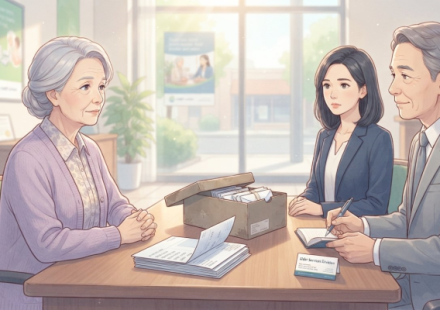
    The attorney’s office was plain and bright.

    There was a small American flag near the reception desk, a stack of intake forms clipped to a clipboard, and a woman behind the counter who spoke gently without sounding soft.

    That helped more than she knew.

    I sat across from the attorney while she read every page.

    The divorce petition.

    The proposed property division.

    The custody language.

    The financial disclosure that Scott had filled out as if I were a problem he could summarize.

    She did not interrupt herself with outrage.

    She did not gasp.

    Good attorneys do not perform shock just because your life is falling apart in front of them.

    They read.

    They mark.

    They ask the questions that matter.

    Finally, she looked up at me.

    “You know this isn’t final, right?”

    I nodded.

    I had hoped it was true, but hearing it from her changed the air in my lungs.

    “He served you papers,” she said. “He did not decide the entire case.”

    That was the first time since Scott had walked into the kitchen that I felt my spine settle back into my body.

    He had been counting on fear.

    He had been counting on shame.

    More than anything, he had been counting on my not understanding the process.

    He wanted me to treat his version like the ending.

    It was the opening move.

    For the next two weeks, Scott celebrated.

    He moved into a new apartment downtown and posted pictures like a man who had escaped captivity instead of abandoned a family.

    There were expensive drinks on polished bars.

    Late dinners with people I did not recognize.

    A smiling photo in the blazer.

    Another in a shirt I knew he had bought with a card tied to an account he told me not to worry about.

    Neighbors heard he was “starting over.”

    His brother heard I was being “reasonable.”

    One of the dads from Ben’s school pickup line gave me an awkward nod and said he was sorry things had gotten “so settled.”

    Settled.

    That was the word Scott had been spreading.

    He wanted the world to believe the hard part was over.

    So I let him.

    Some women survive by fighting loudly.

    Some survive by making the person underestimating them comfortable enough to keep talking.

    After the kids went to bed, I went into the garage.

    The concrete was cold through my jeans even though the nights were still heavy with August heat.

    The air smelled like cardboard, dust, old lawn equipment, and the faint chemical bite of a half-empty gas can near the mower.

    I pulled down the blue file box Scott always mocked me for keeping.

    He said I saved too much.

    Receipts.

    School forms.

    Old tax returns.

    Bank statements.

    Printed emails.

    I used to feel embarrassed when he called me sentimental.

    That week, sentimental looked a lot like evidence.

    I sorted everything by date first.

    Then by account number.

    Then by signature.

    When that got too confusing, I started labeling sticky notes and stacking piles across the garage floor.

    Tax returns on the left.

    Bank statements near the water heater.

    Receipts by the old cooler.

    School forms in a separate folder so I would not mix the kids into the mess more than they already were.

    At midnight, my coffee had gone cold.

    At 1:32 a.m., I found the first transfer that did not belong.

    It was not large enough to scream.

    That was the clever part.

    It looked ordinary if you were tired.

    It looked like the kind of thing someone like Scott would explain away with a sigh and a lecture.

    By 2:06 a.m., I found the second.

    Then a third pattern started to show itself across months.

    Not groceries.

    Not gas.

    Not a business expense I recognized.

    Money moving quietly through places he had never mentioned in any kitchen conversation.

    The next day, I called my attorney.

    She told me what to print, what to photograph, and what not to touch.

    She told me not to guess.

    She told me to document.

    So I did.

    I printed account histories.

    I photographed pages with the dates visible.

    I saved envelopes.

    I wrote down where every paper had come from.

    I did not hack anything.

    I did not break into anything.

    I used what had lived in our house for years, in cabinets and boxes and old email folders he had forgotten existed because he had forgotten I was capable of remembering.

    That was Scott’s real mistake.

    He did not forget one document.

    He forgot me.

    The folder grew thick.

    By the end of the second week, the rubber band snapped when I tried to close it.

    I sat on the garage floor holding the broken band in my palm, and for one ugly second, I wanted to throw the whole box across the room.

    I wanted to storm into his apartment.

    I wanted to call everyone he had been bragging to and tell them he had not won anything except the privilege of being studied.

    But rage is expensive when you have children asleep upstairs.

    So I set the rubber band aside, got a bigger folder, and kept going.

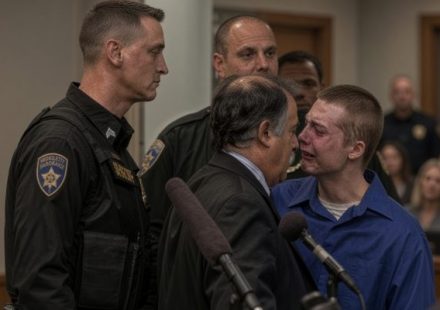
    Two weeks after Scott left, we sat in a family court room.

    The air smelled like floor polish and old coffee.

    The walls were beige.

    The benches were hard.

    A flag stood near the front, and the judge’s bench looked less dramatic than I had imagined because real fear rarely arrives with movie lighting.

    Scott came in wearing the navy blazer.

    Of course he did.

    He sat with his attorney and gave me the kind of nod people use when they want witnesses to think they are being generous.

    I gave him nothing back.

    My attorney had told me the goal for that day was not fireworks.

    It was records.

    It was temporary orders.

    It was getting the court to understand that Scott’s version of our marriage was not the only version with paper behind it.

    When Scott took the stand, he looked almost relaxed.

    He talked about responsibility.

    He talked about stability.

    He talked about how he had always handled the finances because I found them stressful.

    That last part made his voice soften in a way that almost sounded kind.

    I watched the judge write something down.

    I watched Scott’s attorney keep his pen moving.

    I watched my own attorney wait.

    That was when I understood the discipline of a good question.

    She did not interrupt him while he was building the wall.

    She waited until he had stacked enough bricks to trap himself behind it.

    Then she stood.

    She opened the folder.

    “Mr. Porter,” she said, “I’d like to ask you about an account ending in 4821.”

    Scott’s smile did not disappear all at once.

    It slipped.

    His eyes went first.

    Then the corners of his mouth.

    Then one hand shifted on the witness chair as if the wood had suddenly become hot.

    He said he would need context.

    My attorney gave it to him.

    She read the dates.

    She read the transfer lines.

    She asked whether he recognized the account.

    He said he handled many accounts through the business.

    She asked whether he considered that account a business account.

    He said it depended on what she meant.

    That was Scott in four words.

    It depends what you mean.

    He could turn a yes into weather.

    He could turn a no into a lecture.

    My attorney did not argue with him.

    She placed the account history beside another page and asked him to read the name on the source account.

    The room changed.

    Even before he said anything, the room changed.

    Scott’s attorney stopped writing.

    The court clerk paused with her fingers over the keyboard.

    I looked at the page only once, because I already knew what it said.

    Ellie’s college fund.

    Seeing it in black and white in that room did something different to me than seeing it on the garage floor.

    In the garage, it had been a discovery.

    In court, it became a fact other people had to look at.

    That is the power of paper.

    It takes what someone told you was just your imagination and lays it flat under fluorescent light.

    Scott swallowed.

    For the first time since he had walked into our kitchen with that folder, he looked smaller than his blazer.

    My attorney asked whether money from that fund had been moved without my knowledge.

    Scott said there were temporary cash-flow issues.

    She asked whether he had disclosed those cash-flow issues in the papers he brought to my kitchen.

    He did not answer right away.

    The judge told him to answer the question.

    “No,” Scott said.

    It was barely a word.

    But it landed.

    The court did not explode.

    No one dragged him out.

    No judge banged a gavel and declared my whole life restored.

    Real endings rarely arrive that clean.

    What happened was quieter and better.

    The court ordered the accounts preserved.

    Scott was required to produce complete financial records.

    The custody threats he had thrown at me in the kitchen did not turn into some magic spell just because he had spoken them with confidence.

    Temporary parenting arrangements were made with the children’s routines in mind, not his ego.

    The house was not handed to him because he had written it that way in a folder.

    The money was not his because he had said it was.

    The kids were not property.

    That last part mattered most.

    When we stepped into the hallway afterward, Scott tried to speak to me.

    He said my name in the tone he used when he wanted to sound injured by the consequences of his own choices.

    “Dana.”

    I looked at him.

    For years, that tone had worked on me.

    It had made me explain, soften, apologize, make the room easier for him to stand in.

    Not that day.

    My attorney was beside me.

    His attorney was behind him.

    A vending machine hummed at the end of the hallway, and someone’s toddler was crying near the elevators.

    It was such an ordinary sound for such an extraordinary moment.

    I said, “Do not threaten me with my children again.”

    He looked away first.

    That was when I knew the marriage was over in the only way that mattered.

    Not legally.

    Not yet.

    But inside me, the part that had kept waiting for Scott to become careful with my heart finally stood up and left.

    When I got home, Ben was at the kitchen table with homework he was pretending to understand.

    Ellie was at the sink, rinsing a bowl that was already clean.

    She looked at my face and asked, “Are we okay?”

    I wanted to tell her yes in the way parents say yes when they are trying to build a roof out of one word.

    Instead, I told her the truth I could safely give.

    “We are going to be.”

    Ben looked up then.

    I set my purse down, took the chicken from the refrigerator, and started making dinner because ordinary things become sacred when life has tried to take them from you.

    The ceiling fan clicked above us.

    The same kitchen.

    The same counter.

    The same back door with Ben’s sneakers kicked beside it.

    Only I was different.

    I had spent years thinking peace meant staying quiet enough not to start a fight.

    Now I know peace sometimes begins the moment you stop helping someone lie about you.

    Scott thought I signed because I was beaten.

    I signed because I knew his papers were not the ending.

    They were evidence of how certain he was that I would never read the rest.

    For two weeks, he celebrated.

    For two weeks, I sorted, printed, photographed, and waited.

    And by the time he finally looked across that family court room and remembered who had been living in that house with him, it was too late for the version of me he thought he could scare into silence.

    He had forgotten to check the one thing that mattered.

    I had been paying attention.

  • PART1: My daughter-in-law called to tell me my son had died and that I wouldn’t receive a single cent. I just smiled, because at that very moment, my son was sitting right next to me—alive, breathing, and listening to every word. Patricia spoke with the voice of a grieving widow. Julian squeezed my hand under the table. And when she said, “He won’t be in the way anymore,” I knew that the trap that had almost killed him had just snapped shut on her.

    PART1: My daughter-in-law called to tell me my son had died and that I wouldn’t receive a single cent. I just smiled, because at that very moment, my son was sitting right next to me—alive, breathing, and listening to every word. Patricia spoke with the voice of a grieving widow. Julian squeezed my hand under the table. And when she said, “He won’t be in the way anymore,” I knew that the trap that had almost killed him had just snapped shut on her.


    PART 2: THE TATTOO
    Julian stared at the photograph.
    His face drained of color.
    “No…” he whispered.
    I grabbed the edge of the table.
    “What is it?”
    Julian took a shaky breath.
    “I know that tattoo.”
    Mr. Morris leaned closer.
    “Who is he?”
    My son swallowed.
    “The tattoo belongs to Gabriel.”
    The room fell silent.
    I frowned.
    “Gabriel who?”
    “My cousin.”
    The photograph slipped from his fingers.
    Three years earlier, Gabriel had vanished without warning.
    Everyone believed he had run away after gambling debts piled up.

    The family searched.
    The police searched.
    Nothing.
    He had simply disappeared.
    Until now.
    Mr. Morris looked horrified.
    “You think Patricia used Gabriel’s body?”
    Julian nodded slowly.
    “I think Gabriel never disappeared.”
    My stomach twisted.
    I remembered Patricia attending family gatherings.
    Always smiling.
    Always asking questions.
    Always listening.

    What if she had known exactly what happened to Gabriel?

    Then another realization struck me.

    The corpse had been prepared to become Julian.

    Not merely hidden.

    Replaced.

    Someone had planned this long before the poisoning.

    This wasn’t panic.

    This was preparation.

    Months of preparation.

    Maybe years.

    Suddenly Julian’s phone vibrated.

    The screen lit up.

    UNKNOWN NUMBER.

    We exchanged glances.

    Julian answered.

    Silence.

    Then a voice.

    A man’s voice.

    Low.

    Calm.

    Dangerous.

    “You should have stayed dead.”

    The call ended.

    PART 3: THE MAN WHO KNEW

    Nobody spoke.

    The fan creaked overhead.

    Julian replayed the call three times.

    The voice sounded familiar.

    Not completely.

    Just enough to bother him.

    Then his eyes widened.

    “I know where I’ve heard him.”

    “Who?” I asked.

    Julian looked at Mr. Morris.

    “The security director.”

    Mr. Morris froze.

    “Arthur?”

    Julian nodded.

    Arthur had worked for the company for nearly fifteen years.

    Loyal.

    Trusted.

    Invisible.

    The kind of man nobody noticed.

    The kind of man who knew everything.

    Every password.

    Every schedule.

    Every camera.

    Every weakness.

    “That’s impossible,” Mr. Morris said.

    But even he didn’t sound convinced.

    Julian limped toward the laptop.

    He opened old company files.

    Photos.

    Meetings.

    Security reports.

    Then he stopped.

    “There.”

    A photograph from a company retreat.

    Patricia stood near the pool.

    Arthur stood beside her.

    Their hands were touching.

    Not accidentally.

    Intimately.

    Secretly.

    Like two people who thought nobody was watching.

    My heart sank.

    Patricia wasn’t acting alone.

    She never had been.

    At that exact moment, another message appeared on Julian’s phone.

    A photograph.

    Taken only minutes earlier.

    My house.

    My front porch.

    And beneath it, a single sentence:

    WE KNOW WHERE YOU ARE.

    PART 4: SOMEONE INSIDE THE HOUSE

    I felt my knees weaken.

    The photograph had been taken recently.

    Very recently.

    The flower pot beside the door had been knocked over by yesterday’s storm.

    The photo showed it exactly that way.

    Which meant whoever sent it had been outside our house within the last few hours.

    Maybe minutes.

    Julian grabbed the curtains and looked outside.

    Nothing.

    Quiet street.

    Children riding bicycles.

    An old woman watering roses.

    Normal.

    Too normal.

    Mr. Morris locked the front door.

    Then the back door.

    Then every window.

    For the first time, I saw fear in his eyes.

    “We have a bigger problem.”

    Julian looked at him.

    “What?”

    Mr. Morris pulled a folded document from his jacket.

    “The hospital called me before I came here.”

    He unfolded the paper.

    It was a visitor log.

    A list of names.

    People who had entered the private hospital during Julian’s recovery.

    One name was highlighted.

    My blood froze.

    ELENA MARTINEZ.

    My name.

    My signature.

    My identification number.

    Someone had entered the hospital pretending to be me.

    Someone who wanted access to my wounded son.

    Someone who almost reached him.

    Julian looked up slowly.

    “Mom…”

    I could barely breathe.

    Because I had never stepped foot inside that hospital.

    PART 5: THE WOMAN WHO WORE MY FACE

    I stared at the visitor log.

    My name.

    My signature.

    My identification number.

    Every detail was perfect.

    Too perfect.

    Julian looked at me.

    “Mom, are you sure you’ve never been to that hospital?”

    I almost laughed.

    “Julian, I don’t even know where it is.”

    Mr. Morris pointed at the highlighted entry.

    “The strange part isn’t that someone used your name.”

    “Then what is it?”

    “The visitor arrived twenty minutes before the poisoning attempt.”

    The room went silent.

    Whoever she was, she wasn’t visiting.

    She was hunting.

    The next morning, we drove to the hospital.

    A nurse brought up security footage.

    There she was.

    A woman wearing sunglasses.

    Dark hair.

    My height.

    My build.

    Even the way she walked looked like me.

    But when she turned toward the camera, my blood froze.

    It wasn’t a stranger.

    It was someone from our family.

    Someone who had eaten at my table.

    Someone who had hugged me at Christmas.

    Julian leaned closer to the screen.

    “No…”

    The woman removed her glasses.

    My niece, Sofia.

    And behind her stood Patricia.

    PART 6: EYES IN THE WALLS

    Sofia disappeared before we could reach her.

    Her phone was disconnected.

    Her apartment was empty.

    No forwarding address.

    No explanation.

    Only silence.

    That night, I couldn’t sleep.

    Something felt wrong.

    The house felt different.

    Smaller.

    Watching.

    At two in the morning, I walked into the kitchen for water.

    A tiny red light blinked behind the microwave.

    I froze.

    Then I pulled the appliance away from the wall.

    A camera.

    Small.

    Hidden.

    Recording.

    My heart began pounding.

    I checked the living room.

    Another camera.

    The hallway.

    Another.

    My bedroom.

    Another.

    Someone had been watching us.

    Listening.

    Learning.

    Every conversation.

    Every plan.

    Every secret.

    Julian immediately called a security specialist.

    By dawn, they found six cameras.

    But the final discovery terrified us.

    One camera had been installed only forty-eight hours earlier.

    After Julian arrived.

    Which meant someone had entered the house recently.

    Someone with a key.

    Someone we trusted.

    Then the specialist handed us a memory card.

    “There’s one video you need to see.”

    The recording began.

    A shadow entered my house.

    Walked directly to Julian’s room.

    And whispered:

    “Next time, you won’t survive.”………….

    PART2: My daughter-in-law called to tell me my son had died and that I wouldn’t receive a single cent. I just smiled, because at that very moment, my son was sitting right next to me—alive, breathing, and listening to every word. Patricia spoke with the voice of a grieving widow. Julian squeezed my hand under the table. And when she said, “He won’t be in the way anymore,” I knew that the trap that had almost killed him had just snapped shut on her.

    PART 7: THE DEAD MAN ON TELEVISION
    Three days later, Patricia learned the truth.
    Not from us.
    From television.
    A local reporter was interviewing residents after a company charity event.
    The camera swept across the crowd.
    Only for a second.
    Just one second.
    But it was enough.
    Julian’s face appeared in the background.
    Alive.
    Walking.
    Breathing.
    Watching.
    The broadcast aired at 6:12 p.m.
    At 6:17 p.m., Patricia’s attorney canceled every meeting.
    At 6:23 p.m., three company executives resigned.
    At 6:31 p.m., money began disappearing from offshore accounts.
    And at exactly 7:00 p.m., Patricia made her first move.
    Julian received a text.
    A photograph.
    Me.
    Leaving the grocery store that afternoon.
    Underneath was a message.

    YOU SHOULD HAVE LET HIM DIE.

    Five minutes later, another message arrived.

    This one contained an address.

    An abandoned warehouse near the river.

    And a promise.

    COME ALONE IF YOU WANT TO KNOW WHAT REALLY HAPPENED TO GABRIEL.

    Julian stared at the screen.

    Then at me.

    Neither of us spoke.

    Because deep down, we both knew.

    Patricia wasn’t running anymore.

    She was preparing for war.

    PART 8: THE WAREHOUSE TRAP

    I begged Julian not to go.

    The abandoned warehouse sat near the river docks, surrounded by rusted shipping containers and broken fences.

    Everything about it screamed trap.

    Which was exactly why Julian knew he had to go.

    “If Patricia knows something about Gabriel, I need answers.”

    “She wants you dead,” I said.

    “Then she should have finished the job the first time.”

    At midnight, Julian and Mr. Morris approached the warehouse.

    The place looked deserted.

    No lights.

    No cars.

    No movement.

    Then they heard a voice.

    “You’re late.”

    A figure stepped from the shadows.

    Sofia.

    My niece looked exhausted.

    Terrified.

    As though she hadn’t slept in days.

    “Where is Patricia?” Julian demanded.

    Sofia shook her head.

    “You don’t understand.”

    “Then explain.”

    Tears filled her eyes.

    “Gabriel wasn’t the first.”

    Julian froze.

    “What?”

    “There were others.”

    A loud metallic click echoed through the darkness.

    Mr. Morris immediately turned.

    “DOWN!”

    A gunshot exploded through the warehouse.

    Glass shattered.

    Metal screamed.

    Julian threw himself behind a container.

    Another shot.

    Then another.

    The shooters weren’t aiming to scare him.

    They were aiming to finish what Patricia started.

    Sofia screamed.

    Chaos erupted.

    Mr. Morris pulled Julian toward an emergency exit.

    They ran through a maze of containers while bullets struck steel around them.

    Just before they escaped, Sofia grabbed Julian’s arm.

    “There is a fourth video.”

    Julian stared at her.

    “What video?”

    “The one your father hid.”

    She was crying now.

    “The one Patricia has been trying to destroy for years.”

    Then headlights appeared outside.

    Several black SUVs.

    Sofia’s face turned white.

    “They found me.”

    Before Julian could stop her, she shoved a small key into his hand.

    “Don’t trust anyone.”

    Then she ran into the darkness.

    The last thing Julian heard was her scream.

    PART 9: ERNESTO’S FINAL MESSAGE

    The key opened a safety deposit box.

    Inside was a single envelope.

    Nothing else.

    No money.

    No documents.

    Only an envelope addressed to me.

    In Ernesto’s handwriting.

    My hands shook as I opened it.

    Inside was a flash drive and a short note.

    Elena,

    If you’re watching this, then everything I feared has happened.

    Forgive me.

    I should have told you sooner.

    I should have protected Julian better.

    The flash drive contained one video.

    Just one.

    We played it.

    And suddenly, Ernesto appeared on the screen.

    Older.

    Tired.

    Afraid.

    “I am recording this because I believe my life is in danger.”

    Julian sat frozen.

    His father looked directly into the camera.

    “If anything happens to me, it was not natural.”

    My heart nearly stopped.

    Ernesto continued.

    “Patricia believes she is the mastermind.”

    He paused.

    Then shook his head.

    “She isn’t.”

    Julian looked at me.

    Neither of us breathed.

    “There is another person.”

    The room seemed to shrink.

    Another person?

    Another conspirator?

    Ernesto leaned forward.

    “I discovered who financed the fraud, who controlled the accounts, and who arranged Gabriel’s disappearance.”

    His voice broke.

    “Unfortunately, that person is family.”

    Julian whispered:

    “No…”

    Ernesto closed his eyes.

    Then he spoke a name.

    A name neither of us expected.

    A name that changed everything.

    My younger brother.

    Ricardo.

    The screen went black.

    For several seconds nobody moved.

    Then Julian finally spoke.

    “Patricia wasn’t the head of this.”

    I shook my head slowly.

    “No.”

    For the first time, we understood.

    Patricia wasn’t the monster behind the curtain.

    She was only one of them.

    PART 10: THE FALL OF PATRICIA

    The annual shareholder meeting was packed.

    Investors.

    Executives.

    Lawyers.

    Reporters.

    Everyone expected Patricia to announce her full control of the company.

    Instead, she walked into her nightmare.

    At precisely ten o’clock, the giant presentation screen flickered.

    Patricia smiled at first.

    She thought it was part of the schedule.

    Then Ernesto appeared.

    On screen.

    Alive in the recording.

    Speaking directly to thousands of people.

    The room fell silent.

    Patricia’s smile disappeared.

    Then came the evidence.

    The forged signatures.

    The hidden transfers.

    The insurance policies.

    The surveillance footage.

    The recordings.

    Every secret she had buried.

    One by one.

    Displayed before the entire room.

    Gasps spread through the audience.

    Executives began whispering.

    Lawyers stopped taking notes.

    Reporters reached for their phones.

    And then Julian walked through the front doors.

    Alive.

    The room exploded.

    Patricia stumbled backward.

    Her face turned ghostly white.

    “You…”

    Julian kept walking.

    Every eye followed him.

    “You told everyone I was dead.”

    Patricia’s lips trembled.

    Security officers entered.

    Then detectives.

    Then federal investigators.

    For the first time, Patricia looked afraid.

    Truly afraid.

    As they approached her, she suddenly laughed.

    Not nervous laughter.

    Not panic.

    A different kind of laughter.

    The laughter of someone who knew something.

    Something terrible.

    She looked directly at Julian.

    Then at me.

    And smiled.

    “You still don’t understand.”

    The detectives grabbed her arms.

    She didn’t resist.

    Instead, she whispered:

    “Ask Ricardo where Sofia is.”

    The smile never left her face.

    And for the first time since this nightmare began, I felt real fear.

    Because Sofia had disappeared.

    And nobody knew whether she was alive.

    PART 11: WHERE IS SOFIA?

    Patricia’s smile haunted me long after the police car disappeared.

    “Ask Ricardo where Sofia is.”

    Those words echoed through my mind all night.

    The next morning, Julian barely touched his coffee.

    Neither of us had slept.

    Detectives searched the warehouse until dawn.

    They found traces of blood.

    A torn piece of Sofia’s jacket.

    And tire tracks leading toward the highway.

    But no Sofia.

    No witnesses.

    No answers.

    At noon, Julian’s phone vibrated.

    A text message.

    Unknown number.

    Attached was a photograph.

    My heart nearly stopped.

    Sofia sat tied to a metal chair.

    Her hands bound behind her back.

    A blindfold covered her eyes.

    A newspaper lay at her feet showing today’s date.

    She was alive.

    For now.

    Below the photo was a message.

    STOP DIGGING.

    OR SHE DIES.

    Julian slammed his fist against the table.

    “They want us scared.”

    I looked at the picture again.

    No.

    Something else caught my attention.

    Behind Sofia was a wall painted dark green.

    And in one corner was a faded symbol.

    I had seen that symbol before.

    Years ago.

    At a place Ricardo owned.

    And suddenly I knew where we needed to look next.

    PART 12: RICARDO’S SECRET HOUSE

    The property sat outside the city.

    Abandoned.

    Forgotten.

    At least that was what Ricardo wanted everyone to believe.

    The gate hung crooked.

    The windows were boarded.

    Weeds covered the driveway.

    But the lock on the front door was new.

    Someone had been there recently.

    Mr. Morris forced the door open.

    Dust filled the air.

    The house appeared empty.

    Then Julian noticed scratches on the floor.

    Heavy furniture had been moved.

    We followed the marks.

    A bookshelf shifted aside.

    Behind it was a hidden room.

    My stomach tightened.

    Inside were dozens of boxes.

    Financial records.

    Photographs.

    Passports.

    Insurance documents.

    Years of secrets.

    Julian opened one folder.

    His face hardened.

    Inside were photographs of people.

    Men and women.

    Each picture had a date beside it.

    Some dates were crossed out.

    Others were circled.

    As if someone were keeping score.

    Then I saw a familiar name.

    Gabriel.

    My hands began to shake.

    His photograph had been taken only six months earlier.

    Six months.

    But Gabriel had supposedly vanished three years ago.

    Julian opened another folder.

    Bank statements.

    Account transfers.

    Identity records.

    And there, buried among the documents, was something impossible.

    A recent transaction.

    Signed by Gabriel himself.

    Julian stared at the page.

    “He can’t be dead.”

    The room suddenly felt colder.

    Because if Gabriel was alive…

    Then somebody had lied to us for years.

    PART 13: THE BOY WHO NEVER LEFT

    That night, I couldn’t stop thinking about Gabriel.

    When he was twelve, he followed Julian everywhere.

    They were inseparable.

    Brothers more than cousins.

    Then everything changed.

    Three years earlier, Gabriel started asking questions.

    Questions about company accounts.

    Questions about Ricardo.

    Questions nobody wanted answered.

    A week later, he disappeared.

    The family was told he had gambling debts.

    That he ran away.

    That he was ashamed.

    It sounded believable.

    At the time.

    Now it sounded manufactured.

    A story prepared in advance.

    Julian spent the entire night tracing the bank transaction.

    By morning he had found something.

    Security footage.

    A withdrawal made forty-eight hours earlier.

    The image was grainy.

    The man wore a baseball cap.

    Dark glasses.

    A beard.

    But when he turned toward the camera, both of us froze.

    The tattoo.

    The same tattoo from the corpse photograph.

    The same tattoo Gabriel had gotten at nineteen.

    Julian’s voice dropped to a whisper.

    “It’s him.”

    I stared at the screen.

    The man looked older.

    Thinner.

    Tired.

    But alive.

    Very much alive.

    Then the footage jumped forward.

    Someone else entered the frame.

    A woman.

    She handed Gabriel an envelope.

    Before leaving, she turned toward the camera.

    My breath caught.

    I knew her.

    So did Julian.

    Because the woman wasn’t a stranger.

    She was Patricia.

    And according to police records, Patricia was sitting in a jail cell at the exact moment that footage was recorded.

    Which meant only one thing.

    Someone had manipulated the evidence.

    Or Patricia had help from somewhere nobody expected…….

    PART3: My daughter-in-law called to tell me my son had died and that I wouldn’t receive a single cent. I just smiled, because at that very moment, my son was sitting right next to me—alive, breathing, and listening to every word. Patricia spoke with the voice of a grieving widow. Julian squeezed my hand under the table. And when she said, “He won’t be in the way anymore,” I knew that the trap that had almost killed him had just snapped shut on her.

    PART 14: ALIVE OR DEAD?
    Nobody spoke for a long time after seeing the security footage.
    Gabriel was alive.
    Or at least he had been alive forty-eight hours earlier.
    The image replayed over and over on Julian’s laptop.
    Same tattoo.
    Same scar above his eyebrow.
    Same way of tilting his head when he walked.
    It was Gabriel.
    There was no doubt anymore.
    “What if he’s being forced?” I asked.
    Julian didn’t answer.
    Because he was thinking the same thing.
    The next morning, Mr. Morris traced the ATM withdrawal.
    A second camera had captured Gabriel leaving the bank.
    This time, the footage was clearer.
    Gabriel looked older.
    Thinner.

    His face carried the weight of someone who had spent years looking over his shoulder.
    Then something strange happened.
    As he walked away, he suddenly looked directly at the camera.
    Not accidentally.
    Intentionally.|Almost as if he knew someone would eventually watch the footage.
    Then he lifted his hand.
    Three fingers.
    A pause.
    Then two fingers.

    Then one.

    Julian leaned forward.

    “What is he doing?”

    I stared at the screen.

    And then I remembered.

    When they were children, Julian and Gabriel used to play a secret game.

    Three-two-one.

    It meant:

    “Danger. Don’t follow.”

    My stomach tightened.

    Gabriel wasn’t hiding from us.

    He was warning us.

    Suddenly another file arrived in Julian’s email.

    No sender.

    No subject.

    Only one attachment.

    A photograph.

    Gabriel standing beside Sofia.

    The image looked recent.

    Very recent.

    Both appeared frightened.

    And written across the bottom in red letters were six terrifying words:

    THEY KNOW YOU FOUND HIM.

    PART 15: THE WOMAN IN THE MOTEL

    The call came at midnight.

    A woman’s voice.

    Shaking.

    Terrified.

    “I need to speak to Elena.”

    “Who is this?” I asked.

    “I worked for Ricardo.”

    Every nerve in my body tightened.

    “Where are you?”

    “Sunrise Motel. Room 17.”

    Then she hung up.

    Julian wanted to call the police.

    Mr. Morris wanted surveillance first.

    But something in the woman’s voice felt real.

    Desperate.

    Broken.

    The next morning we arrived at the motel.

    Room 17 looked abandoned.

    Curtains closed.

    Door locked.

    For a moment I thought we were too late.

    Then the door slowly opened.

    A woman in her fifties stood inside.

    Exhausted.

    Thin.

    Terrified.

    She checked the parking lot three times before letting us enter.

    “My name is Teresa.”

    She immediately handed Julian a stack of documents.

    Bank records.

    Property deeds.

    Photographs.

    Years of hidden transactions.

    “Why are you helping us?” Julian asked.

    The woman laughed bitterly.

    “Because I finally realized I’m disposable.”

    “What do you mean?”

    Tears filled her eyes.

    For several seconds she couldn’t speak.

    Then she whispered:

    “Patricia wasn’t the first wife.”

    The room went silent.

    “What?”

    Teresa nodded.

    “There were others.”

    My heart nearly stopped.

    “Others?”

    “Women Ricardo recruited. Women Patricia helped manipulate. Women who married wealthy men. Women used to gain control of businesses.”

    Julian stared at her.

    “How many?”

    Teresa lowered her eyes.

    “More than I can count.”

    Then she pulled out one final photograph.

    The image showed Patricia standing beside a smiling blonde woman.

    The date was eight years old.

    The woman was now dead.

    Official cause:

    Accidental drowning.

    Teresa looked directly at us.

    “It wasn’t an accident.”

    PART 16: THE SECOND FAMILY

    Teresa’s documents changed everything.

    For two days, Julian barely slept.

    Every file revealed another secret.

    Another lie.

    Another hidden life.

    Then we found the address.

    A house purchased through three shell companies.

    Owned by nobody.

    Connected to Ricardo.

    We drove there immediately.

    The property sat behind iron gates.

    Large.

    Expensive.

    Completely hidden from public records.

    A second life.

    A second family.

    Inside the house were photographs covering entire walls.

    Children.

    Birthdays.

    Vacations.

    Christmas celebrations.

    Years of memories.

    None of us recognized a single face.

    Julian slowly picked up a framed picture.

    A teenage boy stared back at him.

    The resemblance was unmistakable.

    The same eyes.

    The same jawline.

    The same expression.

    “He looks like Ricardo.”

    Mr. Morris nodded.

    “Because he is Ricardo’s son.”

    Another hidden child.

    Another secret.

    Then we discovered something worse.

    The young man wasn’t just related to Ricardo.

    He worked inside Julian’s company.

    For three years.

    Under a different surname.

    Inside the finance department.

    With access to accounts.

    Transfers.

    Internal records.

    Everything.

    Julian’s face turned pale.

    “He has been spying on us.”

    Before anyone could answer, the front door suddenly slammed shut.

    Footsteps echoed upstairs.

    Slow.

    Deliberate.

    Someone was inside the house.

    And whoever it was had been waiting for us.

    PART 17: THE BETRAYAL

    Nobody moved.

    The footsteps above us stopped.

    Silence filled the house.

    Then a voice echoed from the second floor.

    “Julian.”

    My son froze.

    He knew that voice.

    So did Mr. Morris.

    Slowly, a man descended the staircase.

    Marcus Bennett.

    Chief Financial Officer.

    Julian’s most trusted executive.

    His friend for twelve years.

    The man who had attended family holidays.

    The man who had carried Ernesto’s coffin at the funeral.

    The man Julian trusted more than anyone.

    “No…” Julian whispered.

    Marcus smiled sadly.

    “I’m afraid yes.”

    The betrayal hit harder than any punch.

    “Why?” Julian asked.

    Marcus laughed.

    “Because loyalty doesn’t pay as well as Ricardo.”

    Every word felt like poison.

    Marcus revealed everything.

    The leaks.

    The missing documents.

    The hidden transfers.

    The surveillance.

    For years he had fed information to Ricardo.

    Every move Julian made.

    Every plan.

    Every weakness.

    Then Marcus pulled out his phone.

    “By now Ricardo already knows you’re here.”

    My blood ran cold.

    Julian stepped forward.

    “Where is Sofia?”

    Marcus hesitated.

    For the first time, fear crossed his face.

    Then he whispered:

    “You should stop looking.”

    “Why?”

    Marcus looked away.

    Because whatever he knew frightened even him.

    Then suddenly the sound of shattering glass exploded through the house.

    A sniper round.

    The bullet struck Marcus directly in the chest.

    He collapsed instantly.

    Dead before he hit the floor.

    The last thing he whispered was:

    “He’s watching.”

    PART 18: FIRE

    The police arrived too late.

    Marcus was dead.

    The sniper was gone.

    No weapon.

    No witnesses.

    No answers.

    That night nobody spoke much.

    The house felt cursed.

    Every answer seemed to create ten new questions.

    At three in the morning I woke to a strange smell.

    Smoke.

    My eyes snapped open.

    The hallway glowed orange.

    Fire.

    I screamed.

    Within seconds the house erupted into chaos.

    Flames raced across the walls.

    Windows shattered.

    Heat consumed everything.

    Julian kicked open my bedroom door.

    “Mom! Move!”

    The smoke was so thick I could barely breathe.

    Mr. Morris dragged me toward the back exit.

    The roof groaned above us.

    Another minute and we would have died.

    Outside, neighbors watched in horror as the house burned.

    Everything I owned.

    Gone.

    My photographs.

    My memories.

    My husband’s letters.

    Gone.

    Firefighters fought the blaze for hours.

    At sunrise an investigator approached us.

    His face looked troubled.

    “Mrs. Elena…”

    “What is it?”

    “This wasn’t an accident.”

    Julian stiffened.

    The investigator held up a small metal object.

    A timing device.

    Professional.

    Deliberate.

    Someone had planted it inside the house.

    But that wasn’t the worst part.

    The device had been hidden inside the guest bedroom.

    The room Sofia used before she disappeared.

    Meaning someone had entered the house recently.

    Someone who knew exactly where to place it.

    Someone from inside our circle.

    PART 19: THE SURVIVOR

    Three days after the fire, Julian received another call.

    Unknown number.

    We expected threats.

    Instead, a familiar voice spoke.

    “Julian.”

    The room froze.

    My son nearly dropped the phone.

    No.

    Impossible.

    “Gabriel?”

    Silence.

    Then:

    “Don’t say my name.”

    The voice sounded older.

    Broken.

    Exhausted.

    But unmistakable.

    It was him.

    Alive.

    After all these years.

    Julian’s eyes filled with tears.

    “Where are you?”

    “I can’t tell you.”

    “Why?”

    A bitter laugh came through the line.

    “Because every time someone gets close to me, they disappear.”

    Nobody spoke.

    Then Gabriel said something only he could know.

    Something from childhood.

    A secret between him and Julian.

    A memory nobody else had ever heard.

    The moment he said it, every doubt vanished.

    It was Gabriel.

    Alive.

    Breathing.

    Hiding.

    “Listen carefully,” Gabriel said.

    “Ricardo didn’t make me disappear.”

    Julian frowned.

    “What do you mean?”

    The answer changed everything.

    “He saved me.”

    The room fell silent.

    My heart nearly stopped.

    Nothing made sense anymore.

    Then Gabriel spoke the sentence that shattered everything we thought we knew.

    “You’ve been hunting the wrong monster.”

    And before Julian could ask another question, the call disconnected.

    PART 20: FACE TO FACE

    The meeting place was an abandoned church twenty miles outside the city.

    Gabriel chose it.

    No phones.

    No police.

    No trackers.

    Just Julian, Mr. Morris, and me.

    The church stood alone beside a dirt road.

    Broken stained-glass windows reflected the afternoon sun.

    For a moment, nobody appeared.

    Then a figure emerged from the shadows.

    Older.

    Thinner.

    A beard covered part of his face.

    His shoulders were heavier than I remembered.

    As though life had spent years sitting on them.

    But it was him.

    Gabriel.

    Alive.

    My nephew stopped several feet away.

    Neither man spoke.

    Neither moved.

    Then Julian stepped forward and embraced him.

    For a moment they were boys again.

    Not businessmen.

    Not victims.

    Not survivors.

    Just family.

    When they finally separated, Julian’s eyes were wet.

    “Why didn’t you come home?”

    Gabriel looked away.

    “Because home wasn’t safe.”

    “For three years?”

    Gabriel nodded.

    “For three years.”

    We sat inside the church.

    Dust floated through beams of sunlight.

    And for the first time, Gabriel told the truth.

    Three years earlier, he had discovered unusual transactions inside the company.

    Millions of dollars disappearing.

    Accounts being manipulated.

    Names being erased.

    At first he believed Ricardo was responsible.

    Everyone did.

    But then Gabriel followed the money.

    And found something unexpected.

    The money wasn’t going to Ricardo.

    It was going to someone else.

    Someone much more powerful.

    Someone nobody suspected.

    Julian leaned forward.

    “Who?”

    Gabriel hesitated.

    Fear appeared in his eyes.

    Real fear.

    The kind that never leaves.

    “The same person who ordered your father’s death.”

    The room fell silent.

    I couldn’t breathe.

    Gabriel continued.

    “The night Ernesto died, I saw them together.”

    Julian’s hands clenched.

    “Who?”

    Gabriel shook his head.

    “You don’t understand.”

    “Then make me understand.”

    Gabriel looked directly at me.

    “Because if I tell you the name…”

    His voice cracked.

    “…everything your family believes will collapse.”

    Outside, thunder rolled across the sky.

    Then Gabriel reached into his jacket.

    Slowly.

    Carefully.

    He pulled out a photograph.

    An old photograph.

    The edges were worn.

    The colors faded.

    But the image was clear.

    I stared at it.

    Then my heart stopped.

    The photograph showed Ernesto.

    Ricardo.

    Patricia.

    And one other person.

    A person who should not have been there.

    A person everyone believed was dead.

    My husband had hidden this picture for years.

    And now I understood why.

    Julian looked at the face.

    His entire body went rigid.

    “No…”

    Gabriel nodded slowly.

    “Now you understand.”

    I could barely whisper.

    Because the person staring back at us from that photograph was not a stranger.

    Not an enemy.

    Not a business rival.

    It was someone from our own family.

    Someone we had trusted our entire lives.

    And according to every official record in existence…

    They had died fifteen years ago………….

    PART4: My daughter-in-law called to tell me my son had died and that I wouldn’t receive a single cent. I just smiled, because at that very moment, my son was sitting right next to me—alive, breathing, and listening to every word. Patricia spoke with the voice of a grieving widow. Julian squeezed my hand under the table. And when she said, “He won’t be in the way anymore,” I knew that the trap that had almost killed him had just snapped shut on her.

    PART 21: THE GHOST OF THE FAMILY

    Nobody spoke inside the church.

    The photograph lay on the table between us.

    The face staring back at us belonged to my sister, Isabella.

    Fifteen years ago, we buried her.

    Or at least we thought we did.

    Julian looked ready to collapse.

    “That’s impossible.”

    Gabriel shook his head.

    “It isn’t.”

    According to Gabriel, Isabella never died.

    The funeral had been real.

    The coffin had been real.

    But the body inside was not hers.

    For fifteen years she had lived under another identity.

    Hidden.

    Watching.

    Waiting.

    And somehow she had become connected to Patricia, Ricardo, and the conspiracy surrounding Ernesto’s death.

    Before we could ask another question, Gabriel handed us a second envelope.

    Inside was a hotel receipt dated the night Ernesto died.

    One room.

    Three guests.

    Ernesto.

    Ricardo.

    Isabella.

    The final line made my blood run cold.

    CHECKOUT: NEVER RECORDED.

    PART 22: THE LAST DINNER

    The hotel had long since closed.

    But old records remained.

    Mr. Morris tracked down a retired employee who had worked there that night.

    The elderly man studied the photograph carefully.

    Then he pointed at Isabella.

    “I remember her.”

    My heart nearly stopped.

    The man explained that the three family members had eaten together the evening before Ernesto died.

    Witnesses reported arguing.

    Loud arguing.

    The kind that makes people stop and stare.

    According to the waiter, Ernesto kept repeating the same sentence:

    “You’ve gone too far.”

    Hours later, someone entered Ernesto’s room.

    The security logs identified the visitor.

    But the name had been manually deleted.

    Only one thing remained.

    A partial signature.

    The first letter.

    I.

    Isabella.

    Then the retired employee revealed one final detail.

    At midnight, someone ordered champagne to Ernesto’s room.

    Only one glass was ever used.

    And traces of poison were later discovered in that room.
    :::

    PART 23: THE MISSING DOCTOR

    If Ernesto had been poisoned, someone helped cover it up.

    The death certificate listed natural causes.

    A heart attack.

    Case closed.

    Or so everyone believed.

    Julian reopened the investigation.

    Three days later, we found the doctor who signed the certificate.

    Dr. Raymond Keller.

    The problem?

    He had vanished ten years ago.

    No medical practice.

    No license.

    No public records.

    Almost as if he had been erased.

    Then something unbelievable happened.

    Julian received an email.

    No subject.

    No signature.

    Just one sentence.

    I DIDN’T KILL YOUR FATHER.

    Attached was a current photograph of Dr. Keller.

    Alive.

    Terrified.

    And apparently hiding from someone.

    At the bottom of the email was an address.

    And a warning.

    COME ALONE.
    :::

    PART 24: SILENCED

    Against everyone’s advice, Julian went.

    The address led to a small cabin deep in the woods.

    When he arrived, the front door stood open.

    Furniture overturned.

    Broken glass everywhere.

    Signs of a struggle.

    “Doctor Keller?” Julian called.

    No answer.

    Then he heard movement.

    A weak voice.

    The doctor lay on the floor bleeding.

    Still alive.

    Barely.

    Julian rushed to him.

    “You have to tell me who did this.”

    The doctor grabbed Julian’s shirt.

    His eyes filled with panic.

    “I changed the records.”

    “Why?”

    “They threatened my family.”

    “Who threatened you?”

    The doctor’s lips trembled.

    He tried to speak.

    Tried again.

    Then suddenly a gunshot shattered the silence.

    The window exploded.

    The doctor went limp.

    Dead.

    Julian spun toward the woods.

    But the shooter was already gone.

    The only thing left behind was a spent shell casing.

    And engraved on it was a single letter.

    I.
    :::

    PART 25: THE TRUTH ABOUT ERNESTO

    The shell casing wasn’t the breakthrough.

    The doctor’s briefcase was.

    Hidden beneath a loose floorboard, investigators discovered files he had protected for years.

    Medical reports.

    Toxicology results.

    Handwritten notes.

    The evidence was undeniable.

    Ernesto had not died from a heart attack.

    He had been poisoned.

    Deliberately.

    Carefully.

    Professionally.

    The reports also contained a witness statement.

    One that had never been submitted.

    The witness claimed to have seen a woman leave Ernesto’s room shortly before his death.

    A woman matching Isabella’s description.

    Julian stared at the documents.

    “So she killed him?”

    Gabriel slowly shook his head.

    “No.”

    “What do you mean?”

    Gabriel pointed to the final page.

    The last page contained a name.

    Not Isabella.

    Not Patricia.

    Not Ricardo.

    Someone else.

    Someone nobody had ever suspected.

    The true mastermind.

    The person who had manipulated everyone.

    The person who had turned family members against each other.

    The person who benefited most from Ernesto’s death.

    I read the name.

    And for the first time in my life, I felt completely betrayed.

    Because the person responsible for everything…

    was sitting at Ernesto’s funeral beside me.

    Crying.

    Pretending to mourn.

    While knowing exactly what had happened……….

    PART5: My daughter-in-law called to tell me my son had died and that I wouldn’t receive a single cent. I just smiled, because at that very moment, my son was sitting right next to me—alive, breathing, and listening to every word. Patricia spoke with the voice of a grieving widow. Julian squeezed my hand under the table. And when she said, “He won’t be in the way anymore,” I knew that the trap that had almost killed him had just snapped shut on her.

    THE FINAL WAR
    PART 26: THE NAME
    Nobody spoke.
    The final page lay on the table.
    The name stared back at us.
    Victoria Santos.
    Ernesto’s former business partner.
    My closest friend for nearly twenty years.
    The woman who sat beside me at Ernesto’s funeral.
    The woman who held my hand while I cried.
    The woman who comforted Julian.
    “No…” I whispered.
    Gabriel nodded slowly.
    “She built everything.”
    According to the files, Victoria had secretly created dozens of shell companies.
    She moved money through hidden accounts.
    She recruited Patricia.
    Manipulated Ricardo.
    Controlled people from the shadows.
    Patricia thought she worked for Ricardo.
    Ricardo thought he worked with Patricia.
    Neither realized they were being used.
    Victoria was always three steps ahead.
    Then Mr. Morris made another discovery.
    Victoria had disappeared.
    Her office was empty.
    Her house abandoned.
    Her phones disconnected.
    She knew we were coming.
    But before leaving, she sent a message.
    A video.
    Victoria looked directly into the camera.
    Then she smiled.
    “You finally found me.”
    The screen went black.

    PART 27: THE OFFER
    Two days later, my phone rang.
    Unknown number.
    I answered.
    “Elena.”
    The voice was calm.
    Familiar.
    Victoria.
    Julian immediately activated the recorder.
    “What do you want?” I asked.
    Victoria laughed softly.

    “The same thing everyone wants.”

    “Which is?”

    “To survive.”

    According to Victoria, the authorities were closing in.

    Accounts frozen.

    Properties seized.

    Associates arrested.

    She wanted a deal.

    Immunity.

    Protection.

    Escape.

    In exchange, she promised to reveal everything.

    Every murder.

    Every theft.

    Every secret.

    Julian didn’t trust her.

    Neither did I.

    But then Victoria said something that froze the room.

    “There is one thing you still don’t know.”

    “What?”

    “The person who kidnapped Sofia wasn’t Patricia.”

    My heart nearly stopped.

    “Then who was it?”

    Victoria became silent.

    Then she whispered:

    “Someone inside your family.”

    The call disconnected.

    PART 28: THE RECORDING

    Three days later, a package arrived.

    No return address.

    No fingerprints.

    Inside was a hard drive.

    Nothing else.

    Julian connected it to his laptop.

    One file.

    A recording.

    The date matched the night Ernesto died.

    The video showed a private dining room.

    Inside sat Ernesto.

    Ricardo.

    Victoria.

    Patricia.

    And Isabella.

    The room exploded with arguments.

    Money.

    Fraud.

    Threats.

    Betrayal.

    Years of lies poured into the open.

    Then Ernesto stood up.

    “You’ve destroyed this family.”

    Victoria smiled.

    “No.”

    She leaned forward.

    “You did.”

    The recording continued for almost two hours.

    By the end, every secret was exposed.

    Every conspiracy.

    Every hidden account.

    Every crime.

    But the biggest shock came during the final minute.

    Someone else entered the room.

    A man wearing a police uniform.

    Julian stared at the screen.

    “No…”

    The officer wasn’t there to arrest anyone.

    He was there to protect them.

    For years, someone inside law enforcement had shielded the conspiracy.

    And now we had proof.

    PART 29: THE TRAP

    The authorities built a plan.

    Victoria believed she was escaping.

    In reality, she was walking into a trap.

    Reporters gathered.

    Federal agents waited.

    Financial investigators monitored every account.

    Every camera was ready.

    Every microphone active.

    Victoria agreed to meet.

    One final negotiation.

    One final attempt to save herself.

    At exactly seven o’clock, a black sedan entered the parking garage.

    The doors opened.

    Victoria stepped out.

    Elegant.

    Confident.

    Unafraid.

    As though she still controlled everything.

    She walked toward the meeting room.

    Then stopped.

    Because she saw Julian.

    Alive.

    Waiting.

    The smile vanished from her face.

    For the first time in years, Victoria looked uncertain.

    Then another door opened.

    Gabriel entered.

    Then Sofia.

    Alive.

    Safe.

    Victoria’s confidence shattered.

    The walls were closing in.

    She finally understood.

    The game was over.

    Or so we thought.

    Then a gunshot echoed through the garage.

    PART 30: THE FINAL TRUTH

    Chaos erupted.

    Agents rushed forward.

    People screamed.

    Victoria dropped to the ground.

    Not hit.

    Terrified.

    The shooter had missed.

    A second later, authorities tackled him.

    The assassin worked for Victoria.

    His arrest became the final piece.

    Everything collapsed.

    The recordings.

    The accounts.

    The witnesses.

    The murders.

    The fraud.

    The kidnappings.

    The conspiracy that had lasted years.

    All of it came crashing down.

    Victoria was arrested.

    Patricia accepted a plea deal.

    Ricardo testified.

    Corrupt officials were exposed.

    Dozens of arrests followed.

    Weeks later, the company returned to Julian.

    Gabriel finally came home.

    Sofia began rebuilding her life.

    And for the first time in years, silence returned.

    A peaceful silence.

    One Sunday morning, Julian and I visited Ernesto’s grave.

    The sky was clear.

    The wind gentle.

    Julian placed white flowers beside the headstone.

    I touched the cold stone.

    Then smiled.

    “We did it, Ernesto.”

    For a moment, I imagined he could hear me.

    The lies were gone.

    The fear was gone.

    The family had survived.

    Julian wrapped an arm around my shoulders.

    We stood there together.

    Mother and son.

    No longer running.

    No longer hiding.

    Finally free.

    END

  • Part1: “Daughter Whispered ‘Can We Talk?’ What She Showed Me Changed Everything.”

    Part1: “Daughter Whispered ‘Can We Talk?’ What She Showed Me Changed Everything.”


    At the school carnival with my daughter. She tugged my jacket. “Dad, can we just go home? Please?” we got to the truck. She lifted her sweater. What I saw made me stop breathing. Bruises. Dark purple bruises across her ribs. “Mr. Harrison did this,” she whispered. The principal. I didn’t scream. I didn’t cry. I buckled her seatbelt. Drove straight to the hospital. I made calls. Exact four hours later, true story my wife came home because…


    Part 1

    I used to think the worst thing that could happen at a school fall carnival was a sugar crash.

    Maplewood Elementary’s October carnival was the kind of wholesome chaos parents posted about online: paper pumpkins taped to classroom doors, a pie-walk in the gym, dunk tanks run by the PTA, and cotton candy that clung to kids’ fingers like pink spiderwebs. Lily loved it. She was seven, all knees and elbows and big opinions, and she treated every school event like it was her personal holiday.

    So when she tugged my sleeve near the ring toss and whispered, “Dad, can we just go home, please?” I thought she was tired. Or overwhelmed. Or maybe she’d gotten into a disagreement over whose turn it was to throw the beanbag.

    But Lily didn’t ask like a tired kid.

    She asked like a kid trying to outrun something.

    Her face was pale under the orange string lights. Her eyes kept flicking over my shoulder toward the main building, where the principal, Jason Harrison, stood near the entrance shaking hands with parents like he was running for office.

    “Did something happen?” I asked.

    “Can we just go?” she said again, voice smaller.

    I didn’t argue. I took her hand, said quick goodbyes to a couple parents I recognized, and walked her to my truck. The parking lot was still half full. Families were loading up kids and leftover cupcakes. Someone laughed near a minivan. Someone else yelled, “Don’t drop the fish bowl!” Normal sounds. Normal night.

    Lily climbed into the passenger seat and pulled her sweater down tight like she was cold. She didn’t talk. She didn’t ask for music. She didn’t ask for snacks. She stared straight ahead as I shut my door and turned the key halfway.

    Before the engine caught, Lily spoke.

    “Dad,” she whispered. “Can we talk in the car?”

    My stomach tightened. “Of course,” I said. “What’s going on?”

    She kept her eyes on the windshield. “I need to show you something,” she said, and her voice shook, “but please don’t get mad.”

    My first thought was that she’d broken something. That she’d stolen a candy bar. That she’d said a bad word. Things that felt like disasters when you’re seven and you don’t know what real disasters look like.

    “Sweetheart,” I said gently, “I could never be mad at you for telling me something.”

    She took a breath like it hurt to breathe. Then she glanced toward the school building one more time, like she was checking for someone watching.

    Slowly, she lifted the hem of her sweater.

    For a second my mind didn’t understand what I was seeing. My brain tried to classify it as shadows or paint from a game booth. Then it clicked, and the air left my lungs.

    Bruises. Dark purples fading into yellow and green, blooming across her ribs and side in uneven patches. Some looked fresh. Some looked older. The kind of bruises that don’t come from a playground tumble or a bump on the edge of a table.

    My hands locked around the steering wheel so hard my knuckles turned white.

    “Lily,” I said, and my voice sounded far away. “Who did this?”

    She swallowed. “Mr. Harrison,” she said quietly. “The principal.”

    My entire body flooded with heat. A roaring, blinding rage that made me want to open my door and sprint back across the parking lot and put my hands on the man whose face was on every school newsletter.

    But Lily’s next words stopped me cold.

    “Dad,” she whispered, tears in her eyes now, “you can’t tell yet. He said if I told, something bad would happen. He said no one would believe me because he’s the principal and I’m just a kid.”

    I turned toward her fully, forcing myself to breathe slow.

    “Look at me,” I said, keeping my voice steady even though my heart was hammering. “You did the right thing. You were so, so brave. And I believe you.”

    Her bottom lip trembled. “Everyone likes him.”

    “I don’t care,” I said, and softened my tone. “What matters is you. What matters is you’re safe.”

    I started the engine with hands that wanted to shake but didn’t. “We’re going somewhere first,” I said. “We’re going to the hospital. A doctor needs to see this, okay? The doctor’s job is to help you.”

    Lily nodded, wiping her face with her sleeve like she was embarrassed by her own tears.

    On the drive, I kept my eyes on the road and my mind on a leash. Rage was a tempting fuel, but it wasn’t smart. Not yet. Not when the person Lily named held authority, connections, and the kind of community reputation that could swallow a child’s voice whole.

    Rachel, my wife, was out of town visiting her sister in Kelowna. Part of me felt guilty relief that she wasn’t here to see this in the car, because I needed to be the calm one right now. I needed to be the adult Lily could lean on.

    At Vancouver Children’s Hospital, a triage nurse took one look at Lily and moved us ahead. A social worker appeared quietly. A pediatric ER doctor, Dr. Sarah Chen, met us in a small room with soft lighting and a box of tissues.

    Dr. Chen spoke to Lily like Lily mattered. She asked permission before touching her. She listened without interrupting. She took photographs for documentation and asked careful questions that didn’t sound like accusations.

    When Lily finished, Dr. Chen pulled me into the hallway.

    “Mr. Sutherland,” she said, voice professional but serious, “these injuries are consistent with repeated physical abuse. The pattern suggests multiple incidents over at least two to three weeks.”

    My stomach dropped further, as if there was still room to fall.

    “I’m legally required to report this,” Dr. Chen continued. “Child protective services and the police will be notified tonight.”

    “Good,” I said, and my voice came out rough. “Because the person who did this is the principal of her elementary school.”

    Dr. Chen’s expression tightened. “Then this will be complicated,” she said. “People in authority are often protected by systems that should protect children.”

    An hour later, a police officer arrived—Officer Martinez. He took Lily’s statement gently enough, but when I said the name Jason Harrison, I saw something flicker across his face.

    “I’ve known Jason for fifteen years,” he said, pen paused. “He’s been principal for twelve. Coaches youth soccer. Started the after-school mentorship program. His kids go there.”

    I stared at him. “My daughter is seven,” I said. “Those bruises are on her ribs.”

    “I’m not saying I don’t believe your daughter,” Officer Martinez said quickly, but the words that followed would haunt me for weeks. “I’m saying we have to be careful with accusations against a well-respected member of the community.”

    Well-respected.

    Member of the community.

    As if those words were armor.

    When we finally got home close to midnight, I carried Lily to bed. She was exhausted but still scared enough to grab my hand.

    “Dad,” she whispered, “you really believe me, right?”

    “Every single word,” I said. “Every single word.”

    Then I went to the kitchen, sat at the table, and waited for my wife to answer the phone.

    Because the night had already changed everything.

    And the fight hadn’t even started.

    Part 2

    Rachel answered on the first ring.

    When I told her what Lily had shown me, there was a moment of silence—like her brain refused to accept it—then a sound I never want to hear again: my wife trying not to fall apart while she was still too far away to hold her child.

    “I’m leaving now,” Rachel said, voice thin. “I’ll be home in four hours.”

    After I hung up, I sat at the kitchen table under the harsh overhead light and stared at the copies Dr. Chen had given me—photos stored securely, medical notes, the social worker’s contact information. My hands shook when I tried to drink water.

    I’m a software engineer. My job is solving problems through logic, evidence, patterns. When things feel impossible, my brain defaults to building a system: identify inputs, verify data, find constraints, design a solution.

    So I opened my laptop and started building a system.

    First, I wrote down everything Lily had said in the car, word for word as best I could remember. Not because I didn’t trust her, but because I didn’t trust the world to protect her story. I noted dates: when she first seemed anxious about school, when she stopped wanting to do “office helper” tasks, the mornings she’d complained of stomach aches.

    Then I searched Jason Harrison’s name.

    The internet gave me smiling photos and glowing headlines. There he was at a district awards ceremony holding a plaque. There he was cutting a ribbon at the new library expansion. There he was in a local news piece about “Innovative Leadership in Elementary Education.” In every photo, he looked exactly like the kind of man people trust without thinking: confident, approachable, community-minded.

    Then I found something different: an anonymous post on a local parenting forum from eight months ago.

    Has anyone else noticed Mr. Harrison spends a lot of one-on-one time with certain students? My daughter says he calls kids to his office during recess. Is this normal?

    The responses were a wall of dismissal.

    He’s just being attentive.

    Some parents are so paranoid.

    He has an excellent reputation.

    I kept scrolling, my throat tightening. Then I found another reference, older: three years ago, a parent complaint filed with the district about “inappropriate physical contact.” It had been investigated and deemed unfounded. The family transferred their child to another school.

    Unfounded.

    Transferred.

    Closed.

    I kept digging until dawn threatened the windows.

    When Rachel finally came through the door around four in the morning, she didn’t speak. She went straight to Lily’s room, knelt by the bed, and stayed there so long my chest hurt watching her.

    When she came out, her eyes were red. Her jaw was set with that dangerous calm Rachel got when she was done asking politely.

    “What do we do?” she asked.

    “We fight,” I said. “But we do it smart.”

    By mid-morning, Officer Martinez called.

    “I spoke with Principal Harrison,” he said. “He denies the allegations completely.”

    Of course.

    “He says Lily has been having some behavioral issues lately,” Martinez continued, voice careful. “Acting out. Not following directions. He suggests the bruises might be from rough play with other students.”

    Rachel’s hand slammed the counter. “Behavioral issues?” she hissed.

    I clenched my phone. “You saw the photos,” I said. “Those aren’t rough play bruises.”

    “I understand you’re upset,” Martinez said, “but without corroborating evidence or witnesses, it’s difficult to move forward with charges. Especially against someone with Mr. Harrison’s standing.”

    Standing.

    There it was again. That word like a shield.

    “And the school district is conducting their own investigation,” Martinez added. “In the meantime, Mr. Harrison will continue in his position.”

    Rachel made a sound that wasn’t a word.

    I ended the call before my temper turned into something the system could use against me.

    We kept Lily home from school. Dr. Chen had advised it, and I would have done it regardless. Lily slept late, then sat on the couch wrapped in a blanket like the world was too big.

    She kept asking, “Am I in trouble?” like she’d done something wrong by being hurt.

    “No,” Rachel told her, smoothing her hair. “You are safe.”

    Rachel and I took turns calling people: child protective services, the district office, a child therapist recommended by the hospital.

    The district’s response was a masterclass in polite delay.

    We take all allegations seriously.

    We have procedures.

    We cannot comment on ongoing investigations.

    Rachel’s sister offered to fly in. My mother offered to drive up. Everyone wanted to help. But help, we quickly realized, wasn’t the same as power.

    The power was in systems that protected their own.

    So we started gathering allies.

    I reached out to parents casually at first, testing the water.

    “How’s your kid liking school this year?” I’d ask in messages that sounded harmless.

    Most responses were cheerful. Maplewood is great! Mr. Harrison is amazing!

    But then, three conversations stood out.

    Jennifer, a mother I knew from PTA meetings, hesitated before replying.

    “Honestly,” she wrote, “my son’s been anxious. Stomach aches every morning. He says he doesn’t like going to the principal’s office.”

    A father named David told me his daughter was having nightmares and wetting the bed again.

    Then Patricia, another mother, pulled me aside in the grocery store and whispered, eyes wet, “My daughter asked if it’s normal for teachers to give ‘special hugs’ that hurt.”

    I documented every conversation: dates, names, exact wording. Rachel did too, her medical-office-manager brain trained to record details because details are what bureaucracies fear.

    Then I knew we needed someone inside the school.

    Someone who had seen more than parents ever could.

    Lily’s teacher, Mrs. Patterson, had taught at Maplewood for twenty years. Lily adored her. Mrs. Patterson was the kind of teacher who remembered kids’ favorite colors and wrote notes on homework papers like she was rooting for them.

    If anyone knew, it would be her.

    I showed up at Maplewood on my lunch break and asked to speak with Mrs. Patterson.

    The secretary tried to deflect. “You’ll need an appointment.”

    “It’s urgent,” I said, keeping my voice polite but firm.

    Mrs. Patterson came out a few minutes later, face tense.

    “Mr. Sutherland,” she said quietly, “I heard about the allegations. I want you to know Mr. Harrison has always been professional.”

    I didn’t argue in the hallway. I didn’t accuse. I just lowered my voice.

    “Please,” I said. “Five minutes. In your classroom.”

    Something in my face must have convinced her, because she nodded and led me down the hall to an empty room. She shut the door behind us.

    I took out my phone, showed her one medical photo—just enough.

    Mrs. Patterson’s face drained of color. Her hand covered her mouth.

    “How long,” I asked gently, “have you suspected something?”

    She sat down hard in her chair like her legs gave out.

    “Three years,” she whispered.

    My throat tightened. “Why didn’t you report it?”

    Her eyes filled with tears. “Because I never had proof,” she said. “And because… people who questioned him got transferred. The superintendent is his brother-in-law. The board chairman’s wife is his secretary. The message was always clear.”

    She swallowed. “I’m ashamed,” she said. “But I’m telling you now because I saw Lily last week. She came into my room during recess. She said she was fine, but she had that look—like she was trying to disappear. I’ve seen that look before.”

    Rachel and I met with Mrs. Patterson again that evening at a coffee shop. She agreed to provide a formal statement about patterns she’d witnessed: children being called alone, behavior changes afterward, fear of the principal’s office.

    Not accusations she couldn’t prove. Patterns. Red flags. Reality.

    When we walked out of that meeting, Rachel squeezed my hand.

    “They’ve been protecting him,” she said, voice shaking with fury.

    “Then we make it impossible to protect him anymore,” I replied.

    We decided our next move would be public, not because we wanted attention, but because the only thing stronger than reputation is a community watching its own hands.

    The next school board meeting was in three days.

    And we were going to show up with facts.


    Part 3

    We prepared like we were going to court, because in a way, we were.

    Rachel made a binder: medical documentation from the hospital, Dr. Chen’s notes, and a timeline of Lily’s symptoms. I made another binder: my records of parent conversations, screenshots of forum posts, the history of the dismissed complaint from years earlier, and Mrs. Patterson’s written statement.

    We also called an attorney. Not because we wanted to sue, but because we needed to protect ourselves from being silenced.

    A lawyer friend of Rachel’s sister, Maya Singh, agreed to meet us after hours. She didn’t sugarcoat anything.

    “Public accusations can trigger defamation threats,” Maya said. “But truth is a defense, and factual statements backed by documentation are your safest route.”

    “What can we say?” I asked.

    “Stick to what you know,” Maya said. “What your daughter reported. What a doctor documented. What patterns you observed. What other parents voluntarily told you. Present it as a demand for immediate action and independent investigation.”

    Rachel’s hands clenched. “Independent,” she repeated. “Not the district protecting itself.”

    Maya nodded. “Exactly.”

    We didn’t sleep much. Lily slept in Rachel’s bed every night, curled against her like she needed proof she wouldn’t be left alone again.

    On the night of the board meeting, the chamber was packed. Word travels fast when parents are scared. I recognized Maplewood parents, teachers, district administrators. And in the front row, calm and confident, sat Jason Harrison.

    He looked relaxed, like this was inconvenient but manageable. Like he’d done this dance before.

    My stomach tightened. Rachel’s hand found mine.

    When the public comment period began, I stood up.

    My hands shook, but my voice held.

    “My name is Marcus Sutherland,” I said at the podium. “Three weeks ago, my seven-year-old daughter disclosed to me that she had been physically harmed by the principal of her school, Jason Harrison.”

    The room erupted. Gasps. Whispering. A few angry voices calling my name like it was a betrayal.

    The board chair banged a gavel. “Order. Mr. Sutherland, these are serious accusations.”

    “They are,” I said. “Which is why I’m not making them lightly.”

    I held up a binder.

    “I have medical documentation of injuries to my daughter from Vancouver Children’s Hospital. I have a statement from a teacher with twenty years’ experience at Maplewood describing concerning patterns of student interactions and fear behaviors. I have accounts from multiple parents reporting trauma symptoms in their children this year.”

    The superintendent stood up—big man, practiced voice. “This is highly irregular. The district is conducting its own investigation. Making these allegations publicly could compromise—”

    “Your investigation,” Rachel cut in from her seat, standing, voice sharp with controlled rage, “that allowed him to continue working with children while my daughter is too afraid to go to school?”

    The room moved like a wave. Parents stood. Someone shouted, “Is this true?” Someone else yelled, “He’s a good man!”

    I looked directly at the board.

    “I filed complaints through the official channels,” I said. “I was told to wait. I was told to be careful. I was told the accused is a well-respected member of the community. I am here because the system failed.”

    Then I handed copies of our documentation to the board members one by one. Not sensational. Not theatrical. Just evidence.

    Jennifer stood up and spoke about her son’s anxiety around being called to the office. David mentioned nightmares. Patricia described her daughter’s question about painful hugs. Each parent’s voice added weight, not because any one story proved everything, but because together they formed a pattern no one could ignore.

    Jason Harrison finally stood.

    “These accusations are baseless,” he said, voice smooth. “I have dedicated my career to these children. This is a witch hunt led by a disgruntled parent whose child has had disciplinary issues.”

    My chest went hot. Rachel surged forward, but I held up a hand to steady her.

    “My child is seven years old,” I said into the mic, my voice echoing. “She has documented bruises on her ribs. Do not you dare blame her.”

    The meeting went on for hours. The board looked trapped between fear of liability and fear of parents. But public fear is stronger than institutional comfort.

    By the end, they had no choice.

    They promised an independent investigation. They placed Jason Harrison on administrative leave pending results. They committed to reviewing reporting policies and oversight failures.

    It wasn’t justice yet.

    But it was the first crack in his armor.

    Two days later, Officer Martinez called again. His voice sounded different—less guarded, more human.

    “We reopened the investigation,” he said. “After the board meeting, four more families came forward. We’ve obtained a warrant to search Mr. Harrison’s office and seize electronic devices.”

    “What changed?” I asked, though I already knew.

    Martinez hesitated. “Honestly? The evidence and the public pressure. It’s harder to ignore when the whole community is watching.”

    Rachel let out a shaky breath beside me.

    The search produced what the police described as disturbing evidence: documentation targeting vulnerable children, recorded notes, and images that confirmed patterns the school had dismissed for years. It wasn’t just my daughter. It had never been just my daughter.

    Jason Harrison was arrested on a Wednesday morning, three weeks after Lily lifted her sweater in the car.

    The charges expanded quickly. Multiple counts of assault and child abuse. Possession of exploitative material. Abuse of authority.

    As the investigation unfolded, more victims came forward. Some were teenagers now. Some families had moved away years ago, carrying shame they’d never named. The final number reached seventeen.

    I didn’t tell Lily the number. She didn’t need that weight.

    We shifted our focus to what she did need: safety, consistency, therapy.

    Dr. Michelle Thompson, a child trauma specialist, began meeting with Lily weekly. The first months were brutal. Lily had nightmares. She startled at loud male voices. She froze when a teacher closed a classroom door.

    Rachel and I learned the language of trauma in real time: triggers, grounding, safe routines. We learned to celebrate tiny victories, like Lily sleeping through a night or laughing without looking over her shoulder.

    Six months later, the trial began.

    Rachel and I attended every day. Lily was not required to testify in person. Her statement was recorded and used appropriately. The defense tried everything—attacking credibility, questioning memory, suggesting hysteria, throwing mud at parents.

    But truth is heavy. Seventeen kids is heavier.

    Mrs. Patterson testified about patterns she’d observed. Dr. Chen testified about injuries consistent with repeated harm. Electronic evidence filled in the spaces where systems had demanded “corroboration” before believing children.

    Jason Harrison was convicted on sixteen of nineteen counts.

    The judge sentenced him to twenty-three years.

    The superintendent resigned under pressure. The board chair stepped down. Administrators who had dismissed prior complaints were reassigned. New mandatory reporting training was implemented. Independent oversight procedures were introduced. Transparency policies were written in ink, not promises.

    But the real ending wasn’t in a sentence from a judge.

    It was in Lily, slowly returning to herself.


    Part 4

    The first time Lily laughed again—really laughed, belly-deep and surprised—it happened over something stupid.

    Rachel was trying to make pancakes into “pumpkin shapes,” and the batter kept turning into lopsided blobs. Lily watched from her stool at the kitchen counter, face serious like she was evaluating a scientific experiment. Then one pancake slid off the spatula and landed in the pan folded like a sad taco.

    Lily stared at it.

    Rachel stared at it.

    And then Lily giggled. It was small at first, like a cautious door opening. Then it grew until she was laughing hard enough she had to wipe her eyes.

    Rachel’s face crumpled. She turned away fast, pretending she needed to check the heat, but I saw the relief hit her like a wave.

    That’s what healing looked like at first: tiny, fragile moments that felt like oxygen after drowning.

    Even after Harrison’s arrest, the world didn’t magically become safe. Lily’s fear had grooves now. Some mornings she woke up bright and almost normal. Other mornings she curled into herself and whispered, “Is he coming back?”

    “No,” I would say, every time, until the word was something she could hold. “He can’t. He won’t. You’re safe.”

    We moved Lily to a different school mid-year. Not because Maplewood didn’t have good teachers, but because Maplewood was full of ghosts. The hallway smell, the office door, the principal’s voice on announcements—all of it was a minefield.

    Her new school was smaller, with a principal who introduced herself to us with direct eyes and a promise that felt like a contract.

    “If Lily says something feels wrong,” the principal said, “we listen. No exceptions.”

    Rachel and I started attending school board meetings regularly. Not for drama. For accountability. We weren’t the only family doing it now. A parent coalition formed quickly—families from Maplewood, teachers who were tired of being told to stay quiet, community members who realized reputation had been used as camouflage.

    We pushed for specific changes:

    truly independent investigation procedures
    mandatory reporting training with real oversight
    periodic audits of staff-student contact protocols
    clear reporting channels for students and parents
    a policy that administrative leave is automatic when credible allegations are raised, regardless of title

    Some board members rolled their eyes at first. Some administrators bristled.

    Then parents started showing up in numbers large enough to fill the chamber without needing a “big incident” to motivate them. Quiet, consistent pressure. The kind institutions can’t wait out forever.

    Mrs. Patterson became an unlikely leader.

    I used to think she was fragile, the way she cried when she admitted she’d stayed silent too long. But what I learned is that guilt can turn into fuel when someone finally decides they won’t carry it alone.

    She began training other teachers in recognizing warning signs and documenting concerns properly. She spoke openly about the fear of retaliation and how systems weaponize that fear.

    “I thought staying quiet was protecting my job,” she said at one meeting, voice steady. “It turned out it was protecting a predator.”

    The room went silent, and then people started clapping—not because applause fixed anything, but because truth deserves witnesses.

    In therapy, Lily learned to name what happened without drowning in it. Dr. Thompson used simple phrases Lily could grasp.

    “What happened to you was not your fault.”

    “Your body belongs to you.”

    “Adults are responsible for keeping kids safe.”

    Lily drew a lot at first. Not of Harrison. Not of school. She drew animals—foxes, rabbits, owls—creatures with big eyes and hidden dens. Dr. Thompson explained that kids often process safety through metaphor before they can talk directly.

    One day, Lily drew a small bunny standing in front of a giant gate with a tiny sign that said, Stop.

    Dr. Thompson smiled gently. “That’s a boundary,” she told Lily.

    Lily looked up. “A boundary is like a rule for your body,” she said, like she was practicing.

    “That’s right,” Dr. Thompson said. “And you’re allowed to have them.”

    Rachel cried in the car afterward.

    “I hate that she had to learn this way,” Rachel whispered.

    “I know,” I said, gripping the steering wheel. “But she’s learning it. And we’re making sure she never has to learn it alone again.”

    The trial ended, but the ripple effects didn’t. News trucks camped outside the district office for a week. Parents argued online. Some people insisted the community was being “overly reactive.”

    There were still adults who wanted the story to be about inconvenience instead of children.

    But we refused.

    Two years passed. Lily turned nine. She started fourth grade with a backpack covered in paint splatters because she’d discovered art club and became obsessed with acrylics. She made friends. She started roller skating. She complained about math homework like a normal kid.

    She still saw Dr. Thompson occasionally. Not because she was broken, but because healing is maintenance, not a finish line.

    One evening, Lily helped me chop vegetables for dinner. She was humming under her breath, hair pulled back, concentrating.

    “Dad,” she said suddenly, without looking up, “you know what I learned?”

    “What?” I asked.

    She paused, knife hovering carefully like she’d seen Rachel do. “Speaking up is scary,” she said. “But staying quiet is scarier.”

    My throat tightened.

    “You’re absolutely right,” I said.

    She nodded like she was stating a fact, not a hero speech.

    “And also,” she added, “being brave doesn’t mean you’re not scared.”

    I smiled, even as my eyes burned. “That’s exactly what it means.”

    Later that month, I received a letter from another family. Their daughter had been one of the victims. The note was short, handwritten in careful kid letters:

    Thank you for believing Lily. Because you fought for her, my parents believed me too.

    I kept that letter in my desk drawer.

    On hard days—when I thought about how close we came to being dismissed, how easily Lily could have stayed silent—I’d take it out and reread it.

    Because the truth is, the system didn’t save our child.

    Our child saved our child, by speaking.

    We saved her, by believing.

    And together, we forced a community to stop worshiping reputation and start protecting kids……

    Part2: “Daughter Whispered ‘Can We Talk?’ What She Showed Me Changed Everything.”

    Part 5

    The first time I ran into someone who still defended Jason Harrison, it wasn’t online. It was in line at a coffee shop.

    I’d stopped in after dropping Lily at her new school. It was one of those mornings where the sky was low and gray and everyone looked like they wanted to crawl back into bed. I was half-awake, waiting for my drink, when a woman behind me said my name.

    “Marcus Sutherland?”

    I turned. She was a Maplewood parent I recognized vaguely—PTA committee, always dressed like she’d stepped out of a lifestyle blog.

    “I just want to say,” she began, smiling too tightly, “it’s been such a shame what happened. For everyone.”

    My stomach tightened. “For the kids,” I corrected gently.

    Her smile flickered. “Of course,” she said quickly. “But you know, the whole community… the school’s reputation… it’s been really hard. And some people think—”

    “Some people think what?” I asked, voice calm.

    She lowered her voice as if she was sharing a secret. “That it got blown up,” she said. “That it turned into this… frenzy. People are afraid to even hug kids now. Teachers feel watched.”

    My coffee order was called, but I didn’t move.

    “Seventeen children,” I said quietly.

    Her eyes darted away. “I know, I know, but—”

    “No,” I said, still quiet. “No ‘but.’ Kids were harmed. Adults ignored warnings. The only thing that got ‘blown up’ was the illusion that reputation is safety.”

    Her cheeks flushed. “I’m just saying it’s complicated.”

    “It’s not,” I said. “It’s painful. It’s ugly. But it’s not complicated.”

    I took my coffee and walked out, hands shaking—not from fear of her, but from the exhausting realization that some people would rather protect their comfort than protect children.

    That conversation became a turning point for Rachel and me. We’d been advocating reactively—responding to the crisis, pushing policy, attending meetings. Now we realized we needed to shift toward something deeper: changing culture, not just paperwork.

    So we started speaking publicly, carefully, and often.

    Not on national TV. Not as sensational “victim parents.” We spoke at local district meetings across the province. We spoke at teacher training workshops. We spoke to parent groups. We told the story in a way that centered kids and systems, not our own rage.

    Rachel was powerful in those rooms. She didn’t raise her voice. She didn’t need to. She spoke like a medical professional used to bureaucracy.

    “Institutions like to treat reporting as a box to check,” she said at one meeting. “But reporting is not the goal. Safety is the goal. When reporting leads nowhere, families stop trusting the system. Then the system becomes the threat.”

    I spoke in the language I understood: patterns and failures and predictable vulnerabilities.

    “Predators don’t pick random environments,” I told a group of administrators. “They pick systems with weak oversight and strong reputational shields. They pick institutions that equate ‘well-liked’ with ‘safe.’ And they rely on adults being afraid to look paranoid.”

    We helped the parent coalition create a formal structure: committees for policy review, communication, and peer support. We set up a confidential network for parents to share concerns without fear of being labeled dramatic. We created a resource list of child trauma therapists, legal contacts, and reporting steps.

    We pushed for one policy change that mattered more than anything else: independent oversight that was triggered automatically. No superintendent deciding whether a complaint was “credible enough” to warrant action. No district investigating itself while the accused stayed in place.

    We weren’t naive. Policies can be ignored. But policies can also become tools parents can point to, like a hand on the table saying, This is the rule. Follow it.

    One year after Harrison’s sentencing, the district held a public forum about “restoring trust.” The phrase made Rachel roll her eyes.

    But we went anyway.

    The superintendent was new. The board chair was new. There was a glossy presentation about improved training and transparency. There were buzzwords about “community partnership.”

    Then the microphone opened for questions.

    A dad stood up and said, voice shaking, “How do we know this won’t happen again?”

    The room went quiet. The superintendent began a careful answer about protocols and background checks, but it sounded too polished.

    I stood up.

    “You don’t know,” I said plainly. “Not with certainty. Because safety isn’t a guarantee. It’s a practice. You build it every day with oversight and humility and the willingness to believe children.”

    People murmured.

    “And you build it,” I continued, “by refusing to protect reputation more than kids. The moment you start worrying about ‘how it looks’ instead of ‘what is true,’ you’re building the same hiding place all over again.”

    Afterward, a teacher approached me, eyes tired.

    “Thank you,” she said. “A lot of us wanted to speak up before. But we were afraid.”

    “I know,” I said. “And I’m not here to blame teachers who were trapped. I’m here to blame the traps.”

    That winter, Lily asked to come with us to one coalition meeting.

    Rachel hesitated. “It might be boring,” she said.

    Lily shrugged. “I want to see,” she said.

    We sat her in the back with crayons and paper. She drew while adults talked about policies, audit schedules, and training modules. Halfway through, Lily leaned toward me and whispered, “Dad, they’re listening now.”

    I swallowed. “Yes,” I said. “They are.”

    When the meeting ended, Lily handed Rachel her drawing.

    It was a school building with windows. In every window, she’d drawn an eye.

    Rachel blinked. “What is this?” she asked.

    Lily looked up seriously. “It’s the school looking back,” she said. “So no one can hide.”

    Rachel hugged her so tight Lily squeaked.

    That night, after Lily went to bed, Rachel and I sat on the couch in the dark. The house was quiet. Normal quiet, not fear quiet.

    “Do you ever think about that night in the parking lot?” Rachel asked softly.

    “All the time,” I admitted.

    Rachel’s voice shook. “What if she hadn’t told you?”

    My chest tightened. “She did,” I said, firmly. “She did. And we believed her.”

    Rachel nodded, tears slipping down her face. “I’m proud of her,” she whispered.

    “So am I,” I said. “And I’m proud of us.”

    Rachel exhaled and wiped her cheeks. “You know what the scary part is?” she said. “People think it’s over because he’s in prison.”

    “It’s not over,” I said. “It’s just… contained.”

    Rachel nodded.

    Because that was the truth. Jason Harrison was in prison. But the cultural reflex that protected him—dismissing kids, protecting reputation, fearing discomfort—didn’t disappear with a sentence. It had to be rewired.

    And we were going to keep doing that work.

    For Lily.

    For the other kids.

    For the next child who would whisper, Dad, can we talk in the car?

    Part 6

    The year Lily turned ten, she joined the debate club at her new school.

    It sounded funny at first—Lily, who used to hate raising her hand, suddenly volunteering to stand in front of a room and argue about whether homework should be banned. But Dr. Thompson called it a sign of recovery.

    “Trauma steals voice,” she told us. “One way kids reclaim it is by practicing speaking in safe, structured environments.”

    Lily didn’t frame it that way. She just said, “I like winning,” with a grin that made Rachel laugh through her worry.

    On Lily’s first debate day, Rachel and I sat in the back of the classroom on tiny chairs, smiling like proud idiots. Lily stood at the front with her teammates, holding note cards. Her voice shook at first, then steadied.

    She spoke clearly. She made eye contact. She didn’t shrink.

    I felt my throat tighten with something that wasn’t sadness, exactly. It was awe. Because when your child survives something that should have crushed them, you stop taking their ordinary courage for granted.

    After the debate, Lily bounced over to us.

    “Did I talk too fast?” she asked.

    “No,” I said, and my voice went thick. “You were amazing.”

    Rachel hugged her. “You were brave.”

    Lily rolled her eyes. “I was nervous,” she corrected. “But I did it anyway.”

    Rachel and I shared a look. Lily had built her own definition of bravery, and she lived by it.

    That spring, the parent coalition achieved something we hadn’t dared to expect: the province announced a new framework for school-based abuse investigations. It required independent investigators for allegations involving administrators and mandated temporary removal from duties pending review.

    It wasn’t perfect. It wouldn’t catch everything. But it closed one of the exact gaps Harrison had used: the ability of districts to investigate themselves while keeping the accused in power.

    A reporter called us for a quote.

    Rachel declined. “This isn’t about us,” she said. “This is about kids.”

    But the reporter persisted, so we agreed to a short statement, factual and calm.

    “We’re grateful the province has taken steps to strengthen oversight,” we said. “Our hope is that no child’s safety will ever be weighed against an adult’s reputation again.”

    The day the announcement went public, Lily came home with a drawing.

    It showed a scale, like Lady Justice holds. On one side she’d drawn a kid. On the other side she’d drawn a trophy labeled reputation. The kid side was heavier.

    At the bottom, Lily had written: Kids matter more.

    Rachel taped it to the fridge.

    For a while, life felt almost normal again. Lily had sleepovers. She learned to ride her bike without training wheels. She complained about math. Rachel and I argued about whether we needed a bigger couch. Ordinary problems, the kind that feel like blessings when you’ve lived through something extraordinary.

    Then, one Tuesday afternoon, I got an email that made my stomach drop.

    Subject line: Maplewood Class Action Interest

    A law firm was exploring a class action against the district on behalf of families affected by Harrison’s abuse and the district’s negligence. They wanted to know if we would participate.

    Rachel and I sat at the kitchen table reading the email twice.

    “I don’t want this to become Lily’s whole life,” Rachel said quietly.

    “I don’t either,” I said. “But accountability matters.”

    We consulted Maya Singh again. She explained the pros and cons: financial compensation, public record, forcing systemic change through legal pressure, versus prolonged exposure, stress, and the risk of sensationalization.

    The deciding factor came from Lily herself, without her knowing it.

    One night she asked, “Do you think the school knew?”

    Rachel’s face tightened. “Some adults suspected,” she said carefully. “Some adults ignored signs.”

    Lily stared at her cereal bowl. “Why?”

    Rachel reached across the table. “Because sometimes adults protect their comfort,” she said gently. “And they tell themselves it’s not that bad.”

    Lily looked up, eyes serious. “That’s not okay,” she said.

    “No,” I said. “It’s not.”

    Rachel and I decided to join, but with one condition: Lily’s privacy would be protected as much as possible. We would not do media interviews. We would not allow her name to become a headline.

    The legal process was slow. Depositions. Documents. Emails uncovered. The kind of behind-the-scenes reality that showed how institutions protect themselves: administrators discussing “risk management,” staff being warned not to “speculate,” concerns being labeled “misinterpretations.”

    Some of it was sickening.

    One email from years earlier showed a district official advising that a complaint should be “handled quietly to avoid public concern.”

    Rachel read it and said, voice shaking, “Public concern. That’s what they called kids being hurt.”

    It fueled us through the months of legal grind.

    During that time, Mrs. Patterson reached out.

    She’d retired, but she didn’t disappear. She continued training teachers in recognizing abuse indicators and documenting concerns in ways that couldn’t be easily dismissed.

    “I wish I’d been braver sooner,” she told Rachel one afternoon over tea.

    Rachel squeezed her hand. “You’re brave now,” she said. “And that matters.”

    The lawsuit eventually settled, with significant funds allocated not only to families but to mandated reforms: external audits, mental health resources, mandatory reporting oversight, staff rotation policies to prevent unchecked authority.

    The settlement didn’t undo trauma. It didn’t heal children by itself. But it set concrete consequences in place.

    When it was finalized, Rachel and I sat on our porch late at night, listening to Lily laugh inside as she played a board game.

    Rachel leaned her head on my shoulder. “Do you feel like we won?” she asked.

    I thought about Harrison in prison. About administrators resigning. About new policies. About Lily’s debate club. About the years of work ahead.

    “I feel like,” I said slowly, “we made it harder for someone like him to hide.”

    Rachel nodded. “That’s enough.”

    A few weeks later, Lily came home excited.

    “I know what I want to be,” she announced, dropping her backpack.

    Rachel smiled. “What?”

    “A lawyer,” Lily said. “But like… for kids.”

    My chest tightened.

    “Why?” I asked.

    Lily shrugged like it was obvious. “Because every kid deserves someone who believes them,” she said. “And I think I’d be good at arguing.”

    Rachel laughed, but her eyes were wet.

    “You would,” I said.

    That night, after Lily went to bed, I opened my desk drawer and pulled out that letter from the other victim’s family.

    Thank you for believing Lily.

    I reread it, then placed it back carefully.

    Because sometimes the legacy of a parent isn’t a trophy or a college fund.

    Sometimes it’s a child who learns her voice can change the world.


    Part 7

    There’s a strange thing that happens after a family goes through something like this: you become hyperaware of small shifts.

    A kid who suddenly doesn’t want to go to school. A child who flinches when an adult raises their voice. A quiet change in behavior that doesn’t fit the normal rhythm of growing up.

    You can’t unsee those signals once you’ve lived them.

    Rachel and I tried not to turn into helicopters. We didn’t want Lily to grow up in a house where every bad mood triggered an interrogation. Dr. Thompson warned us about that early.

    “Safety doesn’t mean constant scanning,” she said. “It means reliable support.”

    So we practiced being steady, not frantic. We checked in. We kept routines. We made sure Lily knew she could tell us anything, at any time, without punishment.

    We also started teaching that message more broadly.

    The coalition created a simple workshop for parents and kids called No Secrets About Safety. It wasn’t scary. It wasn’t graphic. It gave kids language: uncomfortable touch, trusted adult, body boundaries, safe versus unsafe secrets. It taught parents how to respond without panic.

    We ran it at community centers and schools. We insisted it remain practical, not performative.

    At one workshop, a dad raised his hand and said, “But what if my kid lies?”

    The room got quiet.

    Rachel answered without hesitation. “Then you still listen,” she said. “You still ask questions. You still take it seriously. Because the cost of dismissing the truth is far higher than the cost of investigating a lie.”

    The dad looked uncomfortable, but he nodded.

    Afterward, a mother pulled me aside, eyes wide. “My son told me something last year,” she whispered. “I thought he was exaggerating.”

    My stomach tightened. “What did he say?”

    She swallowed. “That a coach made him uncomfortable. I… I didn’t do anything. I didn’t want to cause trouble.”

    I didn’t judge her. I remembered how hard it was to push against systems designed to protect themselves.

    “Talk to him again,” I said. “Ask calmly. Tell him you believe him. And if there’s still concern, report it. Document it.”

    Her eyes filled with tears. “I’m scared,” she admitted.

    “I know,” I said. “But you can do scared.”

    I went home that night and told Rachel. She sat silently for a long moment, then said, “This is why we can’t stop.”

    The work wasn’t just policy. It was culture. It was giving adults permission to choose discomfort over denial.

    In Lily’s life, the trauma became less central. It didn’t vanish, but it didn’t define her every day. She grew into her personality again—sarcastic, creative, stubborn. She developed a love for painting and started selling little canvases at the school art fair, proudly handing out business cards she’d drawn herself.

    When she was eleven, she painted a mountain with a sunrise and called it Still Here.

    Rachel bought it immediately and hung it in the hallway.

    “Do you still think about him?” Lily asked once, unexpectedly, when we were driving home from soccer practice. Her voice was casual, but her hands were tense in her lap.

    “You mean Mr. Harrison?” I asked carefully.

    Lily nodded.

    I took a breath. “Sometimes,” I admitted. “Mostly when I think about what we’re trying to prevent.”

    Lily stared out the window. “I don’t think about him much anymore,” she said. “But sometimes I get mad.”

    “That makes sense,” I said.

    “I hate that he made me feel small,” she whispered.

    I felt my throat tighten. “He tried,” I said. “But he didn’t get to keep that.”

    Lily was quiet. Then she said, “I feel big now.”

    I smiled, even though my eyes burned. “You are big,” I said. “You always were.”

    When Lily turned twelve, the province invited Rachel and me to sit on an advisory panel for child safety in schools. It was surreal, sitting in a government building with people taking notes while we spoke.

    A deputy minister asked, “What’s the single most important lesson?”

    Rachel answered first. “Believe children,” she said simply. “And remove power from the accused until facts are clear. Not because accusation equals guilt, but because safety equals priority.”

    I added, “Reputation is not evidence. Title is not proof of character. Systems must be designed assuming the worst can happen, because it will.”

    The panel’s recommendations led to more changes: improved audit frequency, anonymous reporting channels for staff, required documentation of all allegations and outcomes.

    Not perfect, but stronger.

    That summer, Lily got a letter in the mail. It was from another survivor—now a teenager—who’d been one of the earlier victims.

    It said:

    I didn’t tell anyone until I heard about you. Then I thought, maybe someone will believe me too. Thank you for being loud.

    Lily read it once, then again. She didn’t cry. She just sat very still.

    Rachel wrapped an arm around her shoulders. “You helped,” Rachel whispered.

    Lily stared at the letter. “I was just telling my dad,” she said quietly. “I wasn’t trying to be… anything.”

    I knelt beside her chair. “Sometimes being brave starts with one person,” I said. “You gave other people permission to tell the truth.”

    Lily swallowed hard, then nodded.

    Later that night, Lily taped the letter inside her sketchbook.

    On the first page, she wrote in marker: My voice matters.

    A year after that, on another warm evening, Lily and I sat on the back porch watching the sunset. The air smelled like cut grass and summer. Rachel was inside, humming as she cleaned up dinner.

    Lily leaned against my shoulder.

    “Dad,” she said.

    “Yeah, sweetheart?”

    “I’m glad I told you,” she said quietly. “Even though it was scary. Even though everything after was hard. I’m glad I told you.”

    I wrapped my arm around her. “I’m glad you told me too,” I said. “I’m proud of you every day.”

    Lily was quiet for a moment, then asked, “Do you think kids are safer now?”

    I looked out at the glowing sky and thought about everything we’d forced into the light.

    “Yes,” I said. “I know they are.”

    Lily nodded slowly. “Good,” she said. “That makes the scary parts worth it.”

    And in that moment, I realized something I hadn’t fully understood until then:

    The ending wasn’t Harrison in prison.

    The ending was Lily, alive in her own life, claiming her voice, and teaching the world—quietly, stubbornly—that the truth doesn’t need permission to be true.


    Part 8

    Time doesn’t erase what happened. It files it differently.

    By the time Lily was thirteen, the story had shifted from a constant emergency to a scar we knew how to live around. Scars still ache sometimes—especially in certain weather, certain memories—but they also prove healing happened.

    Lily entered middle school with a confidence that startled her teachers. She joined student council. She argued about dress codes. She volunteered to mentor younger kids. She was still Lily—art and sarcasm and stubbornness—but she also carried something else: a radar for unfairness.

    Rachel and I noticed it first when Lily came home furious because a substitute teacher told a shy boy to “stop being dramatic” when he said he felt sick.

    “That’s not okay,” Lily said, dropping her backpack. “He looked like he wanted to disappear.”

    Rachel’s expression softened. “Did you do anything?” she asked.

    Lily nodded. “I walked him to the counselor,” she said. “And I told the counselor what happened.”

    Rachel exhaled, pride and worry mixed together. “You did the right thing,” she said.

    “I know,” Lily replied, as if she’d built her life on that certainty.

    Around the same time, the district asked our coalition to help design a student-facing safety program: posters, classroom materials, assemblies that taught kids how to report concerns and what would happen if they did.

    One of the biggest fears kids have—Lily told us—was being told, “Nothing will happen.”

    So we built the program around clear steps.

    If you report: you will be heard. You will be documented. You will be offered support. You will not be punished for speaking.

    It was a promise in writing, visible in hallways, reinforced in classrooms.

    Did it guarantee perfection? No.

    But it made silence harder to enforce.

    At a community event, a teacher approached me and said, “You know what’s different now? We don’t say ‘Are you sure?’ first. We say ‘Thank you for telling me.’”

    That sentence alone felt like progress.

    Rachel and I also learned to live with the aftershocks: random legal updates, occasional media retrospectives, people who wanted to tell us their opinions like opinions were helpful.

    Sometimes Rachel would see a news headline about another school scandal somewhere else and go quiet for hours.

    “It’s everywhere,” she’d say.

    “Yes,” I’d answer. “Which is why we keep building systems that don’t rely on luck.”

    Then, in Lily’s ninth-grade year, we got the news we hadn’t expected.

    Jason Harrison filed an appeal.

    It wasn’t surprising legally—many convicted people appeal—but it still hit like a slap. The idea of his name rising again, of his lawyers trying to reframe truth as uncertainty, made my hands shake.

    Rachel stared at the email from Maya Singh, jaw tight. “I can’t do this again,” she whispered.

    “We don’t have to do it alone,” I said. “And Lily won’t be pulled into it.”

    The appeal focused on procedure, not innocence: arguments about evidence admissibility, statements, technicalities. His lawyers tried to chip at the foundation, not the facts.

    The district attorney’s office was prepared. The evidence was overwhelming. The appellate court reviewed and rejected most claims quickly.

    Still, it dragged on for months, a reminder that predators don’t stop trying to control narratives even after they’re convicted.

    One night, Lily overheard Rachel and me talking in the kitchen.

    She walked in quietly and said, “Is he trying to get out?”

    Rachel froze, eyes wide. “Lily—”

    “It’s okay,” Lily said, voice calm. “I want to know.”

    I took a breath. “He filed an appeal,” I said. “That doesn’t mean he’ll succeed. It’s a legal process.”

    Lily nodded slowly. “Will he?” she asked.

    “No,” I said firmly. “The evidence is strong. The conviction stands.”

    Lily stared at the counter for a moment, then said, “Good.”

    Rachel stepped closer. “How do you feel?” she asked.

    Lily shrugged, but her eyes were sharp. “I feel annoyed,” she said. “Because he already took enough.”

    Rachel’s face crumpled with love and grief at once. She hugged Lily, and Lily hugged her back, steady.

    Afterward, Lily looked at me and said, “Dad, you know what’s weird?”

    “What?”

    “I used to think adults always knew what to do,” she said. “Now I think adults are just… people. Some are brave. Some are cowards. And some pretend.”

    I nodded. “That’s true.”

    Lily’s mouth tightened. “I’m going to be the brave kind,” she said.

    “You already are,” I replied.

    That spring, Lily’s art teacher nominated her for a youth leadership award. Lily rolled her eyes about it, but she accepted. At the ceremony, when she got up to speak, she didn’t tell the whole story. She didn’t have to.

    She said: “When someone tells you something is wrong, believe them. You don’t have to be a hero. You just have to be a person who listens.”

    The room went quiet, then erupted into applause.

    Rachel’s hand squeezed mine so hard it hurt, and I welcomed the pain because it reminded me we were here, we were together, and Lily was standing in her own light.

    Later, Lily asked if we could drive by Maplewood.

    Rachel’s eyes widened. “Why?” she asked carefully.

    “I just want to see it,” Lily said. “From the car.”

    We drove there on a Saturday. The playground was empty. The building looked the same—brick and windows and a flag out front. But it also looked different, because time changes the meaning of places.

    We sat in the car for a moment, not speaking. Then Lily exhaled.

    “I used to think that building was the whole world,” she said softly. “And now it’s just… a building.”

    Rachel’s eyes filled with tears. “Yes,” she whispered. “Just a building.”

    Lily leaned back in her seat and looked at us.

    “I don’t want to go inside,” she said. “I just wanted to know I could come here and not disappear.”

    I swallowed hard. “You didn’t disappear,” I said. “You never did.”

    Lily nodded once, like she was closing a chapter.

    Then she said, “Can we get ice cream?”

    Rachel laughed through tears. “Absolutely,” she said.

    We drove away, leaving Maplewood behind us, not as a forgotten place but as a finished one.

    The story had a clear ending: Harrison convicted, systems changed, Lily healing.

    But the future was even clearer.

    Because Lily didn’t just survive what happened.

    She grew into someone who would make it harder for it to happen again.

    Part 9

    When Lily was sixteen, she got her first part-time job—after-school tutoring for younger kids in art and reading. She liked it because she could earn money and boss people around in an acceptable way.

    “It’s leadership,” she insisted.

    “It’s control,” Rachel teased.

    “It’s both,” Lily said, and grinned.

    That fall, Lily had to write a personal essay for a youth scholarship program. She sat at the dining table with her laptop open, fingers hovering over the keyboard, looking unusually unsure.

    I poured her tea and set it beside her. “Writer’s block?” I asked.

    Lily sighed. “They want a story about overcoming something,” she said. “And I don’t want to be… that.”

    Rachel looked up from folding laundry. “That what?”

    “The trauma girl,” Lily said quietly. “I’m more than what happened.”

    Rachel’s face softened. “You are,” she said. “But you’re also allowed to tell your story if you choose.”

    Lily stared at her blank document. “What if people judge me?” she asked.

    I sat down across from her. “People will,” I said honestly. “Some will respect you. Some will pity you. Some will be uncomfortable. But none of that changes who you are.”

    Lily exhaled slowly. “I don’t want pity,” she said.

    “Then don’t write for pity,” Rachel said. “Write for truth. Write for the kid who’s scared and thinks no one will believe them.”

    Lily’s eyes flickered. “That kid still exists,” she said, almost to herself.

    “Yes,” I said. “And you can be proof.”

    Lily started typing.

    She didn’t name Harrison. She didn’t describe details. She wrote about the moment she decided her voice mattered, and about how adults can fail, and about how she learned to choose courage anyway.

    When she finished, she handed the laptop to Rachel and me. We read it silently.

    Rachel wiped her eyes. I felt my throat tighten so hard I couldn’t speak.

    Lily watched us like she was bracing for criticism.

    Finally, I looked up. “This isn’t pity,” I said, voice rough. “This is power.”

    Lily swallowed hard, then nodded.

    Two months later, Lily won the scholarship.

    She celebrated for five minutes, then went back to painting because she hated being fussed over.

    That winter, our coalition received a message from another district across the province. They’d had a near-miss: a coach accused of inappropriate behavior. Instead of dismissing it, their school followed the new independent process immediately. The coach was removed pending investigation. Evidence was found. Kids were protected quickly.

    They wanted to thank us for pushing for reforms.

    Rachel read the email twice, then sat down slowly.

    “This is it,” she whispered. “This is why we kept going.”

    Lily glanced up from her homework. “What?” she asked.

    Rachel handed her the email. Lily read it, expression calm.

    Then she said, “Good.”

    There it was again—Lily’s simple moral clarity. Not performative. Not dramatic. Just solid.

    A few months later, we got a letter in the mail from Dr. Thompson. Lily had “graduated” from regular therapy sessions a while back, but Dr. Thompson stayed in touch occasionally.

    The letter was short:

    Lily has built resilience without losing softness. That is rare. You did the hardest part: you believed her, and you kept believing her, even when systems tried to convince you not to.

    Rachel held the letter to her chest like it was a medal.

    On Lily’s eighteenth birthday, we threw a small party in the backyard. Friends, cousins, a few coalition parents who’d become family in the way trauma sometimes forges people together. Lily wore a paint-splattered hoodie even though Rachel begged her to dress “nice.”

    “I am nice,” Lily insisted, pointing at the hoodie. “This is my brand.”

    As the sun set, Lily tapped her glass for attention.

    Everyone quieted, smiling.

    Lily cleared her throat, suddenly nervous, which was rare for her now.

    “I don’t do speeches,” she said, and the crowd laughed.

    “But,” Lily continued, “I want to say something.”

    She looked at Rachel and me.

    “When I was seven,” she said carefully, “I told my dad something scary in the car. And he believed me.”

    My chest tightened. Rachel’s eyes filled immediately.

    Lily looked around at the group. “And because he believed me, a lot of other kids were believed too. That’s… the whole thing. That’s the point.”

    She swallowed.

    “So,” Lily said, voice steady now, “if you’re an adult, believe kids. And if you’re a kid, tell someone. Keep telling until someone listens.”

    Silence held for a moment, heavy and holy.

    Then people clapped, not loud at first, then louder, the sound filling our backyard like a wave.

    Lily sat down quickly, cheeks pink. “Okay, done,” she muttered.

    Rachel pulled her into a hug, and Lily hugged her back without embarrassment, which felt like its own kind of miracle.

    Later that night, after everyone left, Lily and I sat on the porch steps with leftover cake.

    “Do you think you’ll still be angry sometimes?” I asked gently.

    Lily licked frosting off her finger. “Probably,” she said. “Anger isn’t always bad. It’s like… a smoke alarm. It tells you something matters.”

    I smiled. “That’s a pretty good definition.”

    Lily leaned her head against my shoulder like she did when she was little.

    “You know what I’m thankful for?” she asked.

    “What?”

    “That you didn’t make me prove it,” she whispered. “That you didn’t say ‘Are you sure?’ first.”

    My eyes burned. “You never had to prove it to me,” I said. “You were my kid. Your fear was enough.”

    Lily nodded slowly. “I’m going to be a lawyer,” she said, like she was reminding herself of a promise.

    “I know,” I said.

    “And,” Lily added, “I’m going to make systems listen faster.”

    I looked out at the quiet street, the calm night, the ordinary world that had once felt fragile.

    “I believe you,” I said.

    Because that was the legacy.

    Not the court sentence. Not the policy manuals. Not the resignation headlines.

    The legacy was a girl who spoke up, a father who listened, and a future shaped by the simple, radical act of believing a child.

  • My six-year-old daughter abruptly muttered, “Mommy… we have to run,” just after my husband had left on his alleged business trip. Right now.

    My six-year-old daughter abruptly muttered, “Mommy… we have to run,” just after my husband had left on his alleged business trip. Right now.

    It wasn’t a game.

    It wasn’t imagination.

    It was fear—raw, urgent, and far too real for a child her age.

    I was at the kitchen sink, rinsing a coffee mug, pretending the quiet in the house meant peace. Thirty minutes earlier, Ethan had kissed my forehead, dragged his suitcase across the floor, and promised he’d be back Sunday night.

    He’d smiled.

    Not warmly.

    Relieved.

    Now Mia stood in the doorway, barefoot, shaking.

    “Why would we leave?” I asked, trying to keep things light.

    Her eyes filled with tears. “We don’t have time,” she whispered. “I heard Dad last night. He said today is the day… and we won’t be here when it’s done.”

    My chest tightened.

    “What did he say exactly?”

    She swallowed hard. “He told someone to make it look like an accident… then he laughed.”

    Everything inside me went cold.

    I didn’t argue. I didn’t think.

    “Okay,” I said. “We’re leaving.”

    I grabbed my purse, stuffed in cash, IDs, my phone charger. No coats. No toys. Only what mattered.

    Mia hovered by the door. “Hurry…”

    I reached for the handle—

    CLICK.

    The deadbolt slammed shut on its own.

    The security panel lit up.

    Beep. Beep. Beep.

    Armed remotely.

    Mia’s voice broke. “Mom… Dad locked us in.”

    That’s when I understood.

    Ethan hadn’t just installed a smart home.

    He had built a trap.

    I called him.

    Straight to voicemail.

    Again—nothing.

    I dialed emergency services. The signal flickered in and out.

    “Mom,” Mia whispered, “the Wi-Fi stopped working last night.”

    Preparation.

    Every detail—planned.

    “Upstairs,” I said.

    We moved fast, quiet, like intruders in our own home.

    I peeked through the curtain—

    And my heart stopped.

    Ethan’s car was still in the driveway.

    He never left.

    A low mechanical hum rose from below.

    The garage door.

    Opening.

    Footsteps followed.

    Slow. Confident.

    Someone was inside.

    I shoved Mia into the closet.

    “Don’t come out unless I call your name,” I whispered.

    “Is Dad trying to hurt us?” she asked.

    I couldn’t answer that.

    “I won’t let anyone hurt you,” I said instead.

    Then I grabbed a heavy brass lamp and stood between her and the door.

    The handle turned.

    Slowly.

    A man’s voice came through the wood.

    “Ma’am, maintenance. Your husband scheduled me.”

    Lie.

    “I didn’t call anyone,” I said. “Leave now. The police are coming.”

    The moment my hand touched the doorknob, the entire house shook with a violent boom that sounded like a cannon had gone off beneath the floor. The force rattled every window, sent a framed wedding photo crashing from the hallway wall, and knocked a ceramic bowl off the kitchen counter where it shattered into a hundred pieces across the tile. Lily screamed and threw herself against my side while I stumbled backward, my heart pounding so hard I could hear it in my ears. A second later the smell hit us, thick and unmistakable, a mixture of smoke, burning plastic, and something chemical that instantly made my eyes water. Every instinct in my body screamed that we had been seconds away from walking directly into whatever had just happened. I yanked Lily behind me and looked through the narrow window beside the front door. My car sat in the driveway surrounded by smoke. The driver’s side was engulfed in flames, and small explosions popped beneath the hood as pieces of metal flew into the yard. For a few stunned seconds I simply stared, unable to process what I was seeing. Then I remembered Lily’s words. Daddy said today is when it’s going to happen. My hands began shaking so badly I nearly dropped my keys. Someone had tampered with my car. Someone had expected me to get inside it. Someone had expected Lily to be with me. I grabbed my phone and dialed 911 while dragging Lily toward the back of the house. The dispatcher answered, but before I could explain what was happening, movement outside the kitchen window caught my attention. A black pickup truck was parked across the street where it hadn’t been five minutes earlier. The engine was running. A man sat behind the wheel wearing sunglasses despite the cloudy morning. When he noticed me looking at him, he immediately put the truck into gear and sped away. The dispatcher kept asking questions, but all I could focus on was the terrifying realization that whoever had done this wasn’t guessing whether I was home. They had been watching. They knew exactly where I was, and they knew exactly when Derek had left.
    Within minutes police cars, fire trucks, and an ambulance crowded the street while neighbors gathered on their lawns pretending not to stare. Investigators quickly determined that the explosion had not been an accident. A device had been attached underneath the vehicle and triggered remotely. One detective asked whether I had any enemies, whether anyone had threatened me recently, or whether there were financial problems in my marriage. I wanted to say no to all of it, but suddenly dozens of memories came rushing back. Derek’s secretive phone calls that stopped whenever I entered the room. The unexplained withdrawals from our bank account. The business trips that never seemed to have hotel receipts. The life insurance policy he had insisted we increase six months earlier despite our already struggling finances. Then my phone rang. The screen showed Derek’s name. I answered on speaker while the detective listened beside me. Derek sounded out of breath and strangely nervous. He immediately asked whether Lily and I were okay before anyone had told him there had been an explosion. The detective’s eyes locked onto mine. I felt a chill crawl down my spine. Derek was three states away according to his travel itinerary, yet somehow he already knew something had happened at our house. I carefully asked how he had heard about it. There was a pause that lasted one second too long. Then he claimed a neighbor had called him. The problem was that none of our neighbors had his number. The detective quietly motioned for me to keep him talking while another officer started recording the conversation. As Derek rambled through increasingly inconsistent explanations, the detective received a text message from one of the investigators. His expression changed immediately. Earlier that morning Derek’s credit card had been used less than twenty miles away at a gas station, meaning he had never left town at all. He wasn’t on a business trip. He had been hiding nearby. When I looked across the yard and saw officers suddenly moving with purpose toward their vehicles, I realized the nightmare wasn’t over yet. The man I had trusted for eleven years wasn’t traveling for work, and he wasn’t hundreds of miles away. He was somewhere close enough to watch, waiting to find out whether his wife and daughter had survived.
  • My father slapped me for asking to borrow the car. He didn’t know I paid every bill.

    My father slapped me for asking to borrow the car. He didn’t know I paid every bill.

    Chapter 1: The Battered Plea

    The heavy rain lashed against the large bay windows of my parents’ suburban home, a chaotic drumming that perfectly mirrored the rising panic in my chest.

    I stood in the center of their pristine, overly decorated living room, clutching my phone with white-knuckled desperation. The bright red banner across the airline app glowed ominously: FLIGHT CANCELLED DUE TO SEVERE WEATHER CONDITIONS.

    My entire future was riding on that flight. Tomorrow morning, in a neighboring state four hundred miles away, I was scheduled to deliver the keynote presentation at the largest tech conference of the year. I had spent six grueling months preparing for this. My CEO had made it abundantly clear: if I landed this multi-million dollar client, the vacant Director of Operations position was mine.

    But my own car, a reliable but aging Honda, was currently sitting in a mechanic’s shop across town with a blown transmission.

    I looked at my parents, who were sitting comfortably in their plush recliners watching a cooking show. My sister, Chloe, was lounging across the expensive Italian leather sofa, completely engrossed in filing her manicured nails.

    “Dad, Mom,” I said, my voice tight with urgency, stepping in front of the television to force them to look at me. “My flight was just cancelled. The entire airport is grounded because of the storm front. I have to drive to Seattle right now if I want to make it to the conference by morning.”

    My father, Arthur, sighed heavily, clearly annoyed by the interruption. He muted the TV. “So? Rent a car.”

    “I tried,” I pleaded, feeling a cold sweat breaking out on the back of my neck. “Every rental agency in a fifty-mile radius is completely sold out because of the grounded flights. Everyone had the same idea. Please. I need to borrow one of your cars. Just for forty-eight hours. I’ll fill the tank, I’ll pay for a full detailing when I get back.”

    Arthur frowned, glancing out the window at the rain. “I need the SUV tomorrow for my golf club luncheon, Maya. I can’t be taking Ubers like a college student.”

    “Then let me take the BMW,” I said, turning to look at the keys resting on the entryway table. The BMW was technically in my father’s name, but Chloe treated it as her personal chariot.

    Chloe stopped filing her nails. She looked up, her expression immediately twisting into an exaggerated, dramatic pout.

    “Um, absolutely not,” Chloe scoffed, as if I had just asked to borrow a kidney. “I have my appointment at the Lotus Spa tomorrow morning. It’s been booked for three weeks.”

    “Chloe, please,” I begged, the panic rising to my throat. I actually felt my knees buckle slightly, dropping me to the cold hardwood floor in front of the sofa. “This isn’t just a regular meeting. This is the Director promotion. It changes my entire career trajectory. You can take an Uber to the spa. I will literally pay for your premium black car service both ways.”

    “No,” Chloe whined, kicking her legs like a petulant toddler. “The spa is in the mountains! I’m not riding in some stranger’s car for an hour! I’m under a lot of stress right now, Maya, you know that. I need a mental health day. My chakras are completely misaligned.”

    I stared at my twenty-four-year-old sister. She didn’t have a job. She hadn’t finished college. Her entire existence consisted of brunches, shopping, and complaining about how ‘exhausting’ her social life was.

    “Your chakras?” I choked out, tears of absolute frustration welling up in my eyes. “I am going to lose my career over a massage!”

    “You heard her, Maya,” my dad snapped, his voice hard and uncompromising. “Your sister needs to go to the spa to relax. That’s more important right now than your little presentation. You always overreact and make everything about you.”

    “But we have two cars sitting in the garage!” I cried out, pointing toward the door. “Dad, please! I pay for—”

    Smack!

    The blow came so fast I didn’t even see his hand move.

    A thunderous, open-handed slap landed squarely across the left side of my face. The sheer force of Arthur’s heavy hand snapped my head violently to the side. My vision flashed white, and a sharp, ringing tone erupted in my left ear. I collapsed entirely onto the floor, my shoulder hitting the leg of the coffee table.

    A hot, sharp pain blossomed on my lip where my teeth had bitten into the soft flesh. I reached up, my fingers trembling, and touched the corner of my mouth. They came away stained with bright red blood.

    They told me my sister’s spa day was more important than my career. They slapped me for begging for a ride, thinking my silence was defeat. They didn’t realize that my bleeding lip was just the price of admission to a new life, and the unpaid bills were their eviction notice.

    “You’re such a nuisance,” my father roared, rubbing his palm as he stood over me. His face was twisted in an ugly sneer. “Always demanding things! Always trying to cause drama! Why can’t you be like your sister, obedient and reasonable for once in your miserable life? Get out of my sight!”

    I sat on the floor, the metallic, salty taste of my own blood seeping across my tongue.

    I looked up. My mother was silently adjusting a throw pillow, deliberately ignoring what had just happened. Chloe was looking at her fingernails again, completely unfazed that her sister had just been struck over a spa appointment.

    I slowly stood up. I didn’t cry. The panic and the desperation that had consumed me just a minute ago vanished completely, incinerated by a sudden, terrifyingly cold clarity.

    I looked down at the expensive, hand-woven Persian rug beneath my feet. A single drop of my blood had fallen onto the intricate wool pattern—a rug I had purchased for my mother as a Christmas gift last year.

    I didn’t say a single word. I didn’t argue. I didn’t scream.

    I turned my back on the family that had just broken my heart, walked out the front door, and stepped into the freezing rain. They thought my silence was submission. They thought I had given up.

    They didn’t know I was going to find a car, and then, I was going to repossess their entire lives.


    Chapter 2: Driving Through the Night

    I stood on the wet pavement outside their house, the rain washing the blood from my chin. I pulled out my phone and opened a ride-sharing app. It cost me eighty dollars just to get an Uber to drive me to the only independent, seedy car rental agency open at this hour on the industrial outskirts of the city.

    The agency owner, a man smoking a cigar behind bulletproof glass, saw my desperation. He charged me an exorbitant, non-refundable fee of $1,000 to rent the last vehicle on his lot: a dented, high-mileage compact car that smelled faintly of stale smoke.

    I didn’t hesitate. I swiped my corporate card, took the keys, and merged onto the dark, rain-slicked interstate heading north toward Seattle.

    It was an eight-hour drive through treacherous weather. I gripped the steering wheel tightly, the rhythmic squeak of the windshield wipers the only sound in the quiet cabin.

    For the first two hours, my father’s slap continued to burn on my cheek like a branding iron. The physical pain was sharp, but the emotional realization was a massive, crushing weight.

    For five years, ever since I landed my first high-paying corporate job, I had been the silent, reliable engine keeping the Vance family afloat. I was the responsible one. The one who fixed the problems.

    When my father’s business went under, he didn’t adjust his lifestyle; he just quietly demanded I help cover the mortgage. When Chloe wanted a luxury car to “build her brand,” my parents co-signed the lease, but I was the one who quietly set up the auto-pay from my checking account to ensure her credit wasn’t ruined. I paid the exorbitant utility bills for their four-bedroom house. I bought the groceries. I funded the very comfort they used to look down on me.

    And for what? To be called a nuisance. To be struck across the face so a useless twenty-four-year-old could get a hot stone massage.

    At 3:00 AM, the rain finally stopped. I pulled the rental car over at a desolate, brightly lit gas station.

    I walked inside, bought a large iced coffee, and held the freezing plastic cup against my swollen, throbbing lip. I walked back to the car, sat in the driver’s seat, and opened my laptop. I connected to my phone’s mobile hotspot.

    I opened my primary banking portal. The screen illuminated the dark car, a glowing dashboard of my financial life.

    I navigated to the ‘Scheduled Payments’ tab.

    There it was. The high-speed internet provider for my parents’ address. Cancel auto-pay.
    The electric, water, and gas utilities for the four-bedroom estate. Delete credit card on file.
    And the $800 monthly lease payment for the BMW Chloe would be driving to the spa in just a few hours. Permanently cancelled.

    With a few clicks of a mouse, sitting in a dingy gas station parking lot in the dead of night, I surgically severed the arteries of their luxurious existence. I didn’t feel a shred of guilt. I felt the profound, euphoric rush of a parasite being removed from a host.

    I put the car in drive and continued north.

    The next morning, at 9:00 AM sharp, I stepped onto the presentation podium in a massive, crowded conference hall in Seattle. I wore a sharp, tailored suit, a radiant, confident smile, and a very thick layer of matte red lipstick to completely conceal the dark bruising on my lower lip.

    I didn’t just deliver the presentation; I dominated it. The adrenaline of the night fueled me. I closed the million-dollar contract right there in the boardroom.

    When the senior partner of the tech firm shook my hand, smiled warmly, and called me the “New Director,” a deep sense of peace settled over me. I had secured my future completely on my own. I knew, with absolute certainty, that I no longer needed the Vance family.


    Chapter 3: The Past Due Bills

    The transition into my new life was remarkably swift and peaceful.

    I returned to my home city two days later. Knowing my parents and Chloe were out attending a lavish Sunday brunch—a brunch they likely paid for using a credit card tied to my account, which I had promptly frozen—I went to their house one final time. I packed the remaining items from my childhood bedroom, loaded them into my newly repaired Honda, and left my house key on the kitchen counter.

    I moved into a sleek, secure luxury apartment complex located just three blocks from my company’s headquarters.

    For two days, I enjoyed the absolute, golden silence of my new sanctuary.

    Then, on Tuesday evening, while I was sitting on my twentieth-floor balcony, watching the city lights flicker to life and sipping a glass of expensive Cabernet Sauvignon, my phone began to vibrate violently on the glass patio table.

    The caller ID flashed my mother’s name.

    The ticking time bomb I had planted in their lives had finally detonated.

    I took a slow, relaxed sip of my wine, enjoying the complex notes of the vintage, before picking up the phone and answering.

    “Hello, Mom,” I said, my voice light and pleasant.

    “Maya! What the hell are you doing?!” My mother’s shrill, panicked voice pierced through the speaker, so loud I had to hold the phone an inch away from my ear. “Where are you? Your room is empty!”

    “I moved out,” I replied simply. “I got the Director promotion. I needed to be closer to the office.”

    “I don’t care about your stupid office!” she shrieked. “Why did the bank just call Arthur about a missed payment on Chloe’s BMW? They said the account on file was rejected! And why is the Wi-Fi completely down in the house? I can’t stream anything! Did your bank accounts get hacked?”

    She didn’t sound worried about me. She sounded angry, annoyed, demanding that I fix the glitches in her comfortable life immediately. She was treating me like a malfunctioning ATM machine.

    “My accounts are perfectly fine, Mom,” I said softly, swirling the red wine in my glass.

    “Then why haven’t the bills been paid?” she demanded, her voice dripping with entitlement. “Fix it right now, Maya! Chloe is having a meltdown because she can’t upload her spa photos to Instagram!”

    “Why haven’t the bills been paid?” I repeated her question slowly, letting the silence hang in the air for a moment. “Because I stopped paying for them.”

    The line went dead quiet for a fraction of a second as her brain struggled to process the concept.

    “What?!” she shrieked, the volume returning tenfold. “Are you crazy? You know Chloe needs her car to get around! She has networking events! The late fees are going to ruin her credit score! Log in and pay the installment immediately!”

    “I can’t do that, Mom,” I said, looking down at the glittering city below. “I am a nuisance, remember? That’s what Dad called me right before he slapped the taste out of my mouth. A nuisance.”

    “Maya, don’t start this,” my mother groaned, a dismissive, patronizing tone entering her voice. “Are you still throwing a tantrum over that silly car thing the other night? Your father just lost his temper because you were being so demanding. Don’t be so petty! You are the older sister! You have a duty to help this family!”

    “I don’t want my nuisance money to stain the perfect, serene life of your obedient, golden daughter,” I mocked her, repeating my father’s exact phrasing.

    “Maya, stop acting like a child and turn the internet back on!” she commanded.

    “No, Mom,” I smiled, a genuine expression of joy. “I’m not throwing a tantrum. I’m just permanently cutting the parasites out of my life.”

    Suddenly, there was a scuffling sound on the other end of the line, followed by the deep, furious roar of my father. He had snatched the phone from my mother’s hand.

    “How dare you speak to your mother that way, you insolent brat?!” Arthur bellowed into the receiver. “You think you can just abandon your responsibilities? I will come down to your company tomorrow morning and teach you a lesson about respect!”

    I burst out laughing. The sound was bright, clear, and completely devoid of fear.

    “Come on down, Dad,” I challenged him playfully. “But before you get in your car, you really should go check the physical mailbox at the end of the driveway. The bank probably just sent you a very big, very important surprise via certified mail today.”

    Chapter 4: The Foreclosure Notice

    I didn’t hang up. I waited, listening to the heavy, angry breathing of my father on the other end of the line.

    “What are you talking about?” Arthur growled suspiciously.

    “Go check the mail, Dad,” I repeated calmly. “I’ll wait.”

    I heard the sound of heavy footsteps, the front door opening, and the faint rustle of the wind. A minute later, the footsteps returned, faster this time. There was the distinct, tearing sound of a thick paper envelope being violently ripped open over the phone.

    Then, a sudden, deathly silence fell over the line.

    “Arthur? What is it?” I heard my mother ask faintly in the background.

    “What… what the hell is this?” my father stammered. The booming, arrogant roar was completely gone from his voice. It was replaced by a thin, reedy squeak of absolute, unadulterated terror. “Notice of Default? Fifteen thousand dollars past due? Risk of immediate foreclosure? Maya, what is this?!”

    I leaned back in my patio chair, resting my feet on the railing.

    “Did you honestly forget, Dad?” I asked, my voice as cold as ice. “Did you forget that I have been carrying the mortgage on that four-bedroom mansion for the past five years?”

    “I… I thought you were just helping out…” he wheezed.

    “Helping out?” I scoffed. “You squandered your retirement day-trading crypto, and your business went bankrupt. You called me a failure and a nuisance the other night, but without this failure’s money, you and Mom would have been living in a motel a long time ago.”

    “Maya, you can’t do this!” Arthur yelled, panic finally setting in. “This is our home! The deed is in my name!”

    “It’s your home, yes, on paper,” I agreed clinically. “And therefore, the massive, crippling debt attached to it is entirely yours, too. I called the bank’s mortgage department while I was driving to Seattle. I formally revoked my payment guarantee and removed myself as an authorized payer on the account. I had actually stopped paying it two months ago, knowing I was going to move out soon once I got my promotion.”

    “Two months?!” my mother shrieked in the background.

    “I was going to give you a heads-up,” I continued mercilessly. “But then you slapped me. So, I decided to let the bank deliver the news instead. From this exact moment forward, you have to figure out how to pay your own massive mortgage.”

    “Maya, please, we don’t have fifteen thousand dollars lying around!” Arthur pleaded, his voice cracking. “We’ll lose the house in weeks! The bank will seize it!”

    “That sounds like a ‘you’ problem, Arthur,” I said. “Oh, and don’t expect Chloe to help chip in for the rent. She needs to save her allowance for her spa days.”

    The reality of his situation crashed down on him with the force of a falling building. The arrogant father who had struck me for begging for a ride was now utterly, hopelessly powerless, staring down the barrel of total financial ruin. The punishment fit his ungratefulness with absolute, poetic perfection.

    Suddenly, a new sound erupted in the background of the call. It was a loud, hysterical, piercing wail.

    “My car! Mom, they’re taking my car!” Chloe screamed, her voice bordering on feral.

    I smiled. I knew exactly what was happening. Because the BMW was leased, and the payments were severely delinquent after I revoked the auto-pay, the dealership had moved fast.

    “What’s happening?” I asked innocently.

    “The repo men!” Arthur yelled, distracted by the chaos outside his window. “They’re hooking Chloe’s BMW up to a tow truck! Maya, tell them to stop! Call them right now and pay the balance!”

    “I can’t,” I said simply.

    Arthur started screaming, cursing, calling me every vile name in the book, and then, finally, when he realized the insults weren’t working, he resorted to pathetic, groveling begging.

    “Maya, please! I’m sorry!” he wept into the phone. “I’m so sorry for the slap! I lost my temper! Please, I’m your father! We don’t have that kind of money! You can’t let us be homeless!”

    I listened to his tears, and the wailing of the golden child in the background as her status symbol was literally dragged down the street.


    Chapter 5: Lesson for the Golden Child

    “Are you sorry for slapping me, Arthur?” I asked, my voice dropping to a harsh, unforgiving whisper. “Or are you just sorry that your personal wallet finally snapped shut?”

    The silence on his end was an acknowledging, damning confession.

    “If my credit card was still active today, if the Wi-Fi was still running, and the mortgage was paid,” I mocked him, “would you ever, in a million years, have called to apologize for putting your hands on me? Or would you have just expected me to cook Sunday dinner like nothing happened?”

    He couldn’t answer. He knew the truth. They only cared because the money had stopped.

    “Maya, baby, please,” my mother grabbed the phone, crying hysterically. “We’ll make it up to you! We’ll make Chloe apologize for not letting you use the car! Just please, fix the house! We’re too old to start over!”

    I felt a brief flicker of pity, but I immediately snuffed it out. They had made their bed, and now they had to lie in it.

    “You always said Chloe was the obedient one,” I said, my voice hardening. “You always said she was reasonable, and talented, and had so much vision for her life. Good.”

    “What do you mean?” my mother sniffled.

    “I mean, now is the perfect time for your golden child to finally step up and prove her immense worth to the family,” I stated. “She’s twenty-four. Tell her to go put on a uniform and get two or three minimum-wage jobs to pay your past-due mortgage. Tell her to use her ‘aligned chakras’ to negotiate with the bank. She’s your problem now. Not mine.”

    “Maya, you can’t be serious! She’s delicate!” my mother wailed.

    “Goodbye, Evelyn. Do not contact me again.”

    I pulled the phone away from my ear and pressed the red button to end the call.

    I didn’t stop there. I went into my phone’s settings and permanently blocked Arthur, Evelyn, and Chloe’s numbers. I blocked their email addresses and their social media profiles. I severed every digital tie connecting me to that toxic house.

    Then, I opened my work email. I drafted a concise, highly professional message to the head of corporate security at my company’s headquarters. I attached clear, recent photographs of my parents and my sister.

    Subject: Security Protocol Update – Do Not Admit.
    Body: Please flag the individuals in the attached photographs. Under no circumstances are they to be allowed past the lobby or onto the executive floors. If they attempt to cause a disturbance, please escort them off the premises and contact local authorities immediately.

    I hit send.

    The separation was finalized. I had forced the toxic family to deal with the monster of entitlement they had spent decades meticulously creating. I was free.


    Chapter 6: The New Director’s Life

    Six months later.

    The sprawling, floor-to-ceiling glass windows of the Director’s corner office offered a breathtaking, panoramic view of the Seattle skyline. I sat behind a massive oak desk, wearing a tailored navy suit, reviewing the quarterly earnings report on my dual monitors.

    I reached out and took a sip of hot, premium Earl Grey tea from a porcelain mug.

    The transition to my new role had been seamless and incredibly successful. Without the massive, draining financial anchor of my family holding me down, my personal savings had skyrocketed. I was respected by my peers, valued by my CEO, and for the first time in my life, I felt entirely, unshakeably secure.

    I hadn’t spoken a single word to my parents or my sister since the night I hung up on them.

    However, gossip always finds a way to travel. I happened to hear the news about their fate through a mutual aunt I ran into at a corporate networking event a few weeks ago.

    The bank had not been lenient. Unable to come up with the fifteen thousand dollars in arrears, and lacking the income to prove they could maintain future payments, Arthur and Evelyn had lost the four-bedroom house to foreclosure. They had been forced to pack up their lives and move into a cramped, dingy rental apartment in a less-than-desirable suburb far outside the city.

    And the golden child?

    Without a car, without a luxury house to take selfies in, and without an older sister to fund her “mental health days,” reality had hit Chloe like a freight train. Stripped of all her resources, the pampered girl who was used to spending her days at high-end spas was now working forty hours a week as a server at a local fast-casual restaurant just to pay her own cell phone bill. According to my aunt, the tiny apartment was a war zone of constant, bitter screaming matches between the three of them.

    I leaned back in my plush executive chair. I raised my hand and lightly touched the corner of my lips with my index finger.

    The dark purple bruise from Arthur’s slap had healed and disappeared completely months ago, leaving absolutely no physical scar. And as I touched the smooth skin, I realized that the deep, aching emotional wound in my heart had healed right alongside it.

    They had slapped me to protect Chloe’s uselessness, but in doing so, they had inadvertently slapped me awake. The physical violence had shattered the deep, suffocating stupor of blind filial piety that had kept me trapped for years.

    By driving me out into the rain that night, by treating me as an expendable nuisance, they had arrogantly stripped themselves of the only life preserver keeping them from drowning in their own incompetence.

    And I, finally, was free.

    I smiled, a genuine expression of profound peace. I turned back to my monitors, clicked approve on a new budget proposal, and got back to the business of living my best life.

    THE END!!!

  • “Don’t Call Dad,” she whispered as the scan revealed something inside of her.

    “Don’t Call Dad,” she whispered as the scan revealed something inside of her.


    My 15-year-old daughter had been complaining of nausea and stomach pain for weeks.

    My husband said, “She’s just faking it.

    Don’t waste time or money.” I took her to the hospital in secret.

    The doctor looked at the image and whispered, “There is something inside her…” I couldn’t do anything but scream.

    I knew something was wrong long before the hospital confirmed it.

    Mothers learn the language of small changes.

    We hear the difference between a tired sigh and a frightened one.

    We notice when a laugh disappears from the house and does not come back.

    Hailey had always been bright in ways that filled a room without trying.

    She was the girl who set alarms for sunrise soccer practice and still had energy afterward to take photos of dew on the grass.

    She talked with her hands.


    She stole fries off my plate and called it a victimless crime.

    She edited pictures late into the night and pinned printed snapshots on the wall above her desk.

    Then, over a few weeks, she began shrinking right in front of me.

    She said her stomach hurt.

    Then she said she felt nauseated all the time.

    Then came the dizziness, the exhaustion, and a strange heaviness in her body that made her move like she was carrying something invisible.

    She stopped asking to see friends.

    She stopped finishing meals.

    She slept with her curtains closed and her phone face down.

    Even her voice changed.

    Everything in her sounded muted, like life had turned down its own volume.

    Mark dismissed it from the start.

    “She’s fifteen,” he said one evening, scrolling on his phone while I stood at the kitchen counter, barely touching my own dinner.

    “Teenagers collect symptoms like hobbies.

    You take her to one doctor, and suddenly we’ll be paying for ten.

    She’s dramatic, Laura.

    Let it pass.”

    I wanted to argue, but Mark had a way of flattening every concern with a few clipped sentences.

    He made worry sound irrational and care sound expensive.

    If I pushed, he accused me of making Hailey weak.

    If I insisted, he called it panic.

    He never raised his voice much.

    He did not need to.

    He could freeze a room with calm contempt.

    Hailey heard it all.

    Every time I asked her in front of him how she was feeling, she retreated further.

    She would pull her hoodie over her head and say, “I’m fine.” Once, I saw her flinch before he even answered for her.

    Then I found the hair in the bathroom sink.

    It was not a few strands.

    It was a small tangled clump, the kind that makes your stomach drop before your brain can explain why.

    I called her name.

    She appeared in the doorway with her hood up, one hand half-hidden in the sleeve.

    “Did you brush too hard?” I asked.

    “I guess,” she said quickly.

    She did not meet my eyes.

    That night I told Mark I was taking her to a doctor whether he approved or not.

    He actually laughed.

    “You are feeding this,” he said.

    “The more attention you give her, the worse she’ll get.

    She wants a reaction.

    Stop giving her one.”


    I looked toward the hallway and saw Hailey standing there for just a second before she disappeared back into her room.

    should have followed her right then.

    I should have walked out of the house with her that night.

    Instead, I stayed up listening to every creak in the floorboards, every rustle behind her bedroom door, and hating myself for hesitating.

    After midnight, I opened her door and found her curled into herself, gripping her stomach with both arms.

    Her face was nearly gray.

    Sweat clung to her hairline.

    Her pillow was wet with tears.

    “Mom,” she whispered, “please make it stop.”

    The next afternoon, while Mark was at work, I took her to St.

    Helena Medical Center.

    The waiting room was bright in that aggressive hospital way that makes everything feel more exposed.

    Nurses took blood.

    A resident asked gentle questions.

    An ultrasound technician rolled cold gel over Hailey’s stomach and went silent halfway through.

    I saw her expression change.

    She moved the wand again and again, then left to get the doctor.

    Dr.

    Adler came in with a folder tucked against his chest.

    He lowered his voice and said the image showed something inside Hailey’s stomach.

    I felt my lungs fail for a second.

    When I asked what that meant, he said he needed a CT scan right away and told me, very carefully, that this was serious.

    I screamed.

    I did not mean to.

    The sound just tore out of me.

    A nurse rushed to the door.

    Hailey grabbed my wrist with freezing fingers and whispered, “Mom…

    please don’t call Dad.”

    Those were the words that changed everything.

    The CT scan moved quickly after that.

    Within an hour, Dr.

    Adler was back.

    He shut the door and pulled a stool close to us.

    “This is not a pregnancy,” he said, as if he knew that fear had already crossed my mind.

    “It is a large mass in her stomach.

    Based on the shape and density, I believe it’s a trichobezoar.” He paused when my face told him I had no idea what that was.

    “A compacted mass of swallowed hair.

    In Hailey’s case, it appears to extend beyond the stomach into the small intestine.

    We sometimes call this Rapunzel syndrome.

    It’s rare, and it can become life-threatening.”

    I turned to my daughter so fast I nearly fell out of my chair.

    Hailey was crying before I could even speak.

    Dr.

    Adler asked gently, “Have you been pulling your hair out, Hailey? Or swallowing it?”

    With shaking hands, she pushed her hood back.

    I saw the patches then.

    A thin place near her temple.

    Broken strands near her crown.

    Areas she had arranged carefully every morning and hidden every afternoon.

    My stomach twisted with a different kind of pain, the kind that comes when you realize your child has been suffering in a language you failed to understand.

    “We need surgery tonight,” Dr.

    Adler said.

    “The mass is too large to pass on its own, and it’s already causing significant obstruction.

    If we wait much longer, we risk a perforation or a full blockage.”

    The room blurred around me.

    Consent forms appeared.

    Nurses explained anesthesia.

    Someone attached a bracelet to Hailey’s wrist.

    Someone else asked about allergies.

    I answered automatically, like a person speaking from underwater.

    Then Hailey clutched my hand and said, very softly, “He knew.”

    I bent closer.

    “What do you mean?”

    Her mouth trembled.

    “Dad saw

    me once.

    Months ago.

    I was in the bathroom.

    He told me if I ever told anyone, they would think I was crazy.

    He said I was doing it for attention.

    He said if I made you spend money on doctors, he’d never forgive me.”

    For a second I could not process the sentence.

    It did not fit into the shape of the man I had been trying to defend in my own head for years.

    Then it fit too well.

    The nurse took Hailey toward pre-op.

    I kissed her forehead and promised I would be there when she woke up.

    She looked terrified, but beneath that terror was something else: relief.

    It hit me with brutal force that my daughter felt safer going into surgery than going home and facing her father.

    I was in the waiting room signing one last form when Mark arrived.

    The hospital had called the emergency contact listed on Hailey’s chart.

    He came in angry, not scared.

    His tie was loosened from work, his jaw clenched, his eyes already looking for someone to blame.

    “You took her here behind my back?” he demanded.

    “She needs emergency surgery,” I said.

    He stared at me.

    “For what?”

    I heard how absurd the answer would sound before I said it.

    “They found a mass made of swallowed hair.

    It’s blocking her stomach.”

    For the first time, he looked unsettled.

    But it lasted only a second.

    “So she did this to herself,” he said.

    Those six words split something open in me.

    Not Is she okay.

    Not What can I do.

    Not How did we miss this.

    So she did this to herself.

    I looked at him and saw, all at once, the structure of the last few years.

    The way Hailey always went silent after he criticized her.

    The way she hid when he was in a bad mood.

    The way he dismissed pain, sadness, fear, and need as weakness.

    The way I had mistaken emotional cruelty for strictness because it arrived in such controlled packaging.

    The surgery lasted a little over three hours.

    Those were the longest three hours of my life.

    Every time the waiting room doors opened, I stopped breathing.

    Mark paced for a while, then sat across from me in brittle silence, as if this were an inconvenience that had happened to him.

    Dr.

    Adler finally came out still wearing a cap and mask around his neck.

    He looked tired, but relieved.

    “She did well,” he said.

    “We removed the mass successfully.

    It was large and extended from the stomach into the intestine, exactly as the scan suggested.

    Another week or two, and this could have been far worse.”

    I sat down because my legs would not hold me.

    Mark asked only one question.

    “How long will she be in the hospital?”

    Dr.

    Adler’s expression changed almost imperceptibly.

    He answered him politely, then turned back to me and explained the recovery process, the need for therapy, the risk of recurrence if the underlying behavior was not treated.

    The next morning, a child psychologist named Dr.

    Nguyen came to Hailey’s room.

    She spoke with the kind of calm that makes truth easier to touch.

    She explained trichotillomania and trichophagia in plain language: hair-pulling can become a response to anxiety, shame, or overwhelming stress; swallowing

    the hair can happen automatically, almost without awareness, especially when the behavior becomes compulsive.

    Kids hide it because they are embarrassed.

    Adults miss it because they do not know what they are looking at.

    Then she asked if she could speak to Hailey alone for a few minutes.

    When she came back out, she said gently, “Your daughter has been living under a lot of fear.

    She needs medical recovery, but she also needs emotional safety.

    Right now, those two things are connected.”

    I sat beside Hailey’s bed after that, holding a cup of coffee gone cold, and asked her to tell me everything.

    At first she could not.

    She cried every time she started.

    So I told her we had time.

    I told her I was not leaving.

    I told her nothing she said would make me love her less.

    Little by little, the truth came out.

    It had started almost a year earlier, after a bad stretch at school and a disappointing soccer season.

    Mark began talking to her the way some people sharpen knives: slowly, precisely, leaving marks you cannot show anyone.

    He called her lazy when she was tired.

    He called her dramatic when she cried.

    He mocked her for needing rest, for needing help, for getting overwhelmed.

    If she forgot something, he said she was careless.

    If she got quiet, he said she was manipulative.

    If I defended her, he said I was babying her.

    At first, she pulled at her hair only during panic attacks.

    Then while doing homework.

    Then in bed at night after he had lectured her.

    She twisted the strands around her fingers, chewed the ends, swallowed without thinking.

    The habit became secret, then automatic, then impossible to stop.

    One night he caught her in the bathroom with hair in the sink.

    Instead of asking if she needed help, he stepped into the doorway and told her she was disgusting.

    He said if anyone found out, they would lock her in a psychiatric ward.

    He said I would be humiliated.

    He said if she cost the family money over something this stupid, she could forget college, forget soccer, forget everything.

    So she hid it better.

    She wore hoodies.

    She changed the part in her hair.

    She cleaned the sink.

    She said she was fine.

    And when the stomach pain started, she understood before I did that the thing hurting her had become physical.

    “I wanted to tell you,” she said through tears.

    “But every time I tried, I heard his voice first.”

    No sentence has ever broken me more completely.

    Mark came to the hospital room that afternoon with flowers from the gift shop, as if props could rebuild what his words had destroyed.

    Hailey went rigid the second he stepped inside.

    “You scared everyone,” he said, trying for gentle and missing by a mile.

    “Let’s not turn this into something bigger than it is.”

    I stood before I even realized I was moving.

    “Stop talking,” I said.

    He stared at me.

    “Excuse me?”

    But Hailey spoke first.

    Her voice shook, yet she did not look away from him.

    “I wasn’t faking,” she said.

    “I was scared of you.”

    The silence that followed felt like a wall collapsing.

    Mark scoffed, then saw from my face that there would be no smoothing

    this over, no private discussion later, no return to normal.

    He tried to say he had only been pushing her to be strong.

    He said kids today were fragile.

    He said everyone was blaming him for a medical issue.

    I called the nurse.

    When she came in, I said, very clearly, “I do not want him in this room.”

    He looked at me as though I had betrayed him.

    Maybe I had.

    But not in the way he meant.

    I had betrayed the version of my life where I kept translating cruelty into discipline because admitting the truth would cost too much.

    Hailey was discharged four days later.

    She did not come home to Mark.

    We went to my sister’s house first, then to a short-term rental across town.

    Dr.

    Nguyen helped us arrange regular therapy.

    A nutritionist guided Hailey through eating again without fear.

    Her incision healed faster than her trust, but both began to close with time.

    I filed for divorce within two weeks.

    Mark sent messages that moved through every possible shape of denial.

    First anger.

    Then blame.

    Then explanation.

    Then a version of apology that never quite stopped protecting him.

    He said he had been under stress.

    He said he never imagined words could do this.

    He said he had only wanted Hailey to toughen up.

    I did not answer most of them.

    By winter, the divorce was final.

    Hailey kept going to therapy.

    She learned what anxiety feels like before it turns into compulsion.

    She learned replacement behaviors, grounding exercises, and how to name fear before it swallows the room.

    Her hair grew back slowly.

    The first day she left the house without her hood up, I had to lock myself in the bathroom for a minute because I started crying too hard to breathe.

    She did not go back to soccer right away.

    Instead, she picked up her camera again.

    One Saturday morning, months after the surgery, she asked me to drive her to the field near our old neighborhood at sunrise.

    The grass was silver with dew.

    The sky was pink at the edges.

    She stepped out with her camera, lifted it to her face, and for the first time in a long while, her posture looked light again, like she was no longer bracing for impact.

    She took a picture of the sun breaking through low clouds and smiled when she checked the screen.

    “This one feels real,” she said.

    So much of our life before had not.

    The surgeons removed the thing inside her in a single night.

    The other thing took longer.

    Shame does not come out through an incision.

    Fear does not vanish because a doctor gives it a name.

    It lingers in doorways, in tones of voice, in the instinct to apologize for pain before anyone has even questioned it.

    I still think about the first red flag I explained away and the cost of every silence that followed.

    People ask whether I will ever forgive Mark.

    I do not know if forgiveness belongs in a story like this.

    I only know the scan found a mass inside my daughter, but the most dangerous thing in our home had never appeared on any image at all.

    THE END

  • PART1: Right in the middle of my husband’s funeral, while my children feigned tears next to the casket, a message reached my phone: “I’m alive. Don’t trust them.” I thought it was a sick joke… until the second message came with a photo of Robert’s desk and read: “That’s where I hid the real will.”

    PART1: Right in the middle of my husband’s funeral, while my children feigned tears next to the casket, a message reached my phone: “I’m alive. Don’t trust them.” I thought it was a sick joke… until the second message came with a photo of Robert’s desk and read: “That’s where I hid the real will.”

    “If you want to know who died in my place, go to the ranch in Austin and ask for the son Charles and Hector believed they buried when he was a newborn.”
    I read the message three times inside the cab. I didn’t understand. Or I didn’t want to understand. Mr. Arthur drove without turning on the radio, both hands steady on the wheel. Left behind was Beverly Hills, my home, my sons, the closed casket, and forty-three years of marriage turned into an impossible question. —”Mr. Arthur,” I whispered, “is Robert alive?” The old chauffeur looked through the rearview mirror. —”Yes, Mrs. Teresa.” I covered my mouth. My weeping came out strange. It wasn’t a clean relief. It was rage, fear, love, and betrayal all twisted together. —”And the man in the casket?” Mr. Arthur took entirely too long to answer. —”He needs to be the one to tell you that.”

    We drove all night. We left Los Angeles while the drizzle battered the windshield. We passed the dark highways, the semi-trucks with red taillights, and the closed diners where the scent of burnt coffee still lingered. Inside my purse, I carried the letter, the USB drive, the empty vial, and Robert’s revolver. I had never felt so old. Nor so wide awake.


    At dawn, Austin appeared with its clear sky, its dry hills, and that earth that smells different after the rain. Mr. Arthur took a dirt road between mesquite trees, cacti, and old stone walls. The ranch wasn’t elegant. It was a low, white house with hydrangeas and a well in the center of the courtyard. And there was Robert. Alive. Sitting on a wooden chair, with a few days’ stubble, a bandage on his arm, and eyes full of guilt. I got out of the cab without knowing whether to run toward him or hit him. He stood up. —”Teresita.”

    I slapped him. Not hard. Just enough for him to understand that a woman doesn’t mourn her husband in front of a casket as part of a strategy and then hug him as if nothing happened. —”I wept for you in front of your sons,” I said. “I wept for you in front of a casket.” Robert lowered his head. —”Forgive me.” —”Don’t start with that. Speak.”

    We walked into the kitchen. A woman from the ranch served us coffee, but nobody touched it. Robert placed a folder on the table. His hands were trembling. —”Charles and Hector wanted to declare you incompetent,” he said. “They already had a doctor willing to testify that your grief had altered your mind. They wanted to control your accounts, sell the house, and present a forged will.” I felt a wave of nausea. —”I overheard them.” —”They were also drugging me.” I looked at the vial in my purse. —”With this?” He nodded. —”Small doses. Sedatives. Just enough to make me seem confused, slow, tired. They told me it was just old age. I started to suspect something when Charles insisted on bringing me coffee every single night.” I remembered my son walking into the study with a smile. “Dad, rest. You can’t handle all of this anymore.” My eyes burned. —”And you faked your death?” —”Not from the beginning. My plan was to leave the house, file a police report, and protect you. But then Raphael died.”

    The name pierced right through me. Raphael. My firstborn son. The baby who, according to everyone, died just two days after he was born. They told me he was born weak. They sedated me. When I woke up, Robert was crying by my bedside, and my mother-in-law was saying that God knew why He did things. I never saw the body. Only a tiny white box. —”No,” I said. Robert closed his eyes. —”Raphael didn’t die back then.”

    I stood up so fast the chair fell backward. —”What did you say?” —”My mother gave him away.” The air in the room turned to poison. —”Your mother?” —”She said the boy was born sick, that we would spend our entire lives in hospitals, that you wouldn’t survive the strain. I was young. I was desperate. I believed he died because they told me the same lie they told you. Eight months ago, Raphael found me.”

    I gripped the edge of the table. —”You knew him for eight months and you didn’t tell me?” Robert wept. —”He didn’t want me to. He grew up believing we had abandoned him. By the time he learned the truth, his heart was already failing. He was terrified of showing up only to die all over again in your arms.” I felt something ancient rip open deep inside me. A pain that didn’t belong to a widow. It belonged to a robbed mother. —”I had the right to hold him.” —”Yes.” —”I had the right to know his voice.” —”Yes.” —”I had the right to say goodbye.” Robert didn’t defend himself. That only infuriated me more.

    He led me to a small bedroom. There was a made bed, a candle, a folded shirt, and a portrait. Raphael. Nearly forty years old. Robert’s eyes. My mouth. My exact way of tilting his head. I approached the portrait and completely broke down. —”My boy…”

    On the table lay a letter. “Momma Teresa.” I opened it with useless, trembling hands. “Forgive me for arriving late. They told me you didn’t want me because I was born sick. When I met Dad, I understood that we had been robbed too. I didn’t want to make you suffer, but I needed you to know that I lived. That I felt fear. That I dreamed of your voice even though I couldn’t remember it. If you ever read this, don’t think I died without a mother. I imagined you my entire life.”

    I collapsed onto the bed. I wept for the baby I never got to cradle. For the boy I never saw walk. For the man who died calling me Momma on a piece of paper. Robert stayed by the door. He was smart to do so. If he had stepped closer, I would have hated him. If he had walked away, I would have hated him just the same.

    When I could finally breathe, I asked: —”How did he end up in that casket?” Robert sat across from me. —”Raphael died here, three days ago. The doctor signed his death certificate with his real name. But Charles and Hector didn’t know I had fled the Beverly Hills house. They entered my study at night. They believed they found me dead on the daybed because Raphael looked so much like me. Thinner, with a beard, covered up. Mr. Arthur let them get confused.” —”You let them bury our son under your name?” —”They weren’t going to bury him. They were going to cremate him tomorrow morning. Fast. To erase all the evidence.”

    Rage dried my tears instantly. —”We are going back today.” —”Yes.” —”And this time, you don’t send me messages like a ghost. This time, you walk right beside me.” Robert nodded.

    Counselor Montalvo arrived before noon—an old notary public and long-time friend of Robert’s. He brought certified copies, videos, DNA test records, the authentic will, and a flash drive containing recordings. —”Mrs. Teresa,” —he said—, “your sons didn’t just try to alter the estate succession. There are clear indicators of chemical tampering and financial elder abuse. And regarding you, an attempt to forcibly compromise your legal capacity through fraudulent deception.” I looked at Robert. —”The will?” Montalvo opened the folder. —”The family estate is left entirely to you with total control and life estate rights. The primary bank accounts as well. Charles and Hector were only designated to receive a portion if they respected your explicit will and didn’t attempt to declare you incompetent, pressure you, or forge documents. Since they violated those terms, they are entirely disinherited.” —”They violated them.” —”Then they have lost far more than money.”

    I tucked Raphael’s letter safely against my chest. —”Let’s go.”

    We returned to Los Angeles before nightfall. I didn’t go hiding in the shadows. I sat straight up in the backseat, with the black veil stuffed inside my purse and a heart turned into a solid, unyielding ruin.

    When we arrived at the funeral home, Charles was aggressively arguing with the director. —”My father wanted an immediate cremation,” —he was saying—. “My mother is not in the proper mental condition to make these decisions.” Hector was speaking into his phone nearby. —”Yes, doctor. As soon as she returns, we’ll sedate her. She’s completely delusional.”

    I walked right into the room. —”Delusional about what, son?” Hector whirled around. He turned ghostly white. Charles stepped toward me with a well-rehearsed expression of deep concern. —”Mom, where were you? You had us half to death with worry.”

    Then Robert walked in right behind me. Charles’s entire face collapsed. Hector stumbled backward until he crashed right into a standing floral arrangement. —”Dad…”

    Robert looked at them as if he were seeing them for the very first time in his life. —”You certainly were in a desperate hurry to burn me.”

    Charles opened his mouth, but absolutely nothing came out. Montalvo’s legal assistant spoke directly to the director. The cremation was immediately suspended. The funeral home staff, who minutes before had been obeying my sons with compliant smiles, were now demanding identifications, legal forms, and verified authorizations.

    The police arrived without their sirens blaring. The fraudulent doctor tried to slip out through a side corridor, but Mr. Arthur pointed him out to the officers. Inside his briefcase, they discovered blank prescription pads, heavy sedatives, and a pre-drafted psychological evaluation bearing my name. “Severe cognitive decline.” “Requires permanent structural supervision.” “Presents a high risk for independent asset management.”

    I almost laughed. Not out of amusement. Out of pure horror. —”They even wanted to forge my old age,” —I said coldly.

    Charles tried to step closer. —”Mom, you don’t understand. Dad was going to leave us with absolutely nothing for the sake of a complete stranger.”

    I slapped him across the face. The sharp crack silenced the entire room. —”Raphael was not a stranger. He was my son.” Hector threw his hands over his head, panicked. —”That man was dead!” —”No,” —I fired back—. “He was hidden away. Just like the truth.”

    Robert took a definitive step toward them. —”You chose money over your own mother.” Charles grit his teeth, his eyes flashing with bitterness. —”You chose a dead man over your living children.” Robert looked at him with a profound, crushing sadness. —”No. You chose to become dead to me.”

    Raphael was buried in Austin under his true legal name. There was no grand society service. There were no corporate executives, no high-society friends from Beverly Hills, no expensive custom wreaths. Just oak trees, damp earth, the private doctor who had cared for him, Mr. Arthur, Montalvo, Robert, and me. I placed white roses flat onto his grave. —”Forgive me for arriving late, my son.” The wind rustled through the branches. Nothing more. But that afternoon, at the very least, my son finally had his mother standing before his earth.

    After that, the legal warfare commenced. Charles and Hector ceased to be my sons; they became criminal case numbers. Grand fraud. Forgery of legal documents. Attempted grand larceny of property. Financial elder abuse. Unlawful administering of chemical substances. Conspiracy to fraudulently manipulate legal competency. I mastered terms that no mother ever wants to learn in connection to her own flesh and blood.

    The authentic will was formally read at a law office in Century City, with video cameras rolling, corporate attorneys present, and my two sons sitting across from me looking like men who still foolishly believed they could negotiate their way out of the truth. Montalvo read the provisions clearly: “Any act directed toward pressuring, legally incapacitating, sedating, displacing, or administering care against the explicit will of my wife, Teresa Morales Miller, shall result in the immediate and total exclusion of any and all inheritance benefits.”

    Charles clenched his jaw tightly. Hector broke into a wave of desperate tears. —”Mom, please…” I didn’t offer a single word in response. The notary public continued: “A prominent portion of the estate assets shall be permanently allocated to the Raphael Ramirez Miller Foundation, designated for the specialized cardiac medical care of infants and children across rural communities in Texas.”

    I closed my eyes tightly. Raphael didn’t receive our resources in time. Other children would.

    When the reading concluded, Charles bolted upright from his chair. —”You stripped us of everything.” Robert, sitting firmly by my side, answered him: —”No. You emptied yourselves.”

    Charles never once begged for my forgiveness. He sent defense attorneys. He sent legal threats. He sent bitter letters claiming Robert was completely manipulating my mind. I filed every single one of them away in a cardboard box without reading past the first two lines.

    Hector did return once. Months later, he surfaced in the estate gardens—thinner, with a neglected beard, holding a bouquet of grocery-store flowers purchased out of sheer guilt. I met him outside on the porch steps. I didn’t invite him into the living room. —”Mom,” —he choked out—, “Charles pressured me into all of it.” —”You were a grown man long before your brother ever learned how to lie better than you.” He lowered his head. —”Forgive me.”

    I looked at him the way you look at a child you still carry love for, but realize you can no longer save from himself. —”Forgiveness doesn’t hand back the keys, Hector.” He wept. —”I know.” —”Then start by actually knowing it for real.” I didn’t pull him into an embrace. Nor did I scream and drive him away. Sometimes a mother doesn’t know if that boundary is an act of mercy or just absolute exhaustion.

    Robert and I never returned to who we used to be. How could we? He had saved me from my own sons. But he had also hidden my firstborn child from me for months. He made me mourn him under a false pretense and bury Raphael under another identity. We slept in separate bedrooms for months. The estate in Beverly Hills, with its high security walls and manicured gardens, no longer felt elegant. It smelled of poisoned coffee, of dark secrets, of drawers pried open by greedy hands.

    I had every single lock terminal changed. I threw the ceramic coffee mug where the vial had been hidden straight into the trash. But I kept the mahogany desk. Every single morning, I would walk up and press the bottom left molding of the secret compartment—even though it remained completely empty—just to remind myself that a woman must always know exactly where she guards her truths…..

    PART2 : Right in the middle of my husband’s funeral, while my children feigned tears next to the casket, a message reached my phone: “I’m alive. Don’t trust them.” I thought it was a sick joke… until the second message came with a photo of Robert’s desk and read: “That’s where I hid the real will.”

    One night, I found Robert sitting alone out on the dark patio. —”I don’t deserve for you to stay under this roof,” —he murmured. I took a seat right beside him. —”I didn’t stay because you deserve it, Robert. I stayed because forty-three years of history cannot fit inside a single lie. But they can’t be magically cured by a single truth, either.” He wept silently into his hands. —”Raphael possessed your exact mouth, Teresa.” —”I know.” —”I should have driven you straight to him.” —”Yes, you should have.” —”I should have told you the truth.” —”Yes, you should have.” —”Are you ever going to forgive me?”

    I looked past the trees at the cold, distant lights of the city skyline. —”Perhaps on the day I finally stop waking up feeling like I am burying you twice.” He didn’t say another word. He was smart not to.

    The Raphael Foundation opened its very first mobile pediatric clinic two years later. We traveled deep into the rural counties, where mothers walked for miles carrying their infants wrapped tightly in warm blankets. I watched a pediatric cardiologist carefully examine a baby while his mother bowed her head, praying in a low whisper. I reached out and took her hand. —”We are right here,” —I told her gently. And in that quiet room, I felt that Raphael was right there alongside us, too.

    Robert died for real five years later. There was no closed casket mystery. There was no theatrical display. There were no frantic text messages sent from unknown numbers. There were no sons standing by the pew feigning tears. I laid him to rest with a profound, clean sadness. Not a flawless history—but a clean grief. I placed a single flower onto his grave and whispered: —”This time, I know exactly where you are.”

    Then I walked over to Raphael’s headstone and left another. The mother of a stolen child. The wife of a man who both saved me and deeply wounded me. The survivor of two living sons who learned entirely too late that a mother is not a trembling signature to be exploited.

    Today, I am eighty years old, and I still reside independently in my home. Upstairs in the study, the mahogany desk remains firmly in its place. Inside the secret compartment, I no longer store wills or financial trusts. I store letters. Raphael’s letter. A letter Robert wrote to me right before he passed, begging for my peace. And a letter of my own, drafted for the day I am no longer here. It begins with these exact words: “To whoever attempts to make decisions on my behalf when I no longer possess the voice to speak: Teresa was never a confused widow, nor a mother easily erased from her own history, nor an old woman waiting around for a permission slip to exist.”

    Sometimes my cell phone vibrates in my palm in the quiet of the afternoon, and I still feel that sudden, icy chill wash over my skin. I remember the funeral parlor. The priest reciting the prayers. Charles and Hector standing rigid beside the casket. The text message: “I’m alive. Don’t trust them.”

    I thought it was a sick, twisted joke. It was a cruel resurrection. But it was also the door. I discovered my husband wasn’t inside that box. I discovered my lost child had actually existed in this world. I discovered my living sons could operate like cold strangers. And I discovered something far more important: a woman can weep in front of a sealed casket, and still possess the absolute, unyielding strength to split open a desk, a will, a massive lie, and her own destiny.

    Robert left me an asset of warning. Raphael left me a legacy of love. Charles and Hector left me a scar. But I left myself the most critical asset of all: the absolute refusal to ever obey those who labeled my confinement as care.

    That is why, whenever people ask me how I managed to survive that funeral, I always deliver the exact same response: It wasn’t because Robert was alive. It was because I had finally woken up, too.

  • A 5-year-old called his grandpa when his mother couldn’t breathe… and that one phone call saved everything.

    A 5-year-old called his grandpa when his mother couldn’t breathe… and that one phone call saved everything.

    Lena used to believe a home announced itself by ordinary sounds.

    The refrigerator clicking on after midnight.

    A child’s bare feet slapping against the hallway floor.

    Rain ticking against the split-level windows in Tacoma, Washington, while the heat vent rattled under the kitchen sink.

    For years, she had tried to make those sounds louder than Evan’s anger.

    She had tried to fill the house with cartoons, pancakes, folded laundry, library books, and Noah’s dinosaur drawings taped crookedly to the refrigerator.

    She had tried to make a marriage look survivable by keeping every terrifying part of it behind closed doors.

    The house had three bedrooms, old wiring, and a narrow staircase that creaked on the fourth step.

    Evan always complained about that step.

    He said the house was falling apart.

    He said Lena wasted money on small things.

    He said she had no idea how hard he worked.

    He said a lot of things in a voice that turned ordinary rooms into places where she measured her breathing.

    Lena had married him seven years earlier, before Noah, before the bank app, before she knew how quickly a man could turn a question into an interrogation.

    Back then, Evan had been charming in public and intense in private.

    He remembered what she ordered at restaurants.

    He scraped ice off her windshield before work.

    He told her he wanted a family that stayed together no matter what.

    At twenty-six, Lena thought that sounded like devotion.

    At thirty-three, she understood it had been a warning.

    Their son Noah was five, small for his age, with a soft voice and serious brown eyes.

    He loved plastic dinosaurs, peanut butter toast, and the little fishing-boat emoji beside his grandfather’s contact in Lena’s phone.

    That emoji mattered because Lena’s father, Carl, had taken Noah fishing once at Point Defiance, where Noah had caught nothing but talked about it for weeks.

    After that, Carl became Grandpa Boat in Noah’s mind.

    If something needed fixing, Grandpa Boat fixed it.

    If a toy wheel came loose, Grandpa Boat had a screwdriver.

    If the porch light burned out, Grandpa Boat brought a ladder.

    If Lena’s car made a grinding noise, Grandpa Boat listened with one hand on the hood and said, “Start it again.”

    Lena had never told Noah that some things were too broken for a screwdriver.

    She had also never told Carl the truth about Evan.

    She told herself she was protecting her father’s heart.

    She told herself she did not want to make family dinners awkward.

    She told herself every bruise had an explanation that sounded almost believable if nobody asked a second question.

    A cabinet door.

    A fall in the garage.

    A bad night.

    A clumsy mistake.

    Shame is patient that way.

    It will sit beside you for years and call itself privacy.

    The week before everything changed, Lena opened a separate savings account at Tacoma First Credit Union.

    She did it on her lunch break while eating a granola bar in her parked car.

    The account held seventy-three dollars.

    That was all.

    Twenty dollars from grocery change.

    Thirty from birthday money her sister had slipped into a card.

    Twenty-three from cash she had saved by pretending she forgot to buy herself shampoo and using Noah’s baby wash instead.

    She did not call it an escape fund.

    Not out loud.

    But she took a screenshot of the account number.

    She wrote the customer service number on the back of a receipt.

    She changed her phone passcode at 1:12 p.m. on a Tuesday and then changed it back at 1:19 because Evan hated when things changed without his permission.

    Those seven minutes frightened her more than they should have.

    By Friday, the seventy-three dollars was still there.

    By Saturday, Evan found it.

    The fight began at 8:17 p.m.

    Noah was supposed to be in bed, but he had come downstairs with his stuffed dinosaur because the hall nightlight had flickered out.

    Lena was standing near the counter, rinsing a mug, when Evan picked up her phone from the kitchen table.

    He had never asked before taking it.

    He simply took things.

    Her phone.

    Her keys.

    Her explanations.

    “What is this?” he asked.

    Lena turned and saw the bank app open on the screen.

  • They Demanded $20,000 At 1 A.M.—So I Told Them To Call Her

    They Demanded $20,000 At 1 A.M.—So I Told Them To Call Her

    Triage

    The text came in at 12:01 a.m., a little burst of light on the nightstand that yanked me out of a shallow, twitchy sleep.

    You are just a glorified maid. Nobody loves you.

    At first, half-awake and disoriented, I stared at the screen, the words blurring into nothing. My brain tried to turn them into spam, a misdial, a wrong number. But the name at the top of the thread was unmistakable.

    Mia.

    Of course it was.

    The blue glow lit the dark room, carving out the shape of my dresser, the pile of scrubs slumped over the chair, the unwatered plant in the corner that I kept meaning to revive but never did because I was always either working, recovering from working, or preparing to work again. The apartment was silent except for the hum of the radiator and the occasional hiss of traffic below.

    I could’ve put the phone down. I could’ve turned it face-down, rolled over, and sunk back into sleep. I could’ve ignored it the way “nobody loves you” implied I should. But this was my sister. And my family never sent messages out of the blue for no reason. There was always a prelude to the ask. An insult, a guilt trip, a reminder that I was, at my core, a utility. First they knocked you down, and then, while you were still dizzy and desperate to prove them wrong, they asked you for something.

    I typed: What’s wrong?

    No reply.

    I watched the clock tick toward 12:05, then 12:11. Finally I put the phone down and lay on my back, eyes open in the dark. My heart didn’t pound; it just did that low, tired thud it’d perfected over years—resigned, braced, waiting for whatever was coming next. Because something was always coming next.


    The phone rang at 3:18 a.m.

    My mother’s name lit up the display: “Mom – Veronica.” I knew, before I hit accept, that we were getting to the real reason Mia had warmed up the line with that text.

    “Evelyn!” My mother’s voice slammed into my ear at full hysteria. “Send forty-eight thousand five hundred dollars right now. Mia’s appendix ruptured! They won’t operate without cash.”

    I sat up slowly, my mind snapping into focus. “What hospital?”

    “Mercy General! She’s screaming, Evie, she’s in so much pain—”

    Mercy General. I’d rotated there. I knew the ER attending who worked nights and the floor charge nurses. I knew the policy. And I knew the law.

    “Hospitals can’t refuse life-saving treatment because someone can’t pay,” I said carefully. “EMTALA. They treat first and bill later.”

    “Oh, for God’s sake, Evelyn, don’t start. The doctor says they need the money before they can book the OR. She could die—”

    Her performance was good. Just enough ragged breathing, enough stumbling on key medical words. If I hadn’t been an ER nurse, and if I’d been the old Evelyn—the one still desperate for her mother’s approval—I would have opened my banking app with shaking hands and started bleeding myself dry.

    But the old Evelyn had died slowly, over years, every time I watched them treat my life like a faucet of money they could twist on and off. The old Evelyn died the first time I realized my sister’s “emergencies” always coincided with her credit card due dates.

    “Okay,” I said, pitching my voice up like a panicked child. “Let me check how much I can move.”

    In the ER, you don’t scream with a family while their loved one codes. You keep your hands steady and your voice level. We call it triage. You tag the people you can save, and you don’t waste precious time on the ones you can’t.

    My family wasn’t coding. My family was malignant. A tumor wrapped around my finances and my self-worth since I was old enough to hold a job. You don’t negotiate with tumors. You excise them.

    “My banking app is flagging the transfer,” I said. “Fraud protection hold. It won’t let me move that much overnight.”

    “Then call them!” she screamed. “Override it!”

    “The fraud department doesn’t open until eight, Mom. But listen—I can wire money directly to the hospital. An emergency medical transfer. It bypasses the hold if the recipient is a medical provider.”

    A pause. “You can?”

    “I need specific details so the system can verify. The doctor’s full name, his medical license number, and the CPT code for the procedure. And the bank needs a voice verification—you have to call me back and leave it on voicemail so they can archive it.”

    “Why can’t I just tell you now?”

    “Because the bank needs a recorded message!” I shouted, pushing my performance right up to shrill. “If they don’t get it, they’ll freeze my whole account. Do you want the money or not?”

    I heard her breathing, fast and shallow. Not fear for a child. It was the same way she breathed before lying to a landlord, before talking herself into an overdraft.

    Addicts don’t sound terrified. They sound greedy.

    “Okay,” she said. “I’ll go to the nurse’s station and get the information.”

    “Hurry.”

    I hung up. The room was silent except for the faint ticking of the clock.

    Five minutes later: voicemail from Mom.

    I stood, padded into the kitchen, poured a glass of water. Drank slowly. Walked back, sat down, pressed play.

    “Evelyn, it’s Mom. I’m outside the OR. The doctor’s name is Dr. Anthony Mitchell at Mercy General. The billing code for the emergency appendectomy is four-four-nine-seven-zero. That’s the CPT code. Send the forty-eight thousand five hundred to the account I texted you, and we’ll take care of the hospital from here. Please hurry.”

    I listened twice. Forwarded it to my secure cloud archive. Saved a backup on a thumb drive.

    Wire fraud is a federal crime. People think of fraud as something nebulous, a slap-on-the-wrist thing. But try to obtain money under false pretenses using telecommunications—phone, email, text—and congratulations, you’re playing in felony territory. Cross state lines and it gets even more interesting.

    By reading off a fake doctor’s name and a real billing code and tying them to a specific amount, my mother hadn’t just lied. She’d created an audio record of attempting to commit a crime.

    She had just handed me a legal scalpel.

    I checked the time—3:45 a.m.—and dragged a hand over my face. The woman in the mirror above my dresser looked older than thirty-two. Dark hair rumpled, skin pale, eyes ringed with echoes of too many night shifts. But behind the exhaustion was something hard and bright and sharp.

    I pulled on my navy scrubs—habit, not personality—and they settled over my shoulders like armor. I clipped my ID badge to my chest, the little plastic rectangle still showing my stiff, professional smile from four years ago. They wanted a nurse, I thought. They were going to get one.

    Chicago at four in the morning in winter is like a forgotten film set: empty streets, traffic lights flipping with no cars to obey them, icy wind sweeping trash along sidewalks like tumbleweeds. My breath puffed white as I crossed the lot to my car. Frost glimmered on the windshield in a thin crust.

    Forty-eight thousand five hundred. The number sat in my mind like a brick. Not some ugly, lumpy Frankenstein monster of real hospital charges—nine hundred forty-two for anesthesia, three thousand for surgeon’s fees, fifty-four for a disposable stapler, twelve-eighty-five for a single dose of some obscure medication. Real surgery bills are padded with codes that look like someone’s cat walked across the keyboard. But forty-eight-five? That’s a payoff number. A collections number. An “if you don’t give us this by Friday” number.

    Three weeks earlier, I’d stopped by my parents’ house to drop off Mom’s blood pressure meds. The kitchen counter was buried in envelopes with screaming red print: FINAL NOTICE, URGENT, IMMEDIATE ACTION REQUIRED. American Express Platinum. Capital One.

    Mia was there, perched on a barstool in leggings and an oversized sweatshirt that cost more than my winter coat. She’d slapped the envelopes into a drawer, but not fast enough.

    For six months, Mia had been “building her brand” on Instagram—content trips to Dubai and Tulum, champagne in infinity pools, designer bikinis on yachts. Captions like “grind now, shine later,” as if she’d manifested the money by positivity instead of swiping our mother’s credit card.

    Mercy General’s parking garage was almost empty. I walked into the ER, badge catching the fluorescent light, and approached the patient information window.

    “I’m checking on my sister, Mia Henderson. Admitted through the ER, suspected ruptured appendix.”

    The clerk typed, frowned, typed again.

    “I’m sorry. No record of any Mia Henderson being admitted today or yesterday. Nothing on the board for an appendectomy tonight.”

    “Check the trauma log?”

    She checked. “We haven’t had any acute abdomens all night.”

    No Mia. No surgery. No Dr. Anthony Mitchell. The lab results confirmed exactly what I’d suspected: they weren’t trying to save a ruptured organ. They were trying to save a credit score.

    Outside, I pulled up the location-sharing app on my phone. Three years ago, my mother had insisted we all download “FamTrack” to keep us “safe.” In reality, it let her track whether I was at work or daring to have a life she wasn’t benefiting from.

    She’d forgotten that cameras record both ways.

    Two blue dots pulsed downtown. Not at Mercy General. At a restaurant: The Prime Rib Vault. A place where the cheapest entrée cost more than my weekly grocery bill, where the windows were floor-to-ceiling glass so the people inside could be seen by everyone outside. The kind of place you went when you wanted to be watched.

    Twenty minutes later, I was parked across the street. Even at that early hour, light blazed from the windows. A few couples lingered over drinks, reluctant to surrender their night.

    Booth four—front and center, like they’d requested the best seat—held three familiar silhouettes.

    Mia was in the middle, angled toward the street, laughing. Her hair flowed over her shoulders, her skin flushed with good wine, a glass of red in hand, head tipped back in carefree joy. Not exactly the posture of someone whose appendix had exploded.

    Veronica sat to her left, cutting into a steak so big it looked obscene, her knife and fork moving with small, precise motions. Gary—my stepfather—sat across from them, topping off glasses from a bottle.

    The table was cluttered with plates: creamed spinach, loaded baked potatoes, some kind of seafood tower. It looked like the glossy photos on the restaurant’s website. They weren’t just eating dinner. They were celebrating. Pre-spending money they didn’t have. Pre-spending my money, the forty-eight thousand five hundred they believed was hurtling through digital pipelines from my future to their plates.

    I watched them for a long moment. This is the part, in movies, where the protagonist bursts through the doors, flips plates, throws wine, causes a scene. But storming in would give them what they always wanted: drama, a stage. They’d spin it into a narrative where I was cruel for “embarrassing” them.

    She can afford it, Veronica would say. She doesn’t have kids. She’s a nurse; they make so much money. She owes us.

    That’s the economics of abuse: the ones who give are rebranded as debtors. The ones who take become creditors, outraged that their payments might someday stop.

    Instead, I shifted the car into drive and headed six blocks south, toward First National Bank.

    Sarah—the bank manager—owed me one. Two years ago, her husband had come into the ER with chest pain. The resident shrugged and said “probably anxiety.” Something about the pattern on the heart monitor made my stomach flip.

    “Let’s get a CT,” I’d said. “Now.”

    The aneurysm in his aorta had been ready to burst. We got him into surgery in eleven minutes. Afterward, Sarah hugged me and whispered, “If you ever need anything—anything—you call me.”

    Tonight, I was calling it in.

    She met me at the side door at five in the morning, wearing jeans and a lumpy ponytail. She unlocked the door, deactivated the alarm, and led me to the main conference room—a glass-walled pod in the middle of the lobby. We were fish in a bowl, but nobody was around to watch.

    “What’s going on?” she asked. “You look like hell, if you don’t mind me saying.”

    “Family,” I said. “And I need a document that’ll hold up if this goes south.”

    “Restraining order? Cease-and-desist?”

    “Something you use when you fire an executive for cause. A mutual termination of relationship. Complete severing.”

    Her eyes sharpened. She went to a cabinet and pulled out a thick sheaf of paper. “Mutual release and settlement agreement. Boilerplate, but our lawyers swear by it.”

    I scanned it—dense with legalese: whereas, hereby, covenants, releases, indemnifies. Exactly the kind of document that made normal people’s eyes glaze over and their panic spike. Perfect.

    I filled in the blanks, my handwriting neat and slow.

    Party A: Evelyn Marie Henderson. Party B: Veronica Lynn Henderson, Gary Thomas Henderson, and Mia Elise Henderson. Consideration: $5,000. Paid as a single cashier’s check upon execution.

    Release: Party B forever waives all claims arising out of any familial, financial, or other relationship with Party A.

    Then the additional clauses. This was the fun part.

    No-contact clause covering phone, text, email, social media, in-person visits, and third-party contact—for the duration of their natural lives. A clause confirming I owed them nothing, now or ever. And a liquidated damages clause: breach meant they owed me $100,000 on demand.

    Sarah whistled low. “You don’t mess around.”

    “I don’t want them arrested,” I said. “I just want them gone. But I want leverage in case they forget how to read.”

    “What’s the five thousand for?”

    “Severance. Enough to keep American Express off their backs for thirty days. Something to make the hook shiny enough to bite.”

    I wasn’t going to hand over forty-eight grand to people who’d already proven they’d abuse it. Five thousand was more than generous for people who’d never given me anything I hadn’t paid for twice over.

    When the ink was dry, Sarah stamped the notary sections and slid it back.

    I drafted the text carefully, my thumb steady.

    The bank flagged the $48,500 transfer as potential fraud. They need you here in person with IDs to verify the receiving account. Come to First National, side entrance. If we don’t clear it by 7 a.m., the transfer will be canceled.

    Once, I would’ve apologized in that message. Added crying emojis to show I was suffering too. Not today.

    I hit send.

    On our way, my mother wrote. Thank you, baby. We knew you wouldn’t let her die.

    Mia followed: You should’ve just wired it to us like a normal person. This is so dramatic.

    Sarah, who’d read upside-down like any good nurse or banker, snorted. “Charming.”

    “They think they’re coming to pick up their winnings,” I said. “We’ll let them.”

    The twenty minutes before they arrived felt stretched thin, like someone had pulled time like taffy. Sarah got us both coffee from the break room—cheap drip that left a scorched taste at the back of my throat. I stood, paced, sat. Stood again.


    They arrived at 6:10 a.m., smelling like garlic butter, charred meat, and expensive wine. Mia still wore her trendy sweater dress and thigh-high boots, hair immaculate. Veronica’s makeup was smudged just enough to suggest tears. Gary’s tie was loosened, eyes yellowed with sleep deprivation and booze.

    “Evie!” Veronica burst into the conference room. “Thank God you’re here to fix it.”

    Mia flopped into a chair. “We need to get back to the hospital. They’re holding her in pre-op.”

    I looked at her. Clear eyes. No morphine buzz. No hospital band. Perfectly coiffed for someone allegedly on the verge of septic shock.

    “Before we do anything,” I said, “we’re going to go over a few things.”

    I slid a printed sheet across the table. Hospital admissions log from Mercy General, timestamped.

    “Zero admissions under ‘Mia Henderson’ in the last six hours. No emergency appendectomy scheduled. No Dr. Anthony Mitchell on call. No surgeon by that name on staff at all.”

    Veronica sputtered. “There must be a mistake—”

    I opened another folder. Credit reports. Statements. American Express Platinum. Final notice. Minimum payment demand equal to the full balance: $48,500. Issued three weeks ago. Due this morning.

    “Where did you get this?” Veronica hissed.

    “You gave me your login once. Remember? When you wanted me to check a refund.”

    Then I picked up my phone and pressed play.

    Veronica’s voice filled the glass-walled room: “The doctor’s name is Dr. Anthony Mitchell at Mercy General. The billing code is four-four-nine-seven-zero. Send the forty-eight thousand five hundred…”

    Silence when it ended.

    “You fabricated a doctor, a surgery, and an emergency,” I said quietly. “You used medical billing codes to try to get me to wire you money. That’s attempted wire fraud. A felony.”

    Veronica’s face crumpled. Full-body sobs. It might’ve once undone me. Now I watched it like a symptom.

    Gary slammed the table. “Families help each other. You’re not some stranger we scammed.”

    I slid another page forward—contact information for the U.S. Attorney’s office, and the email of a fraud investigator I worked with.

    “You wouldn’t,” Veronica whispered.

    “I don’t want to,” I said. “I don’t want my mother in prison. But I am done being your cart horse.”

    The word landed. I watched it register on Veronica’s face—the callback to a night twenty years ago, when I was sixteen and Mia was twelve, sitting at our sticky kitchen table. I’d had my AP Bio textbook spread open, fluorescent yellow highlighter in hand, the overhead light buzzing like it was going to explode. Mia was sprawled on the couch, crying because she wanted a designer dress for a dance she wasn’t even old enough to attend.

    “You don’t need things like that, Eevee,” Veronica had said, her tone matter-of-fact, one hand stroking Mia’s hair. “You’re practical. You’re the strong one. You’re built like a cart horse.”

    I’d frowned. “A what?”

    “A cart horse,” she’d repeated, smiling faintly like it was a compliment. “You can pull a lot. You’re sturdy. You don’t need the extras. But Mia—she’s a show pony. She needs special care. That’s just how she is.”

    A cart horse. A beast of burden. Something you feed just enough to keep it working. You don’t braid its mane or take it to shows. You hitch it to the cart and expect it to pull.

    I’d carried that description in my gut like a stone for sixteen years. Working twenty-four hours of class and thirty-two hours of part-time jobs while Mia cried about shoes. Telling myself someday they’d see me, thank me, realize I was more than a beast of burden.

    They never did. You don’t thank your water heater for working. You don’t ask it how its day was. You just expect hot water when you turn the tap. If it stops, you don’t grieve. You kick it and curse.

    That 3:18 a.m. phone call had been them kicking the water heater.

    I placed the mutual release agreement in the center of the table.

    “You sign this. All three of you. Today. And I won’t forward the voicemail to anyone. In exchange, I give you a cashier’s check for five thousand dollars.”

    “What is this?” Mia squinted at the paragraphs.

    “It says that as of the moment you sign, I am no longer your daughter or your sister in any practical sense. You have no claim to my money, my time, or my presence. You agree not to contact me. Ever.” I paused. “It’s a severance agreement. I’m firing you.”

    Gary snorted. “You can’t decide we’re not family. Blood is blood.”

    “Blood does not give you the right to commit crimes against me.”

    Mia pushed back her chair, standing so fast it screeched against the floor. “This is ridiculous. We’re not signing anything. You don’t get to lord your stupid nursing degree over us.”

    She marched toward the door like she expected us to call her back, to beg her to sit down. I didn’t move. I didn’t flinch.

    “What happens if we just walk?” Gary asked, uncertainty creeping into his posture. He’d always gone where the loudest voice pointed him. For years, that had been Veronica’s.

    Today, the paper on the table was louder.

    “Then I call the investigator,” I said. “And I send a copy of the voicemail to Mercy General’s legal department, since you used their name in your script. They might not enjoy being dragged into your fraud attempt.”

    Mia stopped in the doorway, hand on the handle. “You don’t have the guts. You’ve never stood up to Mom in your life. You’re just pretending to be tough because we scared you.”

    I picked up my phone. My thumb hovered over the share icon.

    “Try me.”

    We stared at each other across the room, an invisible line drawn between us. For the first time in my life, I didn’t feel smaller under her glare. I didn’t feel like the awkward, practical older sister in the corner of every family photo. I felt done.

    Mia’s gaze flicked to the paper, to the pen, to our mother’s shaking shoulders. She was doing math—five thousand now and delayed prison maybe, versus nothing now and so many unknowns later.

    “Mom,” she said. “Sign it.”

    “Mia—”

    “Sign it. You made the call. You used the code.” She jabbed a finger at the table. “Sign it and get the money.”

    Gary went first. His signature scrawled across the line, messy, almost illegible. “Whatever,” he muttered. “This is all bullshit anyway. She’ll come crawling back eventually. They always do.”

    Veronica took the pen next. Her hand shook so badly she had to brace it with the other. For a second, I thought she’d throw it at me instead. But she bent over the paper and wrote her name, pressing so hard the pen left indentations even where the ink didn’t fully take.

    Then Mia. She sat, eyes narrowed, holding the pen poised.

    “If I sign this and something happens to you later—if you get sick or broke—you can’t come to us for help.”

    I almost laughed. “Correct. I would never come to you. That’s the point.”

    She sighed dramatically, like the star of her own reality show, and scribbled her name. Quick, jagged, angry strokes.

    Sarah notarized it with a series of satisfying thumps and swirls of ink. She examined their IDs, compared signatures, and stamped every page.

    “It’s done,” she said quietly to me.

    I reached into my bag for the cashier’s check—requested from Sarah before they’d arrived, while she’d printed the agreement. Five thousand dollars. My hand didn’t tremble as I placed it on the table.

    Veronica’s eyes zeroed in on it like a hawk spotting a mouse. She lunged, fingers closing around the paper, clutching it to her chest.

    “Thank you, baby,” she gasped, tears still clinging to her lashes. “You’ll never regret this. We’ll pay you back, I swear—”

    “You won’t,” I said. “Because after you walk out of this room, we are done. Permanently. Do not call me. Do not text me. Don’t show up at my apartment or my work. If there’s a crisis, call 911 or each other. I am not your emergency contact anymore.”

    Mia rolled her eyes. “It’s not like we won’t see each other at Christmas.”

    “You won’t. Because I won’t be there.”

    Veronica stared at me like she was seeing me for the first time. Not the dependable background character in her life’s drama, but something else entirely. Something that had teeth.

    “You’re really going to throw away your family over a little mistake?”

    “You didn’t make a mistake,” I said softly. “You made a choice. You chose money over my trust. You chose a lie over my safety. You chose your show pony’s image over your cart horse’s life. I’m just responding.”

    Gary stood, adjusted his jacket. “Let’s go. We’ve got calls to make.”

    They shuffled out of the conference room, the scent of garlic and wine fading with them. Through the glass, I watched them cross the lobby and push through the side door, already arguing, voices sharp even through the walls. Mia snatched the check from Veronica’s hand, waving it in the air. Gary gestured angrily at the parking lot. Within seconds, they were three small figures in the cold, dissolving into the blue-gray morning like they’d never been inside at all.

    I didn’t watch them drive away. I simply turned my head toward the sunrise. The first thin line of light split the clouds, turning them a gentle pink. The city was beginning to stir—a bus rumbling past, lights flickering on in office buildings, early risers hurrying with coffee cups. The world didn’t know that, in a small conference room behind a locked glass door, a family had just been declared legally dead.

    “You okay?” Sarah asked quietly.

    I thought about it. For the first time in thirty-two years, my life no longer had a leak. No more quiet siphoning of savings into their emergencies. No more being jolted awake by calls that felt like gunshots. No more rewriting my budget around their impulsive disasters. No more bracing.

    I felt lighter. Hollowed out in places, yes—the kind of hollow that aches when you press on it—but also the kind that makes room for something new.

    “I think so,” I said. “Or I will be.”

    She squeezed my shoulder. “If they bother you again, bring me that paper. We’ll get some very expensive lawyers involved.”

    “Thank you,” I murmured. And I meant it more than she knew.


    Twelve months later, I stood in a different apartment with a paintbrush in my hand.

    This place had white walls, big windows, and a tiny balcony overlooking a park instead of a parking lot. I’d moved six months after cutting them off—not because I thought they’d show up, but because I wanted a place untouched by their ghosts. A place where every corner didn’t remind me of a phone call I’d dreaded or a transfer I’d regretted.

    On the easel was a watercolor I was completely failing to control. The sky bled into the buildings, the trees ran together. It was a mess. I loved it.

    I’d started painting after walking past a community center sign: Watercolor for Beginners, No Experience Needed. The old Evelyn would have thought, I don’t have time. I don’t have money. I don’t deserve to take up space doing something frivolous. This Evelyn walked inside, signed up, and bought cheap brushes without feeling like she owed anyone an explanation.

    I’d also started doing other things that would have seemed impossible a year ago. I took a weekend trip to Michigan, just to see the lake. I bought a plant—a real one, not the dying thing from my old apartment—and I actually watered it. I signed up for the RN bridge program I’d been putting off for three years because every time I’d saved enough for tuition, someone in my family had needed it more.

    Nobody needed it more now. It was mine.

    My phone buzzed on the kitchen counter. I ignored it, dabbing more color into the sky.

    It buzzed again. And again.

    Old habits. A buzzing phone still made my heart skip in that old, anxious pattern. I walked into the kitchen and picked it up.

    Unknown number. The preview showed: Your mother was taken by ambulance to the hospital. She’s been asking for you. Please call me. – Pastor Rick

    For a long moment, I stared at the screen.

    This was the scenario people always brought up when I told them I’d gone no contact. “But what if one of them dies? Won’t you regret it?” They asked it with such certainty, as if the answer was obvious, as if guilt was the only reasonable response. As if my entire life should be built around preemptively rehearsing grief for people who’d never grieved for me. As if the theoretical sadness of a future loss should outweigh the very real pain of my present.

    I scrolled up, checking the number. Definitely not one I knew. Probably the church she’d joined after deciding religion made her look respectable.

    The old Evelyn would have called back immediately, thrown herself into crisis mode, driven across the city in her scrubs, taken on the role of dutiful daughter without question, and sat by a hospital bed while Veronica recounted her illness in a voice heavy with expectation and implication.

    The new Evelyn set the phone down on the counter.

    Maybe it was real this time. Maybe she was genuinely in an ambulance, genuinely frightened, genuinely asking for me. And maybe that was sad—deeply, fundamentally sad—in a way I’d have to sit with someday. But sad didn’t mean I had to go back. Sad didn’t mean the contract was void. Sad didn’t undo what they’d done in that conference room, or what they’d done for thirty-two years before it.

    I walked back to my easel. The paint had started to dry, leaving faint tide lines where the water pooled. I dipped my brush in clear water and touched it to the edge of a cloud, watching pigment soften and spread.

    Some people think boundaries are cruel. That saying no makes you selfish, that stepping away makes you heartless.

    But I knew, now, what it really was.

    It was triage.

    In the ER, we color-code incoming patients: black tags for the ones we can’t save, red for critical, yellow for serious but stable, green for walking wounded. You don’t stand there wasting IV lines and compressions on a black-tagged patient while a red one bleeds out beside you.

    My family had handed me their black tag at that bank table. They’d proven, in a fluorescent-lit fishbowl, that they would choose my destruction over my safety every single time if there was money at stake.

    Sometimes survival means firing your own blood.

    My phone buzzed again. I reached over, turned it face down, and let the sound fade into the background.

    Then I picked up my brush, and kept painting.

  • My Husband Said He Was Taking Everything in the Divorce So I Signed and Let Him Celebrate Too Soon

    My Husband Said He Was Taking Everything in the Divorce So I Signed and Let Him Celebrate Too Soon


    It was just a soft scratch across the bottom of the page.

    Still, in that kitchen, on that humid Indiana night, it sounded like the loudest thing in the house. The ceiling fan clicked above us in a rhythm that made the room feel smaller, each rotation pushing warm air downward without cooling anything, the mechanical gesture of a machine performing a function it could not actually accomplish. The counter was still sticky from the sweet tea Ben had spilled at dinner, and the manila folder Scott had dropped there smelled like fresh printer ink and his expensive cologne, the kind he wore when he wanted people to notice him from across a room and form an opinion about his success before he opened his mouth.

    He had expected a different sound from me. A scream. A sob. The kind of broken noise that would confirm what he had been telling himself for years, that I was fragile and dependent and incapable of surviving the distance between his version of our life and the truth. He had walked into the kitchen that evening with the folder tucked under his arm and the posture of a man delivering a verdict rather than beginning a conversation, and he had set the papers on the counter beside the sticky ring of spilled tea and told me he was done.

    No hello. No warning. No preamble. Just done, the word landing on the counter between us like something he had been carrying in his pocket all day and was finally relieved to set down.

    Scott stood on the other side of the kitchen island in his navy blazer and clean sneakers, the outfit he wore when he wanted to feel important. Not formal enough to seem desperate. Not casual enough to seem ordinary. The blazer of a man who had positioned himself between two impressions and wanted you to choose the more flattering one. He had always dressed strategically. I used to find that charming. Then I found it calculated. Then I stopped finding it anything at all, which was the stage of a marriage where the things you once admired become evidence of the character you should have questioned earlier.

    He explained my future as though he had already purchased it. The house would be his. The money would be his. The business would be his. He delivered each claim with the confidence of a man reading from a contract he had written himself, as though my role in the marriage had been advisory rather than foundational, as though the years I had spent managing the household and raising the children and absorbing the daily maintenance of a life he was too busy performing to actually sustain were incidental to the structure he was now claiming sole ownership of.

    Then he leaned closer and lowered his voice, because Scott always lowered his voice when he was about to say the thing that was designed to break you. He understood, the way certain men understand these things instinctively, that cruelty delivered quietly is harder to defend against than cruelty delivered loudly, because quiet cruelty can later be described as calm and reasonable while the person it was directed at is described as hysterical for reacting to it.

    If you fight this, he said, you will never see the kids again.

    That was the only part that nearly broke me. Not the house. Not the bank accounts. Not the years I had spent swallowing small insults so the evening would stay peaceful, not the dinners where I smiled while he told friends I was not a numbers person, not the mornings I pretended not to notice that the financial landscape of our marriage had been rearranged without my knowledge. The kids. Ben and Ellie. The two people in the world whose breathing I could identify from across a house, whose footsteps on the stairs told me whether they were happy or frightened or pretending to be one while feeling the other.

    Ben was in the den, tapping his game controller too quickly, which was the rhythm he fell into when he could hear something he did not want to hear and was trying to generate enough noise to drown it out. Ellie was upstairs with headphones on, which meant she had probably heard everything before the headphones went on and was now sitting in the dark with music playing and her knees pulled up, pretending that the volume could do what the walls could not.

    That was motherhood in a house where a man loved control more than peace. You learned which silence belonged to which child. You learned the difference between the quiet of a child who is reading and the quiet of a child who is listening through a closed door. You learned the sound of fear pretending to be normal, because fear in children does not always look like trembling and tears. Sometimes it looks like a boy pressing buttons too fast on a controller. Sometimes it looks like a girl putting on headphones before anyone has raised a voice, because she has learned to predict the weather of a household the way animals predict storms, by instinct, by pattern, by the way the air changes before the first sound arrives.

    Scott saw my face change when he mentioned the children. His mouth shifted into that small, satisfied line I had learned to recognize over thirteen years of marriage, the expression he wore when he believed he had located the pressure point that would make me cooperate. For years, maybe he had. I had let him handle the accounts because he said it was easier. I had signed forms he slid across the table because he said there was no reason to make everything complicated. I had smiled when he told people at dinner parties that I was not interested in the business side of things, that I preferred to let him handle the heavy lifting, that our arrangement worked because we had clearly defined roles, and the room would nod and the wives would smile and I would take another sip of wine and feel the lie settle into my stomach like something I had eaten that would not digest.

    He called it protecting me from stress. What he meant was keeping the lights pointed away from himself.

    A marriage can train a woman to be quiet, but quiet is not the same thing as blind. I noticed the charges on the credit card that did not match the stories he told about where he had been. I noticed the business trips with gaps in the receipts, days unaccounted for, hotel charges that appeared in cities where he had no meetings scheduled. I noticed the weekend meetings that never appeared on any shared calendar. I noticed the email account he thought he had locked me out of but had forgotten to remove from the browser on the family computer, the one in the office that the children used for homework and that I used on Tuesday nights to pay the bills he told me not to worry about.

    For years those details sat in the back of my mind like loose threads. Not evidence. Not accusations. Just threads, small and disconnected, each one too insignificant to pull on its own but accumulating in a way that created texture, that gave the fabric of my marriage a roughness I could feel even when the surface looked smooth.

    That night, when Scott shoved the papers toward me, all those threads tightened into one rope.

    He said, I am taking everything.

    I looked at him. I looked at the folder. I looked at the counter with the sticky ring of sweet tea and the fresh ink on the papers and the man standing across from me in his strategic blazer, and I felt something shift inside my chest. Not rage. Not grief. Something structural. The way a house settles when a support beam that has been under pressure for years finally releases, not collapsing but redistributing the weight, finding a new way to stand that does not depend on the thing that was holding it up before.

    Fine, I said. Let us not drag this out.

    The smile came back to his face. Smart move.

    So I signed before he could finish explaining how badly I was going to lose.

    He blinked. You did what?

    I capped the pen and slid the papers back across the counter. You heard me.

    That frightened him more than anger would have. Anger would have been familiar. Anger would have given him the role he was prepared for, the calm, reasonable man dealing with an irrational woman, the narrative he had been rehearsing in his head and would later deploy for the benefit of friends, family, and anyone else who needed a version of the story that cast him as the patient hero of his own departure. Calm gave him nothing to grab. Calm was a surface without handholds. He stood there holding the signed papers with the expression of a man who has thrown a punch and hit air.

    He left the kitchen with the folder tucked under his arm and the posture of a man who believed he had won because nobody had stopped him from announcing victory. I stood there until I heard the front door close. Then I turned off the burner under the chicken, set Ben’s glass in the sink, and walked upstairs. Ellie’s bedroom light was off, but I could see the thin line of glow under the door, the light from her phone or her laptop, the light of a fourteen year old girl who was awake and aware and pretending not to be.

    I did not knock. Not yet. Children deserve at least a few minutes to pretend they are not listening to their parents dismantle everything around them.

    The next morning I drove to Indianapolis with the manila folder on the passenger seat and a paper coffee cup in the cupholder that I barely touched because every time I lifted it to my mouth my hand shook enough to spill, and spilling felt like losing control of something, and I could not afford to lose control of anything, not that morning, not with Scott’s voice still echoing in the car from the night before.

    The attorney’s office was plain and bright. There was a small American flag near the reception desk. A stack of intake forms on a clipboard. A woman behind the counter who spoke gently without sounding soft, which is a distinction that matters more than most people realize. Gentle and soft are not the same thing. Gentle is a choice. Soft is a condition. I needed someone who had chosen to be kind, not someone who could not help it.

    I sat across from the attorney, a woman named Catherine Reeves who wore reading glasses on a chain around her neck and had the particular directness of a person who had spent twenty years listening to people describe the worst things that had happened to them and had learned to respond with precision rather than performance. She read every page of Scott’s papers. The divorce petition. The proposed property division. The custody language. The financial disclosure that Scott had filled out as though I were a problem he could summarize in columns and checkboxes.

    She did not interrupt herself with outrage. She did not gasp or shake her head or make the kind of sympathetic noises that are designed to make the person across the desk feel validated but do not actually help. She read. She marked. She turned pages. She asked questions that were specific and sequential and revealed the architecture of what she was looking for before I understood what the architecture was.

    Finally she looked up.

    You know this is not final, right?

    I nodded. I had hoped it was true, but hearing it from her changed the air in my lungs.

    He served you papers. He did not decide the entire case. What he gave you is a proposal. A proposal he expected you to accept because he assumed you would not understand the difference.

    That was the first time since Scott walked into the kitchen that I felt my spine settle back into my body. He had been counting on fear. He had been counting on shame. More than anything, he had been counting on my not understanding the process. He wanted me to treat his version of the ending as the ending itself. He wanted me to believe that signing the papers meant accepting his terms, that the scratch of my pen on the bottom of the page was a surrender rather than what it actually was, which was an acknowledgment that a document existed and that I had received it.

    It was the opening move. He thought it was the final one.

    For the next two weeks, Scott celebrated.

    He moved into a new apartment downtown and decorated his social media with the curated enthusiasm of a man who had escaped captivity rather than abandoned a family. There were photographs of expensive drinks on polished bar surfaces, the amber liquid and the clean glass and the low lighting all arranged to communicate a lifestyle rather than a life. There were dinners with people I did not recognize at restaurants I had never been invited to. A smiling photograph in the navy blazer. Another in a new shirt I knew he had purchased with a card tied to an account he had told me not to worry about.

    Neighbors heard he was starting over. His brother heard I was being reasonable. One of the dads from Ben’s school pickup line gave me an awkward nod in the parking lot and said he was sorry things had gotten so settled, the word settled arriving in the conversation as though it were a medical term for a condition that had been treated and resolved.

    Settled. That was the word Scott had been distributing. He wanted the world to believe the hard part was over, that the divorce was a transaction that had already cleared, that the marriage had been closed the way a business account is closed, with signatures and handshakes and a mutual understanding that all parties had received fair value.

    So I let him. Some women survive by fighting loudly, by confronting the lie in real time and demanding correction before the lie can harden into accepted truth. Some survive by allowing the person who is underestimating them to become comfortable enough in the underestimation that they stop watching. I chose the second approach. Not out of weakness. Out of strategy. Because Scott was the kind of man who only revealed the full extent of what he was doing when he believed no one capable of understanding it was paying attention.

    After the kids went to bed each night, I went into the garage.

    The concrete was cold through my jeans even though the nights were still heavy with August heat. The air smelled like cardboard, dust, old lawn equipment, and the faint chemical sharpness of a half empty gas can near the mower. The single bulb overhead cast a yellow light that made the shadows hard edged and the boxes along the wall look taller than they were. I pulled down the blue file box Scott had always mocked me for keeping. He said I saved too much. He said I was sentimental about paper. He said the word sentimental the way someone says the word rash, as though it were a minor condition I should be embarrassed about.

    That week, sentimental looked a lot like evidence.

    I sorted everything by date first. Then by account number. Then by signature. When that got too confusing I started labeling sticky notes and stacking piles across the garage floor. Tax returns on the left. Bank statements near the water heater. Receipts by the old cooler. School forms in a separate folder so I would not accidentally mix the children into the financial mess more than they were already mixed in by virtue of being the children of a man who treated family resources as personal assets.

    At midnight my coffee had gone cold. The garage was quiet except for the occasional creak of the house settling and the distant hum of a neighbor’s air conditioning unit running through the wall. I was sitting cross legged on the concrete with papers spread around me in a half circle, the way a student sits during an exam when the desk is too small for all the materials, and I was reading account statements with the focus of a woman who has been told she is not a numbers person and is discovering that the person who told her that had a very specific reason for wanting her to believe it.

    At 1:32 in the morning, I found the first transfer that did not belong.

    It was not large enough to scream. That was the clever part. It was the kind of amount that looks ordinary if you are tired, if you are trusting, if you are the kind of woman whose husband has spent years training her to glance at bank statements rather than read them. The kind of amount Scott would have explained away with a sigh and a lecture if I had ever asked about it, which I never had because asking questions about money in our household always came with a cost that made the question feel more expensive than the answer was worth.

    By 2:06 I found the second. Then a third pattern began to emerge across months, a series of transfers that were not groceries and not gas and not any business expense I recognized from the work I had watched Scott do for thirteen years. Money moving quietly through places he had never mentioned in any kitchen conversation, through accounts that did not appear on the financial disclosure he had dropped on the counter beside the spilled sweet tea.

    I sat on the cold concrete and looked at the papers spread around me and felt the particular clarity that arrives when a picture you have been staring at for years finally resolves into focus. The loose threads had become a pattern. The pattern had become a structure. And the structure explained everything, not just the money but the confidence, the blazer, the way he had walked into the kitchen and told me he was taking everything with the certainty of a man who believed the books were cooked so thoroughly that no one would ever taste the difference.

    The next morning I called Catherine. She told me what to print, what to photograph, and what not to touch. She told me not to guess. She told me to document. So I did. I printed account histories. I photographed pages with the dates visible. I saved envelopes. I wrote down where every paper had come from and when I had found it and what box it had been stored in. I did not hack anything. I did not break into anything. I did not access accounts I was not authorized to access. I used what had been living in our house for years, in cabinets and boxes and old email folders he had forgotten existed because he had forgotten I was capable of remembering.

    That was Scott’s real mistake. He did not forget one document. He forgot me. He forgot that the woman he had been calling sentimental and not a numbers person had been organizing, filing, and preserving every piece of paper that entered our household for thirteen years. He forgot that the quality he had mocked was the quality that would undo him. He forgot that the woman sitting across the kitchen island was not the woman he had described to his friends and his family and himself, the helpless wife who needed protecting from stress. She was the woman who had been sitting inside his description for years, watching through it like a window, seeing everything on the other side.

    The folder grew thick. By the end of the second week, the rubber band snapped when I tried to close it. I sat on the garage floor holding the broken band in my palm, and for one ugly second I wanted to throw the whole box across the room. I wanted to drive to his apartment. I wanted to call every person he had been bragging to and tell them he had not won anything except the privilege of being studied by a woman he underestimated so badly he did not even realize the study was in progress.

    But rage is expensive when you have children asleep upstairs. Rage is a luxury that belongs to people who do not have to make breakfast in the morning and pack lunches and drive carpool and maintain the appearance of a stable household for two children who are already frightened and do not need their mother to become another source of instability. So I set the rubber band aside, found a larger folder, and kept going.

    Two weeks after Scott left, we sat in a family courtroom.

    The air smelled like floor polish and old coffee and the faint staleness of a room that has been used for difficult conversations so many times the walls have absorbed the residue. The benches were hard. The lighting was fluorescent. A flag stood near the front, and the judge’s bench looked less dramatic than I had imagined it would look, because real fear rarely arrives with movie lighting. Real fear arrives in a beige room with bad acoustics and a vending machine in the hallway and a toddler crying near the elevators.

    Scott came in wearing the navy blazer. Of course he did. He sat beside his attorney and gave me the kind of nod people use when they want witnesses to believe they are being generous, the nod that says I hold no ill will toward this person even though I am the one who created the situation that requires me to demonstrate the absence of ill will.

    I gave him nothing back. My face was neutral. My hands were still. I sat beside Catherine with the thick folder on the table in front of me and I waited, because Catherine had told me the goal for that day was not fireworks. The goal was records. The goal was temporary orders. The goal was getting the court to understand that Scott’s version of our marriage was not the only version that existed and that his version, specifically, was the one that could not survive contact with paper.

    When Scott took the stand, he looked almost relaxed. He talked about responsibility. He talked about stability. He talked about how he had always handled the finances because I found them stressful, delivering the word stressful with a slight downward inflection that almost sounded kind, the tone of a man who has packaged his control as compassion and practiced the packaging until it is indistinguishable from the real thing.

    I watched the judge write something down. I watched Scott’s attorney keep his pen moving. I watched Catherine wait.

    That was when I understood the discipline of a good question. She did not interrupt him while he was building the wall. She let him place every brick, let him construct the version of our marriage where he was the responsible partner and I was the grateful dependent and the finances were handled by the competent person and the children were best served by the parent who understood the world. She let him build the wall high enough that he could no longer see over it. High enough that he had trapped himself behind it.

    Then she stood. She opened the folder.

    Mr. Porter, she said, I would like to ask you about an account ending in 4821.

    Scott’s smile did not disappear all at once. It slipped. His eyes went first, the confidence leaving them the way light leaves a room when someone moves between the lamp and the wall. Then the corners of his mouth. Then one hand shifted on the armrest of the witness chair as though the wood had become hot.

    He said he would need context.

    Catherine gave it to him. She read the dates. She read the transfer amounts. She asked whether he recognized the account. He said he handled many accounts through the business. She asked whether he considered this particular account a business account. He said it depended on what she meant.

    That was Scott in four words. It depends what you mean. He could turn a yes into weather. He could turn a no into a lecture. He could take any clear, direct question and refract it through enough qualifications and redirections that the answer became unrecognizable as an answer and the person who asked the question forgot what they had been looking for.

    Catherine did not argue with him. She did not raise her voice or express frustration or do any of the things that would have given him the conflict he was trained to win. She simply placed the account history beside another page and asked him to read the name on the source account.

    The room changed.

    Even before he said anything, the room changed. The quality of the air shifted. Scott’s attorney stopped writing. The court clerk paused with her fingers over the keyboard. The judge looked up from the notes she had been making with the particular attention of a person whose suspicion has just been confirmed.

    I looked at the page once, because I already knew what it said.

    Ellie’s college fund.

    Seeing it in black and white in that courtroom did something different to me than seeing it on the garage floor at two in the morning. In the garage it had been a discovery, a private horror experienced alone on cold concrete while my children slept and my husband celebrated and the house creaked around me with the indifferent patience of a structure that does not care who lives inside it. In court it became a fact that other people had to look at. That is the power of paper. It takes what someone told you was just your imagination and lays it flat under fluorescent light and invites a room full of strangers to examine it.

    Scott swallowed. For the first time since he had walked into our kitchen with that folder, he looked smaller than his blazer.

    Catherine asked whether money from that fund had been moved without my knowledge.

    Scott said there were temporary cash flow issues.

    She asked whether he had disclosed those cash flow issues in the financial documents he brought to my kitchen.

    He did not answer right away.

    The judge told him to answer the question.

    No, Scott said.

    It was barely a word. More like a breath that happened to contain a consonant. But it landed in the room the way small, heavy things land, with an impact that is disproportionate to their size. Because that single syllable confirmed what Catherine had been building toward with every question, which was not just that Scott had moved money from his daughter’s college fund without telling me, but that he had then prepared a divorce filing that concealed the movement, and that he had delivered that filing to me in my own kitchen with the confidence of a man who believed the concealment was permanent.

    The court did not explode. Nobody dragged him out. Nobody banged a gavel and declared my life restored. Real endings rarely arrive that clean. What happened was quieter and more important. The court ordered the accounts preserved. Scott was required to produce complete financial records within fourteen days. The custody threats he had thrown at me in the kitchen did not function as the legal instruments he had intended them to be, because threats spoken in a kitchen by a man in a blazer do not carry the same weight as orders issued by a judge who has just watched that man fail to account for money he moved from his daughter’s education fund. Temporary parenting arrangements were established based on the children’s routines and school schedules, not on Scott’s ego or his desire to punish me for the crime of existing inside a marriage he wanted to exit profitably.

    The house was not handed to him because he had written it that way in a folder. The money was not declared his because he had said it was. The children were not property.

    That last part mattered most.

    When we stepped into the hallway afterward, Scott tried to speak to me. He said my name in the tone he used when he wanted to sound injured by the consequences of his own choices, the tone that had worked on me for thirteen years, the particular frequency of manufactured hurt that made me explain and soften and apologize and rearrange the room so that he could stand in it without discomfort.

    Dana.

    I looked at him. His attorney was behind him. Catherine was beside me. The hallway smelled like floor polish and vending machine coffee. A toddler was crying near the elevators. Somewhere down the corridor a door closed. It was such an ordinary setting for such an extraordinary moment, and the ordinariness of it was the point, because the end of my willingness to be managed did not happen on a stage or in a dramatic confrontation or in any of the cinematic locations where women in movies discover their strength. It happened in a beige hallway with bad lighting and hard benches and the distant sound of someone else’s child crying.

    Do not threaten me with my children again, I said.

    He looked away first.

    That was when I knew the marriage was over in the only way that mattered. Not legally. Not yet. The legal process would take months, would involve depositions and disclosures and hearings and the slow, grinding machinery of a system that processes the end of a family with the same bureaucratic thoroughness it processes the end of a lease. But inside me, the part that had been waiting for Scott to become careful with my heart, the part that had kept a lamp lit in a window he had stopped looking at years ago, that part finally stood up and walked away from the window and turned off the lamp and let the room go dark.

    When I got home, Ben was at the kitchen table with homework he was pretending to understand, his pencil moving across the page without producing anything that resembled answers, the mechanical motion of a child who wants to appear occupied when his mother walks through the door so that she will not worry about him. Ellie was at the sink, rinsing a bowl that was already clean, running water over the ceramic surface with the careful attention of a teenager who needs something to do with her hands while she waits for information she is afraid to ask for.

    She looked at my face and asked, Are we okay?

    I wanted to say yes in the way parents say yes when they are trying to build a roof out of a single word, when they want the word to cover everything, to protect against every fear, to function as a shelter large enough for everyone who needs it. Instead I told her the truth I could safely give.

    We are going to be.

    Ben looked up then. His pencil stopped. He studied my face the way children study their parents’ faces when they are trying to determine whether the adult version of okay matches the child version, whether the word means the same thing in both languages.

    I set my purse down on the counter. I took the chicken from the refrigerator. I started making dinner because ordinary things become sacred when life has tried to take them from you, because the act of cooking for your children in the same kitchen where a man told you he was taking everything is not just cooking. It is a declaration. It is the physical statement that you are still here, that the kitchen still belongs to the people who use it to feed each other, and that the man who walked out of it with a folder under his arm did not take the room with him when he left.

    The ceiling fan clicked above us. The same kitchen. The same counter. The same back door with Ben’s sneakers kicked beside it. The same window where the evening light came through and made the room warmer than the air conditioning could account for.

    Only I was different.

    I had spent years thinking peace meant staying quiet enough not to start a fight. I had believed that silence was a form of diplomacy, that absorbing insults was a form of strength, that keeping the evening peaceful was a contribution to the household as real and as valuable as the money Scott claimed he alone was responsible for earning. I had built a life inside that belief, a life that looked from the outside like a woman who was content and from the inside like a woman who was holding her breath.

    Now I understand that peace sometimes begins the moment you stop helping someone lie about you. That silence is not always diplomacy. That the absence of conflict is not the presence of safety. That a woman who signs the papers and says nothing and walks her husband to the door with a calm expression on her face is not necessarily a woman who has been defeated. She may be a woman who has decided to stop performing defeat and start preparing for the rest of her life.

    Scott thought I signed because I was beaten. He thought the scratch of my pen on the bottom of the page was the sound of surrender, the sound of a woman accepting his terms because she lacked the resources and the intelligence and the will to contest them. He told his friends. He told his family. He posted photographs of his new life and spread the word that things were settled and waited for the world to confirm that he had won.

    For two weeks, he celebrated.

    For two weeks, I sat on a cold garage floor after my children were asleep and sorted through thirteen years of paper with a pen and a stack of sticky notes and a focus that came not from anger but from the particular, bone deep determination of a woman who has been told she is not a numbers person and has just discovered that the person who told her that was counting on her believing it.

    He had forgotten to check the one thing that mattered.

    The kitchen was quiet now. Ben had finished his homework. Ellie had dried the bowl and put it away. The chicken was on the stove. The ceiling fan clicked. The house settled into the evening the way houses do when the people inside them have survived something and are beginning, cautiously, to trust the ground beneath their feet again.

    I stood at the counter and looked at the spot where Scott had dropped the folder. The sweet tea ring was still there, a faint circle on the surface, the residue of an ordinary evening that had become the dividing line between the life I had been living and the life I was about to build.

    I wiped it clean.

    Then I called the children for dinner.