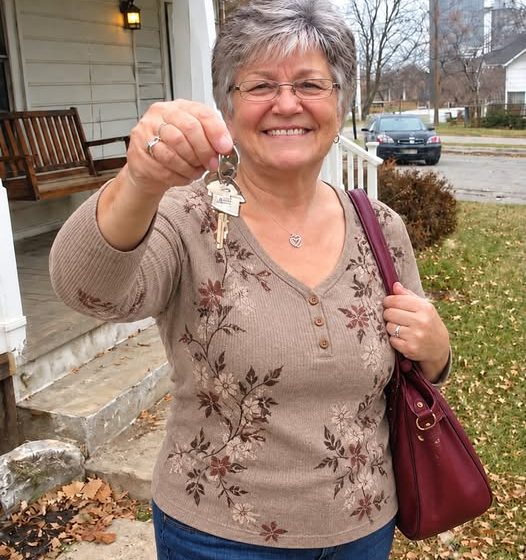
Part 2: My daughter offered to let me stay in her basement for $800 a month from my Social Security check, plus four days of babysitting every week to “earn my keep.” I thanked her politely, then found myself a little two-room rental near the grain elevator for just $550.

PART 2
Todd’s handwriting covered the yellow legal pad from top to bottom.
Mortgage.
Truck payment.
Electricity.
Groceries.
Health insurance.
Credit cards.
Daycare.
Every number was written carefully, with little arrows connecting one expense to another as though he had spent hours trying to force their lives into a calculation that would finally make sense.
At the bottom of the page, beneath two thick lines, was one figure.
$1,137.
I stared at it.
“What is that?”
Todd pulled out the chair across from me and sat down.
For once, he didn’t look like the confident man who always had an answer.
He looked tired.
Older than thirty-nine.
“That’s what we’re short every month,” he said.
Michelle stood beside my sink with both arms wrapped around herself.
Her eyes were still swollen.
I looked from her to Todd.
“I don’t understand.”
Todd rubbed both hands across his face.
“The plant cut overtime in April. I kept thinking it would come back.”
“It didn’t,” Michelle whispered.
Todd continued.
“Then the transmission went out on the truck. We put it on a card. Sadie needed dental work. Another card. Our homeowners insurance went up. Daycare increased again.”
He tapped the legal pad.
“We kept falling behind.”
I looked at the figures again.
Then I understood.
The basement.
Eight hundred dollars a month.
Four days of babysitting.
It hadn’t been an offer to help me.
It had been a financial plan.
I sat back slowly.
“So when you told me I needed to contribute something…”
Michelle covered her mouth.
“Mom…”
“You needed my Social Security check.”
“No,” she said quickly.
Todd didn’t let her finish.
“Yes.”
She looked at him.
He swallowed.
“That’s what I was thinking.”
Silence filled my little kitchen.
Outside, a grain truck groaned somewhere near the elevator.
I could hear its brakes hiss.
Todd stared at the tabletop.
“I knew Judy needed somewhere to live,” he said to Michelle, though the words were meant for me. “I knew we needed money. I thought it solved both problems.”
“Solved,” I repeated.
His jaw tightened.
“I know how it sounds now.”
I almost laughed.
Not because anything was funny.
Because sometimes hurt becomes so sharp that your body doesn’t know what else to do with it.
“So you were going to charge a sixty-seven-year-old widow eight hundred dollars for a basement room while she watched your children four days a week.”
Todd closed his eyes.
“When you say it like that—”
“How else should I say it?”
Michelle started crying again.
“Please don’t fight.”
I turned toward her.
“I’m not fighting.”
My voice was quieter than I expected.
“That’s the problem, honey. I’ve spent half my life trying not to fight with you.”
She froze.
I hadn’t planned to say that.
Maybe I had been carrying it longer than I realized.
After Dale died, everyone told me grief would come in waves.
Nobody told me that sometimes grief removes the walls you built around everything else.
I folded my hands in front of me.
“Do you remember when Sadie was born?”
Michelle wiped her face.
“What?”
“I came to your house every morning for six weeks.”
Her eyes shifted downward.
“You were exhausted. Todd was working nights. I made breakfast. I washed bottles. I did laundry. I held that baby so you could sleep.”
“I know.”
“When Caleb was born, I did it again.”
“I know, Mom.”
“I never once sent you a bill.”
Michelle’s chin trembled.
“That’s not fair.”
“No,” I said gently. “It isn’t.”
Todd looked at me.
I could see the shame building in his face.
And strangely, I didn’t enjoy it.
I had imagined being angry if they ever apologized.
Instead, I felt tired.
Deeply tired.
“I would have helped you,” I said.
Michelle looked up.
“What?”
“If you had come to me and said you were struggling, I would have helped.”
Her shoulders sagged.
“You don’t have much.”
“That doesn’t mean I have nothing.”
“We didn’t want your charity.”
I looked at her carefully.
“But you wanted my rent?”
That silenced her.
Todd leaned forward.
“I thought calling it rent would preserve everyone’s dignity.”
“Whose dignity?”
He didn’t answer.
I did.
“Yours.”
His eyes met mine.
“You didn’t want to tell your mother-in-law you couldn’t cover your bills. You didn’t want to admit the numbers weren’t working. So you took something you needed and dressed it up like something I owed.”
He nodded slowly.
“You’re right.”
Michelle pulled out the chair beside him.
“I told him eight hundred was too much.”
Todd looked at her.
“She did.”
“But you still sat there while he pushed that piece of paper toward me.”
Her face collapsed.
“I know.”
I wished Dale were there.
He had always been better at knowing when to speak and when to walk outside and let a problem cool down.
But Dale had been gone for twenty-two months.
Some mornings I still reached toward his side of the bed before remembering I didn’t sleep in that farmhouse anymore.
That afternoon, sitting in the first home I had ever chosen by myself, I realized something else.
I had spent almost fifty years letting Dale be the steady one.
Then I had spent another two years trying to be whatever everyone else needed so nobody would worry about me.
Widow.
Mother.
Grandmother.
Easygoing Judy.
Grateful Judy.
Judy who didn’t cause trouble.
I was tired of being easy.
“So what happens now?” Michelle asked.
I stood and walked to the coffeemaker.
My hands needed something ordinary to do.
“Now I make coffee.”
Todd blinked.
“That’s it?”
“For the next five minutes.”
I filled the pot.
Behind me, Michelle gave a shaky little laugh.
I almost smiled.
Dale used to say nobody in our family should make decisions hungry or without coffee.
Maybe some habits survive death.
When the coffee was ready, I poured three cups.
Todd took his black.
Michelle added too much sugar, the way she had since high school.
I sat down again.
“This house costs me five hundred fifty dollars,” I said. “Electricity will probably run another hundred or so.”
Todd nodded.
“I know.”
“I can afford it.”
Michelle looked around my tiny kitchen.
The cabinets were old.
The linoleum near the refrigerator curled at one corner.
My table came from a church rummage sale.
But sunlight came through the window above the sink.
There was a vase of wild asters on the sill.
Dale’s photograph sat beside them.
“I like it here,” I said.
Michelle stared at me.
“I thought you’d hate being alone.”
“Sometimes I do.”
Her expression softened.
I continued.
“But being lonely in my own house is different from feeling unwanted in someone else’s.”
She looked away.
The words landed harder than I intended.
“I never wanted you to feel unwanted.”
“I know.”
“Then why does it sound like you blame me?”
“Because loving somebody doesn’t erase what they do.”
That was another thing widowhood had taught me.
Two truths can live in the same room.
I loved my daughter.
She had hurt me.
Neither truth canceled the other.
Michelle pressed the heel of her hand against her forehead.
“I was so angry when I found out you rented this place.”
“I know.”
“I told myself you were choosing strangers over us.”
“I wasn’t.”
“I know that now.”
Todd stared into his coffee.
“I’m sorry, Judy.”
He said it without excuses.
That mattered.
“I should never have put that number on paper.”
I nodded.
“No, you shouldn’t have.”
“And I shouldn’t have treated your time like something we were entitled to.”
“No.”
He breathed out.
“I don’t expect you to forgive me tonight.”
“I can forgive you and still remember it happened.”
He nodded.
“That’s fair.”
Michelle reached across the table.
I let her take my hand.
“So you’re staying here?”
“Yes.”
A tear slipped down her cheek.
“What if you need help?”
“I’ll call.”
“What if you fall?”
“I have one step, not thirteen.”
Todd winced.
Michelle almost smiled.
“What about winter?”
“I survived forty-three winters with your father on a farm six miles outside town. I think I can survive behind the grain elevator.”
That finally made her laugh.
It was the first sound all evening that felt familiar.
Then I looked at Todd’s legal pad again.
“How bad is it?”
His expression changed.
“Bad enough.”
“How much credit-card debt?”
He hesitated.
“Twenty-two thousand.”
Michelle closed her eyes.
I inhaled slowly.
“Does that include the truck?”
“No.”
“What about the mortgage?”
“We’re current.”
“Barely,” Michelle added.
I knew that tone.
Fear disguised as casualness.
I had heard it in my own voice years earlier when Dale broke his ankle and couldn’t work for ten weeks.
“How many payments before you’re in real trouble?”
Todd rubbed his thumb over the edge of the cup.
“Maybe three.”
I looked at Michelle.
“Why didn’t you tell me?”
She whispered, “Because Dad would have known what to do.”
There it was.
The sentence that broke me.
Not loudly.
Not dramatically.
Just enough.
I looked at Dale’s picture on the windowsill.
He was fifty-nine in that photograph, standing beside his old Ford tractor, one hand tucked into his jacket pocket.
A man who had spent his life fixing whatever broke.
Fence.
Tractor.
Roof.
Family.
“He probably would have,” I said.
Michelle squeezed my fingers.
“I miss him.”
“So do I.”
For a while, nobody spoke.
Then Todd turned the legal pad to another page.
“I made a different budget.”
I looked at it.
He had cut nearly everything.
Streaming services.
Restaurant meals.
His fishing club.
Michelle’s monthly salon visits.
The newer SUV they had financed only eighteen months ago.
“If we sell Michelle’s vehicle and buy something older, that saves four hundred and thirty dollars a month.”
Michelle nodded.
“I already called about it.”
“Daycare?”
“We can’t completely eliminate it,” Todd said, “but if we change shifts and use my sister one day, we can cut two days.”
“And me,” I said.
Michelle looked at me.
“What?”
“I said I’ll babysit.”
“No, Mom.”
“I didn’t say four days.”
I pointed at her.
“Don’t get greedy.”
She laughed through her tears.
“One afternoon a week,” I said. “Maybe two sometimes. Because I want to see my grandchildren.”
“Not because you owe us.”
“Exactly.”
Todd nodded.
“That helps.”
“And you’ll come here.”
Michelle looked around again.
“Here?”
“Sadie likes the porch swing. Caleb can play in the yard. And I’m not climbing thirteen basement stairs every time I need to use my own front door.”
The smile disappeared from her face again.
“I really am sorry.”
“I know.”
That should have been the end of the evening.
An apology.
A plan.
A fragile beginning.
But Todd still looked uneasy.
He kept glancing at Michelle.
And Michelle kept refusing to meet his eyes.
Finally, I noticed the envelope.
It was sticking out of the side pocket of her purse.
Yellowed paper.
Not a modern envelope.
Old.
My name was written across the front.
JUDY.
I recognized the handwriting before she touched it.
Dale’s.
My chest tightened.
“What is that?”
Michelle froze.
Todd looked at her.
“Tell her.”
She didn’t move.
“Michelle.”
Her fingers closed around the purse strap.
“We weren’t going to bring this up tonight.”
“Then why did you bring it?”
No answer.
I stood.
“Give it to me.”
She slowly pulled out the envelope.
The paper was creased down the middle.
My name had been written in black ink.
Not the shaky handwriting Dale had during his final months.
His normal handwriting.
Strong.
Square.
Careful.
“When did you get this?”
Michelle looked at Todd.
He answered.
“After your husband died.”
I stared at them.
“You’ve had a letter from Dale for almost two years?”
Michelle shook her head quickly.
“No. Not exactly.”
“What does that mean?”
“We found it after Dad died. But it wasn’t addressed only to you.”
She turned the envelope over.
On the back were three words.
FOR MICHELLE FIRST.
I felt something cold move through me.
“Open it,” Todd said quietly.
My eyes remained on my daughter.
“Have you read it?”
She nodded.
“When?”
“The week after the funeral.”
The room seemed to shift slightly.
“You read a letter from your father meant for me, and you never told me?”
“Mom—”
“Give it to me.”
She handed it over.
My fingers shook.
Inside were four folded pages and a bank statement.
I pulled out the statement first.
The account belonged to First Prairie Savings.
Account holder:
DALE R. HENDERSON.
Balance:
$46,280.17.
I stared at the number.
Again.
And again.
It made no sense.
Dale and I had shared everything.
Checking account.
Savings.
Farm expenses.
Medical bills.
He never earned much.
Neither had I.
The largest amount we ever had sitting in savings at one time was probably twelve thousand dollars, and that was before Michelle’s wedding.
“What is this?”
Michelle looked miserable.
“It was Dad’s account.”
“I can see that.”
“I didn’t know about it either.”
Todd pointed toward the letter.
“Read.”
I unfolded the first page.
Dale’s handwriting filled both sides.
Judy,
If you are reading this, then I didn’t get enough time to explain things myself.
My vision blurred immediately.
I stopped.
Michelle reached toward me.
I pulled the paper closer.
Not because I was angry.
Because I needed to hear Dale alone.
Even surrounded by people.
I read again.
There is money you don’t know about.
Before you get mad, know that I never hid it because I didn’t trust you.
I hid it because I made a promise.
My throat tightened.
A promise to whom?
The next paragraph answered.
Years ago, when Michelle was seventeen, she made a mistake.
I looked up.
Michelle’s face had gone white.
“What mistake?”
“Keep reading.”
My voice sharpened.
“What mistake?”
She whispered.
“Please, Mom.”
I returned to the letter.
I remember the summer Michelle was seventeen.
Of course I did.
She had worked at Peterson’s Diner.
Drove an old blue Cavalier.
Spent half her time with a boy named Aaron Webb whom Dale disliked.
Then one August morning, Aaron disappeared from our lives.
Michelle told me they broke up.
She cried for weeks.
After that, she changed.
Quieter.
More serious.
She graduated early the next spring.
I kept reading.
There are things a father does because he thinks he is protecting his child.
Sometimes he is wrong.
Sometimes protection becomes secrecy, and secrecy grows teeth.
My heartbeat quickened.
I glanced at Michelle.
She had started crying again.
Dale’s letter continued.
The money in this account did not come from my wages.
It came from the sale of eighty acres outside Mason County that were left to me by my uncle Walter.
I remembered Uncle Walter.
Barely.
He died almost twenty years earlier.
Dale told me the land had been tied up in estate problems and eventually lost to taxes.
Apparently, that had been a lie.
The land sold for far more than I expected.
Part of that money was used years ago for something Michelle needed.
The rest stayed untouched.
I gripped the paper.
“What did you need?”
Michelle stood abruptly.
“I can’t.”
“What did you need?”
Todd whispered her name.
She shook her head.
“Not tonight.”
I stood too.
“You kept a letter from my dead husband for twenty-two months.”
“Because Dad told me to!”
Her voice cracked through the kitchen.
Everything stopped.
She covered her mouth.
Then lowered her hands.
“He told me not to give it to you unless…”
“Unless what?”
Her face twisted.
“Unless you ever needed the money.”
I stared at her.
“That doesn’t make sense.”
She pointed at the letter.
“It does if you finish reading.”
My hands felt numb.
I lowered myself into the chair.
The next section of Dale’s letter was shorter.
Michelle will know when to tell you the rest.
You may hate me for putting that burden on her.
Maybe you should.
But I was afraid that if you knew the whole truth while I was alive, you would look at our daughter differently.
I knew instantly that whatever was coming was bigger than debt.
Bigger than the basement.
Bigger than forty-six thousand dollars.
I turned the page.
The next sentence stopped me.
The money was originally meant for a child.
I looked up.
Michelle was sobbing silently now.
Todd stood beside her.
I heard myself ask, “What child?”
No answer.
My skin prickled.
“Michelle.”
She shook her head.
“You need to read it.”
“No.”
I dropped the letter on the table.
“You tell me.”
For several seconds, she couldn’t speak.
Then she pulled out the chair and sat opposite me.
“When I was seventeen…”
Her voice broke.
She started again.
“When I was seventeen, I got pregnant.”
The refrigerator hummed behind me.
A truck passed outside.
Somewhere in the distance, metal clanged at the grain elevator.
I heard every sound.
And none of them.
“You what?”
“I got pregnant.”
My first thought was absurd.
Impossible.
I would have known.
I was her mother.
I did her laundry.
I cooked her meals.
I drove her to school when the Cavalier wouldn’t start.
“No.”
“It’s true.”
“You weren’t pregnant.”
“I was.”
“No.”
“Mom…”
“I would have known.”
She began crying harder.
“I hid it.”
“For how long?”
“Almost six months.”
I laughed once, sharply.
“That is impossible.”
“I wore Dad’s sweatshirts. I stopped eating dinner with you half the time. I said I was gaining weight from the diner food.”
Memories moved through me like broken pieces of film.
Baggy clothes.
Closed bedroom door.
A sudden refusal to go swimming that summer.
Dale driving her somewhere one rainy Thursday while I covered an evening shift at the lumberyard.
My stomach turned.
“What happened to the baby?”
Michelle looked at Todd.
Then at me.
“I gave birth to a boy.”
The room went completely still.
A grandson.
I had a grandson.
Or had once had one.
“Where?”
“St. Matthew’s.”
“That’s forty miles away.”
“Dad drove me.”
My eyes filled.
“Dale knew.”
She nodded.
I couldn’t breathe properly.
“My husband knew our seventeen-year-old daughter was pregnant and never told me.”
“He was trying to protect me.”
“From me?”
“No.”
“Then from what?”
She pressed both palms against her face.
“I was scared.”
“So was I your mother or not?”
“You were.”
“Then why didn’t anybody tell me?”
“Because Aaron’s family threatened us.”
That stopped me.
“What?”
Todd moved closer.
Michelle wiped her cheeks.
“Aaron’s father found out. He said if I kept the baby, he’d make sure Aaron took custody. Their family had money. His uncle was an attorney. Dad believed them.”
I remembered Aaron Webb differently after that.
Not the skinny teenager with too much hair.
His father.
Richard Webb.
Owner of two equipment dealerships.
A man who shook Dale’s hand at church.
“What did you do?”
Michelle’s voice dropped.
“I signed adoption papers.”
I closed my eyes.
Pain moved through me in layers.
For the teenage girl she had been.
For the baby.
For Dale.
For myself.
“Was it a closed adoption?”
“Yes.”
“Did you hold him?”
She nodded.
“What did you name him?”
Her mouth trembled.
“Daniel.”
Dale’s middle name.
I covered my face.
For the first time that evening, I cried.
Not politely.
Not quietly.
I cried like I had at Dale’s funeral.
Michelle came around the table and knelt beside me.
“I’m sorry.”
I touched her hair.
“You were seventeen.”
“I should have told you.”
“You were seventeen.”
She leaned against my knees.
And somehow, despite the anger, despite the secrets, my first instinct was still to comfort my child.
Maybe motherhood is cruel that way.
It doesn’t wait for facts.
It moves before the heart catches up.
After several minutes, I picked up Dale’s letter again.
There was still another page.
I read.
The adoption did not happen the way Michelle believes it happened.
My hands stopped.
I read the sentence twice.
“Michelle.”
She looked up.
“What?”
“You haven’t read this?”
Her face changed.
“What do you mean?”
“You said you read the letter.”
“The first pages.”
Todd frowned.
“You didn’t read all of it?”
She shook her head.
“Dad wrote on the envelope that the last page was for Mom.”
My pulse thudded.
I continued.
After Daniel was born, the Webb family interfered.
The adoption agency Michelle believed was handling the placement was not the agency listed on the final documents.
I felt suddenly cold.
I kept reading.
Years later, I discovered Aaron’s father paid an attorney to redirect the adoption.
I tried to find out where the boy went.
I failed for a long time.
Then, three years ago, I found something.
The page trembled violently in my hands.
Michelle stood.
“What?”
I couldn’t answer.
I read the next sentence aloud.
“Daniel was never adopted by strangers.”
Michelle’s face drained of color.
Todd whispered, “What?”
I read on.
“He was raised by someone we knew.”
Michelle took a step backward.
“No.”
I kept reading.
I wanted to tell you both, but by then I was already sick. Before I could confirm everything, the person disappeared from town.
The bank account contains what remained from Walter’s land. I kept it because I believed one day Daniel might need it.
My eyes raced to the final paragraph.
There was a name.
One name.
I knew it.
Everybody in town knew it.
A woman who had attended Michelle’s high school graduation.
A woman who brought a casserole to our house after Dale died.
A woman who had once held baby Sadie in church and told Michelle she had “a beautiful little family.”
I whispered the name.
Michelle grabbed the edge of the table.
“No.”
Todd stared at her.
“What is it?”
I looked at my daughter.
For twenty-two months, I had believed Dale died carrying nothing more complicated than unfinished farm chores and hospital bills.
Instead, he had died carrying a secret that had begun seventeen years before.
A secret involving land.
Money.
An adoption.
And a grandson I never knew existed.
But that wasn’t the worst part.
The worst part was the woman named in Dale’s letter.
Because she wasn’t a stranger.
She was Todd’s mother.
Full Story: My daughter offered to let me stay in her basement for $800 a month from my Social Security check, plus four days of babysitting every week to “earn my keep.” I thanked her politely, then found myself a little two-room rental near the grain elevator for just $550.
PART 3 — THE WOMAN WHO RAISED THE CHILD WE THOUGHT WE HAD LOST
For several seconds, nobody moved.
Todd stood beside my kitchen table with one hand gripping the back of a chair.
Michelle stared at Dale’s letter as if the paper had just spoken aloud.
I could hear the grain elevator outside.
Metal groaned.
A truck shifted gears.
Somewhere down the block, a dog barked twice.
Ordinary sounds.
But inside my little two-room house, our entire family had just changed shape.
“Todd’s mother?” Michelle finally whispered.
I nodded.
Todd shook his head immediately.
“No.”
I turned the last page toward him.
The name was there.
Linda Mercer.
Todd’s mother.
A woman I had known for nearly twenty years.
The woman who sat three pews behind us at church.
The woman who had attended Michelle and Todd’s wedding.
The woman who brought me chicken casserole after Dale d/i/ed.
The woman who had once told me she understood what it meant to lose someone.
Todd snatched up the paper.
He read the paragraph.
Then read it again.
“That’s impossible.”
Michelle stepped toward him.
“Todd…”
“No.”
His voice rose.
“My mother never had another son.”
Dale’s letter said otherwise.
According to him, Linda had become involved with the adoption agency after Daniel was born.
Not officially.
Not legally.
She had been working part-time in the billing office of St. Matthew’s Hospital at the time.
Dale discovered years later that she had been present the night Michelle delivered.
Todd looked sick.
“My mother told me she was working nights at the hospital back then.”
Michelle whispered, “I never saw her.”
“You were sedated after delivery.”
The words came from me.
They sounded foreign.
Like I was talking about strangers.
Michelle sank into the chair.
“I remember Dad holding Daniel.”
Her voice broke.
“Just once. He wrapped him in that blue blanket.”
I closed my eyes.
I could picture Dale at forty-eight.
Strong hands.
Sunburned neck.
A grandfather before I even knew I was a grandmother.
“What happened after that?” Todd asked.
Michelle shook her head.
“They took him away.”
Todd stared at Dale’s letter.
“My mother raised him?”
I looked at the page again.
Dale hadn’t written that Linda openly raised Daniel as her child.
He wrote something more confusing.
Daniel was never adopted by strangers.
He was placed with Linda’s younger sister, Evelyn, in Nebraska.
Linda arranged it.
That name struck another memory.
Evelyn Mercer.
I had met her exactly twice.
She was eleven years younger than Linda, unmarried then, and had moved away from our area before Todd finished high school.
Todd read over my shoulder.
“Aunt Evelyn?”
Michelle looked at him.
“You have an Aunt Evelyn?”
“Had.”
The word made my heart jolt.
He caught himself.
“She d/i/ed eight years ago.”
Michelle covered her mouth.
“What happened to Daniel?”
Todd stared at the wall.
“I don’t know.”
He said it slowly.
“My aunt had a son.”
I stopped breathing.
“What?”
Todd looked at us.
“His name wasn’t Daniel.”
“What was his name?”
“Ethan.”
Michelle went completely still.
Todd continued.
“He was maybe seventeen years younger than Mom. I didn’t see him much. Aunt Evelyn moved constantly.”
“How old would Ethan be now?”
Todd calculated silently.
“Thirty-two.”
Michelle whispered, “Daniel would be thirty-two.”
Nobody spoke.
Then Todd reached for his phone.
He called his mother.
It rang six times.
No answer.
He called again.
Still nothing.
He typed something quickly.
A minute passed.
Then his phone rang.
Todd answered immediately.
“Mom?”
I watched his face change.
First frustration.
Then confusion.
Then something colder.
“Where are you?”
Pause.
“No, don’t tell me later.”
He looked at Michelle.
“Did you know Dad left a letter?”
Another pause.
Todd’s shoulders stiffened.
“Mom.”
His voice cracked.
“Who is Ethan?”
The room went silent.
I could hear Linda’s voice faintly through the phone, though not the words.
Todd closed his eyes.
Then he whispered, “Oh, God.”
Michelle stood.
“What did she say?”
Todd lowered the phone slowly.
“She said she’ll come tomorrow.”
“That’s it?”
He nodded.
“She said there are things she should have told us years ago.”
Michelle started crying again.
I felt anger rise inside me.
Not the hot kind.
The cold kind.
The kind that sits quietly in your chest and asks questions.
For twenty-two months, I had grieved Dale believing I knew the full story of our marriage.
Now I was discovering locked rooms behind every memory.
That night, Michelle and Todd stayed longer than planned.
Nobody wanted to leave.
We talked until almost midnight.
Michelle remembered pieces.
Dale driving her to St. Matthew’s.
Linda entering the hallway once.
A nurse bringing papers she couldn’t understand.
Aaron never appearing.
His father calling Dale twice.
Threatening words.
Todd remembered Aunt Evelyn visiting their house with a dark-haired little boy when he was fifteen.
The boy had been about four.
Quiet.
Big brown eyes.
Todd remembered playing catch with him in the yard.
“He called Mom Aunt Linda.”
Michelle stared at him.
“Did he look like me?”
Todd swallowed.
“I don’t remember.”
But the way he avoided her eyes told me he remembered more than he wanted to say.
The next morning, Linda arrived at ten.
She didn’t knock.
She stood on my porch holding an old leather folder against her chest.
At sixty-nine, she looked smaller than I remembered.
Her silver hair was pinned back.
No makeup.
No jewelry.
She looked like someone heading into court.
I opened the door.
“Come in.”
She entered without asking whether Todd and Michelle were there.
They were.
Todd stood near the window.
Michelle sat at the table.
Linda looked at each of us.
Then at Dale’s photograph.
Her eyes filled.
“I wondered when this day would come.”
Todd’s face hardened.
“You knew.”
“Yes.”
“What did you do?”
Linda sat down.
Her hands trembled over the leather folder.
“I helped a frightened girl.”
Michelle spoke sharply.
“You took my baby.”
Linda flinched.
“No.”
“Then explain.”
She looked directly at Michelle.
“Your son was going to be taken by the Webbs.”
Michelle froze.
Linda continued.
“Richard Webb had already contacted an attorney. Aaron was seventeen too. His parents decided they wanted control.”
“Why?”
“Because Richard found out Aaron might inherit money from his grandmother. He was terrified a future claim from your child could complicate the estate.”
The ugliness of it made my stomach twist.
“So he wanted the baby?”
“He wanted ownership of the situation.”
Todd whispered, “That sounds like him.”
Linda nodded.
“Dale came to me because I worked at St. Matthew’s. He was desperate.”
I stared at her.
“Dale involved you?”
She looked ashamed.
“Yes.”
“Why?”
“Because Evelyn couldn’t have children.”
Michelle gripped the table.
Linda opened the folder.
Inside were copies of old forms.
A birth certificate.
A guardianship petition.
Letters.
Photographs.
One picture slid partly free.
A dark-haired boy, maybe six, standing beside a red bicycle.
Michelle saw it.
Her hand flew to her mouth.
“Oh.”
I knew before anyone said anything.
The boy had Dale’s eyes.
Not exactly.
But enough.
Linda pushed the photograph toward Michelle.
“This is Daniel.”
Michelle touched the edge but didn’t lift it.
“You called him Ethan.”
“Evelyn did.”
“You changed his name.”
“Legally.”
Michelle stood so suddenly her chair scraped backward.
“You had no right.”
“No.”
Linda’s answer stopped her.
“No, Michelle. We did not have the right.”
The room went quiet.
Linda began crying.
“We convinced ourselves we were saving him.”
“Saving him from what?”
“Richard Webb.”
“And you never thought maybe his mother deserved to know?”
“You were seventeen.”
“That didn’t make me nothing!”
“No.”
Linda lowered her head.
“It didn’t.”
Todd looked furious.
“Why didn’t you tell me?”
“Because by the time you married Michelle, I was terrified.”
“You watched me marry the mother of a child you helped hide.”
“Yes.”
“And you said nothing.”
“Yes.”
He turned away.
Linda continued.
“Evelyn loved Daniel. Whatever else happened, please believe that.”
Michelle whispered, “Where is he?”
Linda’s eyes lifted slowly.
“That’s the part Dale never confirmed.”
“What does that mean?”
“After Evelyn d/i/ed, Daniel disappeared.”
“Disappeared?”
“He was twenty-four. He had already learned some of the truth.”
My pulse quickened.
“What truth?”
“That Evelyn wasn’t his biological mother.”
“Did he know Michelle’s name?”
Linda nodded.
“Yes.”
Michelle’s knees seemed to weaken.
Todd caught her elbow.
Linda opened the folder again.
“There’s more.”
She pulled out an envelope addressed to Dale.
The postmark was eight years old.
“Daniel sent this to Evelyn’s house after her funeral. I found it when I went through her things.”
Michelle stared at it.
“Why didn’t you give it to Dad?”
“I did.”
I looked at Dale’s photo.
That explained his search.
His secret account.
His final letter.
“What did Daniel write?”
Linda pushed the envelope across the table.
Michelle opened it.
Inside was one page.
The handwriting was unfamiliar.
I watched her read.
Then she gasped.
“What?”
Todd leaned closer.
Michelle looked up.
“He knew.”
“Knew what?”
“He knew my name.”
She read aloud.
“I don’t want money. I don’t want explanations. I only want to know why my mother gave me away and why everyone kept lying afterward.”
Her voice shattered.
She kept reading.
“If she ever asks about me, tell her I’m alive. Tell her I’m not angry anymore. But don’t tell her where I am.”
Michelle pressed the letter against her chest.
“When was this?”
Linda answered.
“Eight years ago.”
Eight years.
Her son had been alive.
Searching.
Hurting.
And close enough to send a letter.
Michelle looked at Linda.
“Where was it mailed from?”
“Des Moines.”
Todd took out his phone.
“We can search.”
Linda shook her head.
“I already did.”
Everyone turned.
“There’s something else you need to know.”
I knew from her voice this was not finished.
Linda folded her hands.
“Daniel changed his last name.”
“To what?”
She hesitated.
“Henderson.”
My maiden name.
No.
Dale’s surname.
Michelle whispered, “He took Dad’s name?”
Linda nodded.
“And three years ago, he contacted Dale again.”
I stared.
“What?”
“They met.”
The room disappeared around me.
“What do you mean, they met?”
“Dale drove to Iowa.”
I remembered that trip.
He told me he was attending a farm equipment auction.
He came home two days later quieter than usual.
I had asked whether he found anything worth buying.
He said no.
Linda continued.
“Dale met Daniel in a diner outside Ames.”
Michelle was shaking.
“And?”
“They talked for four hours.”
“What happened?”
Linda looked at her.
“Daniel refused to come home.”
Michelle covered her face.
“Why?”
“Because he believed returning would destroy your family.”
“That makes no sense.”
Linda’s expression changed.
“He knew you had married Todd.”
Michelle lowered her hands.
“So?”
Linda looked at Todd.
Then at Michelle.
And suddenly, I understood why she had been afraid.
But not completely.
Todd said, “Mom?”
Linda whispered, “Daniel believed you were his brother.”
Silence.
Michelle stared at Todd.
Todd stared back.
For one terrible second, even I felt the floor tilt.
Then Todd stepped backward.
“No.”
Linda quickly shook her head.
“He was wrong.”
Todd didn’t move.
“Explain.”
“Daniel grew up believing Richard Webb was his father.”
Michelle whispered, “Aaron was his father.”
“Yes.”
“But Richard?”
“Evelyn lied about that too. She told Daniel the Webb family connection came through Richard.”
Todd looked nauseated.
Linda continued.
“When Daniel learned Michelle had married my son, he thought Todd might somehow be related to him through me and the Webbs. He believed coming back could expose something shameful.”
“But it wasn’t true.”
“No.”
“Then why didn’t Dad tell him?”
“He tried.”
Linda’s eyes filled again.
“Daniel didn’t believe anyone anymore.”
That hurt more than anything.
Not because Daniel hated us.
Because all the adults around him had taught him not to trust love.
Then Linda reached inside the folder one last time.
She removed a small business card.
“I found this six months ago.”
Todd took it.
The name printed on the card was:
Ethan Henderson.
Independent Building Inspector.
OMAHA, NEBRASKA.
A phone number sat beneath it.
Michelle stopped breathing.
“Is this him?”
Linda nodded.
“I think so.”
“You think?”
“I called once.”
“What happened?”
“He answered.”
“And?”
“I couldn’t speak.”
Michelle stared at her.
“You had my son’s phone number for six months?”
Linda began to cry.
“I was afraid.”
Michelle stood.
This time, she didn’t shout.
That was worse.
She walked toward Linda and placed the business card in front of her.
“You’ve been afraid for thirty-two years.”
Linda looked up.
Michelle’s voice remained calm.
“I’m done letting everybody else’s fear decide what happens to my son.”
She picked up her phone.
And before anyone could stop her, she dialed the number.
PART 4 — THE VOICE ON THE OTHER END
The phone rang once.
Twice.
Three times.
Michelle held it so tightly her knuckles whitened.
Todd stood beside her.
Linda remained at the table, pale and trembling.
I couldn’t breathe.
Fourth ring.
Then—
“Hello?”
A man’s voice.
Deep.
Calm.
Michelle’s mouth opened.
Nothing came out.
“Hello?”
She closed her eyes.
“Daniel?”
Silence.
The man on the other end stopped breathing too.
Then his voice changed.
“Who is this?”
Michelle’s chin trembled.
“My name is Michelle.”
Nothing.
Not even static.
She whispered, “Michelle Henderson. Well… Mercer now.”
The call ended.
Michelle stared at the screen.
“He hung up.”
Nobody moved.
She called again.
Straight to voicemail.
Again.
Voicemail.
She typed a message.
I watched her fingers shake.
I am not asking for anything. I just learned the truth. I only want you to know I never stopped loving the child I lost, even when I believed I had no right to look for him.
She stared at the message.
Then added:
I’m sorry it took me thirty-two years to say that.
Send.
We waited.
Five minutes.
Ten.
Nothing.
Linda eventually left.
Todd didn’t hug her goodbye.
He only said, “We’ll talk later.”
That afternoon, Michelle sat on my porch swing staring at her phone.
Sadie and Caleb were still with Todd’s sister.
The house felt unusually quiet.
I carried out two mugs of coffee.
Michelle accepted one.
“What if he never answers?”
“He might not.”
She looked at me.
“You’re supposed to tell me he will.”
“I’m your mother. Not a fortune-teller.”
She smiled faintly.
Then the smile disappeared.
“I gave him away.”
“You were seventeen.”
“I signed.”
“You were scared.”
“I still signed.”
I sat beside her.
“The older I get, the less I believe our worst decision tells the whole truth about us.”
She looked at me.
“Dad lied to you.”
“Yes.”
“Can you forgive him?”
I looked toward the grain elevator.
Dale had lied.
For decades.
But he had also spent years trying to repair something he helped hide.
“I don’t know,” I said.
That answer surprised her.
“I loved him. I still do. But love doesn’t require pretending.”
Michelle nodded slowly.
Then her phone buzzed.
She nearly dropped the coffee.
A text.
Unknown number.
I need time.
That was all.
Michelle cried for twenty minutes.
Not because it was rejection.
Because it wasn’t silence.
Over the next four days, nothing else came.
Then on Monday morning, I heard a knock.
Not at Michelle’s house.
Mine.
I opened the door.
A man stood on my porch.
Early thirties.
Dark jacket.
Work boots.
Brown eyes.
Dale’s eyes.
I knew him immediately.
“You’re Judy.”
It wasn’t a question.
I gripped the doorframe.
“Daniel?”
He looked away.
“I go by Ethan.”
My throat closed.
“All right.”
He looked surprised that I accepted it so quickly.
I opened the door wider.
“Would you like coffee?”
That almost made him smile.
“Is that what this family does?”
“When we don’t know what else to do.”
He stepped inside.
He looked around my little kitchen.
His eyes stopped on Dale’s photograph.
For several seconds, he said nothing.
“You knew him.”
“Yes.”
“He met me once.”
“I know.”
“He talked about you.”
That nearly broke me.
“What did he say?”
Daniel—Ethan—walked closer to the photograph.
“He said you were the best person he ever lied to.”
I closed my eyes.
“That sounds like Dale.”
He sat at the table.
I poured coffee.
He took it black.
Just like Dale.
“What do you want me to call you?” I asked.
“Ethan.”
“Then Ethan it is.”
He nodded.
“Michelle wants to see you.”
“I know.”
“Are you going to?”
He looked into his cup.
“I came here first for a reason.”
“What reason?”
“To know whether all of you are going to lie again.”
His honesty hurt.
“I won’t.”
“Everybody says that after they get caught.”
I sat opposite him.
“That’s true.”
He looked up.
“So tell me something nobody else will.”
I thought about it.
Then I said, “I’m angry at Dale.”
His eyebrows lifted.
“You loved him.”
“Yes.”
“And you’re angry.”
“Yes.”
“Why?”
“Because he decided I couldn’t handle the truth.”
Ethan studied me.
Then nodded.
“That’s the first honest thing anyone in this family has said to me.”
He stayed two hours.
He told me about Evelyn.
She had loved him fiercely.
Whatever wrong she had done, she was his mother in every practical sense.
She packed school lunches.
Stayed awake through fevers.
Taught him to drive.
Cried at graduation.
When she d/i/ed suddenly from a stroke, Ethan found documents in a locked box.
Nothing matched.
Names changed.
Dates contradicted each other.
He spent years pulling at threads.
“Every answer gave me three new lies.”
Eventually, he found Linda.
Then Dale.
“Dale wanted me to meet Michelle.”
“Why didn’t you?”
“I thought he was trying to ease his conscience.”
“Maybe he was.”
Ethan nodded.
“He also offered money.”
“The account.”
“Yes.”
“You refused.”
“I didn’t want money from people who erased me.”
I winced.
He saw it.
“Sorry.”
“No. Don’t apologize for the truth.”
He looked at Dale’s photograph again.
“Before he d/i/ed, he mailed me another letter.”
My heart jumped.
“What did it say?”
“That he had made one mistake worse by hiding it. He asked me not to repeat that mistake.”
“So why didn’t you contact us?”
Ethan’s jaw tightened.
“Because there was something else.”
I waited.
He reached into his jacket and removed a folded photocopy.
A DNA report.
“I had a test done.”
My stomach sank.
“To confirm Michelle?”
“No.”
He slid it across the table.
“To confirm Aaron.”
The page showed zero probability of paternity.
I looked up.
“Aaron wasn’t your father?”
“No.”
My mind raced.
“But Michelle believed—”
“She was seventeen.”
“Then who?”
Ethan stared directly at me.
“That’s why I came.”
I felt dread crawl up my spine.
“Dale knew.”
“No.”
“He suspected.”
“Who?”
Ethan spoke one name.
And this time, it was my turn to go cold.
“Richard Webb.”
Aaron’s father.
PART 5 — THE MAN WHO BUILT HIS POWER ON A THIRTY-TWO-YEAR LIE
I told Ethan he had to be wrong.
Not because I trusted Richard Webb.
I didn’t.
But because the alternative was too ugly.
Michelle had been seventeen.
Richard Webb had been forty-three.
“No.”
Ethan didn’t argue.
He simply pushed another paper toward me.
“Read.”
It was a letter Dale had mailed him.
The handwriting was shaky.
Written near the end of his life.
Daniel,
There is one possibility I never had the courage to say aloud.
Michelle always told us Aaron was the father.
Years later, I wondered whether she believed that because somebody made her believe it.
My hands trembled.
I stopped reading.
“Does Michelle know?”
“No.”
“You can’t tell her like this.”
“I know.”
“What proof do you have?”
“Not enough.”
Ethan had taken an ancestry DNA test.
A cluster of matches connected him to the Webb family.
But not through Aaron’s maternal side.
Through Richard’s paternal line.
That didn’t automatically prove Richard was his father.
There were brothers.
Cousins.
Other possibilities.
But Ethan had done more.
Richard had one surviving sister.
Margaret.
Ethan contacted her under the pretense of genealogy.
Margaret agreed to a test.
The result showed a relationship consistent with aunt and nephew.
My stomach turned.
“Still not proof.”
“No.”
“But close.”
“Yes.”
“Does Richard know?”
Ethan looked grim.
“I think so.”
“Why?”
“Because after I contacted Margaret, somebody broke into my apartment.”
I stiffened.
“Were you hurt?”
“No.”
“Did they steal anything?”
“Only the folder with my adoption documents.”
My pulse jumped.
“Police?”
“I reported the br/e/@k-in.”
He used the obfuscated word awkwardly, as though even saying it made the event smaller.
“They called it a burglary.”
“Nothing else taken?”
“No.”
That wasn’t random.
I called Michelle.
I told her to come alone.
When she arrived, she knew immediately something was wrong.
Ethan stood when she entered.
For thirty-two years, she had imagined her son as a baby.
Maybe a toddler.
Maybe a child.
Now a grown man stood in front of her.
Same height as Dale.
Same eyes.
Different life.
Michelle stopped three feet inside the door.
“Hi.”
Ethan looked uncomfortable.
“Hi.”
She didn’t rush forward.
Didn’t touch him.
I was proud of her for that.
“I’m glad you came.”
“I came to talk.”
“That’s enough.”
They sat.
At first, conversation came in pieces.
Where he lived.
What he did.
Whether he was married.
He wasn’t.
Whether he had children.
No.
Whether Evelyn had been kind.
Yes.
That answer seemed to relieve Michelle more than anything.
Then Ethan told her about Aaron.
Her face went still.
“He wasn’t your father?”
“No.”
“That test is wrong.”
“It was repeated.”
Michelle stood.
“No.”
Ethan remained seated.
She paced to the sink.
“I only ever—”
She stopped.
Her hand gripped the counter.
I watched memory move through her expression.
Her face changed.
“Michelle?”
She didn’t answer.
“Mom.”
Her voice sounded far away.
“There was a party.”
Ethan stiffened.
“What party?”
She stared through the window.
“End of summer. At the Webbs’ lake house.”
I felt cold.
Michelle continued slowly.
“Aaron and I had been fighting.”
She pressed her fingertips against her temple.
“Richard gave me something to drink.”
Todd wasn’t there.
Thank God.
She whispered, “I thought it was lemonade.”
My chest tightened.
“I woke up in a guest room.”
Ethan looked down.
Michelle’s breathing changed.
“I never remembered everything.”
I stood.
“You don’t have to continue.”
“No.”
She shook her head.
“I need to.”
Tears filled her eyes.
“I remember Richard standing in the doorway.”
No one spoke.
She pressed both hands to the counter.
“Afterward, he told me Aaron brought me upstairs because I was sick.”
I moved beside her.
She leaned into me.
For thirty-two years, she had carried a memory without language.
A missing piece.
A shadow.
Now it had a shape.
I felt rage.
Not the kind that burns fast.
The kind that turns to ice.
Ethan looked shattered.
“I’m sorry.”
Michelle turned.
“Don’t.”
He swallowed.
“I wanted answers.”
“You didn’t do this.”
His face tightened.
“Neither did you.”
She stared at him.
Then covered her mouth.
That sentence broke something open.
She crossed the room.
Ethan stood.
For one second, they faced each other.
Then Michelle reached out.
Stopped.
“May I?”
Ethan’s eyes filled.
He nodded.
She hugged him.
Not dramatically.
Not like television.
Carefully.
As if he might disappear.
I turned away because the moment belonged to them.
But I still heard her whisper.
“I’m sorry.”
And Ethan answer.
“I know.”
That afternoon, Todd came.
Michelle told him.
He sat in silence.
Then he walked outside and was sick behind my lilac bush.
When he returned, he looked older.
“We go to the police.”
Michelle shook her head.
“It’s been thirty-two years.”
“We still go.”
Ethan said, “There may be another option.”
He had already contacted an attorney.
Not about criminal charges.
About records.
St. Matthew’s archive.
The original adoption documents.
The altered forms.
The hospital had merged with a larger health system, and some records survived.
His attorney believed they might prove improper interference.
Michelle stared at him.
“You’ve been working on this a long time.”
“Eight years.”
“You did all that alone?”
Ethan shrugged.
“I’m used to it.”
Todd looked at him.
“You’re not alone now.”
Ethan’s expression hardened slightly.
“Don’t say things you can’t promise.”
Todd accepted that.
“Fair.”
Two weeks later, the first records arrived.
They were worse than we expected.
A nurse’s handwritten note mentioned Michelle was “distressed after visit from R. Webb.”
Another recorded an order for medication that wasn’t signed by the attending physician.
A third showed Linda Mercer requested an administrative change to the infant discharge file.
Linda had already admitted her role.
But there was something new.
A notation:
Infant released under private guardianship authorization signed by D. Henderson.
Dale.
My husband.
His signature.
I stared at it for a long time.
“He signed away our grandson.”
Michelle whispered, “Dad thought he was protecting him.”
“That doesn’t make it right.”
“No.”
Then Ethan’s attorney called.
There was one more document.
A letter from Richard Webb’s attorney to the hospital.
Its language was careful.
But the meaning was obvious.
The Webb family wanted the infant removed from Michelle’s legal control before she could reconsider adoption.
Todd said, “That’s coercion.”
The attorney said yes.
Then she added something else.
Richard Webb was still alive.
Eighty.
Living in a private retirement community outside Kansas City.
And after Ethan’s DNA inquiry, Richard had recently moved several million dollars into a trust.
A trust with a beneficiary none of us expected.
Ethan Henderson.
PART 6 — THE INHERITANCE HE NEVER ASKED FOR
When Ethan’s attorney told us about the trust, nobody believed her.
“Why would Richard leave money to him?” Todd asked.
The attorney’s answer was simple.
“Guilt. Fear. Control. Pick one.”
The trust contained $2.4 million.
But there was a condition.
Ethan had to sign a confidentiality agreement.
He would receive the money only if he agreed never to publicly accuse Richard Webb of wrongdoing and never to pursue civil claims against the Webb family.
Michelle laughed once.
It was bitter.
“He’s trying to buy silence.”
Ethan stared at the documents.
“Looks like it.”
“What are you going to do?”
He folded them.
“Nothing.”
I looked at him.
“Nothing?”
“I don’t want his money.”
Todd said, “Two point four million dollars is a lot of money.”
Ethan’s eyes hardened.
“So was thirty-two years.”
Nobody argued.
Richard’s attorney began calling.
First Ethan.
Then his lawyer.
Then, somehow, me.
A polished voice introduced himself as Martin Cole.
He said Mr. Webb wished to resolve a painful family matter privately.
I said, “You mean the painful family matter where a seventeen-year-old girl lost her child?”
Silence.
Then, “Mrs. Henderson, I’m not authorized to discuss allegations.”
“Then you called the wrong house.”
I hung up.
The next week, Richard Webb himself called Michelle.
She put him on speakerphone.
We were all there.
Even Linda.
His voice was old.
Weak.
But I recognized the authority underneath it.
“Michelle.”
She didn’t answer.
“I understand you’ve been told things.”
She looked at Ethan.
“Yes.”
“Many of them are distorted.”
“What happened at the lake house?”
Silence.
Richard changed direction.
“You were young.”
Michelle’s face went white.
“What happened?”
“You had been drinking.”
“No.”
“You and Aaron were unstable.”
“Answer me.”
Richard breathed slowly.
“I made mistakes.”
Todd stood.
Ethan clenched his jaw.
Michelle said, “Did you touch me when I couldn’t consent?”
The silence that followed was answer enough.
Richard finally whispered, “I’m sorry.”
Michelle closed her eyes.
Linda began crying.
Richard continued.
“I was not a good man then.”
“Then?”
His breathing sounded rough.
“I’ve lived with what I did.”
Michelle opened her eyes.
“No. I lived with what you did.”
No one moved.
“You kept my son from me.”
“I believed adoption was best.”
“You believed control was best.”
Richard didn’t deny it.
Then he said the cruelest thing.
“I’m trying to provide for him now.”
Ethan stepped toward the phone.
“You don’t get to call money providing.”
Richard heard him.
“Daniel?”
Ethan’s face changed.
“My name is Ethan.”
A pause.
“I see.”
“No, you don’t.”
“I am your father.”
Ethan laughed without humor.
“That’s biology.”
Richard inhaled.
“I would like to meet you.”
“No.”
“You may regret refusing.”
“No.”
“Time is limited.”
Ethan looked at Michelle.
Then at me.
“You’re eighty. You had thirty-two years.”
He ended the call.
Nobody spoke.
Linda covered her face.
“I’m sorry.”
Todd looked at her.
“You keep saying that.”
She nodded.
“Because I keep finding new things to be sorry for.”
It was harsh.
But honest.
Over the next month, the family began changing.
Not magically.
Not cleanly.
Todd apologized again.
He sold the SUV.
Canceled the fishing club.
Picked up weekend work repairing machinery.
Michelle took bookkeeping shifts for two local businesses.
They cut their expenses.
I watched the grandchildren two afternoons a week.
For free.
Because I wanted to.
Sadie loved my porch swing.
Caleb loved watching grain trucks.
They filled my little house with crackers, crayons, and noise.
My loneliness softened.
Ethan stayed nearby.
At first in a motel.
Then in a furnished apartment.
He said it was temporary.
Nobody believed him.
He began visiting.
Sometimes he came for dinner.
Sometimes he stopped just to drink coffee.
He and Todd had an awkward relationship.
Technically not brothers.
Not cousins.
Not anything simple.
But they slowly became friends.
One Saturday, they repaired my porch railing together.
Todd held the level.
Ethan drove screws.
I watched from the kitchen.
Dale would have loved that sight.
It also would have broken his heart.
Michelle never pushed Ethan to call her Mom.
He called her Michelle.
Once, by accident, he said “my mother” while speaking to a contractor.
He froze.
Michelle pretended not to notice until later.
Then she went into my bathroom and cried.
Three months passed.
Then Richard Webb d/i/ed.
The call came from Ethan’s attorney.
No ceremony.
No dramatic last words.
Just a legal fact.
Richard Webb was d/e/@/d.
The trust remained.
But something had changed.
Richard left a second document.
A sealed affidavit.
It could be released only after his d/e/@/th.
Inside, he admitted enough to confirm the worst.
He acknowledged fathering Michelle’s child.
He acknowledged pressuring Dale.
He acknowledged arranging legal intimidation around the adoption.
He claimed he never intended permanent harm.
That sentence made Michelle furious.
“Permanent harm?”
She threw the photocopy onto my table.
“He stole thirty-two years.”
Ethan picked it up.
“There’s more.”
At the bottom, Richard identified another payment.
$65,000 transferred to Dale Henderson three months after Daniel’s birth.
I stared at the number.
“No.”
Michelle looked at me.
“Mom?”
“Dale never had sixty-five thousand dollars.”
Ethan’s attorney had already traced it.
The money went into an account in Dale’s name.
Six weeks later, almost all of it was transferred.
Not spent.
Transferred.
To an account belonging to Evelyn Mercer.
Todd looked at Linda.
She whispered, “I didn’t know.”
Ethan understood first.
“He gave it to Evelyn.”
The attorney nodded.
“Likely for Daniel.”
I felt something inside me loosen.
Dale had accepted Richard’s money.
But he had not kept it.
He gave it to the woman raising the baby.
Not enough to make the secrecy right.
Not enough to erase anything.
But enough to tell me something about the man I married.
He had been weak.
Afraid.
Wrong.
But not greedy.
Then the attorney revealed the final surprise.
Richard’s trust was no longer conditional.
His affidavit revoked the confidentiality clause.
Ethan could take the $2.4 million without signing anything.
Todd exhaled.
“Well.”
Ethan stared at the papers.
Michelle asked, “Now what?”
He looked at her.
“I still don’t want it.”
I said, “Then don’t keep it.”
Everyone turned toward me.
I shrugged.
“Money doesn’t have to stay where it came from.”
Ethan’s eyes narrowed.
“What are you thinking?”
I thought of the scared seventeen-year-old girl Michelle had been.
The young woman Dale tried to protect badly.
Evelyn raising a boy inside a lie.
Linda living inside fear.
Ethan searching alone.
And my tiny house behind the grain elevator.
My own front door.
My own keys.
“Use it to give people choices.”
That became the beginning of something none of us expected.
PART 7 — THE HOUSE WITH THE BLUE DOOR
Six months after Richard Webb’s d/e/@/th, Ethan created a foundation.
He refused to name it after himself.
Michelle refused to let him name it after Dale.
“He made mistakes too,” she said.
So they chose a different name.
The Open Door Fund.
It provided emergency housing assistance, legal support, and counseling grants for young parents facing coercion, family pressure, or unstable housing.
Ethan put $2 million from Richard’s trust into it.
He kept enough to pay taxes, legal fees, and buy a modest home.
Not a mansion.
Not a luxury condo.
A three-bedroom craftsman house four blocks from mine.
It had a blue front door.
Michelle cried the first time she saw it.
“You’re staying?”
Ethan looked uncomfortable.
“For now.”
Todd laughed.
“You’ve been saying ‘for now’ for eight months.”
Ethan shrugged.
“Could still leave.”
Sadie grabbed his hand.
“No.”
He looked down.
She said, “You’re Uncle Ethan.”
Everybody froze.
Ethan looked at Michelle.
Then at Todd.
“What?”
Sadie repeated it.
“Uncle Ethan.”
Todd smiled.
“Sounds good to me.”
Ethan didn’t answer.
But later, I saw him wiping his eyes in the garage.
My own life changed too.
I stayed in my little rental.
Michelle tried three times to convince me to move into a larger apartment.
I refused.
“I like my porch.”
She stopped asking.
Mr. Brandt eventually offered to sell me the house.
The price was $72,000.
I laughed.
“With what money?”
Then Ethan reminded me of Dale’s hidden account.
$46,280.
Interest had pushed it slightly higher.
I didn’t want to touch it.
For months, I considered it Daniel’s money.
Ethan disagreed.
“Dale left it to you.”
“He saved it for you.”
“I don’t need it.”
“That’s not the point.”
He leaned across my kitchen table.
“You spent your whole life accepting less so everybody else could have more.”
I frowned.
“That sounds dramatic.”
“It’s accurate.”
In the end, I used part of the account as a down payment.
The bank approved a small mortgage.
At sixty-eight, I bought my first home.
Not with Dale.
Not through his employer.
Mine.
The day I signed the papers, Mr. Brandt handed me the same two keys.
Front door.
Back door.
I cried in the parking lot.
Not because the house was beautiful.
Because I finally understood what those keys represented.
Choice.
Months earlier, Michelle offered me a basement.
Now she helped me paint my own bedroom.
Pale green.
Todd fixed the crooked cabinet.
Ethan replaced the porch light.
Sadie painted a small wooden sign that said GRANDMA JUDY.
Caleb got paint on the dog next door.
It was perfect.
Linda remained the hardest part.
Todd didn’t speak to her for nearly four months.
Michelle avoided her.
Ethan refused contact completely.
Then Linda became sick.
Not seriously.
Pneumonia.
But enough to put her in the hospital for a week.
Todd went.
So did I.
Ethan didn’t.
Nobody pressured him.
On the third day, Linda asked me to take an envelope to him.
“I won’t make him read it.”
“I know.”
I delivered it.
Ethan put it on his kitchen counter.
For three weeks, he didn’t open it.
Then one evening, he arrived at my house holding the letter.
“She kept pictures.”
“What?”
“Of me.”
Linda had quietly collected photographs from Evelyn over the years.
Birthdays.
School plays.
Graduation.
A driver’s license photo.
Even an announcement from Ethan’s first job.
“She knew where I was almost the whole time.”
I winced.
“That hurts.”
“Yes.”
“What did she say?”
He handed me the letter.
I didn’t read it.
“It’s yours.”
He nodded.
“She said fear became a habit.”
That sounded true.
“She said every year she waited made telling the truth harder.”
“That sounds true too.”
“She asked for nothing.”
“What will you do?”
“I don’t know.”
Months passed.
Then one Sunday, Linda came to my porch.
Ethan was there.
So was Michelle.
The moment could have become ugly.
Instead, Linda stood at the bottom step.
“I won’t come up unless you ask me.”
Ethan looked at her.
He didn’t smile.
Didn’t forgive her.
He simply said, “You can sit.”
That was all.
Sometimes healing isn’t an embrace.
Sometimes it is permission to sit on the same porch.
By autumn, our family had developed new habits.
Sunday supper at my house twice a month.
Too many people for my tiny table.
Todd brought folding chairs.
Michelle brought pie.
Ethan brought nothing and ate the most.
Linda came occasionally.
Not always.
Nobody pretended everything was repaired.
But nobody was lying anymore.
Then, just when life finally seemed steady, the Open Door Fund received a strange application.
Ethan called me at seven in the morning.
“Do you know the name Aaron Webb?”
Of course I did.
Michelle’s teenage boyfriend.
The boy we once believed was Daniel’s father.
“What about him?”
“He applied for help.”
I nearly dropped the phone.
“For what?”
“His daughter.”
Aaron had moved to Arizona decades earlier.
Married.
Divorced.
Worked construction.
Had one daughter named Rachel.
Twenty-nine years old.
Rachel was living in Iowa with two young children.
Her landlord was evicting her.
Her ex-husband had emptied their joint account.
She needed emergency housing.
“What does that have to do with us?”
Ethan was quiet.
“Rachel listed Michelle as an emergency contact.”
My stomach tightened.
“Why?”
“I don’t know.”
We found out two days later.
Aaron had finally told Rachel the truth.
Not about Richard.
About Michelle.
Aaron knew more than we realized.
After the lake house incident, Aaron confronted his father.
Richard threatened him.
Then sent him to live with relatives.
Aaron had spent decades believing Michelle hated him.
Recently, after reading news about the Open Door Fund, he recognized Michelle’s name.
He told Rachel everything.
Rachel contacted Michelle.
They met.
I expected anger.
Instead, Aaron appeared by video call.
His hair was gray.
His face looked tired.
When Michelle saw him, she covered her mouth.
“Hi, Shelly.”
Nobody had called her that in thirty years.
She cried.
Aaron cried.
“I’m sorry.”
“You were seventeen.”
“So were you.”
“What did you know?”
“Not enough.”
They talked for nearly two hours.
At the end, Aaron said something that stunned us.
“My father kept something.”
A box.
Locked.
After Richard d/i/ed, Aaron received it through the estate.
Inside were letters.
One was from Dale.
Never mailed.
Addressed to me.
Aaron sent it.
Three days later, I stood in my kitchen holding the last letter my husband had ever written about Daniel.
PART 8 — THE LAST LETTER, THE FIRST TRUTH
I waited until everyone was there.
Michelle.
Todd.
Ethan.
Linda.
Even Sadie and Caleb, though they played in the living room and understood none of it.
The envelope was old.
My name across the front.
Judy.
Just Judy.
Dale always wrote my name that way.
No heart.
No nickname.
Block letters.
Simple.
I opened it.
The paper had yellowed.
Judy,
If this letter ever reaches you, then I failed to fix what I helped break.
I stopped reading.
Ethan sat across from me.
Michelle beside him.
I continued.
I told myself I was protecting Michelle.
That was the lie I used because it sounded better than the truth.
The truth is I was afraid.
Afraid Richard Webb would ruin us.
Afraid you would blame me.
Afraid Michelle would hate herself.
Afraid the town would talk.
Afraid of lawyers, money, shame, everything.
Fear made me cowardly.
Linda lowered her head.
I read on.
There is no excuse for keeping a mother from her child.
No excuse for keeping a wife from the truth.
If Daniel ever comes home, do not make him carry the burden of forgiving us.
He owes us nothing.
Give him room to decide who he wants to be.
Ethan’s eyes filled.
Michelle reached for his hand.
This time, he let her.
Then came the paragraph that surprised me.
Richard thinks the worst thing he did was what happened to Michelle at the lake.
He is wrong.
The worst thing was teaching all of us to believe his power mattered more than the truth.
That line sat inside me.
For thirty-two years, one man’s money and influence had shaped dozens of lives.
Richard controlled people because they believed he could.
Dale knew it too late.
Then I reached the final page.
There is one more thing.
The money I kept was never meant only for Daniel.
It is for Judy.
I froze.
Michelle looked up.
“What?”
I continued.
She spent her life making a home out of whatever I could provide.
Farmhouses owned by other men.
Used furniture.
Cars that barely ran.
Vacations we never took.
If I go first, I want her to have one thing that belongs entirely to her.
A front door nobody can take away.
I couldn’t read for several seconds.
Todd covered his face.
Michelle cried openly.
Ethan stared at the floor.
Dale had known.
Not the basement.
Not Mr. Brandt’s rental.
Not the porch swing.
But somehow, years before, he had known exactly what I would need.
A front door.
I finished the letter.
Judy, I’m sorry.
Not the easy kind of sorry.
The kind that knows sorry doesn’t erase anything.
Be angry if you need to.
But live.
Please live.
Love, Dale.
I folded the letter.
Nobody spoke.
Finally, Ethan said, “He loved you.”
“Yes.”
“And he failed you.”
“Yes.”
He nodded.
“Both can be true.”
I smiled through tears.
“You sound like your grandmother.”
Michelle laughed.
“Which one?”
That made everyone laugh.
Even Linda.
The tension broke.
But the story wasn’t finished.
The biggest surprise came three weeks later.
The Open Door Fund held its first annual community dinner.
Nothing fancy.
A rented hall.
Folding tables.
Pot roast.
Mashed potatoes.
Two hundred people attended.
Young parents.
Grandparents.
Volunteers.
Attorneys.
Social workers.
Families the fund had helped.
Michelle spoke briefly.
She did not tell her whole story.
Only enough.
“When people are scared, they often think they have no choices. This foundation exists to make sure fear isn’t the only voice in the room.”
Ethan stood in the back.
He hated attention.
I sat with Sadie and Caleb.
After Michelle finished, the director announced a scholarship.
The Dale Henderson Independence Grant.
I turned toward Ethan.
He smiled.
“You did this?”
“Maybe.”
“I told you not to name anything after him.”
“That was Michelle.”
She shrugged.
“We changed our minds.”
The grant would provide $5,000 to older adults rebuilding their lives after losing housing, a spouse, or financial stability.
“Older adults?” I asked.
Todd grinned.
“Your idea.”
“It was not.”
“It absolutely was.”
Then the director announced something else.
A donor had matched the grant.
Anonymous.
$50,000.
Everyone applauded.
I assumed some local business had done it.
After dinner, Linda approached me.
“It was Aaron.”
I stared.
“What?”
“Aaron Webb.”
“Why?”
“He said Dale was the first adult who ever tried to stand up to Richard, even if he didn’t do it well enough.”
I looked across the hall.
Families talking.
Children running between tables.
Michelle laughing with Rachel.
Todd stacking chairs.
Ethan arguing with a caterer because they had overcharged for coffee.
Life.
Messy.
Imperfect.
Still moving.
A year later, my porch became the center of our family.
Sunday mornings, Ethan brought donuts.
Michelle brought the children.
Todd fixed things I didn’t ask him to fix.
Linda sometimes brought flowers.
Aaron visited once.
He stood outside my house for a long time before knocking.
When he saw Michelle, neither knew what to say.
Then she hugged him.
Not because the past was repaired.
Because neither of them was seventeen anymore.
Rachel and her children eventually moved into stable housing with help from the foundation.
She became a volunteer.
Ethan hired her to coordinate emergency grants.
Linda began counseling with a therapist.
So did Michelle.
Eventually, so did Ethan.
Todd and Michelle paid off nearly half their credit-card debt within eighteen months.
They never again offered me the basement.
In fact, when Todd remodeled it, he turned the old room into a playroom.
One afternoon, Sadie dragged me downstairs.
The tiny cake-pan window was still there.
But the dehumidifier was gone.
Bright yellow curtains hung around it.
A dollhouse stood where my bed would have gone.
“Grandma, this is my underneath room.”
I laughed so hard I cried.
Then she asked me something.
“Were you going to live here?”
“For a little while, maybe.”
“Why didn’t you?”
I looked around.
Because I had finally chosen myself.
Because I held keys in my hand.
Because five hundred fifty dollars bought more than two rooms.
Because sometimes the smallest home gives you the biggest life.
“I found somewhere better.”
She nodded as though that made perfect sense.
Children often understand freedom faster than adults.
On the second anniversary of buying my house, the family gathered on my porch.
Ethan installed a new blue mailbox.
Michelle hung flower baskets.
Todd brought burgers.
Linda brought potato salad.
Sadie and Caleb chased fireflies.
The evening sun turned the grain dust gold.
I sat on the porch swing holding Dale’s last letter.
I no longer read it every week.
I didn’t need to.
Some truths stop hurting when they finally have somewhere to rest.
Ethan sat beside me.
He had recently begun dating a local teacher named Claire.
He tried to pretend it wasn’t serious.
Nobody believed him.
“You okay?” he asked.
“Yes.”
“You’re staring at that letter again.”
“I’m allowed.”
He smiled.
After a moment, he said, “Can I ask you something?”
“Sure.”
“What would you have done if Michelle had offered you that basement differently?”
I thought about it.
“If she had said, ‘Mom, we’re struggling. Can you help us?’”
“Yeah.”
“I probably would have helped.”
“Even moved in?”
“Maybe.”
He frowned.
“Really?”
“For a while.”
“So the problem wasn’t the money.”
“No.”
“What was it?”
I looked toward my front door.
Blue now.
Ethan painted it the previous spring.
“The problem was being treated like my value depended on what I could provide.”
He nodded.
“That makes sense.”
Then Michelle called from the yard.
“Mom! Come take a picture.”
I stood.
The whole family gathered.
Todd set his phone on a timer.
We squeezed together.
Linda stood at one edge.
Ethan at the other.
Michelle pulled him closer.
“No escaping.”
He rolled his eyes.
Sadie sat in front.
Caleb held a half-eaten burger.
The camera flashed.
For one frozen second, all of us existed in the same frame.
Not the family we had been.
Not the family we pretended to be.
The family we had become after the truth.
Later, after everyone left, I sat alone on the porch.
The night was warm.
Grain trucks moved in the distance.
I held my house key between two fingers.
Two years earlier, Michelle had offered me a basement for eight hundred dollars a month and four days of babysitting.
I thought refusing meant I was choosing loneliness.
Instead, that refusal opened the door to everything.
My own home.
My daughter’s truth.
My grandson.
Dale’s final apology.
A family rebuilt not by pretending nothing happened, but by finally admitting that it did.
I looked toward Ethan’s blue-doored house down the street.
His porch light came on.
A few seconds later, my phone buzzed.
A message from him.
Coffee tomorrow?
I smiled.
Only if you bring donuts.
His reply came immediately.
Deal, Grandma.
I stared at that word.
Grandma.
Thirty-two years late.
Still right on time.
I placed the phone beside me and listened to the quiet.
For decades, I thought a home was somewhere you were allowed to stay.
I know better now.
A home is where you are free to tell the truth.
Where nobody charges you for love.
Where your value is not measured in rent, childcare, silence, sacrifice, or fear.
Where the door belongs to you.
And where, if someone you love finally finds their way back after thirty-two years, you can open it.
THE END